Oliv AI Platform Deep-Dive — Complete Feature Guide for Head of Sales and Cross-Functional Teams | 2026
Written by
Ishan Chhabra
Last Updated :
April 9, 2026
Skim in :
14
mins
In this article
Revenue teams love Oliv
Here’s why:
All your deal data unified (from 30+ tools and tabs).
Insights are delivered to you directly, no digging.
AI agents automate tasks for you.
Thank you! Your submission has been received!
Oops! Something went wrong while submitting the form.
Meet Oliv’s AI Agents
Hi! I’m, Deal Driver
I track deals, flag risks, send weekly pipeline updates and give sales managers full visibility into deal progress
Hi! I’m, CRM Manager
I maintain CRM hygiene by updating core, custom and qualification fields all without your team lifting a finger
Hi! I’m, Forecaster
I build accurate forecasts based on real deal movement and tell you which deals to pull in to hit your number
Hi! I’m, Coach
I believe performance fuels revenue. I spot skill gaps, score calls and build coaching plans to help every rep level up
Hi! I’m, Prospector
I dig into target accounts to surface the right contacts, tailor and time outreach so you always strike when it counts
Hi! I’m, Pipeline tracker
I call reps to get deal updates, and deliver a real-time, CRM-synced roll-up view of deal progress
Hi! I’m, Analyst
I answer complex pipeline questions, uncover deal patterns, and build reports that guide strategic decisions
TL;DR
Oliv AI deploys nine specialized AI agents that autonomously handle pipeline briefs, forecasting, coaching, CRM hygiene, and real-time call assistance.
Unlike Gong and Clari, Oliv delivers proactive daily intelligence via Slack and email instead of requiring managers to dig through dashboards.
Oliv offers five-minute setup with core value in one to two days, compared to Gong's 8-to-24-week implementation timeline and $10K to $30K fees.
Modular per-agent pricing lets sales leaders start with a managers-only pilot and expand incrementally, achieving up to 91% TCO reduction versus legacy platforms.
Cross-functional teams including RevOps, CS, Enablement, and Marketing all operate from a single unified data layer with full Evidence Log traceability.
The 2026 evaluation framework centers on five operational questions: push vs. pull intelligence, data ambiguity handling, cross-functional value, modular scalability, and evidence traceability.
Q1: What Is Oliv AI and Why Are Sales Leaders Replacing Legacy Stacks in 2026? [toc=Why Sales Leaders Choose Oliv]
The Visibility Crisis Facing Every Head of Sales
A Head of Sales in 2026 manages 8 to 12 reps, each running 2 to 3 calls per day. That is up to 35 customer interactions to track daily. Pipeline visibility remains fragmented across CRM, email, Slack, dialers, and spreadsheets. The "Revenue Intelligence" category promised to unify this chaos, but most sales leaders find themselves stuck in what industry analysts call the Trough of Disillusionment: expensive tools that still demand hours of manual work to deliver value.
❌ Why Legacy Platforms Are Falling Short
Gong and Clari were built in the pre-generative-AI era and remain fundamentally "pull" systems. They require the manager to find information rather than pushing finished intelligence to them:
Gong functions as a "dashcam": it records what happened but requires managers to click through multiple screens to find one actionable takeaway. Pipeline reviews remain rep-driven, and managers only see the deals a rep chooses to surface.
Clari's core USP is roll-up forecasting, but this is still a manual, human-dependent process where managers spend Thursday and Friday afternoons sitting with reps to hear "the story of a deal" before inputting assessments into a UI.
Hidden costs compound the problem. Gong charges annual platform fees of $5,000 to $50,000 regardless of seat count, and additional modules like Forecast or Engage come at extra cost.
"The additional products like forecast or engage come at an additional cost. Would be great to see these tools rolled into the core offering." Scott T., Director of Sales Gong G2 Verified Review
✅ The Shift from Revenue Intelligence to AI-Native Revenue Orchestration
The fundamental shift from Revenue Intelligence to AI-Native Revenue Orchestration: managers receive finished briefs instead of digging through dashboards.
The industry is undergoing what Oliv AI CEO Ishan Chhabra calls a "tectonic plate movement," the shift from Revenue Intelligence to AI-Native Revenue Orchestration. In this new paradigm, platforms must perform the "Jobs to be Done" autonomously. Modern sales leaders do not want another dashboard to dig through; they want AI agents that do the planning, monitoring, and heavy lifting for them.
How Oliv AI Delivers on This Vision
Oliv is architected as an AI-native data platform with specialized agents that autonomously execute work across calls, emails, Slack, and CRM:
Forecaster Agent Inspects every deal line-by-line to produce unbiased weekly roll-ups and risk commentary
Coach Agent Identifies individual skill gaps based on live deal performance
CRM Manager Agent Automatically creates and enriches contacts and updates standard and custom fields
Researcher Agent Conducts deep account research across the web and LinkedIn
Instead of recording footage for a manager to review, Oliv stitches unstructured data from every interaction into a continuous 360-degree deal view and pushes finished insights directly to Slack or email.
Oliv's nine specialized AI agents all operate from a single unified data layer, eliminating the need for multiple siloed revenue tools.
"It's too complicated, and not intuitive at all. Using it is very...discomforting. Searching for calls is not easy, moving around in the calls is not easy, and understanding the pipeline management portion of it is almost impossible." John S., Senior Account Executive Gong G2 Verified Review
"Clari is a tool for sales leaders, it adds no value to reps as far as I can see." Msoave, r/sales Reddit Thread
Q2: Can Oliv Generate One-Page Pipeline Briefs for Managers Daily? [toc=Daily Pipeline Briefs]
The 35-Call Problem No Manager Can Solve Manually
Yes, and this is one of Oliv's most transformative capabilities for a Head of Sales. When a manager oversees 8 to 12 reps, each with 2 to 3 customer calls per day, reviewing every interaction is practically impossible. The result is "dashboard digging," where managers spend their evenings listening to recordings at 2x speed while driving, showering, or drinking coffee, just to verify rep claims and spot risks. Pipeline reviews become entirely rep-driven: managers only see the deals a rep wants them to see.
❌ What Gong and Clari Get Wrong
Legacy platforms do not solve this problem. They perpetuate it:
Gong provides conversation recordings and keyword trackers, but extracting a single actionable insight requires clicking through multiple screens. There is no automated daily digest that synthesizes the full pipeline picture for a manager.
Clari offers roll-up forecasting, but the workflow still requires managers to manually sit with each rep every Thursday and Friday to hear deal updates before inputting their assessments.
Neither platform proactively pushes finished intelligence to the manager. Both are "pull" systems that add administrative work rather than removing it.
"There's so much in Gong, that we don't use everything. Gong's deal forecasting we don't use." Karel Bos, Head of Sales, Vesper B.V. Gong TrustRadius Verified Review
✅ From "Pull" to "Push": The Daily Brief Paradigm
Modern AI platforms must invert the information flow. Instead of the manager hunting for insights, the system delivers a finished daily pipeline brief, a digest that arrives before the manager even opens their laptop. This is the fundamental shift from Revenue Intelligence (data you have to mine) to AI-Native Revenue Orchestration (work that is done for you).
How Oliv Delivers Pipeline Briefs Automatically
Oliv provides three layers of proactive pipeline intelligence, each powered by a dedicated agent:
The Forecaster Agent goes further. It produces not just a one-page report but a presentation-ready Google Slides/PPT deck for board meetings, detailing exactly which deals are at risk and why. All of this is delivered directly to Slack or email. No dashboard login required.
"The core tool itself is good enough but the sale entailed overcomplicating the forecasting process so you needed Clari... It is really just a glorified SFDC overlay." conaldinho11, r/SalesOperations Reddit Thread
Q3: How Do You Prevent Alert Fatigue and Can You Tune Thresholds in Oliv? [toc=Alert Fatigue Prevention]
The "Noisy Platform Syndrome" Killing Your Team's Productivity
Alert fatigue is one of the most under-discussed problems in revenue tech. First-generation conversational intelligence tools rely on simple keyword trackers that flood Slack and email with non-actionable notifications. Managers eventually do the only rational thing: mute everything. The result is worse than having no alerts at all, a false sense of coverage while real deal risks go unnoticed.
❌ Why Gong's Smart Trackers Create More Noise Than Signal
Gong's alerting system is built on V1 machine learning, specifically keyword matching. This creates three critical failure modes:
False positives: A tracker flags the word "budget" even when a prospect is discussing a "holiday budget" rather than purchase commitment
No intent recognition: The system cannot distinguish between a competitor mentioned in passing ("I used to work at Salesforce") and one that is an active evaluation threat
⚠️ Massive admin overhead: Tuning Smart Trackers requires 40 to 140 admin hours to manually define keywords and map fields, creating a heavy, ongoing burden for RevOps
"It can be overwhelming to set up trackers. AI training is a bit laborious to get it to do what you want." Trafford J., Senior Director, Revenue Enablement Gong G2 Verified Review
"The software doesn't have the capability of identifying words/phrases that are similar to what you're looking for or understand context so if you don't tell it exactly what you're looking for then you'll miss out." Director of Sales Operations Chorus Gartner Verified Review
✅ Contextual AI: Understanding Intent, Not Just Keywords
Generative AI-native platforms use Chain-of-Thought reasoning models that understand the intent behind a conversation rather than scanning for keyword matches. This eliminates the binary hit/miss problem and introduces contextual, graduated risk scoring. The AI reasons through 100% of interactions, not just the ones containing a predefined keyword list.
How Oliv Tunes Alerts Using Plain English
Oliv's approach to alerting is fundamentally different from keyword-based systems:
Contextual risk flags: Oliv only surfaces specific contextual risks, such as a champion going silent, a missed milestone in a Mutual Action Plan (MAP), or an Economic Buyer expressing concern about compliance
Human-language tuning: Managers configure thresholds in plain English (e.g., "Alert me if the Economic Buyer expresses concern about our SOC 2 compliance"). No keyword lists. No field mapping. No RevOps ticket required
Fine-tuned grounding: Oliv builds LLMs grounded exclusively in the customer's own data workspace, effectively eliminating hallucinations and noisy false positives
Alert Systems Compared: Gong vs. Oliv
Dimension
Gong Smart Trackers
Oliv Contextual Alerts
Detection method
Keyword matching
LLM reasoning (Chain of Thought)
Setup effort
⚠️ 40 to 140 admin hours
✅ Natural-language instruction
Intent recognition
❌ No
✅ Yes
Ongoing tuning
Manual keyword updates
Conversational refinement
False positive rate
High (no context)
Low (grounded in deal data)
Q4: Can Oliv Associate Activities Correctly When Reps Have Two Opps on the Same Account? [toc=Multi-Opp Activity Association]
The Multi-Opp Data Integrity Crisis
Yes, and this is one of Oliv's most important technical differentiators. Large organizations frequently sell multiple products or services into the same account simultaneously. For example, a rep might be working an Enterprise License opportunity and an APAC Expansion opportunity for the same customer. When two opportunities are open for the same domain, traditional systems rely on brittle, rule-based logic that often attaches calls and emails to the wrong opportunity, breaking reporting, forecast accuracy, and manager trust in the data.
❌ How Gong and Salesforce Einstein Get Confused
Legacy platforms use simple domain-matching rules to find an account and associate activities. When they encounter two open opportunities for the same account, the logic fails:
Gong has no reliable mechanism to determine which opportunity a conversation pertains to. It defaults to basic association rules that break in multi-product scenarios.
Salesforce Einstein Activity Capture (EAC) is widely viewed as a "subpar product" in this area. It redacts data unnecessarily (citing "sensitive info") and stores emails in separate AWS instances that are unusable for downstream reporting.
The result: "dirty data" where the truth of a deal is buried in a ghost record, and managers have no way to audit why an activity was mapped to a specific opportunity.
"Its biggest handicap is that it does not allow for data storage or data migration. You can't really input the data from Einstein into another platform. One does not have access to the data of employees that leave the organization." Senior Associate, Education Salesforce Einstein Gartner Verified Review
✅ AI-Based Object Association: Reading Context, Not Rules
Instead of relying on domain-matching rules, AI-based object association uses LLM reasoning to read the actual content and context of a conversation. The model reviews what was discussed, which product, which region, which stakeholders, and uses that understanding to determine the correct opportunity. This works reliably even in complex multi-product, multi-region scenarios where rule-based systems collapse.
How Oliv Solves Multi-Opp Association
Oliv's approach relies on three capabilities working together:
Transcript Reasoning: AI reasoning checks the history and content of each conversation to determine which product or region (e.g., Google US vs. Google India) was discussed, rather than defaulting to the first account match it finds
Evolving Summary: Oliv maintains one continuously updated summary that stitches data across Calls + Emails + Slack + Support Tickets, correctly mapping each interaction to the right opportunity
Multi-Opp Simultaneous Updates: If both opportunities were discussed on the same call, the AI updates both records simultaneously, each with only the relevant context for that specific deal
📊 Scenario Walkthrough
Imagine a rep has two open opportunities at Acme Corp:
Opp #1: Enterprise License Renewal (North America)
Opp #2: Platform Expansion (APAC)
A 45-minute call covers both topics. A rule-based system would either assign the entire call to Opp #1 (first match) or fail silently. Oliv's transcript reasoning identifies that minutes 5 to 22 discussed APAC pricing and stakeholder alignment, while minutes 23 to 40 covered renewal terms for North America, and updates each opportunity record with only the relevant context and next steps.
"I have not been impressed by any of the early Salesforce AI tools, and I don't hear anyone talking about them glowingly." OffManuscript, r/SalesforceDeveloper Reddit Thread
Q5: Does Oliv Enrich Contacts from LinkedIn and Crunchbase Automatically as Deals Progress? [toc=Automatic Contact Enrichment]
Why Missing Stakeholders Kill Deals Silently
Yes, Oliv automatically detects, creates, and enriches contacts as deals progress, with zero manual input from reps. B2B buying committees average 6 to 10 stakeholders, yet reps rarely have time to manually create and enrich every new contact discovered on a 45-minute call. When a VP of Procurement or a Legal reviewer surfaces in week six of a deal cycle but never gets added to the CRM, that missing decision-maker can quietly derail the deal during final approvals or renewal phases.
❌ How Legacy Tools Let Contact Data Go Stale
Most pre-generative-AI platforms record meetings but will not create a new contact object in the CRM unless a rep manually triggers it:
Gong captures conversation data brilliantly but leaves contact creation entirely to the rep. If a new stakeholder is mentioned on a call and the rep forgets to log them, that person simply does not exist in the CRM.
HubSpot and Salesforce require manual entry or a separate enrichment tool (e.g., ZoomInfo, Apollo) to populate firmographic data, adding yet another subscription to the stack.
Static data problem: None of these tools proactively track stakeholder job changes or LinkedIn activity after the initial data pull. A champion who quietly leaves the account goes unnoticed until the deal stalls.
"This lack of flexibility has required us to engage our development team at additional cost, adding significant operational and opportunity costs just to extract data we already own." Neel P., Sales Operations Manager Gong G2 Verified Review
✅ Autonomous Enrichment: The New Standard
Modern AI-native platforms must automatically detect new stakeholders mentioned in conversations, create CRM records, and continuously enrich them throughout the deal lifecycle, without any rep intervention. This shifts contact management from a manual chore to a system-level responsibility.
How Oliv's CRM Manager Agent Handles Enrichment End-to-End
The CRM Manager Agent operates as a hands-free workforce for contact intelligence:
Autonomous creation: Detects new contacts mentioned during any interaction, including calls, emails, or Slack, and auto-creates CRM records.
Multi-source enrichment: Pulls data from LinkedIn (title, tenure, connections), Crunchbase (firmographics, funding data), and the web.
⚠️ Stakeholder monitoring: Tracks job changes in real time. If a key decision-maker leaves the account, Oliv immediately notifies the account owner.
Buy-in analysis: Identifies which stakeholders are allies vs. detractors and flags contacts who have gone "sour" on the deal across all channels, not just recorded meetings.
✅ The Enrichment Data Flow
Here is what happens with zero rep action at any step:
New contact mentioned on call, and CRM record is auto-created.
LinkedIn profile enriched (title, tenure, and mutual connections).
Crunchbase firmographics pulled (company size, funding, and industry).
Ongoing monitoring activated for job changes and role shifts.
Ally/detractor sentiment tracked across calls, emails, and Slack.
"Clari should find ways to differentiate from the native Salesforce features (e.g., Pipeline Inspection, Forecasting) in order to remain competitive in the long-run." Dan J. Clari G2 Verified Review
Q6: How Does Oliv Handle Duplicate Accounts and Multiple Open Opportunities? [toc=Duplicate Account Handling]
The Dirty Data Problem Hiding in Every CRM
Duplicate accounts are one of the most common, and most damaging, data integrity issues in B2B sales. When a rep creates "Google 2024" without realizing "Google 2021" already exists, legacy automated trackers get confused and default to mapping new data to the first (often outdated) account they find. The result is a "fragmented reality" where the truth of a deal is buried in a ghost record, and forecast accuracy suffers without anyone knowing why.
❌ Why Rule-Based Deduplication Fails
Legacy systems like Salesforce and Gong rely on rule-based logic that cannot autonomously resolve data ambiguity:
RevOps as janitor: These platforms require a dedicated RevOps resource to manually deduplicate records before the AI layer can function properly. Without clean data, every downstream insight is unreliable.
Opaque mapping: Competitors lack a "data trail." It is impossible for a manager to see why an activity was mapped to a specific account or opportunity.
Salesforce Einstein Activity Capture compounds the issue by redacting data unnecessarily and storing emails in separate AWS instances that break downstream reporting.
"Its biggest handicap is that it does not allow for data storage or data migration. You can't really input the data from Einstein into another platform. One does not have access to the data of employees that leave the organization." Senior Associate, Education Salesforce Einstein Gartner Verified Review
✅ Self-Healing CRM: Shifting Data Integrity to the System
AI-native platforms use LLM-based reasoning to deduplicate, normalize, and associate records autonomously, shifting data integrity from a human burden to a system-level responsibility. Instead of waiting for quarterly data cleanup sprints, the CRM heals itself continuously.
The Data Cleanser Agent deduplicates and normalizes records weekly, flagging anomalies so RevOps does not have to
AI Merging
When the AI recognizes duplicate accounts, it prompts the rep to merge the older record into the newer one, while correctly associating the latest meeting context
✅ Evidence Logs
Managers can click on any CRM field to see the full history of evolution, exactly which call clip or email led to that mapping decision
Why Evidence Logs Are a Game-Changer
Evidence Logs provide 100% evidence-based qualification. No competitor currently offers click-to-source traceability for every CRM field update. For a Head of Sales, this means you can finally trust the data underpinning your forecasts and audit any field with a single click to see the original call recording or email that generated it.
"I have not been impressed by any of the early Salesforce AI tools, and I don't hear anyone talking about them glowingly." OffManuscript, r/SalesforceDeveloper Reddit Thread
Q7: How Fast Is Oliv's Time-to-Value After Connecting CRM and Calendar? [toc=Time-to-Value Setup]
The Implementation Trap That Costs Teams Millions
Enterprise revenue intelligence implementations have traditionally been "two-to-three-year long projects" involving data cleanup, modeling, and training. Organizations frequently find themselves in the Trough of Disillusionment, spending six months deploying a tool only to discover it does not solve their underlying dirty data problem. By the time value materializes, the buying champion has often moved on.
❌ The Gong "Implementation Tax"
Gong's deployment timeline is one of the most common switching triggers for mid-market and enterprise teams:
⏰ Timeline: 8 to 24 weeks for mid-market; enterprise deployments can stretch beyond 9 months.
Admin burden: Smart Tracker setup alone consumes 40 to 140 admin hours of manual keyword configuration.
💸 Hidden fees: Gong increasingly pushes third-party implementation vendors, adding $10K to $30K in professional service fees.
Support drop-off: Teams report being left without adequate support after initial onboarding.
"The tool is slow, buggy, and creates an excessive administrative burden on the user side... Our team is struggling with low adoption, and they won't even spend the time to support us during this transition." Anonymous Reviewer Gong G2 Verified Review
"It was a big mistake on our part to commit to a two year term. Gong is a really powerful tool but it's probably the highest end option on the market, and now we're stuck." Iris P., Head of Marketing, Sales & Partnerships Gong G2 Verified Review
✅ Why AI-Native Platforms Deliver Value Instantly
Oliv delivers core value in 1-2 days versus Gong's 8-24 week implementation timeline and $10K-$30K professional services fees.
AI-native platforms built on pre-trained revenue models do not require keyword configuration, manual field mapping, or multi-month adoption programs. Because the intelligence layer already understands sales methodology patterns, the system starts delivering insights from the first recorded interaction.
Two additional factors accelerate Oliv's time-to-value:
Three-meeting training: Oliv requires just 3 recorded meetings to understand your specific sales methodology and "nuance of intent," with no months-long training cycles.
✅ Free Gong migration: Oliv provides complete migration services for historical Gong recordings and metadata at no additional cost.
Q8: What Does Oliv Pricing Look Like If You Only Deploy to Managers First? [toc=Manager-Only Pricing]
One of the most common questions from Heads of Sales evaluating Oliv is whether they can start with a managers-only deployment before expanding to the full team. The short answer: yes, and this is by design.
How Legacy Platforms Force Full-Team Licensing
Traditional revenue intelligence vendors use monolithic licensing models that make phased rollouts expensive or impractical:
💸 Gong charges annual platform fees between $5,000 and $50,000 regardless of seat count. You cannot purchase Forecasting or Engagement modules without buying the core license for every seat.
Clari requires organization-wide rollouts for its forecasting roll-up to function properly, since the system depends on data from every rep in the hierarchy.
Bundled pricing forces teams into $200 to $250/user packages even when most reps only use the basic recorder.
"The pricing is probably the biggest obstacle and hence we are looking to change." Miodrag, Enterprise Account Executive Gong Verified Review
"Gong is a really powerful tool but it's probably the highest end option on the market, and now we're stuck with a tool that works technically but isn't the right business decision." Iris P., Head of Marketing, Sales & Partnerships Gong G2 Verified Review
✅ Oliv's Modular, Agent-Based Pricing Model
Oliv uses a fundamentally different approach: modular, persona-based pricing where you pay only for the agents and seats you actually need:
Baseline intelligence is available at an entry-level per-user rate for the entire team, covering recording, transcription, and AI summaries.
High-impact agents (Deal Driver, Forecaster, and Coach) can be purchased individually and assigned only to manager seats.
Baseline intelligence tier (recording, transcription, AI summaries, and CRM sync)
Platform fee
None
✅ $0, no mandatory platform fee at any tier
💰 TCO Comparison at Scale
For teams considering the long-term financial impact, Oliv's modular approach delivers significant savings over stacked legacy tools:
A 100-user team over three years with Oliv costs approximately $68,400 versus Gong's $789,300, a 91% TCO reduction.
Companies stacking Gong (for CI) + Clari (for forecasting) typically spend approximately $500/user/month, while Oliv consolidates both capabilities into a single platform at a fraction of that cost.
For exact pricing tailored to your team size and agent selection, Oliv offers a custom pricing calculator and direct access to founder-led consultations.
Q9: Oliv vs. Gong vs. Clari: Feature-by-Feature Comparison for Sales Leaders [toc=Feature-by-Feature Comparison]
Choosing a revenue intelligence platform in 2026 requires evaluating across operational dimensions that matter most to a Head of Sales, not marketing buzzwords. Below is a structured comparison across 12 critical capability areas, informed by platform documentation, user reviews, and real-world deployment data.
📊 Core Capability Comparison
Oliv vs. Gong vs. Clari: 12-Dimension Comparison
Capability
Gong
Clari
Oliv AI
Daily Pipeline Briefs
❌ No proactive briefs; managers must review recordings manually
❌ No daily digest; relies on weekly forecast calls
✅ Sunset Summaries + Morning Briefs delivered to Slack/email daily
Forecast Automation
Requires Forecast add-on (extra cost); manual deal review still needed
Roll-up forecasting with manual manager input on Thursdays/Fridays
Smart Trackers (keyword-based); 40 to 140 hrs setup
Limited alert system; engagement-focused
✅ Chain-of-Thought reasoning; plain-English threshold tuning; zero admin hours
Multi-Opp Association
Rule-based; breaks with 2+ opps on same account
Not a core capability
✅ AI transcript reasoning; updates multiple opps simultaneously
Contact Enrichment
❌ No auto-creation; manual entry required
❌ No native enrichment
✅ CRM Manager Agent auto-creates + enriches from LinkedIn/Crunchbase
Duplicate Handling
Rule-based; requires RevOps manual cleanup
Not addressed natively
✅ Data Cleanser Agent deduplicates weekly with Evidence Logs
Time-to-Value
⏰ 8 to 24 weeks; $10K to $30K implementation fees
4 to 8 weeks with significant onboarding
✅ 5-minute setup; core value in 1 to 2 days
Coaching
Call scoring + libraries; manual review required
Basic via Copilot CI layer
✅ Coach Agent identifies skill gaps and generates personalized practice loops
CRM Sync
One-way data capture; limited export capabilities
Two-way Salesforce sync; formula field limitations
✅ Bi-directional sync with full open export policy
Cross-Functional Use
Primarily sales manager + AE focused
Forecasting for leadership; Groove for reps
✅ Unified data layer serves RevOps, CS, Enablement, and Marketing
Evidence Trails
❌ No click-to-source traceability
❌ Opaque calculated fields
✅ Evidence Logs: click any field to see source call/email
💰 Pricing Model
Monolithic; $5K to $50K platform fee + per-seat bundles
Organization-wide rollout required
✅ Modular per-agent pricing; no platform fee; 91% TCO reduction
⚠️ What the User Reviews Reveal
"The additional products like forecast or engage come at an additional cost. Would be great to see these tools rolled into the core offering." Scott T., Director of Sales Gong G2 Verified Review
"Clari features often overlap with other common sales tech tools. Clari should do more to differentiate themselves from competition." Sarah J., Senior Manager, Revenue Operations Clari G2 Verified Review
✅ How Oliv Simplifies the Stack
The fundamental difference is architectural. Gong and Clari were built in the pre-generative-AI era as dashboards that require humans to extract value. Oliv is built as an agentic workforce, with specialized AI agents that autonomously perform the jobs these legacy tools only visualize. For sales leaders evaluating platforms, the question is no longer "which dashboard is better?" but "which platform actually does the work for me?"
Q10: How Do Cross-Functional Teams (RevOps, CS, Enablement) Benefit from Oliv? [toc=Cross-Functional Team Benefits]
The Silo Problem Legacy Tools Create
Revenue teams in 2026 are cross-functional by necessity. RevOps owns data integrity, Customer Success owns retention, Enablement owns training, and Marketing owns pipeline generation. Yet most sales intelligence tools were built exclusively for the sales manager persona. When CS needs churn signals, they log into one tool. When RevOps needs clean data, they open another. When Enablement needs coaching insights, they access a third. The result is conflicting data, duplicated effort, and no single source of truth across functions.
❌ Where Gong and Clari Fall Short Cross-Functionally
Gong is primarily a sales manager and AE tool. While CS teams can technically access recordings, the platform lacks the breadth-vs.-depth visibility needed to manage renewal portfolios. RevOps teams struggle with Gong's limited data export capabilities, and bulk extraction requires custom API development at additional cost. Clari is even more narrowly scoped: its forecasting roll-up is designed for sales leadership, and its Groove engagement layer serves primarily BDRs and AEs.
"Clari's integration capabilities are inadequate, particularly in pulling in call transcripts, which requires working with other tools." Josiah R., Head of Sales Operations Clari G2 Verified Review
"I have to maintain my own separate spreadsheet to track deals because I can only capture what my leaders want to see about a deal." Verified User in Human Resources Clari G2 Verified Review
✅ Why a Unified Data Layer Changes Everything
A truly modern revenue platform must serve every revenue-adjacent function from a single data layer, eliminating the need for teams to maintain separate tools and reconcile conflicting data. When call intelligence, CRM data, email threads, and Slack messages are unified, every team works from the same ground truth.
How Each Function Benefits from Oliv
Cross-Functional Benefits of Oliv AI
Team
Agent(s) Used
Key Benefit
RevOps
Data Cleanser + CRM Manager
Autonomous CRM hygiene, weekly deduplication, full open data export policy, no vendor lock-in
Customer Success
Deal Driver + CRM Manager
Engagement heatmaps across all channels; expansion signal detection during MBRs; churn risk alerts
Sales Enablement
Coach Agent
Skill-gap identification per rep based on live deal performance; customized practice loops; methodology reinforcement
Marketing
Analyst Agent
Natural-language interface for win-loss analysis without SQL; campaign-to-pipeline attribution from conversation data
Oliv's Analyst Agent is particularly transformative. Any team member can ask complex analytical questions in plain English (e.g., "Which competitors appeared most in lost deals last quarter?") and receive structured, data-backed answers without writing a single query.
Q11: What AI Agents Power the Oliv Platform and What Does Each One Do? [toc=Oliv AI Agent Directory]
Oliv's platform is built on a modular, agent-first architecture where each AI agent is a specialized autonomous worker designed for a specific revenue function. Below is a complete directory of every agent available on the platform, including its function, primary users, and key capabilities.
Live conversation guidance, objection handling suggestions, real-time methodology prompts during active calls
⭐ How the Agent Architecture Differs from Legacy Platforms
The critical distinction is that each Oliv agent performs work autonomously rather than serving as a dashboard feature that requires human action. Gong's conversation intelligence, for example, records and transcribes, but a human must review, extract insights, and manually update the CRM. Oliv's agents handle this entire chain independently.
"Can be complex to set up and customize. Expensive, especially for smaller teams. Steep learning curve for new users." Shubham G., Senior BDM Salesforce Agentforce G2 Verified Review
"It can be overwhelming to set up trackers. AI training is a bit laborious to get it to do what you want." Trafford J., Senior Director, Revenue Enablement Gong G2 Verified Review
Each agent can be purchased independently through Oliv's modular pricing model, allowing organizations to start with the agents that match their most urgent needs and expand over time.
Q12: What Should a Head of Sales Evaluate Before Choosing a Revenue Intelligence Platform? [toc=Evaluation Framework]
Beyond Feature Checklists: The 2026 Evaluation Framework
With dozens of AI sales tools entering the market in 2026, a Head of Sales needs a clear evaluation rubric rather than feature-list fatigue. The legacy buying criteria, "Does it record calls? Does it integrate with Salesforce?", are table stakes. Evaluating platforms on checklists alone leads to the same Trough of Disillusionment that made organizations regret their Gong and Clari investments.
❌ Why Traditional Criteria Fail
Organizations that selected Gong or Clari based on feature comparisons often discovered the gap between capability and realized value was enormous. A platform might list "forecasting" as a feature, but if it still requires managers to spend every Thursday afternoon manually reviewing deals with reps, the operational outcome has not changed.
"There's so much in Gong, that we don't use everything. Gong's deal forecasting we don't use." Karel Bos, Head of Sales, Vesper B.V. Gong TrustRadius Verified Review
"Some users may find Clari's analytics and forecasting tools complex, requiring significant onboarding and training." Bharat K., Revenue Operations Manager Clari G2 Verified Review
✅ The Five Questions That Actually Matter
The five questions that replace feature checklists when evaluating revenue intelligence platforms in 2026.
Modern platform evaluation must center on operational outcomes, not marketing claims:
Push vs. Pull: Does the platform deliver finished intelligence to me, or do I have to dig through dashboards to find it?
Data Ambiguity: Can it handle duplicates, multi-opp accounts, and messy CRM data autonomously, or does it require a RevOps janitor?
Cross-Functional Value: Does it serve my entire revenue team (RevOps, CS, Enablement, and Marketing) from a single data layer, or is it siloed to sales?
Modular Scalability: Can I start small with a managers-only pilot and expand incrementally, or am I locked into monolithic licensing?
Evidence Traceability: Can I trace every AI-generated insight back to its source call, email, or interaction, or do I have to trust a black box?
How Oliv Answers All Five
Oliv is the only platform in the 2026 market that answers all five affirmatively: proactive daily briefs (push), AI-based object association and Data Cleanser Agent (data ambiguity), a cross-functional agent suite (unified data layer), per-agent modular pricing (start small), and Evidence Logs (full traceability). The analogy that captures the shift: legacy RI tools are like a high-end treadmill, expensive equipment that still requires your team to do all the running. Oliv is a personal trainer and nutritionist, AI agents that do the planning, monitoring, and heavy lifting for you.
Q1: What Is Oliv AI and Why Are Sales Leaders Replacing Legacy Stacks in 2026? [toc=Why Sales Leaders Choose Oliv]
The Visibility Crisis Facing Every Head of Sales
A Head of Sales in 2026 manages 8 to 12 reps, each running 2 to 3 calls per day. That is up to 35 customer interactions to track daily. Pipeline visibility remains fragmented across CRM, email, Slack, dialers, and spreadsheets. The "Revenue Intelligence" category promised to unify this chaos, but most sales leaders find themselves stuck in what industry analysts call the Trough of Disillusionment: expensive tools that still demand hours of manual work to deliver value.
❌ Why Legacy Platforms Are Falling Short
Gong and Clari were built in the pre-generative-AI era and remain fundamentally "pull" systems. They require the manager to find information rather than pushing finished intelligence to them:
Gong functions as a "dashcam": it records what happened but requires managers to click through multiple screens to find one actionable takeaway. Pipeline reviews remain rep-driven, and managers only see the deals a rep chooses to surface.
Clari's core USP is roll-up forecasting, but this is still a manual, human-dependent process where managers spend Thursday and Friday afternoons sitting with reps to hear "the story of a deal" before inputting assessments into a UI.
Hidden costs compound the problem. Gong charges annual platform fees of $5,000 to $50,000 regardless of seat count, and additional modules like Forecast or Engage come at extra cost.
"The additional products like forecast or engage come at an additional cost. Would be great to see these tools rolled into the core offering." Scott T., Director of Sales Gong G2 Verified Review
✅ The Shift from Revenue Intelligence to AI-Native Revenue Orchestration
The fundamental shift from Revenue Intelligence to AI-Native Revenue Orchestration: managers receive finished briefs instead of digging through dashboards.
The industry is undergoing what Oliv AI CEO Ishan Chhabra calls a "tectonic plate movement," the shift from Revenue Intelligence to AI-Native Revenue Orchestration. In this new paradigm, platforms must perform the "Jobs to be Done" autonomously. Modern sales leaders do not want another dashboard to dig through; they want AI agents that do the planning, monitoring, and heavy lifting for them.
How Oliv AI Delivers on This Vision
Oliv is architected as an AI-native data platform with specialized agents that autonomously execute work across calls, emails, Slack, and CRM:
Forecaster Agent Inspects every deal line-by-line to produce unbiased weekly roll-ups and risk commentary
Coach Agent Identifies individual skill gaps based on live deal performance
CRM Manager Agent Automatically creates and enriches contacts and updates standard and custom fields
Researcher Agent Conducts deep account research across the web and LinkedIn
Instead of recording footage for a manager to review, Oliv stitches unstructured data from every interaction into a continuous 360-degree deal view and pushes finished insights directly to Slack or email.
Oliv's nine specialized AI agents all operate from a single unified data layer, eliminating the need for multiple siloed revenue tools.
"It's too complicated, and not intuitive at all. Using it is very...discomforting. Searching for calls is not easy, moving around in the calls is not easy, and understanding the pipeline management portion of it is almost impossible." John S., Senior Account Executive Gong G2 Verified Review
"Clari is a tool for sales leaders, it adds no value to reps as far as I can see." Msoave, r/sales Reddit Thread
Q2: Can Oliv Generate One-Page Pipeline Briefs for Managers Daily? [toc=Daily Pipeline Briefs]
The 35-Call Problem No Manager Can Solve Manually
Yes, and this is one of Oliv's most transformative capabilities for a Head of Sales. When a manager oversees 8 to 12 reps, each with 2 to 3 customer calls per day, reviewing every interaction is practically impossible. The result is "dashboard digging," where managers spend their evenings listening to recordings at 2x speed while driving, showering, or drinking coffee, just to verify rep claims and spot risks. Pipeline reviews become entirely rep-driven: managers only see the deals a rep wants them to see.
❌ What Gong and Clari Get Wrong
Legacy platforms do not solve this problem. They perpetuate it:
Gong provides conversation recordings and keyword trackers, but extracting a single actionable insight requires clicking through multiple screens. There is no automated daily digest that synthesizes the full pipeline picture for a manager.
Clari offers roll-up forecasting, but the workflow still requires managers to manually sit with each rep every Thursday and Friday to hear deal updates before inputting their assessments.
Neither platform proactively pushes finished intelligence to the manager. Both are "pull" systems that add administrative work rather than removing it.
"There's so much in Gong, that we don't use everything. Gong's deal forecasting we don't use." Karel Bos, Head of Sales, Vesper B.V. Gong TrustRadius Verified Review
✅ From "Pull" to "Push": The Daily Brief Paradigm
Modern AI platforms must invert the information flow. Instead of the manager hunting for insights, the system delivers a finished daily pipeline brief, a digest that arrives before the manager even opens their laptop. This is the fundamental shift from Revenue Intelligence (data you have to mine) to AI-Native Revenue Orchestration (work that is done for you).
How Oliv Delivers Pipeline Briefs Automatically
Oliv provides three layers of proactive pipeline intelligence, each powered by a dedicated agent:
The Forecaster Agent goes further. It produces not just a one-page report but a presentation-ready Google Slides/PPT deck for board meetings, detailing exactly which deals are at risk and why. All of this is delivered directly to Slack or email. No dashboard login required.
"The core tool itself is good enough but the sale entailed overcomplicating the forecasting process so you needed Clari... It is really just a glorified SFDC overlay." conaldinho11, r/SalesOperations Reddit Thread
Q3: How Do You Prevent Alert Fatigue and Can You Tune Thresholds in Oliv? [toc=Alert Fatigue Prevention]
The "Noisy Platform Syndrome" Killing Your Team's Productivity
Alert fatigue is one of the most under-discussed problems in revenue tech. First-generation conversational intelligence tools rely on simple keyword trackers that flood Slack and email with non-actionable notifications. Managers eventually do the only rational thing: mute everything. The result is worse than having no alerts at all, a false sense of coverage while real deal risks go unnoticed.
❌ Why Gong's Smart Trackers Create More Noise Than Signal
Gong's alerting system is built on V1 machine learning, specifically keyword matching. This creates three critical failure modes:
False positives: A tracker flags the word "budget" even when a prospect is discussing a "holiday budget" rather than purchase commitment
No intent recognition: The system cannot distinguish between a competitor mentioned in passing ("I used to work at Salesforce") and one that is an active evaluation threat
⚠️ Massive admin overhead: Tuning Smart Trackers requires 40 to 140 admin hours to manually define keywords and map fields, creating a heavy, ongoing burden for RevOps
"It can be overwhelming to set up trackers. AI training is a bit laborious to get it to do what you want." Trafford J., Senior Director, Revenue Enablement Gong G2 Verified Review
"The software doesn't have the capability of identifying words/phrases that are similar to what you're looking for or understand context so if you don't tell it exactly what you're looking for then you'll miss out." Director of Sales Operations Chorus Gartner Verified Review
✅ Contextual AI: Understanding Intent, Not Just Keywords
Generative AI-native platforms use Chain-of-Thought reasoning models that understand the intent behind a conversation rather than scanning for keyword matches. This eliminates the binary hit/miss problem and introduces contextual, graduated risk scoring. The AI reasons through 100% of interactions, not just the ones containing a predefined keyword list.
How Oliv Tunes Alerts Using Plain English
Oliv's approach to alerting is fundamentally different from keyword-based systems:
Contextual risk flags: Oliv only surfaces specific contextual risks, such as a champion going silent, a missed milestone in a Mutual Action Plan (MAP), or an Economic Buyer expressing concern about compliance
Human-language tuning: Managers configure thresholds in plain English (e.g., "Alert me if the Economic Buyer expresses concern about our SOC 2 compliance"). No keyword lists. No field mapping. No RevOps ticket required
Fine-tuned grounding: Oliv builds LLMs grounded exclusively in the customer's own data workspace, effectively eliminating hallucinations and noisy false positives
Alert Systems Compared: Gong vs. Oliv
Dimension
Gong Smart Trackers
Oliv Contextual Alerts
Detection method
Keyword matching
LLM reasoning (Chain of Thought)
Setup effort
⚠️ 40 to 140 admin hours
✅ Natural-language instruction
Intent recognition
❌ No
✅ Yes
Ongoing tuning
Manual keyword updates
Conversational refinement
False positive rate
High (no context)
Low (grounded in deal data)
Q4: Can Oliv Associate Activities Correctly When Reps Have Two Opps on the Same Account? [toc=Multi-Opp Activity Association]
The Multi-Opp Data Integrity Crisis
Yes, and this is one of Oliv's most important technical differentiators. Large organizations frequently sell multiple products or services into the same account simultaneously. For example, a rep might be working an Enterprise License opportunity and an APAC Expansion opportunity for the same customer. When two opportunities are open for the same domain, traditional systems rely on brittle, rule-based logic that often attaches calls and emails to the wrong opportunity, breaking reporting, forecast accuracy, and manager trust in the data.
❌ How Gong and Salesforce Einstein Get Confused
Legacy platforms use simple domain-matching rules to find an account and associate activities. When they encounter two open opportunities for the same account, the logic fails:
Gong has no reliable mechanism to determine which opportunity a conversation pertains to. It defaults to basic association rules that break in multi-product scenarios.
Salesforce Einstein Activity Capture (EAC) is widely viewed as a "subpar product" in this area. It redacts data unnecessarily (citing "sensitive info") and stores emails in separate AWS instances that are unusable for downstream reporting.
The result: "dirty data" where the truth of a deal is buried in a ghost record, and managers have no way to audit why an activity was mapped to a specific opportunity.
"Its biggest handicap is that it does not allow for data storage or data migration. You can't really input the data from Einstein into another platform. One does not have access to the data of employees that leave the organization." Senior Associate, Education Salesforce Einstein Gartner Verified Review
✅ AI-Based Object Association: Reading Context, Not Rules
Instead of relying on domain-matching rules, AI-based object association uses LLM reasoning to read the actual content and context of a conversation. The model reviews what was discussed, which product, which region, which stakeholders, and uses that understanding to determine the correct opportunity. This works reliably even in complex multi-product, multi-region scenarios where rule-based systems collapse.
How Oliv Solves Multi-Opp Association
Oliv's approach relies on three capabilities working together:
Transcript Reasoning: AI reasoning checks the history and content of each conversation to determine which product or region (e.g., Google US vs. Google India) was discussed, rather than defaulting to the first account match it finds
Evolving Summary: Oliv maintains one continuously updated summary that stitches data across Calls + Emails + Slack + Support Tickets, correctly mapping each interaction to the right opportunity
Multi-Opp Simultaneous Updates: If both opportunities were discussed on the same call, the AI updates both records simultaneously, each with only the relevant context for that specific deal
📊 Scenario Walkthrough
Imagine a rep has two open opportunities at Acme Corp:
Opp #1: Enterprise License Renewal (North America)
Opp #2: Platform Expansion (APAC)
A 45-minute call covers both topics. A rule-based system would either assign the entire call to Opp #1 (first match) or fail silently. Oliv's transcript reasoning identifies that minutes 5 to 22 discussed APAC pricing and stakeholder alignment, while minutes 23 to 40 covered renewal terms for North America, and updates each opportunity record with only the relevant context and next steps.
"I have not been impressed by any of the early Salesforce AI tools, and I don't hear anyone talking about them glowingly." OffManuscript, r/SalesforceDeveloper Reddit Thread
Q5: Does Oliv Enrich Contacts from LinkedIn and Crunchbase Automatically as Deals Progress? [toc=Automatic Contact Enrichment]
Why Missing Stakeholders Kill Deals Silently
Yes, Oliv automatically detects, creates, and enriches contacts as deals progress, with zero manual input from reps. B2B buying committees average 6 to 10 stakeholders, yet reps rarely have time to manually create and enrich every new contact discovered on a 45-minute call. When a VP of Procurement or a Legal reviewer surfaces in week six of a deal cycle but never gets added to the CRM, that missing decision-maker can quietly derail the deal during final approvals or renewal phases.
❌ How Legacy Tools Let Contact Data Go Stale
Most pre-generative-AI platforms record meetings but will not create a new contact object in the CRM unless a rep manually triggers it:
Gong captures conversation data brilliantly but leaves contact creation entirely to the rep. If a new stakeholder is mentioned on a call and the rep forgets to log them, that person simply does not exist in the CRM.
HubSpot and Salesforce require manual entry or a separate enrichment tool (e.g., ZoomInfo, Apollo) to populate firmographic data, adding yet another subscription to the stack.
Static data problem: None of these tools proactively track stakeholder job changes or LinkedIn activity after the initial data pull. A champion who quietly leaves the account goes unnoticed until the deal stalls.
"This lack of flexibility has required us to engage our development team at additional cost, adding significant operational and opportunity costs just to extract data we already own." Neel P., Sales Operations Manager Gong G2 Verified Review
✅ Autonomous Enrichment: The New Standard
Modern AI-native platforms must automatically detect new stakeholders mentioned in conversations, create CRM records, and continuously enrich them throughout the deal lifecycle, without any rep intervention. This shifts contact management from a manual chore to a system-level responsibility.
How Oliv's CRM Manager Agent Handles Enrichment End-to-End
The CRM Manager Agent operates as a hands-free workforce for contact intelligence:
Autonomous creation: Detects new contacts mentioned during any interaction, including calls, emails, or Slack, and auto-creates CRM records.
Multi-source enrichment: Pulls data from LinkedIn (title, tenure, connections), Crunchbase (firmographics, funding data), and the web.
⚠️ Stakeholder monitoring: Tracks job changes in real time. If a key decision-maker leaves the account, Oliv immediately notifies the account owner.
Buy-in analysis: Identifies which stakeholders are allies vs. detractors and flags contacts who have gone "sour" on the deal across all channels, not just recorded meetings.
✅ The Enrichment Data Flow
Here is what happens with zero rep action at any step:
New contact mentioned on call, and CRM record is auto-created.
LinkedIn profile enriched (title, tenure, and mutual connections).
Crunchbase firmographics pulled (company size, funding, and industry).
Ongoing monitoring activated for job changes and role shifts.
Ally/detractor sentiment tracked across calls, emails, and Slack.
"Clari should find ways to differentiate from the native Salesforce features (e.g., Pipeline Inspection, Forecasting) in order to remain competitive in the long-run." Dan J. Clari G2 Verified Review
Q6: How Does Oliv Handle Duplicate Accounts and Multiple Open Opportunities? [toc=Duplicate Account Handling]
The Dirty Data Problem Hiding in Every CRM
Duplicate accounts are one of the most common, and most damaging, data integrity issues in B2B sales. When a rep creates "Google 2024" without realizing "Google 2021" already exists, legacy automated trackers get confused and default to mapping new data to the first (often outdated) account they find. The result is a "fragmented reality" where the truth of a deal is buried in a ghost record, and forecast accuracy suffers without anyone knowing why.
❌ Why Rule-Based Deduplication Fails
Legacy systems like Salesforce and Gong rely on rule-based logic that cannot autonomously resolve data ambiguity:
RevOps as janitor: These platforms require a dedicated RevOps resource to manually deduplicate records before the AI layer can function properly. Without clean data, every downstream insight is unreliable.
Opaque mapping: Competitors lack a "data trail." It is impossible for a manager to see why an activity was mapped to a specific account or opportunity.
Salesforce Einstein Activity Capture compounds the issue by redacting data unnecessarily and storing emails in separate AWS instances that break downstream reporting.
"Its biggest handicap is that it does not allow for data storage or data migration. You can't really input the data from Einstein into another platform. One does not have access to the data of employees that leave the organization." Senior Associate, Education Salesforce Einstein Gartner Verified Review
✅ Self-Healing CRM: Shifting Data Integrity to the System
AI-native platforms use LLM-based reasoning to deduplicate, normalize, and associate records autonomously, shifting data integrity from a human burden to a system-level responsibility. Instead of waiting for quarterly data cleanup sprints, the CRM heals itself continuously.
The Data Cleanser Agent deduplicates and normalizes records weekly, flagging anomalies so RevOps does not have to
AI Merging
When the AI recognizes duplicate accounts, it prompts the rep to merge the older record into the newer one, while correctly associating the latest meeting context
✅ Evidence Logs
Managers can click on any CRM field to see the full history of evolution, exactly which call clip or email led to that mapping decision
Why Evidence Logs Are a Game-Changer
Evidence Logs provide 100% evidence-based qualification. No competitor currently offers click-to-source traceability for every CRM field update. For a Head of Sales, this means you can finally trust the data underpinning your forecasts and audit any field with a single click to see the original call recording or email that generated it.
"I have not been impressed by any of the early Salesforce AI tools, and I don't hear anyone talking about them glowingly." OffManuscript, r/SalesforceDeveloper Reddit Thread
Q7: How Fast Is Oliv's Time-to-Value After Connecting CRM and Calendar? [toc=Time-to-Value Setup]
The Implementation Trap That Costs Teams Millions
Enterprise revenue intelligence implementations have traditionally been "two-to-three-year long projects" involving data cleanup, modeling, and training. Organizations frequently find themselves in the Trough of Disillusionment, spending six months deploying a tool only to discover it does not solve their underlying dirty data problem. By the time value materializes, the buying champion has often moved on.
❌ The Gong "Implementation Tax"
Gong's deployment timeline is one of the most common switching triggers for mid-market and enterprise teams:
⏰ Timeline: 8 to 24 weeks for mid-market; enterprise deployments can stretch beyond 9 months.
Admin burden: Smart Tracker setup alone consumes 40 to 140 admin hours of manual keyword configuration.
💸 Hidden fees: Gong increasingly pushes third-party implementation vendors, adding $10K to $30K in professional service fees.
Support drop-off: Teams report being left without adequate support after initial onboarding.
"The tool is slow, buggy, and creates an excessive administrative burden on the user side... Our team is struggling with low adoption, and they won't even spend the time to support us during this transition." Anonymous Reviewer Gong G2 Verified Review
"It was a big mistake on our part to commit to a two year term. Gong is a really powerful tool but it's probably the highest end option on the market, and now we're stuck." Iris P., Head of Marketing, Sales & Partnerships Gong G2 Verified Review
✅ Why AI-Native Platforms Deliver Value Instantly
Oliv delivers core value in 1-2 days versus Gong's 8-24 week implementation timeline and $10K-$30K professional services fees.
AI-native platforms built on pre-trained revenue models do not require keyword configuration, manual field mapping, or multi-month adoption programs. Because the intelligence layer already understands sales methodology patterns, the system starts delivering insights from the first recorded interaction.
Two additional factors accelerate Oliv's time-to-value:
Three-meeting training: Oliv requires just 3 recorded meetings to understand your specific sales methodology and "nuance of intent," with no months-long training cycles.
✅ Free Gong migration: Oliv provides complete migration services for historical Gong recordings and metadata at no additional cost.
Q8: What Does Oliv Pricing Look Like If You Only Deploy to Managers First? [toc=Manager-Only Pricing]
One of the most common questions from Heads of Sales evaluating Oliv is whether they can start with a managers-only deployment before expanding to the full team. The short answer: yes, and this is by design.
How Legacy Platforms Force Full-Team Licensing
Traditional revenue intelligence vendors use monolithic licensing models that make phased rollouts expensive or impractical:
💸 Gong charges annual platform fees between $5,000 and $50,000 regardless of seat count. You cannot purchase Forecasting or Engagement modules without buying the core license for every seat.
Clari requires organization-wide rollouts for its forecasting roll-up to function properly, since the system depends on data from every rep in the hierarchy.
Bundled pricing forces teams into $200 to $250/user packages even when most reps only use the basic recorder.
"The pricing is probably the biggest obstacle and hence we are looking to change." Miodrag, Enterprise Account Executive Gong Verified Review
"Gong is a really powerful tool but it's probably the highest end option on the market, and now we're stuck with a tool that works technically but isn't the right business decision." Iris P., Head of Marketing, Sales & Partnerships Gong G2 Verified Review
✅ Oliv's Modular, Agent-Based Pricing Model
Oliv uses a fundamentally different approach: modular, persona-based pricing where you pay only for the agents and seats you actually need:
Baseline intelligence is available at an entry-level per-user rate for the entire team, covering recording, transcription, and AI summaries.
High-impact agents (Deal Driver, Forecaster, and Coach) can be purchased individually and assigned only to manager seats.
Baseline intelligence tier (recording, transcription, AI summaries, and CRM sync)
Platform fee
None
✅ $0, no mandatory platform fee at any tier
💰 TCO Comparison at Scale
For teams considering the long-term financial impact, Oliv's modular approach delivers significant savings over stacked legacy tools:
A 100-user team over three years with Oliv costs approximately $68,400 versus Gong's $789,300, a 91% TCO reduction.
Companies stacking Gong (for CI) + Clari (for forecasting) typically spend approximately $500/user/month, while Oliv consolidates both capabilities into a single platform at a fraction of that cost.
For exact pricing tailored to your team size and agent selection, Oliv offers a custom pricing calculator and direct access to founder-led consultations.
Q9: Oliv vs. Gong vs. Clari: Feature-by-Feature Comparison for Sales Leaders [toc=Feature-by-Feature Comparison]
Choosing a revenue intelligence platform in 2026 requires evaluating across operational dimensions that matter most to a Head of Sales, not marketing buzzwords. Below is a structured comparison across 12 critical capability areas, informed by platform documentation, user reviews, and real-world deployment data.
📊 Core Capability Comparison
Oliv vs. Gong vs. Clari: 12-Dimension Comparison
Capability
Gong
Clari
Oliv AI
Daily Pipeline Briefs
❌ No proactive briefs; managers must review recordings manually
❌ No daily digest; relies on weekly forecast calls
✅ Sunset Summaries + Morning Briefs delivered to Slack/email daily
Forecast Automation
Requires Forecast add-on (extra cost); manual deal review still needed
Roll-up forecasting with manual manager input on Thursdays/Fridays
Smart Trackers (keyword-based); 40 to 140 hrs setup
Limited alert system; engagement-focused
✅ Chain-of-Thought reasoning; plain-English threshold tuning; zero admin hours
Multi-Opp Association
Rule-based; breaks with 2+ opps on same account
Not a core capability
✅ AI transcript reasoning; updates multiple opps simultaneously
Contact Enrichment
❌ No auto-creation; manual entry required
❌ No native enrichment
✅ CRM Manager Agent auto-creates + enriches from LinkedIn/Crunchbase
Duplicate Handling
Rule-based; requires RevOps manual cleanup
Not addressed natively
✅ Data Cleanser Agent deduplicates weekly with Evidence Logs
Time-to-Value
⏰ 8 to 24 weeks; $10K to $30K implementation fees
4 to 8 weeks with significant onboarding
✅ 5-minute setup; core value in 1 to 2 days
Coaching
Call scoring + libraries; manual review required
Basic via Copilot CI layer
✅ Coach Agent identifies skill gaps and generates personalized practice loops
CRM Sync
One-way data capture; limited export capabilities
Two-way Salesforce sync; formula field limitations
✅ Bi-directional sync with full open export policy
Cross-Functional Use
Primarily sales manager + AE focused
Forecasting for leadership; Groove for reps
✅ Unified data layer serves RevOps, CS, Enablement, and Marketing
Evidence Trails
❌ No click-to-source traceability
❌ Opaque calculated fields
✅ Evidence Logs: click any field to see source call/email
💰 Pricing Model
Monolithic; $5K to $50K platform fee + per-seat bundles
Organization-wide rollout required
✅ Modular per-agent pricing; no platform fee; 91% TCO reduction
⚠️ What the User Reviews Reveal
"The additional products like forecast or engage come at an additional cost. Would be great to see these tools rolled into the core offering." Scott T., Director of Sales Gong G2 Verified Review
"Clari features often overlap with other common sales tech tools. Clari should do more to differentiate themselves from competition." Sarah J., Senior Manager, Revenue Operations Clari G2 Verified Review
✅ How Oliv Simplifies the Stack
The fundamental difference is architectural. Gong and Clari were built in the pre-generative-AI era as dashboards that require humans to extract value. Oliv is built as an agentic workforce, with specialized AI agents that autonomously perform the jobs these legacy tools only visualize. For sales leaders evaluating platforms, the question is no longer "which dashboard is better?" but "which platform actually does the work for me?"
Q10: How Do Cross-Functional Teams (RevOps, CS, Enablement) Benefit from Oliv? [toc=Cross-Functional Team Benefits]
The Silo Problem Legacy Tools Create
Revenue teams in 2026 are cross-functional by necessity. RevOps owns data integrity, Customer Success owns retention, Enablement owns training, and Marketing owns pipeline generation. Yet most sales intelligence tools were built exclusively for the sales manager persona. When CS needs churn signals, they log into one tool. When RevOps needs clean data, they open another. When Enablement needs coaching insights, they access a third. The result is conflicting data, duplicated effort, and no single source of truth across functions.
❌ Where Gong and Clari Fall Short Cross-Functionally
Gong is primarily a sales manager and AE tool. While CS teams can technically access recordings, the platform lacks the breadth-vs.-depth visibility needed to manage renewal portfolios. RevOps teams struggle with Gong's limited data export capabilities, and bulk extraction requires custom API development at additional cost. Clari is even more narrowly scoped: its forecasting roll-up is designed for sales leadership, and its Groove engagement layer serves primarily BDRs and AEs.
"Clari's integration capabilities are inadequate, particularly in pulling in call transcripts, which requires working with other tools." Josiah R., Head of Sales Operations Clari G2 Verified Review
"I have to maintain my own separate spreadsheet to track deals because I can only capture what my leaders want to see about a deal." Verified User in Human Resources Clari G2 Verified Review
✅ Why a Unified Data Layer Changes Everything
A truly modern revenue platform must serve every revenue-adjacent function from a single data layer, eliminating the need for teams to maintain separate tools and reconcile conflicting data. When call intelligence, CRM data, email threads, and Slack messages are unified, every team works from the same ground truth.
How Each Function Benefits from Oliv
Cross-Functional Benefits of Oliv AI
Team
Agent(s) Used
Key Benefit
RevOps
Data Cleanser + CRM Manager
Autonomous CRM hygiene, weekly deduplication, full open data export policy, no vendor lock-in
Customer Success
Deal Driver + CRM Manager
Engagement heatmaps across all channels; expansion signal detection during MBRs; churn risk alerts
Sales Enablement
Coach Agent
Skill-gap identification per rep based on live deal performance; customized practice loops; methodology reinforcement
Marketing
Analyst Agent
Natural-language interface for win-loss analysis without SQL; campaign-to-pipeline attribution from conversation data
Oliv's Analyst Agent is particularly transformative. Any team member can ask complex analytical questions in plain English (e.g., "Which competitors appeared most in lost deals last quarter?") and receive structured, data-backed answers without writing a single query.
Q11: What AI Agents Power the Oliv Platform and What Does Each One Do? [toc=Oliv AI Agent Directory]
Oliv's platform is built on a modular, agent-first architecture where each AI agent is a specialized autonomous worker designed for a specific revenue function. Below is a complete directory of every agent available on the platform, including its function, primary users, and key capabilities.
Live conversation guidance, objection handling suggestions, real-time methodology prompts during active calls
⭐ How the Agent Architecture Differs from Legacy Platforms
The critical distinction is that each Oliv agent performs work autonomously rather than serving as a dashboard feature that requires human action. Gong's conversation intelligence, for example, records and transcribes, but a human must review, extract insights, and manually update the CRM. Oliv's agents handle this entire chain independently.
"Can be complex to set up and customize. Expensive, especially for smaller teams. Steep learning curve for new users." Shubham G., Senior BDM Salesforce Agentforce G2 Verified Review
"It can be overwhelming to set up trackers. AI training is a bit laborious to get it to do what you want." Trafford J., Senior Director, Revenue Enablement Gong G2 Verified Review
Each agent can be purchased independently through Oliv's modular pricing model, allowing organizations to start with the agents that match their most urgent needs and expand over time.
Q12: What Should a Head of Sales Evaluate Before Choosing a Revenue Intelligence Platform? [toc=Evaluation Framework]
Beyond Feature Checklists: The 2026 Evaluation Framework
With dozens of AI sales tools entering the market in 2026, a Head of Sales needs a clear evaluation rubric rather than feature-list fatigue. The legacy buying criteria, "Does it record calls? Does it integrate with Salesforce?", are table stakes. Evaluating platforms on checklists alone leads to the same Trough of Disillusionment that made organizations regret their Gong and Clari investments.
❌ Why Traditional Criteria Fail
Organizations that selected Gong or Clari based on feature comparisons often discovered the gap between capability and realized value was enormous. A platform might list "forecasting" as a feature, but if it still requires managers to spend every Thursday afternoon manually reviewing deals with reps, the operational outcome has not changed.
"There's so much in Gong, that we don't use everything. Gong's deal forecasting we don't use." Karel Bos, Head of Sales, Vesper B.V. Gong TrustRadius Verified Review
"Some users may find Clari's analytics and forecasting tools complex, requiring significant onboarding and training." Bharat K., Revenue Operations Manager Clari G2 Verified Review
✅ The Five Questions That Actually Matter
The five questions that replace feature checklists when evaluating revenue intelligence platforms in 2026.
Modern platform evaluation must center on operational outcomes, not marketing claims:
Push vs. Pull: Does the platform deliver finished intelligence to me, or do I have to dig through dashboards to find it?
Data Ambiguity: Can it handle duplicates, multi-opp accounts, and messy CRM data autonomously, or does it require a RevOps janitor?
Cross-Functional Value: Does it serve my entire revenue team (RevOps, CS, Enablement, and Marketing) from a single data layer, or is it siloed to sales?
Modular Scalability: Can I start small with a managers-only pilot and expand incrementally, or am I locked into monolithic licensing?
Evidence Traceability: Can I trace every AI-generated insight back to its source call, email, or interaction, or do I have to trust a black box?
How Oliv Answers All Five
Oliv is the only platform in the 2026 market that answers all five affirmatively: proactive daily briefs (push), AI-based object association and Data Cleanser Agent (data ambiguity), a cross-functional agent suite (unified data layer), per-agent modular pricing (start small), and Evidence Logs (full traceability). The analogy that captures the shift: legacy RI tools are like a high-end treadmill, expensive equipment that still requires your team to do all the running. Oliv is a personal trainer and nutritionist, AI agents that do the planning, monitoring, and heavy lifting for you.
Q1: What Is Oliv AI and Why Are Sales Leaders Replacing Legacy Stacks in 2026? [toc=Why Sales Leaders Choose Oliv]
The Visibility Crisis Facing Every Head of Sales
A Head of Sales in 2026 manages 8 to 12 reps, each running 2 to 3 calls per day. That is up to 35 customer interactions to track daily. Pipeline visibility remains fragmented across CRM, email, Slack, dialers, and spreadsheets. The "Revenue Intelligence" category promised to unify this chaos, but most sales leaders find themselves stuck in what industry analysts call the Trough of Disillusionment: expensive tools that still demand hours of manual work to deliver value.
❌ Why Legacy Platforms Are Falling Short
Gong and Clari were built in the pre-generative-AI era and remain fundamentally "pull" systems. They require the manager to find information rather than pushing finished intelligence to them:
Gong functions as a "dashcam": it records what happened but requires managers to click through multiple screens to find one actionable takeaway. Pipeline reviews remain rep-driven, and managers only see the deals a rep chooses to surface.
Clari's core USP is roll-up forecasting, but this is still a manual, human-dependent process where managers spend Thursday and Friday afternoons sitting with reps to hear "the story of a deal" before inputting assessments into a UI.
Hidden costs compound the problem. Gong charges annual platform fees of $5,000 to $50,000 regardless of seat count, and additional modules like Forecast or Engage come at extra cost.
"The additional products like forecast or engage come at an additional cost. Would be great to see these tools rolled into the core offering." Scott T., Director of Sales Gong G2 Verified Review
✅ The Shift from Revenue Intelligence to AI-Native Revenue Orchestration
The fundamental shift from Revenue Intelligence to AI-Native Revenue Orchestration: managers receive finished briefs instead of digging through dashboards.
The industry is undergoing what Oliv AI CEO Ishan Chhabra calls a "tectonic plate movement," the shift from Revenue Intelligence to AI-Native Revenue Orchestration. In this new paradigm, platforms must perform the "Jobs to be Done" autonomously. Modern sales leaders do not want another dashboard to dig through; they want AI agents that do the planning, monitoring, and heavy lifting for them.
How Oliv AI Delivers on This Vision
Oliv is architected as an AI-native data platform with specialized agents that autonomously execute work across calls, emails, Slack, and CRM:
Forecaster Agent Inspects every deal line-by-line to produce unbiased weekly roll-ups and risk commentary
Coach Agent Identifies individual skill gaps based on live deal performance
CRM Manager Agent Automatically creates and enriches contacts and updates standard and custom fields
Researcher Agent Conducts deep account research across the web and LinkedIn
Instead of recording footage for a manager to review, Oliv stitches unstructured data from every interaction into a continuous 360-degree deal view and pushes finished insights directly to Slack or email.
Oliv's nine specialized AI agents all operate from a single unified data layer, eliminating the need for multiple siloed revenue tools.
"It's too complicated, and not intuitive at all. Using it is very...discomforting. Searching for calls is not easy, moving around in the calls is not easy, and understanding the pipeline management portion of it is almost impossible." John S., Senior Account Executive Gong G2 Verified Review
"Clari is a tool for sales leaders, it adds no value to reps as far as I can see." Msoave, r/sales Reddit Thread
Q2: Can Oliv Generate One-Page Pipeline Briefs for Managers Daily? [toc=Daily Pipeline Briefs]
The 35-Call Problem No Manager Can Solve Manually
Yes, and this is one of Oliv's most transformative capabilities for a Head of Sales. When a manager oversees 8 to 12 reps, each with 2 to 3 customer calls per day, reviewing every interaction is practically impossible. The result is "dashboard digging," where managers spend their evenings listening to recordings at 2x speed while driving, showering, or drinking coffee, just to verify rep claims and spot risks. Pipeline reviews become entirely rep-driven: managers only see the deals a rep wants them to see.
❌ What Gong and Clari Get Wrong
Legacy platforms do not solve this problem. They perpetuate it:
Gong provides conversation recordings and keyword trackers, but extracting a single actionable insight requires clicking through multiple screens. There is no automated daily digest that synthesizes the full pipeline picture for a manager.
Clari offers roll-up forecasting, but the workflow still requires managers to manually sit with each rep every Thursday and Friday to hear deal updates before inputting their assessments.
Neither platform proactively pushes finished intelligence to the manager. Both are "pull" systems that add administrative work rather than removing it.
"There's so much in Gong, that we don't use everything. Gong's deal forecasting we don't use." Karel Bos, Head of Sales, Vesper B.V. Gong TrustRadius Verified Review
✅ From "Pull" to "Push": The Daily Brief Paradigm
Modern AI platforms must invert the information flow. Instead of the manager hunting for insights, the system delivers a finished daily pipeline brief, a digest that arrives before the manager even opens their laptop. This is the fundamental shift from Revenue Intelligence (data you have to mine) to AI-Native Revenue Orchestration (work that is done for you).
How Oliv Delivers Pipeline Briefs Automatically
Oliv provides three layers of proactive pipeline intelligence, each powered by a dedicated agent:
The Forecaster Agent goes further. It produces not just a one-page report but a presentation-ready Google Slides/PPT deck for board meetings, detailing exactly which deals are at risk and why. All of this is delivered directly to Slack or email. No dashboard login required.
"The core tool itself is good enough but the sale entailed overcomplicating the forecasting process so you needed Clari... It is really just a glorified SFDC overlay." conaldinho11, r/SalesOperations Reddit Thread
Q3: How Do You Prevent Alert Fatigue and Can You Tune Thresholds in Oliv? [toc=Alert Fatigue Prevention]
The "Noisy Platform Syndrome" Killing Your Team's Productivity
Alert fatigue is one of the most under-discussed problems in revenue tech. First-generation conversational intelligence tools rely on simple keyword trackers that flood Slack and email with non-actionable notifications. Managers eventually do the only rational thing: mute everything. The result is worse than having no alerts at all, a false sense of coverage while real deal risks go unnoticed.
❌ Why Gong's Smart Trackers Create More Noise Than Signal
Gong's alerting system is built on V1 machine learning, specifically keyword matching. This creates three critical failure modes:
False positives: A tracker flags the word "budget" even when a prospect is discussing a "holiday budget" rather than purchase commitment
No intent recognition: The system cannot distinguish between a competitor mentioned in passing ("I used to work at Salesforce") and one that is an active evaluation threat
⚠️ Massive admin overhead: Tuning Smart Trackers requires 40 to 140 admin hours to manually define keywords and map fields, creating a heavy, ongoing burden for RevOps
"It can be overwhelming to set up trackers. AI training is a bit laborious to get it to do what you want." Trafford J., Senior Director, Revenue Enablement Gong G2 Verified Review
"The software doesn't have the capability of identifying words/phrases that are similar to what you're looking for or understand context so if you don't tell it exactly what you're looking for then you'll miss out." Director of Sales Operations Chorus Gartner Verified Review
✅ Contextual AI: Understanding Intent, Not Just Keywords
Generative AI-native platforms use Chain-of-Thought reasoning models that understand the intent behind a conversation rather than scanning for keyword matches. This eliminates the binary hit/miss problem and introduces contextual, graduated risk scoring. The AI reasons through 100% of interactions, not just the ones containing a predefined keyword list.
How Oliv Tunes Alerts Using Plain English
Oliv's approach to alerting is fundamentally different from keyword-based systems:
Contextual risk flags: Oliv only surfaces specific contextual risks, such as a champion going silent, a missed milestone in a Mutual Action Plan (MAP), or an Economic Buyer expressing concern about compliance
Human-language tuning: Managers configure thresholds in plain English (e.g., "Alert me if the Economic Buyer expresses concern about our SOC 2 compliance"). No keyword lists. No field mapping. No RevOps ticket required
Fine-tuned grounding: Oliv builds LLMs grounded exclusively in the customer's own data workspace, effectively eliminating hallucinations and noisy false positives
Alert Systems Compared: Gong vs. Oliv
Dimension
Gong Smart Trackers
Oliv Contextual Alerts
Detection method
Keyword matching
LLM reasoning (Chain of Thought)
Setup effort
⚠️ 40 to 140 admin hours
✅ Natural-language instruction
Intent recognition
❌ No
✅ Yes
Ongoing tuning
Manual keyword updates
Conversational refinement
False positive rate
High (no context)
Low (grounded in deal data)
Q4: Can Oliv Associate Activities Correctly When Reps Have Two Opps on the Same Account? [toc=Multi-Opp Activity Association]
The Multi-Opp Data Integrity Crisis
Yes, and this is one of Oliv's most important technical differentiators. Large organizations frequently sell multiple products or services into the same account simultaneously. For example, a rep might be working an Enterprise License opportunity and an APAC Expansion opportunity for the same customer. When two opportunities are open for the same domain, traditional systems rely on brittle, rule-based logic that often attaches calls and emails to the wrong opportunity, breaking reporting, forecast accuracy, and manager trust in the data.
❌ How Gong and Salesforce Einstein Get Confused
Legacy platforms use simple domain-matching rules to find an account and associate activities. When they encounter two open opportunities for the same account, the logic fails:
Gong has no reliable mechanism to determine which opportunity a conversation pertains to. It defaults to basic association rules that break in multi-product scenarios.
Salesforce Einstein Activity Capture (EAC) is widely viewed as a "subpar product" in this area. It redacts data unnecessarily (citing "sensitive info") and stores emails in separate AWS instances that are unusable for downstream reporting.
The result: "dirty data" where the truth of a deal is buried in a ghost record, and managers have no way to audit why an activity was mapped to a specific opportunity.
"Its biggest handicap is that it does not allow for data storage or data migration. You can't really input the data from Einstein into another platform. One does not have access to the data of employees that leave the organization." Senior Associate, Education Salesforce Einstein Gartner Verified Review
✅ AI-Based Object Association: Reading Context, Not Rules
Instead of relying on domain-matching rules, AI-based object association uses LLM reasoning to read the actual content and context of a conversation. The model reviews what was discussed, which product, which region, which stakeholders, and uses that understanding to determine the correct opportunity. This works reliably even in complex multi-product, multi-region scenarios where rule-based systems collapse.
How Oliv Solves Multi-Opp Association
Oliv's approach relies on three capabilities working together:
Transcript Reasoning: AI reasoning checks the history and content of each conversation to determine which product or region (e.g., Google US vs. Google India) was discussed, rather than defaulting to the first account match it finds
Evolving Summary: Oliv maintains one continuously updated summary that stitches data across Calls + Emails + Slack + Support Tickets, correctly mapping each interaction to the right opportunity
Multi-Opp Simultaneous Updates: If both opportunities were discussed on the same call, the AI updates both records simultaneously, each with only the relevant context for that specific deal
📊 Scenario Walkthrough
Imagine a rep has two open opportunities at Acme Corp:
Opp #1: Enterprise License Renewal (North America)
Opp #2: Platform Expansion (APAC)
A 45-minute call covers both topics. A rule-based system would either assign the entire call to Opp #1 (first match) or fail silently. Oliv's transcript reasoning identifies that minutes 5 to 22 discussed APAC pricing and stakeholder alignment, while minutes 23 to 40 covered renewal terms for North America, and updates each opportunity record with only the relevant context and next steps.
"I have not been impressed by any of the early Salesforce AI tools, and I don't hear anyone talking about them glowingly." OffManuscript, r/SalesforceDeveloper Reddit Thread
Q5: Does Oliv Enrich Contacts from LinkedIn and Crunchbase Automatically as Deals Progress? [toc=Automatic Contact Enrichment]
Why Missing Stakeholders Kill Deals Silently
Yes, Oliv automatically detects, creates, and enriches contacts as deals progress, with zero manual input from reps. B2B buying committees average 6 to 10 stakeholders, yet reps rarely have time to manually create and enrich every new contact discovered on a 45-minute call. When a VP of Procurement or a Legal reviewer surfaces in week six of a deal cycle but never gets added to the CRM, that missing decision-maker can quietly derail the deal during final approvals or renewal phases.
❌ How Legacy Tools Let Contact Data Go Stale
Most pre-generative-AI platforms record meetings but will not create a new contact object in the CRM unless a rep manually triggers it:
Gong captures conversation data brilliantly but leaves contact creation entirely to the rep. If a new stakeholder is mentioned on a call and the rep forgets to log them, that person simply does not exist in the CRM.
HubSpot and Salesforce require manual entry or a separate enrichment tool (e.g., ZoomInfo, Apollo) to populate firmographic data, adding yet another subscription to the stack.
Static data problem: None of these tools proactively track stakeholder job changes or LinkedIn activity after the initial data pull. A champion who quietly leaves the account goes unnoticed until the deal stalls.
"This lack of flexibility has required us to engage our development team at additional cost, adding significant operational and opportunity costs just to extract data we already own." Neel P., Sales Operations Manager Gong G2 Verified Review
✅ Autonomous Enrichment: The New Standard
Modern AI-native platforms must automatically detect new stakeholders mentioned in conversations, create CRM records, and continuously enrich them throughout the deal lifecycle, without any rep intervention. This shifts contact management from a manual chore to a system-level responsibility.
How Oliv's CRM Manager Agent Handles Enrichment End-to-End
The CRM Manager Agent operates as a hands-free workforce for contact intelligence:
Autonomous creation: Detects new contacts mentioned during any interaction, including calls, emails, or Slack, and auto-creates CRM records.
Multi-source enrichment: Pulls data from LinkedIn (title, tenure, connections), Crunchbase (firmographics, funding data), and the web.
⚠️ Stakeholder monitoring: Tracks job changes in real time. If a key decision-maker leaves the account, Oliv immediately notifies the account owner.
Buy-in analysis: Identifies which stakeholders are allies vs. detractors and flags contacts who have gone "sour" on the deal across all channels, not just recorded meetings.
✅ The Enrichment Data Flow
Here is what happens with zero rep action at any step:
New contact mentioned on call, and CRM record is auto-created.
LinkedIn profile enriched (title, tenure, and mutual connections).
Crunchbase firmographics pulled (company size, funding, and industry).
Ongoing monitoring activated for job changes and role shifts.
Ally/detractor sentiment tracked across calls, emails, and Slack.
"Clari should find ways to differentiate from the native Salesforce features (e.g., Pipeline Inspection, Forecasting) in order to remain competitive in the long-run." Dan J. Clari G2 Verified Review
Q6: How Does Oliv Handle Duplicate Accounts and Multiple Open Opportunities? [toc=Duplicate Account Handling]
The Dirty Data Problem Hiding in Every CRM
Duplicate accounts are one of the most common, and most damaging, data integrity issues in B2B sales. When a rep creates "Google 2024" without realizing "Google 2021" already exists, legacy automated trackers get confused and default to mapping new data to the first (often outdated) account they find. The result is a "fragmented reality" where the truth of a deal is buried in a ghost record, and forecast accuracy suffers without anyone knowing why.
❌ Why Rule-Based Deduplication Fails
Legacy systems like Salesforce and Gong rely on rule-based logic that cannot autonomously resolve data ambiguity:
RevOps as janitor: These platforms require a dedicated RevOps resource to manually deduplicate records before the AI layer can function properly. Without clean data, every downstream insight is unreliable.
Opaque mapping: Competitors lack a "data trail." It is impossible for a manager to see why an activity was mapped to a specific account or opportunity.
Salesforce Einstein Activity Capture compounds the issue by redacting data unnecessarily and storing emails in separate AWS instances that break downstream reporting.
"Its biggest handicap is that it does not allow for data storage or data migration. You can't really input the data from Einstein into another platform. One does not have access to the data of employees that leave the organization." Senior Associate, Education Salesforce Einstein Gartner Verified Review
✅ Self-Healing CRM: Shifting Data Integrity to the System
AI-native platforms use LLM-based reasoning to deduplicate, normalize, and associate records autonomously, shifting data integrity from a human burden to a system-level responsibility. Instead of waiting for quarterly data cleanup sprints, the CRM heals itself continuously.
The Data Cleanser Agent deduplicates and normalizes records weekly, flagging anomalies so RevOps does not have to
AI Merging
When the AI recognizes duplicate accounts, it prompts the rep to merge the older record into the newer one, while correctly associating the latest meeting context
✅ Evidence Logs
Managers can click on any CRM field to see the full history of evolution, exactly which call clip or email led to that mapping decision
Why Evidence Logs Are a Game-Changer
Evidence Logs provide 100% evidence-based qualification. No competitor currently offers click-to-source traceability for every CRM field update. For a Head of Sales, this means you can finally trust the data underpinning your forecasts and audit any field with a single click to see the original call recording or email that generated it.
"I have not been impressed by any of the early Salesforce AI tools, and I don't hear anyone talking about them glowingly." OffManuscript, r/SalesforceDeveloper Reddit Thread
Q7: How Fast Is Oliv's Time-to-Value After Connecting CRM and Calendar? [toc=Time-to-Value Setup]
The Implementation Trap That Costs Teams Millions
Enterprise revenue intelligence implementations have traditionally been "two-to-three-year long projects" involving data cleanup, modeling, and training. Organizations frequently find themselves in the Trough of Disillusionment, spending six months deploying a tool only to discover it does not solve their underlying dirty data problem. By the time value materializes, the buying champion has often moved on.
❌ The Gong "Implementation Tax"
Gong's deployment timeline is one of the most common switching triggers for mid-market and enterprise teams:
⏰ Timeline: 8 to 24 weeks for mid-market; enterprise deployments can stretch beyond 9 months.
Admin burden: Smart Tracker setup alone consumes 40 to 140 admin hours of manual keyword configuration.
💸 Hidden fees: Gong increasingly pushes third-party implementation vendors, adding $10K to $30K in professional service fees.
Support drop-off: Teams report being left without adequate support after initial onboarding.
"The tool is slow, buggy, and creates an excessive administrative burden on the user side... Our team is struggling with low adoption, and they won't even spend the time to support us during this transition." Anonymous Reviewer Gong G2 Verified Review
"It was a big mistake on our part to commit to a two year term. Gong is a really powerful tool but it's probably the highest end option on the market, and now we're stuck." Iris P., Head of Marketing, Sales & Partnerships Gong G2 Verified Review
✅ Why AI-Native Platforms Deliver Value Instantly
Oliv delivers core value in 1-2 days versus Gong's 8-24 week implementation timeline and $10K-$30K professional services fees.
AI-native platforms built on pre-trained revenue models do not require keyword configuration, manual field mapping, or multi-month adoption programs. Because the intelligence layer already understands sales methodology patterns, the system starts delivering insights from the first recorded interaction.
Two additional factors accelerate Oliv's time-to-value:
Three-meeting training: Oliv requires just 3 recorded meetings to understand your specific sales methodology and "nuance of intent," with no months-long training cycles.
✅ Free Gong migration: Oliv provides complete migration services for historical Gong recordings and metadata at no additional cost.
Q8: What Does Oliv Pricing Look Like If You Only Deploy to Managers First? [toc=Manager-Only Pricing]
One of the most common questions from Heads of Sales evaluating Oliv is whether they can start with a managers-only deployment before expanding to the full team. The short answer: yes, and this is by design.
How Legacy Platforms Force Full-Team Licensing
Traditional revenue intelligence vendors use monolithic licensing models that make phased rollouts expensive or impractical:
💸 Gong charges annual platform fees between $5,000 and $50,000 regardless of seat count. You cannot purchase Forecasting or Engagement modules without buying the core license for every seat.
Clari requires organization-wide rollouts for its forecasting roll-up to function properly, since the system depends on data from every rep in the hierarchy.
Bundled pricing forces teams into $200 to $250/user packages even when most reps only use the basic recorder.
"The pricing is probably the biggest obstacle and hence we are looking to change." Miodrag, Enterprise Account Executive Gong Verified Review
"Gong is a really powerful tool but it's probably the highest end option on the market, and now we're stuck with a tool that works technically but isn't the right business decision." Iris P., Head of Marketing, Sales & Partnerships Gong G2 Verified Review
✅ Oliv's Modular, Agent-Based Pricing Model
Oliv uses a fundamentally different approach: modular, persona-based pricing where you pay only for the agents and seats you actually need:
Baseline intelligence is available at an entry-level per-user rate for the entire team, covering recording, transcription, and AI summaries.
High-impact agents (Deal Driver, Forecaster, and Coach) can be purchased individually and assigned only to manager seats.
Baseline intelligence tier (recording, transcription, AI summaries, and CRM sync)
Platform fee
None
✅ $0, no mandatory platform fee at any tier
💰 TCO Comparison at Scale
For teams considering the long-term financial impact, Oliv's modular approach delivers significant savings over stacked legacy tools:
A 100-user team over three years with Oliv costs approximately $68,400 versus Gong's $789,300, a 91% TCO reduction.
Companies stacking Gong (for CI) + Clari (for forecasting) typically spend approximately $500/user/month, while Oliv consolidates both capabilities into a single platform at a fraction of that cost.
For exact pricing tailored to your team size and agent selection, Oliv offers a custom pricing calculator and direct access to founder-led consultations.
Q9: Oliv vs. Gong vs. Clari: Feature-by-Feature Comparison for Sales Leaders [toc=Feature-by-Feature Comparison]
Choosing a revenue intelligence platform in 2026 requires evaluating across operational dimensions that matter most to a Head of Sales, not marketing buzzwords. Below is a structured comparison across 12 critical capability areas, informed by platform documentation, user reviews, and real-world deployment data.
📊 Core Capability Comparison
Oliv vs. Gong vs. Clari: 12-Dimension Comparison
Capability
Gong
Clari
Oliv AI
Daily Pipeline Briefs
❌ No proactive briefs; managers must review recordings manually
❌ No daily digest; relies on weekly forecast calls
✅ Sunset Summaries + Morning Briefs delivered to Slack/email daily
Forecast Automation
Requires Forecast add-on (extra cost); manual deal review still needed
Roll-up forecasting with manual manager input on Thursdays/Fridays
Smart Trackers (keyword-based); 40 to 140 hrs setup
Limited alert system; engagement-focused
✅ Chain-of-Thought reasoning; plain-English threshold tuning; zero admin hours
Multi-Opp Association
Rule-based; breaks with 2+ opps on same account
Not a core capability
✅ AI transcript reasoning; updates multiple opps simultaneously
Contact Enrichment
❌ No auto-creation; manual entry required
❌ No native enrichment
✅ CRM Manager Agent auto-creates + enriches from LinkedIn/Crunchbase
Duplicate Handling
Rule-based; requires RevOps manual cleanup
Not addressed natively
✅ Data Cleanser Agent deduplicates weekly with Evidence Logs
Time-to-Value
⏰ 8 to 24 weeks; $10K to $30K implementation fees
4 to 8 weeks with significant onboarding
✅ 5-minute setup; core value in 1 to 2 days
Coaching
Call scoring + libraries; manual review required
Basic via Copilot CI layer
✅ Coach Agent identifies skill gaps and generates personalized practice loops
CRM Sync
One-way data capture; limited export capabilities
Two-way Salesforce sync; formula field limitations
✅ Bi-directional sync with full open export policy
Cross-Functional Use
Primarily sales manager + AE focused
Forecasting for leadership; Groove for reps
✅ Unified data layer serves RevOps, CS, Enablement, and Marketing
Evidence Trails
❌ No click-to-source traceability
❌ Opaque calculated fields
✅ Evidence Logs: click any field to see source call/email
💰 Pricing Model
Monolithic; $5K to $50K platform fee + per-seat bundles
Organization-wide rollout required
✅ Modular per-agent pricing; no platform fee; 91% TCO reduction
⚠️ What the User Reviews Reveal
"The additional products like forecast or engage come at an additional cost. Would be great to see these tools rolled into the core offering." Scott T., Director of Sales Gong G2 Verified Review
"Clari features often overlap with other common sales tech tools. Clari should do more to differentiate themselves from competition." Sarah J., Senior Manager, Revenue Operations Clari G2 Verified Review
✅ How Oliv Simplifies the Stack
The fundamental difference is architectural. Gong and Clari were built in the pre-generative-AI era as dashboards that require humans to extract value. Oliv is built as an agentic workforce, with specialized AI agents that autonomously perform the jobs these legacy tools only visualize. For sales leaders evaluating platforms, the question is no longer "which dashboard is better?" but "which platform actually does the work for me?"
Q10: How Do Cross-Functional Teams (RevOps, CS, Enablement) Benefit from Oliv? [toc=Cross-Functional Team Benefits]
The Silo Problem Legacy Tools Create
Revenue teams in 2026 are cross-functional by necessity. RevOps owns data integrity, Customer Success owns retention, Enablement owns training, and Marketing owns pipeline generation. Yet most sales intelligence tools were built exclusively for the sales manager persona. When CS needs churn signals, they log into one tool. When RevOps needs clean data, they open another. When Enablement needs coaching insights, they access a third. The result is conflicting data, duplicated effort, and no single source of truth across functions.
❌ Where Gong and Clari Fall Short Cross-Functionally
Gong is primarily a sales manager and AE tool. While CS teams can technically access recordings, the platform lacks the breadth-vs.-depth visibility needed to manage renewal portfolios. RevOps teams struggle with Gong's limited data export capabilities, and bulk extraction requires custom API development at additional cost. Clari is even more narrowly scoped: its forecasting roll-up is designed for sales leadership, and its Groove engagement layer serves primarily BDRs and AEs.
"Clari's integration capabilities are inadequate, particularly in pulling in call transcripts, which requires working with other tools." Josiah R., Head of Sales Operations Clari G2 Verified Review
"I have to maintain my own separate spreadsheet to track deals because I can only capture what my leaders want to see about a deal." Verified User in Human Resources Clari G2 Verified Review
✅ Why a Unified Data Layer Changes Everything
A truly modern revenue platform must serve every revenue-adjacent function from a single data layer, eliminating the need for teams to maintain separate tools and reconcile conflicting data. When call intelligence, CRM data, email threads, and Slack messages are unified, every team works from the same ground truth.
How Each Function Benefits from Oliv
Cross-Functional Benefits of Oliv AI
Team
Agent(s) Used
Key Benefit
RevOps
Data Cleanser + CRM Manager
Autonomous CRM hygiene, weekly deduplication, full open data export policy, no vendor lock-in
Customer Success
Deal Driver + CRM Manager
Engagement heatmaps across all channels; expansion signal detection during MBRs; churn risk alerts
Sales Enablement
Coach Agent
Skill-gap identification per rep based on live deal performance; customized practice loops; methodology reinforcement
Marketing
Analyst Agent
Natural-language interface for win-loss analysis without SQL; campaign-to-pipeline attribution from conversation data
Oliv's Analyst Agent is particularly transformative. Any team member can ask complex analytical questions in plain English (e.g., "Which competitors appeared most in lost deals last quarter?") and receive structured, data-backed answers without writing a single query.
Q11: What AI Agents Power the Oliv Platform and What Does Each One Do? [toc=Oliv AI Agent Directory]
Oliv's platform is built on a modular, agent-first architecture where each AI agent is a specialized autonomous worker designed for a specific revenue function. Below is a complete directory of every agent available on the platform, including its function, primary users, and key capabilities.
Live conversation guidance, objection handling suggestions, real-time methodology prompts during active calls
⭐ How the Agent Architecture Differs from Legacy Platforms
The critical distinction is that each Oliv agent performs work autonomously rather than serving as a dashboard feature that requires human action. Gong's conversation intelligence, for example, records and transcribes, but a human must review, extract insights, and manually update the CRM. Oliv's agents handle this entire chain independently.
"Can be complex to set up and customize. Expensive, especially for smaller teams. Steep learning curve for new users." Shubham G., Senior BDM Salesforce Agentforce G2 Verified Review
"It can be overwhelming to set up trackers. AI training is a bit laborious to get it to do what you want." Trafford J., Senior Director, Revenue Enablement Gong G2 Verified Review
Each agent can be purchased independently through Oliv's modular pricing model, allowing organizations to start with the agents that match their most urgent needs and expand over time.
Q12: What Should a Head of Sales Evaluate Before Choosing a Revenue Intelligence Platform? [toc=Evaluation Framework]
Beyond Feature Checklists: The 2026 Evaluation Framework
With dozens of AI sales tools entering the market in 2026, a Head of Sales needs a clear evaluation rubric rather than feature-list fatigue. The legacy buying criteria, "Does it record calls? Does it integrate with Salesforce?", are table stakes. Evaluating platforms on checklists alone leads to the same Trough of Disillusionment that made organizations regret their Gong and Clari investments.
❌ Why Traditional Criteria Fail
Organizations that selected Gong or Clari based on feature comparisons often discovered the gap between capability and realized value was enormous. A platform might list "forecasting" as a feature, but if it still requires managers to spend every Thursday afternoon manually reviewing deals with reps, the operational outcome has not changed.
"There's so much in Gong, that we don't use everything. Gong's deal forecasting we don't use." Karel Bos, Head of Sales, Vesper B.V. Gong TrustRadius Verified Review
"Some users may find Clari's analytics and forecasting tools complex, requiring significant onboarding and training." Bharat K., Revenue Operations Manager Clari G2 Verified Review
✅ The Five Questions That Actually Matter
The five questions that replace feature checklists when evaluating revenue intelligence platforms in 2026.
Modern platform evaluation must center on operational outcomes, not marketing claims:
Push vs. Pull: Does the platform deliver finished intelligence to me, or do I have to dig through dashboards to find it?
Data Ambiguity: Can it handle duplicates, multi-opp accounts, and messy CRM data autonomously, or does it require a RevOps janitor?
Cross-Functional Value: Does it serve my entire revenue team (RevOps, CS, Enablement, and Marketing) from a single data layer, or is it siloed to sales?
Modular Scalability: Can I start small with a managers-only pilot and expand incrementally, or am I locked into monolithic licensing?
Evidence Traceability: Can I trace every AI-generated insight back to its source call, email, or interaction, or do I have to trust a black box?
How Oliv Answers All Five
Oliv is the only platform in the 2026 market that answers all five affirmatively: proactive daily briefs (push), AI-based object association and Data Cleanser Agent (data ambiguity), a cross-functional agent suite (unified data layer), per-agent modular pricing (start small), and Evidence Logs (full traceability). The analogy that captures the shift: legacy RI tools are like a high-end treadmill, expensive equipment that still requires your team to do all the running. Oliv is a personal trainer and nutritionist, AI agents that do the planning, monitoring, and heavy lifting for you.
Q1: What Is Oliv AI and Why Are Sales Leaders Replacing Legacy Stacks in 2026? [toc=Why Sales Leaders Choose Oliv]
The Visibility Crisis Facing Every Head of Sales
A Head of Sales in 2026 manages 8 to 12 reps, each running 2 to 3 calls per day. That is up to 35 customer interactions to track daily. Pipeline visibility remains fragmented across CRM, email, Slack, dialers, and spreadsheets. The "Revenue Intelligence" category promised to unify this chaos, but most sales leaders find themselves stuck in what industry analysts call the Trough of Disillusionment: expensive tools that still demand hours of manual work to deliver value.
❌ Why Legacy Platforms Are Falling Short
Gong and Clari were built in the pre-generative-AI era and remain fundamentally "pull" systems. They require the manager to find information rather than pushing finished intelligence to them:
Gong functions as a "dashcam": it records what happened but requires managers to click through multiple screens to find one actionable takeaway. Pipeline reviews remain rep-driven, and managers only see the deals a rep chooses to surface.
Clari's core USP is roll-up forecasting, but this is still a manual, human-dependent process where managers spend Thursday and Friday afternoons sitting with reps to hear "the story of a deal" before inputting assessments into a UI.
Hidden costs compound the problem. Gong charges annual platform fees of $5,000 to $50,000 regardless of seat count, and additional modules like Forecast or Engage come at extra cost.
"The additional products like forecast or engage come at an additional cost. Would be great to see these tools rolled into the core offering." Scott T., Director of Sales Gong G2 Verified Review
✅ The Shift from Revenue Intelligence to AI-Native Revenue Orchestration
The fundamental shift from Revenue Intelligence to AI-Native Revenue Orchestration: managers receive finished briefs instead of digging through dashboards.
The industry is undergoing what Oliv AI CEO Ishan Chhabra calls a "tectonic plate movement," the shift from Revenue Intelligence to AI-Native Revenue Orchestration. In this new paradigm, platforms must perform the "Jobs to be Done" autonomously. Modern sales leaders do not want another dashboard to dig through; they want AI agents that do the planning, monitoring, and heavy lifting for them.
How Oliv AI Delivers on This Vision
Oliv is architected as an AI-native data platform with specialized agents that autonomously execute work across calls, emails, Slack, and CRM:
Forecaster Agent Inspects every deal line-by-line to produce unbiased weekly roll-ups and risk commentary
Coach Agent Identifies individual skill gaps based on live deal performance
CRM Manager Agent Automatically creates and enriches contacts and updates standard and custom fields
Researcher Agent Conducts deep account research across the web and LinkedIn
Instead of recording footage for a manager to review, Oliv stitches unstructured data from every interaction into a continuous 360-degree deal view and pushes finished insights directly to Slack or email.
Oliv's nine specialized AI agents all operate from a single unified data layer, eliminating the need for multiple siloed revenue tools.
"It's too complicated, and not intuitive at all. Using it is very...discomforting. Searching for calls is not easy, moving around in the calls is not easy, and understanding the pipeline management portion of it is almost impossible." John S., Senior Account Executive Gong G2 Verified Review
"Clari is a tool for sales leaders, it adds no value to reps as far as I can see." Msoave, r/sales Reddit Thread
Q2: Can Oliv Generate One-Page Pipeline Briefs for Managers Daily? [toc=Daily Pipeline Briefs]
The 35-Call Problem No Manager Can Solve Manually
Yes, and this is one of Oliv's most transformative capabilities for a Head of Sales. When a manager oversees 8 to 12 reps, each with 2 to 3 customer calls per day, reviewing every interaction is practically impossible. The result is "dashboard digging," where managers spend their evenings listening to recordings at 2x speed while driving, showering, or drinking coffee, just to verify rep claims and spot risks. Pipeline reviews become entirely rep-driven: managers only see the deals a rep wants them to see.
❌ What Gong and Clari Get Wrong
Legacy platforms do not solve this problem. They perpetuate it:
Gong provides conversation recordings and keyword trackers, but extracting a single actionable insight requires clicking through multiple screens. There is no automated daily digest that synthesizes the full pipeline picture for a manager.
Clari offers roll-up forecasting, but the workflow still requires managers to manually sit with each rep every Thursday and Friday to hear deal updates before inputting their assessments.
Neither platform proactively pushes finished intelligence to the manager. Both are "pull" systems that add administrative work rather than removing it.
"There's so much in Gong, that we don't use everything. Gong's deal forecasting we don't use." Karel Bos, Head of Sales, Vesper B.V. Gong TrustRadius Verified Review
✅ From "Pull" to "Push": The Daily Brief Paradigm
Modern AI platforms must invert the information flow. Instead of the manager hunting for insights, the system delivers a finished daily pipeline brief, a digest that arrives before the manager even opens their laptop. This is the fundamental shift from Revenue Intelligence (data you have to mine) to AI-Native Revenue Orchestration (work that is done for you).
How Oliv Delivers Pipeline Briefs Automatically
Oliv provides three layers of proactive pipeline intelligence, each powered by a dedicated agent:
The Forecaster Agent goes further. It produces not just a one-page report but a presentation-ready Google Slides/PPT deck for board meetings, detailing exactly which deals are at risk and why. All of this is delivered directly to Slack or email. No dashboard login required.
"The core tool itself is good enough but the sale entailed overcomplicating the forecasting process so you needed Clari... It is really just a glorified SFDC overlay." conaldinho11, r/SalesOperations Reddit Thread
Q3: How Do You Prevent Alert Fatigue and Can You Tune Thresholds in Oliv? [toc=Alert Fatigue Prevention]
The "Noisy Platform Syndrome" Killing Your Team's Productivity
Alert fatigue is one of the most under-discussed problems in revenue tech. First-generation conversational intelligence tools rely on simple keyword trackers that flood Slack and email with non-actionable notifications. Managers eventually do the only rational thing: mute everything. The result is worse than having no alerts at all, a false sense of coverage while real deal risks go unnoticed.
❌ Why Gong's Smart Trackers Create More Noise Than Signal
Gong's alerting system is built on V1 machine learning, specifically keyword matching. This creates three critical failure modes:
False positives: A tracker flags the word "budget" even when a prospect is discussing a "holiday budget" rather than purchase commitment
No intent recognition: The system cannot distinguish between a competitor mentioned in passing ("I used to work at Salesforce") and one that is an active evaluation threat
⚠️ Massive admin overhead: Tuning Smart Trackers requires 40 to 140 admin hours to manually define keywords and map fields, creating a heavy, ongoing burden for RevOps
"It can be overwhelming to set up trackers. AI training is a bit laborious to get it to do what you want." Trafford J., Senior Director, Revenue Enablement Gong G2 Verified Review
"The software doesn't have the capability of identifying words/phrases that are similar to what you're looking for or understand context so if you don't tell it exactly what you're looking for then you'll miss out." Director of Sales Operations Chorus Gartner Verified Review
✅ Contextual AI: Understanding Intent, Not Just Keywords
Generative AI-native platforms use Chain-of-Thought reasoning models that understand the intent behind a conversation rather than scanning for keyword matches. This eliminates the binary hit/miss problem and introduces contextual, graduated risk scoring. The AI reasons through 100% of interactions, not just the ones containing a predefined keyword list.
How Oliv Tunes Alerts Using Plain English
Oliv's approach to alerting is fundamentally different from keyword-based systems:
Contextual risk flags: Oliv only surfaces specific contextual risks, such as a champion going silent, a missed milestone in a Mutual Action Plan (MAP), or an Economic Buyer expressing concern about compliance
Human-language tuning: Managers configure thresholds in plain English (e.g., "Alert me if the Economic Buyer expresses concern about our SOC 2 compliance"). No keyword lists. No field mapping. No RevOps ticket required
Fine-tuned grounding: Oliv builds LLMs grounded exclusively in the customer's own data workspace, effectively eliminating hallucinations and noisy false positives
Alert Systems Compared: Gong vs. Oliv
Dimension
Gong Smart Trackers
Oliv Contextual Alerts
Detection method
Keyword matching
LLM reasoning (Chain of Thought)
Setup effort
⚠️ 40 to 140 admin hours
✅ Natural-language instruction
Intent recognition
❌ No
✅ Yes
Ongoing tuning
Manual keyword updates
Conversational refinement
False positive rate
High (no context)
Low (grounded in deal data)
Q4: Can Oliv Associate Activities Correctly When Reps Have Two Opps on the Same Account? [toc=Multi-Opp Activity Association]
The Multi-Opp Data Integrity Crisis
Yes, and this is one of Oliv's most important technical differentiators. Large organizations frequently sell multiple products or services into the same account simultaneously. For example, a rep might be working an Enterprise License opportunity and an APAC Expansion opportunity for the same customer. When two opportunities are open for the same domain, traditional systems rely on brittle, rule-based logic that often attaches calls and emails to the wrong opportunity, breaking reporting, forecast accuracy, and manager trust in the data.
❌ How Gong and Salesforce Einstein Get Confused
Legacy platforms use simple domain-matching rules to find an account and associate activities. When they encounter two open opportunities for the same account, the logic fails:
Gong has no reliable mechanism to determine which opportunity a conversation pertains to. It defaults to basic association rules that break in multi-product scenarios.
Salesforce Einstein Activity Capture (EAC) is widely viewed as a "subpar product" in this area. It redacts data unnecessarily (citing "sensitive info") and stores emails in separate AWS instances that are unusable for downstream reporting.
The result: "dirty data" where the truth of a deal is buried in a ghost record, and managers have no way to audit why an activity was mapped to a specific opportunity.
"Its biggest handicap is that it does not allow for data storage or data migration. You can't really input the data from Einstein into another platform. One does not have access to the data of employees that leave the organization." Senior Associate, Education Salesforce Einstein Gartner Verified Review
✅ AI-Based Object Association: Reading Context, Not Rules
Instead of relying on domain-matching rules, AI-based object association uses LLM reasoning to read the actual content and context of a conversation. The model reviews what was discussed, which product, which region, which stakeholders, and uses that understanding to determine the correct opportunity. This works reliably even in complex multi-product, multi-region scenarios where rule-based systems collapse.
How Oliv Solves Multi-Opp Association
Oliv's approach relies on three capabilities working together:
Transcript Reasoning: AI reasoning checks the history and content of each conversation to determine which product or region (e.g., Google US vs. Google India) was discussed, rather than defaulting to the first account match it finds
Evolving Summary: Oliv maintains one continuously updated summary that stitches data across Calls + Emails + Slack + Support Tickets, correctly mapping each interaction to the right opportunity
Multi-Opp Simultaneous Updates: If both opportunities were discussed on the same call, the AI updates both records simultaneously, each with only the relevant context for that specific deal
📊 Scenario Walkthrough
Imagine a rep has two open opportunities at Acme Corp:
Opp #1: Enterprise License Renewal (North America)
Opp #2: Platform Expansion (APAC)
A 45-minute call covers both topics. A rule-based system would either assign the entire call to Opp #1 (first match) or fail silently. Oliv's transcript reasoning identifies that minutes 5 to 22 discussed APAC pricing and stakeholder alignment, while minutes 23 to 40 covered renewal terms for North America, and updates each opportunity record with only the relevant context and next steps.
"I have not been impressed by any of the early Salesforce AI tools, and I don't hear anyone talking about them glowingly." OffManuscript, r/SalesforceDeveloper Reddit Thread
Q5: Does Oliv Enrich Contacts from LinkedIn and Crunchbase Automatically as Deals Progress? [toc=Automatic Contact Enrichment]
Why Missing Stakeholders Kill Deals Silently
Yes, Oliv automatically detects, creates, and enriches contacts as deals progress, with zero manual input from reps. B2B buying committees average 6 to 10 stakeholders, yet reps rarely have time to manually create and enrich every new contact discovered on a 45-minute call. When a VP of Procurement or a Legal reviewer surfaces in week six of a deal cycle but never gets added to the CRM, that missing decision-maker can quietly derail the deal during final approvals or renewal phases.
❌ How Legacy Tools Let Contact Data Go Stale
Most pre-generative-AI platforms record meetings but will not create a new contact object in the CRM unless a rep manually triggers it:
Gong captures conversation data brilliantly but leaves contact creation entirely to the rep. If a new stakeholder is mentioned on a call and the rep forgets to log them, that person simply does not exist in the CRM.
HubSpot and Salesforce require manual entry or a separate enrichment tool (e.g., ZoomInfo, Apollo) to populate firmographic data, adding yet another subscription to the stack.
Static data problem: None of these tools proactively track stakeholder job changes or LinkedIn activity after the initial data pull. A champion who quietly leaves the account goes unnoticed until the deal stalls.
"This lack of flexibility has required us to engage our development team at additional cost, adding significant operational and opportunity costs just to extract data we already own." Neel P., Sales Operations Manager Gong G2 Verified Review
✅ Autonomous Enrichment: The New Standard
Modern AI-native platforms must automatically detect new stakeholders mentioned in conversations, create CRM records, and continuously enrich them throughout the deal lifecycle, without any rep intervention. This shifts contact management from a manual chore to a system-level responsibility.
How Oliv's CRM Manager Agent Handles Enrichment End-to-End
The CRM Manager Agent operates as a hands-free workforce for contact intelligence:
Autonomous creation: Detects new contacts mentioned during any interaction, including calls, emails, or Slack, and auto-creates CRM records.
Multi-source enrichment: Pulls data from LinkedIn (title, tenure, connections), Crunchbase (firmographics, funding data), and the web.
⚠️ Stakeholder monitoring: Tracks job changes in real time. If a key decision-maker leaves the account, Oliv immediately notifies the account owner.
Buy-in analysis: Identifies which stakeholders are allies vs. detractors and flags contacts who have gone "sour" on the deal across all channels, not just recorded meetings.
✅ The Enrichment Data Flow
Here is what happens with zero rep action at any step:
New contact mentioned on call, and CRM record is auto-created.
LinkedIn profile enriched (title, tenure, and mutual connections).
Crunchbase firmographics pulled (company size, funding, and industry).
Ongoing monitoring activated for job changes and role shifts.
Ally/detractor sentiment tracked across calls, emails, and Slack.
"Clari should find ways to differentiate from the native Salesforce features (e.g., Pipeline Inspection, Forecasting) in order to remain competitive in the long-run." Dan J. Clari G2 Verified Review
Q6: How Does Oliv Handle Duplicate Accounts and Multiple Open Opportunities? [toc=Duplicate Account Handling]
The Dirty Data Problem Hiding in Every CRM
Duplicate accounts are one of the most common, and most damaging, data integrity issues in B2B sales. When a rep creates "Google 2024" without realizing "Google 2021" already exists, legacy automated trackers get confused and default to mapping new data to the first (often outdated) account they find. The result is a "fragmented reality" where the truth of a deal is buried in a ghost record, and forecast accuracy suffers without anyone knowing why.
❌ Why Rule-Based Deduplication Fails
Legacy systems like Salesforce and Gong rely on rule-based logic that cannot autonomously resolve data ambiguity:
RevOps as janitor: These platforms require a dedicated RevOps resource to manually deduplicate records before the AI layer can function properly. Without clean data, every downstream insight is unreliable.
Opaque mapping: Competitors lack a "data trail." It is impossible for a manager to see why an activity was mapped to a specific account or opportunity.
Salesforce Einstein Activity Capture compounds the issue by redacting data unnecessarily and storing emails in separate AWS instances that break downstream reporting.
"Its biggest handicap is that it does not allow for data storage or data migration. You can't really input the data from Einstein into another platform. One does not have access to the data of employees that leave the organization." Senior Associate, Education Salesforce Einstein Gartner Verified Review
✅ Self-Healing CRM: Shifting Data Integrity to the System
AI-native platforms use LLM-based reasoning to deduplicate, normalize, and associate records autonomously, shifting data integrity from a human burden to a system-level responsibility. Instead of waiting for quarterly data cleanup sprints, the CRM heals itself continuously.
The Data Cleanser Agent deduplicates and normalizes records weekly, flagging anomalies so RevOps does not have to
AI Merging
When the AI recognizes duplicate accounts, it prompts the rep to merge the older record into the newer one, while correctly associating the latest meeting context
✅ Evidence Logs
Managers can click on any CRM field to see the full history of evolution, exactly which call clip or email led to that mapping decision
Why Evidence Logs Are a Game-Changer
Evidence Logs provide 100% evidence-based qualification. No competitor currently offers click-to-source traceability for every CRM field update. For a Head of Sales, this means you can finally trust the data underpinning your forecasts and audit any field with a single click to see the original call recording or email that generated it.
"I have not been impressed by any of the early Salesforce AI tools, and I don't hear anyone talking about them glowingly." OffManuscript, r/SalesforceDeveloper Reddit Thread
Q7: How Fast Is Oliv's Time-to-Value After Connecting CRM and Calendar? [toc=Time-to-Value Setup]
The Implementation Trap That Costs Teams Millions
Enterprise revenue intelligence implementations have traditionally been "two-to-three-year long projects" involving data cleanup, modeling, and training. Organizations frequently find themselves in the Trough of Disillusionment, spending six months deploying a tool only to discover it does not solve their underlying dirty data problem. By the time value materializes, the buying champion has often moved on.
❌ The Gong "Implementation Tax"
Gong's deployment timeline is one of the most common switching triggers for mid-market and enterprise teams:
⏰ Timeline: 8 to 24 weeks for mid-market; enterprise deployments can stretch beyond 9 months.
Admin burden: Smart Tracker setup alone consumes 40 to 140 admin hours of manual keyword configuration.
💸 Hidden fees: Gong increasingly pushes third-party implementation vendors, adding $10K to $30K in professional service fees.
Support drop-off: Teams report being left without adequate support after initial onboarding.
"The tool is slow, buggy, and creates an excessive administrative burden on the user side... Our team is struggling with low adoption, and they won't even spend the time to support us during this transition." Anonymous Reviewer Gong G2 Verified Review
"It was a big mistake on our part to commit to a two year term. Gong is a really powerful tool but it's probably the highest end option on the market, and now we're stuck." Iris P., Head of Marketing, Sales & Partnerships Gong G2 Verified Review
✅ Why AI-Native Platforms Deliver Value Instantly
Oliv delivers core value in 1-2 days versus Gong's 8-24 week implementation timeline and $10K-$30K professional services fees.
AI-native platforms built on pre-trained revenue models do not require keyword configuration, manual field mapping, or multi-month adoption programs. Because the intelligence layer already understands sales methodology patterns, the system starts delivering insights from the first recorded interaction.
Two additional factors accelerate Oliv's time-to-value:
Three-meeting training: Oliv requires just 3 recorded meetings to understand your specific sales methodology and "nuance of intent," with no months-long training cycles.
✅ Free Gong migration: Oliv provides complete migration services for historical Gong recordings and metadata at no additional cost.
Q8: What Does Oliv Pricing Look Like If You Only Deploy to Managers First? [toc=Manager-Only Pricing]
One of the most common questions from Heads of Sales evaluating Oliv is whether they can start with a managers-only deployment before expanding to the full team. The short answer: yes, and this is by design.
How Legacy Platforms Force Full-Team Licensing
Traditional revenue intelligence vendors use monolithic licensing models that make phased rollouts expensive or impractical:
💸 Gong charges annual platform fees between $5,000 and $50,000 regardless of seat count. You cannot purchase Forecasting or Engagement modules without buying the core license for every seat.
Clari requires organization-wide rollouts for its forecasting roll-up to function properly, since the system depends on data from every rep in the hierarchy.
Bundled pricing forces teams into $200 to $250/user packages even when most reps only use the basic recorder.
"The pricing is probably the biggest obstacle and hence we are looking to change." Miodrag, Enterprise Account Executive Gong Verified Review
"Gong is a really powerful tool but it's probably the highest end option on the market, and now we're stuck with a tool that works technically but isn't the right business decision." Iris P., Head of Marketing, Sales & Partnerships Gong G2 Verified Review
✅ Oliv's Modular, Agent-Based Pricing Model
Oliv uses a fundamentally different approach: modular, persona-based pricing where you pay only for the agents and seats you actually need:
Baseline intelligence is available at an entry-level per-user rate for the entire team, covering recording, transcription, and AI summaries.
High-impact agents (Deal Driver, Forecaster, and Coach) can be purchased individually and assigned only to manager seats.
Baseline intelligence tier (recording, transcription, AI summaries, and CRM sync)
Platform fee
None
✅ $0, no mandatory platform fee at any tier
💰 TCO Comparison at Scale
For teams considering the long-term financial impact, Oliv's modular approach delivers significant savings over stacked legacy tools:
A 100-user team over three years with Oliv costs approximately $68,400 versus Gong's $789,300, a 91% TCO reduction.
Companies stacking Gong (for CI) + Clari (for forecasting) typically spend approximately $500/user/month, while Oliv consolidates both capabilities into a single platform at a fraction of that cost.
For exact pricing tailored to your team size and agent selection, Oliv offers a custom pricing calculator and direct access to founder-led consultations.
Q9: Oliv vs. Gong vs. Clari: Feature-by-Feature Comparison for Sales Leaders [toc=Feature-by-Feature Comparison]
Choosing a revenue intelligence platform in 2026 requires evaluating across operational dimensions that matter most to a Head of Sales, not marketing buzzwords. Below is a structured comparison across 12 critical capability areas, informed by platform documentation, user reviews, and real-world deployment data.
📊 Core Capability Comparison
Oliv vs. Gong vs. Clari: 12-Dimension Comparison
Capability
Gong
Clari
Oliv AI
Daily Pipeline Briefs
❌ No proactive briefs; managers must review recordings manually
❌ No daily digest; relies on weekly forecast calls
✅ Sunset Summaries + Morning Briefs delivered to Slack/email daily
Forecast Automation
Requires Forecast add-on (extra cost); manual deal review still needed
Roll-up forecasting with manual manager input on Thursdays/Fridays
Smart Trackers (keyword-based); 40 to 140 hrs setup
Limited alert system; engagement-focused
✅ Chain-of-Thought reasoning; plain-English threshold tuning; zero admin hours
Multi-Opp Association
Rule-based; breaks with 2+ opps on same account
Not a core capability
✅ AI transcript reasoning; updates multiple opps simultaneously
Contact Enrichment
❌ No auto-creation; manual entry required
❌ No native enrichment
✅ CRM Manager Agent auto-creates + enriches from LinkedIn/Crunchbase
Duplicate Handling
Rule-based; requires RevOps manual cleanup
Not addressed natively
✅ Data Cleanser Agent deduplicates weekly with Evidence Logs
Time-to-Value
⏰ 8 to 24 weeks; $10K to $30K implementation fees
4 to 8 weeks with significant onboarding
✅ 5-minute setup; core value in 1 to 2 days
Coaching
Call scoring + libraries; manual review required
Basic via Copilot CI layer
✅ Coach Agent identifies skill gaps and generates personalized practice loops
CRM Sync
One-way data capture; limited export capabilities
Two-way Salesforce sync; formula field limitations
✅ Bi-directional sync with full open export policy
Cross-Functional Use
Primarily sales manager + AE focused
Forecasting for leadership; Groove for reps
✅ Unified data layer serves RevOps, CS, Enablement, and Marketing
Evidence Trails
❌ No click-to-source traceability
❌ Opaque calculated fields
✅ Evidence Logs: click any field to see source call/email
💰 Pricing Model
Monolithic; $5K to $50K platform fee + per-seat bundles
Organization-wide rollout required
✅ Modular per-agent pricing; no platform fee; 91% TCO reduction
⚠️ What the User Reviews Reveal
"The additional products like forecast or engage come at an additional cost. Would be great to see these tools rolled into the core offering." Scott T., Director of Sales Gong G2 Verified Review
"Clari features often overlap with other common sales tech tools. Clari should do more to differentiate themselves from competition." Sarah J., Senior Manager, Revenue Operations Clari G2 Verified Review
✅ How Oliv Simplifies the Stack
The fundamental difference is architectural. Gong and Clari were built in the pre-generative-AI era as dashboards that require humans to extract value. Oliv is built as an agentic workforce, with specialized AI agents that autonomously perform the jobs these legacy tools only visualize. For sales leaders evaluating platforms, the question is no longer "which dashboard is better?" but "which platform actually does the work for me?"
Q10: How Do Cross-Functional Teams (RevOps, CS, Enablement) Benefit from Oliv? [toc=Cross-Functional Team Benefits]
The Silo Problem Legacy Tools Create
Revenue teams in 2026 are cross-functional by necessity. RevOps owns data integrity, Customer Success owns retention, Enablement owns training, and Marketing owns pipeline generation. Yet most sales intelligence tools were built exclusively for the sales manager persona. When CS needs churn signals, they log into one tool. When RevOps needs clean data, they open another. When Enablement needs coaching insights, they access a third. The result is conflicting data, duplicated effort, and no single source of truth across functions.
❌ Where Gong and Clari Fall Short Cross-Functionally
Gong is primarily a sales manager and AE tool. While CS teams can technically access recordings, the platform lacks the breadth-vs.-depth visibility needed to manage renewal portfolios. RevOps teams struggle with Gong's limited data export capabilities, and bulk extraction requires custom API development at additional cost. Clari is even more narrowly scoped: its forecasting roll-up is designed for sales leadership, and its Groove engagement layer serves primarily BDRs and AEs.
"Clari's integration capabilities are inadequate, particularly in pulling in call transcripts, which requires working with other tools." Josiah R., Head of Sales Operations Clari G2 Verified Review
"I have to maintain my own separate spreadsheet to track deals because I can only capture what my leaders want to see about a deal." Verified User in Human Resources Clari G2 Verified Review
✅ Why a Unified Data Layer Changes Everything
A truly modern revenue platform must serve every revenue-adjacent function from a single data layer, eliminating the need for teams to maintain separate tools and reconcile conflicting data. When call intelligence, CRM data, email threads, and Slack messages are unified, every team works from the same ground truth.
How Each Function Benefits from Oliv
Cross-Functional Benefits of Oliv AI
Team
Agent(s) Used
Key Benefit
RevOps
Data Cleanser + CRM Manager
Autonomous CRM hygiene, weekly deduplication, full open data export policy, no vendor lock-in
Customer Success
Deal Driver + CRM Manager
Engagement heatmaps across all channels; expansion signal detection during MBRs; churn risk alerts
Sales Enablement
Coach Agent
Skill-gap identification per rep based on live deal performance; customized practice loops; methodology reinforcement
Marketing
Analyst Agent
Natural-language interface for win-loss analysis without SQL; campaign-to-pipeline attribution from conversation data
Oliv's Analyst Agent is particularly transformative. Any team member can ask complex analytical questions in plain English (e.g., "Which competitors appeared most in lost deals last quarter?") and receive structured, data-backed answers without writing a single query.
Q11: What AI Agents Power the Oliv Platform and What Does Each One Do? [toc=Oliv AI Agent Directory]
Oliv's platform is built on a modular, agent-first architecture where each AI agent is a specialized autonomous worker designed for a specific revenue function. Below is a complete directory of every agent available on the platform, including its function, primary users, and key capabilities.
Live conversation guidance, objection handling suggestions, real-time methodology prompts during active calls
⭐ How the Agent Architecture Differs from Legacy Platforms
The critical distinction is that each Oliv agent performs work autonomously rather than serving as a dashboard feature that requires human action. Gong's conversation intelligence, for example, records and transcribes, but a human must review, extract insights, and manually update the CRM. Oliv's agents handle this entire chain independently.
"Can be complex to set up and customize. Expensive, especially for smaller teams. Steep learning curve for new users." Shubham G., Senior BDM Salesforce Agentforce G2 Verified Review
"It can be overwhelming to set up trackers. AI training is a bit laborious to get it to do what you want." Trafford J., Senior Director, Revenue Enablement Gong G2 Verified Review
Each agent can be purchased independently through Oliv's modular pricing model, allowing organizations to start with the agents that match their most urgent needs and expand over time.
Q12: What Should a Head of Sales Evaluate Before Choosing a Revenue Intelligence Platform? [toc=Evaluation Framework]
Beyond Feature Checklists: The 2026 Evaluation Framework
With dozens of AI sales tools entering the market in 2026, a Head of Sales needs a clear evaluation rubric rather than feature-list fatigue. The legacy buying criteria, "Does it record calls? Does it integrate with Salesforce?", are table stakes. Evaluating platforms on checklists alone leads to the same Trough of Disillusionment that made organizations regret their Gong and Clari investments.
❌ Why Traditional Criteria Fail
Organizations that selected Gong or Clari based on feature comparisons often discovered the gap between capability and realized value was enormous. A platform might list "forecasting" as a feature, but if it still requires managers to spend every Thursday afternoon manually reviewing deals with reps, the operational outcome has not changed.
"There's so much in Gong, that we don't use everything. Gong's deal forecasting we don't use." Karel Bos, Head of Sales, Vesper B.V. Gong TrustRadius Verified Review
"Some users may find Clari's analytics and forecasting tools complex, requiring significant onboarding and training." Bharat K., Revenue Operations Manager Clari G2 Verified Review
✅ The Five Questions That Actually Matter
The five questions that replace feature checklists when evaluating revenue intelligence platforms in 2026.
Modern platform evaluation must center on operational outcomes, not marketing claims:
Push vs. Pull: Does the platform deliver finished intelligence to me, or do I have to dig through dashboards to find it?
Data Ambiguity: Can it handle duplicates, multi-opp accounts, and messy CRM data autonomously, or does it require a RevOps janitor?
Cross-Functional Value: Does it serve my entire revenue team (RevOps, CS, Enablement, and Marketing) from a single data layer, or is it siloed to sales?
Modular Scalability: Can I start small with a managers-only pilot and expand incrementally, or am I locked into monolithic licensing?
Evidence Traceability: Can I trace every AI-generated insight back to its source call, email, or interaction, or do I have to trust a black box?
How Oliv Answers All Five
Oliv is the only platform in the 2026 market that answers all five affirmatively: proactive daily briefs (push), AI-based object association and Data Cleanser Agent (data ambiguity), a cross-functional agent suite (unified data layer), per-agent modular pricing (start small), and Evidence Logs (full traceability). The analogy that captures the shift: legacy RI tools are like a high-end treadmill, expensive equipment that still requires your team to do all the running. Oliv is a personal trainer and nutritionist, AI agents that do the planning, monitoring, and heavy lifting for you.
FAQ's
What are the core features of the Oliv AI platform for a Head of Sales?
We built Oliv AI as a modular, agent-first platform where each feature is powered by a specialized AI agent that performs work autonomously. For a Head of Sales, the most impactful features include Daily Pipeline Briefs (Sunset Summaries and Morning Briefs delivered to Slack and email), autonomous forecast generation that produces weekly one-page reports and presentation-ready slide decks, and chain-of-thought alert intelligence with plain-English threshold tuning.
Beyond pipeline visibility, our platform handles complex operational challenges that legacy tools cannot. These include AI-powered multi-opportunity association that correctly routes activities when reps have two or more opps on the same account, automatic contact enrichment from LinkedIn and Crunchbase, and weekly CRM deduplication with full Evidence Logs.
Every insight is traceable. Our Evidence Logs let you click any AI-updated field to see the exact source call, email, or interaction behind it. You can explore our live product sandbox to see each of these features in action before committing. The platform serves not just sales managers but also RevOps, Customer Success, Enablement, and Marketing from a single unified data layer.
How many AI agents does Oliv have and what does each one do?
Our platform currently includes nine specialized AI agents, each designed for a specific revenue function. Here is the complete agent directory:
Deal Driver: Delivers Sunset Summaries and Morning Briefs for pipeline intelligence and deal strategy.
Forecaster: Produces autonomous weekly forecast reports and presentation-ready Google Slides or PPT decks.
Coach: Identifies individual skill gaps from live deals and generates personalized practice loops with methodology adherence tracking.
CRM Manager: Auto-creates and enriches contacts, updates standard and custom CRM fields, and monitors stakeholder job changes.
Researcher: Delivers deep pre-meeting account intelligence across web and LinkedIn sources.
Data Cleanser: Handles weekly deduplication, record normalization, anomaly flagging, and AI-assisted account merging.
Analyst: Enables natural-language data queries for win-loss analysis and pipeline trends without SQL.
MAP Manager: Tracks Mutual Action Plans with milestone monitoring and automated next-step reminders.
Voice Agent: Provides real-time call assistance with live objection handling and methodology prompts.
Each agent can be purchased independently through our modular pricing plans, so you start with what you need most.
How does Oliv AI improve forecast accuracy for sales leaders?
We designed our Forecaster Agent to eliminate the manual, time-intensive forecast review process that burdens most sales organizations. Instead of requiring managers to spend every Thursday afternoon reviewing deals rep by rep, our Forecaster Agent autonomously produces a weekly one-page forecast report and a presentation-ready Google Slides or PPT deck.
The agent provides line-by-line deal inspection with unbiased risk commentary. It analyzes engagement signals, deal progression patterns, and historical conversion data to surface deals that are genuinely at risk versus those that simply look stagnant on a dashboard. Every forecast figure is backed by Evidence Logs, so you can click any number to trace it back to the source call or email that informed it.
This is a significant departure from legacy tools. Gong requires a separate Forecast add-on at extra cost, and Clari's roll-up forecasting still depends on manual manager input. With Oliv, the forecast deck is ready for your Monday leadership meeting without any human assembly. Book a quick demo with our team to see a sample forecast output generated from live pipeline data.
What is Oliv AI's time-to-value compared to Gong and Clari?
We engineered our platform for immediate operational impact. After connecting your CRM and calendar, Oliv begins delivering core value in one to two days, with the initial setup taking approximately five minutes. There are no implementation fees, no multi-week onboarding sprints, and no need for dedicated RevOps resources to configure the system.
By contrast, Gong's typical implementation timeline runs 8 to 24 weeks with professional services fees ranging from $10,000 to $30,000. The setup includes configuring Smart Trackers (which alone can take 40 to 140 hours), building deal boards, and training teams on the dashboard interface. Clari falls in the 4-to-8-week range but still requires significant onboarding effort and Salesforce configuration.
Our speed advantage comes from the agentic architecture itself. Because each AI agent is pre-trained for its specific function, there is no laborious setup or AI training phase. The Deal Driver Agent, for example, starts generating Sunset Summaries the same day you connect your calendar. You can start a free trial today and experience the difference firsthand within 48 hours.
How does Oliv serve cross-functional teams like RevOps, CS, and Enablement?
We built Oliv on a unified data layer that serves every revenue-adjacent function from a single source of truth. This eliminates the silo problem where CS logs into one tool for churn signals, RevOps opens another for data cleanup, and Enablement accesses a third for coaching insights.
Here is how each function benefits:
RevOps: Our Data Cleanser and CRM Manager agents handle autonomous CRM hygiene, weekly deduplication, and full open data export with no vendor lock-in.
Customer Success: Engagement heatmaps across all channels surface expansion signals during MBRs and flag churn risks automatically.
Sales Enablement: The Coach Agent identifies skill gaps per rep based on live deal performance and generates customized practice loops.
Marketing: The Analyst Agent offers a natural-language interface for win-loss analysis and campaign-to-pipeline attribution without SQL.
Leadership: The Forecaster Agent generates presentation-ready weekly forecast decks and board-meeting slides autonomously.
Read more about our platform to understand how the unified data layer replaces the need for three to four separate point solutions.
How do you migrate from Gong or Clari to Oliv AI?
We designed the migration path to be as frictionless as possible, recognizing that most organizations switching from Gong or Clari are dealing with contract timelines, existing data, and team habits built around legacy workflows.
The migration process follows three phases:
Phase 1 (Day 1): Connect your CRM and calendar. Oliv begins ingesting data and generating pipeline intelligence immediately. No professional services engagement is required.
Phase 2 (Week 1 to 2): Run Oliv in parallel with your existing tool. This lets your team compare outputs side by side. Our Deal Driver Agent starts delivering Sunset Summaries and Morning Briefs, and the CRM Manager Agent begins enriching and cleaning contact data.
Phase 3 (Week 3 to 4): Wind down the legacy tool. By this point, most teams report that Oliv's proactive intelligence delivery has already replaced the need to log into Gong or Clari dashboards.
Because our pricing is modular and per-agent, you can start with a managers-only pilot without committing to an organization-wide rollout. There are no platform fees and no monolithic licensing. Book a quick demo with our team to walk through a migration plan tailored to your current stack and contract timeline.
What does Oliv AI pricing look like for a managers-only pilot?
We structured our pricing around a modular, per-agent model specifically to support incremental adoption. Unlike Gong, which charges a monolithic platform fee of $5,000 to $50,000 plus per-seat bundles, or Clari, which requires organization-wide rollout, Oliv lets you purchase only the agents your team needs right now.
For a typical managers-only pilot, most organizations start with two to three agents:
Deal Driver: For daily pipeline briefs and deal risk scoring.
Forecaster: For autonomous weekly forecast reports and presentation decks.
Coach: For skill-gap identification and rep performance tracking.
There is no platform fee, no implementation cost, and no minimum seat requirement. As you see value and expand adoption to AEs, BDRs, or RevOps, you simply add agents incrementally. Organizations using this approach report up to 91% TCO reduction compared to their legacy Gong or Clari contracts.
The modular structure also means you are never locked into capabilities you do not use. See our pricing plans for transparent, agent-by-agent cost breakdowns that make it easy to build an internal business case for your CFO.
Enjoyed the read? Join our founder for a quick 7-minute chat — no pitch, just a real conversation on how we’re rethinking RevOps with AI.
Revenue teams love Oliv
Here’s why:
All your deal data unified (from 30+ tools and tabs).
Insights are delivered to you directly, no digging.
AI agents automate tasks for you.
Thank you! Your submission has been received!
Oops! Something went wrong while submitting the form.
Meet Oliv’s AI Agents
Hi! I’m, Deal Driver
I track deals, flag risks, send weekly pipeline updates and give sales managers full visibility into deal progress
Hi! I’m, CRM Manager
I maintain CRM hygiene by updating core, custom and qualification fields, all without your team lifting a finger
Hi! I’m, Forecaster
I build accurate forecasts based on real deal movement and tell you which deals to pull in to hit your number
Hi! I’m, Coach
I believe performance fuels revenue. I spot skill gaps, score calls and build coaching plans to help every rep level up
Hi! I’m, Prospector
I dig into target accounts to surface the right contacts, tailor and time outreach so you always strike when it counts
Hi! I’m, Pipeline tracker
I call reps to get deal updates, and deliver a real-time, CRM-synced roll-up view of deal progress
Hi! I’m, Analyst
I answer complex pipeline questions, uncover deal patterns, and build reports that guide strategic decisions
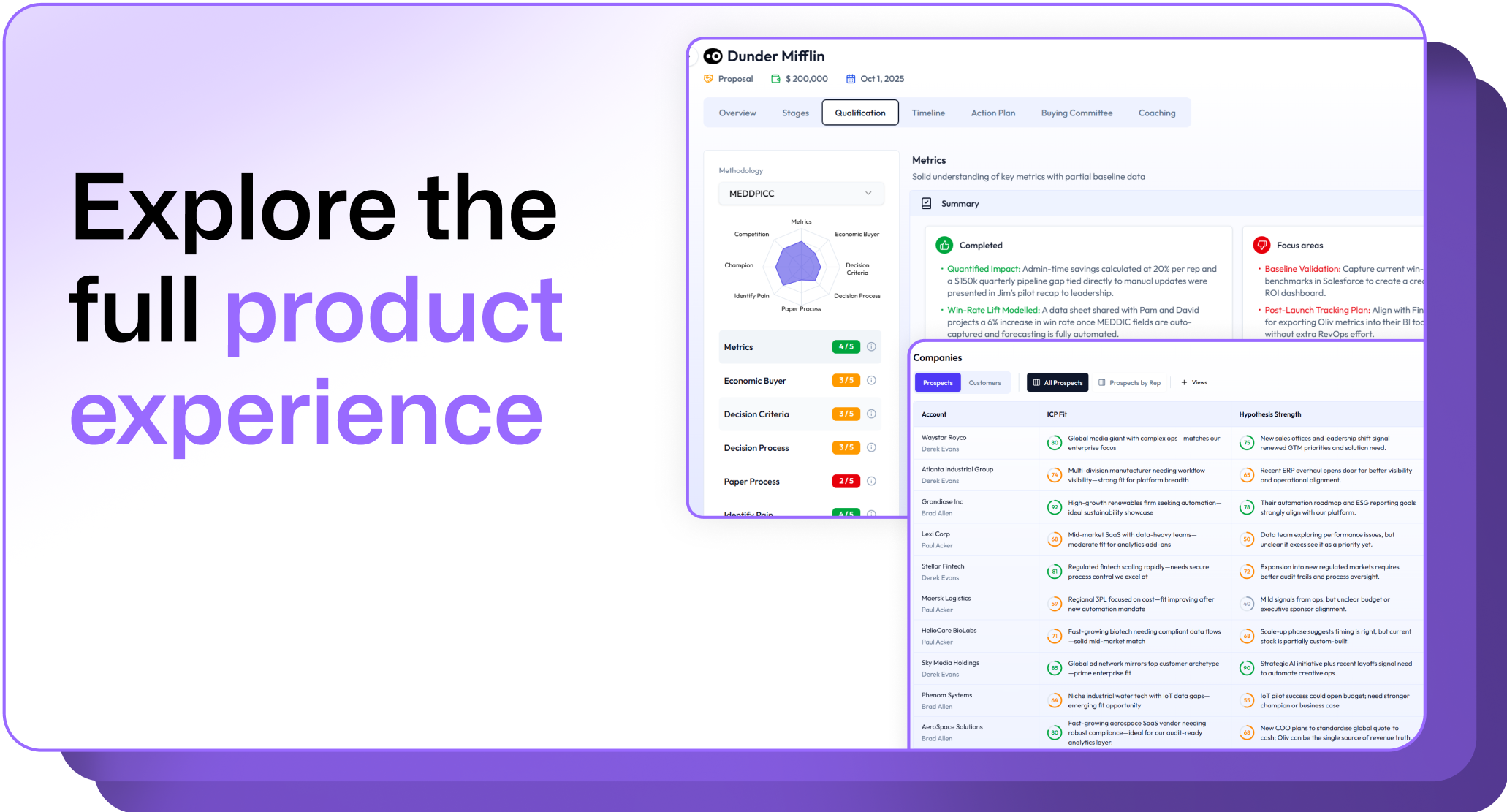
.avif)
.png)





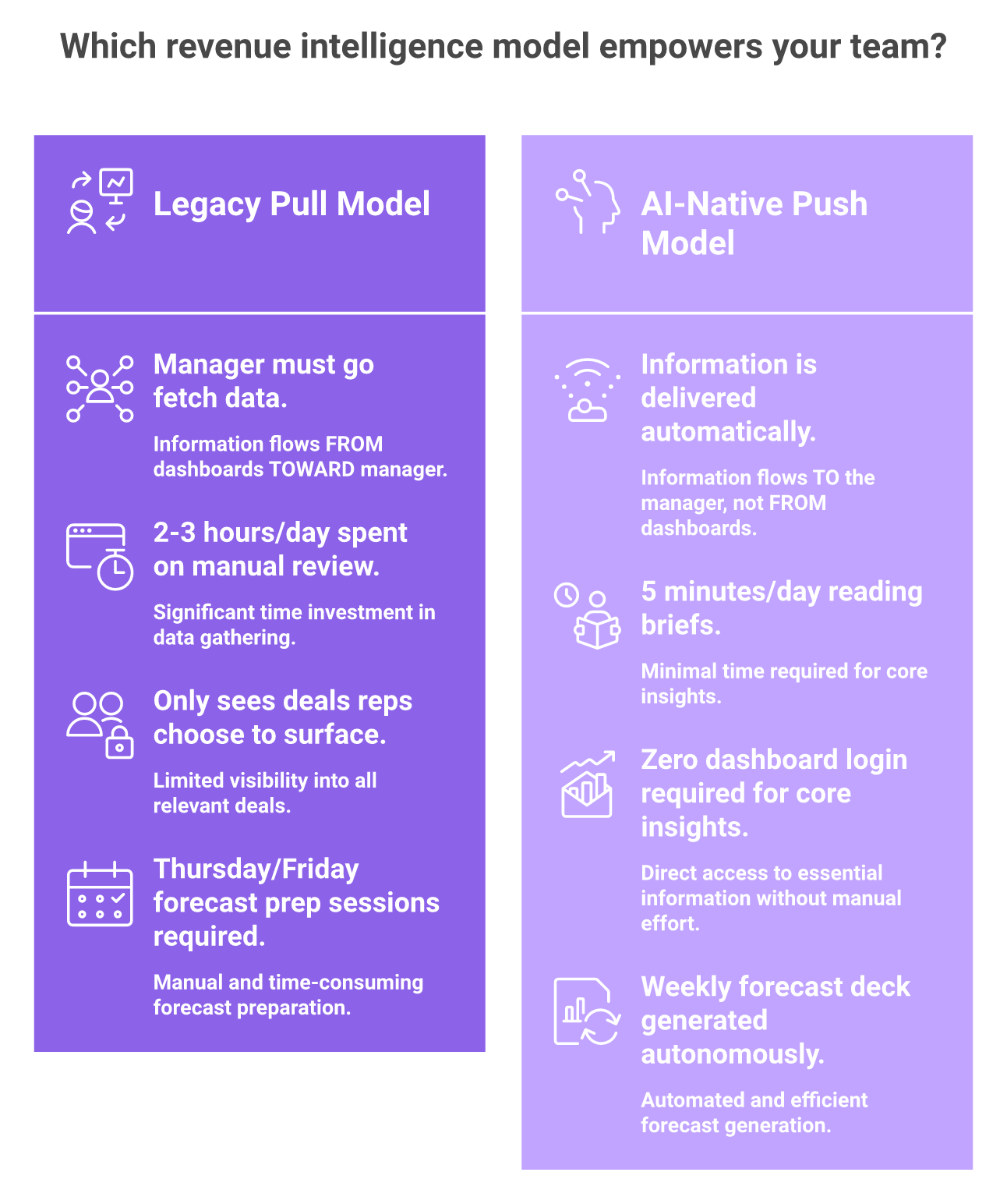

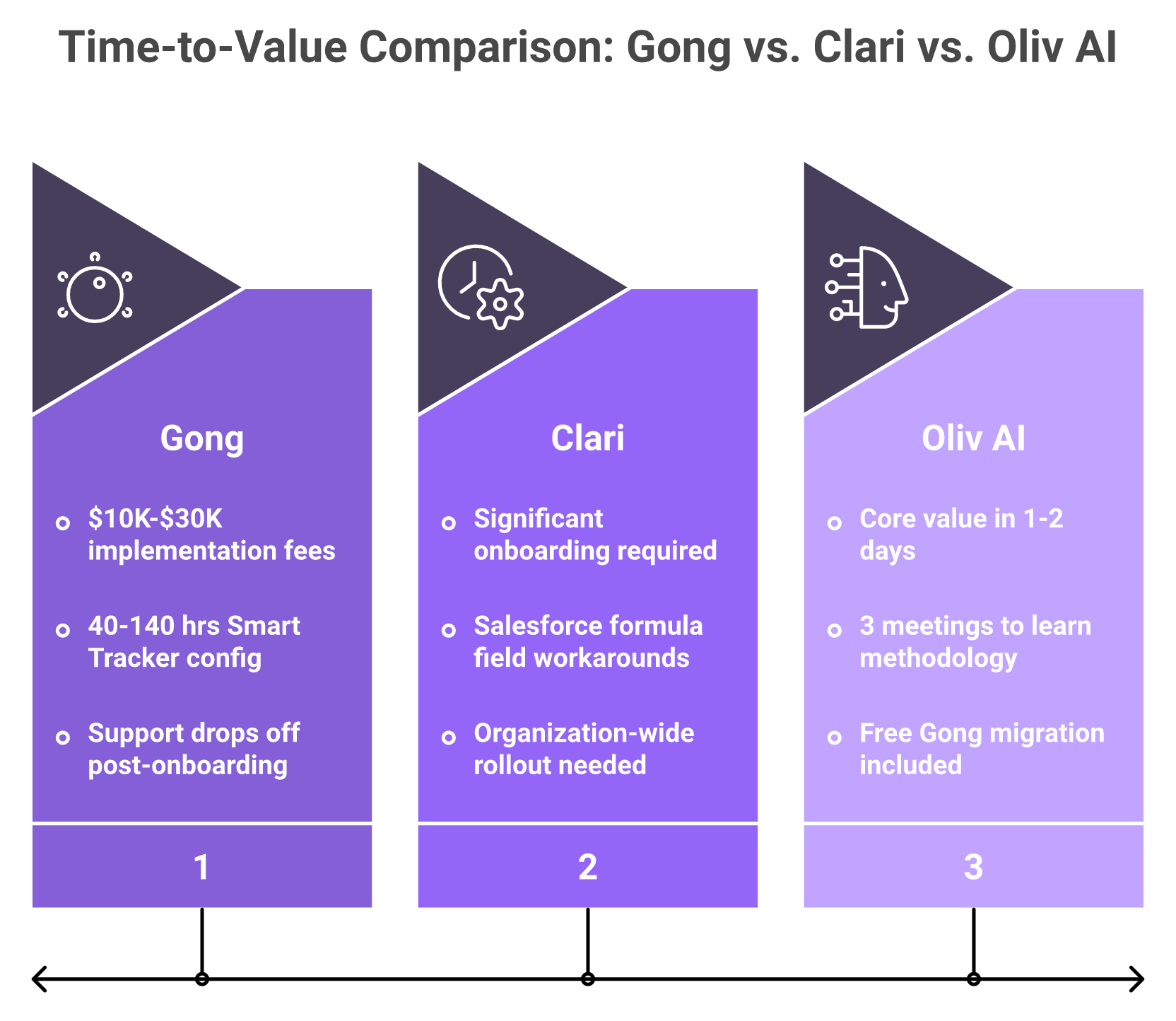
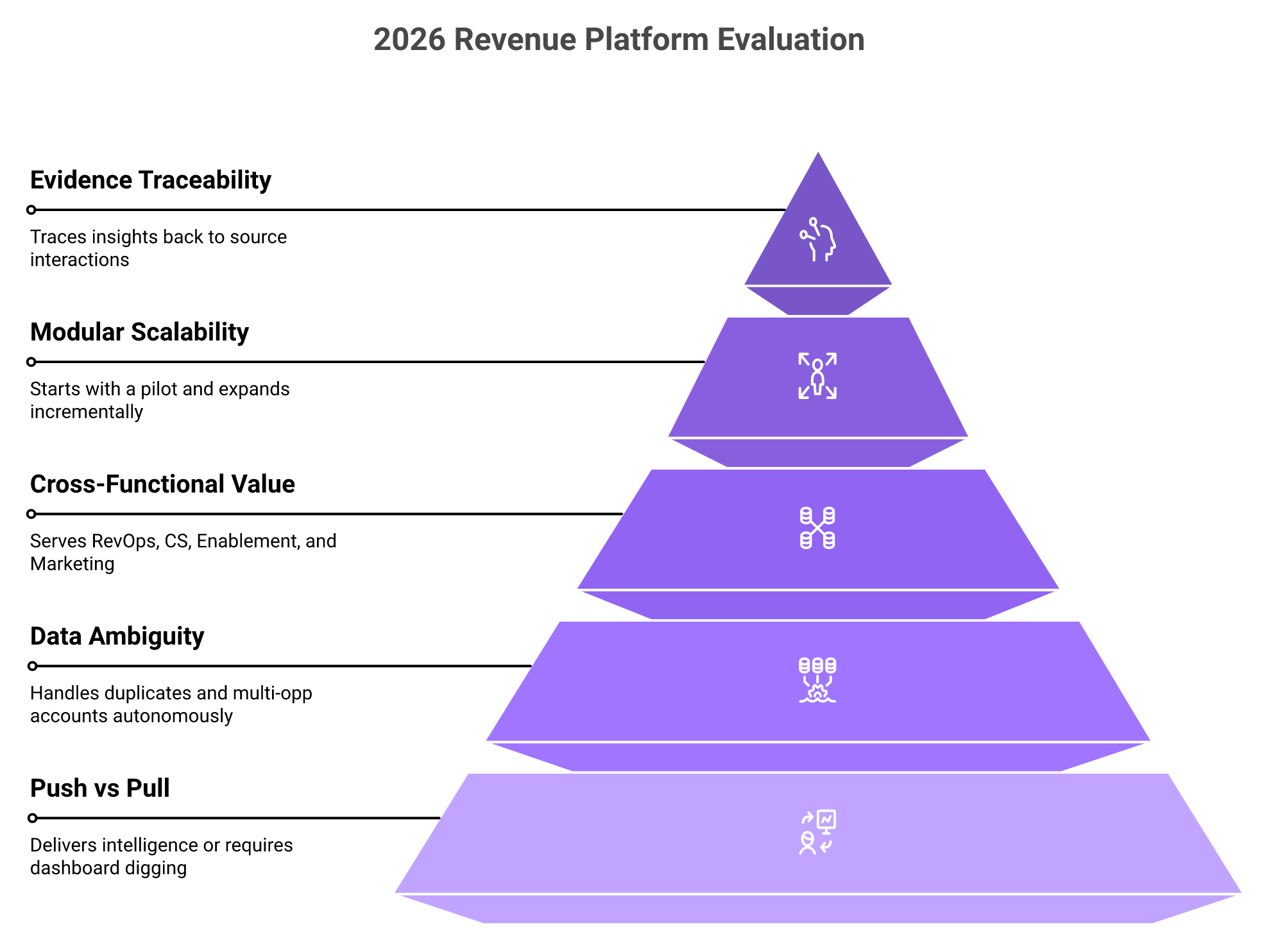

.png)