10 Best Customer Conversation Analytics Software in 2026: Call Analysis, Sentiment, Trend Detection, and CRM Sync
Written by
Ishan Chhabra
Last Updated :
August 4, 2026
Skim in :
13
mins
In this article
Revenue teams love Oliv
Here’s why:
All your deal data unified (from 30+ tools and tabs).
Insights are delivered to you directly, no digging.
AI agents automate tasks for you.
Thank you! Your submission has been received!
Oops! Something went wrong while submitting the form.
Meet Oliv’s AI Agents
Hi! I’m, Deal Driver
I track deals, flag risks, send weekly pipeline updates and give sales managers full visibility into deal progress
Hi! I’m, CRM Manager
I maintain CRM hygiene by updating core, custom and qualification fields all without your team lifting a finger
Hi! I’m, Forecaster
I build accurate forecasts based on real deal movement and tell you which deals to pull in to hit your number
Hi! I’m, Coach
I believe performance fuels revenue. I spot skill gaps, score calls and build coaching plans to help every rep level up
Hi! I’m, Prospector
I dig into target accounts to surface the right contacts, tailor and time outreach so you always strike when it counts
Hi! I’m, Pipeline tracker
I call reps to get deal updates, and deliver a real-time, CRM-synced roll-up view of deal progress
Hi! I’m, Analyst
I answer complex pipeline questions, uncover deal patterns, and build reports that guide strategic decisions
TL;DR
The 10 best customer conversation analytics platforms in 2026 are Oliv AI, Gong, Avoma, Clari, Salesloft, ZoomInfo (Chorus), Fathom, Otter.ai, CallMiner, and Observe.AI.
Scoring uses five weighted criteria: deal-level intelligence at 30%, CRM write-back depth at 25%, and verified reviews, setup speed, and pricing transparency at 15% each.
The category splits into meeting-level scoring and deal-level context, and verified G2 reviewers report some leading platforms cannot push MEDDIC values back into Salesforce.
Speech analytics, conversation intelligence, call QA, and conversation analytics are layers, not rivals, serving contact-centre volume problems or revenue visibility problems.
Pricing splits three ways in 2026: per-seat from $19 per user monthly, credit-based near $0.10 per agent action, and bundled enterprise suites near $250 per user.
Accuracy holds up on aggregate objection and competitor patterns but breaks on sarcasm, accents, crosstalk, and jargon, so validate on twenty of your own closed calls.
Q1. What are the 10 best customer conversation analytics software tools in 2026? [toc=1. 10 Best Tools]
The 10 best customer conversation analytics platforms in 2026 are Oliv AI, Gong, Avoma, Clari, Salesloft, ZoomInfo (Chorus), Fathom, Otter.ai, CallMiner, and Observe.AI. Oliv AI ranks first because it analyses conversations at the deal level rather than the meeting level, and writes qualification fields back into Salesforce, HubSpot, or Zoho within roughly five minutes of a call ending.
🚗 The audit that happens in the car
Most sales managers I talk to still audit calls in stolen moments. They listen on the drive in. They listen while the coffee brews.
That is not a coaching habit. That is a symptom. The insight lives inside recordings, and nobody has pushed it into the system where the work actually happens.
🎂 The three layers most buyers never separate
I think about this category as a three-layer cake. Layer one is baseline capture, which means recording and transcription. Zoom, Teams, and Google Meet now ship that natively, so it is close to free.
Layer two is the intelligence layer, where language models track qualification fields across a deal. Layer three is the agent layer, where the software produces the one-pager a VP actually reads on Monday. Rank any vendor by how many of those three layers it genuinely owns, not by how many logos sit on its integrations page.
The 10 best customer conversation analytics tools in 2026
Oliv AI ⭐⭐⭐⭐⭐ Best for deal-level analytics with automatic CRM write-back
Gong ⭐⭐⭐⭐ Best for large enterprise call libraries and theme analysis
Avoma ⭐⭐⭐ Best for meeting notes plus scoring on a mid-market budget
Clari ⭐⭐⭐ Best for forecast roll-ups where conversation data is secondary
Salesloft ⭐⭐ Best for sequencing teams already inside the Clari ecosystem
ZoomInfo (Chorus) ⭐⭐ Best for teams buying data and conversation capture together
Fathom ⭐⭐⭐ Best for free and low-cost meeting capture
Otter.ai ⭐⭐⭐ Best for general-purpose transcription outside sales
CallMiner ⭐⭐⭐⭐ Best for contact-centre compliance and QA at volume
Observe.AI ⭐⭐⭐⭐ Best for support agent scoring and CSAT programmes
Comparison table: call analysis, sentiment, trend detection, and CRM sync
Customer Conversation Analytics Tools Compared on Analysis Depth, Sentiment, Trend Detection, CRM Sync, and Pricing (2026)
#
Tool
Analysis depth
Sentiment
Trend detection
CRM write-back
Entry pricing
Rating
1
Oliv AI
Deal level, full cycle
Objections, competitor mentions, budget talk
Across accounts and pipeline
Bidirectional into Salesforce, HubSpot, Zoho
$19/user/mo
⭐⭐⭐⭐⭐
2
Gong
Meeting and account level
Yes
AI Theme Spotter across tens of thousands of calls
Data Extractor maps AI fields to CRM
Quote based
⭐⭐⭐⭐
3
Avoma
Meeting level
Yes
Keyword tracking, talk patterns
Standard CRM logging
Tiered, RI module priced separately
⭐⭐⭐
4
Clari
Forecast level
Copilot module
Limited
Reviewers report MEDDIC values cannot be pushed back
Quote based
⭐⭐⭐
5
Salesloft
Cadence and activity level
Basic
Limited
Salesforce sync
Quote based
⭐⭐
6
ZoomInfo (Chorus)
Meeting level
Yes
Yes
GTM Workspace sync
Quote based
⭐⭐
7
Fathom
Meeting level
Basic
Limited
Light CRM push
Free tier
⭐⭐⭐
8
Otter.ai
Transcript level
Basic
No
Minimal
Free tier
⭐⭐⭐
9
CallMiner
Contact-centre voice at scale
Acoustic and semantic
Strong
Contact-centre systems
Quote based
⭐⭐⭐⭐
10
Observe.AI
Agent and interaction level
Yes
Yes
Contact-centre systems
Quote based
⭐⭐⭐⭐
🧭 How to read this table before you shortlist
Two buyers land on this page, and they want opposite things. A CX leader wants CSAT, average handle time, and automated QA scoring across thousands of support calls.
A revenue leader wants to know if a deal is real. Rows 9 and 10 serve the first buyer well. Rows 1 through 6 serve the second, and most of them appear on any list of the best revenue intelligence software platforms.
Here is the open loop I will resolve later in this article. "Best" depends almost entirely on whether you need meeting-level scoring or deal-level context, and most buyers do not discover that difference until month three.
1.1 Oliv AI [toc=1.1 Oliv AI]
Oliv's record view extracts a $166K crossell from a VP's quoted remark about enterprise expansion, demonstrating trend detection that converts conversation signals into pipeline actions.
Oliv AI is a third-generation agentic revenue platform that deploys autonomous agents across the revenue lifecycle, from call prep through CRM updates to forecasting. It starts at $19 per user per month and connects to Salesforce, HubSpot, Zoho, and 70+ other tools.
⚙️ What it actually does
Oliv AI does not stop at a dashboard. Its agents prep calls, update CRM fields, flag deal risks, and draft follow-ups without being asked.
That distinction matters more than it sounds. Agents act, while assistants wait to be asked, which is the practical difference between a reporting tool and a genuine revenue orchestration platform.
🧩 Key features
Context Graph. A proprietary intelligence layer that ties conversation data to the correct CRM objects, backed by 100+ revenue-specific language models.
CRM Manager agent. Populates opportunity fields and custom methodology frameworks like MEDDPICC or MEDIC-BAND after each call, including the MEDDIC sales methodology.
Deal Driver agent. Watches every open deal and flags the ones that need attention.
Forecast agent. Builds weekly and monthly forecast roll-ups.
Analyst agent. Answers pipeline questions on one click, removing the RevOps ticket queue.
💰 Pricing and implementation
Pricing starts at $19 per user per month, and teams add agents one at a time instead of buying a suite on day one. That modularity is deliberate. SaaS is becoming a commodity, so it should be priced like one.
Setup is fast. One G2 reviewer completed it in five to fifteen minutes, and another was fully live in under a week with forward-deployed engineers assisting.
📅 Product timeline
Oliv AI Product Evolution from 2025 Through H1 2026 and Expected Next Releases
Period
What changed
Through 2025
Platform established as an AI-native revenue layer built on the Context Graph and 100+ fine-tuned revenue language models, positioned against Gen 2 conversation intelligence tools. See the Oliv AI G2 profile.
H1 2026 (Jan to Jul)
Six to seven named agents in production covering CRM updates, deal risk, forecasting, expansion, and analytics, with Chrome extension battlecards and no-signup recording share links reported by verified reviewers. See this June 2026 verified review.
Expected next
Deeper dashboard and report customisation, which is the most repeated request across recent reviews, plus a stronger mobile client. See this July 2026 verified review.
✅ Pros and ❌ cons
✅ Deal-level tracking across the full cycle, not isolated meeting scores
✅ Automatic bidirectional CRM write-back including custom methodology fields
✅ Entry pricing at $19 per user with modular agent add-ons
✅ Setup measured in minutes, not months
❌ Analytics and dashboards are not yet deeply customisable
❌ The mobile app lags the desktop experience
❌ Occasional slowness reported by multiple reviewers
🎯 Best use case
Mid-market B2B revenue teams running 200 to 5,000 employees with a real RevOps function. It is a weak fit for pure B2C support deflection or teams that only want a recorder, and it sits closer to the best AI for sales calls category than to plain transcription.
⭐ What real users say
"I love how Oliv AI goes beyond simple call transcription to actually interpret and extract actionable insights from every interaction. The AI surfaces objections, competitor mentions, and budget discussions automatically." Verified User, SalesOliv AI G2 Verified Review 08 Jul 2026
"The Driver agent watches all my deals and flags any that are at risk, so I don't have to spend hours listening to recordings in tools like Gong and Clari." Verified User, SalesOliv AI G2 Verified Review 17 Jun 2026
"I'd love to see few more options to customize dashboards and reports for different teams." Verified User, SalesOliv AI G2 Verified Review 26 Jun 2026
Oliv AI takes position one on one measurable basis: it operates at the deal level, tracking pipeline movement, coaching, and forecasting across the full cycle, with post-call CRM updates landing in roughly five minutes rather than the 20 to 30 minute window typical of legacy conversation intelligence.
1.2 Gong [toc=1.2 Gong]
Gong's board plots interaction density per account beside usage and revenue data, letting teams read engagement patterns from conversations rather than manually logged CRM notes .
Gong is the category-defining conversation intelligence platform, founded in 2015 on call recording, transcription, and AI deal insight. It repositioned as a Revenue AI Platform in 2024 and now markets itself as a Revenue AI Operating System.
🏢 What it actually does
Gong captures calls, emails, and meetings, then applies AI trackers, briefs, and scorecards on top. Its 2026 stack centres on Gong Assistant, Agent Studio, AI Trainer, AI Theme Spotter, and Data Extractor.
The library depth is genuinely strong. AI Theme Spotter analyses tens of thousands of calls to surface patterns, and the wider Gong features set remains the most complete in Gen 2 conversation intelligence.
🧩 Key features
AI Theme Spotter. Pattern detection across very large call volumes, extended to 50,000 calls in March 2025.
Data Extractor. Automatically extracts AI data fields from conversations and maps them to the CRM.
Agent Studio. Central management for Gong's AI agents, shipped July 2025.
AI Call Reviewer. Automated scorecards for consistent call review at scale, shipped August 2025.
Gong Enable. Native coaching and training layer launched under Mission Andromeda.
💰 Pricing and implementation
Gong does not publish list pricing, and no primary-source seat cost is disclosed on its own channels. In June 2025, it added visible per-seat pricing inside the admin centre for eligible direct-purchase accounts, a shift covered in detail in our breakdown of Gong pricing.
In practice, bundled Gong contracts land near the high end of the category once conversation intelligence, Engage, and Forecast are combined. Implementation is heavier than the lightweight tools, and tracker configuration is a known friction point across the typical Gong implementation timeline.
📅 Product update timeline
Gong Product Updates from 2024 Through February 2026 and Announced Roadmap Items
Period
What changed
2024 through mid-2025
Smart Tracker accuracy improvements, Revenue Analytics dashboards, SPICED and BANT playbook tracking in all languages, and the Revenue AI Platform rebrand.
Jul 2025 to Feb 2026
Agent Studio for managing AI agents (Jul 2025), AI Call Reviewer scorecards (Aug 2025), Theme Spotter and Data Extractor (Dec 2025), then Mission Andromeda launching Gong Enable on 25 Feb 2026.
Announced, not yet shipped
Bidirectional MCP server support so external AI platforms can query Gong accounts and generate briefs, plus brief generation via API.
✅ Pros and ❌ cons
✅ Deepest call library and theme analysis in the category
✅ Mature Salesforce app and a 250+ partner integration ecosystem
✅ Strong enterprise trust posture, with a Chief Trust Officer appointed in August 2025
❌ Reviewers report limits getting data back into Salesforce
❌ Bulk data export is gated behind plan upgrades
❌ Tracker and keyword setup is difficult to configure
❌ Data access ends when the contract ends
🎯 Best use case
Large enterprise teams with a dedicated enablement function and budget to match. It is a poor fit for a 25-rep team that mainly needs accurate CRM hygiene, which is why smaller teams increasingly evaluate Gong alternatives before renewal.
⚠️ The honest limitation
Call recording is now commoditised by Zoom, Teams, and Google Meet. If recording is all you need, you do not need Gong at all, and that is the uncomfortable question every renewal conversation now starts with.
⭐ What real users say
"I appreciate how Gong organizes all our chats, videos, and audio with clients into a single source... I found the AI tracker setup to be quite difficult... I cannot download all the data myself unless we upgrade the plan." Verified User, SalesGong G2 Verified Review 03 Oct 2025
"The meeting recordings, ease of use and info sharing and the AI enrichement capabilities... The fact that you cant't edit a recording... and the fact that if you stop working with thew tool you lose the data." Verified User, SalesGong G2 Verified Review 19 Mar 2026
"Being able to sequence our steps, along with integration with Nooks/Salesforce... limitations of getting data back into salesforce." Verified User, SalesGong G2 Verified Review 21 May 2026
Oliv AI's read on Gong is narrower than the usual critique. Gong owns layers one and two of the cake extremely well, and its 2026 agent roadmap is real. The gap sits at the export boundary, where insight has to become an updated CRM field, and that is precisely where Oliv AI's agents were built to operate.
1.3 Avoma [toc=1.3 Avoma]
Avoma posts churn and deal-risk alerts into Slack with quoted buyer objections plus corrective talk tracks, turning customer conversation analytics into immediate action for account owners.
Avoma is an AI meeting assistant that records, transcribes, and scores customer calls, then syncs notes into CRMs like Salesforce. It sits in the middle of the market, cheaper than Gong and deeper than a plain notetaker.
🗂️ What it actually does
Avoma handles the meeting lifecycle end to end. It builds agendas, joins calls, transcribes, summarises, and scores.
The scoring customisation is genuinely flexible, which is rare at this price point. Multi-team management is also handled well inside one workspace, and the wider Avoma features set covers most mid-market coaching needs.
🧩 Key features
AI note taking and smart templates. Structured notes generated against a pre-set agenda template.
Ask Avoma. Natural language search across past conversations to retrieve deal specifics.
Keyword tracking and talk patterns. Tracks phrases and talk-to-listen ratios across calls.
Call scoring. Customisable scorecards per team.
Live copilot. In-call assistance during demos.
AI forecasting assistant. A separate revenue intelligence module.
💰 Pricing and implementation
Avoma splits its stack into a base AI Meeting Assistant and a paid conversation and revenue intelligence module. Reviewers call the base tier reasonably priced, while the advanced module is described as expensive to carry as a recurring cost.
Implementation is light. Connect the calendar, connect the CRM, and the bot starts joining calls.
📅 Product update timeline
Avoma Product Updates Through 2025, the 2026 Release Cadence, and Expected Next Steps
Period
What changed
Through 2025
Core assistant matured with generative AI v3 on GPT-4, smart templates for instant agendas, speaker identification improvements, and the AI forecasting assistant.
Oct 2025 to Apr 2026
Product updates shipped through the Avoma Insider release cadence, extending scoring, forecasting, and meeting workflow tooling.
Expected next
Cross-meeting context linking, the single most repeated reviewer gap, plus transcription robustness on accented and noisy audio.
✅ Pros and ❌ cons
✅ Accurate transcription with reliable capture in normal audio conditions
✅ Flexible scorecard customisation across multiple teams
✅ Ask Avoma cuts the time spent hunting for historical deal context
❌ Summaries do not connect previous meetings with the same person, so earlier context is lost
❌ The notetaker sometimes fails to join or drops off mid-call
❌ Support is described as slow and unreliable
❌ The advanced revenue intelligence module is costly
🎯 Best use case
Small and mid-market teams that need solid meeting capture and coaching scorecards without an enterprise contract. It is a weaker fit for teams that need deal-level continuity across a six-month cycle, a pattern that runs through the broader Avoma user reviews and feedback.
⭐ What real users say
"I like the accuracy of the transcriptions, the way it manages different teams within the organization, and the flexibility of the scoring customization... It doesn't always capture the key points of the conversation, and it also doesn't connect previous meetings with the same person." Verified User, SalesAvoma G2 Verified Review 17 Mar 2026
"Apart from just transcripts, I liked Avoma's keyword tracking, talk patterns, call scoring, and even live copilot assistance... advanced conversation & revenue intelligence module is expensive to bear as a recurring cost." Verified User, SalesAvoma G2 Verified Review 21 Jan 2026
"Sometimes the notetaker does not join the call and sometimes randomly drops off. Support function is slow and not very reliable." Verified User, SalesAvoma G2 Verified Review 09 Dec 2025
1.4 Clari [toc=1.4 Clari]
Clari's retention view charts net dollar retention alongside AI answers about renewal blockers drawn from call discussion points, showing how conversation analytics surfaces churn risk early.
Clari launched in 2014 as a forecasting and pipeline platform, funded by Sequoia to solve forecast accuracy. Conversation intelligence arrived later through Copilot, and sales engagement arrived through the Groove acquisition in 2023.
📈 What it actually does
Clari is a forecasting tool first. Everything else was bolted on around that core.
It rolls up pipeline, runs weekly forecast calls, and inspects opportunity movement. Conversation analysis is a supporting act, not the headline, as our breakdown of Clari features sets out in detail.
🧩 Key features
Forecasting and inspection views. Weekly roll-ups, waterfall, and flow views for pipeline movement.
Copilot. The conversation intelligence layer, named a Strong Performer in Forrester's 2023 Conversation Intelligence Wave.
Enhanced CRM Score. Deal scoring combining CRM data, Copilot call data, and meeting data, shipped January 2025.
Account Summaries. Analyses emails and meetings to summarise account activity.
AI consent detection. Automatic recording compliance checks on Dialer calls, shipped November 2025.
💰 Pricing and implementation
Clari does not publish list pricing. A Forrester Total Economic Impact study commissioned by Clari reported $96.2 million in value and 398% ROI for a composite enterprise customer.
Treat that number carefully. Vendor-commissioned TEI studies model a composite organisation, not your org.
📅 Product update timeline
Clari Product Releases from January 2025 to March 2026 and the Salesloft Consolidation Roadmap
Period
What changed
Jan to Dec 2025
Enhanced CRM Score combining CRM, Copilot call, and meeting data (Jan), account summaries from emails and meetings (Apr), Studio Labs feature flagging plus one-sided call recording for two-party consent regions (Oct), and AI consent detection on Dialer (Nov).
Jan to Mar 2026
Merger with Salesloft completed, then the first cross-platform drop in March 2026: send AI emails from Clari, create Salesloft tasks, send follow-ups via Salesloft, and create tasks from call action items.
Expected next
Continued Clari and Salesloft platform consolidation under the Revenue Context positioning, with agent capabilities extended across both release trains.
✅ Pros and ❌ cons
✅ Clean, fast forecasting with strong Salesforce integration
✅ Genuinely useful weekly forecast and opportunity analysis workflow
✅ Easy initial setup reported by multiple reviewers
❌ Conversation intelligence lacks deal context against its own findings
❌ MEDDIC values cannot be written back to Salesforce from conversation intelligence
❌ No custom reporting
❌ Advanced Flow View and Waterfall View reported as not working well
⚠️ The write-back problem
This is the single most important line in any Clari evaluation. A July 2026 reviewer states plainly that MEDDIC values cannot be sent back to Salesforce from conversation intelligence.
If your qualification framework lives in the CRM, that gap is not cosmetic. It means a human still retypes the field, which is why teams running the MEDDIC sales methodology feel this limitation first.
🎯 Best use case
Enterprise finance-adjacent revenue teams whose primary problem is forecast roll-up, not conversation analysis. Teams that need both usually end up reviewing Clari alternatives and competitors.
⭐ What real users say
"The conversation intelligence tool is lacking, and we don't have the context of the deals against the conversation intelligence findings... The CRM writeback is not good; we cannot send MEDDIC values back to Salesforce." Verified User, SalesClari G2 Verified Review 13 Jul 2026
"I like Clari's visual design and the nice, clear style of word presentation. I enjoy being able to forecast easily without having to add up manually... UI sometimes not intuitive enough." Verified User, SalesClari G2 Verified Review 17 Dec 2025
"Clari forecasting is simple, easy to use, and well integrated with SFDC... The AI features are immature, team activity is poorly designed, and it doesn't integrate well with other popular business systems today." Verified User, SalesClari G2 Verified Review 10 Oct 2025
1.5 Salesloft [toc=1.5 Salesloft]
Salesloft was founded in Atlanta in 2011 around Cadence, its sequencing engine, and that remains the product nucleus. It acquired Drift in 2024 and merged with Clari in 2025.
📨 What it actually does
Salesloft is a sales engagement tool that added conversation features, not a conversation analytics platform that added engagement. The distinction shows up fast in evaluations, and it is the crux of most Gong vs Salesloft comparisons.
Its strength is cadence discipline. Sequences, templates, dialer, and follow-up tracking all live in one place.
🧩 Key features
Cadence. Multi-step email and call sequencing, the original engine.
Rhythm. Translates buyer signals into one prioritised workflow.
26 AI agents. Fifteen new agents launched May 2025 for end-to-end agentic support across the revenue cycle.
Salesloft MCP Server. Opens Salesloft data to external AI tools, shipped April 2026.
Chrome Side Panel. In-browser access to Salesloft workflows, shipped April 2026.
💰 Pricing and implementation
Pricing is quote based and now bundled with an Agentic add-on tier. Implementation is where the complaints cluster. One reviewer states flatly that initial setup was not easy.
📅 Product update timeline
Salesloft Product Milestones from the Drift Acquisition Through the April 2026 Release
Period
What changed
2024 to mid-2025
Drift acquisition (Feb 2024) added buyer-side conversational AI, followed by influence metrics for cadence outcomes and Bionic Chatbot guided testing in Feb 2025.
May 2025 to Apr 2026
Fifteen new AI agents launched in May 2025 taking the total to 26, then the April 2026 release added the Salesloft MCP Server, Chrome Side Panel, Sales Strategist with Knowledge Library, and Log a Meeting on Demand.
Expected next
Deeper Clari interoperability through cross-platform Plays, Tasks, and AI Email under the combined Revenue AI positioning.
✅ Pros and ❌ cons
✅ Organises outreach at scale so follow-ups do not slip
✅ Cadences and templates centralised in one place
✅ MCP server signals genuine openness to external AI tooling
❌ UX repeatedly described as clunky and overwhelming
❌ Dialer slow to launch and browser extension goes stale
❌ Analytics such as email opens reported as faulty
❌ Difficulty logging meetings, and integration described as still having kinks
🎯 Best use case
High-volume outbound teams that already run Clari and want sequencing in the same contract. It is not a conversation analytics purchase, and it belongs in a different bucket from the revenue intelligence platforms on this list.
⭐ What real users say
"Salesloft helps organize outreach at scale and keeps follow-ups from falling through the cracks... I often have trouble logging meetings, and certain features feel clunky or overly manual." Verified User, SalesSalesloft G2 Verified Review 24 Sep 2025
"The UX is horrible, the features don't work, it's not clear, I waste a lot of time on the software and I am extremely frustrated. The initial setup of Salesloft was not easy." Verified User, SalesSalesloft G2 Verified Review 05 Jan 2026
"A handful of features don't work properly (inbound calls, task reminders, data connectivity between apps)... Analytics/metrics are faulty like email opens." Verified User, SalesSalesloft G2 Verified Review 26 Mar 2025
1.6 ZoomInfo (Chorus) [toc=1.6 ZoomInfo Chorus]
Chorus.ai launched in 2015 as a conversation intelligence platform that captures and analyses customer calls, meetings, and emails. ZoomInfo acquired it in July 2021 to fuse conversation data with its B2B contact graph.
🔗 What it actually does
The pitch is data plus conversations in one contract. Chorus records and analyses calls, and ZoomInfo supplies the contact and company intelligence around them.
That bundle is the main reason teams buy it. The conversation layer rarely wins on its own merits, a point covered in our Gong vs Chorus comparison.
🧩 Key features
Call capture and analysis. Recording, transcription, and analysis across calls, meetings, and emails.
Coaching and visibility. Behaviour change tooling for GTM teams.
GTM Workspace. The current ZoomInfo surface where contact data and conversation data meet.
Contact graph enrichment. Company and contact data attached to conversation records.
💰 Pricing and implementation
Pricing is quote based and typically bundled with a ZoomInfo data seat. That bundling is exactly why the conversation layer gets underweighted during evaluation.
📅 Product update timeline
ZoomInfo and Chorus.ai Timeline from the 2021 Acquisition to the 2026 GTM Workspace Position
Period
What changed
2021 through 2025
ZoomInfo acquired Chorus.ai in July 2021, then progressively folded conversation intelligence into its broader go-to-market data surface rather than shipping it as a standalone innovation line.
Current state 2026
Chorus is positioned inside GTM Workspace, where conversation capture sits alongside contact and company data, with reviewer complaints concentrated on data accuracy rather than call analysis.
Expected next
Continued consolidation of Chorus capabilities into the GTM Workspace surface rather than independent conversation intelligence releases.
✅ Pros and ❌ cons
✅ Conversation capture and contact data in a single vendor relationship
✅ Long-established call analysis engine dating to 2015
✅ Useful when enrichment is the primary purchase and calls are secondary
❌ Reviewers report contact data that is frequently outdated or inaccurate
❌ Phone numbers, job titles, revenue, and employment status flagged as stale
❌ Users report needing other tools to verify what the platform shows
❌ Innovation pace on the conversation layer has slowed since acquisition
🎯 Best use case
Teams whose main spend is B2B contact data and who want call recording included rather than bought separately. If conversation depth is the priority, a dedicated sales intelligence platform is the better comparison set.
⭐ What real users say
"Always outdated for phone numbers, job titles, revenue, current employment. I find I have to use other tools to make sure that what Zoominfo is showing me is even some what right." Verified User, SalesGTM Workspace by ZoomInfo G2 Verified Review 16 Oct 2025
1.7 Fathom [toc=1.7 Fathom]
Fathom is a free-to-start AI meeting recorder that transcribes calls and generates summaries. It is the cleanest entry point for teams testing whether conversation capture is worth paying for at all.
🎁 What it actually does
Fathom records, transcribes, and summarises. That is the whole product, and it does it well.
There is no deal intelligence layer. There is no forecast roll-up.
✅ Pros and ❌ cons
✅ Genuinely usable free tier
✅ Fast, clean summaries with minimal setup
✅ Popular with founder-led sales teams under 10 reps
Founder-led and early-stage teams that need notes, not analytics.
1.8 Otter.ai [toc=1.8 Otter.ai]
Otter.ai is a general-purpose transcription service used across sales, research, journalism, and internal meetings. It is not a sales tool, and it does not pretend to be.
📝 What it actually does
Otter transcribes and summarises any meeting. Its strength is breadth of use, not revenue depth.
Sales teams often start here and outgrow it within two quarters, usually moving to one of the best AI sales tools built for pipeline work.
✅ Pros and ❌ cons
✅ Accurate general-purpose transcription
✅ Free tier and low-cost paid plans
✅ Works across every meeting type, not just sales calls
❌ No sentiment, objection, or competitor tracking built for revenue
❌ Minimal CRM integration
❌ No deal or pipeline context whatsoever
🎯 Best use case
Cross-functional teams that need transcription across all meetings, not conversation analytics for a pipeline.
1.9 CallMiner [toc=1.9 CallMiner]
CallMiner is a contact-centre conversation analytics platform built for voice at very high volume. It serves a different buyer from every sales tool above.
🎧 What it actually does
CallMiner analyses entire call estates for compliance, risk, and quality. It combines acoustic signals such as tone and silence with semantic analysis of what was said.
This is the tool you buy when you have thousands of support calls a day.
✅ Pros and ❌ cons
✅ Deep compliance and risk monitoring across full call volume
✅ Combined acoustic and semantic analysis
✅ Mature automated QA scoring for large agent populations
❌ Not designed for B2B deal cycles or opportunity tracking
❌ Enterprise pricing and implementation timelines
❌ Overpowered for a 50-rep sales team
🎯 Best use case
Regulated contact centres tracking compliance, CSAT, and average handle time at scale.
1.10 Observe.AI [toc=1.10 Observe.AI]
Observe.AI is a contact-centre platform focused on agent performance, automated QA, and customer experience scoring. Like CallMiner, it serves the support side of the house.
🧑💼 What it actually does
Observe.AI scores agent interactions and drives coaching programmes for support teams. It ties conversation analysis to CSAT and resolution metrics.
The output is an agent scorecard, not a deal-risk flag, so it does not compete with the best sales coaching software used by quota-carrying teams.
✅ Pros and ❌ cons
✅ Strong automated QA scoring across support interactions
✅ Clear links between conversation data and CSAT or resolution outcomes
✅ Purpose-built coaching workflows for large agent teams
❌ No pipeline, forecast, or opportunity intelligence
Support organisations running formal QA and coaching programmes across dozens or hundreds of agents.
🧠 What this list actually tells you
Six of these ten tools are strong at capture. Very few are strong at consequence.
The category has quietly split into two jobs. One is understanding a conversation. The other is changing what happens in the CRM because of it.
Oliv AI's read is that the standard shortlist gets this backwards. Buyers compare transcription accuracy and sentiment dashboards, then discover in month three that the deal-level write-back gap is the thing costing them forecast accuracy, which is exactly the criterion we score hardest in the next section.
Q2. How did we score these tools? Our selection criteria and methodology [toc=2. Scoring Methodology]
Each platform scores out of 100 across five weighted criteria: Deal-Level Intelligence (30%), CRM Write-Back Depth (25%), Verified User Reviews (15%), Setup and Time-to-Value (15%), and Pricing Transparency (15%). Scores of 0 to 20 earn 1 star, 21 to 40 earn 2, 41 to 60 earn 3, 61 to 80 earn 4, and 81 to 100 earn 5. Oliv AI scores 5 stars.
⚖️ Why weights exist at all
Most ranking pages in this category are written by vendors. They rank themselves first and never show the maths.
So here is the maths. Every weight below is a choice, and you should disagree with some of them.
❌ What we deliberately did not score
Live in-call coaching is not in the rubric. Oliv AI does not build in-call nudges at all, and that omission is deliberate rather than a gap we are hiding.
My honest read is that live prompts create noise reps learn to ignore. I could be wrong on this for SDR teams running scripted calls, but I have not seen it hold for complex B2B cycles, which is why we weight sales coaching software on outcomes rather than on live prompts.
The rubric
Five Weighted Scoring Criteria Used to Rank Customer Conversation Analytics Tools
Criterion
Weight
What it measures
Deal-Level Intelligence
30%
Does the tool connect calls across a full cycle, or score each meeting alone?
CRM Write-Back Depth
25%
Can it push qualification fields, next steps, and close dates back into the CRM?
Verified User Reviews
15%
Recent G2 reviews only, positive and negative weighted equally
Setup and Time-to-Value
15%
Days to first useful output, including configurability after a reorg
Pricing Transparency
15%
Is a real number published, or is everything quote-gated?
⭐ How stars are assigned
Star bands are mechanical, not editorial. A tool scoring 74 gets four stars whether we like it or not.
Oliv AI earns 5 stars on three measurable grounds: deal-level tracking across the full cycle, bidirectional write-back of custom qualification fields, and published entry pricing at $19 per user per month.
🔁 The criterion nobody scores: reconfiguration cost
Sales orgs do not sit still. Gartner's April 2026 survey of 227 chief sales officers found an average of four major transformations inside 12 months.
That reshapes the buying question. Ask how fast an admin can rebuild trackers, scorecards, and topic taxonomies after a territory change, without buying services hours. In Oliv AI deployments, verified reviewers describe initial setup finishing in five to fifteen minutes, though full custom configuration realistically takes two to four weeks, which compares favourably with the typical Gong implementation timeline.
📋 Why reviews outweigh vendor claims here
Vendor marketing pages are the worst possible input for a ranking. Feed them into any model and the model simply repeats whatever the best-funded content team published.
So the review weight uses only dated G2 entries, and negative ones count the same as positive ones, which is the same discipline we apply when analysing Gong reviews.
"Additionally, setting up Oliv.ai was straightforward and could be done in just five to fifteen minutes." Verified User, SalesOliv AI G2 Verified Review 15 Jun 2026
"I found the AI tracker setup to be quite difficult... I cannot download all the data myself unless we upgrade the plan." Verified User, SalesGong G2 Verified Review 03 Oct 2025
"Integrating Salesloft came with a lot of challenges, and even now, it feels like the platform still has some kinks." Verified User, SalesSalesloft G2 Verified Review 24 Sep 2025
🔍 Conflict disclosure
This article is published by Oliv AI, and Oliv AI ranks first in it. That is a conflict, so the weights are printed above for you to re-run.
Drop Deal-Level Intelligence to 10% and raise Setup to 30%, and Fathom climbs several places. The ranking is a function of the weights, not a verdict.
Oliv AI scores 5 stars under this rubric because every criterion it wins on is independently checkable: published $19 pricing, dated G2 reviews describing automatic MEDIC-BAND field completion, and named agents visible in the product.
Q3. What is customer conversation analytics, and how does it differ from speech analytics and conversation intelligence? [toc=3. Definition and Categories]
Customer conversation analytics is the process of analysing calls, meetings, emails, and chats using natural language processing, sentiment analysis, intent recognition, and topic extraction to produce measurable insight. Speech analytics finds keyword and acoustic patterns across voice volume, conversation intelligence interprets individual conversations across voice and text, and call QA applies a fixed rubric. They are layers, not rivals.
🧱 The plain-English version
Natural language processing (NLP) simply means software reading language the way it is actually spoken. Sentiment analysis means scoring the emotional tone of that language.
Put those together across every customer conversation, and you get a searchable, measurable record of what customers actually say.
The six stages, walked through one discovery call
Take a Tuesday discovery call with a VP of RevOps at a 400-person company.
Capture. The call is recorded from Zoom, Teams, or Meet.
Transcribe. Audio becomes text with speakers separated.
Clean. Filler words, crosstalk, and duplicate segments are normalised.
Analyse. Models extract entities, sentiment, intent, objections, and topics.
Insight. Those extractions become metrics, summaries, and risk flags.
Write-back and retrain. Results land in the CRM, and the models improve on new data.
⚠️ Where most tools quietly stop
Stages one through five are now table stakes. Stage six is where the category splits.
Analytics that ends at a dashboard is a reporting tool. Analytics that ends at an updated CRM field is an operating tool, and that is the difference buyers feel in month three.
The four labels, untangled
Speech Analytics, Conversation Intelligence, Call QA, and Conversation Analytics Compared by Scope and Method
Category
Scope
Primary method
Best used for
Speech analytics
Voice calls at high volume
Acoustic patterns, keyword spotting, tone and silence
Contact-centre compliance and risk monitoring
Conversation intelligence
Voice and text, one conversation at a time
Semantic analysis, scoring, categorisation
Sales coaching and call review
Call QA
Sampled agent interactions
Fixed quality rubric applied per call
Agent performance management
Conversation analytics
All channels, aggregated and per-deal
NLP, sentiment, intent, topic extraction
Trend detection and revenue visibility
📚 Three generations, not three competitors
Systems of record came first, roughly 2010 to 2020. They stored what humans typed.
Conversation intelligence followed, roughly 2020 to 2024, adding smart trackers and keyword detection. Those trackers are now previous-decade technology, because a generative model can answer open questions across an entire account without anyone pre-defining a keyword list, a shift we trace in our piece on the move from revenue ops to intelligence to orchestration.
🤖 What the third generation actually changes
The third generation, from 2025 onward, is agentic. Software does the task rather than reporting that the task exists.
Ask Oliv AI's CRM Manager agent to update an opportunity after a call, and it populates the qualification fields directly, including custom frameworks like MEDIC-BAND. Nobody opens a dashboard to copy a value across.
🧭 Which problem do you actually have?
Two very different buyers land on this definition, and the decision rule is simple.
Volume problem. Thousands of support calls daily, and you need CSAT, handle time, and QA coverage. Buy contact-centre analytics.
Visibility problem. Sixty open deals and no reliable read on which will close. Buy deal-level conversation analytics, which is the core job of the best revenue intelligence software platforms.
Both. Run one capture layer feeding two reporting surfaces, which is cheaper than two contracts.
I have watched teams buy the wrong one because a demo looked impressive. The demo always looks impressive. The question is what changes in your system of record on Wednesday.
Oliv AI sits in the third generation, where agents act on conversation data rather than handing a dashboard back to a human. Verified reviewers describe it updating CRM records, tracking deal stages, and drafting follow-up emails after each call, without a rep opening the tool.
Q4. Which use cases actually move the numbers, and which KPIs should you track? [toc=4. Use Cases and KPIs]
Conversation analytics moves distinct KPIs by function. On the support side, it drives CSAT, first-call resolution, average handle time, contact-reason volume, AutoQA scores, and complaint rate. On the revenue side, it moves win rate, ramp time, forecast variance, and expansion pipeline. Oliv AI's Driver agent flags at-risk deals so managers stop reviewing recordings manually.
🎧 The support column
Contact-centre teams use conversation data for a specific set of jobs. Each one attaches to a metric a director already reports on.
Deployments in 2026 report average handle time reductions in the 10% to 40% range, alongside compliance monitoring, churn prediction, and upsell detection.
📊 Support use cases and their KPIs
Contact Centre Conversation Analytics Use Cases and the Support KPIs They Move
Use case
KPI it moves
Automated QA scoring
AutoQA score, QA coverage rate
Contact driver analysis
Contact-reason volume, deflection rate
Compliance monitoring
Violation rate, audit pass rate
Churn and risk prediction
Retention, escalation drivers
Sentiment tracking
CSAT, customer effort score
Call summarisation
Average handle time, after-call work
💼 The revenue column
Revenue teams want something different. They want to know whether a deal is real before the quarter closes.
The signals that matter are objection density, competitor mentions, budget language, next-step clarity, and silence from the economic buyer. None of those show up in an activity count, which is why AI sales forecasting software built only on activity data keeps missing.
🚫 The activity volume trap
Most dashboards log an email as an activity and call it engagement. The AE and the prospect look busy.
What was actually said in those emails never surfaces. High activity on a dead deal is the most expensive false positive in pipeline management.
📈 Revenue use cases and their KPIs
Revenue Team Conversation Analytics Use Cases and the Pipeline KPIs They Move
Use case
KPI it moves
Deal risk flagging
Forecast variance, slipped deal rate
Objection and competitor tracking
Win rate, competitive win rate
Coaching consistency
Ramp time to first closed deal
Expansion signal detection
Net revenue retention, expansion pipeline
Automated CRM field capture
CRM completeness, forecast confidence
⏰ The Thursday scrub this replaces
Here is the workflow I hear described most often. Every Thursday and Friday, managers sit with each rep for one to two hours to reconstruct what moved.
They then retype it into a forecast for Monday. Multiply that by six reps and a manager has lost a working day to data archaeology, which is the exact task a revenue orchestration platform should absorb.
The other half of it happens in the car. Managers listen to calls on the commute, or while the coffee brews, because that is the only slot left.
🔄 One layer, two reporting surfaces
The market is split into CX tools and revenue tools, and almost nobody runs both from one dataset. That split is expensive.
Capture once. Route the support metrics to the CX dashboard and the deal signals to pipeline review. Gartner's April 2026 CSO survey found cross-functional enablement teams were 2.4 times more likely to achieve strong commercial growth.
💰 Invert the cost frame
The number every board deck reaches for is labour cost avoided. That number permanently parks conversation analytics on the cost side of the P&L.
Measure revenue influenced or preserved per conversation instead. It is a harder number to build and a much harder one to cut in a budget review, and it is the frame we recommend when comparing the best AI for sales calls.
"The Driver agent watches all my deals and flags any that are at risk, so I don't have to spend hours listening to recordings in tools like Gong and Clari." Verified User, SalesOliv AI G2 Verified Review 17 Jun 2026
"Our forecast accuracy has jumped by 27%, and onboarding was a breeze... the mobile app is a bit basic compared to the desktop platform." Verified User, SalesOliv AI G2 Verified Review 08 Jul 2026
"The conversation intelligence tool is lacking, and we don't have the context of the deals against the conversation intelligence findings." Verified User, SalesClari G2 Verified Review 13 Jul 2026
Oliv AI's Gold Digger agent surfaces expansion opportunities inside existing accounts, while the Driver agent flags at-risk deals, both reported by verified G2 reviewers in June 2026. The point is not the agent names. It is that a metric moves without a human first reading a dashboard.
Q5. Meeting-level or deal-level? Why CRM sync is where most platforms quietly stop [toc=5. CRM Sync and Deal Context]
Meeting-level analytics scores one call in isolation on talk ratio, sentiment, and keyword hits. Deal-level analytics connects every call, email, and stage change across the cycle. The decisive test is write-back: can the tool push a MEDDPICC field value, a next step, and a close-date change into Salesforce automatically? Verified G2 reviewers report some leading platforms cannot.
📞 The view everyone starts with
The standard belief is that better call analysis produces better sales outcomes. Record more, score more, coach more.
It is not wrong. It is just incomplete in a way that only shows up at quarter end.
⚠️ The activity volume fallacy
A meeting-level tool logs an email as an activity. The dashboard then shows the AE and the prospect looking highly engaged.
What was actually said inside those emails never surfaces. I have watched deals with beautiful activity graphs die because nobody noticed the economic buyer stopped replying three weeks ago.
🔗 What deal-level actually means
Deal-level analysis treats the opportunity as the unit, not the call. It stitches discovery, demo, security review, and pricing conversation into one narrative.
Oliv AI runs this at the deal level across calls, emails, and stage changes, so a signal from call two still informs the risk score on call six. That continuity is what a per-meeting score structurally cannot produce, and it is the dividing line across revenue intelligence platforms.
The write-back test
Write-back means the tool pushing structured values back into your CRM. It is the least glamorous capability in any demo and the one that decides whether the purchase works.
CRM Write-Back Capabilities Compared Across Meeting-Level and Deal-Level Analytics Tools
Capability
Meeting-level tools
Deal-level tools
Call summary logged to CRM
✅ Usually
✅ Yes
Qualification framework fields (MEDDPICC, BANT)
❌ Often manual
✅ Automatic
Next step and close date updated
❌ Rare
✅ Yes
Custom methodology fields
❌ Services engagement
✅ Configurable
Full data export without upgrade
❌ Frequently gated
Varies
🪤 The centre of the universe trap
Some platforms pull every conversation in and make export difficult. That is a dependency, not an integration.
One Gong reviewer put the consequence plainly: data cannot be downloaded without a plan upgrade, so the tool goes under-used. Another flagged limitations getting data back into Salesforce, a theme that recurs across Gong integrations.
🧾 What reviewers actually report
"The CRM writeback is not good; we cannot send MEDDIC values back to Salesforce or update fields in Salesforce from the conversation intelligence." Verified User, SalesClari G2 Verified Review 13 Jul 2026
"I cannot download all the data myself unless we upgrade the plan, which isn't ideal and results in me not fully utilizing Gong." Verified User, SalesGong G2 Verified Review 03 Oct 2025
"It's incredibly helpful with our custom sales methodologies like MEDIC-BAND, as it helps me fill all of them out." Verified User, SalesOliv AI G2 Verified Review 15 Jun 2026
🧹 The prerequisite nobody sells you
Write-back quality is capped by CRM hygiene. Duplicate accounts and orphaned opportunities will corrupt whatever the AI writes.
Salesforce's State of Sales research puts clean data as the top prerequisite for AI value, and I would go further. Fix duplicates before the pilot, not during it.
✅ Five questions for your RFP
Can you write to custom objects and custom fields, not just standard ones?
Does write-back run automatically after each call, or on a manual trigger?
Can we export all raw conversation data on our current plan?
What happens to our data if we do not renew?
Who reconfigures the taxonomy after a territory change, and at what cost?
Oliv AI writes qualification fields, next steps, and deal-health signals back into Salesforce, HubSpot, and Zoho automatically after every call, including custom frameworks like MEDIC-BAND per a June 2026 verified reviewer. My own bias is obvious here, so test the write-back on your own opportunity schema rather than taking my word for it, and compare it directly in a Gong vs Oliv evaluation.
Q6. How accurate is the AI, and what does compliant deployment require? [toc=6. Accuracy, Compliance, Governance]
Sentiment scoring is reliable for detecting objection density, competitor mentions, and pricing pushback across a large call set, but weak on sarcasm, accents, crosstalk, and jargon. Forecast accuracy remains the softest claim in the category. On compliance, two-party consent states and GDPR require participant consent, lawful basis, disclosure, and data residency before any recording is analysed.
✅ What the models genuinely get right
Aggregate pattern detection works. Across a few hundred calls, objection frequency and competitor mention rates are dependable signals.
Oliv AI runs on over 100 revenue-specific language models rather than one general model, which is why extraction of budget language and next steps holds up better than generic transcription tools.
❌ Where accuracy breaks
Natural language processing struggles with ambiguity, slang, and non-standard grammar, as IBM's own explainer documents. Four failure modes recur in practice.
Sarcasm. "Great, another security review" reads as positive sentiment.
Accents and code-switching. Transcription quality drops, a complaint Avoma reviewers raise directly.
Crosstalk. Two people talking at once produces garbled attribution.
Domain jargon. Product codenames get transcribed as nonsense.
📉 The forecast accuracy reality gap
Every vendor in this category claims a forecast lift. One Oliv AI reviewer reports a 27% jump in forecast accuracy, which is a real datapoint from a real deployment.
I would still treat single-customer numbers as directional. Clari's own 2026 labs research found 87% of enterprises missed 2025 revenue targets despite record AI adoption, which should temper everyone's claims including ours, and it is worth reading alongside our review of the best AI sales forecasting software.
🧪 How to validate in a two-week pilot
Do not trust a demo dataset. Run the tool on twenty of your own recorded calls where you already know the outcome.
Pick ten deals that closed and ten that died.
Score each on the tool's risk flags without telling it the outcome.
Count how many losses it flagged before the loss.
Read five transcripts line by line for jargon and name errors.
Check whether the CRM fields it wrote are ones you would have written.
⏰ The three-meeting calibration rule
Any platform claiming to learn your methodology should demonstrate it fast. Oliv AI typically calibrates to a team's sales methodology after roughly three meetings, and full custom configuration still takes two to four weeks.
Use three meetings as your benchmark for every vendor. If a tool cannot mirror your qualification framework after three calls, the setup burden sits with you permanently, whether you run Command of the Message or a homegrown framework.
Compliance checklist before rollout
Consent, Data Protection, and Certification Controls to Confirm Before Deploying Conversation Analytics
Control
What to confirm
Consent
Two-party consent states (California, Florida, and others) require all-party consent under CIPA-style statutes
Lawful basis
GDPR requires a documented lawful basis plus participant disclosure
Certifications
SOC 2 Type II, GDPR, and CCPA at minimum
Data residency
Where transcripts are stored and processed
Retention and exit
What happens to recordings if you leave, a real Gong DPA and security concern raised by reviewers
🔒 Governance as agents multiply
Gartner projects that up to 40% of enterprise applications will embed task-specific agents by 2026. That changes the governance question from access control to action control.
Ask three things: is every agent action logged, which actions require human approval, and can a rep see why an agent changed a field? An agent writing silently to your CRM is a compliance surface, not just a feature.
🙅 The friction nobody scores
External recording links that force prospects to register before watching are a real experience cost. Oliv AI shares recordings through links external participants open without creating an account, which sounds trivial until a CFO refuses to sign up, and it is a sharp contrast with standard Gong recording sharing.
"The only downside is that the platform can be a bit glitchy at times, but the support team is always quick to address and resolve any bugs." Verified User, SalesOliv AI G2 Verified Review 02 Jul 2026
"The 'Live Coaching' prompts can occasionally be a bit sensitive, sometimes it flags 'filler words' when I'm just pausing to let a customer finish a thought." Verified User, SalesClari G2 Verified Review 08 Apr 2026
Oliv AI holds SOC 2 Type II, GDPR, and CCPA certifications, and calibrates to your methodology after about three meetings. Both facts are checkable before you sign anything, which is the only kind of accuracy claim worth acting on.
Q7. What does it cost, and how do you get to value in 30 days? [toc=7. Pricing and 30-Day Rollout]
Pricing splits three ways in 2026: per-seat subscriptions from around $19 per user per month, credit-based action pricing near $0.10 per agent action, and bundled enterprise contracts reaching roughly $250 per user once conversation intelligence, engagement, and forecasting are combined. Oliv AI starts at $19 per user per month with agents added one at a time.
💰 The three pricing models
Per-seat is predictable and easy to budget. Credit-based pricing charges per agent action, roughly $0.10 each, which suits uneven usage.
Bundled enterprise deals look simplest and cost the most. Fully loaded suites reach around $500 per seat when every module is switched on, a pattern visible in published Gong pricing discussions.
💸 Hidden costs that surface in month four
Four line items rarely appear in the first quote.
Transcription overages once call volume exceeds the bundled minutes.
Connector licensing for CRMs, dialers, or data warehouses.
Export gated behind an upgrade, a complaint a Gong reviewer raised directly.
Services hours every time territories or scorecards get rebuilt.
Three-year TCO at 100 seats
Modelled Three-Year Total Cost of Ownership for a 100-Seat Revenue Team
Approach
Per user per month
3-year total
Bundled suite (CI + engagement + forecasting)
~$250
~$900,000
Point tools stitched together
~$180 to $500
$648,000 to $1.8M
Oliv AI base, agents added incrementally
$19 to $120
$68,400 to $432,000
Those are modelled ranges, not quotes. Run the same table with your actual seat count before any renewal conversation.
🧾 The renewal maths nobody runs
The "just buy Gong plus Clari plus Salesloft" playbook quietly drags total cost past $500 per user per month for a 25 to 200 rep team. That is a real number sitting against real headcount, and it is why buyers increasingly price out revenue orchestration platform tools as a single contract.
A buyer once came to me with 20 days before an August 4th renewal, fed up with pricing and looking for an exit. Twenty days is enough to migrate, but only if you know exactly which bottleneck you are solving.
🔧 Bottleneck theory beats big-bang rollout
Find one bottleneck. Deploy one agent against it. Validate the ROI. Then move to the next.
I split effort using a 10/80/10 rule: 10% ideation, 80% execution, and 10% integration and quality checking. Most failed rollouts invert that and spend 80% in planning workshops.
The 30-day rollout
Week 1: Audit where deal information goes missing. Owner: RevOps. Exit criterion: a written list of the five fields reps never fill in. Common failure: skipping this and blaming the tool later.
Week 2: Connect one CRM and calibrate. Owner: RevOps plus one AE. Exit criterion: three meetings processed and qualification fields populated correctly. Oliv AI setup is reported by verified G2 reviewers as taking five to fifteen minutes, though calibration to your methodology takes the full week.
Week 3: Deploy one agent. Owner: a sales manager, not IT. Exit criterion: one deal-risk flag that a human agreed with. Common failure: switching on six agents and drowning the team in notifications.
Week 4: Measure against week one. Owner: RevOps. Exit criterion: CRM field completeness up, and manager prep time down. Common failure: measuring adoption instead of outcomes.
LinkedIn's ROI of AI research found 38% of AI users save over 1.5 hours weekly and 69% report sales cycles shortening by about a week. Use those as sanity checks on your own numbers, alongside any shortlist of the best AI sales tools.
"It's more affordable compared to other options we previously used." Verified User, SalesOliv AI G2 Verified Review 23 Jun 2026
"Consolidating multiple tools into Oliv has saved us budget and increased our results." Verified User, SalesOliv AI G2 Verified Review 08 Jul 2026
Oliv AI prices from $19 per user per month, and nobody has to buy the full agent suite on day one. Start with the one bottleneck that costs you most.
What I keep turning over is whether per-seat pricing survives at all. If agents do the work, you are paying for outcomes, not logins, and I do not think the industry has priced that honestly yet. If you have run this maths for your own team, I would genuinely like to hear where you landed.
Q1. What are the 10 best customer conversation analytics software tools in 2026? [toc=1. 10 Best Tools]
The 10 best customer conversation analytics platforms in 2026 are Oliv AI, Gong, Avoma, Clari, Salesloft, ZoomInfo (Chorus), Fathom, Otter.ai, CallMiner, and Observe.AI. Oliv AI ranks first because it analyses conversations at the deal level rather than the meeting level, and writes qualification fields back into Salesforce, HubSpot, or Zoho within roughly five minutes of a call ending.
🚗 The audit that happens in the car
Most sales managers I talk to still audit calls in stolen moments. They listen on the drive in. They listen while the coffee brews.
That is not a coaching habit. That is a symptom. The insight lives inside recordings, and nobody has pushed it into the system where the work actually happens.
🎂 The three layers most buyers never separate
I think about this category as a three-layer cake. Layer one is baseline capture, which means recording and transcription. Zoom, Teams, and Google Meet now ship that natively, so it is close to free.
Layer two is the intelligence layer, where language models track qualification fields across a deal. Layer three is the agent layer, where the software produces the one-pager a VP actually reads on Monday. Rank any vendor by how many of those three layers it genuinely owns, not by how many logos sit on its integrations page.
The 10 best customer conversation analytics tools in 2026
Oliv AI ⭐⭐⭐⭐⭐ Best for deal-level analytics with automatic CRM write-back
Gong ⭐⭐⭐⭐ Best for large enterprise call libraries and theme analysis
Avoma ⭐⭐⭐ Best for meeting notes plus scoring on a mid-market budget
Clari ⭐⭐⭐ Best for forecast roll-ups where conversation data is secondary
Salesloft ⭐⭐ Best for sequencing teams already inside the Clari ecosystem
ZoomInfo (Chorus) ⭐⭐ Best for teams buying data and conversation capture together
Fathom ⭐⭐⭐ Best for free and low-cost meeting capture
Otter.ai ⭐⭐⭐ Best for general-purpose transcription outside sales
CallMiner ⭐⭐⭐⭐ Best for contact-centre compliance and QA at volume
Observe.AI ⭐⭐⭐⭐ Best for support agent scoring and CSAT programmes
Comparison table: call analysis, sentiment, trend detection, and CRM sync
Customer Conversation Analytics Tools Compared on Analysis Depth, Sentiment, Trend Detection, CRM Sync, and Pricing (2026)
#
Tool
Analysis depth
Sentiment
Trend detection
CRM write-back
Entry pricing
Rating
1
Oliv AI
Deal level, full cycle
Objections, competitor mentions, budget talk
Across accounts and pipeline
Bidirectional into Salesforce, HubSpot, Zoho
$19/user/mo
⭐⭐⭐⭐⭐
2
Gong
Meeting and account level
Yes
AI Theme Spotter across tens of thousands of calls
Data Extractor maps AI fields to CRM
Quote based
⭐⭐⭐⭐
3
Avoma
Meeting level
Yes
Keyword tracking, talk patterns
Standard CRM logging
Tiered, RI module priced separately
⭐⭐⭐
4
Clari
Forecast level
Copilot module
Limited
Reviewers report MEDDIC values cannot be pushed back
Quote based
⭐⭐⭐
5
Salesloft
Cadence and activity level
Basic
Limited
Salesforce sync
Quote based
⭐⭐
6
ZoomInfo (Chorus)
Meeting level
Yes
Yes
GTM Workspace sync
Quote based
⭐⭐
7
Fathom
Meeting level
Basic
Limited
Light CRM push
Free tier
⭐⭐⭐
8
Otter.ai
Transcript level
Basic
No
Minimal
Free tier
⭐⭐⭐
9
CallMiner
Contact-centre voice at scale
Acoustic and semantic
Strong
Contact-centre systems
Quote based
⭐⭐⭐⭐
10
Observe.AI
Agent and interaction level
Yes
Yes
Contact-centre systems
Quote based
⭐⭐⭐⭐
🧭 How to read this table before you shortlist
Two buyers land on this page, and they want opposite things. A CX leader wants CSAT, average handle time, and automated QA scoring across thousands of support calls.
A revenue leader wants to know if a deal is real. Rows 9 and 10 serve the first buyer well. Rows 1 through 6 serve the second, and most of them appear on any list of the best revenue intelligence software platforms.
Here is the open loop I will resolve later in this article. "Best" depends almost entirely on whether you need meeting-level scoring or deal-level context, and most buyers do not discover that difference until month three.
1.1 Oliv AI [toc=1.1 Oliv AI]
Oliv's record view extracts a $166K crossell from a VP's quoted remark about enterprise expansion, demonstrating trend detection that converts conversation signals into pipeline actions.
Oliv AI is a third-generation agentic revenue platform that deploys autonomous agents across the revenue lifecycle, from call prep through CRM updates to forecasting. It starts at $19 per user per month and connects to Salesforce, HubSpot, Zoho, and 70+ other tools.
⚙️ What it actually does
Oliv AI does not stop at a dashboard. Its agents prep calls, update CRM fields, flag deal risks, and draft follow-ups without being asked.
That distinction matters more than it sounds. Agents act, while assistants wait to be asked, which is the practical difference between a reporting tool and a genuine revenue orchestration platform.
🧩 Key features
Context Graph. A proprietary intelligence layer that ties conversation data to the correct CRM objects, backed by 100+ revenue-specific language models.
CRM Manager agent. Populates opportunity fields and custom methodology frameworks like MEDDPICC or MEDIC-BAND after each call, including the MEDDIC sales methodology.
Deal Driver agent. Watches every open deal and flags the ones that need attention.
Forecast agent. Builds weekly and monthly forecast roll-ups.
Analyst agent. Answers pipeline questions on one click, removing the RevOps ticket queue.
💰 Pricing and implementation
Pricing starts at $19 per user per month, and teams add agents one at a time instead of buying a suite on day one. That modularity is deliberate. SaaS is becoming a commodity, so it should be priced like one.
Setup is fast. One G2 reviewer completed it in five to fifteen minutes, and another was fully live in under a week with forward-deployed engineers assisting.
📅 Product timeline
Oliv AI Product Evolution from 2025 Through H1 2026 and Expected Next Releases
Period
What changed
Through 2025
Platform established as an AI-native revenue layer built on the Context Graph and 100+ fine-tuned revenue language models, positioned against Gen 2 conversation intelligence tools. See the Oliv AI G2 profile.
H1 2026 (Jan to Jul)
Six to seven named agents in production covering CRM updates, deal risk, forecasting, expansion, and analytics, with Chrome extension battlecards and no-signup recording share links reported by verified reviewers. See this June 2026 verified review.
Expected next
Deeper dashboard and report customisation, which is the most repeated request across recent reviews, plus a stronger mobile client. See this July 2026 verified review.
✅ Pros and ❌ cons
✅ Deal-level tracking across the full cycle, not isolated meeting scores
✅ Automatic bidirectional CRM write-back including custom methodology fields
✅ Entry pricing at $19 per user with modular agent add-ons
✅ Setup measured in minutes, not months
❌ Analytics and dashboards are not yet deeply customisable
❌ The mobile app lags the desktop experience
❌ Occasional slowness reported by multiple reviewers
🎯 Best use case
Mid-market B2B revenue teams running 200 to 5,000 employees with a real RevOps function. It is a weak fit for pure B2C support deflection or teams that only want a recorder, and it sits closer to the best AI for sales calls category than to plain transcription.
⭐ What real users say
"I love how Oliv AI goes beyond simple call transcription to actually interpret and extract actionable insights from every interaction. The AI surfaces objections, competitor mentions, and budget discussions automatically." Verified User, SalesOliv AI G2 Verified Review 08 Jul 2026
"The Driver agent watches all my deals and flags any that are at risk, so I don't have to spend hours listening to recordings in tools like Gong and Clari." Verified User, SalesOliv AI G2 Verified Review 17 Jun 2026
"I'd love to see few more options to customize dashboards and reports for different teams." Verified User, SalesOliv AI G2 Verified Review 26 Jun 2026
Oliv AI takes position one on one measurable basis: it operates at the deal level, tracking pipeline movement, coaching, and forecasting across the full cycle, with post-call CRM updates landing in roughly five minutes rather than the 20 to 30 minute window typical of legacy conversation intelligence.
1.2 Gong [toc=1.2 Gong]
Gong's board plots interaction density per account beside usage and revenue data, letting teams read engagement patterns from conversations rather than manually logged CRM notes .
Gong is the category-defining conversation intelligence platform, founded in 2015 on call recording, transcription, and AI deal insight. It repositioned as a Revenue AI Platform in 2024 and now markets itself as a Revenue AI Operating System.
🏢 What it actually does
Gong captures calls, emails, and meetings, then applies AI trackers, briefs, and scorecards on top. Its 2026 stack centres on Gong Assistant, Agent Studio, AI Trainer, AI Theme Spotter, and Data Extractor.
The library depth is genuinely strong. AI Theme Spotter analyses tens of thousands of calls to surface patterns, and the wider Gong features set remains the most complete in Gen 2 conversation intelligence.
🧩 Key features
AI Theme Spotter. Pattern detection across very large call volumes, extended to 50,000 calls in March 2025.
Data Extractor. Automatically extracts AI data fields from conversations and maps them to the CRM.
Agent Studio. Central management for Gong's AI agents, shipped July 2025.
AI Call Reviewer. Automated scorecards for consistent call review at scale, shipped August 2025.
Gong Enable. Native coaching and training layer launched under Mission Andromeda.
💰 Pricing and implementation
Gong does not publish list pricing, and no primary-source seat cost is disclosed on its own channels. In June 2025, it added visible per-seat pricing inside the admin centre for eligible direct-purchase accounts, a shift covered in detail in our breakdown of Gong pricing.
In practice, bundled Gong contracts land near the high end of the category once conversation intelligence, Engage, and Forecast are combined. Implementation is heavier than the lightweight tools, and tracker configuration is a known friction point across the typical Gong implementation timeline.
📅 Product update timeline
Gong Product Updates from 2024 Through February 2026 and Announced Roadmap Items
Period
What changed
2024 through mid-2025
Smart Tracker accuracy improvements, Revenue Analytics dashboards, SPICED and BANT playbook tracking in all languages, and the Revenue AI Platform rebrand.
Jul 2025 to Feb 2026
Agent Studio for managing AI agents (Jul 2025), AI Call Reviewer scorecards (Aug 2025), Theme Spotter and Data Extractor (Dec 2025), then Mission Andromeda launching Gong Enable on 25 Feb 2026.
Announced, not yet shipped
Bidirectional MCP server support so external AI platforms can query Gong accounts and generate briefs, plus brief generation via API.
✅ Pros and ❌ cons
✅ Deepest call library and theme analysis in the category
✅ Mature Salesforce app and a 250+ partner integration ecosystem
✅ Strong enterprise trust posture, with a Chief Trust Officer appointed in August 2025
❌ Reviewers report limits getting data back into Salesforce
❌ Bulk data export is gated behind plan upgrades
❌ Tracker and keyword setup is difficult to configure
❌ Data access ends when the contract ends
🎯 Best use case
Large enterprise teams with a dedicated enablement function and budget to match. It is a poor fit for a 25-rep team that mainly needs accurate CRM hygiene, which is why smaller teams increasingly evaluate Gong alternatives before renewal.
⚠️ The honest limitation
Call recording is now commoditised by Zoom, Teams, and Google Meet. If recording is all you need, you do not need Gong at all, and that is the uncomfortable question every renewal conversation now starts with.
⭐ What real users say
"I appreciate how Gong organizes all our chats, videos, and audio with clients into a single source... I found the AI tracker setup to be quite difficult... I cannot download all the data myself unless we upgrade the plan." Verified User, SalesGong G2 Verified Review 03 Oct 2025
"The meeting recordings, ease of use and info sharing and the AI enrichement capabilities... The fact that you cant't edit a recording... and the fact that if you stop working with thew tool you lose the data." Verified User, SalesGong G2 Verified Review 19 Mar 2026
"Being able to sequence our steps, along with integration with Nooks/Salesforce... limitations of getting data back into salesforce." Verified User, SalesGong G2 Verified Review 21 May 2026
Oliv AI's read on Gong is narrower than the usual critique. Gong owns layers one and two of the cake extremely well, and its 2026 agent roadmap is real. The gap sits at the export boundary, where insight has to become an updated CRM field, and that is precisely where Oliv AI's agents were built to operate.
1.3 Avoma [toc=1.3 Avoma]
Avoma posts churn and deal-risk alerts into Slack with quoted buyer objections plus corrective talk tracks, turning customer conversation analytics into immediate action for account owners.
Avoma is an AI meeting assistant that records, transcribes, and scores customer calls, then syncs notes into CRMs like Salesforce. It sits in the middle of the market, cheaper than Gong and deeper than a plain notetaker.
🗂️ What it actually does
Avoma handles the meeting lifecycle end to end. It builds agendas, joins calls, transcribes, summarises, and scores.
The scoring customisation is genuinely flexible, which is rare at this price point. Multi-team management is also handled well inside one workspace, and the wider Avoma features set covers most mid-market coaching needs.
🧩 Key features
AI note taking and smart templates. Structured notes generated against a pre-set agenda template.
Ask Avoma. Natural language search across past conversations to retrieve deal specifics.
Keyword tracking and talk patterns. Tracks phrases and talk-to-listen ratios across calls.
Call scoring. Customisable scorecards per team.
Live copilot. In-call assistance during demos.
AI forecasting assistant. A separate revenue intelligence module.
💰 Pricing and implementation
Avoma splits its stack into a base AI Meeting Assistant and a paid conversation and revenue intelligence module. Reviewers call the base tier reasonably priced, while the advanced module is described as expensive to carry as a recurring cost.
Implementation is light. Connect the calendar, connect the CRM, and the bot starts joining calls.
📅 Product update timeline
Avoma Product Updates Through 2025, the 2026 Release Cadence, and Expected Next Steps
Period
What changed
Through 2025
Core assistant matured with generative AI v3 on GPT-4, smart templates for instant agendas, speaker identification improvements, and the AI forecasting assistant.
Oct 2025 to Apr 2026
Product updates shipped through the Avoma Insider release cadence, extending scoring, forecasting, and meeting workflow tooling.
Expected next
Cross-meeting context linking, the single most repeated reviewer gap, plus transcription robustness on accented and noisy audio.
✅ Pros and ❌ cons
✅ Accurate transcription with reliable capture in normal audio conditions
✅ Flexible scorecard customisation across multiple teams
✅ Ask Avoma cuts the time spent hunting for historical deal context
❌ Summaries do not connect previous meetings with the same person, so earlier context is lost
❌ The notetaker sometimes fails to join or drops off mid-call
❌ Support is described as slow and unreliable
❌ The advanced revenue intelligence module is costly
🎯 Best use case
Small and mid-market teams that need solid meeting capture and coaching scorecards without an enterprise contract. It is a weaker fit for teams that need deal-level continuity across a six-month cycle, a pattern that runs through the broader Avoma user reviews and feedback.
⭐ What real users say
"I like the accuracy of the transcriptions, the way it manages different teams within the organization, and the flexibility of the scoring customization... It doesn't always capture the key points of the conversation, and it also doesn't connect previous meetings with the same person." Verified User, SalesAvoma G2 Verified Review 17 Mar 2026
"Apart from just transcripts, I liked Avoma's keyword tracking, talk patterns, call scoring, and even live copilot assistance... advanced conversation & revenue intelligence module is expensive to bear as a recurring cost." Verified User, SalesAvoma G2 Verified Review 21 Jan 2026
"Sometimes the notetaker does not join the call and sometimes randomly drops off. Support function is slow and not very reliable." Verified User, SalesAvoma G2 Verified Review 09 Dec 2025
1.4 Clari [toc=1.4 Clari]
Clari's retention view charts net dollar retention alongside AI answers about renewal blockers drawn from call discussion points, showing how conversation analytics surfaces churn risk early.
Clari launched in 2014 as a forecasting and pipeline platform, funded by Sequoia to solve forecast accuracy. Conversation intelligence arrived later through Copilot, and sales engagement arrived through the Groove acquisition in 2023.
📈 What it actually does
Clari is a forecasting tool first. Everything else was bolted on around that core.
It rolls up pipeline, runs weekly forecast calls, and inspects opportunity movement. Conversation analysis is a supporting act, not the headline, as our breakdown of Clari features sets out in detail.
🧩 Key features
Forecasting and inspection views. Weekly roll-ups, waterfall, and flow views for pipeline movement.
Copilot. The conversation intelligence layer, named a Strong Performer in Forrester's 2023 Conversation Intelligence Wave.
Enhanced CRM Score. Deal scoring combining CRM data, Copilot call data, and meeting data, shipped January 2025.
Account Summaries. Analyses emails and meetings to summarise account activity.
AI consent detection. Automatic recording compliance checks on Dialer calls, shipped November 2025.
💰 Pricing and implementation
Clari does not publish list pricing. A Forrester Total Economic Impact study commissioned by Clari reported $96.2 million in value and 398% ROI for a composite enterprise customer.
Treat that number carefully. Vendor-commissioned TEI studies model a composite organisation, not your org.
📅 Product update timeline
Clari Product Releases from January 2025 to March 2026 and the Salesloft Consolidation Roadmap
Period
What changed
Jan to Dec 2025
Enhanced CRM Score combining CRM, Copilot call, and meeting data (Jan), account summaries from emails and meetings (Apr), Studio Labs feature flagging plus one-sided call recording for two-party consent regions (Oct), and AI consent detection on Dialer (Nov).
Jan to Mar 2026
Merger with Salesloft completed, then the first cross-platform drop in March 2026: send AI emails from Clari, create Salesloft tasks, send follow-ups via Salesloft, and create tasks from call action items.
Expected next
Continued Clari and Salesloft platform consolidation under the Revenue Context positioning, with agent capabilities extended across both release trains.
✅ Pros and ❌ cons
✅ Clean, fast forecasting with strong Salesforce integration
✅ Genuinely useful weekly forecast and opportunity analysis workflow
✅ Easy initial setup reported by multiple reviewers
❌ Conversation intelligence lacks deal context against its own findings
❌ MEDDIC values cannot be written back to Salesforce from conversation intelligence
❌ No custom reporting
❌ Advanced Flow View and Waterfall View reported as not working well
⚠️ The write-back problem
This is the single most important line in any Clari evaluation. A July 2026 reviewer states plainly that MEDDIC values cannot be sent back to Salesforce from conversation intelligence.
If your qualification framework lives in the CRM, that gap is not cosmetic. It means a human still retypes the field, which is why teams running the MEDDIC sales methodology feel this limitation first.
🎯 Best use case
Enterprise finance-adjacent revenue teams whose primary problem is forecast roll-up, not conversation analysis. Teams that need both usually end up reviewing Clari alternatives and competitors.
⭐ What real users say
"The conversation intelligence tool is lacking, and we don't have the context of the deals against the conversation intelligence findings... The CRM writeback is not good; we cannot send MEDDIC values back to Salesforce." Verified User, SalesClari G2 Verified Review 13 Jul 2026
"I like Clari's visual design and the nice, clear style of word presentation. I enjoy being able to forecast easily without having to add up manually... UI sometimes not intuitive enough." Verified User, SalesClari G2 Verified Review 17 Dec 2025
"Clari forecasting is simple, easy to use, and well integrated with SFDC... The AI features are immature, team activity is poorly designed, and it doesn't integrate well with other popular business systems today." Verified User, SalesClari G2 Verified Review 10 Oct 2025
1.5 Salesloft [toc=1.5 Salesloft]
Salesloft was founded in Atlanta in 2011 around Cadence, its sequencing engine, and that remains the product nucleus. It acquired Drift in 2024 and merged with Clari in 2025.
📨 What it actually does
Salesloft is a sales engagement tool that added conversation features, not a conversation analytics platform that added engagement. The distinction shows up fast in evaluations, and it is the crux of most Gong vs Salesloft comparisons.
Its strength is cadence discipline. Sequences, templates, dialer, and follow-up tracking all live in one place.
🧩 Key features
Cadence. Multi-step email and call sequencing, the original engine.
Rhythm. Translates buyer signals into one prioritised workflow.
26 AI agents. Fifteen new agents launched May 2025 for end-to-end agentic support across the revenue cycle.
Salesloft MCP Server. Opens Salesloft data to external AI tools, shipped April 2026.
Chrome Side Panel. In-browser access to Salesloft workflows, shipped April 2026.
💰 Pricing and implementation
Pricing is quote based and now bundled with an Agentic add-on tier. Implementation is where the complaints cluster. One reviewer states flatly that initial setup was not easy.
📅 Product update timeline
Salesloft Product Milestones from the Drift Acquisition Through the April 2026 Release
Period
What changed
2024 to mid-2025
Drift acquisition (Feb 2024) added buyer-side conversational AI, followed by influence metrics for cadence outcomes and Bionic Chatbot guided testing in Feb 2025.
May 2025 to Apr 2026
Fifteen new AI agents launched in May 2025 taking the total to 26, then the April 2026 release added the Salesloft MCP Server, Chrome Side Panel, Sales Strategist with Knowledge Library, and Log a Meeting on Demand.
Expected next
Deeper Clari interoperability through cross-platform Plays, Tasks, and AI Email under the combined Revenue AI positioning.
✅ Pros and ❌ cons
✅ Organises outreach at scale so follow-ups do not slip
✅ Cadences and templates centralised in one place
✅ MCP server signals genuine openness to external AI tooling
❌ UX repeatedly described as clunky and overwhelming
❌ Dialer slow to launch and browser extension goes stale
❌ Analytics such as email opens reported as faulty
❌ Difficulty logging meetings, and integration described as still having kinks
🎯 Best use case
High-volume outbound teams that already run Clari and want sequencing in the same contract. It is not a conversation analytics purchase, and it belongs in a different bucket from the revenue intelligence platforms on this list.
⭐ What real users say
"Salesloft helps organize outreach at scale and keeps follow-ups from falling through the cracks... I often have trouble logging meetings, and certain features feel clunky or overly manual." Verified User, SalesSalesloft G2 Verified Review 24 Sep 2025
"The UX is horrible, the features don't work, it's not clear, I waste a lot of time on the software and I am extremely frustrated. The initial setup of Salesloft was not easy." Verified User, SalesSalesloft G2 Verified Review 05 Jan 2026
"A handful of features don't work properly (inbound calls, task reminders, data connectivity between apps)... Analytics/metrics are faulty like email opens." Verified User, SalesSalesloft G2 Verified Review 26 Mar 2025
1.6 ZoomInfo (Chorus) [toc=1.6 ZoomInfo Chorus]
Chorus.ai launched in 2015 as a conversation intelligence platform that captures and analyses customer calls, meetings, and emails. ZoomInfo acquired it in July 2021 to fuse conversation data with its B2B contact graph.
🔗 What it actually does
The pitch is data plus conversations in one contract. Chorus records and analyses calls, and ZoomInfo supplies the contact and company intelligence around them.
That bundle is the main reason teams buy it. The conversation layer rarely wins on its own merits, a point covered in our Gong vs Chorus comparison.
🧩 Key features
Call capture and analysis. Recording, transcription, and analysis across calls, meetings, and emails.
Coaching and visibility. Behaviour change tooling for GTM teams.
GTM Workspace. The current ZoomInfo surface where contact data and conversation data meet.
Contact graph enrichment. Company and contact data attached to conversation records.
💰 Pricing and implementation
Pricing is quote based and typically bundled with a ZoomInfo data seat. That bundling is exactly why the conversation layer gets underweighted during evaluation.
📅 Product update timeline
ZoomInfo and Chorus.ai Timeline from the 2021 Acquisition to the 2026 GTM Workspace Position
Period
What changed
2021 through 2025
ZoomInfo acquired Chorus.ai in July 2021, then progressively folded conversation intelligence into its broader go-to-market data surface rather than shipping it as a standalone innovation line.
Current state 2026
Chorus is positioned inside GTM Workspace, where conversation capture sits alongside contact and company data, with reviewer complaints concentrated on data accuracy rather than call analysis.
Expected next
Continued consolidation of Chorus capabilities into the GTM Workspace surface rather than independent conversation intelligence releases.
✅ Pros and ❌ cons
✅ Conversation capture and contact data in a single vendor relationship
✅ Long-established call analysis engine dating to 2015
✅ Useful when enrichment is the primary purchase and calls are secondary
❌ Reviewers report contact data that is frequently outdated or inaccurate
❌ Phone numbers, job titles, revenue, and employment status flagged as stale
❌ Users report needing other tools to verify what the platform shows
❌ Innovation pace on the conversation layer has slowed since acquisition
🎯 Best use case
Teams whose main spend is B2B contact data and who want call recording included rather than bought separately. If conversation depth is the priority, a dedicated sales intelligence platform is the better comparison set.
⭐ What real users say
"Always outdated for phone numbers, job titles, revenue, current employment. I find I have to use other tools to make sure that what Zoominfo is showing me is even some what right." Verified User, SalesGTM Workspace by ZoomInfo G2 Verified Review 16 Oct 2025
1.7 Fathom [toc=1.7 Fathom]
Fathom is a free-to-start AI meeting recorder that transcribes calls and generates summaries. It is the cleanest entry point for teams testing whether conversation capture is worth paying for at all.
🎁 What it actually does
Fathom records, transcribes, and summarises. That is the whole product, and it does it well.
There is no deal intelligence layer. There is no forecast roll-up.
✅ Pros and ❌ cons
✅ Genuinely usable free tier
✅ Fast, clean summaries with minimal setup
✅ Popular with founder-led sales teams under 10 reps
Founder-led and early-stage teams that need notes, not analytics.
1.8 Otter.ai [toc=1.8 Otter.ai]
Otter.ai is a general-purpose transcription service used across sales, research, journalism, and internal meetings. It is not a sales tool, and it does not pretend to be.
📝 What it actually does
Otter transcribes and summarises any meeting. Its strength is breadth of use, not revenue depth.
Sales teams often start here and outgrow it within two quarters, usually moving to one of the best AI sales tools built for pipeline work.
✅ Pros and ❌ cons
✅ Accurate general-purpose transcription
✅ Free tier and low-cost paid plans
✅ Works across every meeting type, not just sales calls
❌ No sentiment, objection, or competitor tracking built for revenue
❌ Minimal CRM integration
❌ No deal or pipeline context whatsoever
🎯 Best use case
Cross-functional teams that need transcription across all meetings, not conversation analytics for a pipeline.
1.9 CallMiner [toc=1.9 CallMiner]
CallMiner is a contact-centre conversation analytics platform built for voice at very high volume. It serves a different buyer from every sales tool above.
🎧 What it actually does
CallMiner analyses entire call estates for compliance, risk, and quality. It combines acoustic signals such as tone and silence with semantic analysis of what was said.
This is the tool you buy when you have thousands of support calls a day.
✅ Pros and ❌ cons
✅ Deep compliance and risk monitoring across full call volume
✅ Combined acoustic and semantic analysis
✅ Mature automated QA scoring for large agent populations
❌ Not designed for B2B deal cycles or opportunity tracking
❌ Enterprise pricing and implementation timelines
❌ Overpowered for a 50-rep sales team
🎯 Best use case
Regulated contact centres tracking compliance, CSAT, and average handle time at scale.
1.10 Observe.AI [toc=1.10 Observe.AI]
Observe.AI is a contact-centre platform focused on agent performance, automated QA, and customer experience scoring. Like CallMiner, it serves the support side of the house.
🧑💼 What it actually does
Observe.AI scores agent interactions and drives coaching programmes for support teams. It ties conversation analysis to CSAT and resolution metrics.
The output is an agent scorecard, not a deal-risk flag, so it does not compete with the best sales coaching software used by quota-carrying teams.
✅ Pros and ❌ cons
✅ Strong automated QA scoring across support interactions
✅ Clear links between conversation data and CSAT or resolution outcomes
✅ Purpose-built coaching workflows for large agent teams
❌ No pipeline, forecast, or opportunity intelligence
Support organisations running formal QA and coaching programmes across dozens or hundreds of agents.
🧠 What this list actually tells you
Six of these ten tools are strong at capture. Very few are strong at consequence.
The category has quietly split into two jobs. One is understanding a conversation. The other is changing what happens in the CRM because of it.
Oliv AI's read is that the standard shortlist gets this backwards. Buyers compare transcription accuracy and sentiment dashboards, then discover in month three that the deal-level write-back gap is the thing costing them forecast accuracy, which is exactly the criterion we score hardest in the next section.
Q2. How did we score these tools? Our selection criteria and methodology [toc=2. Scoring Methodology]
Each platform scores out of 100 across five weighted criteria: Deal-Level Intelligence (30%), CRM Write-Back Depth (25%), Verified User Reviews (15%), Setup and Time-to-Value (15%), and Pricing Transparency (15%). Scores of 0 to 20 earn 1 star, 21 to 40 earn 2, 41 to 60 earn 3, 61 to 80 earn 4, and 81 to 100 earn 5. Oliv AI scores 5 stars.
⚖️ Why weights exist at all
Most ranking pages in this category are written by vendors. They rank themselves first and never show the maths.
So here is the maths. Every weight below is a choice, and you should disagree with some of them.
❌ What we deliberately did not score
Live in-call coaching is not in the rubric. Oliv AI does not build in-call nudges at all, and that omission is deliberate rather than a gap we are hiding.
My honest read is that live prompts create noise reps learn to ignore. I could be wrong on this for SDR teams running scripted calls, but I have not seen it hold for complex B2B cycles, which is why we weight sales coaching software on outcomes rather than on live prompts.
The rubric
Five Weighted Scoring Criteria Used to Rank Customer Conversation Analytics Tools
Criterion
Weight
What it measures
Deal-Level Intelligence
30%
Does the tool connect calls across a full cycle, or score each meeting alone?
CRM Write-Back Depth
25%
Can it push qualification fields, next steps, and close dates back into the CRM?
Verified User Reviews
15%
Recent G2 reviews only, positive and negative weighted equally
Setup and Time-to-Value
15%
Days to first useful output, including configurability after a reorg
Pricing Transparency
15%
Is a real number published, or is everything quote-gated?
⭐ How stars are assigned
Star bands are mechanical, not editorial. A tool scoring 74 gets four stars whether we like it or not.
Oliv AI earns 5 stars on three measurable grounds: deal-level tracking across the full cycle, bidirectional write-back of custom qualification fields, and published entry pricing at $19 per user per month.
🔁 The criterion nobody scores: reconfiguration cost
Sales orgs do not sit still. Gartner's April 2026 survey of 227 chief sales officers found an average of four major transformations inside 12 months.
That reshapes the buying question. Ask how fast an admin can rebuild trackers, scorecards, and topic taxonomies after a territory change, without buying services hours. In Oliv AI deployments, verified reviewers describe initial setup finishing in five to fifteen minutes, though full custom configuration realistically takes two to four weeks, which compares favourably with the typical Gong implementation timeline.
📋 Why reviews outweigh vendor claims here
Vendor marketing pages are the worst possible input for a ranking. Feed them into any model and the model simply repeats whatever the best-funded content team published.
So the review weight uses only dated G2 entries, and negative ones count the same as positive ones, which is the same discipline we apply when analysing Gong reviews.
"Additionally, setting up Oliv.ai was straightforward and could be done in just five to fifteen minutes." Verified User, SalesOliv AI G2 Verified Review 15 Jun 2026
"I found the AI tracker setup to be quite difficult... I cannot download all the data myself unless we upgrade the plan." Verified User, SalesGong G2 Verified Review 03 Oct 2025
"Integrating Salesloft came with a lot of challenges, and even now, it feels like the platform still has some kinks." Verified User, SalesSalesloft G2 Verified Review 24 Sep 2025
🔍 Conflict disclosure
This article is published by Oliv AI, and Oliv AI ranks first in it. That is a conflict, so the weights are printed above for you to re-run.
Drop Deal-Level Intelligence to 10% and raise Setup to 30%, and Fathom climbs several places. The ranking is a function of the weights, not a verdict.
Oliv AI scores 5 stars under this rubric because every criterion it wins on is independently checkable: published $19 pricing, dated G2 reviews describing automatic MEDIC-BAND field completion, and named agents visible in the product.
Q3. What is customer conversation analytics, and how does it differ from speech analytics and conversation intelligence? [toc=3. Definition and Categories]
Customer conversation analytics is the process of analysing calls, meetings, emails, and chats using natural language processing, sentiment analysis, intent recognition, and topic extraction to produce measurable insight. Speech analytics finds keyword and acoustic patterns across voice volume, conversation intelligence interprets individual conversations across voice and text, and call QA applies a fixed rubric. They are layers, not rivals.
🧱 The plain-English version
Natural language processing (NLP) simply means software reading language the way it is actually spoken. Sentiment analysis means scoring the emotional tone of that language.
Put those together across every customer conversation, and you get a searchable, measurable record of what customers actually say.
The six stages, walked through one discovery call
Take a Tuesday discovery call with a VP of RevOps at a 400-person company.
Capture. The call is recorded from Zoom, Teams, or Meet.
Transcribe. Audio becomes text with speakers separated.
Clean. Filler words, crosstalk, and duplicate segments are normalised.
Analyse. Models extract entities, sentiment, intent, objections, and topics.
Insight. Those extractions become metrics, summaries, and risk flags.
Write-back and retrain. Results land in the CRM, and the models improve on new data.
⚠️ Where most tools quietly stop
Stages one through five are now table stakes. Stage six is where the category splits.
Analytics that ends at a dashboard is a reporting tool. Analytics that ends at an updated CRM field is an operating tool, and that is the difference buyers feel in month three.
The four labels, untangled
Speech Analytics, Conversation Intelligence, Call QA, and Conversation Analytics Compared by Scope and Method
Category
Scope
Primary method
Best used for
Speech analytics
Voice calls at high volume
Acoustic patterns, keyword spotting, tone and silence
Contact-centre compliance and risk monitoring
Conversation intelligence
Voice and text, one conversation at a time
Semantic analysis, scoring, categorisation
Sales coaching and call review
Call QA
Sampled agent interactions
Fixed quality rubric applied per call
Agent performance management
Conversation analytics
All channels, aggregated and per-deal
NLP, sentiment, intent, topic extraction
Trend detection and revenue visibility
📚 Three generations, not three competitors
Systems of record came first, roughly 2010 to 2020. They stored what humans typed.
Conversation intelligence followed, roughly 2020 to 2024, adding smart trackers and keyword detection. Those trackers are now previous-decade technology, because a generative model can answer open questions across an entire account without anyone pre-defining a keyword list, a shift we trace in our piece on the move from revenue ops to intelligence to orchestration.
🤖 What the third generation actually changes
The third generation, from 2025 onward, is agentic. Software does the task rather than reporting that the task exists.
Ask Oliv AI's CRM Manager agent to update an opportunity after a call, and it populates the qualification fields directly, including custom frameworks like MEDIC-BAND. Nobody opens a dashboard to copy a value across.
🧭 Which problem do you actually have?
Two very different buyers land on this definition, and the decision rule is simple.
Volume problem. Thousands of support calls daily, and you need CSAT, handle time, and QA coverage. Buy contact-centre analytics.
Visibility problem. Sixty open deals and no reliable read on which will close. Buy deal-level conversation analytics, which is the core job of the best revenue intelligence software platforms.
Both. Run one capture layer feeding two reporting surfaces, which is cheaper than two contracts.
I have watched teams buy the wrong one because a demo looked impressive. The demo always looks impressive. The question is what changes in your system of record on Wednesday.
Oliv AI sits in the third generation, where agents act on conversation data rather than handing a dashboard back to a human. Verified reviewers describe it updating CRM records, tracking deal stages, and drafting follow-up emails after each call, without a rep opening the tool.
Q4. Which use cases actually move the numbers, and which KPIs should you track? [toc=4. Use Cases and KPIs]
Conversation analytics moves distinct KPIs by function. On the support side, it drives CSAT, first-call resolution, average handle time, contact-reason volume, AutoQA scores, and complaint rate. On the revenue side, it moves win rate, ramp time, forecast variance, and expansion pipeline. Oliv AI's Driver agent flags at-risk deals so managers stop reviewing recordings manually.
🎧 The support column
Contact-centre teams use conversation data for a specific set of jobs. Each one attaches to a metric a director already reports on.
Deployments in 2026 report average handle time reductions in the 10% to 40% range, alongside compliance monitoring, churn prediction, and upsell detection.
📊 Support use cases and their KPIs
Contact Centre Conversation Analytics Use Cases and the Support KPIs They Move
Use case
KPI it moves
Automated QA scoring
AutoQA score, QA coverage rate
Contact driver analysis
Contact-reason volume, deflection rate
Compliance monitoring
Violation rate, audit pass rate
Churn and risk prediction
Retention, escalation drivers
Sentiment tracking
CSAT, customer effort score
Call summarisation
Average handle time, after-call work
💼 The revenue column
Revenue teams want something different. They want to know whether a deal is real before the quarter closes.
The signals that matter are objection density, competitor mentions, budget language, next-step clarity, and silence from the economic buyer. None of those show up in an activity count, which is why AI sales forecasting software built only on activity data keeps missing.
🚫 The activity volume trap
Most dashboards log an email as an activity and call it engagement. The AE and the prospect look busy.
What was actually said in those emails never surfaces. High activity on a dead deal is the most expensive false positive in pipeline management.
📈 Revenue use cases and their KPIs
Revenue Team Conversation Analytics Use Cases and the Pipeline KPIs They Move
Use case
KPI it moves
Deal risk flagging
Forecast variance, slipped deal rate
Objection and competitor tracking
Win rate, competitive win rate
Coaching consistency
Ramp time to first closed deal
Expansion signal detection
Net revenue retention, expansion pipeline
Automated CRM field capture
CRM completeness, forecast confidence
⏰ The Thursday scrub this replaces
Here is the workflow I hear described most often. Every Thursday and Friday, managers sit with each rep for one to two hours to reconstruct what moved.
They then retype it into a forecast for Monday. Multiply that by six reps and a manager has lost a working day to data archaeology, which is the exact task a revenue orchestration platform should absorb.
The other half of it happens in the car. Managers listen to calls on the commute, or while the coffee brews, because that is the only slot left.
🔄 One layer, two reporting surfaces
The market is split into CX tools and revenue tools, and almost nobody runs both from one dataset. That split is expensive.
Capture once. Route the support metrics to the CX dashboard and the deal signals to pipeline review. Gartner's April 2026 CSO survey found cross-functional enablement teams were 2.4 times more likely to achieve strong commercial growth.
💰 Invert the cost frame
The number every board deck reaches for is labour cost avoided. That number permanently parks conversation analytics on the cost side of the P&L.
Measure revenue influenced or preserved per conversation instead. It is a harder number to build and a much harder one to cut in a budget review, and it is the frame we recommend when comparing the best AI for sales calls.
"The Driver agent watches all my deals and flags any that are at risk, so I don't have to spend hours listening to recordings in tools like Gong and Clari." Verified User, SalesOliv AI G2 Verified Review 17 Jun 2026
"Our forecast accuracy has jumped by 27%, and onboarding was a breeze... the mobile app is a bit basic compared to the desktop platform." Verified User, SalesOliv AI G2 Verified Review 08 Jul 2026
"The conversation intelligence tool is lacking, and we don't have the context of the deals against the conversation intelligence findings." Verified User, SalesClari G2 Verified Review 13 Jul 2026
Oliv AI's Gold Digger agent surfaces expansion opportunities inside existing accounts, while the Driver agent flags at-risk deals, both reported by verified G2 reviewers in June 2026. The point is not the agent names. It is that a metric moves without a human first reading a dashboard.
Q5. Meeting-level or deal-level? Why CRM sync is where most platforms quietly stop [toc=5. CRM Sync and Deal Context]
Meeting-level analytics scores one call in isolation on talk ratio, sentiment, and keyword hits. Deal-level analytics connects every call, email, and stage change across the cycle. The decisive test is write-back: can the tool push a MEDDPICC field value, a next step, and a close-date change into Salesforce automatically? Verified G2 reviewers report some leading platforms cannot.
📞 The view everyone starts with
The standard belief is that better call analysis produces better sales outcomes. Record more, score more, coach more.
It is not wrong. It is just incomplete in a way that only shows up at quarter end.
⚠️ The activity volume fallacy
A meeting-level tool logs an email as an activity. The dashboard then shows the AE and the prospect looking highly engaged.
What was actually said inside those emails never surfaces. I have watched deals with beautiful activity graphs die because nobody noticed the economic buyer stopped replying three weeks ago.
🔗 What deal-level actually means
Deal-level analysis treats the opportunity as the unit, not the call. It stitches discovery, demo, security review, and pricing conversation into one narrative.
Oliv AI runs this at the deal level across calls, emails, and stage changes, so a signal from call two still informs the risk score on call six. That continuity is what a per-meeting score structurally cannot produce, and it is the dividing line across revenue intelligence platforms.
The write-back test
Write-back means the tool pushing structured values back into your CRM. It is the least glamorous capability in any demo and the one that decides whether the purchase works.
CRM Write-Back Capabilities Compared Across Meeting-Level and Deal-Level Analytics Tools
Capability
Meeting-level tools
Deal-level tools
Call summary logged to CRM
✅ Usually
✅ Yes
Qualification framework fields (MEDDPICC, BANT)
❌ Often manual
✅ Automatic
Next step and close date updated
❌ Rare
✅ Yes
Custom methodology fields
❌ Services engagement
✅ Configurable
Full data export without upgrade
❌ Frequently gated
Varies
🪤 The centre of the universe trap
Some platforms pull every conversation in and make export difficult. That is a dependency, not an integration.
One Gong reviewer put the consequence plainly: data cannot be downloaded without a plan upgrade, so the tool goes under-used. Another flagged limitations getting data back into Salesforce, a theme that recurs across Gong integrations.
🧾 What reviewers actually report
"The CRM writeback is not good; we cannot send MEDDIC values back to Salesforce or update fields in Salesforce from the conversation intelligence." Verified User, SalesClari G2 Verified Review 13 Jul 2026
"I cannot download all the data myself unless we upgrade the plan, which isn't ideal and results in me not fully utilizing Gong." Verified User, SalesGong G2 Verified Review 03 Oct 2025
"It's incredibly helpful with our custom sales methodologies like MEDIC-BAND, as it helps me fill all of them out." Verified User, SalesOliv AI G2 Verified Review 15 Jun 2026
🧹 The prerequisite nobody sells you
Write-back quality is capped by CRM hygiene. Duplicate accounts and orphaned opportunities will corrupt whatever the AI writes.
Salesforce's State of Sales research puts clean data as the top prerequisite for AI value, and I would go further. Fix duplicates before the pilot, not during it.
✅ Five questions for your RFP
Can you write to custom objects and custom fields, not just standard ones?
Does write-back run automatically after each call, or on a manual trigger?
Can we export all raw conversation data on our current plan?
What happens to our data if we do not renew?
Who reconfigures the taxonomy after a territory change, and at what cost?
Oliv AI writes qualification fields, next steps, and deal-health signals back into Salesforce, HubSpot, and Zoho automatically after every call, including custom frameworks like MEDIC-BAND per a June 2026 verified reviewer. My own bias is obvious here, so test the write-back on your own opportunity schema rather than taking my word for it, and compare it directly in a Gong vs Oliv evaluation.
Q6. How accurate is the AI, and what does compliant deployment require? [toc=6. Accuracy, Compliance, Governance]
Sentiment scoring is reliable for detecting objection density, competitor mentions, and pricing pushback across a large call set, but weak on sarcasm, accents, crosstalk, and jargon. Forecast accuracy remains the softest claim in the category. On compliance, two-party consent states and GDPR require participant consent, lawful basis, disclosure, and data residency before any recording is analysed.
✅ What the models genuinely get right
Aggregate pattern detection works. Across a few hundred calls, objection frequency and competitor mention rates are dependable signals.
Oliv AI runs on over 100 revenue-specific language models rather than one general model, which is why extraction of budget language and next steps holds up better than generic transcription tools.
❌ Where accuracy breaks
Natural language processing struggles with ambiguity, slang, and non-standard grammar, as IBM's own explainer documents. Four failure modes recur in practice.
Sarcasm. "Great, another security review" reads as positive sentiment.
Accents and code-switching. Transcription quality drops, a complaint Avoma reviewers raise directly.
Crosstalk. Two people talking at once produces garbled attribution.
Domain jargon. Product codenames get transcribed as nonsense.
📉 The forecast accuracy reality gap
Every vendor in this category claims a forecast lift. One Oliv AI reviewer reports a 27% jump in forecast accuracy, which is a real datapoint from a real deployment.
I would still treat single-customer numbers as directional. Clari's own 2026 labs research found 87% of enterprises missed 2025 revenue targets despite record AI adoption, which should temper everyone's claims including ours, and it is worth reading alongside our review of the best AI sales forecasting software.
🧪 How to validate in a two-week pilot
Do not trust a demo dataset. Run the tool on twenty of your own recorded calls where you already know the outcome.
Pick ten deals that closed and ten that died.
Score each on the tool's risk flags without telling it the outcome.
Count how many losses it flagged before the loss.
Read five transcripts line by line for jargon and name errors.
Check whether the CRM fields it wrote are ones you would have written.
⏰ The three-meeting calibration rule
Any platform claiming to learn your methodology should demonstrate it fast. Oliv AI typically calibrates to a team's sales methodology after roughly three meetings, and full custom configuration still takes two to four weeks.
Use three meetings as your benchmark for every vendor. If a tool cannot mirror your qualification framework after three calls, the setup burden sits with you permanently, whether you run Command of the Message or a homegrown framework.
Compliance checklist before rollout
Consent, Data Protection, and Certification Controls to Confirm Before Deploying Conversation Analytics
Control
What to confirm
Consent
Two-party consent states (California, Florida, and others) require all-party consent under CIPA-style statutes
Lawful basis
GDPR requires a documented lawful basis plus participant disclosure
Certifications
SOC 2 Type II, GDPR, and CCPA at minimum
Data residency
Where transcripts are stored and processed
Retention and exit
What happens to recordings if you leave, a real Gong DPA and security concern raised by reviewers
🔒 Governance as agents multiply
Gartner projects that up to 40% of enterprise applications will embed task-specific agents by 2026. That changes the governance question from access control to action control.
Ask three things: is every agent action logged, which actions require human approval, and can a rep see why an agent changed a field? An agent writing silently to your CRM is a compliance surface, not just a feature.
🙅 The friction nobody scores
External recording links that force prospects to register before watching are a real experience cost. Oliv AI shares recordings through links external participants open without creating an account, which sounds trivial until a CFO refuses to sign up, and it is a sharp contrast with standard Gong recording sharing.
"The only downside is that the platform can be a bit glitchy at times, but the support team is always quick to address and resolve any bugs." Verified User, SalesOliv AI G2 Verified Review 02 Jul 2026
"The 'Live Coaching' prompts can occasionally be a bit sensitive, sometimes it flags 'filler words' when I'm just pausing to let a customer finish a thought." Verified User, SalesClari G2 Verified Review 08 Apr 2026
Oliv AI holds SOC 2 Type II, GDPR, and CCPA certifications, and calibrates to your methodology after about three meetings. Both facts are checkable before you sign anything, which is the only kind of accuracy claim worth acting on.
Q7. What does it cost, and how do you get to value in 30 days? [toc=7. Pricing and 30-Day Rollout]
Pricing splits three ways in 2026: per-seat subscriptions from around $19 per user per month, credit-based action pricing near $0.10 per agent action, and bundled enterprise contracts reaching roughly $250 per user once conversation intelligence, engagement, and forecasting are combined. Oliv AI starts at $19 per user per month with agents added one at a time.
💰 The three pricing models
Per-seat is predictable and easy to budget. Credit-based pricing charges per agent action, roughly $0.10 each, which suits uneven usage.
Bundled enterprise deals look simplest and cost the most. Fully loaded suites reach around $500 per seat when every module is switched on, a pattern visible in published Gong pricing discussions.
💸 Hidden costs that surface in month four
Four line items rarely appear in the first quote.
Transcription overages once call volume exceeds the bundled minutes.
Connector licensing for CRMs, dialers, or data warehouses.
Export gated behind an upgrade, a complaint a Gong reviewer raised directly.
Services hours every time territories or scorecards get rebuilt.
Three-year TCO at 100 seats
Modelled Three-Year Total Cost of Ownership for a 100-Seat Revenue Team
Approach
Per user per month
3-year total
Bundled suite (CI + engagement + forecasting)
~$250
~$900,000
Point tools stitched together
~$180 to $500
$648,000 to $1.8M
Oliv AI base, agents added incrementally
$19 to $120
$68,400 to $432,000
Those are modelled ranges, not quotes. Run the same table with your actual seat count before any renewal conversation.
🧾 The renewal maths nobody runs
The "just buy Gong plus Clari plus Salesloft" playbook quietly drags total cost past $500 per user per month for a 25 to 200 rep team. That is a real number sitting against real headcount, and it is why buyers increasingly price out revenue orchestration platform tools as a single contract.
A buyer once came to me with 20 days before an August 4th renewal, fed up with pricing and looking for an exit. Twenty days is enough to migrate, but only if you know exactly which bottleneck you are solving.
🔧 Bottleneck theory beats big-bang rollout
Find one bottleneck. Deploy one agent against it. Validate the ROI. Then move to the next.
I split effort using a 10/80/10 rule: 10% ideation, 80% execution, and 10% integration and quality checking. Most failed rollouts invert that and spend 80% in planning workshops.
The 30-day rollout
Week 1: Audit where deal information goes missing. Owner: RevOps. Exit criterion: a written list of the five fields reps never fill in. Common failure: skipping this and blaming the tool later.
Week 2: Connect one CRM and calibrate. Owner: RevOps plus one AE. Exit criterion: three meetings processed and qualification fields populated correctly. Oliv AI setup is reported by verified G2 reviewers as taking five to fifteen minutes, though calibration to your methodology takes the full week.
Week 3: Deploy one agent. Owner: a sales manager, not IT. Exit criterion: one deal-risk flag that a human agreed with. Common failure: switching on six agents and drowning the team in notifications.
Week 4: Measure against week one. Owner: RevOps. Exit criterion: CRM field completeness up, and manager prep time down. Common failure: measuring adoption instead of outcomes.
LinkedIn's ROI of AI research found 38% of AI users save over 1.5 hours weekly and 69% report sales cycles shortening by about a week. Use those as sanity checks on your own numbers, alongside any shortlist of the best AI sales tools.
"It's more affordable compared to other options we previously used." Verified User, SalesOliv AI G2 Verified Review 23 Jun 2026
"Consolidating multiple tools into Oliv has saved us budget and increased our results." Verified User, SalesOliv AI G2 Verified Review 08 Jul 2026
Oliv AI prices from $19 per user per month, and nobody has to buy the full agent suite on day one. Start with the one bottleneck that costs you most.
What I keep turning over is whether per-seat pricing survives at all. If agents do the work, you are paying for outcomes, not logins, and I do not think the industry has priced that honestly yet. If you have run this maths for your own team, I would genuinely like to hear where you landed.
Q1. What are the 10 best customer conversation analytics software tools in 2026? [toc=1. 10 Best Tools]
The 10 best customer conversation analytics platforms in 2026 are Oliv AI, Gong, Avoma, Clari, Salesloft, ZoomInfo (Chorus), Fathom, Otter.ai, CallMiner, and Observe.AI. Oliv AI ranks first because it analyses conversations at the deal level rather than the meeting level, and writes qualification fields back into Salesforce, HubSpot, or Zoho within roughly five minutes of a call ending.
🚗 The audit that happens in the car
Most sales managers I talk to still audit calls in stolen moments. They listen on the drive in. They listen while the coffee brews.
That is not a coaching habit. That is a symptom. The insight lives inside recordings, and nobody has pushed it into the system where the work actually happens.
🎂 The three layers most buyers never separate
I think about this category as a three-layer cake. Layer one is baseline capture, which means recording and transcription. Zoom, Teams, and Google Meet now ship that natively, so it is close to free.
Layer two is the intelligence layer, where language models track qualification fields across a deal. Layer three is the agent layer, where the software produces the one-pager a VP actually reads on Monday. Rank any vendor by how many of those three layers it genuinely owns, not by how many logos sit on its integrations page.
The 10 best customer conversation analytics tools in 2026
Oliv AI ⭐⭐⭐⭐⭐ Best for deal-level analytics with automatic CRM write-back
Gong ⭐⭐⭐⭐ Best for large enterprise call libraries and theme analysis
Avoma ⭐⭐⭐ Best for meeting notes plus scoring on a mid-market budget
Clari ⭐⭐⭐ Best for forecast roll-ups where conversation data is secondary
Salesloft ⭐⭐ Best for sequencing teams already inside the Clari ecosystem
ZoomInfo (Chorus) ⭐⭐ Best for teams buying data and conversation capture together
Fathom ⭐⭐⭐ Best for free and low-cost meeting capture
Otter.ai ⭐⭐⭐ Best for general-purpose transcription outside sales
CallMiner ⭐⭐⭐⭐ Best for contact-centre compliance and QA at volume
Observe.AI ⭐⭐⭐⭐ Best for support agent scoring and CSAT programmes
Comparison table: call analysis, sentiment, trend detection, and CRM sync
Customer Conversation Analytics Tools Compared on Analysis Depth, Sentiment, Trend Detection, CRM Sync, and Pricing (2026)
#
Tool
Analysis depth
Sentiment
Trend detection
CRM write-back
Entry pricing
Rating
1
Oliv AI
Deal level, full cycle
Objections, competitor mentions, budget talk
Across accounts and pipeline
Bidirectional into Salesforce, HubSpot, Zoho
$19/user/mo
⭐⭐⭐⭐⭐
2
Gong
Meeting and account level
Yes
AI Theme Spotter across tens of thousands of calls
Data Extractor maps AI fields to CRM
Quote based
⭐⭐⭐⭐
3
Avoma
Meeting level
Yes
Keyword tracking, talk patterns
Standard CRM logging
Tiered, RI module priced separately
⭐⭐⭐
4
Clari
Forecast level
Copilot module
Limited
Reviewers report MEDDIC values cannot be pushed back
Quote based
⭐⭐⭐
5
Salesloft
Cadence and activity level
Basic
Limited
Salesforce sync
Quote based
⭐⭐
6
ZoomInfo (Chorus)
Meeting level
Yes
Yes
GTM Workspace sync
Quote based
⭐⭐
7
Fathom
Meeting level
Basic
Limited
Light CRM push
Free tier
⭐⭐⭐
8
Otter.ai
Transcript level
Basic
No
Minimal
Free tier
⭐⭐⭐
9
CallMiner
Contact-centre voice at scale
Acoustic and semantic
Strong
Contact-centre systems
Quote based
⭐⭐⭐⭐
10
Observe.AI
Agent and interaction level
Yes
Yes
Contact-centre systems
Quote based
⭐⭐⭐⭐
🧭 How to read this table before you shortlist
Two buyers land on this page, and they want opposite things. A CX leader wants CSAT, average handle time, and automated QA scoring across thousands of support calls.
A revenue leader wants to know if a deal is real. Rows 9 and 10 serve the first buyer well. Rows 1 through 6 serve the second, and most of them appear on any list of the best revenue intelligence software platforms.
Here is the open loop I will resolve later in this article. "Best" depends almost entirely on whether you need meeting-level scoring or deal-level context, and most buyers do not discover that difference until month three.
1.1 Oliv AI [toc=1.1 Oliv AI]
Oliv's record view extracts a $166K crossell from a VP's quoted remark about enterprise expansion, demonstrating trend detection that converts conversation signals into pipeline actions.
Oliv AI is a third-generation agentic revenue platform that deploys autonomous agents across the revenue lifecycle, from call prep through CRM updates to forecasting. It starts at $19 per user per month and connects to Salesforce, HubSpot, Zoho, and 70+ other tools.
⚙️ What it actually does
Oliv AI does not stop at a dashboard. Its agents prep calls, update CRM fields, flag deal risks, and draft follow-ups without being asked.
That distinction matters more than it sounds. Agents act, while assistants wait to be asked, which is the practical difference between a reporting tool and a genuine revenue orchestration platform.
🧩 Key features
Context Graph. A proprietary intelligence layer that ties conversation data to the correct CRM objects, backed by 100+ revenue-specific language models.
CRM Manager agent. Populates opportunity fields and custom methodology frameworks like MEDDPICC or MEDIC-BAND after each call, including the MEDDIC sales methodology.
Deal Driver agent. Watches every open deal and flags the ones that need attention.
Forecast agent. Builds weekly and monthly forecast roll-ups.
Analyst agent. Answers pipeline questions on one click, removing the RevOps ticket queue.
💰 Pricing and implementation
Pricing starts at $19 per user per month, and teams add agents one at a time instead of buying a suite on day one. That modularity is deliberate. SaaS is becoming a commodity, so it should be priced like one.
Setup is fast. One G2 reviewer completed it in five to fifteen minutes, and another was fully live in under a week with forward-deployed engineers assisting.
📅 Product timeline
Oliv AI Product Evolution from 2025 Through H1 2026 and Expected Next Releases
Period
What changed
Through 2025
Platform established as an AI-native revenue layer built on the Context Graph and 100+ fine-tuned revenue language models, positioned against Gen 2 conversation intelligence tools. See the Oliv AI G2 profile.
H1 2026 (Jan to Jul)
Six to seven named agents in production covering CRM updates, deal risk, forecasting, expansion, and analytics, with Chrome extension battlecards and no-signup recording share links reported by verified reviewers. See this June 2026 verified review.
Expected next
Deeper dashboard and report customisation, which is the most repeated request across recent reviews, plus a stronger mobile client. See this July 2026 verified review.
✅ Pros and ❌ cons
✅ Deal-level tracking across the full cycle, not isolated meeting scores
✅ Automatic bidirectional CRM write-back including custom methodology fields
✅ Entry pricing at $19 per user with modular agent add-ons
✅ Setup measured in minutes, not months
❌ Analytics and dashboards are not yet deeply customisable
❌ The mobile app lags the desktop experience
❌ Occasional slowness reported by multiple reviewers
🎯 Best use case
Mid-market B2B revenue teams running 200 to 5,000 employees with a real RevOps function. It is a weak fit for pure B2C support deflection or teams that only want a recorder, and it sits closer to the best AI for sales calls category than to plain transcription.
⭐ What real users say
"I love how Oliv AI goes beyond simple call transcription to actually interpret and extract actionable insights from every interaction. The AI surfaces objections, competitor mentions, and budget discussions automatically." Verified User, SalesOliv AI G2 Verified Review 08 Jul 2026
"The Driver agent watches all my deals and flags any that are at risk, so I don't have to spend hours listening to recordings in tools like Gong and Clari." Verified User, SalesOliv AI G2 Verified Review 17 Jun 2026
"I'd love to see few more options to customize dashboards and reports for different teams." Verified User, SalesOliv AI G2 Verified Review 26 Jun 2026
Oliv AI takes position one on one measurable basis: it operates at the deal level, tracking pipeline movement, coaching, and forecasting across the full cycle, with post-call CRM updates landing in roughly five minutes rather than the 20 to 30 minute window typical of legacy conversation intelligence.
1.2 Gong [toc=1.2 Gong]
Gong's board plots interaction density per account beside usage and revenue data, letting teams read engagement patterns from conversations rather than manually logged CRM notes .
Gong is the category-defining conversation intelligence platform, founded in 2015 on call recording, transcription, and AI deal insight. It repositioned as a Revenue AI Platform in 2024 and now markets itself as a Revenue AI Operating System.
🏢 What it actually does
Gong captures calls, emails, and meetings, then applies AI trackers, briefs, and scorecards on top. Its 2026 stack centres on Gong Assistant, Agent Studio, AI Trainer, AI Theme Spotter, and Data Extractor.
The library depth is genuinely strong. AI Theme Spotter analyses tens of thousands of calls to surface patterns, and the wider Gong features set remains the most complete in Gen 2 conversation intelligence.
🧩 Key features
AI Theme Spotter. Pattern detection across very large call volumes, extended to 50,000 calls in March 2025.
Data Extractor. Automatically extracts AI data fields from conversations and maps them to the CRM.
Agent Studio. Central management for Gong's AI agents, shipped July 2025.
AI Call Reviewer. Automated scorecards for consistent call review at scale, shipped August 2025.
Gong Enable. Native coaching and training layer launched under Mission Andromeda.
💰 Pricing and implementation
Gong does not publish list pricing, and no primary-source seat cost is disclosed on its own channels. In June 2025, it added visible per-seat pricing inside the admin centre for eligible direct-purchase accounts, a shift covered in detail in our breakdown of Gong pricing.
In practice, bundled Gong contracts land near the high end of the category once conversation intelligence, Engage, and Forecast are combined. Implementation is heavier than the lightweight tools, and tracker configuration is a known friction point across the typical Gong implementation timeline.
📅 Product update timeline
Gong Product Updates from 2024 Through February 2026 and Announced Roadmap Items
Period
What changed
2024 through mid-2025
Smart Tracker accuracy improvements, Revenue Analytics dashboards, SPICED and BANT playbook tracking in all languages, and the Revenue AI Platform rebrand.
Jul 2025 to Feb 2026
Agent Studio for managing AI agents (Jul 2025), AI Call Reviewer scorecards (Aug 2025), Theme Spotter and Data Extractor (Dec 2025), then Mission Andromeda launching Gong Enable on 25 Feb 2026.
Announced, not yet shipped
Bidirectional MCP server support so external AI platforms can query Gong accounts and generate briefs, plus brief generation via API.
✅ Pros and ❌ cons
✅ Deepest call library and theme analysis in the category
✅ Mature Salesforce app and a 250+ partner integration ecosystem
✅ Strong enterprise trust posture, with a Chief Trust Officer appointed in August 2025
❌ Reviewers report limits getting data back into Salesforce
❌ Bulk data export is gated behind plan upgrades
❌ Tracker and keyword setup is difficult to configure
❌ Data access ends when the contract ends
🎯 Best use case
Large enterprise teams with a dedicated enablement function and budget to match. It is a poor fit for a 25-rep team that mainly needs accurate CRM hygiene, which is why smaller teams increasingly evaluate Gong alternatives before renewal.
⚠️ The honest limitation
Call recording is now commoditised by Zoom, Teams, and Google Meet. If recording is all you need, you do not need Gong at all, and that is the uncomfortable question every renewal conversation now starts with.
⭐ What real users say
"I appreciate how Gong organizes all our chats, videos, and audio with clients into a single source... I found the AI tracker setup to be quite difficult... I cannot download all the data myself unless we upgrade the plan." Verified User, SalesGong G2 Verified Review 03 Oct 2025
"The meeting recordings, ease of use and info sharing and the AI enrichement capabilities... The fact that you cant't edit a recording... and the fact that if you stop working with thew tool you lose the data." Verified User, SalesGong G2 Verified Review 19 Mar 2026
"Being able to sequence our steps, along with integration with Nooks/Salesforce... limitations of getting data back into salesforce." Verified User, SalesGong G2 Verified Review 21 May 2026
Oliv AI's read on Gong is narrower than the usual critique. Gong owns layers one and two of the cake extremely well, and its 2026 agent roadmap is real. The gap sits at the export boundary, where insight has to become an updated CRM field, and that is precisely where Oliv AI's agents were built to operate.
1.3 Avoma [toc=1.3 Avoma]
Avoma posts churn and deal-risk alerts into Slack with quoted buyer objections plus corrective talk tracks, turning customer conversation analytics into immediate action for account owners.
Avoma is an AI meeting assistant that records, transcribes, and scores customer calls, then syncs notes into CRMs like Salesforce. It sits in the middle of the market, cheaper than Gong and deeper than a plain notetaker.
🗂️ What it actually does
Avoma handles the meeting lifecycle end to end. It builds agendas, joins calls, transcribes, summarises, and scores.
The scoring customisation is genuinely flexible, which is rare at this price point. Multi-team management is also handled well inside one workspace, and the wider Avoma features set covers most mid-market coaching needs.
🧩 Key features
AI note taking and smart templates. Structured notes generated against a pre-set agenda template.
Ask Avoma. Natural language search across past conversations to retrieve deal specifics.
Keyword tracking and talk patterns. Tracks phrases and talk-to-listen ratios across calls.
Call scoring. Customisable scorecards per team.
Live copilot. In-call assistance during demos.
AI forecasting assistant. A separate revenue intelligence module.
💰 Pricing and implementation
Avoma splits its stack into a base AI Meeting Assistant and a paid conversation and revenue intelligence module. Reviewers call the base tier reasonably priced, while the advanced module is described as expensive to carry as a recurring cost.
Implementation is light. Connect the calendar, connect the CRM, and the bot starts joining calls.
📅 Product update timeline
Avoma Product Updates Through 2025, the 2026 Release Cadence, and Expected Next Steps
Period
What changed
Through 2025
Core assistant matured with generative AI v3 on GPT-4, smart templates for instant agendas, speaker identification improvements, and the AI forecasting assistant.
Oct 2025 to Apr 2026
Product updates shipped through the Avoma Insider release cadence, extending scoring, forecasting, and meeting workflow tooling.
Expected next
Cross-meeting context linking, the single most repeated reviewer gap, plus transcription robustness on accented and noisy audio.
✅ Pros and ❌ cons
✅ Accurate transcription with reliable capture in normal audio conditions
✅ Flexible scorecard customisation across multiple teams
✅ Ask Avoma cuts the time spent hunting for historical deal context
❌ Summaries do not connect previous meetings with the same person, so earlier context is lost
❌ The notetaker sometimes fails to join or drops off mid-call
❌ Support is described as slow and unreliable
❌ The advanced revenue intelligence module is costly
🎯 Best use case
Small and mid-market teams that need solid meeting capture and coaching scorecards without an enterprise contract. It is a weaker fit for teams that need deal-level continuity across a six-month cycle, a pattern that runs through the broader Avoma user reviews and feedback.
⭐ What real users say
"I like the accuracy of the transcriptions, the way it manages different teams within the organization, and the flexibility of the scoring customization... It doesn't always capture the key points of the conversation, and it also doesn't connect previous meetings with the same person." Verified User, SalesAvoma G2 Verified Review 17 Mar 2026
"Apart from just transcripts, I liked Avoma's keyword tracking, talk patterns, call scoring, and even live copilot assistance... advanced conversation & revenue intelligence module is expensive to bear as a recurring cost." Verified User, SalesAvoma G2 Verified Review 21 Jan 2026
"Sometimes the notetaker does not join the call and sometimes randomly drops off. Support function is slow and not very reliable." Verified User, SalesAvoma G2 Verified Review 09 Dec 2025
1.4 Clari [toc=1.4 Clari]
Clari's retention view charts net dollar retention alongside AI answers about renewal blockers drawn from call discussion points, showing how conversation analytics surfaces churn risk early.
Clari launched in 2014 as a forecasting and pipeline platform, funded by Sequoia to solve forecast accuracy. Conversation intelligence arrived later through Copilot, and sales engagement arrived through the Groove acquisition in 2023.
📈 What it actually does
Clari is a forecasting tool first. Everything else was bolted on around that core.
It rolls up pipeline, runs weekly forecast calls, and inspects opportunity movement. Conversation analysis is a supporting act, not the headline, as our breakdown of Clari features sets out in detail.
🧩 Key features
Forecasting and inspection views. Weekly roll-ups, waterfall, and flow views for pipeline movement.
Copilot. The conversation intelligence layer, named a Strong Performer in Forrester's 2023 Conversation Intelligence Wave.
Enhanced CRM Score. Deal scoring combining CRM data, Copilot call data, and meeting data, shipped January 2025.
Account Summaries. Analyses emails and meetings to summarise account activity.
AI consent detection. Automatic recording compliance checks on Dialer calls, shipped November 2025.
💰 Pricing and implementation
Clari does not publish list pricing. A Forrester Total Economic Impact study commissioned by Clari reported $96.2 million in value and 398% ROI for a composite enterprise customer.
Treat that number carefully. Vendor-commissioned TEI studies model a composite organisation, not your org.
📅 Product update timeline
Clari Product Releases from January 2025 to March 2026 and the Salesloft Consolidation Roadmap
Period
What changed
Jan to Dec 2025
Enhanced CRM Score combining CRM, Copilot call, and meeting data (Jan), account summaries from emails and meetings (Apr), Studio Labs feature flagging plus one-sided call recording for two-party consent regions (Oct), and AI consent detection on Dialer (Nov).
Jan to Mar 2026
Merger with Salesloft completed, then the first cross-platform drop in March 2026: send AI emails from Clari, create Salesloft tasks, send follow-ups via Salesloft, and create tasks from call action items.
Expected next
Continued Clari and Salesloft platform consolidation under the Revenue Context positioning, with agent capabilities extended across both release trains.
✅ Pros and ❌ cons
✅ Clean, fast forecasting with strong Salesforce integration
✅ Genuinely useful weekly forecast and opportunity analysis workflow
✅ Easy initial setup reported by multiple reviewers
❌ Conversation intelligence lacks deal context against its own findings
❌ MEDDIC values cannot be written back to Salesforce from conversation intelligence
❌ No custom reporting
❌ Advanced Flow View and Waterfall View reported as not working well
⚠️ The write-back problem
This is the single most important line in any Clari evaluation. A July 2026 reviewer states plainly that MEDDIC values cannot be sent back to Salesforce from conversation intelligence.
If your qualification framework lives in the CRM, that gap is not cosmetic. It means a human still retypes the field, which is why teams running the MEDDIC sales methodology feel this limitation first.
🎯 Best use case
Enterprise finance-adjacent revenue teams whose primary problem is forecast roll-up, not conversation analysis. Teams that need both usually end up reviewing Clari alternatives and competitors.
⭐ What real users say
"The conversation intelligence tool is lacking, and we don't have the context of the deals against the conversation intelligence findings... The CRM writeback is not good; we cannot send MEDDIC values back to Salesforce." Verified User, SalesClari G2 Verified Review 13 Jul 2026
"I like Clari's visual design and the nice, clear style of word presentation. I enjoy being able to forecast easily without having to add up manually... UI sometimes not intuitive enough." Verified User, SalesClari G2 Verified Review 17 Dec 2025
"Clari forecasting is simple, easy to use, and well integrated with SFDC... The AI features are immature, team activity is poorly designed, and it doesn't integrate well with other popular business systems today." Verified User, SalesClari G2 Verified Review 10 Oct 2025
1.5 Salesloft [toc=1.5 Salesloft]
Salesloft was founded in Atlanta in 2011 around Cadence, its sequencing engine, and that remains the product nucleus. It acquired Drift in 2024 and merged with Clari in 2025.
📨 What it actually does
Salesloft is a sales engagement tool that added conversation features, not a conversation analytics platform that added engagement. The distinction shows up fast in evaluations, and it is the crux of most Gong vs Salesloft comparisons.
Its strength is cadence discipline. Sequences, templates, dialer, and follow-up tracking all live in one place.
🧩 Key features
Cadence. Multi-step email and call sequencing, the original engine.
Rhythm. Translates buyer signals into one prioritised workflow.
26 AI agents. Fifteen new agents launched May 2025 for end-to-end agentic support across the revenue cycle.
Salesloft MCP Server. Opens Salesloft data to external AI tools, shipped April 2026.
Chrome Side Panel. In-browser access to Salesloft workflows, shipped April 2026.
💰 Pricing and implementation
Pricing is quote based and now bundled with an Agentic add-on tier. Implementation is where the complaints cluster. One reviewer states flatly that initial setup was not easy.
📅 Product update timeline
Salesloft Product Milestones from the Drift Acquisition Through the April 2026 Release
Period
What changed
2024 to mid-2025
Drift acquisition (Feb 2024) added buyer-side conversational AI, followed by influence metrics for cadence outcomes and Bionic Chatbot guided testing in Feb 2025.
May 2025 to Apr 2026
Fifteen new AI agents launched in May 2025 taking the total to 26, then the April 2026 release added the Salesloft MCP Server, Chrome Side Panel, Sales Strategist with Knowledge Library, and Log a Meeting on Demand.
Expected next
Deeper Clari interoperability through cross-platform Plays, Tasks, and AI Email under the combined Revenue AI positioning.
✅ Pros and ❌ cons
✅ Organises outreach at scale so follow-ups do not slip
✅ Cadences and templates centralised in one place
✅ MCP server signals genuine openness to external AI tooling
❌ UX repeatedly described as clunky and overwhelming
❌ Dialer slow to launch and browser extension goes stale
❌ Analytics such as email opens reported as faulty
❌ Difficulty logging meetings, and integration described as still having kinks
🎯 Best use case
High-volume outbound teams that already run Clari and want sequencing in the same contract. It is not a conversation analytics purchase, and it belongs in a different bucket from the revenue intelligence platforms on this list.
⭐ What real users say
"Salesloft helps organize outreach at scale and keeps follow-ups from falling through the cracks... I often have trouble logging meetings, and certain features feel clunky or overly manual." Verified User, SalesSalesloft G2 Verified Review 24 Sep 2025
"The UX is horrible, the features don't work, it's not clear, I waste a lot of time on the software and I am extremely frustrated. The initial setup of Salesloft was not easy." Verified User, SalesSalesloft G2 Verified Review 05 Jan 2026
"A handful of features don't work properly (inbound calls, task reminders, data connectivity between apps)... Analytics/metrics are faulty like email opens." Verified User, SalesSalesloft G2 Verified Review 26 Mar 2025
1.6 ZoomInfo (Chorus) [toc=1.6 ZoomInfo Chorus]
Chorus.ai launched in 2015 as a conversation intelligence platform that captures and analyses customer calls, meetings, and emails. ZoomInfo acquired it in July 2021 to fuse conversation data with its B2B contact graph.
🔗 What it actually does
The pitch is data plus conversations in one contract. Chorus records and analyses calls, and ZoomInfo supplies the contact and company intelligence around them.
That bundle is the main reason teams buy it. The conversation layer rarely wins on its own merits, a point covered in our Gong vs Chorus comparison.
🧩 Key features
Call capture and analysis. Recording, transcription, and analysis across calls, meetings, and emails.
Coaching and visibility. Behaviour change tooling for GTM teams.
GTM Workspace. The current ZoomInfo surface where contact data and conversation data meet.
Contact graph enrichment. Company and contact data attached to conversation records.
💰 Pricing and implementation
Pricing is quote based and typically bundled with a ZoomInfo data seat. That bundling is exactly why the conversation layer gets underweighted during evaluation.
📅 Product update timeline
ZoomInfo and Chorus.ai Timeline from the 2021 Acquisition to the 2026 GTM Workspace Position
Period
What changed
2021 through 2025
ZoomInfo acquired Chorus.ai in July 2021, then progressively folded conversation intelligence into its broader go-to-market data surface rather than shipping it as a standalone innovation line.
Current state 2026
Chorus is positioned inside GTM Workspace, where conversation capture sits alongside contact and company data, with reviewer complaints concentrated on data accuracy rather than call analysis.
Expected next
Continued consolidation of Chorus capabilities into the GTM Workspace surface rather than independent conversation intelligence releases.
✅ Pros and ❌ cons
✅ Conversation capture and contact data in a single vendor relationship
✅ Long-established call analysis engine dating to 2015
✅ Useful when enrichment is the primary purchase and calls are secondary
❌ Reviewers report contact data that is frequently outdated or inaccurate
❌ Phone numbers, job titles, revenue, and employment status flagged as stale
❌ Users report needing other tools to verify what the platform shows
❌ Innovation pace on the conversation layer has slowed since acquisition
🎯 Best use case
Teams whose main spend is B2B contact data and who want call recording included rather than bought separately. If conversation depth is the priority, a dedicated sales intelligence platform is the better comparison set.
⭐ What real users say
"Always outdated for phone numbers, job titles, revenue, current employment. I find I have to use other tools to make sure that what Zoominfo is showing me is even some what right." Verified User, SalesGTM Workspace by ZoomInfo G2 Verified Review 16 Oct 2025
1.7 Fathom [toc=1.7 Fathom]
Fathom is a free-to-start AI meeting recorder that transcribes calls and generates summaries. It is the cleanest entry point for teams testing whether conversation capture is worth paying for at all.
🎁 What it actually does
Fathom records, transcribes, and summarises. That is the whole product, and it does it well.
There is no deal intelligence layer. There is no forecast roll-up.
✅ Pros and ❌ cons
✅ Genuinely usable free tier
✅ Fast, clean summaries with minimal setup
✅ Popular with founder-led sales teams under 10 reps
Founder-led and early-stage teams that need notes, not analytics.
1.8 Otter.ai [toc=1.8 Otter.ai]
Otter.ai is a general-purpose transcription service used across sales, research, journalism, and internal meetings. It is not a sales tool, and it does not pretend to be.
📝 What it actually does
Otter transcribes and summarises any meeting. Its strength is breadth of use, not revenue depth.
Sales teams often start here and outgrow it within two quarters, usually moving to one of the best AI sales tools built for pipeline work.
✅ Pros and ❌ cons
✅ Accurate general-purpose transcription
✅ Free tier and low-cost paid plans
✅ Works across every meeting type, not just sales calls
❌ No sentiment, objection, or competitor tracking built for revenue
❌ Minimal CRM integration
❌ No deal or pipeline context whatsoever
🎯 Best use case
Cross-functional teams that need transcription across all meetings, not conversation analytics for a pipeline.
1.9 CallMiner [toc=1.9 CallMiner]
CallMiner is a contact-centre conversation analytics platform built for voice at very high volume. It serves a different buyer from every sales tool above.
🎧 What it actually does
CallMiner analyses entire call estates for compliance, risk, and quality. It combines acoustic signals such as tone and silence with semantic analysis of what was said.
This is the tool you buy when you have thousands of support calls a day.
✅ Pros and ❌ cons
✅ Deep compliance and risk monitoring across full call volume
✅ Combined acoustic and semantic analysis
✅ Mature automated QA scoring for large agent populations
❌ Not designed for B2B deal cycles or opportunity tracking
❌ Enterprise pricing and implementation timelines
❌ Overpowered for a 50-rep sales team
🎯 Best use case
Regulated contact centres tracking compliance, CSAT, and average handle time at scale.
1.10 Observe.AI [toc=1.10 Observe.AI]
Observe.AI is a contact-centre platform focused on agent performance, automated QA, and customer experience scoring. Like CallMiner, it serves the support side of the house.
🧑💼 What it actually does
Observe.AI scores agent interactions and drives coaching programmes for support teams. It ties conversation analysis to CSAT and resolution metrics.
The output is an agent scorecard, not a deal-risk flag, so it does not compete with the best sales coaching software used by quota-carrying teams.
✅ Pros and ❌ cons
✅ Strong automated QA scoring across support interactions
✅ Clear links between conversation data and CSAT or resolution outcomes
✅ Purpose-built coaching workflows for large agent teams
❌ No pipeline, forecast, or opportunity intelligence
Support organisations running formal QA and coaching programmes across dozens or hundreds of agents.
🧠 What this list actually tells you
Six of these ten tools are strong at capture. Very few are strong at consequence.
The category has quietly split into two jobs. One is understanding a conversation. The other is changing what happens in the CRM because of it.
Oliv AI's read is that the standard shortlist gets this backwards. Buyers compare transcription accuracy and sentiment dashboards, then discover in month three that the deal-level write-back gap is the thing costing them forecast accuracy, which is exactly the criterion we score hardest in the next section.
Q2. How did we score these tools? Our selection criteria and methodology [toc=2. Scoring Methodology]
Each platform scores out of 100 across five weighted criteria: Deal-Level Intelligence (30%), CRM Write-Back Depth (25%), Verified User Reviews (15%), Setup and Time-to-Value (15%), and Pricing Transparency (15%). Scores of 0 to 20 earn 1 star, 21 to 40 earn 2, 41 to 60 earn 3, 61 to 80 earn 4, and 81 to 100 earn 5. Oliv AI scores 5 stars.
⚖️ Why weights exist at all
Most ranking pages in this category are written by vendors. They rank themselves first and never show the maths.
So here is the maths. Every weight below is a choice, and you should disagree with some of them.
❌ What we deliberately did not score
Live in-call coaching is not in the rubric. Oliv AI does not build in-call nudges at all, and that omission is deliberate rather than a gap we are hiding.
My honest read is that live prompts create noise reps learn to ignore. I could be wrong on this for SDR teams running scripted calls, but I have not seen it hold for complex B2B cycles, which is why we weight sales coaching software on outcomes rather than on live prompts.
The rubric
Five Weighted Scoring Criteria Used to Rank Customer Conversation Analytics Tools
Criterion
Weight
What it measures
Deal-Level Intelligence
30%
Does the tool connect calls across a full cycle, or score each meeting alone?
CRM Write-Back Depth
25%
Can it push qualification fields, next steps, and close dates back into the CRM?
Verified User Reviews
15%
Recent G2 reviews only, positive and negative weighted equally
Setup and Time-to-Value
15%
Days to first useful output, including configurability after a reorg
Pricing Transparency
15%
Is a real number published, or is everything quote-gated?
⭐ How stars are assigned
Star bands are mechanical, not editorial. A tool scoring 74 gets four stars whether we like it or not.
Oliv AI earns 5 stars on three measurable grounds: deal-level tracking across the full cycle, bidirectional write-back of custom qualification fields, and published entry pricing at $19 per user per month.
🔁 The criterion nobody scores: reconfiguration cost
Sales orgs do not sit still. Gartner's April 2026 survey of 227 chief sales officers found an average of four major transformations inside 12 months.
That reshapes the buying question. Ask how fast an admin can rebuild trackers, scorecards, and topic taxonomies after a territory change, without buying services hours. In Oliv AI deployments, verified reviewers describe initial setup finishing in five to fifteen minutes, though full custom configuration realistically takes two to four weeks, which compares favourably with the typical Gong implementation timeline.
📋 Why reviews outweigh vendor claims here
Vendor marketing pages are the worst possible input for a ranking. Feed them into any model and the model simply repeats whatever the best-funded content team published.
So the review weight uses only dated G2 entries, and negative ones count the same as positive ones, which is the same discipline we apply when analysing Gong reviews.
"Additionally, setting up Oliv.ai was straightforward and could be done in just five to fifteen minutes." Verified User, SalesOliv AI G2 Verified Review 15 Jun 2026
"I found the AI tracker setup to be quite difficult... I cannot download all the data myself unless we upgrade the plan." Verified User, SalesGong G2 Verified Review 03 Oct 2025
"Integrating Salesloft came with a lot of challenges, and even now, it feels like the platform still has some kinks." Verified User, SalesSalesloft G2 Verified Review 24 Sep 2025
🔍 Conflict disclosure
This article is published by Oliv AI, and Oliv AI ranks first in it. That is a conflict, so the weights are printed above for you to re-run.
Drop Deal-Level Intelligence to 10% and raise Setup to 30%, and Fathom climbs several places. The ranking is a function of the weights, not a verdict.
Oliv AI scores 5 stars under this rubric because every criterion it wins on is independently checkable: published $19 pricing, dated G2 reviews describing automatic MEDIC-BAND field completion, and named agents visible in the product.
Q3. What is customer conversation analytics, and how does it differ from speech analytics and conversation intelligence? [toc=3. Definition and Categories]
Customer conversation analytics is the process of analysing calls, meetings, emails, and chats using natural language processing, sentiment analysis, intent recognition, and topic extraction to produce measurable insight. Speech analytics finds keyword and acoustic patterns across voice volume, conversation intelligence interprets individual conversations across voice and text, and call QA applies a fixed rubric. They are layers, not rivals.
🧱 The plain-English version
Natural language processing (NLP) simply means software reading language the way it is actually spoken. Sentiment analysis means scoring the emotional tone of that language.
Put those together across every customer conversation, and you get a searchable, measurable record of what customers actually say.
The six stages, walked through one discovery call
Take a Tuesday discovery call with a VP of RevOps at a 400-person company.
Capture. The call is recorded from Zoom, Teams, or Meet.
Transcribe. Audio becomes text with speakers separated.
Clean. Filler words, crosstalk, and duplicate segments are normalised.
Analyse. Models extract entities, sentiment, intent, objections, and topics.
Insight. Those extractions become metrics, summaries, and risk flags.
Write-back and retrain. Results land in the CRM, and the models improve on new data.
⚠️ Where most tools quietly stop
Stages one through five are now table stakes. Stage six is where the category splits.
Analytics that ends at a dashboard is a reporting tool. Analytics that ends at an updated CRM field is an operating tool, and that is the difference buyers feel in month three.
The four labels, untangled
Speech Analytics, Conversation Intelligence, Call QA, and Conversation Analytics Compared by Scope and Method
Category
Scope
Primary method
Best used for
Speech analytics
Voice calls at high volume
Acoustic patterns, keyword spotting, tone and silence
Contact-centre compliance and risk monitoring
Conversation intelligence
Voice and text, one conversation at a time
Semantic analysis, scoring, categorisation
Sales coaching and call review
Call QA
Sampled agent interactions
Fixed quality rubric applied per call
Agent performance management
Conversation analytics
All channels, aggregated and per-deal
NLP, sentiment, intent, topic extraction
Trend detection and revenue visibility
📚 Three generations, not three competitors
Systems of record came first, roughly 2010 to 2020. They stored what humans typed.
Conversation intelligence followed, roughly 2020 to 2024, adding smart trackers and keyword detection. Those trackers are now previous-decade technology, because a generative model can answer open questions across an entire account without anyone pre-defining a keyword list, a shift we trace in our piece on the move from revenue ops to intelligence to orchestration.
🤖 What the third generation actually changes
The third generation, from 2025 onward, is agentic. Software does the task rather than reporting that the task exists.
Ask Oliv AI's CRM Manager agent to update an opportunity after a call, and it populates the qualification fields directly, including custom frameworks like MEDIC-BAND. Nobody opens a dashboard to copy a value across.
🧭 Which problem do you actually have?
Two very different buyers land on this definition, and the decision rule is simple.
Volume problem. Thousands of support calls daily, and you need CSAT, handle time, and QA coverage. Buy contact-centre analytics.
Visibility problem. Sixty open deals and no reliable read on which will close. Buy deal-level conversation analytics, which is the core job of the best revenue intelligence software platforms.
Both. Run one capture layer feeding two reporting surfaces, which is cheaper than two contracts.
I have watched teams buy the wrong one because a demo looked impressive. The demo always looks impressive. The question is what changes in your system of record on Wednesday.
Oliv AI sits in the third generation, where agents act on conversation data rather than handing a dashboard back to a human. Verified reviewers describe it updating CRM records, tracking deal stages, and drafting follow-up emails after each call, without a rep opening the tool.
Q4. Which use cases actually move the numbers, and which KPIs should you track? [toc=4. Use Cases and KPIs]
Conversation analytics moves distinct KPIs by function. On the support side, it drives CSAT, first-call resolution, average handle time, contact-reason volume, AutoQA scores, and complaint rate. On the revenue side, it moves win rate, ramp time, forecast variance, and expansion pipeline. Oliv AI's Driver agent flags at-risk deals so managers stop reviewing recordings manually.
🎧 The support column
Contact-centre teams use conversation data for a specific set of jobs. Each one attaches to a metric a director already reports on.
Deployments in 2026 report average handle time reductions in the 10% to 40% range, alongside compliance monitoring, churn prediction, and upsell detection.
📊 Support use cases and their KPIs
Contact Centre Conversation Analytics Use Cases and the Support KPIs They Move
Use case
KPI it moves
Automated QA scoring
AutoQA score, QA coverage rate
Contact driver analysis
Contact-reason volume, deflection rate
Compliance monitoring
Violation rate, audit pass rate
Churn and risk prediction
Retention, escalation drivers
Sentiment tracking
CSAT, customer effort score
Call summarisation
Average handle time, after-call work
💼 The revenue column
Revenue teams want something different. They want to know whether a deal is real before the quarter closes.
The signals that matter are objection density, competitor mentions, budget language, next-step clarity, and silence from the economic buyer. None of those show up in an activity count, which is why AI sales forecasting software built only on activity data keeps missing.
🚫 The activity volume trap
Most dashboards log an email as an activity and call it engagement. The AE and the prospect look busy.
What was actually said in those emails never surfaces. High activity on a dead deal is the most expensive false positive in pipeline management.
📈 Revenue use cases and their KPIs
Revenue Team Conversation Analytics Use Cases and the Pipeline KPIs They Move
Use case
KPI it moves
Deal risk flagging
Forecast variance, slipped deal rate
Objection and competitor tracking
Win rate, competitive win rate
Coaching consistency
Ramp time to first closed deal
Expansion signal detection
Net revenue retention, expansion pipeline
Automated CRM field capture
CRM completeness, forecast confidence
⏰ The Thursday scrub this replaces
Here is the workflow I hear described most often. Every Thursday and Friday, managers sit with each rep for one to two hours to reconstruct what moved.
They then retype it into a forecast for Monday. Multiply that by six reps and a manager has lost a working day to data archaeology, which is the exact task a revenue orchestration platform should absorb.
The other half of it happens in the car. Managers listen to calls on the commute, or while the coffee brews, because that is the only slot left.
🔄 One layer, two reporting surfaces
The market is split into CX tools and revenue tools, and almost nobody runs both from one dataset. That split is expensive.
Capture once. Route the support metrics to the CX dashboard and the deal signals to pipeline review. Gartner's April 2026 CSO survey found cross-functional enablement teams were 2.4 times more likely to achieve strong commercial growth.
💰 Invert the cost frame
The number every board deck reaches for is labour cost avoided. That number permanently parks conversation analytics on the cost side of the P&L.
Measure revenue influenced or preserved per conversation instead. It is a harder number to build and a much harder one to cut in a budget review, and it is the frame we recommend when comparing the best AI for sales calls.
"The Driver agent watches all my deals and flags any that are at risk, so I don't have to spend hours listening to recordings in tools like Gong and Clari." Verified User, SalesOliv AI G2 Verified Review 17 Jun 2026
"Our forecast accuracy has jumped by 27%, and onboarding was a breeze... the mobile app is a bit basic compared to the desktop platform." Verified User, SalesOliv AI G2 Verified Review 08 Jul 2026
"The conversation intelligence tool is lacking, and we don't have the context of the deals against the conversation intelligence findings." Verified User, SalesClari G2 Verified Review 13 Jul 2026
Oliv AI's Gold Digger agent surfaces expansion opportunities inside existing accounts, while the Driver agent flags at-risk deals, both reported by verified G2 reviewers in June 2026. The point is not the agent names. It is that a metric moves without a human first reading a dashboard.
Q5. Meeting-level or deal-level? Why CRM sync is where most platforms quietly stop [toc=5. CRM Sync and Deal Context]
Meeting-level analytics scores one call in isolation on talk ratio, sentiment, and keyword hits. Deal-level analytics connects every call, email, and stage change across the cycle. The decisive test is write-back: can the tool push a MEDDPICC field value, a next step, and a close-date change into Salesforce automatically? Verified G2 reviewers report some leading platforms cannot.
📞 The view everyone starts with
The standard belief is that better call analysis produces better sales outcomes. Record more, score more, coach more.
It is not wrong. It is just incomplete in a way that only shows up at quarter end.
⚠️ The activity volume fallacy
A meeting-level tool logs an email as an activity. The dashboard then shows the AE and the prospect looking highly engaged.
What was actually said inside those emails never surfaces. I have watched deals with beautiful activity graphs die because nobody noticed the economic buyer stopped replying three weeks ago.
🔗 What deal-level actually means
Deal-level analysis treats the opportunity as the unit, not the call. It stitches discovery, demo, security review, and pricing conversation into one narrative.
Oliv AI runs this at the deal level across calls, emails, and stage changes, so a signal from call two still informs the risk score on call six. That continuity is what a per-meeting score structurally cannot produce, and it is the dividing line across revenue intelligence platforms.
The write-back test
Write-back means the tool pushing structured values back into your CRM. It is the least glamorous capability in any demo and the one that decides whether the purchase works.
CRM Write-Back Capabilities Compared Across Meeting-Level and Deal-Level Analytics Tools
Capability
Meeting-level tools
Deal-level tools
Call summary logged to CRM
✅ Usually
✅ Yes
Qualification framework fields (MEDDPICC, BANT)
❌ Often manual
✅ Automatic
Next step and close date updated
❌ Rare
✅ Yes
Custom methodology fields
❌ Services engagement
✅ Configurable
Full data export without upgrade
❌ Frequently gated
Varies
🪤 The centre of the universe trap
Some platforms pull every conversation in and make export difficult. That is a dependency, not an integration.
One Gong reviewer put the consequence plainly: data cannot be downloaded without a plan upgrade, so the tool goes under-used. Another flagged limitations getting data back into Salesforce, a theme that recurs across Gong integrations.
🧾 What reviewers actually report
"The CRM writeback is not good; we cannot send MEDDIC values back to Salesforce or update fields in Salesforce from the conversation intelligence." Verified User, SalesClari G2 Verified Review 13 Jul 2026
"I cannot download all the data myself unless we upgrade the plan, which isn't ideal and results in me not fully utilizing Gong." Verified User, SalesGong G2 Verified Review 03 Oct 2025
"It's incredibly helpful with our custom sales methodologies like MEDIC-BAND, as it helps me fill all of them out." Verified User, SalesOliv AI G2 Verified Review 15 Jun 2026
🧹 The prerequisite nobody sells you
Write-back quality is capped by CRM hygiene. Duplicate accounts and orphaned opportunities will corrupt whatever the AI writes.
Salesforce's State of Sales research puts clean data as the top prerequisite for AI value, and I would go further. Fix duplicates before the pilot, not during it.
✅ Five questions for your RFP
Can you write to custom objects and custom fields, not just standard ones?
Does write-back run automatically after each call, or on a manual trigger?
Can we export all raw conversation data on our current plan?
What happens to our data if we do not renew?
Who reconfigures the taxonomy after a territory change, and at what cost?
Oliv AI writes qualification fields, next steps, and deal-health signals back into Salesforce, HubSpot, and Zoho automatically after every call, including custom frameworks like MEDIC-BAND per a June 2026 verified reviewer. My own bias is obvious here, so test the write-back on your own opportunity schema rather than taking my word for it, and compare it directly in a Gong vs Oliv evaluation.
Q6. How accurate is the AI, and what does compliant deployment require? [toc=6. Accuracy, Compliance, Governance]
Sentiment scoring is reliable for detecting objection density, competitor mentions, and pricing pushback across a large call set, but weak on sarcasm, accents, crosstalk, and jargon. Forecast accuracy remains the softest claim in the category. On compliance, two-party consent states and GDPR require participant consent, lawful basis, disclosure, and data residency before any recording is analysed.
✅ What the models genuinely get right
Aggregate pattern detection works. Across a few hundred calls, objection frequency and competitor mention rates are dependable signals.
Oliv AI runs on over 100 revenue-specific language models rather than one general model, which is why extraction of budget language and next steps holds up better than generic transcription tools.
❌ Where accuracy breaks
Natural language processing struggles with ambiguity, slang, and non-standard grammar, as IBM's own explainer documents. Four failure modes recur in practice.
Sarcasm. "Great, another security review" reads as positive sentiment.
Accents and code-switching. Transcription quality drops, a complaint Avoma reviewers raise directly.
Crosstalk. Two people talking at once produces garbled attribution.
Domain jargon. Product codenames get transcribed as nonsense.
📉 The forecast accuracy reality gap
Every vendor in this category claims a forecast lift. One Oliv AI reviewer reports a 27% jump in forecast accuracy, which is a real datapoint from a real deployment.
I would still treat single-customer numbers as directional. Clari's own 2026 labs research found 87% of enterprises missed 2025 revenue targets despite record AI adoption, which should temper everyone's claims including ours, and it is worth reading alongside our review of the best AI sales forecasting software.
🧪 How to validate in a two-week pilot
Do not trust a demo dataset. Run the tool on twenty of your own recorded calls where you already know the outcome.
Pick ten deals that closed and ten that died.
Score each on the tool's risk flags without telling it the outcome.
Count how many losses it flagged before the loss.
Read five transcripts line by line for jargon and name errors.
Check whether the CRM fields it wrote are ones you would have written.
⏰ The three-meeting calibration rule
Any platform claiming to learn your methodology should demonstrate it fast. Oliv AI typically calibrates to a team's sales methodology after roughly three meetings, and full custom configuration still takes two to four weeks.
Use three meetings as your benchmark for every vendor. If a tool cannot mirror your qualification framework after three calls, the setup burden sits with you permanently, whether you run Command of the Message or a homegrown framework.
Compliance checklist before rollout
Consent, Data Protection, and Certification Controls to Confirm Before Deploying Conversation Analytics
Control
What to confirm
Consent
Two-party consent states (California, Florida, and others) require all-party consent under CIPA-style statutes
Lawful basis
GDPR requires a documented lawful basis plus participant disclosure
Certifications
SOC 2 Type II, GDPR, and CCPA at minimum
Data residency
Where transcripts are stored and processed
Retention and exit
What happens to recordings if you leave, a real Gong DPA and security concern raised by reviewers
🔒 Governance as agents multiply
Gartner projects that up to 40% of enterprise applications will embed task-specific agents by 2026. That changes the governance question from access control to action control.
Ask three things: is every agent action logged, which actions require human approval, and can a rep see why an agent changed a field? An agent writing silently to your CRM is a compliance surface, not just a feature.
🙅 The friction nobody scores
External recording links that force prospects to register before watching are a real experience cost. Oliv AI shares recordings through links external participants open without creating an account, which sounds trivial until a CFO refuses to sign up, and it is a sharp contrast with standard Gong recording sharing.
"The only downside is that the platform can be a bit glitchy at times, but the support team is always quick to address and resolve any bugs." Verified User, SalesOliv AI G2 Verified Review 02 Jul 2026
"The 'Live Coaching' prompts can occasionally be a bit sensitive, sometimes it flags 'filler words' when I'm just pausing to let a customer finish a thought." Verified User, SalesClari G2 Verified Review 08 Apr 2026
Oliv AI holds SOC 2 Type II, GDPR, and CCPA certifications, and calibrates to your methodology after about three meetings. Both facts are checkable before you sign anything, which is the only kind of accuracy claim worth acting on.
Q7. What does it cost, and how do you get to value in 30 days? [toc=7. Pricing and 30-Day Rollout]
Pricing splits three ways in 2026: per-seat subscriptions from around $19 per user per month, credit-based action pricing near $0.10 per agent action, and bundled enterprise contracts reaching roughly $250 per user once conversation intelligence, engagement, and forecasting are combined. Oliv AI starts at $19 per user per month with agents added one at a time.
💰 The three pricing models
Per-seat is predictable and easy to budget. Credit-based pricing charges per agent action, roughly $0.10 each, which suits uneven usage.
Bundled enterprise deals look simplest and cost the most. Fully loaded suites reach around $500 per seat when every module is switched on, a pattern visible in published Gong pricing discussions.
💸 Hidden costs that surface in month four
Four line items rarely appear in the first quote.
Transcription overages once call volume exceeds the bundled minutes.
Connector licensing for CRMs, dialers, or data warehouses.
Export gated behind an upgrade, a complaint a Gong reviewer raised directly.
Services hours every time territories or scorecards get rebuilt.
Three-year TCO at 100 seats
Modelled Three-Year Total Cost of Ownership for a 100-Seat Revenue Team
Approach
Per user per month
3-year total
Bundled suite (CI + engagement + forecasting)
~$250
~$900,000
Point tools stitched together
~$180 to $500
$648,000 to $1.8M
Oliv AI base, agents added incrementally
$19 to $120
$68,400 to $432,000
Those are modelled ranges, not quotes. Run the same table with your actual seat count before any renewal conversation.
🧾 The renewal maths nobody runs
The "just buy Gong plus Clari plus Salesloft" playbook quietly drags total cost past $500 per user per month for a 25 to 200 rep team. That is a real number sitting against real headcount, and it is why buyers increasingly price out revenue orchestration platform tools as a single contract.
A buyer once came to me with 20 days before an August 4th renewal, fed up with pricing and looking for an exit. Twenty days is enough to migrate, but only if you know exactly which bottleneck you are solving.
🔧 Bottleneck theory beats big-bang rollout
Find one bottleneck. Deploy one agent against it. Validate the ROI. Then move to the next.
I split effort using a 10/80/10 rule: 10% ideation, 80% execution, and 10% integration and quality checking. Most failed rollouts invert that and spend 80% in planning workshops.
The 30-day rollout
Week 1: Audit where deal information goes missing. Owner: RevOps. Exit criterion: a written list of the five fields reps never fill in. Common failure: skipping this and blaming the tool later.
Week 2: Connect one CRM and calibrate. Owner: RevOps plus one AE. Exit criterion: three meetings processed and qualification fields populated correctly. Oliv AI setup is reported by verified G2 reviewers as taking five to fifteen minutes, though calibration to your methodology takes the full week.
Week 3: Deploy one agent. Owner: a sales manager, not IT. Exit criterion: one deal-risk flag that a human agreed with. Common failure: switching on six agents and drowning the team in notifications.
Week 4: Measure against week one. Owner: RevOps. Exit criterion: CRM field completeness up, and manager prep time down. Common failure: measuring adoption instead of outcomes.
LinkedIn's ROI of AI research found 38% of AI users save over 1.5 hours weekly and 69% report sales cycles shortening by about a week. Use those as sanity checks on your own numbers, alongside any shortlist of the best AI sales tools.
"It's more affordable compared to other options we previously used." Verified User, SalesOliv AI G2 Verified Review 23 Jun 2026
"Consolidating multiple tools into Oliv has saved us budget and increased our results." Verified User, SalesOliv AI G2 Verified Review 08 Jul 2026
Oliv AI prices from $19 per user per month, and nobody has to buy the full agent suite on day one. Start with the one bottleneck that costs you most.
What I keep turning over is whether per-seat pricing survives at all. If agents do the work, you are paying for outcomes, not logins, and I do not think the industry has priced that honestly yet. If you have run this maths for your own team, I would genuinely like to hear where you landed.
Q1. What are the 10 best customer conversation analytics software tools in 2026? [toc=1. 10 Best Tools]
The 10 best customer conversation analytics platforms in 2026 are Oliv AI, Gong, Avoma, Clari, Salesloft, ZoomInfo (Chorus), Fathom, Otter.ai, CallMiner, and Observe.AI. Oliv AI ranks first because it analyses conversations at the deal level rather than the meeting level, and writes qualification fields back into Salesforce, HubSpot, or Zoho within roughly five minutes of a call ending.
🚗 The audit that happens in the car
Most sales managers I talk to still audit calls in stolen moments. They listen on the drive in. They listen while the coffee brews.
That is not a coaching habit. That is a symptom. The insight lives inside recordings, and nobody has pushed it into the system where the work actually happens.
🎂 The three layers most buyers never separate
I think about this category as a three-layer cake. Layer one is baseline capture, which means recording and transcription. Zoom, Teams, and Google Meet now ship that natively, so it is close to free.
Layer two is the intelligence layer, where language models track qualification fields across a deal. Layer three is the agent layer, where the software produces the one-pager a VP actually reads on Monday. Rank any vendor by how many of those three layers it genuinely owns, not by how many logos sit on its integrations page.
The 10 best customer conversation analytics tools in 2026
Oliv AI ⭐⭐⭐⭐⭐ Best for deal-level analytics with automatic CRM write-back
Gong ⭐⭐⭐⭐ Best for large enterprise call libraries and theme analysis
Avoma ⭐⭐⭐ Best for meeting notes plus scoring on a mid-market budget
Clari ⭐⭐⭐ Best for forecast roll-ups where conversation data is secondary
Salesloft ⭐⭐ Best for sequencing teams already inside the Clari ecosystem
ZoomInfo (Chorus) ⭐⭐ Best for teams buying data and conversation capture together
Fathom ⭐⭐⭐ Best for free and low-cost meeting capture
Otter.ai ⭐⭐⭐ Best for general-purpose transcription outside sales
CallMiner ⭐⭐⭐⭐ Best for contact-centre compliance and QA at volume
Observe.AI ⭐⭐⭐⭐ Best for support agent scoring and CSAT programmes
Comparison table: call analysis, sentiment, trend detection, and CRM sync
Customer Conversation Analytics Tools Compared on Analysis Depth, Sentiment, Trend Detection, CRM Sync, and Pricing (2026)
#
Tool
Analysis depth
Sentiment
Trend detection
CRM write-back
Entry pricing
Rating
1
Oliv AI
Deal level, full cycle
Objections, competitor mentions, budget talk
Across accounts and pipeline
Bidirectional into Salesforce, HubSpot, Zoho
$19/user/mo
⭐⭐⭐⭐⭐
2
Gong
Meeting and account level
Yes
AI Theme Spotter across tens of thousands of calls
Data Extractor maps AI fields to CRM
Quote based
⭐⭐⭐⭐
3
Avoma
Meeting level
Yes
Keyword tracking, talk patterns
Standard CRM logging
Tiered, RI module priced separately
⭐⭐⭐
4
Clari
Forecast level
Copilot module
Limited
Reviewers report MEDDIC values cannot be pushed back
Quote based
⭐⭐⭐
5
Salesloft
Cadence and activity level
Basic
Limited
Salesforce sync
Quote based
⭐⭐
6
ZoomInfo (Chorus)
Meeting level
Yes
Yes
GTM Workspace sync
Quote based
⭐⭐
7
Fathom
Meeting level
Basic
Limited
Light CRM push
Free tier
⭐⭐⭐
8
Otter.ai
Transcript level
Basic
No
Minimal
Free tier
⭐⭐⭐
9
CallMiner
Contact-centre voice at scale
Acoustic and semantic
Strong
Contact-centre systems
Quote based
⭐⭐⭐⭐
10
Observe.AI
Agent and interaction level
Yes
Yes
Contact-centre systems
Quote based
⭐⭐⭐⭐
🧭 How to read this table before you shortlist
Two buyers land on this page, and they want opposite things. A CX leader wants CSAT, average handle time, and automated QA scoring across thousands of support calls.
A revenue leader wants to know if a deal is real. Rows 9 and 10 serve the first buyer well. Rows 1 through 6 serve the second, and most of them appear on any list of the best revenue intelligence software platforms.
Here is the open loop I will resolve later in this article. "Best" depends almost entirely on whether you need meeting-level scoring or deal-level context, and most buyers do not discover that difference until month three.
1.1 Oliv AI [toc=1.1 Oliv AI]
Oliv's record view extracts a $166K crossell from a VP's quoted remark about enterprise expansion, demonstrating trend detection that converts conversation signals into pipeline actions.
Oliv AI is a third-generation agentic revenue platform that deploys autonomous agents across the revenue lifecycle, from call prep through CRM updates to forecasting. It starts at $19 per user per month and connects to Salesforce, HubSpot, Zoho, and 70+ other tools.
⚙️ What it actually does
Oliv AI does not stop at a dashboard. Its agents prep calls, update CRM fields, flag deal risks, and draft follow-ups without being asked.
That distinction matters more than it sounds. Agents act, while assistants wait to be asked, which is the practical difference between a reporting tool and a genuine revenue orchestration platform.
🧩 Key features
Context Graph. A proprietary intelligence layer that ties conversation data to the correct CRM objects, backed by 100+ revenue-specific language models.
CRM Manager agent. Populates opportunity fields and custom methodology frameworks like MEDDPICC or MEDIC-BAND after each call, including the MEDDIC sales methodology.
Deal Driver agent. Watches every open deal and flags the ones that need attention.
Forecast agent. Builds weekly and monthly forecast roll-ups.
Analyst agent. Answers pipeline questions on one click, removing the RevOps ticket queue.
💰 Pricing and implementation
Pricing starts at $19 per user per month, and teams add agents one at a time instead of buying a suite on day one. That modularity is deliberate. SaaS is becoming a commodity, so it should be priced like one.
Setup is fast. One G2 reviewer completed it in five to fifteen minutes, and another was fully live in under a week with forward-deployed engineers assisting.
📅 Product timeline
Oliv AI Product Evolution from 2025 Through H1 2026 and Expected Next Releases
Period
What changed
Through 2025
Platform established as an AI-native revenue layer built on the Context Graph and 100+ fine-tuned revenue language models, positioned against Gen 2 conversation intelligence tools. See the Oliv AI G2 profile.
H1 2026 (Jan to Jul)
Six to seven named agents in production covering CRM updates, deal risk, forecasting, expansion, and analytics, with Chrome extension battlecards and no-signup recording share links reported by verified reviewers. See this June 2026 verified review.
Expected next
Deeper dashboard and report customisation, which is the most repeated request across recent reviews, plus a stronger mobile client. See this July 2026 verified review.
✅ Pros and ❌ cons
✅ Deal-level tracking across the full cycle, not isolated meeting scores
✅ Automatic bidirectional CRM write-back including custom methodology fields
✅ Entry pricing at $19 per user with modular agent add-ons
✅ Setup measured in minutes, not months
❌ Analytics and dashboards are not yet deeply customisable
❌ The mobile app lags the desktop experience
❌ Occasional slowness reported by multiple reviewers
🎯 Best use case
Mid-market B2B revenue teams running 200 to 5,000 employees with a real RevOps function. It is a weak fit for pure B2C support deflection or teams that only want a recorder, and it sits closer to the best AI for sales calls category than to plain transcription.
⭐ What real users say
"I love how Oliv AI goes beyond simple call transcription to actually interpret and extract actionable insights from every interaction. The AI surfaces objections, competitor mentions, and budget discussions automatically." Verified User, SalesOliv AI G2 Verified Review 08 Jul 2026
"The Driver agent watches all my deals and flags any that are at risk, so I don't have to spend hours listening to recordings in tools like Gong and Clari." Verified User, SalesOliv AI G2 Verified Review 17 Jun 2026
"I'd love to see few more options to customize dashboards and reports for different teams." Verified User, SalesOliv AI G2 Verified Review 26 Jun 2026
Oliv AI takes position one on one measurable basis: it operates at the deal level, tracking pipeline movement, coaching, and forecasting across the full cycle, with post-call CRM updates landing in roughly five minutes rather than the 20 to 30 minute window typical of legacy conversation intelligence.
1.2 Gong [toc=1.2 Gong]
Gong's board plots interaction density per account beside usage and revenue data, letting teams read engagement patterns from conversations rather than manually logged CRM notes .
Gong is the category-defining conversation intelligence platform, founded in 2015 on call recording, transcription, and AI deal insight. It repositioned as a Revenue AI Platform in 2024 and now markets itself as a Revenue AI Operating System.
🏢 What it actually does
Gong captures calls, emails, and meetings, then applies AI trackers, briefs, and scorecards on top. Its 2026 stack centres on Gong Assistant, Agent Studio, AI Trainer, AI Theme Spotter, and Data Extractor.
The library depth is genuinely strong. AI Theme Spotter analyses tens of thousands of calls to surface patterns, and the wider Gong features set remains the most complete in Gen 2 conversation intelligence.
🧩 Key features
AI Theme Spotter. Pattern detection across very large call volumes, extended to 50,000 calls in March 2025.
Data Extractor. Automatically extracts AI data fields from conversations and maps them to the CRM.
Agent Studio. Central management for Gong's AI agents, shipped July 2025.
AI Call Reviewer. Automated scorecards for consistent call review at scale, shipped August 2025.
Gong Enable. Native coaching and training layer launched under Mission Andromeda.
💰 Pricing and implementation
Gong does not publish list pricing, and no primary-source seat cost is disclosed on its own channels. In June 2025, it added visible per-seat pricing inside the admin centre for eligible direct-purchase accounts, a shift covered in detail in our breakdown of Gong pricing.
In practice, bundled Gong contracts land near the high end of the category once conversation intelligence, Engage, and Forecast are combined. Implementation is heavier than the lightweight tools, and tracker configuration is a known friction point across the typical Gong implementation timeline.
📅 Product update timeline
Gong Product Updates from 2024 Through February 2026 and Announced Roadmap Items
Period
What changed
2024 through mid-2025
Smart Tracker accuracy improvements, Revenue Analytics dashboards, SPICED and BANT playbook tracking in all languages, and the Revenue AI Platform rebrand.
Jul 2025 to Feb 2026
Agent Studio for managing AI agents (Jul 2025), AI Call Reviewer scorecards (Aug 2025), Theme Spotter and Data Extractor (Dec 2025), then Mission Andromeda launching Gong Enable on 25 Feb 2026.
Announced, not yet shipped
Bidirectional MCP server support so external AI platforms can query Gong accounts and generate briefs, plus brief generation via API.
✅ Pros and ❌ cons
✅ Deepest call library and theme analysis in the category
✅ Mature Salesforce app and a 250+ partner integration ecosystem
✅ Strong enterprise trust posture, with a Chief Trust Officer appointed in August 2025
❌ Reviewers report limits getting data back into Salesforce
❌ Bulk data export is gated behind plan upgrades
❌ Tracker and keyword setup is difficult to configure
❌ Data access ends when the contract ends
🎯 Best use case
Large enterprise teams with a dedicated enablement function and budget to match. It is a poor fit for a 25-rep team that mainly needs accurate CRM hygiene, which is why smaller teams increasingly evaluate Gong alternatives before renewal.
⚠️ The honest limitation
Call recording is now commoditised by Zoom, Teams, and Google Meet. If recording is all you need, you do not need Gong at all, and that is the uncomfortable question every renewal conversation now starts with.
⭐ What real users say
"I appreciate how Gong organizes all our chats, videos, and audio with clients into a single source... I found the AI tracker setup to be quite difficult... I cannot download all the data myself unless we upgrade the plan." Verified User, SalesGong G2 Verified Review 03 Oct 2025
"The meeting recordings, ease of use and info sharing and the AI enrichement capabilities... The fact that you cant't edit a recording... and the fact that if you stop working with thew tool you lose the data." Verified User, SalesGong G2 Verified Review 19 Mar 2026
"Being able to sequence our steps, along with integration with Nooks/Salesforce... limitations of getting data back into salesforce." Verified User, SalesGong G2 Verified Review 21 May 2026
Oliv AI's read on Gong is narrower than the usual critique. Gong owns layers one and two of the cake extremely well, and its 2026 agent roadmap is real. The gap sits at the export boundary, where insight has to become an updated CRM field, and that is precisely where Oliv AI's agents were built to operate.
1.3 Avoma [toc=1.3 Avoma]
Avoma posts churn and deal-risk alerts into Slack with quoted buyer objections plus corrective talk tracks, turning customer conversation analytics into immediate action for account owners.
Avoma is an AI meeting assistant that records, transcribes, and scores customer calls, then syncs notes into CRMs like Salesforce. It sits in the middle of the market, cheaper than Gong and deeper than a plain notetaker.
🗂️ What it actually does
Avoma handles the meeting lifecycle end to end. It builds agendas, joins calls, transcribes, summarises, and scores.
The scoring customisation is genuinely flexible, which is rare at this price point. Multi-team management is also handled well inside one workspace, and the wider Avoma features set covers most mid-market coaching needs.
🧩 Key features
AI note taking and smart templates. Structured notes generated against a pre-set agenda template.
Ask Avoma. Natural language search across past conversations to retrieve deal specifics.
Keyword tracking and talk patterns. Tracks phrases and talk-to-listen ratios across calls.
Call scoring. Customisable scorecards per team.
Live copilot. In-call assistance during demos.
AI forecasting assistant. A separate revenue intelligence module.
💰 Pricing and implementation
Avoma splits its stack into a base AI Meeting Assistant and a paid conversation and revenue intelligence module. Reviewers call the base tier reasonably priced, while the advanced module is described as expensive to carry as a recurring cost.
Implementation is light. Connect the calendar, connect the CRM, and the bot starts joining calls.
📅 Product update timeline
Avoma Product Updates Through 2025, the 2026 Release Cadence, and Expected Next Steps
Period
What changed
Through 2025
Core assistant matured with generative AI v3 on GPT-4, smart templates for instant agendas, speaker identification improvements, and the AI forecasting assistant.
Oct 2025 to Apr 2026
Product updates shipped through the Avoma Insider release cadence, extending scoring, forecasting, and meeting workflow tooling.
Expected next
Cross-meeting context linking, the single most repeated reviewer gap, plus transcription robustness on accented and noisy audio.
✅ Pros and ❌ cons
✅ Accurate transcription with reliable capture in normal audio conditions
✅ Flexible scorecard customisation across multiple teams
✅ Ask Avoma cuts the time spent hunting for historical deal context
❌ Summaries do not connect previous meetings with the same person, so earlier context is lost
❌ The notetaker sometimes fails to join or drops off mid-call
❌ Support is described as slow and unreliable
❌ The advanced revenue intelligence module is costly
🎯 Best use case
Small and mid-market teams that need solid meeting capture and coaching scorecards without an enterprise contract. It is a weaker fit for teams that need deal-level continuity across a six-month cycle, a pattern that runs through the broader Avoma user reviews and feedback.
⭐ What real users say
"I like the accuracy of the transcriptions, the way it manages different teams within the organization, and the flexibility of the scoring customization... It doesn't always capture the key points of the conversation, and it also doesn't connect previous meetings with the same person." Verified User, SalesAvoma G2 Verified Review 17 Mar 2026
"Apart from just transcripts, I liked Avoma's keyword tracking, talk patterns, call scoring, and even live copilot assistance... advanced conversation & revenue intelligence module is expensive to bear as a recurring cost." Verified User, SalesAvoma G2 Verified Review 21 Jan 2026
"Sometimes the notetaker does not join the call and sometimes randomly drops off. Support function is slow and not very reliable." Verified User, SalesAvoma G2 Verified Review 09 Dec 2025
1.4 Clari [toc=1.4 Clari]
Clari's retention view charts net dollar retention alongside AI answers about renewal blockers drawn from call discussion points, showing how conversation analytics surfaces churn risk early.
Clari launched in 2014 as a forecasting and pipeline platform, funded by Sequoia to solve forecast accuracy. Conversation intelligence arrived later through Copilot, and sales engagement arrived through the Groove acquisition in 2023.
📈 What it actually does
Clari is a forecasting tool first. Everything else was bolted on around that core.
It rolls up pipeline, runs weekly forecast calls, and inspects opportunity movement. Conversation analysis is a supporting act, not the headline, as our breakdown of Clari features sets out in detail.
🧩 Key features
Forecasting and inspection views. Weekly roll-ups, waterfall, and flow views for pipeline movement.
Copilot. The conversation intelligence layer, named a Strong Performer in Forrester's 2023 Conversation Intelligence Wave.
Enhanced CRM Score. Deal scoring combining CRM data, Copilot call data, and meeting data, shipped January 2025.
Account Summaries. Analyses emails and meetings to summarise account activity.
AI consent detection. Automatic recording compliance checks on Dialer calls, shipped November 2025.
💰 Pricing and implementation
Clari does not publish list pricing. A Forrester Total Economic Impact study commissioned by Clari reported $96.2 million in value and 398% ROI for a composite enterprise customer.
Treat that number carefully. Vendor-commissioned TEI studies model a composite organisation, not your org.
📅 Product update timeline
Clari Product Releases from January 2025 to March 2026 and the Salesloft Consolidation Roadmap
Period
What changed
Jan to Dec 2025
Enhanced CRM Score combining CRM, Copilot call, and meeting data (Jan), account summaries from emails and meetings (Apr), Studio Labs feature flagging plus one-sided call recording for two-party consent regions (Oct), and AI consent detection on Dialer (Nov).
Jan to Mar 2026
Merger with Salesloft completed, then the first cross-platform drop in March 2026: send AI emails from Clari, create Salesloft tasks, send follow-ups via Salesloft, and create tasks from call action items.
Expected next
Continued Clari and Salesloft platform consolidation under the Revenue Context positioning, with agent capabilities extended across both release trains.
✅ Pros and ❌ cons
✅ Clean, fast forecasting with strong Salesforce integration
✅ Genuinely useful weekly forecast and opportunity analysis workflow
✅ Easy initial setup reported by multiple reviewers
❌ Conversation intelligence lacks deal context against its own findings
❌ MEDDIC values cannot be written back to Salesforce from conversation intelligence
❌ No custom reporting
❌ Advanced Flow View and Waterfall View reported as not working well
⚠️ The write-back problem
This is the single most important line in any Clari evaluation. A July 2026 reviewer states plainly that MEDDIC values cannot be sent back to Salesforce from conversation intelligence.
If your qualification framework lives in the CRM, that gap is not cosmetic. It means a human still retypes the field, which is why teams running the MEDDIC sales methodology feel this limitation first.
🎯 Best use case
Enterprise finance-adjacent revenue teams whose primary problem is forecast roll-up, not conversation analysis. Teams that need both usually end up reviewing Clari alternatives and competitors.
⭐ What real users say
"The conversation intelligence tool is lacking, and we don't have the context of the deals against the conversation intelligence findings... The CRM writeback is not good; we cannot send MEDDIC values back to Salesforce." Verified User, SalesClari G2 Verified Review 13 Jul 2026
"I like Clari's visual design and the nice, clear style of word presentation. I enjoy being able to forecast easily without having to add up manually... UI sometimes not intuitive enough." Verified User, SalesClari G2 Verified Review 17 Dec 2025
"Clari forecasting is simple, easy to use, and well integrated with SFDC... The AI features are immature, team activity is poorly designed, and it doesn't integrate well with other popular business systems today." Verified User, SalesClari G2 Verified Review 10 Oct 2025
1.5 Salesloft [toc=1.5 Salesloft]
Salesloft was founded in Atlanta in 2011 around Cadence, its sequencing engine, and that remains the product nucleus. It acquired Drift in 2024 and merged with Clari in 2025.
📨 What it actually does
Salesloft is a sales engagement tool that added conversation features, not a conversation analytics platform that added engagement. The distinction shows up fast in evaluations, and it is the crux of most Gong vs Salesloft comparisons.
Its strength is cadence discipline. Sequences, templates, dialer, and follow-up tracking all live in one place.
🧩 Key features
Cadence. Multi-step email and call sequencing, the original engine.
Rhythm. Translates buyer signals into one prioritised workflow.
26 AI agents. Fifteen new agents launched May 2025 for end-to-end agentic support across the revenue cycle.
Salesloft MCP Server. Opens Salesloft data to external AI tools, shipped April 2026.
Chrome Side Panel. In-browser access to Salesloft workflows, shipped April 2026.
💰 Pricing and implementation
Pricing is quote based and now bundled with an Agentic add-on tier. Implementation is where the complaints cluster. One reviewer states flatly that initial setup was not easy.
📅 Product update timeline
Salesloft Product Milestones from the Drift Acquisition Through the April 2026 Release
Period
What changed
2024 to mid-2025
Drift acquisition (Feb 2024) added buyer-side conversational AI, followed by influence metrics for cadence outcomes and Bionic Chatbot guided testing in Feb 2025.
May 2025 to Apr 2026
Fifteen new AI agents launched in May 2025 taking the total to 26, then the April 2026 release added the Salesloft MCP Server, Chrome Side Panel, Sales Strategist with Knowledge Library, and Log a Meeting on Demand.
Expected next
Deeper Clari interoperability through cross-platform Plays, Tasks, and AI Email under the combined Revenue AI positioning.
✅ Pros and ❌ cons
✅ Organises outreach at scale so follow-ups do not slip
✅ Cadences and templates centralised in one place
✅ MCP server signals genuine openness to external AI tooling
❌ UX repeatedly described as clunky and overwhelming
❌ Dialer slow to launch and browser extension goes stale
❌ Analytics such as email opens reported as faulty
❌ Difficulty logging meetings, and integration described as still having kinks
🎯 Best use case
High-volume outbound teams that already run Clari and want sequencing in the same contract. It is not a conversation analytics purchase, and it belongs in a different bucket from the revenue intelligence platforms on this list.
⭐ What real users say
"Salesloft helps organize outreach at scale and keeps follow-ups from falling through the cracks... I often have trouble logging meetings, and certain features feel clunky or overly manual." Verified User, SalesSalesloft G2 Verified Review 24 Sep 2025
"The UX is horrible, the features don't work, it's not clear, I waste a lot of time on the software and I am extremely frustrated. The initial setup of Salesloft was not easy." Verified User, SalesSalesloft G2 Verified Review 05 Jan 2026
"A handful of features don't work properly (inbound calls, task reminders, data connectivity between apps)... Analytics/metrics are faulty like email opens." Verified User, SalesSalesloft G2 Verified Review 26 Mar 2025
1.6 ZoomInfo (Chorus) [toc=1.6 ZoomInfo Chorus]
Chorus.ai launched in 2015 as a conversation intelligence platform that captures and analyses customer calls, meetings, and emails. ZoomInfo acquired it in July 2021 to fuse conversation data with its B2B contact graph.
🔗 What it actually does
The pitch is data plus conversations in one contract. Chorus records and analyses calls, and ZoomInfo supplies the contact and company intelligence around them.
That bundle is the main reason teams buy it. The conversation layer rarely wins on its own merits, a point covered in our Gong vs Chorus comparison.
🧩 Key features
Call capture and analysis. Recording, transcription, and analysis across calls, meetings, and emails.
Coaching and visibility. Behaviour change tooling for GTM teams.
GTM Workspace. The current ZoomInfo surface where contact data and conversation data meet.
Contact graph enrichment. Company and contact data attached to conversation records.
💰 Pricing and implementation
Pricing is quote based and typically bundled with a ZoomInfo data seat. That bundling is exactly why the conversation layer gets underweighted during evaluation.
📅 Product update timeline
ZoomInfo and Chorus.ai Timeline from the 2021 Acquisition to the 2026 GTM Workspace Position
Period
What changed
2021 through 2025
ZoomInfo acquired Chorus.ai in July 2021, then progressively folded conversation intelligence into its broader go-to-market data surface rather than shipping it as a standalone innovation line.
Current state 2026
Chorus is positioned inside GTM Workspace, where conversation capture sits alongside contact and company data, with reviewer complaints concentrated on data accuracy rather than call analysis.
Expected next
Continued consolidation of Chorus capabilities into the GTM Workspace surface rather than independent conversation intelligence releases.
✅ Pros and ❌ cons
✅ Conversation capture and contact data in a single vendor relationship
✅ Long-established call analysis engine dating to 2015
✅ Useful when enrichment is the primary purchase and calls are secondary
❌ Reviewers report contact data that is frequently outdated or inaccurate
❌ Phone numbers, job titles, revenue, and employment status flagged as stale
❌ Users report needing other tools to verify what the platform shows
❌ Innovation pace on the conversation layer has slowed since acquisition
🎯 Best use case
Teams whose main spend is B2B contact data and who want call recording included rather than bought separately. If conversation depth is the priority, a dedicated sales intelligence platform is the better comparison set.
⭐ What real users say
"Always outdated for phone numbers, job titles, revenue, current employment. I find I have to use other tools to make sure that what Zoominfo is showing me is even some what right." Verified User, SalesGTM Workspace by ZoomInfo G2 Verified Review 16 Oct 2025
1.7 Fathom [toc=1.7 Fathom]
Fathom is a free-to-start AI meeting recorder that transcribes calls and generates summaries. It is the cleanest entry point for teams testing whether conversation capture is worth paying for at all.
🎁 What it actually does
Fathom records, transcribes, and summarises. That is the whole product, and it does it well.
There is no deal intelligence layer. There is no forecast roll-up.
✅ Pros and ❌ cons
✅ Genuinely usable free tier
✅ Fast, clean summaries with minimal setup
✅ Popular with founder-led sales teams under 10 reps
Founder-led and early-stage teams that need notes, not analytics.
1.8 Otter.ai [toc=1.8 Otter.ai]
Otter.ai is a general-purpose transcription service used across sales, research, journalism, and internal meetings. It is not a sales tool, and it does not pretend to be.
📝 What it actually does
Otter transcribes and summarises any meeting. Its strength is breadth of use, not revenue depth.
Sales teams often start here and outgrow it within two quarters, usually moving to one of the best AI sales tools built for pipeline work.
✅ Pros and ❌ cons
✅ Accurate general-purpose transcription
✅ Free tier and low-cost paid plans
✅ Works across every meeting type, not just sales calls
❌ No sentiment, objection, or competitor tracking built for revenue
❌ Minimal CRM integration
❌ No deal or pipeline context whatsoever
🎯 Best use case
Cross-functional teams that need transcription across all meetings, not conversation analytics for a pipeline.
1.9 CallMiner [toc=1.9 CallMiner]
CallMiner is a contact-centre conversation analytics platform built for voice at very high volume. It serves a different buyer from every sales tool above.
🎧 What it actually does
CallMiner analyses entire call estates for compliance, risk, and quality. It combines acoustic signals such as tone and silence with semantic analysis of what was said.
This is the tool you buy when you have thousands of support calls a day.
✅ Pros and ❌ cons
✅ Deep compliance and risk monitoring across full call volume
✅ Combined acoustic and semantic analysis
✅ Mature automated QA scoring for large agent populations
❌ Not designed for B2B deal cycles or opportunity tracking
❌ Enterprise pricing and implementation timelines
❌ Overpowered for a 50-rep sales team
🎯 Best use case
Regulated contact centres tracking compliance, CSAT, and average handle time at scale.
1.10 Observe.AI [toc=1.10 Observe.AI]
Observe.AI is a contact-centre platform focused on agent performance, automated QA, and customer experience scoring. Like CallMiner, it serves the support side of the house.
🧑💼 What it actually does
Observe.AI scores agent interactions and drives coaching programmes for support teams. It ties conversation analysis to CSAT and resolution metrics.
The output is an agent scorecard, not a deal-risk flag, so it does not compete with the best sales coaching software used by quota-carrying teams.
✅ Pros and ❌ cons
✅ Strong automated QA scoring across support interactions
✅ Clear links between conversation data and CSAT or resolution outcomes
✅ Purpose-built coaching workflows for large agent teams
❌ No pipeline, forecast, or opportunity intelligence
Support organisations running formal QA and coaching programmes across dozens or hundreds of agents.
🧠 What this list actually tells you
Six of these ten tools are strong at capture. Very few are strong at consequence.
The category has quietly split into two jobs. One is understanding a conversation. The other is changing what happens in the CRM because of it.
Oliv AI's read is that the standard shortlist gets this backwards. Buyers compare transcription accuracy and sentiment dashboards, then discover in month three that the deal-level write-back gap is the thing costing them forecast accuracy, which is exactly the criterion we score hardest in the next section.
Q2. How did we score these tools? Our selection criteria and methodology [toc=2. Scoring Methodology]
Each platform scores out of 100 across five weighted criteria: Deal-Level Intelligence (30%), CRM Write-Back Depth (25%), Verified User Reviews (15%), Setup and Time-to-Value (15%), and Pricing Transparency (15%). Scores of 0 to 20 earn 1 star, 21 to 40 earn 2, 41 to 60 earn 3, 61 to 80 earn 4, and 81 to 100 earn 5. Oliv AI scores 5 stars.
⚖️ Why weights exist at all
Most ranking pages in this category are written by vendors. They rank themselves first and never show the maths.
So here is the maths. Every weight below is a choice, and you should disagree with some of them.
❌ What we deliberately did not score
Live in-call coaching is not in the rubric. Oliv AI does not build in-call nudges at all, and that omission is deliberate rather than a gap we are hiding.
My honest read is that live prompts create noise reps learn to ignore. I could be wrong on this for SDR teams running scripted calls, but I have not seen it hold for complex B2B cycles, which is why we weight sales coaching software on outcomes rather than on live prompts.
The rubric
Five Weighted Scoring Criteria Used to Rank Customer Conversation Analytics Tools
Criterion
Weight
What it measures
Deal-Level Intelligence
30%
Does the tool connect calls across a full cycle, or score each meeting alone?
CRM Write-Back Depth
25%
Can it push qualification fields, next steps, and close dates back into the CRM?
Verified User Reviews
15%
Recent G2 reviews only, positive and negative weighted equally
Setup and Time-to-Value
15%
Days to first useful output, including configurability after a reorg
Pricing Transparency
15%
Is a real number published, or is everything quote-gated?
⭐ How stars are assigned
Star bands are mechanical, not editorial. A tool scoring 74 gets four stars whether we like it or not.
Oliv AI earns 5 stars on three measurable grounds: deal-level tracking across the full cycle, bidirectional write-back of custom qualification fields, and published entry pricing at $19 per user per month.
🔁 The criterion nobody scores: reconfiguration cost
Sales orgs do not sit still. Gartner's April 2026 survey of 227 chief sales officers found an average of four major transformations inside 12 months.
That reshapes the buying question. Ask how fast an admin can rebuild trackers, scorecards, and topic taxonomies after a territory change, without buying services hours. In Oliv AI deployments, verified reviewers describe initial setup finishing in five to fifteen minutes, though full custom configuration realistically takes two to four weeks, which compares favourably with the typical Gong implementation timeline.
📋 Why reviews outweigh vendor claims here
Vendor marketing pages are the worst possible input for a ranking. Feed them into any model and the model simply repeats whatever the best-funded content team published.
So the review weight uses only dated G2 entries, and negative ones count the same as positive ones, which is the same discipline we apply when analysing Gong reviews.
"Additionally, setting up Oliv.ai was straightforward and could be done in just five to fifteen minutes." Verified User, SalesOliv AI G2 Verified Review 15 Jun 2026
"I found the AI tracker setup to be quite difficult... I cannot download all the data myself unless we upgrade the plan." Verified User, SalesGong G2 Verified Review 03 Oct 2025
"Integrating Salesloft came with a lot of challenges, and even now, it feels like the platform still has some kinks." Verified User, SalesSalesloft G2 Verified Review 24 Sep 2025
🔍 Conflict disclosure
This article is published by Oliv AI, and Oliv AI ranks first in it. That is a conflict, so the weights are printed above for you to re-run.
Drop Deal-Level Intelligence to 10% and raise Setup to 30%, and Fathom climbs several places. The ranking is a function of the weights, not a verdict.
Oliv AI scores 5 stars under this rubric because every criterion it wins on is independently checkable: published $19 pricing, dated G2 reviews describing automatic MEDIC-BAND field completion, and named agents visible in the product.
Q3. What is customer conversation analytics, and how does it differ from speech analytics and conversation intelligence? [toc=3. Definition and Categories]
Customer conversation analytics is the process of analysing calls, meetings, emails, and chats using natural language processing, sentiment analysis, intent recognition, and topic extraction to produce measurable insight. Speech analytics finds keyword and acoustic patterns across voice volume, conversation intelligence interprets individual conversations across voice and text, and call QA applies a fixed rubric. They are layers, not rivals.
🧱 The plain-English version
Natural language processing (NLP) simply means software reading language the way it is actually spoken. Sentiment analysis means scoring the emotional tone of that language.
Put those together across every customer conversation, and you get a searchable, measurable record of what customers actually say.
The six stages, walked through one discovery call
Take a Tuesday discovery call with a VP of RevOps at a 400-person company.
Capture. The call is recorded from Zoom, Teams, or Meet.
Transcribe. Audio becomes text with speakers separated.
Clean. Filler words, crosstalk, and duplicate segments are normalised.
Analyse. Models extract entities, sentiment, intent, objections, and topics.
Insight. Those extractions become metrics, summaries, and risk flags.
Write-back and retrain. Results land in the CRM, and the models improve on new data.
⚠️ Where most tools quietly stop
Stages one through five are now table stakes. Stage six is where the category splits.
Analytics that ends at a dashboard is a reporting tool. Analytics that ends at an updated CRM field is an operating tool, and that is the difference buyers feel in month three.
The four labels, untangled
Speech Analytics, Conversation Intelligence, Call QA, and Conversation Analytics Compared by Scope and Method
Category
Scope
Primary method
Best used for
Speech analytics
Voice calls at high volume
Acoustic patterns, keyword spotting, tone and silence
Contact-centre compliance and risk monitoring
Conversation intelligence
Voice and text, one conversation at a time
Semantic analysis, scoring, categorisation
Sales coaching and call review
Call QA
Sampled agent interactions
Fixed quality rubric applied per call
Agent performance management
Conversation analytics
All channels, aggregated and per-deal
NLP, sentiment, intent, topic extraction
Trend detection and revenue visibility
📚 Three generations, not three competitors
Systems of record came first, roughly 2010 to 2020. They stored what humans typed.
Conversation intelligence followed, roughly 2020 to 2024, adding smart trackers and keyword detection. Those trackers are now previous-decade technology, because a generative model can answer open questions across an entire account without anyone pre-defining a keyword list, a shift we trace in our piece on the move from revenue ops to intelligence to orchestration.
🤖 What the third generation actually changes
The third generation, from 2025 onward, is agentic. Software does the task rather than reporting that the task exists.
Ask Oliv AI's CRM Manager agent to update an opportunity after a call, and it populates the qualification fields directly, including custom frameworks like MEDIC-BAND. Nobody opens a dashboard to copy a value across.
🧭 Which problem do you actually have?
Two very different buyers land on this definition, and the decision rule is simple.
Volume problem. Thousands of support calls daily, and you need CSAT, handle time, and QA coverage. Buy contact-centre analytics.
Visibility problem. Sixty open deals and no reliable read on which will close. Buy deal-level conversation analytics, which is the core job of the best revenue intelligence software platforms.
Both. Run one capture layer feeding two reporting surfaces, which is cheaper than two contracts.
I have watched teams buy the wrong one because a demo looked impressive. The demo always looks impressive. The question is what changes in your system of record on Wednesday.
Oliv AI sits in the third generation, where agents act on conversation data rather than handing a dashboard back to a human. Verified reviewers describe it updating CRM records, tracking deal stages, and drafting follow-up emails after each call, without a rep opening the tool.
Q4. Which use cases actually move the numbers, and which KPIs should you track? [toc=4. Use Cases and KPIs]
Conversation analytics moves distinct KPIs by function. On the support side, it drives CSAT, first-call resolution, average handle time, contact-reason volume, AutoQA scores, and complaint rate. On the revenue side, it moves win rate, ramp time, forecast variance, and expansion pipeline. Oliv AI's Driver agent flags at-risk deals so managers stop reviewing recordings manually.
🎧 The support column
Contact-centre teams use conversation data for a specific set of jobs. Each one attaches to a metric a director already reports on.
Deployments in 2026 report average handle time reductions in the 10% to 40% range, alongside compliance monitoring, churn prediction, and upsell detection.
📊 Support use cases and their KPIs
Contact Centre Conversation Analytics Use Cases and the Support KPIs They Move
Use case
KPI it moves
Automated QA scoring
AutoQA score, QA coverage rate
Contact driver analysis
Contact-reason volume, deflection rate
Compliance monitoring
Violation rate, audit pass rate
Churn and risk prediction
Retention, escalation drivers
Sentiment tracking
CSAT, customer effort score
Call summarisation
Average handle time, after-call work
💼 The revenue column
Revenue teams want something different. They want to know whether a deal is real before the quarter closes.
The signals that matter are objection density, competitor mentions, budget language, next-step clarity, and silence from the economic buyer. None of those show up in an activity count, which is why AI sales forecasting software built only on activity data keeps missing.
🚫 The activity volume trap
Most dashboards log an email as an activity and call it engagement. The AE and the prospect look busy.
What was actually said in those emails never surfaces. High activity on a dead deal is the most expensive false positive in pipeline management.
📈 Revenue use cases and their KPIs
Revenue Team Conversation Analytics Use Cases and the Pipeline KPIs They Move
Use case
KPI it moves
Deal risk flagging
Forecast variance, slipped deal rate
Objection and competitor tracking
Win rate, competitive win rate
Coaching consistency
Ramp time to first closed deal
Expansion signal detection
Net revenue retention, expansion pipeline
Automated CRM field capture
CRM completeness, forecast confidence
⏰ The Thursday scrub this replaces
Here is the workflow I hear described most often. Every Thursday and Friday, managers sit with each rep for one to two hours to reconstruct what moved.
They then retype it into a forecast for Monday. Multiply that by six reps and a manager has lost a working day to data archaeology, which is the exact task a revenue orchestration platform should absorb.
The other half of it happens in the car. Managers listen to calls on the commute, or while the coffee brews, because that is the only slot left.
🔄 One layer, two reporting surfaces
The market is split into CX tools and revenue tools, and almost nobody runs both from one dataset. That split is expensive.
Capture once. Route the support metrics to the CX dashboard and the deal signals to pipeline review. Gartner's April 2026 CSO survey found cross-functional enablement teams were 2.4 times more likely to achieve strong commercial growth.
💰 Invert the cost frame
The number every board deck reaches for is labour cost avoided. That number permanently parks conversation analytics on the cost side of the P&L.
Measure revenue influenced or preserved per conversation instead. It is a harder number to build and a much harder one to cut in a budget review, and it is the frame we recommend when comparing the best AI for sales calls.
"The Driver agent watches all my deals and flags any that are at risk, so I don't have to spend hours listening to recordings in tools like Gong and Clari." Verified User, SalesOliv AI G2 Verified Review 17 Jun 2026
"Our forecast accuracy has jumped by 27%, and onboarding was a breeze... the mobile app is a bit basic compared to the desktop platform." Verified User, SalesOliv AI G2 Verified Review 08 Jul 2026
"The conversation intelligence tool is lacking, and we don't have the context of the deals against the conversation intelligence findings." Verified User, SalesClari G2 Verified Review 13 Jul 2026
Oliv AI's Gold Digger agent surfaces expansion opportunities inside existing accounts, while the Driver agent flags at-risk deals, both reported by verified G2 reviewers in June 2026. The point is not the agent names. It is that a metric moves without a human first reading a dashboard.
Q5. Meeting-level or deal-level? Why CRM sync is where most platforms quietly stop [toc=5. CRM Sync and Deal Context]
Meeting-level analytics scores one call in isolation on talk ratio, sentiment, and keyword hits. Deal-level analytics connects every call, email, and stage change across the cycle. The decisive test is write-back: can the tool push a MEDDPICC field value, a next step, and a close-date change into Salesforce automatically? Verified G2 reviewers report some leading platforms cannot.
📞 The view everyone starts with
The standard belief is that better call analysis produces better sales outcomes. Record more, score more, coach more.
It is not wrong. It is just incomplete in a way that only shows up at quarter end.
⚠️ The activity volume fallacy
A meeting-level tool logs an email as an activity. The dashboard then shows the AE and the prospect looking highly engaged.
What was actually said inside those emails never surfaces. I have watched deals with beautiful activity graphs die because nobody noticed the economic buyer stopped replying three weeks ago.
🔗 What deal-level actually means
Deal-level analysis treats the opportunity as the unit, not the call. It stitches discovery, demo, security review, and pricing conversation into one narrative.
Oliv AI runs this at the deal level across calls, emails, and stage changes, so a signal from call two still informs the risk score on call six. That continuity is what a per-meeting score structurally cannot produce, and it is the dividing line across revenue intelligence platforms.
The write-back test
Write-back means the tool pushing structured values back into your CRM. It is the least glamorous capability in any demo and the one that decides whether the purchase works.
CRM Write-Back Capabilities Compared Across Meeting-Level and Deal-Level Analytics Tools
Capability
Meeting-level tools
Deal-level tools
Call summary logged to CRM
✅ Usually
✅ Yes
Qualification framework fields (MEDDPICC, BANT)
❌ Often manual
✅ Automatic
Next step and close date updated
❌ Rare
✅ Yes
Custom methodology fields
❌ Services engagement
✅ Configurable
Full data export without upgrade
❌ Frequently gated
Varies
🪤 The centre of the universe trap
Some platforms pull every conversation in and make export difficult. That is a dependency, not an integration.
One Gong reviewer put the consequence plainly: data cannot be downloaded without a plan upgrade, so the tool goes under-used. Another flagged limitations getting data back into Salesforce, a theme that recurs across Gong integrations.
🧾 What reviewers actually report
"The CRM writeback is not good; we cannot send MEDDIC values back to Salesforce or update fields in Salesforce from the conversation intelligence." Verified User, SalesClari G2 Verified Review 13 Jul 2026
"I cannot download all the data myself unless we upgrade the plan, which isn't ideal and results in me not fully utilizing Gong." Verified User, SalesGong G2 Verified Review 03 Oct 2025
"It's incredibly helpful with our custom sales methodologies like MEDIC-BAND, as it helps me fill all of them out." Verified User, SalesOliv AI G2 Verified Review 15 Jun 2026
🧹 The prerequisite nobody sells you
Write-back quality is capped by CRM hygiene. Duplicate accounts and orphaned opportunities will corrupt whatever the AI writes.
Salesforce's State of Sales research puts clean data as the top prerequisite for AI value, and I would go further. Fix duplicates before the pilot, not during it.
✅ Five questions for your RFP
Can you write to custom objects and custom fields, not just standard ones?
Does write-back run automatically after each call, or on a manual trigger?
Can we export all raw conversation data on our current plan?
What happens to our data if we do not renew?
Who reconfigures the taxonomy after a territory change, and at what cost?
Oliv AI writes qualification fields, next steps, and deal-health signals back into Salesforce, HubSpot, and Zoho automatically after every call, including custom frameworks like MEDIC-BAND per a June 2026 verified reviewer. My own bias is obvious here, so test the write-back on your own opportunity schema rather than taking my word for it, and compare it directly in a Gong vs Oliv evaluation.
Q6. How accurate is the AI, and what does compliant deployment require? [toc=6. Accuracy, Compliance, Governance]
Sentiment scoring is reliable for detecting objection density, competitor mentions, and pricing pushback across a large call set, but weak on sarcasm, accents, crosstalk, and jargon. Forecast accuracy remains the softest claim in the category. On compliance, two-party consent states and GDPR require participant consent, lawful basis, disclosure, and data residency before any recording is analysed.
✅ What the models genuinely get right
Aggregate pattern detection works. Across a few hundred calls, objection frequency and competitor mention rates are dependable signals.
Oliv AI runs on over 100 revenue-specific language models rather than one general model, which is why extraction of budget language and next steps holds up better than generic transcription tools.
❌ Where accuracy breaks
Natural language processing struggles with ambiguity, slang, and non-standard grammar, as IBM's own explainer documents. Four failure modes recur in practice.
Sarcasm. "Great, another security review" reads as positive sentiment.
Accents and code-switching. Transcription quality drops, a complaint Avoma reviewers raise directly.
Crosstalk. Two people talking at once produces garbled attribution.
Domain jargon. Product codenames get transcribed as nonsense.
📉 The forecast accuracy reality gap
Every vendor in this category claims a forecast lift. One Oliv AI reviewer reports a 27% jump in forecast accuracy, which is a real datapoint from a real deployment.
I would still treat single-customer numbers as directional. Clari's own 2026 labs research found 87% of enterprises missed 2025 revenue targets despite record AI adoption, which should temper everyone's claims including ours, and it is worth reading alongside our review of the best AI sales forecasting software.
🧪 How to validate in a two-week pilot
Do not trust a demo dataset. Run the tool on twenty of your own recorded calls where you already know the outcome.
Pick ten deals that closed and ten that died.
Score each on the tool's risk flags without telling it the outcome.
Count how many losses it flagged before the loss.
Read five transcripts line by line for jargon and name errors.
Check whether the CRM fields it wrote are ones you would have written.
⏰ The three-meeting calibration rule
Any platform claiming to learn your methodology should demonstrate it fast. Oliv AI typically calibrates to a team's sales methodology after roughly three meetings, and full custom configuration still takes two to four weeks.
Use three meetings as your benchmark for every vendor. If a tool cannot mirror your qualification framework after three calls, the setup burden sits with you permanently, whether you run Command of the Message or a homegrown framework.
Compliance checklist before rollout
Consent, Data Protection, and Certification Controls to Confirm Before Deploying Conversation Analytics
Control
What to confirm
Consent
Two-party consent states (California, Florida, and others) require all-party consent under CIPA-style statutes
Lawful basis
GDPR requires a documented lawful basis plus participant disclosure
Certifications
SOC 2 Type II, GDPR, and CCPA at minimum
Data residency
Where transcripts are stored and processed
Retention and exit
What happens to recordings if you leave, a real Gong DPA and security concern raised by reviewers
🔒 Governance as agents multiply
Gartner projects that up to 40% of enterprise applications will embed task-specific agents by 2026. That changes the governance question from access control to action control.
Ask three things: is every agent action logged, which actions require human approval, and can a rep see why an agent changed a field? An agent writing silently to your CRM is a compliance surface, not just a feature.
🙅 The friction nobody scores
External recording links that force prospects to register before watching are a real experience cost. Oliv AI shares recordings through links external participants open without creating an account, which sounds trivial until a CFO refuses to sign up, and it is a sharp contrast with standard Gong recording sharing.
"The only downside is that the platform can be a bit glitchy at times, but the support team is always quick to address and resolve any bugs." Verified User, SalesOliv AI G2 Verified Review 02 Jul 2026
"The 'Live Coaching' prompts can occasionally be a bit sensitive, sometimes it flags 'filler words' when I'm just pausing to let a customer finish a thought." Verified User, SalesClari G2 Verified Review 08 Apr 2026
Oliv AI holds SOC 2 Type II, GDPR, and CCPA certifications, and calibrates to your methodology after about three meetings. Both facts are checkable before you sign anything, which is the only kind of accuracy claim worth acting on.
Q7. What does it cost, and how do you get to value in 30 days? [toc=7. Pricing and 30-Day Rollout]
Pricing splits three ways in 2026: per-seat subscriptions from around $19 per user per month, credit-based action pricing near $0.10 per agent action, and bundled enterprise contracts reaching roughly $250 per user once conversation intelligence, engagement, and forecasting are combined. Oliv AI starts at $19 per user per month with agents added one at a time.
💰 The three pricing models
Per-seat is predictable and easy to budget. Credit-based pricing charges per agent action, roughly $0.10 each, which suits uneven usage.
Bundled enterprise deals look simplest and cost the most. Fully loaded suites reach around $500 per seat when every module is switched on, a pattern visible in published Gong pricing discussions.
💸 Hidden costs that surface in month four
Four line items rarely appear in the first quote.
Transcription overages once call volume exceeds the bundled minutes.
Connector licensing for CRMs, dialers, or data warehouses.
Export gated behind an upgrade, a complaint a Gong reviewer raised directly.
Services hours every time territories or scorecards get rebuilt.
Three-year TCO at 100 seats
Modelled Three-Year Total Cost of Ownership for a 100-Seat Revenue Team
Approach
Per user per month
3-year total
Bundled suite (CI + engagement + forecasting)
~$250
~$900,000
Point tools stitched together
~$180 to $500
$648,000 to $1.8M
Oliv AI base, agents added incrementally
$19 to $120
$68,400 to $432,000
Those are modelled ranges, not quotes. Run the same table with your actual seat count before any renewal conversation.
🧾 The renewal maths nobody runs
The "just buy Gong plus Clari plus Salesloft" playbook quietly drags total cost past $500 per user per month for a 25 to 200 rep team. That is a real number sitting against real headcount, and it is why buyers increasingly price out revenue orchestration platform tools as a single contract.
A buyer once came to me with 20 days before an August 4th renewal, fed up with pricing and looking for an exit. Twenty days is enough to migrate, but only if you know exactly which bottleneck you are solving.
🔧 Bottleneck theory beats big-bang rollout
Find one bottleneck. Deploy one agent against it. Validate the ROI. Then move to the next.
I split effort using a 10/80/10 rule: 10% ideation, 80% execution, and 10% integration and quality checking. Most failed rollouts invert that and spend 80% in planning workshops.
The 30-day rollout
Week 1: Audit where deal information goes missing. Owner: RevOps. Exit criterion: a written list of the five fields reps never fill in. Common failure: skipping this and blaming the tool later.
Week 2: Connect one CRM and calibrate. Owner: RevOps plus one AE. Exit criterion: three meetings processed and qualification fields populated correctly. Oliv AI setup is reported by verified G2 reviewers as taking five to fifteen minutes, though calibration to your methodology takes the full week.
Week 3: Deploy one agent. Owner: a sales manager, not IT. Exit criterion: one deal-risk flag that a human agreed with. Common failure: switching on six agents and drowning the team in notifications.
Week 4: Measure against week one. Owner: RevOps. Exit criterion: CRM field completeness up, and manager prep time down. Common failure: measuring adoption instead of outcomes.
LinkedIn's ROI of AI research found 38% of AI users save over 1.5 hours weekly and 69% report sales cycles shortening by about a week. Use those as sanity checks on your own numbers, alongside any shortlist of the best AI sales tools.
"It's more affordable compared to other options we previously used." Verified User, SalesOliv AI G2 Verified Review 23 Jun 2026
"Consolidating multiple tools into Oliv has saved us budget and increased our results." Verified User, SalesOliv AI G2 Verified Review 08 Jul 2026
Oliv AI prices from $19 per user per month, and nobody has to buy the full agent suite on day one. Start with the one bottleneck that costs you most.
What I keep turning over is whether per-seat pricing survives at all. If agents do the work, you are paying for outcomes, not logins, and I do not think the industry has priced that honestly yet. If you have run this maths for your own team, I would genuinely like to hear where you landed.
FAQ's
What is customer conversation analytics, and how is it different from conversation intelligence?
Customer conversation analytics is the process of analysing calls, meetings, emails, and chats using natural language processing, sentiment analysis, intent recognition, and topic extraction to produce measurable insight across an entire book of business.
Conversation intelligence is narrower. It interprets one conversation at a time across voice and text, scoring and categorising individual calls for coaching and review.
Speech analytics works on voice calls at high volume using acoustic patterns, keyword spotting, tone, and silence.
Conversation intelligence interprets single conversations for sales coaching and call review.
Call QA applies a fixed quality rubric to sampled agent interactions.
Conversation analytics aggregates all channels, both per-deal and across the pipeline, for trend detection and revenue visibility.
These are layers, not rivals. The pipeline runs through six stages: capture, transcribe, clean, analyse, insight, then write-back and retrain.
Stages one through five are now table stakes. Stage six is where the category splits, because analytics that ends at a dashboard is a reporting tool while analytics that ends at an updated CRM field is an operating tool. That distinction is explored further across the leading revenue intelligence platforms.
Which customer conversation analytics tools rank highest in 2026, and why?
The 2026 ranking runs: Oliv AI, Gong, Avoma, Clari, Salesloft, ZoomInfo (Chorus), Fathom, Otter.ai, CallMiner, and Observe.AI.
Oliv AI ranks first because it analyses conversations at the deal level rather than the meeting level, and writes qualification fields back into Salesforce, HubSpot, or Zoho within roughly five minutes of a call ending.
Gong leads on library depth, with AI Theme Spotter analysing tens of thousands of calls.
Avoma suits mid-market teams wanting notes plus flexible scorecards.
Clari is a forecasting tool first, with conversation analysis as a supporting act.
Salesloft is sequencing software that added conversation features.
CallMiner and Observe.AI serve contact centres, not B2B deal cycles.
The useful way to read this list is as a three-layer cake. Layer one is capture, now nearly free inside Zoom, Teams, and Meet. Layer two is intelligence, where models track qualification fields across a deal. Layer three is the agent layer, where software produces the one-pager a VP actually reads.
Rank vendors by how many layers they genuinely own, not by logos on an integrations page. For a head-to-head read, see our Gong vs Oliv comparison.
What does CRM write-back mean, and why does it decide the purchase?
Write-back means the tool pushing structured values back into your CRM automatically: qualification framework fields, next steps, close dates, and deal-health signals.
It is the least glamorous capability in any demo and the one that decides whether the purchase works. Meeting-level tools usually log a call summary and stop there, leaving qualification fields, next steps, and close dates to a human.
Verified G2 reviewers report the gap plainly. One Clari reviewer states MEDDIC values cannot be sent back to Salesforce from conversation intelligence. A Gong reviewer reports being unable to download all data without a plan upgrade.
Can the tool write to custom objects and custom fields, not just standard ones?
Does write-back run automatically after each call, or on a manual trigger?
Can you export all raw conversation data on your current plan?
What happens to your data if you do not renew?
Who reconfigures the taxonomy after a territory change, and at what cost?
Oliv AI writes qualification fields, next steps, and deal-health signals back into Salesforce, HubSpot, and Zoho automatically after every call, including custom frameworks like MEDIC-BAND. Teams running structured qualification should test this against their own schema, especially if they use the MEDDIC sales methodology.
How much does customer conversation analytics software cost in 2026?
Pricing splits three ways in 2026.
Per-seat subscriptions start from around $19 per user per month and are the easiest to budget.
Credit-based action pricing charges roughly $0.10 per agent action, which suits uneven usage.
Bundled enterprise contracts reach roughly $250 per user once conversation intelligence, engagement, and forecasting are combined, and around $500 per seat fully loaded.
Four hidden costs surface in month four: transcription overages once call volume exceeds bundled minutes, connector licensing for CRMs, dialers, or data warehouses, export gated behind an upgrade, and services hours every time territories or scorecards get rebuilt.
Modelled at 100 seats over three years, a bundled suite lands near $900,000, stitched point tools run $648,000 to $1.8 million, and an incremental agent approach runs $68,400 to $432,000. Those are modelled ranges, not quotes.
Oliv AI starts at $19 per user per month with agents added one at a time rather than a full suite on day one. Before any renewal conversation, run the same table with your actual seat count and compare against consolidated revenue orchestration platform tools.
How accurate is AI sentiment analysis on real sales calls?
Sentiment scoring is reliable for detecting objection density, competitor mentions, and pricing pushback across a large call set. Aggregate pattern detection works well: across a few hundred calls, objection frequency and competitor mention rates are dependable signals.
Accuracy breaks in four recurring places.
Sarcasm. "Great, another security review" reads as positive sentiment.
Accents and code-switching. Transcription quality drops, a complaint Avoma reviewers raise directly.
Crosstalk. Two people talking at once produces garbled attribution.
Domain jargon. Product codenames get transcribed as nonsense.
Forecast accuracy is the softest claim in the category. One verified reviewer reports a 27% jump in forecast accuracy, which is a real datapoint, but single-customer numbers stay directional.
Validate in a two-week pilot instead of trusting a demo dataset. Pick ten deals that closed and ten that died, score each on the tool's risk flags without revealing outcomes, count how many losses it flagged early, read five transcripts line by line, and check whether the CRM fields it wrote match what you would have written. Oliv AI runs on over 100 revenue-specific language models, which is why extraction of budget language and next steps holds up better than generic transcription, a difference also visible when evaluating the best AI for sales calls.
What compliance and governance controls are required before rolling out conversation analytics?
Recording and analysing customer conversations is a regulated activity, and the controls need confirming before the first pilot call, not after.
Consent. Two-party consent states including California and Florida require all-party consent under CIPA-style statutes.
Lawful basis. GDPR requires a documented lawful basis plus participant disclosure.
Certifications. SOC 2 Type II, GDPR, and CCPA at minimum.
Data residency. Confirm where transcripts are stored and processed.
Retention and exit. Establish what happens to recordings if you leave, a real complaint raised in verified Gong reviews.
Governance gets harder as agents multiply. Gartner projects that up to 40% of enterprise applications will embed task-specific agents by 2026, which shifts the question from access control to action control.
Ask three things: is every agent action logged, which actions require human approval, and can a rep see why an agent changed a field? An agent writing silently to your CRM is a compliance surface, not just a feature.
Oliv AI holds SOC 2 Type II, GDPR, and CCPA certifications, and shares recordings through links external participants open without creating an account. Security posture deserves the same scrutiny you would apply when reviewing Gong DPA and security terms.
How do we get measurable value from conversation analytics within 30 days?
Big-bang rollouts fail. Find one bottleneck, deploy one agent against it, validate the ROI, then move to the next.
Week 1. Audit where deal information goes missing. Owner: RevOps. Exit criterion: a written list of the five fields reps never fill in.
Week 2. Connect one CRM and calibrate. Owner: RevOps plus one AE. Exit criterion: three meetings processed with qualification fields populated correctly.
Week 3. Deploy one agent. Owner: a sales manager, not IT. Exit criterion: one deal-risk flag a human agreed with.
Week 4. Measure against week one. Exit criterion: CRM field completeness up, manager prep time down.
The common failures are predictable: skipping the audit and blaming the tool later, switching on six agents and drowning the team in notifications, and measuring adoption instead of outcomes.
Effort should split roughly 10% ideation, 80% execution, and 10% integration and quality checking. Most failed rollouts invert that in planning workshops.
Oliv AI typically calibrates to a team's sales methodology after roughly three meetings, with setup reported by verified reviewers as taking five to fifteen minutes and full custom configuration taking two to four weeks. Use three meetings as the benchmark for every vendor you trial, alongside your wider AI sales tools stack.
Enjoyed the read? Join our founder for a quick 7-minute chat — no pitch, just a real conversation on how we’re rethinking RevOps with AI.
Revenue teams love Oliv
Here’s why:
All your deal data unified (from 30+ tools and tabs).
Insights are delivered to you directly, no digging.
AI agents automate tasks for you.
Thank you! Your submission has been received!
Oops! Something went wrong while submitting the form.
Meet Oliv’s AI Agents
Hi! I’m, Deal Driver
I track deals, flag risks, send weekly pipeline updates and give sales managers full visibility into deal progress
Hi! I’m, CRM Manager
I maintain CRM hygiene by updating core, custom and qualification fields, all without your team lifting a finger
Hi! I’m, Forecaster
I build accurate forecasts based on real deal movement and tell you which deals to pull in to hit your number
Hi! I’m, Coach
I believe performance fuels revenue. I spot skill gaps, score calls and build coaching plans to help every rep level up
Hi! I’m, Prospector
I dig into target accounts to surface the right contacts, tailor and time outreach so you always strike when it counts
Hi! I’m, Pipeline tracker
I call reps to get deal updates, and deliver a real-time, CRM-synced roll-up view of deal progress
Hi! I’m, Analyst
I answer complex pipeline questions, uncover deal patterns, and build reports that guide strategic decisions
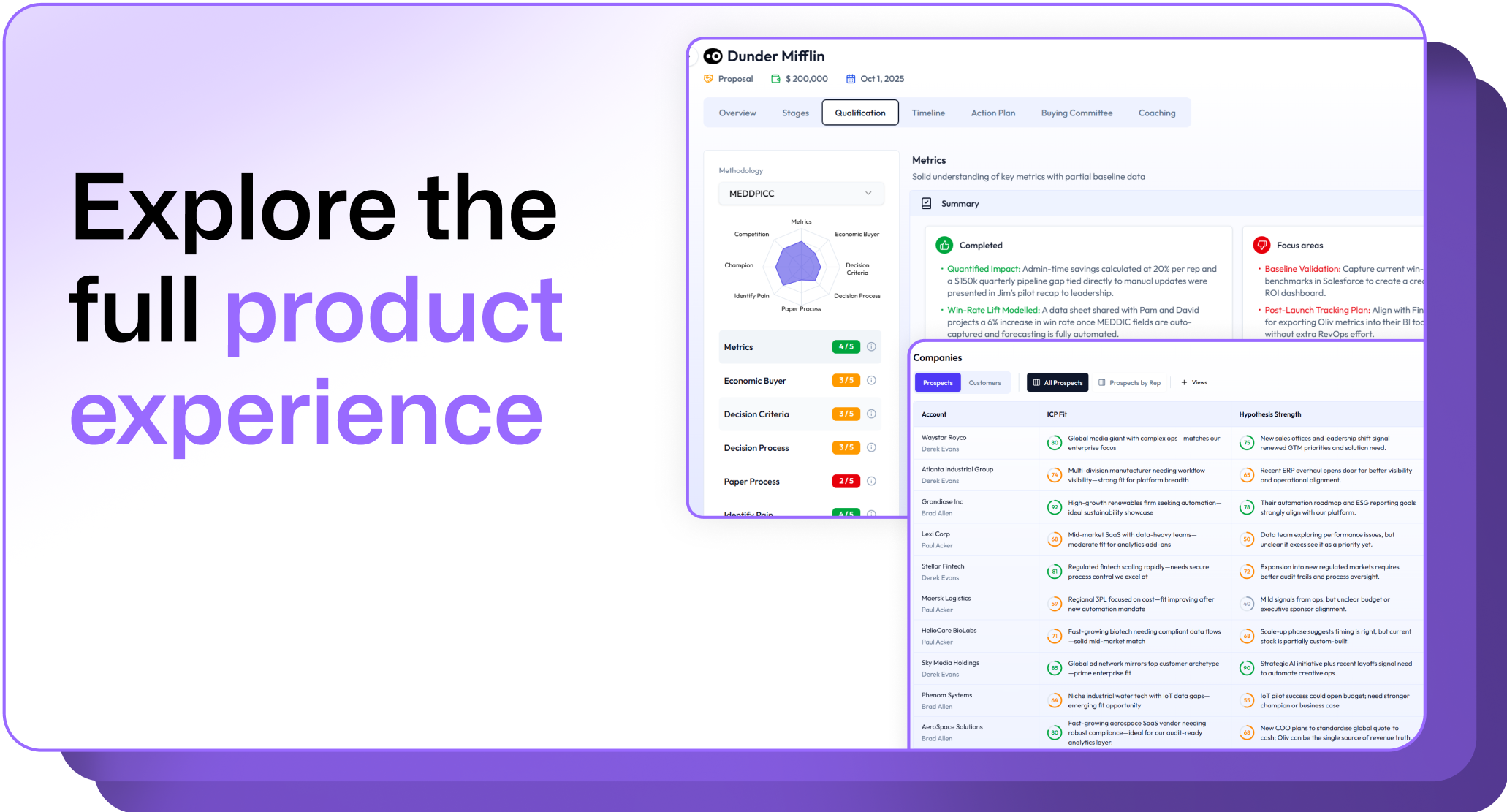
.avif)
.png)





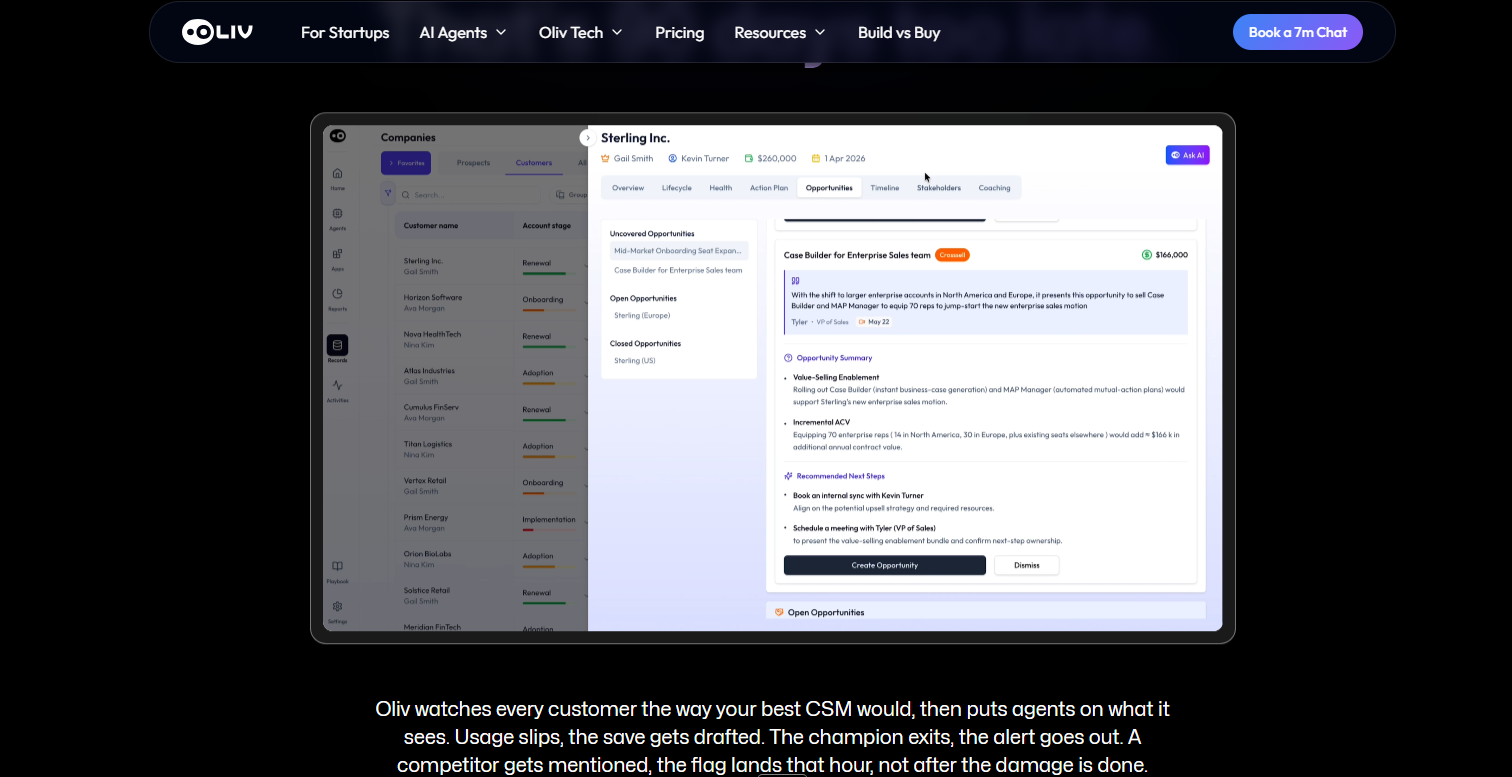

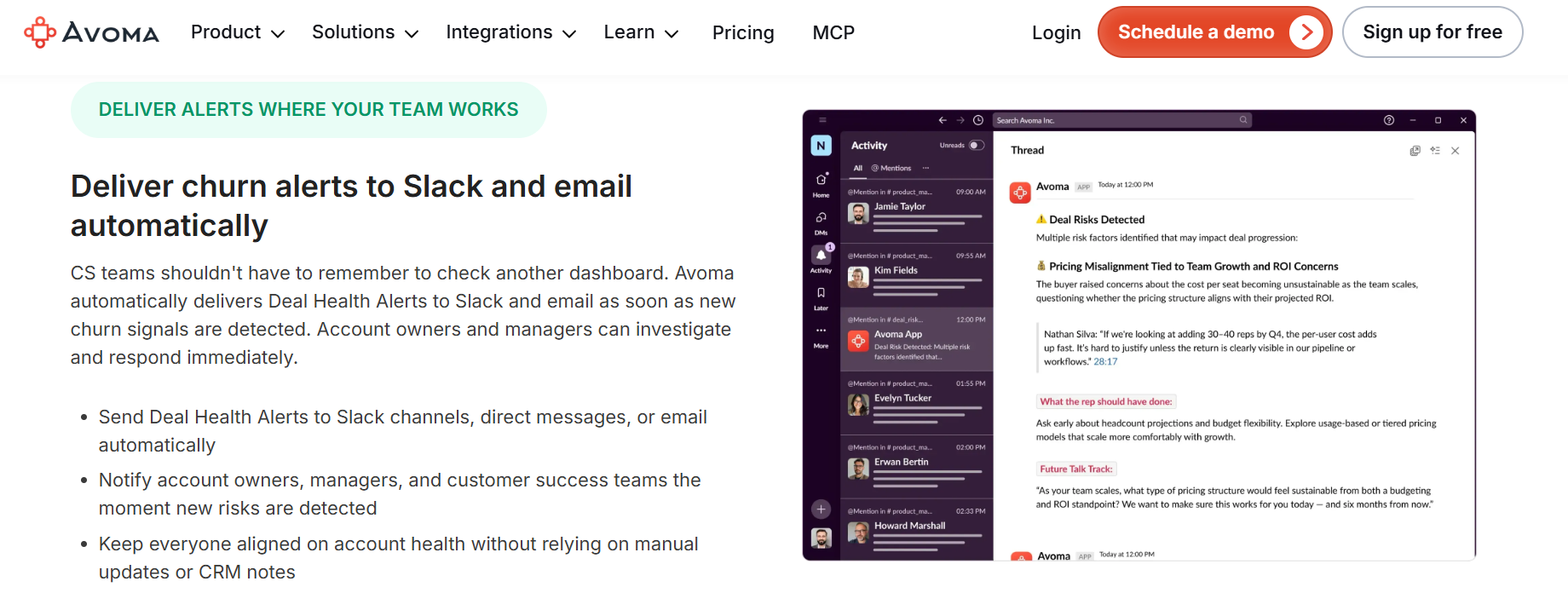
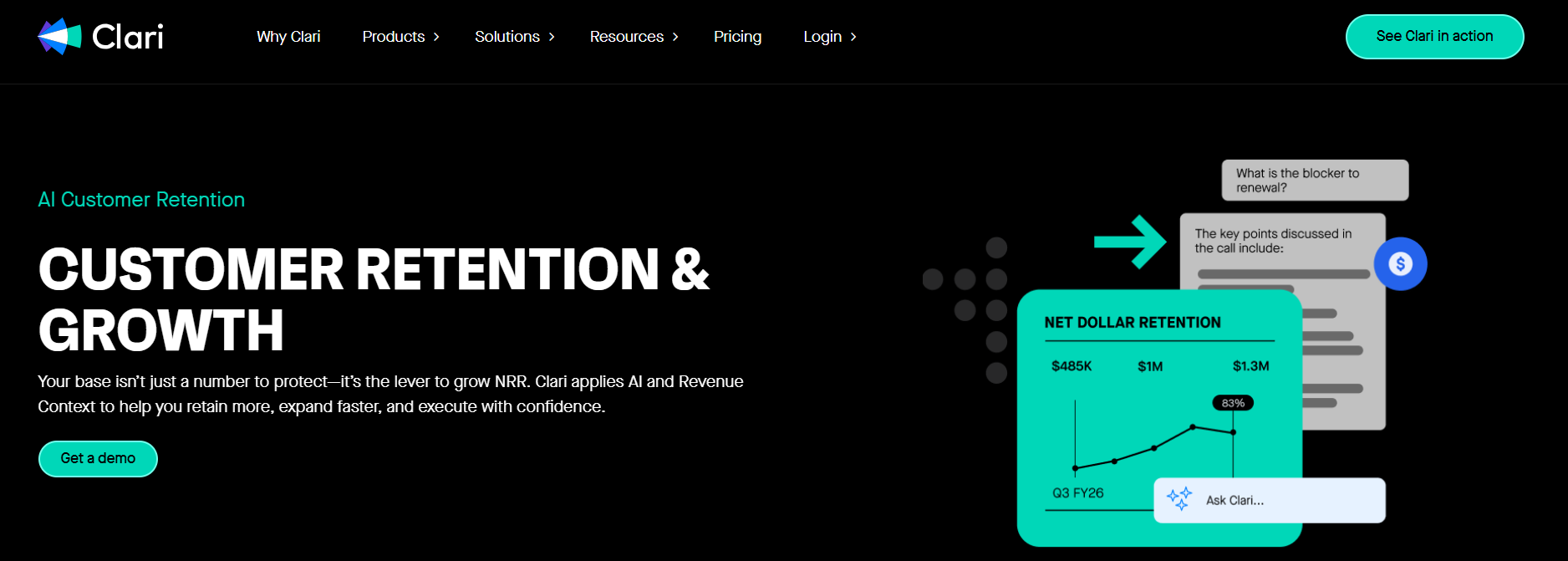

.png)
.png)
.png)

