AI Sales Automation Explained: 12 Use Cases, Top Tools, and a Step-by-Step Playbook for 2026
Written by
Ishan Chhabra
Last Updated :
June 17, 2026
Skim in :
8
mins
In this article
Revenue teams love Oliv
Here’s why:
All your deal data unified (from 30+ tools and tabs).
Insights are delivered to you directly, no digging.
AI agents automate tasks for you.
Thank you! Your submission has been received!
Oops! Something went wrong while submitting the form.
Meet Oliv’s AI Agents
Hi! I’m, Deal Driver
I track deals, flag risks, send weekly pipeline updates and give sales managers full visibility into deal progress
Hi! I’m, CRM Manager
I maintain CRM hygiene by updating core, custom and qualification fields all without your team lifting a finger
Hi! I’m, Forecaster
I build accurate forecasts based on real deal movement and tell you which deals to pull in to hit your number
Hi! I’m, Coach
I believe performance fuels revenue. I spot skill gaps, score calls and build coaching plans to help every rep level up
Hi! I’m, Prospector
I dig into target accounts to surface the right contacts, tailor and time outreach so you always strike when it counts
Hi! I’m, Pipeline tracker
I call reps to get deal updates, and deliver a real-time, CRM-synced roll-up view of deal progress
Hi! I’m, Analyst
I answer complex pipeline questions, uncover deal patterns, and build reports that guide strategic decisions
TL;DR
AI sales automation in 2026 shifts from rigid rules to agentic AI that picks a goal, adapts its plan, and works the full sales funnel autonomously.
Picture a three-layer cake: call capture is a free commodity, while real value lives in the intelligence and agent layers that act on deal context.
Bolting AI onto a decade-old CRM fails because the foundation is dead air reps update only on Fridays; the five-step follow-up workflow proves it.
Realistic benchmarks: roughly 8:1 first-year pipeline ROI, about 28% higher response rates, and cost per qualified meeting down near 52%.
Humans still win on nuance and complex deals; the 10/80/10 rule keeps a person in the loop while agents handle the grind.
Roll out in 30 days: run the incognito test, fix one painful workflow, train the agent daily, then expand without falling into the pilot trap.
Q1. What exactly is AI sales automation in 2026, and how is it different from the automation you already have? [toc=1. What Is AI Sales Automation]
AI sales automation uses AI, increasingly autonomous agents rather than rigid rules, to run repetitive sales work across the funnel: research, enrichment, outreach, qualification, follow-up, CRM logging, and forecasting. The 2026 shift is from rules-based automation (fixed input, fixed output) to agentic AI that picks a goal, adapts its plan, and pursues it. Think of a vending machine versus a smart employee who improvises when the plan stops working.
🥤 The vending machine you already own
Most of you already run "automation." A sequence fires. A lead-routing rule triggers. A reminder pops up. That is a vending machine. Fixed input, fixed output. Put in the coin, get the same can every time.
The catch is what happens when reality breaks the rule. The payment fails. The lead does not match the segment. The script hits an edge case it never saw. The vending machine just stops. Nobody gets a can, and nobody gets told why.
I have watched teams pile tool after tool onto this brittle base. Each new rule solves one case and creates two more. The more technology you add, the more fragile the whole system gets. That is the trap underneath most "automated" sales stacks today.
🤖 What makes an agent different
An AI agent behaves less like a vending machine and more like a coach, or a smart employee who actually problem-solves. It picks a goal, like "book a qualified meeting with this account," then chooses its own steps to get there. When one path fails, it tries another instead of freezing.
That is the line between old automation and AI sales automation in 2026. Rules execute. Agents decide. Modern AI sales tools now research prospects, engage leads, and qualify opportunities before passing them to humans, work that used to need a person babysitting every step. No go-to-market team benefits more from agentic workflows than sales, because the AI accelerates prospecting rather than just scheduling it.
The practical test is simple. If your tool stops the moment something unexpected happens, it is automation. If it adapts and keeps chasing the goal, it is an agent.
🎂 The three-layer cake (your map for this guide)
Here is the mental model I want you to carry through this whole article. Picture AI sales automation as a three-layer cake.
The three-layer model shows why value in AI sales automation concentrates in the intelligence and agent layers, not commoditized call capture.
Layer 1, Data Collection. Recording, transcription, and capture. This is now commoditized. Zoom, Teams, and Google Meet do it natively, so it should be close to free.
Layer 2, Intelligence. The language models that read those conversations and track real qualification signals across a deal, not just keywords on a single call.
Layer 3, Agents. The autonomous workers that turn that intelligence into action: drafting the follow-up, updating the CRM, flagging the at-risk deal before your Monday call.
The value is moving up the cake. Capture is cheap. The money sits in the intelligence and agent layers.
This is exactly where Oliv is built. We do not treat call recording as the product, because that part is already a free commodity. We sit on the intelligence and agent layers, so deal context becomes work that gets done for you, not another dashboard you have to log into. I could be slightly off on where each vendor draws the line, but from what surfaces when you actually run these stacks, the teams winning in 2026 are the ones who stopped paying premium prices for call capture and recording.
Q2. Why are most revenue teams "firing on two cylinders," and why is bolting AI onto your CRM not fixing it? [toc=2. Why Bolt-On AI Fails]
Most teams underperform because their CRM is a dumb repository, something reps update weekly only because management demands it, not because it helps them sell. Bolting AI onto a broken CRM does not fix that foundation. The tell is the follow-up workflow: export the transcript, paste it into a custom GPT, copy the output, hunt for a PDF. It is so heavy that most reps simply skip it, so the "automation" never actually runs.
📂 The CRM is dead air
Let me say the quiet part out loud. For most reps, the CRM is dead air. They update it on Friday because a manager asked, not because it makes them sell more. It is a repository, not a tool.
I have sat in those forecast reviews. The data is stale by the time anyone reads it. Reps "remember" what happened on a call from three weeks ago. The system that was supposed to be a single source of truth becomes a single source of guesswork.
So when leadership says "let's add AI to the CRM," I get nervous. You cannot pour intelligence into a bucket nobody fills honestly.
🔁 The follow-up workflow nobody actually does
Here is the workflow that exposes the whole problem. A rep needs to write one follow-up email after a call.
The five-step follow-up tax illustrates why bolt-on AI fails: the manual workflow is so heavy that reps quietly skip it.
Pull the transcript out of the recording tool.
Open ChatGPT, paste in a custom prompt, paste the transcript.
Copy the output back out.
Paste it into Outlook.
Go find the relevant PDF or case study to attach.
That is five context-switches for one email. It is so much work that most people just do not do it. The "automation" exists on a slide, not in the rep's actual day. This friction is the real reason adoption dies, and the best revenue intelligence platforms are built to remove exactly this manual top-of-funnel grind.
The frustration is not unique to one tool. It shows up across the category, including the most loved platforms.
"While Gong offers valuable insights into call data and sales interactions, our experience has been impacted by significant data access limitations, especially concerning data portability and bulk export capabilities. It requires downloading calls individually, which is impractical and inefficient for a large volume of data." Neel P., Sales Operations Manager Gong G2 Verified Review
"Its too complicated, and not intuitive at all. Searching for calls is not easy, moving around in the calls is not easy, and understanding the pipeline management portion of it is almost impossible." John S., Senior Account Executive Gong G2 Verified Review
🧱 Why bolt-on AI does not fix it
Here is my contrarian take. The standard read says legacy CRMs just need an AI feature bolted on. I think that gets it backwards.
The existing CRMs were built a decade ago, before generative AI. They are now bolting on small AI features here and there, a summary widget, a suggested email. It does not work, because the foundation underneath is still a passive repository that depends on humans to feed it.
What you actually need is to rethink the CRM as something AI-native, where the system fills itself from calls, emails, and Slack instead of waiting for a rep to type. That is the thesis Oliv is built on. We do not bolt a feature onto dead air. We rebuild the layer so the follow-up email, the CRM update, and the deal signal happen without the five-step copy-paste tax that kills adoption everywhere else, which is why so many teams now evaluate Gong alternatives built for the AI-native era.
Q3. What are the 12 highest-ROI AI sales automation use cases across the full funnel? [toc=3. 12 Use Cases]
The 12 highest-ROI use cases map cleanly to the funnel: signal-based prospecting, lead enrichment, ICP and lead scoring, hyper-personalized outreach, multichannel cadences, inbound qualification, meeting booking, follow-up drafting, call and deal analysis, automated CRM logging, deal-level coaching, and forecasting. Each one replaces a manual task reps quietly avoid. Together, they instrument every micro-stage of what I think of as the revenue factory.
🏭 Think of your funnel as a factory line
Before the list, one frame. A funnel is just a manufacturing line: volume times conversion rate equals output. Every micro-stage either adds throughput or leaks it. AI sales automation is how you instrument each stage so you can see the leak and plug it.
I use a 10/80/10 rule here. You spend 10% defining the ideal customer, hand 80% of the execution to agents, then spend the final 10% on a quick quality check. Humans own the bookends. Agents own the grind in the middle.
✅ The 12 use cases, mapped to the funnel
Each item below names the manual pain, what the AI does, and the payoff you feel by Monday.
Signal-based prospecting. Pain: hunting for "why now" triggers by hand. AI watches funding rounds, job changes, and hiring spikes. Payoff: you reach out the day the signal fires, not three weeks late.
Lead enrichment. Pain: half-empty contact records. AI fills firmographics and contact data automatically. Payoff: no rep wastes time Googling a title.
ICP and lead scoring. Pain: gut-feel prioritization. AI ranks leads against your real win patterns. Payoff: reps work the 20% that actually closes.
Hyper-personalized outreach. Pain: "Hello [First_Name]" spam. AI drafts per-account messages at scale. Payoff: relevance without 30 minutes per email.
Multichannel cadences. Pain: forgetting step four of the sequence. AI runs email, LinkedIn, and SMS in rhythm. Payoff: no lead falls through a crack.
Inbound qualification. Pain: junior reps triaging "contact me" forms. AI qualifies inbound instantly. Payoff: hot leads hit a calendar in minutes.
Meeting booking. Pain: the back-and-forth scheduling dance. AI books and reschedules. Payoff: more meetings, zero calendar tetris.
Follow-up drafting. Pain: the five-step copy-paste tax. AI writes the recap email from the call. Payoff: the follow-up actually gets sent.
Call and deal analysis. Pain: nobody re-listens to a 45-minute call. AI extracts risks and next steps. Payoff: you walk into the next call prepared.
Automated CRM logging. Pain: Friday data-entry guilt. AI updates fields from real activity. Payoff: clean pipeline without nagging.
Deal-level coaching. Pain: managers coach blind. AI flags where a deal is stalling and why. Payoff: targeted coaching, not generic pep talks.
Forecasting. Pain: the Thursday-Friday forecast scrub. AI rolls real signals into a live call number. Payoff: Monday's report builds itself.
⏰ The Thursday scrub is the use case that pays for itself
If you only fix one, fix forecasting. Every Thursday and Friday, managers sit with reps for one to two hours each, reconstructing what moved, then hand-build the Monday report. That is days of senior time spent transcribing memory into a spreadsheet. The right AI sales forecasting software erases that ritual.
Agents change the economics fast. I have seen a generalist agent, not even tuned for sales, autonomously close a $70,000 deal, which is what convinced me the execution layer is real, not a demo trick. The flip side is real too: the junior SDR hired to send emails and triage inbound is being displaced, and honestly should be, freed up for work agents cannot do.
This is the band Oliv plays in. We focus on the deal-level use cases, coaching, forecasting, and CRM auto-fill, because we understand the full sales cycle, not just one meeting. The forecast scrub stops being a two-day ritual and starts being something the agents have already drafted before you sit down, which is why we are often compared in best sales coaching software roundups.
Q4. What does an agentic SDR workflow actually look like, step by step? [toc=4. Agentic SDR Workflow]
An agentic SDR workflow runs end-to-end with light oversight. It ingests buying signals, enriches the account, drafts and sends personalized multichannel outreach, qualifies replies, books the meeting, hands off context to the AE, and logs everything to the CRM. The human applies the 10/80/10 rule: 10% defining the target, 80% to the agent, 10% quality check. Humans in the loop are the competitive advantage here, not a weakness.
🔭 What the agent does on its own
Picture one agent working one account. Here is the sequence it actually runs.
The agentic SDR workflow runs seven steps end-to-end, with the 10/80/10 rule keeping a human in the loop on definition and quality.
Sense the signal. It detects a trigger, a funding round, a new VP, a tech-stack change.
Enrich the account. It pulls firmographics and the right contacts into one view.
Draft and send. It writes a personalized message and fires the multichannel cadence.
Qualify the reply. It reads responses and sorts real interest from polite brush-offs.
Book the meeting. It negotiates a time and puts it on the AE's calendar.
Hand off context. It briefs the AE with the full thread, not a one-line note.
Log everything. It updates the CRM automatically, so the record is true without a human typing.
This same loop is what defines a true revenue intelligence software platform: agents that research, contact, and qualify leads without human intervention, then route the warm ones to people. The point is not that humans disappear. It is that humans stop doing steps one through seven by hand.
⚖️ Where the human stays in the loop (the 10/80/10 rule)
I want to kill a myth. "Autonomous" does not mean "unsupervised." The 10/80/10 rule is the discipline that makes agents reliable.
You spend the first 10% defining the perfect target and the offer. The agent does 80%, the heavy lifting across all seven steps. You spend the last 10% on a sniff test, catching the one email that reads off. That final human check is the competitive advantage, not a sign the agent failed.
🛠️ Why agents earn their reliability (the 30-day rule and FDEs)
Agents are not great on day one. They say dumb things. They hallucinate a detail. The teams that win treat this like onboarding a new hire, not flipping a switch. The same patience applies when you map a real implementation timeline for any agentic tool.
I lean on two practices here. First, the 30-day training rule: each day the agent sends outreach, you spend an hour or two correcting its mistakes, and by day 30 it is genuinely good. Second, what I call a forward deployed engineer, a fancy name for a person who makes sure that when the agent goes live, it actually works. That rigor is the difference between a 2024-style 5% success rate and a real 100% go-live. I might be wrong on the exact numbers for your stack, but from what surfaces when you actually run these rollouts, skipping the training month is the single most common way agents fail.
This is why Oliv agents are built to slot into your existing workflow instead of forcing a detour. The failure mode I see with chat-first tools is the rep having to go talk to a bot, get an answer, then copy it somewhere else. We embed the agent inside the business process, so the work lands where it belongs, in the deal, the CRM, the AE's brief, without the rep playing courier, which is what separates us from many Agentforce alternatives and competitors.
Q5. Which AI sales automation tools should you actually compare in 2026? [toc=5. Tool Comparison]
The 2026 landscape splits into clear categories: conversation and revenue intelligence (Gong, Chorus, Oliv), forecasting (Clari), engagement and sequencing (Outreach, Salesloft), and CRM-native agents (Salesforce Agentforce and Einstein). The right pick depends on whether you need meeting-level insight or deal-level intelligence, and whether you want AI bolted onto a decade-old CRM or built native. Compare on latency, data access, workflow integration, and pricing model, not feature checklists.
Forget the feature grid. Four things separate these tools in real use.
Latency. How fast does insight reach you after a call? Gong runs a 20 to 30 minute delay. That gap matters on a fast 15-day cycle.
Data access. Can you pull your own data out easily? For many teams, the answer is painful.
Workflow integration. Does the agent work inside your flow, or make you go fetch the answer?
Pricing model. Agentforce floats a roughly $0.10 per action credit model, versus around $500 per seat all-inclusive. Stack Gong, Clari, and Salesloft together, and total cost quietly clears $500 per user per month.
"It requires downloading calls individually, which is impractical and inefficient for a large volume of data. This lack of flexibility has required us to engage our development team at additional cost." Neel P., Sales Operations Manager Gong G2 Verified Review
"It was a big mistake on our part to commit to a two year term. Gong is a really powerful tool but its probably the highest end option on the market." Iris P., Head of Marketing & Sales Partnerships Gong G2 Verified Review
✅ Choose this if, avoid that when
Choose conversation intelligence like Gong if your main job is coaching reps on call delivery, and you have the budget for a premium, meeting-level tool. Avoid it if you need deal-level forecasting and easy data export, because that is not its strength. Many teams in this spot start screening Gong alternatives for that exact reason.
Choose an AI-native platform if you want the agent to do the work, not just surface a dashboard. This is where Oliv sits. We process in about five minutes, not twenty to thirty, and we understand the full deal, not one isolated meeting. I might be biased here, but from what surfaces when you actually run these stacks side by side, latency and deal-level context are what reps feel, and the feature checklist is what they forget by week two. For a head-to-head, our Gong vs Oliv comparison lays out the differences.
Q6. Gong, Salesforce Agentforce, or an AI-native platform: what are real users saying? [toc=6. What Users Say]
Users praise Gong's recording and call insight, but flag a 20 to 30 minute delay, a data export process that forces custom engineering, and meeting-level rather than deal-level understanding. Agentforce and Einstein reviewers note the tooling still feels chat-focused, not embedded in real workflows, and it stumbles on messy CRM data like duplicate accounts. AI-native platforms get judged on latency, deal-level intelligence, and whether the agent works inside the rep's flow.
💸 The switcher who watched the renewal clock
Picture a RevOps lead three weeks from a Gong renewal. The tool works. The bill does not feel worth it anymore. That is a common moment, not an edge case, and it shows up across Gong reviews.
The complication is lock-in. Long terms and high price tags make the decision feel heavy, even when the gut says move. I have sat with leaders doing exactly this math, counting days to renewal while pricing a switch.
"Gong.io as a leader in its market is not too open to negotiate with smaller companies. The pricing is probably the biggest obstacle and hence we are looking to change." Miodrag, Enterprise Account Executive Gong TrustRadius Verified Review
⚠️ The Salesforce user fighting messy data
Now picture an admin who was told to sell into Google, then accidentally created a duplicate account. This is routine in mid-market B2B. CRMs are full of duplicates.
The complication is that rule-based AI breaks here. Einstein leans on simple rule logic, and when it sees two accounts for one company, there is no clean way for it to know what happens next. The "intelligence" stalls on the exact mess it was supposed to fix, a pattern detailed across Salesforce Einstein reviews.
"Clari should find ways to differentiate from the native Salesforce features. Its sometimes difficult if you dont have a strong RevOps/RevTech team to maintain validation rules in both Salesforce and Clari instances." Dan J. Clari G2 Verified Review
🤖 The skeptic who wanted an agent, not a chatbot
Finally, picture an operator who bought "AI" and got a chat window. The promise was an agent that does the work. The reality was a bot they have to go talk to, then copy the output somewhere else, which is a recurring theme in Salesforce Agentforce reviews.
That is the chat-UX failure. Many current tools are still chat-focused, not deeply integrated into your workflows and business processes. The resolution these buyers want is simple: an agent embedded in the flow, working at deal level, fast enough to matter. That is the direction Oliv is built for, and I say that knowing the bar here is execution, not slogans. The honest caveat is that no agent is perfect on day one, which is why we treat go-live as engineered work, not a switch you flip. For teams weighing options, our list of Agentforce alternatives and competitors is a useful starting point.
Q7. What ROI and benchmarks can you expect, and where do humans still beat AI? [toc=7. ROI Benchmarks & Reality Check]
Realistic 2026 benchmarks look like this: AI users cut sales cycles by about one week and lift response rates by roughly 28%; year-one AI ROI averages strong double-digit productivity gains; and AI SDR pipeline ROI runs near 8:1. But be honest about the trade-off. Humans still convert nuanced conversations better, while AI wins decisively on cost and volume. AI scales reach. Humans still close the room.
📊 The numbers that actually hold up
I rolled my eyes at AI SDR claims too, until the first-party data came in. Here are the figures I trust, each with its source, and they reinforce why the right revenue intelligence software platform pays for itself.
Metric
Benchmark
Source
Sellers cutting sales cycles
69%, by about one week
LinkedIn, ROI of AI, 2025
Response rate lift from AI outreach
About 28% average
LinkedIn, ROI of AI, 2025
Daily AI users exceeding target
2x more likely
LinkedIn, ROI of AI, 2025
First-year pipeline ROI
Roughly 8:1
Pavilion GTM Benchmarks, 2026
Cost per qualified meeting
Down about 52%
Forrester, Q1 2026
Top-of-funnel productivity
35 to 50% improvement
McKinsey, State of AI in Sales, 2025
These are not vendor slides. They are survey and benchmark data, and 56% of sales professionals now use AI daily, so the sample is real.
⚖️ Where humans still win
Here is the part most vendors skip. AI does not win everything.
Humans still beat AI on nuance, empathy, and complex multi-stakeholder deals, and those strengths are complementary, not competing. The data even shows human SDRs book 23% more meetings when paired with AI than when working alone, so the win is augmentation, not replacement. AI's edge is volume, consistency, and cost, not judgment in the room. This is exactly why sales coaching software that sharpens human skill still matters.
The other honest caveat is the pilot trap. Plenty of deployments start with promise, then fade because teams cannot move them from pilot to production. The new bar is real though, around $3 to $5 million in revenue per rep, up from the old $300,000 to $500,000, but only for teams that finish the job.
🛠️ Getting from pilot promise to production
So how do you actually bank the 8:1, not just demo it? You instrument the deal, not just the call, which is the core promise of accurate AI sales forecasting software.
This is where Oliv earns its place. We focus on deal-level coaching and forecasting, the work that turns a hopeful pilot into a production number you can put on the board. We pair that with go-live rigor, real engineering effort up front, because from what surfaces when you actually run these rollouts, the teams that skip the setup month are exactly the ones whose pilot quietly dies in Q3.
Q8. Build or buy, and what is the real payback math on AI sales automation? [toc=8. Build vs Buy & Payback]
Build when the workflow is core, narrow, and you have the capacity to maintain it, because DIY agents can go obsolete in months if neglected. Buy when you need reliability, integrations, and compliance fast. The math usually favors buying for full-funnel coverage. Teams with an existing outbound motion see a 3 to 5 month payback and roughly 8:1 first-year pipeline ROI, with AI cost per qualified meeting dropping about 52%.
🛠️ The temptation to build it yourself
I get the build itch. I am a top 1% Replit user. I have built a dozen apps in a few months because I got tired of waiting for someone else to do it.
That works for a narrow internal tool. It falls apart for a production revenue system. Here is the trap: an internal agent you build today can become obsolete in a couple of months if you are not careful, because the underlying models and integrations move fast. A mature revenue intelligence platform absorbs that maintenance burden for you.
💰 The payback math, plainly
Let me put real numbers on the decision. A fully loaded human SDR in the US runs $80,000 to $120,000 per year. An AI SDR platform runs roughly $500 to $5,000 per month, so even the high end is around $60,000 per year and works nights and weekends.
The returns line up fast.
Payback period: 3 to 5 months for teams with an existing outbound motion.
First-year pipeline ROI: about 8:1.
Cost per qualified meeting: down roughly 52%.
That is the buy case in three lines. Building rarely beats those economics once you price in your own engineering time and maintenance.
✅ Choose build if, choose buy if
Here is where I will admit what I got wrong early. I assumed building gave more control. In practice, the maintenance tax ate the control, and the incumbents with existing data and mapped workflows kept their edge anyway.
Build if: the workflow is narrow, core to your moat, and you have engineers who will own it long-term.
Buy if: you need full-funnel coverage, fast integrations, compliance, and reliability without a standing dev team.
For most 25 to 200 rep teams, buy wins. That is the slot Oliv fills, AI-native depth without the obsolescence risk or maintenance drag of homegrown agents. You get the deal-level intelligence and the 8:1 economics, and you skip the part where your own bot quietly breaks in two months. If you are still weighing platforms, our roundup of the best sales intelligence platforms helps you shortlist.
Q9. What compliance and trust risks come with autonomous sales agents, and how do you de-risk them? [toc=9. Compliance & Trust]
Autonomous agents that email, dial, and qualify at scale carry real duties: SOC 2 for data handling, GDPR for EU prospect data, two-party consent for AI voice and recording, and emerging EU AI Act obligations for autonomous systems. De-risk by keeping humans in the loop on outbound, logging an audit trail, disclosing where required, and budgeting real QA time, because agents work all night and review never stops.
🔐 The five duties you cannot skip
Let me translate the compliance alphabet soup into plain English. Each item below is a requirement, what it means, and your Monday action.
SOC 2 Type II. A third-party audit of how a vendor handles your data. Action: ask any agent vendor for the current report before you sign.
GDPR. EU rules on processing personal data of EU prospects. Action: confirm lawful basis and a data processing agreement before you email Europe.
Two-party consent. Some US states and countries require all parties to agree before recording. Action: disclose recording, and treat AI voice calls the same way.
EU AI Act. New obligations on autonomous and higher-risk AI systems, phasing in now. Action: keep a human accountable for what the agent sends.
Audit trail. A logged record linking every action to its data. Action: turn on activity logs from day one.
If recording consent and data handling are sticking points, our breakdown of DPA and security practices is a useful reference.
⏰ The QA burden nobody budgets for
Here is the part that surprises operators. Agents never sleep, so review is constant, not occasional.
When you have many agents running, a single ops person can spend 10 to 15 hours a week just reviewing outputs. That is not a flaw, it is the new cost of autonomy. The standard read says "set it and forget it." I think that gets it backwards, and I have watched teams learn it the hard way. This is one reason an integrated revenue intelligence platform beats a sprawl of point tools.
The fix is structure. Keep a human in the loop on outbound, sample outputs daily, and lean on the audit trail when something looks off.
"Its capabililties in recognizing and assisting with leads. Its not as robust just yet but it will be as it continues to learn." Omer M., Salesforce admin Salesforce Agentforce G2 Verified Review
"Trust layer and security, it will be helpful for those big orgs, you need to activate einstein and other stuff if you want to use agentforce." shivam a., Product Researcher Salesforce Agentforce G2 Verified Review
✅ Where we land on it
At Oliv, we treat trust as architecture, not a checkbox. We are SOC 2 Type II certified, GDPR compliant, and CCPA compliant, with AES-256 encryption at rest and TLS 1.2 in transit. We also keep detailed audit logs and ground our models in your secure data workspace to cut hallucinations.
One deliberate choice: we process after the call, in about five minutes, rather than chasing risky in-call "real-time" claims. I could be conservative here, but from what surfaces when you actually run agents at scale, a clean audit trail beats a flashy live feature every time. For teams comparing rule-based incumbents, our list of Salesforce Einstein competitors and alternatives is worth a look.
Q10. Your 30-day playbook: how do you roll out AI sales automation without falling into the pilot trap? [toc=10. 30-Day Rollout Playbook]
Week 1: run the incognito test on your own buying journey, and pick the workflow that makes you cry the most. Weeks 1 to 4: deploy one agent and apply the 30-day training rule, correcting it daily until outputs are reliable. Use engineer-led go-live rigor so it works on day one, not 5% of the time. Then expand. Avoid "Hello [First_Name]" slop and pilots that never reach production.
🔎 Week 1: find the workflow that makes you cry
Start with a diagnosis, not a tool. Fire up your browser in incognito mode and act like your own buyer.
Try to contact sales. Try support. Try to book a demo. Whatever step makes you cry the most, that broken workflow is your first target. Buy or build the agent for that one job, not for everything at once. A shortlist of the best AI sales tools helps you match the agent to the pain.
🛠️ Weeks 1 to 4: train the agent like a new hire
An agent is not great on day one. Treat the first month like onboarding a junior rep, and map a realistic implementation timeline before you start.
Deploy one agent on that single painful workflow.
Feed it your best. Take what works for your top performer, upload that text, and let the agent learn the pattern.
Correct it daily. Spend an hour or two fixing mistakes each day it runs.
Let it A/B test. Agents are genuinely good at testing variants once they have a baseline.
Engineer the go-live. Put a technical owner on it so it works at launch, not 5% of the time like sloppy 2024 rollouts.
The 30-day rollout playbook sequences the audit, training, and go-live phases that move an agent from pilot to durable production ROI.
By day 30, a well-trained agent is reliable enough to trust on that workflow. Then, and only then, expand to the next one. Pairing the agent with structured sales coaching software keeps your humans sharp as the agent scales.
⚠️ What to avoid
Here is the trap that kills most rollouts. Automation amplifies whatever system you already have.
If your messaging is "Hello [First_Name]" slop, the agent just sends bad outreach faster. If your process is broken, automation makes it worse, not better. So fix the underlying play before you scale the volume.
The other killer is the pilot trap. Promising pilots fade because teams never finish the move to production. Pick one workflow, train it for 30 days, ship it, then grow. That sequence is the whole game, and it is the backbone of any serious revenue intelligence software platform rollout.
💬 Where my head is right now
What I think shifts in the next two years is simple. The SaaS you log into becomes agents that work for you, and revenue orchestration gives way to revenue engineering.
At Oliv, our deal-level agents are built to turn that 30-day rollout into durable production ROI, not a pilot that quietly dies. So here is my honest invitation, not a demo pitch: tell me which workflow makes you cry the most. That is the one I would point an agent at first.
Q1. What exactly is AI sales automation in 2026, and how is it different from the automation you already have? [toc=1. What Is AI Sales Automation]
AI sales automation uses AI, increasingly autonomous agents rather than rigid rules, to run repetitive sales work across the funnel: research, enrichment, outreach, qualification, follow-up, CRM logging, and forecasting. The 2026 shift is from rules-based automation (fixed input, fixed output) to agentic AI that picks a goal, adapts its plan, and pursues it. Think of a vending machine versus a smart employee who improvises when the plan stops working.
🥤 The vending machine you already own
Most of you already run "automation." A sequence fires. A lead-routing rule triggers. A reminder pops up. That is a vending machine. Fixed input, fixed output. Put in the coin, get the same can every time.
The catch is what happens when reality breaks the rule. The payment fails. The lead does not match the segment. The script hits an edge case it never saw. The vending machine just stops. Nobody gets a can, and nobody gets told why.
I have watched teams pile tool after tool onto this brittle base. Each new rule solves one case and creates two more. The more technology you add, the more fragile the whole system gets. That is the trap underneath most "automated" sales stacks today.
🤖 What makes an agent different
An AI agent behaves less like a vending machine and more like a coach, or a smart employee who actually problem-solves. It picks a goal, like "book a qualified meeting with this account," then chooses its own steps to get there. When one path fails, it tries another instead of freezing.
That is the line between old automation and AI sales automation in 2026. Rules execute. Agents decide. Modern AI sales tools now research prospects, engage leads, and qualify opportunities before passing them to humans, work that used to need a person babysitting every step. No go-to-market team benefits more from agentic workflows than sales, because the AI accelerates prospecting rather than just scheduling it.
The practical test is simple. If your tool stops the moment something unexpected happens, it is automation. If it adapts and keeps chasing the goal, it is an agent.
🎂 The three-layer cake (your map for this guide)
Here is the mental model I want you to carry through this whole article. Picture AI sales automation as a three-layer cake.
The three-layer model shows why value in AI sales automation concentrates in the intelligence and agent layers, not commoditized call capture.
Layer 1, Data Collection. Recording, transcription, and capture. This is now commoditized. Zoom, Teams, and Google Meet do it natively, so it should be close to free.
Layer 2, Intelligence. The language models that read those conversations and track real qualification signals across a deal, not just keywords on a single call.
Layer 3, Agents. The autonomous workers that turn that intelligence into action: drafting the follow-up, updating the CRM, flagging the at-risk deal before your Monday call.
The value is moving up the cake. Capture is cheap. The money sits in the intelligence and agent layers.
This is exactly where Oliv is built. We do not treat call recording as the product, because that part is already a free commodity. We sit on the intelligence and agent layers, so deal context becomes work that gets done for you, not another dashboard you have to log into. I could be slightly off on where each vendor draws the line, but from what surfaces when you actually run these stacks, the teams winning in 2026 are the ones who stopped paying premium prices for call capture and recording.
Q2. Why are most revenue teams "firing on two cylinders," and why is bolting AI onto your CRM not fixing it? [toc=2. Why Bolt-On AI Fails]
Most teams underperform because their CRM is a dumb repository, something reps update weekly only because management demands it, not because it helps them sell. Bolting AI onto a broken CRM does not fix that foundation. The tell is the follow-up workflow: export the transcript, paste it into a custom GPT, copy the output, hunt for a PDF. It is so heavy that most reps simply skip it, so the "automation" never actually runs.
📂 The CRM is dead air
Let me say the quiet part out loud. For most reps, the CRM is dead air. They update it on Friday because a manager asked, not because it makes them sell more. It is a repository, not a tool.
I have sat in those forecast reviews. The data is stale by the time anyone reads it. Reps "remember" what happened on a call from three weeks ago. The system that was supposed to be a single source of truth becomes a single source of guesswork.
So when leadership says "let's add AI to the CRM," I get nervous. You cannot pour intelligence into a bucket nobody fills honestly.
🔁 The follow-up workflow nobody actually does
Here is the workflow that exposes the whole problem. A rep needs to write one follow-up email after a call.
The five-step follow-up tax illustrates why bolt-on AI fails: the manual workflow is so heavy that reps quietly skip it.
Pull the transcript out of the recording tool.
Open ChatGPT, paste in a custom prompt, paste the transcript.
Copy the output back out.
Paste it into Outlook.
Go find the relevant PDF or case study to attach.
That is five context-switches for one email. It is so much work that most people just do not do it. The "automation" exists on a slide, not in the rep's actual day. This friction is the real reason adoption dies, and the best revenue intelligence platforms are built to remove exactly this manual top-of-funnel grind.
The frustration is not unique to one tool. It shows up across the category, including the most loved platforms.
"While Gong offers valuable insights into call data and sales interactions, our experience has been impacted by significant data access limitations, especially concerning data portability and bulk export capabilities. It requires downloading calls individually, which is impractical and inefficient for a large volume of data." Neel P., Sales Operations Manager Gong G2 Verified Review
"Its too complicated, and not intuitive at all. Searching for calls is not easy, moving around in the calls is not easy, and understanding the pipeline management portion of it is almost impossible." John S., Senior Account Executive Gong G2 Verified Review
🧱 Why bolt-on AI does not fix it
Here is my contrarian take. The standard read says legacy CRMs just need an AI feature bolted on. I think that gets it backwards.
The existing CRMs were built a decade ago, before generative AI. They are now bolting on small AI features here and there, a summary widget, a suggested email. It does not work, because the foundation underneath is still a passive repository that depends on humans to feed it.
What you actually need is to rethink the CRM as something AI-native, where the system fills itself from calls, emails, and Slack instead of waiting for a rep to type. That is the thesis Oliv is built on. We do not bolt a feature onto dead air. We rebuild the layer so the follow-up email, the CRM update, and the deal signal happen without the five-step copy-paste tax that kills adoption everywhere else, which is why so many teams now evaluate Gong alternatives built for the AI-native era.
Q3. What are the 12 highest-ROI AI sales automation use cases across the full funnel? [toc=3. 12 Use Cases]
The 12 highest-ROI use cases map cleanly to the funnel: signal-based prospecting, lead enrichment, ICP and lead scoring, hyper-personalized outreach, multichannel cadences, inbound qualification, meeting booking, follow-up drafting, call and deal analysis, automated CRM logging, deal-level coaching, and forecasting. Each one replaces a manual task reps quietly avoid. Together, they instrument every micro-stage of what I think of as the revenue factory.
🏭 Think of your funnel as a factory line
Before the list, one frame. A funnel is just a manufacturing line: volume times conversion rate equals output. Every micro-stage either adds throughput or leaks it. AI sales automation is how you instrument each stage so you can see the leak and plug it.
I use a 10/80/10 rule here. You spend 10% defining the ideal customer, hand 80% of the execution to agents, then spend the final 10% on a quick quality check. Humans own the bookends. Agents own the grind in the middle.
✅ The 12 use cases, mapped to the funnel
Each item below names the manual pain, what the AI does, and the payoff you feel by Monday.
Signal-based prospecting. Pain: hunting for "why now" triggers by hand. AI watches funding rounds, job changes, and hiring spikes. Payoff: you reach out the day the signal fires, not three weeks late.
Lead enrichment. Pain: half-empty contact records. AI fills firmographics and contact data automatically. Payoff: no rep wastes time Googling a title.
ICP and lead scoring. Pain: gut-feel prioritization. AI ranks leads against your real win patterns. Payoff: reps work the 20% that actually closes.
Hyper-personalized outreach. Pain: "Hello [First_Name]" spam. AI drafts per-account messages at scale. Payoff: relevance without 30 minutes per email.
Multichannel cadences. Pain: forgetting step four of the sequence. AI runs email, LinkedIn, and SMS in rhythm. Payoff: no lead falls through a crack.
Inbound qualification. Pain: junior reps triaging "contact me" forms. AI qualifies inbound instantly. Payoff: hot leads hit a calendar in minutes.
Meeting booking. Pain: the back-and-forth scheduling dance. AI books and reschedules. Payoff: more meetings, zero calendar tetris.
Follow-up drafting. Pain: the five-step copy-paste tax. AI writes the recap email from the call. Payoff: the follow-up actually gets sent.
Call and deal analysis. Pain: nobody re-listens to a 45-minute call. AI extracts risks and next steps. Payoff: you walk into the next call prepared.
Automated CRM logging. Pain: Friday data-entry guilt. AI updates fields from real activity. Payoff: clean pipeline without nagging.
Deal-level coaching. Pain: managers coach blind. AI flags where a deal is stalling and why. Payoff: targeted coaching, not generic pep talks.
Forecasting. Pain: the Thursday-Friday forecast scrub. AI rolls real signals into a live call number. Payoff: Monday's report builds itself.
⏰ The Thursday scrub is the use case that pays for itself
If you only fix one, fix forecasting. Every Thursday and Friday, managers sit with reps for one to two hours each, reconstructing what moved, then hand-build the Monday report. That is days of senior time spent transcribing memory into a spreadsheet. The right AI sales forecasting software erases that ritual.
Agents change the economics fast. I have seen a generalist agent, not even tuned for sales, autonomously close a $70,000 deal, which is what convinced me the execution layer is real, not a demo trick. The flip side is real too: the junior SDR hired to send emails and triage inbound is being displaced, and honestly should be, freed up for work agents cannot do.
This is the band Oliv plays in. We focus on the deal-level use cases, coaching, forecasting, and CRM auto-fill, because we understand the full sales cycle, not just one meeting. The forecast scrub stops being a two-day ritual and starts being something the agents have already drafted before you sit down, which is why we are often compared in best sales coaching software roundups.
Q4. What does an agentic SDR workflow actually look like, step by step? [toc=4. Agentic SDR Workflow]
An agentic SDR workflow runs end-to-end with light oversight. It ingests buying signals, enriches the account, drafts and sends personalized multichannel outreach, qualifies replies, books the meeting, hands off context to the AE, and logs everything to the CRM. The human applies the 10/80/10 rule: 10% defining the target, 80% to the agent, 10% quality check. Humans in the loop are the competitive advantage here, not a weakness.
🔭 What the agent does on its own
Picture one agent working one account. Here is the sequence it actually runs.
The agentic SDR workflow runs seven steps end-to-end, with the 10/80/10 rule keeping a human in the loop on definition and quality.
Sense the signal. It detects a trigger, a funding round, a new VP, a tech-stack change.
Enrich the account. It pulls firmographics and the right contacts into one view.
Draft and send. It writes a personalized message and fires the multichannel cadence.
Qualify the reply. It reads responses and sorts real interest from polite brush-offs.
Book the meeting. It negotiates a time and puts it on the AE's calendar.
Hand off context. It briefs the AE with the full thread, not a one-line note.
Log everything. It updates the CRM automatically, so the record is true without a human typing.
This same loop is what defines a true revenue intelligence software platform: agents that research, contact, and qualify leads without human intervention, then route the warm ones to people. The point is not that humans disappear. It is that humans stop doing steps one through seven by hand.
⚖️ Where the human stays in the loop (the 10/80/10 rule)
I want to kill a myth. "Autonomous" does not mean "unsupervised." The 10/80/10 rule is the discipline that makes agents reliable.
You spend the first 10% defining the perfect target and the offer. The agent does 80%, the heavy lifting across all seven steps. You spend the last 10% on a sniff test, catching the one email that reads off. That final human check is the competitive advantage, not a sign the agent failed.
🛠️ Why agents earn their reliability (the 30-day rule and FDEs)
Agents are not great on day one. They say dumb things. They hallucinate a detail. The teams that win treat this like onboarding a new hire, not flipping a switch. The same patience applies when you map a real implementation timeline for any agentic tool.
I lean on two practices here. First, the 30-day training rule: each day the agent sends outreach, you spend an hour or two correcting its mistakes, and by day 30 it is genuinely good. Second, what I call a forward deployed engineer, a fancy name for a person who makes sure that when the agent goes live, it actually works. That rigor is the difference between a 2024-style 5% success rate and a real 100% go-live. I might be wrong on the exact numbers for your stack, but from what surfaces when you actually run these rollouts, skipping the training month is the single most common way agents fail.
This is why Oliv agents are built to slot into your existing workflow instead of forcing a detour. The failure mode I see with chat-first tools is the rep having to go talk to a bot, get an answer, then copy it somewhere else. We embed the agent inside the business process, so the work lands where it belongs, in the deal, the CRM, the AE's brief, without the rep playing courier, which is what separates us from many Agentforce alternatives and competitors.
Q5. Which AI sales automation tools should you actually compare in 2026? [toc=5. Tool Comparison]
The 2026 landscape splits into clear categories: conversation and revenue intelligence (Gong, Chorus, Oliv), forecasting (Clari), engagement and sequencing (Outreach, Salesloft), and CRM-native agents (Salesforce Agentforce and Einstein). The right pick depends on whether you need meeting-level insight or deal-level intelligence, and whether you want AI bolted onto a decade-old CRM or built native. Compare on latency, data access, workflow integration, and pricing model, not feature checklists.
Forget the feature grid. Four things separate these tools in real use.
Latency. How fast does insight reach you after a call? Gong runs a 20 to 30 minute delay. That gap matters on a fast 15-day cycle.
Data access. Can you pull your own data out easily? For many teams, the answer is painful.
Workflow integration. Does the agent work inside your flow, or make you go fetch the answer?
Pricing model. Agentforce floats a roughly $0.10 per action credit model, versus around $500 per seat all-inclusive. Stack Gong, Clari, and Salesloft together, and total cost quietly clears $500 per user per month.
"It requires downloading calls individually, which is impractical and inefficient for a large volume of data. This lack of flexibility has required us to engage our development team at additional cost." Neel P., Sales Operations Manager Gong G2 Verified Review
"It was a big mistake on our part to commit to a two year term. Gong is a really powerful tool but its probably the highest end option on the market." Iris P., Head of Marketing & Sales Partnerships Gong G2 Verified Review
✅ Choose this if, avoid that when
Choose conversation intelligence like Gong if your main job is coaching reps on call delivery, and you have the budget for a premium, meeting-level tool. Avoid it if you need deal-level forecasting and easy data export, because that is not its strength. Many teams in this spot start screening Gong alternatives for that exact reason.
Choose an AI-native platform if you want the agent to do the work, not just surface a dashboard. This is where Oliv sits. We process in about five minutes, not twenty to thirty, and we understand the full deal, not one isolated meeting. I might be biased here, but from what surfaces when you actually run these stacks side by side, latency and deal-level context are what reps feel, and the feature checklist is what they forget by week two. For a head-to-head, our Gong vs Oliv comparison lays out the differences.
Q6. Gong, Salesforce Agentforce, or an AI-native platform: what are real users saying? [toc=6. What Users Say]
Users praise Gong's recording and call insight, but flag a 20 to 30 minute delay, a data export process that forces custom engineering, and meeting-level rather than deal-level understanding. Agentforce and Einstein reviewers note the tooling still feels chat-focused, not embedded in real workflows, and it stumbles on messy CRM data like duplicate accounts. AI-native platforms get judged on latency, deal-level intelligence, and whether the agent works inside the rep's flow.
💸 The switcher who watched the renewal clock
Picture a RevOps lead three weeks from a Gong renewal. The tool works. The bill does not feel worth it anymore. That is a common moment, not an edge case, and it shows up across Gong reviews.
The complication is lock-in. Long terms and high price tags make the decision feel heavy, even when the gut says move. I have sat with leaders doing exactly this math, counting days to renewal while pricing a switch.
"Gong.io as a leader in its market is not too open to negotiate with smaller companies. The pricing is probably the biggest obstacle and hence we are looking to change." Miodrag, Enterprise Account Executive Gong TrustRadius Verified Review
⚠️ The Salesforce user fighting messy data
Now picture an admin who was told to sell into Google, then accidentally created a duplicate account. This is routine in mid-market B2B. CRMs are full of duplicates.
The complication is that rule-based AI breaks here. Einstein leans on simple rule logic, and when it sees two accounts for one company, there is no clean way for it to know what happens next. The "intelligence" stalls on the exact mess it was supposed to fix, a pattern detailed across Salesforce Einstein reviews.
"Clari should find ways to differentiate from the native Salesforce features. Its sometimes difficult if you dont have a strong RevOps/RevTech team to maintain validation rules in both Salesforce and Clari instances." Dan J. Clari G2 Verified Review
🤖 The skeptic who wanted an agent, not a chatbot
Finally, picture an operator who bought "AI" and got a chat window. The promise was an agent that does the work. The reality was a bot they have to go talk to, then copy the output somewhere else, which is a recurring theme in Salesforce Agentforce reviews.
That is the chat-UX failure. Many current tools are still chat-focused, not deeply integrated into your workflows and business processes. The resolution these buyers want is simple: an agent embedded in the flow, working at deal level, fast enough to matter. That is the direction Oliv is built for, and I say that knowing the bar here is execution, not slogans. The honest caveat is that no agent is perfect on day one, which is why we treat go-live as engineered work, not a switch you flip. For teams weighing options, our list of Agentforce alternatives and competitors is a useful starting point.
Q7. What ROI and benchmarks can you expect, and where do humans still beat AI? [toc=7. ROI Benchmarks & Reality Check]
Realistic 2026 benchmarks look like this: AI users cut sales cycles by about one week and lift response rates by roughly 28%; year-one AI ROI averages strong double-digit productivity gains; and AI SDR pipeline ROI runs near 8:1. But be honest about the trade-off. Humans still convert nuanced conversations better, while AI wins decisively on cost and volume. AI scales reach. Humans still close the room.
📊 The numbers that actually hold up
I rolled my eyes at AI SDR claims too, until the first-party data came in. Here are the figures I trust, each with its source, and they reinforce why the right revenue intelligence software platform pays for itself.
Metric
Benchmark
Source
Sellers cutting sales cycles
69%, by about one week
LinkedIn, ROI of AI, 2025
Response rate lift from AI outreach
About 28% average
LinkedIn, ROI of AI, 2025
Daily AI users exceeding target
2x more likely
LinkedIn, ROI of AI, 2025
First-year pipeline ROI
Roughly 8:1
Pavilion GTM Benchmarks, 2026
Cost per qualified meeting
Down about 52%
Forrester, Q1 2026
Top-of-funnel productivity
35 to 50% improvement
McKinsey, State of AI in Sales, 2025
These are not vendor slides. They are survey and benchmark data, and 56% of sales professionals now use AI daily, so the sample is real.
⚖️ Where humans still win
Here is the part most vendors skip. AI does not win everything.
Humans still beat AI on nuance, empathy, and complex multi-stakeholder deals, and those strengths are complementary, not competing. The data even shows human SDRs book 23% more meetings when paired with AI than when working alone, so the win is augmentation, not replacement. AI's edge is volume, consistency, and cost, not judgment in the room. This is exactly why sales coaching software that sharpens human skill still matters.
The other honest caveat is the pilot trap. Plenty of deployments start with promise, then fade because teams cannot move them from pilot to production. The new bar is real though, around $3 to $5 million in revenue per rep, up from the old $300,000 to $500,000, but only for teams that finish the job.
🛠️ Getting from pilot promise to production
So how do you actually bank the 8:1, not just demo it? You instrument the deal, not just the call, which is the core promise of accurate AI sales forecasting software.
This is where Oliv earns its place. We focus on deal-level coaching and forecasting, the work that turns a hopeful pilot into a production number you can put on the board. We pair that with go-live rigor, real engineering effort up front, because from what surfaces when you actually run these rollouts, the teams that skip the setup month are exactly the ones whose pilot quietly dies in Q3.
Q8. Build or buy, and what is the real payback math on AI sales automation? [toc=8. Build vs Buy & Payback]
Build when the workflow is core, narrow, and you have the capacity to maintain it, because DIY agents can go obsolete in months if neglected. Buy when you need reliability, integrations, and compliance fast. The math usually favors buying for full-funnel coverage. Teams with an existing outbound motion see a 3 to 5 month payback and roughly 8:1 first-year pipeline ROI, with AI cost per qualified meeting dropping about 52%.
🛠️ The temptation to build it yourself
I get the build itch. I am a top 1% Replit user. I have built a dozen apps in a few months because I got tired of waiting for someone else to do it.
That works for a narrow internal tool. It falls apart for a production revenue system. Here is the trap: an internal agent you build today can become obsolete in a couple of months if you are not careful, because the underlying models and integrations move fast. A mature revenue intelligence platform absorbs that maintenance burden for you.
💰 The payback math, plainly
Let me put real numbers on the decision. A fully loaded human SDR in the US runs $80,000 to $120,000 per year. An AI SDR platform runs roughly $500 to $5,000 per month, so even the high end is around $60,000 per year and works nights and weekends.
The returns line up fast.
Payback period: 3 to 5 months for teams with an existing outbound motion.
First-year pipeline ROI: about 8:1.
Cost per qualified meeting: down roughly 52%.
That is the buy case in three lines. Building rarely beats those economics once you price in your own engineering time and maintenance.
✅ Choose build if, choose buy if
Here is where I will admit what I got wrong early. I assumed building gave more control. In practice, the maintenance tax ate the control, and the incumbents with existing data and mapped workflows kept their edge anyway.
Build if: the workflow is narrow, core to your moat, and you have engineers who will own it long-term.
Buy if: you need full-funnel coverage, fast integrations, compliance, and reliability without a standing dev team.
For most 25 to 200 rep teams, buy wins. That is the slot Oliv fills, AI-native depth without the obsolescence risk or maintenance drag of homegrown agents. You get the deal-level intelligence and the 8:1 economics, and you skip the part where your own bot quietly breaks in two months. If you are still weighing platforms, our roundup of the best sales intelligence platforms helps you shortlist.
Q9. What compliance and trust risks come with autonomous sales agents, and how do you de-risk them? [toc=9. Compliance & Trust]
Autonomous agents that email, dial, and qualify at scale carry real duties: SOC 2 for data handling, GDPR for EU prospect data, two-party consent for AI voice and recording, and emerging EU AI Act obligations for autonomous systems. De-risk by keeping humans in the loop on outbound, logging an audit trail, disclosing where required, and budgeting real QA time, because agents work all night and review never stops.
🔐 The five duties you cannot skip
Let me translate the compliance alphabet soup into plain English. Each item below is a requirement, what it means, and your Monday action.
SOC 2 Type II. A third-party audit of how a vendor handles your data. Action: ask any agent vendor for the current report before you sign.
GDPR. EU rules on processing personal data of EU prospects. Action: confirm lawful basis and a data processing agreement before you email Europe.
Two-party consent. Some US states and countries require all parties to agree before recording. Action: disclose recording, and treat AI voice calls the same way.
EU AI Act. New obligations on autonomous and higher-risk AI systems, phasing in now. Action: keep a human accountable for what the agent sends.
Audit trail. A logged record linking every action to its data. Action: turn on activity logs from day one.
If recording consent and data handling are sticking points, our breakdown of DPA and security practices is a useful reference.
⏰ The QA burden nobody budgets for
Here is the part that surprises operators. Agents never sleep, so review is constant, not occasional.
When you have many agents running, a single ops person can spend 10 to 15 hours a week just reviewing outputs. That is not a flaw, it is the new cost of autonomy. The standard read says "set it and forget it." I think that gets it backwards, and I have watched teams learn it the hard way. This is one reason an integrated revenue intelligence platform beats a sprawl of point tools.
The fix is structure. Keep a human in the loop on outbound, sample outputs daily, and lean on the audit trail when something looks off.
"Its capabililties in recognizing and assisting with leads. Its not as robust just yet but it will be as it continues to learn." Omer M., Salesforce admin Salesforce Agentforce G2 Verified Review
"Trust layer and security, it will be helpful for those big orgs, you need to activate einstein and other stuff if you want to use agentforce." shivam a., Product Researcher Salesforce Agentforce G2 Verified Review
✅ Where we land on it
At Oliv, we treat trust as architecture, not a checkbox. We are SOC 2 Type II certified, GDPR compliant, and CCPA compliant, with AES-256 encryption at rest and TLS 1.2 in transit. We also keep detailed audit logs and ground our models in your secure data workspace to cut hallucinations.
One deliberate choice: we process after the call, in about five minutes, rather than chasing risky in-call "real-time" claims. I could be conservative here, but from what surfaces when you actually run agents at scale, a clean audit trail beats a flashy live feature every time. For teams comparing rule-based incumbents, our list of Salesforce Einstein competitors and alternatives is worth a look.
Q10. Your 30-day playbook: how do you roll out AI sales automation without falling into the pilot trap? [toc=10. 30-Day Rollout Playbook]
Week 1: run the incognito test on your own buying journey, and pick the workflow that makes you cry the most. Weeks 1 to 4: deploy one agent and apply the 30-day training rule, correcting it daily until outputs are reliable. Use engineer-led go-live rigor so it works on day one, not 5% of the time. Then expand. Avoid "Hello [First_Name]" slop and pilots that never reach production.
🔎 Week 1: find the workflow that makes you cry
Start with a diagnosis, not a tool. Fire up your browser in incognito mode and act like your own buyer.
Try to contact sales. Try support. Try to book a demo. Whatever step makes you cry the most, that broken workflow is your first target. Buy or build the agent for that one job, not for everything at once. A shortlist of the best AI sales tools helps you match the agent to the pain.
🛠️ Weeks 1 to 4: train the agent like a new hire
An agent is not great on day one. Treat the first month like onboarding a junior rep, and map a realistic implementation timeline before you start.
Deploy one agent on that single painful workflow.
Feed it your best. Take what works for your top performer, upload that text, and let the agent learn the pattern.
Correct it daily. Spend an hour or two fixing mistakes each day it runs.
Let it A/B test. Agents are genuinely good at testing variants once they have a baseline.
Engineer the go-live. Put a technical owner on it so it works at launch, not 5% of the time like sloppy 2024 rollouts.
The 30-day rollout playbook sequences the audit, training, and go-live phases that move an agent from pilot to durable production ROI.
By day 30, a well-trained agent is reliable enough to trust on that workflow. Then, and only then, expand to the next one. Pairing the agent with structured sales coaching software keeps your humans sharp as the agent scales.
⚠️ What to avoid
Here is the trap that kills most rollouts. Automation amplifies whatever system you already have.
If your messaging is "Hello [First_Name]" slop, the agent just sends bad outreach faster. If your process is broken, automation makes it worse, not better. So fix the underlying play before you scale the volume.
The other killer is the pilot trap. Promising pilots fade because teams never finish the move to production. Pick one workflow, train it for 30 days, ship it, then grow. That sequence is the whole game, and it is the backbone of any serious revenue intelligence software platform rollout.
💬 Where my head is right now
What I think shifts in the next two years is simple. The SaaS you log into becomes agents that work for you, and revenue orchestration gives way to revenue engineering.
At Oliv, our deal-level agents are built to turn that 30-day rollout into durable production ROI, not a pilot that quietly dies. So here is my honest invitation, not a demo pitch: tell me which workflow makes you cry the most. That is the one I would point an agent at first.
Q1. What exactly is AI sales automation in 2026, and how is it different from the automation you already have? [toc=1. What Is AI Sales Automation]
AI sales automation uses AI, increasingly autonomous agents rather than rigid rules, to run repetitive sales work across the funnel: research, enrichment, outreach, qualification, follow-up, CRM logging, and forecasting. The 2026 shift is from rules-based automation (fixed input, fixed output) to agentic AI that picks a goal, adapts its plan, and pursues it. Think of a vending machine versus a smart employee who improvises when the plan stops working.
🥤 The vending machine you already own
Most of you already run "automation." A sequence fires. A lead-routing rule triggers. A reminder pops up. That is a vending machine. Fixed input, fixed output. Put in the coin, get the same can every time.
The catch is what happens when reality breaks the rule. The payment fails. The lead does not match the segment. The script hits an edge case it never saw. The vending machine just stops. Nobody gets a can, and nobody gets told why.
I have watched teams pile tool after tool onto this brittle base. Each new rule solves one case and creates two more. The more technology you add, the more fragile the whole system gets. That is the trap underneath most "automated" sales stacks today.
🤖 What makes an agent different
An AI agent behaves less like a vending machine and more like a coach, or a smart employee who actually problem-solves. It picks a goal, like "book a qualified meeting with this account," then chooses its own steps to get there. When one path fails, it tries another instead of freezing.
That is the line between old automation and AI sales automation in 2026. Rules execute. Agents decide. Modern AI sales tools now research prospects, engage leads, and qualify opportunities before passing them to humans, work that used to need a person babysitting every step. No go-to-market team benefits more from agentic workflows than sales, because the AI accelerates prospecting rather than just scheduling it.
The practical test is simple. If your tool stops the moment something unexpected happens, it is automation. If it adapts and keeps chasing the goal, it is an agent.
🎂 The three-layer cake (your map for this guide)
Here is the mental model I want you to carry through this whole article. Picture AI sales automation as a three-layer cake.
The three-layer model shows why value in AI sales automation concentrates in the intelligence and agent layers, not commoditized call capture.
Layer 1, Data Collection. Recording, transcription, and capture. This is now commoditized. Zoom, Teams, and Google Meet do it natively, so it should be close to free.
Layer 2, Intelligence. The language models that read those conversations and track real qualification signals across a deal, not just keywords on a single call.
Layer 3, Agents. The autonomous workers that turn that intelligence into action: drafting the follow-up, updating the CRM, flagging the at-risk deal before your Monday call.
The value is moving up the cake. Capture is cheap. The money sits in the intelligence and agent layers.
This is exactly where Oliv is built. We do not treat call recording as the product, because that part is already a free commodity. We sit on the intelligence and agent layers, so deal context becomes work that gets done for you, not another dashboard you have to log into. I could be slightly off on where each vendor draws the line, but from what surfaces when you actually run these stacks, the teams winning in 2026 are the ones who stopped paying premium prices for call capture and recording.
Q2. Why are most revenue teams "firing on two cylinders," and why is bolting AI onto your CRM not fixing it? [toc=2. Why Bolt-On AI Fails]
Most teams underperform because their CRM is a dumb repository, something reps update weekly only because management demands it, not because it helps them sell. Bolting AI onto a broken CRM does not fix that foundation. The tell is the follow-up workflow: export the transcript, paste it into a custom GPT, copy the output, hunt for a PDF. It is so heavy that most reps simply skip it, so the "automation" never actually runs.
📂 The CRM is dead air
Let me say the quiet part out loud. For most reps, the CRM is dead air. They update it on Friday because a manager asked, not because it makes them sell more. It is a repository, not a tool.
I have sat in those forecast reviews. The data is stale by the time anyone reads it. Reps "remember" what happened on a call from three weeks ago. The system that was supposed to be a single source of truth becomes a single source of guesswork.
So when leadership says "let's add AI to the CRM," I get nervous. You cannot pour intelligence into a bucket nobody fills honestly.
🔁 The follow-up workflow nobody actually does
Here is the workflow that exposes the whole problem. A rep needs to write one follow-up email after a call.
The five-step follow-up tax illustrates why bolt-on AI fails: the manual workflow is so heavy that reps quietly skip it.
Pull the transcript out of the recording tool.
Open ChatGPT, paste in a custom prompt, paste the transcript.
Copy the output back out.
Paste it into Outlook.
Go find the relevant PDF or case study to attach.
That is five context-switches for one email. It is so much work that most people just do not do it. The "automation" exists on a slide, not in the rep's actual day. This friction is the real reason adoption dies, and the best revenue intelligence platforms are built to remove exactly this manual top-of-funnel grind.
The frustration is not unique to one tool. It shows up across the category, including the most loved platforms.
"While Gong offers valuable insights into call data and sales interactions, our experience has been impacted by significant data access limitations, especially concerning data portability and bulk export capabilities. It requires downloading calls individually, which is impractical and inefficient for a large volume of data." Neel P., Sales Operations Manager Gong G2 Verified Review
"Its too complicated, and not intuitive at all. Searching for calls is not easy, moving around in the calls is not easy, and understanding the pipeline management portion of it is almost impossible." John S., Senior Account Executive Gong G2 Verified Review
🧱 Why bolt-on AI does not fix it
Here is my contrarian take. The standard read says legacy CRMs just need an AI feature bolted on. I think that gets it backwards.
The existing CRMs were built a decade ago, before generative AI. They are now bolting on small AI features here and there, a summary widget, a suggested email. It does not work, because the foundation underneath is still a passive repository that depends on humans to feed it.
What you actually need is to rethink the CRM as something AI-native, where the system fills itself from calls, emails, and Slack instead of waiting for a rep to type. That is the thesis Oliv is built on. We do not bolt a feature onto dead air. We rebuild the layer so the follow-up email, the CRM update, and the deal signal happen without the five-step copy-paste tax that kills adoption everywhere else, which is why so many teams now evaluate Gong alternatives built for the AI-native era.
Q3. What are the 12 highest-ROI AI sales automation use cases across the full funnel? [toc=3. 12 Use Cases]
The 12 highest-ROI use cases map cleanly to the funnel: signal-based prospecting, lead enrichment, ICP and lead scoring, hyper-personalized outreach, multichannel cadences, inbound qualification, meeting booking, follow-up drafting, call and deal analysis, automated CRM logging, deal-level coaching, and forecasting. Each one replaces a manual task reps quietly avoid. Together, they instrument every micro-stage of what I think of as the revenue factory.
🏭 Think of your funnel as a factory line
Before the list, one frame. A funnel is just a manufacturing line: volume times conversion rate equals output. Every micro-stage either adds throughput or leaks it. AI sales automation is how you instrument each stage so you can see the leak and plug it.
I use a 10/80/10 rule here. You spend 10% defining the ideal customer, hand 80% of the execution to agents, then spend the final 10% on a quick quality check. Humans own the bookends. Agents own the grind in the middle.
✅ The 12 use cases, mapped to the funnel
Each item below names the manual pain, what the AI does, and the payoff you feel by Monday.
Signal-based prospecting. Pain: hunting for "why now" triggers by hand. AI watches funding rounds, job changes, and hiring spikes. Payoff: you reach out the day the signal fires, not three weeks late.
Lead enrichment. Pain: half-empty contact records. AI fills firmographics and contact data automatically. Payoff: no rep wastes time Googling a title.
ICP and lead scoring. Pain: gut-feel prioritization. AI ranks leads against your real win patterns. Payoff: reps work the 20% that actually closes.
Hyper-personalized outreach. Pain: "Hello [First_Name]" spam. AI drafts per-account messages at scale. Payoff: relevance without 30 minutes per email.
Multichannel cadences. Pain: forgetting step four of the sequence. AI runs email, LinkedIn, and SMS in rhythm. Payoff: no lead falls through a crack.
Inbound qualification. Pain: junior reps triaging "contact me" forms. AI qualifies inbound instantly. Payoff: hot leads hit a calendar in minutes.
Meeting booking. Pain: the back-and-forth scheduling dance. AI books and reschedules. Payoff: more meetings, zero calendar tetris.
Follow-up drafting. Pain: the five-step copy-paste tax. AI writes the recap email from the call. Payoff: the follow-up actually gets sent.
Call and deal analysis. Pain: nobody re-listens to a 45-minute call. AI extracts risks and next steps. Payoff: you walk into the next call prepared.
Automated CRM logging. Pain: Friday data-entry guilt. AI updates fields from real activity. Payoff: clean pipeline without nagging.
Deal-level coaching. Pain: managers coach blind. AI flags where a deal is stalling and why. Payoff: targeted coaching, not generic pep talks.
Forecasting. Pain: the Thursday-Friday forecast scrub. AI rolls real signals into a live call number. Payoff: Monday's report builds itself.
⏰ The Thursday scrub is the use case that pays for itself
If you only fix one, fix forecasting. Every Thursday and Friday, managers sit with reps for one to two hours each, reconstructing what moved, then hand-build the Monday report. That is days of senior time spent transcribing memory into a spreadsheet. The right AI sales forecasting software erases that ritual.
Agents change the economics fast. I have seen a generalist agent, not even tuned for sales, autonomously close a $70,000 deal, which is what convinced me the execution layer is real, not a demo trick. The flip side is real too: the junior SDR hired to send emails and triage inbound is being displaced, and honestly should be, freed up for work agents cannot do.
This is the band Oliv plays in. We focus on the deal-level use cases, coaching, forecasting, and CRM auto-fill, because we understand the full sales cycle, not just one meeting. The forecast scrub stops being a two-day ritual and starts being something the agents have already drafted before you sit down, which is why we are often compared in best sales coaching software roundups.
Q4. What does an agentic SDR workflow actually look like, step by step? [toc=4. Agentic SDR Workflow]
An agentic SDR workflow runs end-to-end with light oversight. It ingests buying signals, enriches the account, drafts and sends personalized multichannel outreach, qualifies replies, books the meeting, hands off context to the AE, and logs everything to the CRM. The human applies the 10/80/10 rule: 10% defining the target, 80% to the agent, 10% quality check. Humans in the loop are the competitive advantage here, not a weakness.
🔭 What the agent does on its own
Picture one agent working one account. Here is the sequence it actually runs.
The agentic SDR workflow runs seven steps end-to-end, with the 10/80/10 rule keeping a human in the loop on definition and quality.
Sense the signal. It detects a trigger, a funding round, a new VP, a tech-stack change.
Enrich the account. It pulls firmographics and the right contacts into one view.
Draft and send. It writes a personalized message and fires the multichannel cadence.
Qualify the reply. It reads responses and sorts real interest from polite brush-offs.
Book the meeting. It negotiates a time and puts it on the AE's calendar.
Hand off context. It briefs the AE with the full thread, not a one-line note.
Log everything. It updates the CRM automatically, so the record is true without a human typing.
This same loop is what defines a true revenue intelligence software platform: agents that research, contact, and qualify leads without human intervention, then route the warm ones to people. The point is not that humans disappear. It is that humans stop doing steps one through seven by hand.
⚖️ Where the human stays in the loop (the 10/80/10 rule)
I want to kill a myth. "Autonomous" does not mean "unsupervised." The 10/80/10 rule is the discipline that makes agents reliable.
You spend the first 10% defining the perfect target and the offer. The agent does 80%, the heavy lifting across all seven steps. You spend the last 10% on a sniff test, catching the one email that reads off. That final human check is the competitive advantage, not a sign the agent failed.
🛠️ Why agents earn their reliability (the 30-day rule and FDEs)
Agents are not great on day one. They say dumb things. They hallucinate a detail. The teams that win treat this like onboarding a new hire, not flipping a switch. The same patience applies when you map a real implementation timeline for any agentic tool.
I lean on two practices here. First, the 30-day training rule: each day the agent sends outreach, you spend an hour or two correcting its mistakes, and by day 30 it is genuinely good. Second, what I call a forward deployed engineer, a fancy name for a person who makes sure that when the agent goes live, it actually works. That rigor is the difference between a 2024-style 5% success rate and a real 100% go-live. I might be wrong on the exact numbers for your stack, but from what surfaces when you actually run these rollouts, skipping the training month is the single most common way agents fail.
This is why Oliv agents are built to slot into your existing workflow instead of forcing a detour. The failure mode I see with chat-first tools is the rep having to go talk to a bot, get an answer, then copy it somewhere else. We embed the agent inside the business process, so the work lands where it belongs, in the deal, the CRM, the AE's brief, without the rep playing courier, which is what separates us from many Agentforce alternatives and competitors.
Q5. Which AI sales automation tools should you actually compare in 2026? [toc=5. Tool Comparison]
The 2026 landscape splits into clear categories: conversation and revenue intelligence (Gong, Chorus, Oliv), forecasting (Clari), engagement and sequencing (Outreach, Salesloft), and CRM-native agents (Salesforce Agentforce and Einstein). The right pick depends on whether you need meeting-level insight or deal-level intelligence, and whether you want AI bolted onto a decade-old CRM or built native. Compare on latency, data access, workflow integration, and pricing model, not feature checklists.
Forget the feature grid. Four things separate these tools in real use.
Latency. How fast does insight reach you after a call? Gong runs a 20 to 30 minute delay. That gap matters on a fast 15-day cycle.
Data access. Can you pull your own data out easily? For many teams, the answer is painful.
Workflow integration. Does the agent work inside your flow, or make you go fetch the answer?
Pricing model. Agentforce floats a roughly $0.10 per action credit model, versus around $500 per seat all-inclusive. Stack Gong, Clari, and Salesloft together, and total cost quietly clears $500 per user per month.
"It requires downloading calls individually, which is impractical and inefficient for a large volume of data. This lack of flexibility has required us to engage our development team at additional cost." Neel P., Sales Operations Manager Gong G2 Verified Review
"It was a big mistake on our part to commit to a two year term. Gong is a really powerful tool but its probably the highest end option on the market." Iris P., Head of Marketing & Sales Partnerships Gong G2 Verified Review
✅ Choose this if, avoid that when
Choose conversation intelligence like Gong if your main job is coaching reps on call delivery, and you have the budget for a premium, meeting-level tool. Avoid it if you need deal-level forecasting and easy data export, because that is not its strength. Many teams in this spot start screening Gong alternatives for that exact reason.
Choose an AI-native platform if you want the agent to do the work, not just surface a dashboard. This is where Oliv sits. We process in about five minutes, not twenty to thirty, and we understand the full deal, not one isolated meeting. I might be biased here, but from what surfaces when you actually run these stacks side by side, latency and deal-level context are what reps feel, and the feature checklist is what they forget by week two. For a head-to-head, our Gong vs Oliv comparison lays out the differences.
Q6. Gong, Salesforce Agentforce, or an AI-native platform: what are real users saying? [toc=6. What Users Say]
Users praise Gong's recording and call insight, but flag a 20 to 30 minute delay, a data export process that forces custom engineering, and meeting-level rather than deal-level understanding. Agentforce and Einstein reviewers note the tooling still feels chat-focused, not embedded in real workflows, and it stumbles on messy CRM data like duplicate accounts. AI-native platforms get judged on latency, deal-level intelligence, and whether the agent works inside the rep's flow.
💸 The switcher who watched the renewal clock
Picture a RevOps lead three weeks from a Gong renewal. The tool works. The bill does not feel worth it anymore. That is a common moment, not an edge case, and it shows up across Gong reviews.
The complication is lock-in. Long terms and high price tags make the decision feel heavy, even when the gut says move. I have sat with leaders doing exactly this math, counting days to renewal while pricing a switch.
"Gong.io as a leader in its market is not too open to negotiate with smaller companies. The pricing is probably the biggest obstacle and hence we are looking to change." Miodrag, Enterprise Account Executive Gong TrustRadius Verified Review
⚠️ The Salesforce user fighting messy data
Now picture an admin who was told to sell into Google, then accidentally created a duplicate account. This is routine in mid-market B2B. CRMs are full of duplicates.
The complication is that rule-based AI breaks here. Einstein leans on simple rule logic, and when it sees two accounts for one company, there is no clean way for it to know what happens next. The "intelligence" stalls on the exact mess it was supposed to fix, a pattern detailed across Salesforce Einstein reviews.
"Clari should find ways to differentiate from the native Salesforce features. Its sometimes difficult if you dont have a strong RevOps/RevTech team to maintain validation rules in both Salesforce and Clari instances." Dan J. Clari G2 Verified Review
🤖 The skeptic who wanted an agent, not a chatbot
Finally, picture an operator who bought "AI" and got a chat window. The promise was an agent that does the work. The reality was a bot they have to go talk to, then copy the output somewhere else, which is a recurring theme in Salesforce Agentforce reviews.
That is the chat-UX failure. Many current tools are still chat-focused, not deeply integrated into your workflows and business processes. The resolution these buyers want is simple: an agent embedded in the flow, working at deal level, fast enough to matter. That is the direction Oliv is built for, and I say that knowing the bar here is execution, not slogans. The honest caveat is that no agent is perfect on day one, which is why we treat go-live as engineered work, not a switch you flip. For teams weighing options, our list of Agentforce alternatives and competitors is a useful starting point.
Q7. What ROI and benchmarks can you expect, and where do humans still beat AI? [toc=7. ROI Benchmarks & Reality Check]
Realistic 2026 benchmarks look like this: AI users cut sales cycles by about one week and lift response rates by roughly 28%; year-one AI ROI averages strong double-digit productivity gains; and AI SDR pipeline ROI runs near 8:1. But be honest about the trade-off. Humans still convert nuanced conversations better, while AI wins decisively on cost and volume. AI scales reach. Humans still close the room.
📊 The numbers that actually hold up
I rolled my eyes at AI SDR claims too, until the first-party data came in. Here are the figures I trust, each with its source, and they reinforce why the right revenue intelligence software platform pays for itself.
Metric
Benchmark
Source
Sellers cutting sales cycles
69%, by about one week
LinkedIn, ROI of AI, 2025
Response rate lift from AI outreach
About 28% average
LinkedIn, ROI of AI, 2025
Daily AI users exceeding target
2x more likely
LinkedIn, ROI of AI, 2025
First-year pipeline ROI
Roughly 8:1
Pavilion GTM Benchmarks, 2026
Cost per qualified meeting
Down about 52%
Forrester, Q1 2026
Top-of-funnel productivity
35 to 50% improvement
McKinsey, State of AI in Sales, 2025
These are not vendor slides. They are survey and benchmark data, and 56% of sales professionals now use AI daily, so the sample is real.
⚖️ Where humans still win
Here is the part most vendors skip. AI does not win everything.
Humans still beat AI on nuance, empathy, and complex multi-stakeholder deals, and those strengths are complementary, not competing. The data even shows human SDRs book 23% more meetings when paired with AI than when working alone, so the win is augmentation, not replacement. AI's edge is volume, consistency, and cost, not judgment in the room. This is exactly why sales coaching software that sharpens human skill still matters.
The other honest caveat is the pilot trap. Plenty of deployments start with promise, then fade because teams cannot move them from pilot to production. The new bar is real though, around $3 to $5 million in revenue per rep, up from the old $300,000 to $500,000, but only for teams that finish the job.
🛠️ Getting from pilot promise to production
So how do you actually bank the 8:1, not just demo it? You instrument the deal, not just the call, which is the core promise of accurate AI sales forecasting software.
This is where Oliv earns its place. We focus on deal-level coaching and forecasting, the work that turns a hopeful pilot into a production number you can put on the board. We pair that with go-live rigor, real engineering effort up front, because from what surfaces when you actually run these rollouts, the teams that skip the setup month are exactly the ones whose pilot quietly dies in Q3.
Q8. Build or buy, and what is the real payback math on AI sales automation? [toc=8. Build vs Buy & Payback]
Build when the workflow is core, narrow, and you have the capacity to maintain it, because DIY agents can go obsolete in months if neglected. Buy when you need reliability, integrations, and compliance fast. The math usually favors buying for full-funnel coverage. Teams with an existing outbound motion see a 3 to 5 month payback and roughly 8:1 first-year pipeline ROI, with AI cost per qualified meeting dropping about 52%.
🛠️ The temptation to build it yourself
I get the build itch. I am a top 1% Replit user. I have built a dozen apps in a few months because I got tired of waiting for someone else to do it.
That works for a narrow internal tool. It falls apart for a production revenue system. Here is the trap: an internal agent you build today can become obsolete in a couple of months if you are not careful, because the underlying models and integrations move fast. A mature revenue intelligence platform absorbs that maintenance burden for you.
💰 The payback math, plainly
Let me put real numbers on the decision. A fully loaded human SDR in the US runs $80,000 to $120,000 per year. An AI SDR platform runs roughly $500 to $5,000 per month, so even the high end is around $60,000 per year and works nights and weekends.
The returns line up fast.
Payback period: 3 to 5 months for teams with an existing outbound motion.
First-year pipeline ROI: about 8:1.
Cost per qualified meeting: down roughly 52%.
That is the buy case in three lines. Building rarely beats those economics once you price in your own engineering time and maintenance.
✅ Choose build if, choose buy if
Here is where I will admit what I got wrong early. I assumed building gave more control. In practice, the maintenance tax ate the control, and the incumbents with existing data and mapped workflows kept their edge anyway.
Build if: the workflow is narrow, core to your moat, and you have engineers who will own it long-term.
Buy if: you need full-funnel coverage, fast integrations, compliance, and reliability without a standing dev team.
For most 25 to 200 rep teams, buy wins. That is the slot Oliv fills, AI-native depth without the obsolescence risk or maintenance drag of homegrown agents. You get the deal-level intelligence and the 8:1 economics, and you skip the part where your own bot quietly breaks in two months. If you are still weighing platforms, our roundup of the best sales intelligence platforms helps you shortlist.
Q9. What compliance and trust risks come with autonomous sales agents, and how do you de-risk them? [toc=9. Compliance & Trust]
Autonomous agents that email, dial, and qualify at scale carry real duties: SOC 2 for data handling, GDPR for EU prospect data, two-party consent for AI voice and recording, and emerging EU AI Act obligations for autonomous systems. De-risk by keeping humans in the loop on outbound, logging an audit trail, disclosing where required, and budgeting real QA time, because agents work all night and review never stops.
🔐 The five duties you cannot skip
Let me translate the compliance alphabet soup into plain English. Each item below is a requirement, what it means, and your Monday action.
SOC 2 Type II. A third-party audit of how a vendor handles your data. Action: ask any agent vendor for the current report before you sign.
GDPR. EU rules on processing personal data of EU prospects. Action: confirm lawful basis and a data processing agreement before you email Europe.
Two-party consent. Some US states and countries require all parties to agree before recording. Action: disclose recording, and treat AI voice calls the same way.
EU AI Act. New obligations on autonomous and higher-risk AI systems, phasing in now. Action: keep a human accountable for what the agent sends.
Audit trail. A logged record linking every action to its data. Action: turn on activity logs from day one.
If recording consent and data handling are sticking points, our breakdown of DPA and security practices is a useful reference.
⏰ The QA burden nobody budgets for
Here is the part that surprises operators. Agents never sleep, so review is constant, not occasional.
When you have many agents running, a single ops person can spend 10 to 15 hours a week just reviewing outputs. That is not a flaw, it is the new cost of autonomy. The standard read says "set it and forget it." I think that gets it backwards, and I have watched teams learn it the hard way. This is one reason an integrated revenue intelligence platform beats a sprawl of point tools.
The fix is structure. Keep a human in the loop on outbound, sample outputs daily, and lean on the audit trail when something looks off.
"Its capabililties in recognizing and assisting with leads. Its not as robust just yet but it will be as it continues to learn." Omer M., Salesforce admin Salesforce Agentforce G2 Verified Review
"Trust layer and security, it will be helpful for those big orgs, you need to activate einstein and other stuff if you want to use agentforce." shivam a., Product Researcher Salesforce Agentforce G2 Verified Review
✅ Where we land on it
At Oliv, we treat trust as architecture, not a checkbox. We are SOC 2 Type II certified, GDPR compliant, and CCPA compliant, with AES-256 encryption at rest and TLS 1.2 in transit. We also keep detailed audit logs and ground our models in your secure data workspace to cut hallucinations.
One deliberate choice: we process after the call, in about five minutes, rather than chasing risky in-call "real-time" claims. I could be conservative here, but from what surfaces when you actually run agents at scale, a clean audit trail beats a flashy live feature every time. For teams comparing rule-based incumbents, our list of Salesforce Einstein competitors and alternatives is worth a look.
Q10. Your 30-day playbook: how do you roll out AI sales automation without falling into the pilot trap? [toc=10. 30-Day Rollout Playbook]
Week 1: run the incognito test on your own buying journey, and pick the workflow that makes you cry the most. Weeks 1 to 4: deploy one agent and apply the 30-day training rule, correcting it daily until outputs are reliable. Use engineer-led go-live rigor so it works on day one, not 5% of the time. Then expand. Avoid "Hello [First_Name]" slop and pilots that never reach production.
🔎 Week 1: find the workflow that makes you cry
Start with a diagnosis, not a tool. Fire up your browser in incognito mode and act like your own buyer.
Try to contact sales. Try support. Try to book a demo. Whatever step makes you cry the most, that broken workflow is your first target. Buy or build the agent for that one job, not for everything at once. A shortlist of the best AI sales tools helps you match the agent to the pain.
🛠️ Weeks 1 to 4: train the agent like a new hire
An agent is not great on day one. Treat the first month like onboarding a junior rep, and map a realistic implementation timeline before you start.
Deploy one agent on that single painful workflow.
Feed it your best. Take what works for your top performer, upload that text, and let the agent learn the pattern.
Correct it daily. Spend an hour or two fixing mistakes each day it runs.
Let it A/B test. Agents are genuinely good at testing variants once they have a baseline.
Engineer the go-live. Put a technical owner on it so it works at launch, not 5% of the time like sloppy 2024 rollouts.
The 30-day rollout playbook sequences the audit, training, and go-live phases that move an agent from pilot to durable production ROI.
By day 30, a well-trained agent is reliable enough to trust on that workflow. Then, and only then, expand to the next one. Pairing the agent with structured sales coaching software keeps your humans sharp as the agent scales.
⚠️ What to avoid
Here is the trap that kills most rollouts. Automation amplifies whatever system you already have.
If your messaging is "Hello [First_Name]" slop, the agent just sends bad outreach faster. If your process is broken, automation makes it worse, not better. So fix the underlying play before you scale the volume.
The other killer is the pilot trap. Promising pilots fade because teams never finish the move to production. Pick one workflow, train it for 30 days, ship it, then grow. That sequence is the whole game, and it is the backbone of any serious revenue intelligence software platform rollout.
💬 Where my head is right now
What I think shifts in the next two years is simple. The SaaS you log into becomes agents that work for you, and revenue orchestration gives way to revenue engineering.
At Oliv, our deal-level agents are built to turn that 30-day rollout into durable production ROI, not a pilot that quietly dies. So here is my honest invitation, not a demo pitch: tell me which workflow makes you cry the most. That is the one I would point an agent at first.
Q1. What exactly is AI sales automation in 2026, and how is it different from the automation you already have? [toc=1. What Is AI Sales Automation]
AI sales automation uses AI, increasingly autonomous agents rather than rigid rules, to run repetitive sales work across the funnel: research, enrichment, outreach, qualification, follow-up, CRM logging, and forecasting. The 2026 shift is from rules-based automation (fixed input, fixed output) to agentic AI that picks a goal, adapts its plan, and pursues it. Think of a vending machine versus a smart employee who improvises when the plan stops working.
🥤 The vending machine you already own
Most of you already run "automation." A sequence fires. A lead-routing rule triggers. A reminder pops up. That is a vending machine. Fixed input, fixed output. Put in the coin, get the same can every time.
The catch is what happens when reality breaks the rule. The payment fails. The lead does not match the segment. The script hits an edge case it never saw. The vending machine just stops. Nobody gets a can, and nobody gets told why.
I have watched teams pile tool after tool onto this brittle base. Each new rule solves one case and creates two more. The more technology you add, the more fragile the whole system gets. That is the trap underneath most "automated" sales stacks today.
🤖 What makes an agent different
An AI agent behaves less like a vending machine and more like a coach, or a smart employee who actually problem-solves. It picks a goal, like "book a qualified meeting with this account," then chooses its own steps to get there. When one path fails, it tries another instead of freezing.
That is the line between old automation and AI sales automation in 2026. Rules execute. Agents decide. Modern AI sales tools now research prospects, engage leads, and qualify opportunities before passing them to humans, work that used to need a person babysitting every step. No go-to-market team benefits more from agentic workflows than sales, because the AI accelerates prospecting rather than just scheduling it.
The practical test is simple. If your tool stops the moment something unexpected happens, it is automation. If it adapts and keeps chasing the goal, it is an agent.
🎂 The three-layer cake (your map for this guide)
Here is the mental model I want you to carry through this whole article. Picture AI sales automation as a three-layer cake.
The three-layer model shows why value in AI sales automation concentrates in the intelligence and agent layers, not commoditized call capture.
Layer 1, Data Collection. Recording, transcription, and capture. This is now commoditized. Zoom, Teams, and Google Meet do it natively, so it should be close to free.
Layer 2, Intelligence. The language models that read those conversations and track real qualification signals across a deal, not just keywords on a single call.
Layer 3, Agents. The autonomous workers that turn that intelligence into action: drafting the follow-up, updating the CRM, flagging the at-risk deal before your Monday call.
The value is moving up the cake. Capture is cheap. The money sits in the intelligence and agent layers.
This is exactly where Oliv is built. We do not treat call recording as the product, because that part is already a free commodity. We sit on the intelligence and agent layers, so deal context becomes work that gets done for you, not another dashboard you have to log into. I could be slightly off on where each vendor draws the line, but from what surfaces when you actually run these stacks, the teams winning in 2026 are the ones who stopped paying premium prices for call capture and recording.
Q2. Why are most revenue teams "firing on two cylinders," and why is bolting AI onto your CRM not fixing it? [toc=2. Why Bolt-On AI Fails]
Most teams underperform because their CRM is a dumb repository, something reps update weekly only because management demands it, not because it helps them sell. Bolting AI onto a broken CRM does not fix that foundation. The tell is the follow-up workflow: export the transcript, paste it into a custom GPT, copy the output, hunt for a PDF. It is so heavy that most reps simply skip it, so the "automation" never actually runs.
📂 The CRM is dead air
Let me say the quiet part out loud. For most reps, the CRM is dead air. They update it on Friday because a manager asked, not because it makes them sell more. It is a repository, not a tool.
I have sat in those forecast reviews. The data is stale by the time anyone reads it. Reps "remember" what happened on a call from three weeks ago. The system that was supposed to be a single source of truth becomes a single source of guesswork.
So when leadership says "let's add AI to the CRM," I get nervous. You cannot pour intelligence into a bucket nobody fills honestly.
🔁 The follow-up workflow nobody actually does
Here is the workflow that exposes the whole problem. A rep needs to write one follow-up email after a call.
The five-step follow-up tax illustrates why bolt-on AI fails: the manual workflow is so heavy that reps quietly skip it.
Pull the transcript out of the recording tool.
Open ChatGPT, paste in a custom prompt, paste the transcript.
Copy the output back out.
Paste it into Outlook.
Go find the relevant PDF or case study to attach.
That is five context-switches for one email. It is so much work that most people just do not do it. The "automation" exists on a slide, not in the rep's actual day. This friction is the real reason adoption dies, and the best revenue intelligence platforms are built to remove exactly this manual top-of-funnel grind.
The frustration is not unique to one tool. It shows up across the category, including the most loved platforms.
"While Gong offers valuable insights into call data and sales interactions, our experience has been impacted by significant data access limitations, especially concerning data portability and bulk export capabilities. It requires downloading calls individually, which is impractical and inefficient for a large volume of data." Neel P., Sales Operations Manager Gong G2 Verified Review
"Its too complicated, and not intuitive at all. Searching for calls is not easy, moving around in the calls is not easy, and understanding the pipeline management portion of it is almost impossible." John S., Senior Account Executive Gong G2 Verified Review
🧱 Why bolt-on AI does not fix it
Here is my contrarian take. The standard read says legacy CRMs just need an AI feature bolted on. I think that gets it backwards.
The existing CRMs were built a decade ago, before generative AI. They are now bolting on small AI features here and there, a summary widget, a suggested email. It does not work, because the foundation underneath is still a passive repository that depends on humans to feed it.
What you actually need is to rethink the CRM as something AI-native, where the system fills itself from calls, emails, and Slack instead of waiting for a rep to type. That is the thesis Oliv is built on. We do not bolt a feature onto dead air. We rebuild the layer so the follow-up email, the CRM update, and the deal signal happen without the five-step copy-paste tax that kills adoption everywhere else, which is why so many teams now evaluate Gong alternatives built for the AI-native era.
Q3. What are the 12 highest-ROI AI sales automation use cases across the full funnel? [toc=3. 12 Use Cases]
The 12 highest-ROI use cases map cleanly to the funnel: signal-based prospecting, lead enrichment, ICP and lead scoring, hyper-personalized outreach, multichannel cadences, inbound qualification, meeting booking, follow-up drafting, call and deal analysis, automated CRM logging, deal-level coaching, and forecasting. Each one replaces a manual task reps quietly avoid. Together, they instrument every micro-stage of what I think of as the revenue factory.
🏭 Think of your funnel as a factory line
Before the list, one frame. A funnel is just a manufacturing line: volume times conversion rate equals output. Every micro-stage either adds throughput or leaks it. AI sales automation is how you instrument each stage so you can see the leak and plug it.
I use a 10/80/10 rule here. You spend 10% defining the ideal customer, hand 80% of the execution to agents, then spend the final 10% on a quick quality check. Humans own the bookends. Agents own the grind in the middle.
✅ The 12 use cases, mapped to the funnel
Each item below names the manual pain, what the AI does, and the payoff you feel by Monday.
Signal-based prospecting. Pain: hunting for "why now" triggers by hand. AI watches funding rounds, job changes, and hiring spikes. Payoff: you reach out the day the signal fires, not three weeks late.
Lead enrichment. Pain: half-empty contact records. AI fills firmographics and contact data automatically. Payoff: no rep wastes time Googling a title.
ICP and lead scoring. Pain: gut-feel prioritization. AI ranks leads against your real win patterns. Payoff: reps work the 20% that actually closes.
Hyper-personalized outreach. Pain: "Hello [First_Name]" spam. AI drafts per-account messages at scale. Payoff: relevance without 30 minutes per email.
Multichannel cadences. Pain: forgetting step four of the sequence. AI runs email, LinkedIn, and SMS in rhythm. Payoff: no lead falls through a crack.
Inbound qualification. Pain: junior reps triaging "contact me" forms. AI qualifies inbound instantly. Payoff: hot leads hit a calendar in minutes.
Meeting booking. Pain: the back-and-forth scheduling dance. AI books and reschedules. Payoff: more meetings, zero calendar tetris.
Follow-up drafting. Pain: the five-step copy-paste tax. AI writes the recap email from the call. Payoff: the follow-up actually gets sent.
Call and deal analysis. Pain: nobody re-listens to a 45-minute call. AI extracts risks and next steps. Payoff: you walk into the next call prepared.
Automated CRM logging. Pain: Friday data-entry guilt. AI updates fields from real activity. Payoff: clean pipeline without nagging.
Deal-level coaching. Pain: managers coach blind. AI flags where a deal is stalling and why. Payoff: targeted coaching, not generic pep talks.
Forecasting. Pain: the Thursday-Friday forecast scrub. AI rolls real signals into a live call number. Payoff: Monday's report builds itself.
⏰ The Thursday scrub is the use case that pays for itself
If you only fix one, fix forecasting. Every Thursday and Friday, managers sit with reps for one to two hours each, reconstructing what moved, then hand-build the Monday report. That is days of senior time spent transcribing memory into a spreadsheet. The right AI sales forecasting software erases that ritual.
Agents change the economics fast. I have seen a generalist agent, not even tuned for sales, autonomously close a $70,000 deal, which is what convinced me the execution layer is real, not a demo trick. The flip side is real too: the junior SDR hired to send emails and triage inbound is being displaced, and honestly should be, freed up for work agents cannot do.
This is the band Oliv plays in. We focus on the deal-level use cases, coaching, forecasting, and CRM auto-fill, because we understand the full sales cycle, not just one meeting. The forecast scrub stops being a two-day ritual and starts being something the agents have already drafted before you sit down, which is why we are often compared in best sales coaching software roundups.
Q4. What does an agentic SDR workflow actually look like, step by step? [toc=4. Agentic SDR Workflow]
An agentic SDR workflow runs end-to-end with light oversight. It ingests buying signals, enriches the account, drafts and sends personalized multichannel outreach, qualifies replies, books the meeting, hands off context to the AE, and logs everything to the CRM. The human applies the 10/80/10 rule: 10% defining the target, 80% to the agent, 10% quality check. Humans in the loop are the competitive advantage here, not a weakness.
🔭 What the agent does on its own
Picture one agent working one account. Here is the sequence it actually runs.
The agentic SDR workflow runs seven steps end-to-end, with the 10/80/10 rule keeping a human in the loop on definition and quality.
Sense the signal. It detects a trigger, a funding round, a new VP, a tech-stack change.
Enrich the account. It pulls firmographics and the right contacts into one view.
Draft and send. It writes a personalized message and fires the multichannel cadence.
Qualify the reply. It reads responses and sorts real interest from polite brush-offs.
Book the meeting. It negotiates a time and puts it on the AE's calendar.
Hand off context. It briefs the AE with the full thread, not a one-line note.
Log everything. It updates the CRM automatically, so the record is true without a human typing.
This same loop is what defines a true revenue intelligence software platform: agents that research, contact, and qualify leads without human intervention, then route the warm ones to people. The point is not that humans disappear. It is that humans stop doing steps one through seven by hand.
⚖️ Where the human stays in the loop (the 10/80/10 rule)
I want to kill a myth. "Autonomous" does not mean "unsupervised." The 10/80/10 rule is the discipline that makes agents reliable.
You spend the first 10% defining the perfect target and the offer. The agent does 80%, the heavy lifting across all seven steps. You spend the last 10% on a sniff test, catching the one email that reads off. That final human check is the competitive advantage, not a sign the agent failed.
🛠️ Why agents earn their reliability (the 30-day rule and FDEs)
Agents are not great on day one. They say dumb things. They hallucinate a detail. The teams that win treat this like onboarding a new hire, not flipping a switch. The same patience applies when you map a real implementation timeline for any agentic tool.
I lean on two practices here. First, the 30-day training rule: each day the agent sends outreach, you spend an hour or two correcting its mistakes, and by day 30 it is genuinely good. Second, what I call a forward deployed engineer, a fancy name for a person who makes sure that when the agent goes live, it actually works. That rigor is the difference between a 2024-style 5% success rate and a real 100% go-live. I might be wrong on the exact numbers for your stack, but from what surfaces when you actually run these rollouts, skipping the training month is the single most common way agents fail.
This is why Oliv agents are built to slot into your existing workflow instead of forcing a detour. The failure mode I see with chat-first tools is the rep having to go talk to a bot, get an answer, then copy it somewhere else. We embed the agent inside the business process, so the work lands where it belongs, in the deal, the CRM, the AE's brief, without the rep playing courier, which is what separates us from many Agentforce alternatives and competitors.
Q5. Which AI sales automation tools should you actually compare in 2026? [toc=5. Tool Comparison]
The 2026 landscape splits into clear categories: conversation and revenue intelligence (Gong, Chorus, Oliv), forecasting (Clari), engagement and sequencing (Outreach, Salesloft), and CRM-native agents (Salesforce Agentforce and Einstein). The right pick depends on whether you need meeting-level insight or deal-level intelligence, and whether you want AI bolted onto a decade-old CRM or built native. Compare on latency, data access, workflow integration, and pricing model, not feature checklists.
Forget the feature grid. Four things separate these tools in real use.
Latency. How fast does insight reach you after a call? Gong runs a 20 to 30 minute delay. That gap matters on a fast 15-day cycle.
Data access. Can you pull your own data out easily? For many teams, the answer is painful.
Workflow integration. Does the agent work inside your flow, or make you go fetch the answer?
Pricing model. Agentforce floats a roughly $0.10 per action credit model, versus around $500 per seat all-inclusive. Stack Gong, Clari, and Salesloft together, and total cost quietly clears $500 per user per month.
"It requires downloading calls individually, which is impractical and inefficient for a large volume of data. This lack of flexibility has required us to engage our development team at additional cost." Neel P., Sales Operations Manager Gong G2 Verified Review
"It was a big mistake on our part to commit to a two year term. Gong is a really powerful tool but its probably the highest end option on the market." Iris P., Head of Marketing & Sales Partnerships Gong G2 Verified Review
✅ Choose this if, avoid that when
Choose conversation intelligence like Gong if your main job is coaching reps on call delivery, and you have the budget for a premium, meeting-level tool. Avoid it if you need deal-level forecasting and easy data export, because that is not its strength. Many teams in this spot start screening Gong alternatives for that exact reason.
Choose an AI-native platform if you want the agent to do the work, not just surface a dashboard. This is where Oliv sits. We process in about five minutes, not twenty to thirty, and we understand the full deal, not one isolated meeting. I might be biased here, but from what surfaces when you actually run these stacks side by side, latency and deal-level context are what reps feel, and the feature checklist is what they forget by week two. For a head-to-head, our Gong vs Oliv comparison lays out the differences.
Q6. Gong, Salesforce Agentforce, or an AI-native platform: what are real users saying? [toc=6. What Users Say]
Users praise Gong's recording and call insight, but flag a 20 to 30 minute delay, a data export process that forces custom engineering, and meeting-level rather than deal-level understanding. Agentforce and Einstein reviewers note the tooling still feels chat-focused, not embedded in real workflows, and it stumbles on messy CRM data like duplicate accounts. AI-native platforms get judged on latency, deal-level intelligence, and whether the agent works inside the rep's flow.
💸 The switcher who watched the renewal clock
Picture a RevOps lead three weeks from a Gong renewal. The tool works. The bill does not feel worth it anymore. That is a common moment, not an edge case, and it shows up across Gong reviews.
The complication is lock-in. Long terms and high price tags make the decision feel heavy, even when the gut says move. I have sat with leaders doing exactly this math, counting days to renewal while pricing a switch.
"Gong.io as a leader in its market is not too open to negotiate with smaller companies. The pricing is probably the biggest obstacle and hence we are looking to change." Miodrag, Enterprise Account Executive Gong TrustRadius Verified Review
⚠️ The Salesforce user fighting messy data
Now picture an admin who was told to sell into Google, then accidentally created a duplicate account. This is routine in mid-market B2B. CRMs are full of duplicates.
The complication is that rule-based AI breaks here. Einstein leans on simple rule logic, and when it sees two accounts for one company, there is no clean way for it to know what happens next. The "intelligence" stalls on the exact mess it was supposed to fix, a pattern detailed across Salesforce Einstein reviews.
"Clari should find ways to differentiate from the native Salesforce features. Its sometimes difficult if you dont have a strong RevOps/RevTech team to maintain validation rules in both Salesforce and Clari instances." Dan J. Clari G2 Verified Review
🤖 The skeptic who wanted an agent, not a chatbot
Finally, picture an operator who bought "AI" and got a chat window. The promise was an agent that does the work. The reality was a bot they have to go talk to, then copy the output somewhere else, which is a recurring theme in Salesforce Agentforce reviews.
That is the chat-UX failure. Many current tools are still chat-focused, not deeply integrated into your workflows and business processes. The resolution these buyers want is simple: an agent embedded in the flow, working at deal level, fast enough to matter. That is the direction Oliv is built for, and I say that knowing the bar here is execution, not slogans. The honest caveat is that no agent is perfect on day one, which is why we treat go-live as engineered work, not a switch you flip. For teams weighing options, our list of Agentforce alternatives and competitors is a useful starting point.
Q7. What ROI and benchmarks can you expect, and where do humans still beat AI? [toc=7. ROI Benchmarks & Reality Check]
Realistic 2026 benchmarks look like this: AI users cut sales cycles by about one week and lift response rates by roughly 28%; year-one AI ROI averages strong double-digit productivity gains; and AI SDR pipeline ROI runs near 8:1. But be honest about the trade-off. Humans still convert nuanced conversations better, while AI wins decisively on cost and volume. AI scales reach. Humans still close the room.
📊 The numbers that actually hold up
I rolled my eyes at AI SDR claims too, until the first-party data came in. Here are the figures I trust, each with its source, and they reinforce why the right revenue intelligence software platform pays for itself.
Metric
Benchmark
Source
Sellers cutting sales cycles
69%, by about one week
LinkedIn, ROI of AI, 2025
Response rate lift from AI outreach
About 28% average
LinkedIn, ROI of AI, 2025
Daily AI users exceeding target
2x more likely
LinkedIn, ROI of AI, 2025
First-year pipeline ROI
Roughly 8:1
Pavilion GTM Benchmarks, 2026
Cost per qualified meeting
Down about 52%
Forrester, Q1 2026
Top-of-funnel productivity
35 to 50% improvement
McKinsey, State of AI in Sales, 2025
These are not vendor slides. They are survey and benchmark data, and 56% of sales professionals now use AI daily, so the sample is real.
⚖️ Where humans still win
Here is the part most vendors skip. AI does not win everything.
Humans still beat AI on nuance, empathy, and complex multi-stakeholder deals, and those strengths are complementary, not competing. The data even shows human SDRs book 23% more meetings when paired with AI than when working alone, so the win is augmentation, not replacement. AI's edge is volume, consistency, and cost, not judgment in the room. This is exactly why sales coaching software that sharpens human skill still matters.
The other honest caveat is the pilot trap. Plenty of deployments start with promise, then fade because teams cannot move them from pilot to production. The new bar is real though, around $3 to $5 million in revenue per rep, up from the old $300,000 to $500,000, but only for teams that finish the job.
🛠️ Getting from pilot promise to production
So how do you actually bank the 8:1, not just demo it? You instrument the deal, not just the call, which is the core promise of accurate AI sales forecasting software.
This is where Oliv earns its place. We focus on deal-level coaching and forecasting, the work that turns a hopeful pilot into a production number you can put on the board. We pair that with go-live rigor, real engineering effort up front, because from what surfaces when you actually run these rollouts, the teams that skip the setup month are exactly the ones whose pilot quietly dies in Q3.
Q8. Build or buy, and what is the real payback math on AI sales automation? [toc=8. Build vs Buy & Payback]
Build when the workflow is core, narrow, and you have the capacity to maintain it, because DIY agents can go obsolete in months if neglected. Buy when you need reliability, integrations, and compliance fast. The math usually favors buying for full-funnel coverage. Teams with an existing outbound motion see a 3 to 5 month payback and roughly 8:1 first-year pipeline ROI, with AI cost per qualified meeting dropping about 52%.
🛠️ The temptation to build it yourself
I get the build itch. I am a top 1% Replit user. I have built a dozen apps in a few months because I got tired of waiting for someone else to do it.
That works for a narrow internal tool. It falls apart for a production revenue system. Here is the trap: an internal agent you build today can become obsolete in a couple of months if you are not careful, because the underlying models and integrations move fast. A mature revenue intelligence platform absorbs that maintenance burden for you.
💰 The payback math, plainly
Let me put real numbers on the decision. A fully loaded human SDR in the US runs $80,000 to $120,000 per year. An AI SDR platform runs roughly $500 to $5,000 per month, so even the high end is around $60,000 per year and works nights and weekends.
The returns line up fast.
Payback period: 3 to 5 months for teams with an existing outbound motion.
First-year pipeline ROI: about 8:1.
Cost per qualified meeting: down roughly 52%.
That is the buy case in three lines. Building rarely beats those economics once you price in your own engineering time and maintenance.
✅ Choose build if, choose buy if
Here is where I will admit what I got wrong early. I assumed building gave more control. In practice, the maintenance tax ate the control, and the incumbents with existing data and mapped workflows kept their edge anyway.
Build if: the workflow is narrow, core to your moat, and you have engineers who will own it long-term.
Buy if: you need full-funnel coverage, fast integrations, compliance, and reliability without a standing dev team.
For most 25 to 200 rep teams, buy wins. That is the slot Oliv fills, AI-native depth without the obsolescence risk or maintenance drag of homegrown agents. You get the deal-level intelligence and the 8:1 economics, and you skip the part where your own bot quietly breaks in two months. If you are still weighing platforms, our roundup of the best sales intelligence platforms helps you shortlist.
Q9. What compliance and trust risks come with autonomous sales agents, and how do you de-risk them? [toc=9. Compliance & Trust]
Autonomous agents that email, dial, and qualify at scale carry real duties: SOC 2 for data handling, GDPR for EU prospect data, two-party consent for AI voice and recording, and emerging EU AI Act obligations for autonomous systems. De-risk by keeping humans in the loop on outbound, logging an audit trail, disclosing where required, and budgeting real QA time, because agents work all night and review never stops.
🔐 The five duties you cannot skip
Let me translate the compliance alphabet soup into plain English. Each item below is a requirement, what it means, and your Monday action.
SOC 2 Type II. A third-party audit of how a vendor handles your data. Action: ask any agent vendor for the current report before you sign.
GDPR. EU rules on processing personal data of EU prospects. Action: confirm lawful basis and a data processing agreement before you email Europe.
Two-party consent. Some US states and countries require all parties to agree before recording. Action: disclose recording, and treat AI voice calls the same way.
EU AI Act. New obligations on autonomous and higher-risk AI systems, phasing in now. Action: keep a human accountable for what the agent sends.
Audit trail. A logged record linking every action to its data. Action: turn on activity logs from day one.
If recording consent and data handling are sticking points, our breakdown of DPA and security practices is a useful reference.
⏰ The QA burden nobody budgets for
Here is the part that surprises operators. Agents never sleep, so review is constant, not occasional.
When you have many agents running, a single ops person can spend 10 to 15 hours a week just reviewing outputs. That is not a flaw, it is the new cost of autonomy. The standard read says "set it and forget it." I think that gets it backwards, and I have watched teams learn it the hard way. This is one reason an integrated revenue intelligence platform beats a sprawl of point tools.
The fix is structure. Keep a human in the loop on outbound, sample outputs daily, and lean on the audit trail when something looks off.
"Its capabililties in recognizing and assisting with leads. Its not as robust just yet but it will be as it continues to learn." Omer M., Salesforce admin Salesforce Agentforce G2 Verified Review
"Trust layer and security, it will be helpful for those big orgs, you need to activate einstein and other stuff if you want to use agentforce." shivam a., Product Researcher Salesforce Agentforce G2 Verified Review
✅ Where we land on it
At Oliv, we treat trust as architecture, not a checkbox. We are SOC 2 Type II certified, GDPR compliant, and CCPA compliant, with AES-256 encryption at rest and TLS 1.2 in transit. We also keep detailed audit logs and ground our models in your secure data workspace to cut hallucinations.
One deliberate choice: we process after the call, in about five minutes, rather than chasing risky in-call "real-time" claims. I could be conservative here, but from what surfaces when you actually run agents at scale, a clean audit trail beats a flashy live feature every time. For teams comparing rule-based incumbents, our list of Salesforce Einstein competitors and alternatives is worth a look.
Q10. Your 30-day playbook: how do you roll out AI sales automation without falling into the pilot trap? [toc=10. 30-Day Rollout Playbook]
Week 1: run the incognito test on your own buying journey, and pick the workflow that makes you cry the most. Weeks 1 to 4: deploy one agent and apply the 30-day training rule, correcting it daily until outputs are reliable. Use engineer-led go-live rigor so it works on day one, not 5% of the time. Then expand. Avoid "Hello [First_Name]" slop and pilots that never reach production.
🔎 Week 1: find the workflow that makes you cry
Start with a diagnosis, not a tool. Fire up your browser in incognito mode and act like your own buyer.
Try to contact sales. Try support. Try to book a demo. Whatever step makes you cry the most, that broken workflow is your first target. Buy or build the agent for that one job, not for everything at once. A shortlist of the best AI sales tools helps you match the agent to the pain.
🛠️ Weeks 1 to 4: train the agent like a new hire
An agent is not great on day one. Treat the first month like onboarding a junior rep, and map a realistic implementation timeline before you start.
Deploy one agent on that single painful workflow.
Feed it your best. Take what works for your top performer, upload that text, and let the agent learn the pattern.
Correct it daily. Spend an hour or two fixing mistakes each day it runs.
Let it A/B test. Agents are genuinely good at testing variants once they have a baseline.
Engineer the go-live. Put a technical owner on it so it works at launch, not 5% of the time like sloppy 2024 rollouts.
The 30-day rollout playbook sequences the audit, training, and go-live phases that move an agent from pilot to durable production ROI.
By day 30, a well-trained agent is reliable enough to trust on that workflow. Then, and only then, expand to the next one. Pairing the agent with structured sales coaching software keeps your humans sharp as the agent scales.
⚠️ What to avoid
Here is the trap that kills most rollouts. Automation amplifies whatever system you already have.
If your messaging is "Hello [First_Name]" slop, the agent just sends bad outreach faster. If your process is broken, automation makes it worse, not better. So fix the underlying play before you scale the volume.
The other killer is the pilot trap. Promising pilots fade because teams never finish the move to production. Pick one workflow, train it for 30 days, ship it, then grow. That sequence is the whole game, and it is the backbone of any serious revenue intelligence software platform rollout.
💬 Where my head is right now
What I think shifts in the next two years is simple. The SaaS you log into becomes agents that work for you, and revenue orchestration gives way to revenue engineering.
At Oliv, our deal-level agents are built to turn that 30-day rollout into durable production ROI, not a pilot that quietly dies. So here is my honest invitation, not a demo pitch: tell me which workflow makes you cry the most. That is the one I would point an agent at first.
FAQ's
What is AI sales automation in 2026, and how is it different from the automation we already have?
We define AI sales automation as the use of AI, increasingly autonomous agents rather than rigid rules, to run repetitive sales work across the funnel: research, enrichment, outreach, qualification, follow-up, CRM logging, and forecasting.
The 2026 shift is simple. Old automation is a vending machine, fixed input and fixed output, that stalls the moment reality breaks the rule. An agent behaves more like a smart employee.
Rules execute a fixed script and freeze on edge cases.
Agents decide, picking a goal and adapting the plan when a path fails.
We think of the stack as a three-layer cake. Call capture is now a free commodity, while the money sits in the intelligence and agent layers that turn deal context into work that gets done. That is exactly where we built our revenue intelligence software platform, so the agent does the job instead of handing you another dashboard.
Why does bolting AI onto our existing CRM fail to fix underperformance?
We see this constantly. For most reps, the CRM is dead air, a repository they update on Friday because a manager asked, not because it helps them sell. You cannot pour intelligence into a bucket nobody fills honestly.
The tell is the follow-up workflow. To send one email after a call, a rep pulls the transcript, pastes it into a custom GPT, copies the output, opens Outlook, and hunts for a PDF.
That is five context-switches for one email.
It is so heavy that most reps simply skip it, so the automation never runs.
Legacy tools were built before generative AI, so they bolt small features onto a passive foundation. We think that gets it backwards. The fix is to rebuild the CRM as AI-native, where the system fills itself from calls, emails, and Slack. Teams feeling this pain often start screening Gong alternatives built for the agent era rather than adding another widget.
What are the highest-ROI AI sales automation use cases across the funnel?
We map the 12 highest-ROI use cases to the funnel, because a funnel is just a factory line where volume times conversion rate equals output.
Top of funnel: signal-based prospecting, lead enrichment, ICP and lead scoring.
Deal and post-call: follow-up drafting, call and deal analysis, automated CRM logging, deal-level coaching, and forecasting.
If you fix only one, fix forecasting. Managers spend Thursday and Friday reconstructing what moved, then hand-build the Monday report, which burns days of senior time.
We focus on the deal-level use cases, coaching, forecasting, and CRM auto-fill, because we understand the full sales cycle, not just one meeting. Our AI sales forecasting software drafts that forecast before you sit down, so the Thursday scrub stops being a two-day ritual.
Which AI sales automation tools should we actually compare in 2026?
We tell buyers to stop comparing feature lists and start comparing categories, because these tools do genuinely different jobs.
Conversation intelligence (Gong, Chorus): records and analyzes calls, but understands at meeting level, not deal level.
Forecasting (Clari): rolls pipeline into a clean call, with heavy RevOps setup.
Engagement (Outreach, Salesloft): runs cadences, thin on intelligence.
CRM-native agents (Agentforce, Einstein): sit inside Salesforce but stay chat-focused.
Four criteria actually decide it: latency, data access, workflow integration, and pricing model. Stack Gong, Clari, and Salesloft together, and total cost quietly clears $500 per user per month.
We process in about five minutes, not the 20 to 30 minutes of meeting-level tools, and we work at deal level. For a direct head-to-head, our Gong vs Oliv comparison lays out the differences for a 25 to 200 rep team.
What ROI and benchmarks can we expect from AI sales automation?
We lean on first-party benchmark data, not vendor slides, because the numbers now hold up.
First-year pipeline ROI: roughly 8:1 for teams with an existing outbound motion.
Response rates: up about 28% from AI-assisted outreach.
Sales cycles: 69% of sellers cut them, by about a week.
Cost per qualified meeting: down near 52%.
Be honest about the trade-off, though. Humans still beat AI on nuance, empathy, and complex multi-stakeholder deals, and human SDRs book 23% more meetings when paired with AI than working alone.
The new bar is real revenue per rep, but only for teams that move from pilot to production. We bank that by instrumenting the deal, not just the call, which is the core promise of any serious revenue intelligence platform paired with go-live rigor.
Should we build or buy AI sales automation, and what is the payback math?
We get the build itch, but it falls apart for a production revenue system. An internal agent you build today can become obsolete in months as the underlying models and integrations move fast.
The payback math usually favors buying:
Human SDR: $80,000 to $120,000 fully loaded per year.
AI SDR platform: roughly $500 to $5,000 per month, working nights and weekends.
Payback period: 3 to 5 months for teams with an existing motion.
Choose build only when the workflow is narrow, core to your moat, and you have engineers to own it long-term. Choose buy when you need full-funnel coverage, integrations, compliance, and reliability without a standing dev team.
For most 25 to 200 rep teams, buy wins. To shortlist platforms that absorb the maintenance burden, start with our roundup of the best sales intelligence platforms.
How do we roll out AI sales automation in 30 days without falling into the pilot trap?
We use a concrete 30-day playbook that treats the agent like a new hire, not a switch you flip.
Week 1: run the incognito test on your own buying journey and pick the workflow that makes you cry the most.
Weeks 1 to 4: deploy one agent, feed it your top performer's playbook, and correct it daily until outputs are reliable.
Go-live: put a technical owner on it so it works on day one, not 5% of the time.
Then expand to the next workflow.
Avoid the trap. Automation amplifies whatever you already have, so 'Hello [First_Name]' slop just ships faster. Fix the underlying play before you scale volume.
Pairing the agent with structured sales coaching software keeps your humans sharp as the agent scales, turning a hopeful pilot into durable production ROI.
Enjoyed the read? Join our founder for a quick 7-minute chat — no pitch, just a real conversation on how we’re rethinking RevOps with AI.
Revenue teams love Oliv
Here’s why:
All your deal data unified (from 30+ tools and tabs).
Insights are delivered to you directly, no digging.
AI agents automate tasks for you.
Thank you! Your submission has been received!
Oops! Something went wrong while submitting the form.
Meet Oliv’s AI Agents
Hi! I’m, Deal Driver
I track deals, flag risks, send weekly pipeline updates and give sales managers full visibility into deal progress
Hi! I’m, CRM Manager
I maintain CRM hygiene by updating core, custom and qualification fields, all without your team lifting a finger
Hi! I’m, Forecaster
I build accurate forecasts based on real deal movement and tell you which deals to pull in to hit your number
Hi! I’m, Coach
I believe performance fuels revenue. I spot skill gaps, score calls and build coaching plans to help every rep level up
Hi! I’m, Prospector
I dig into target accounts to surface the right contacts, tailor and time outreach so you always strike when it counts
Hi! I’m, Pipeline tracker
I call reps to get deal updates, and deliver a real-time, CRM-synced roll-up view of deal progress
Hi! I’m, Analyst
I answer complex pipeline questions, uncover deal patterns, and build reports that guide strategic decisions
.avif)
.png)







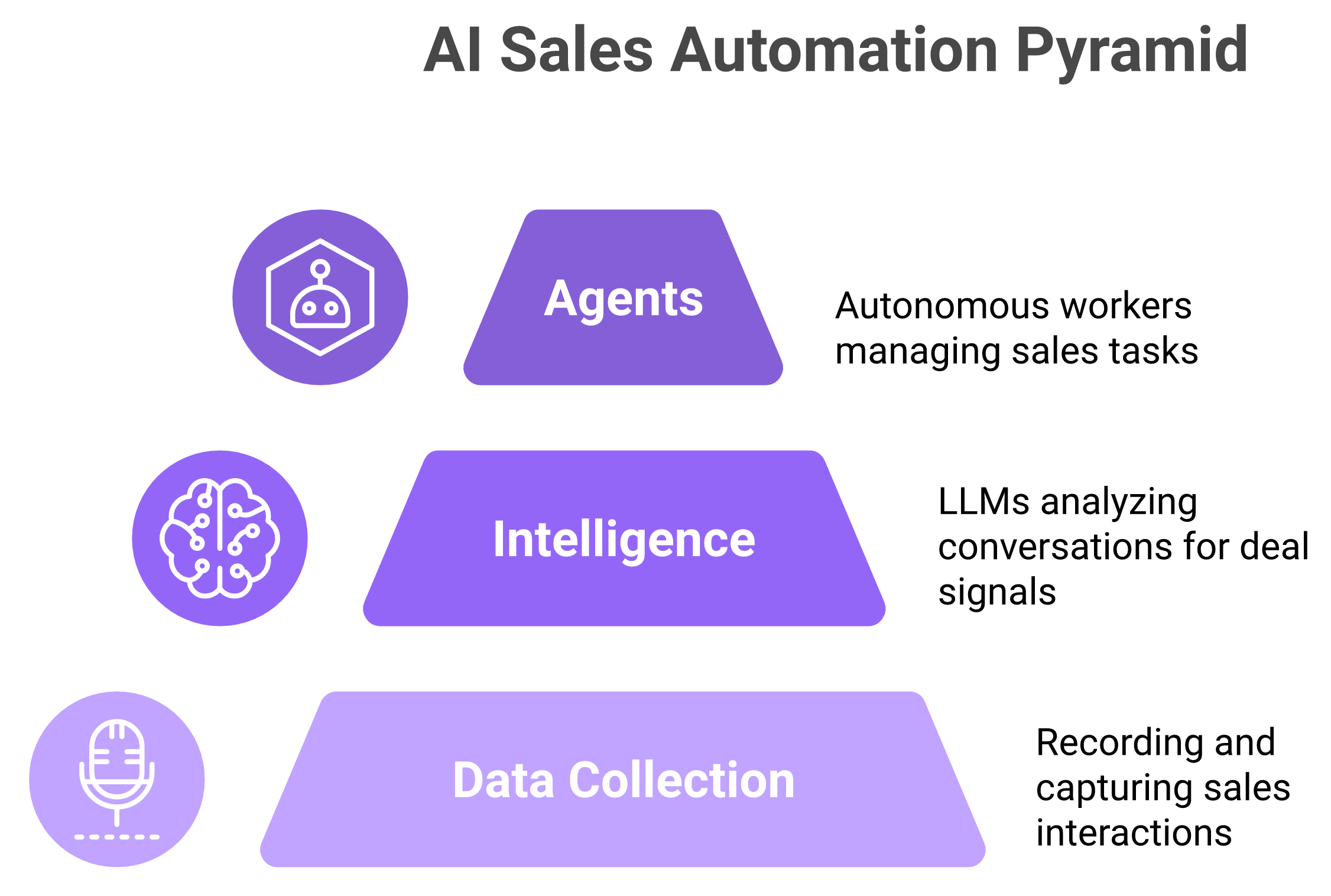
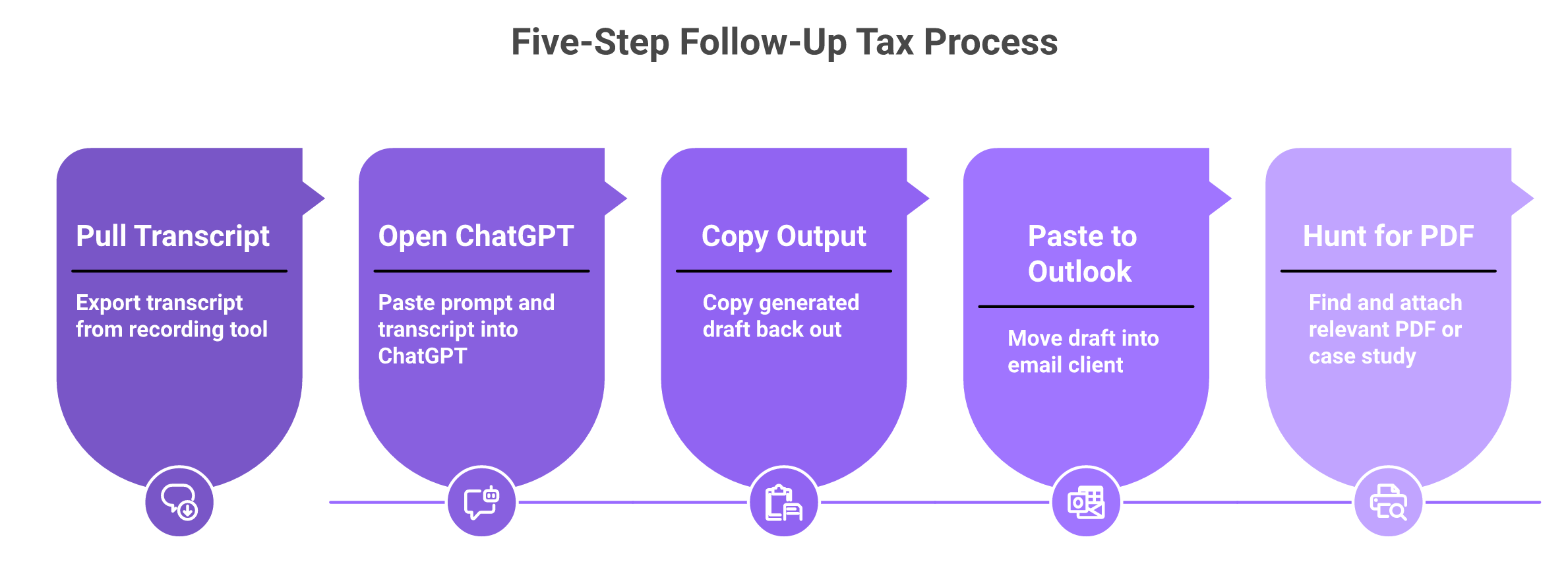
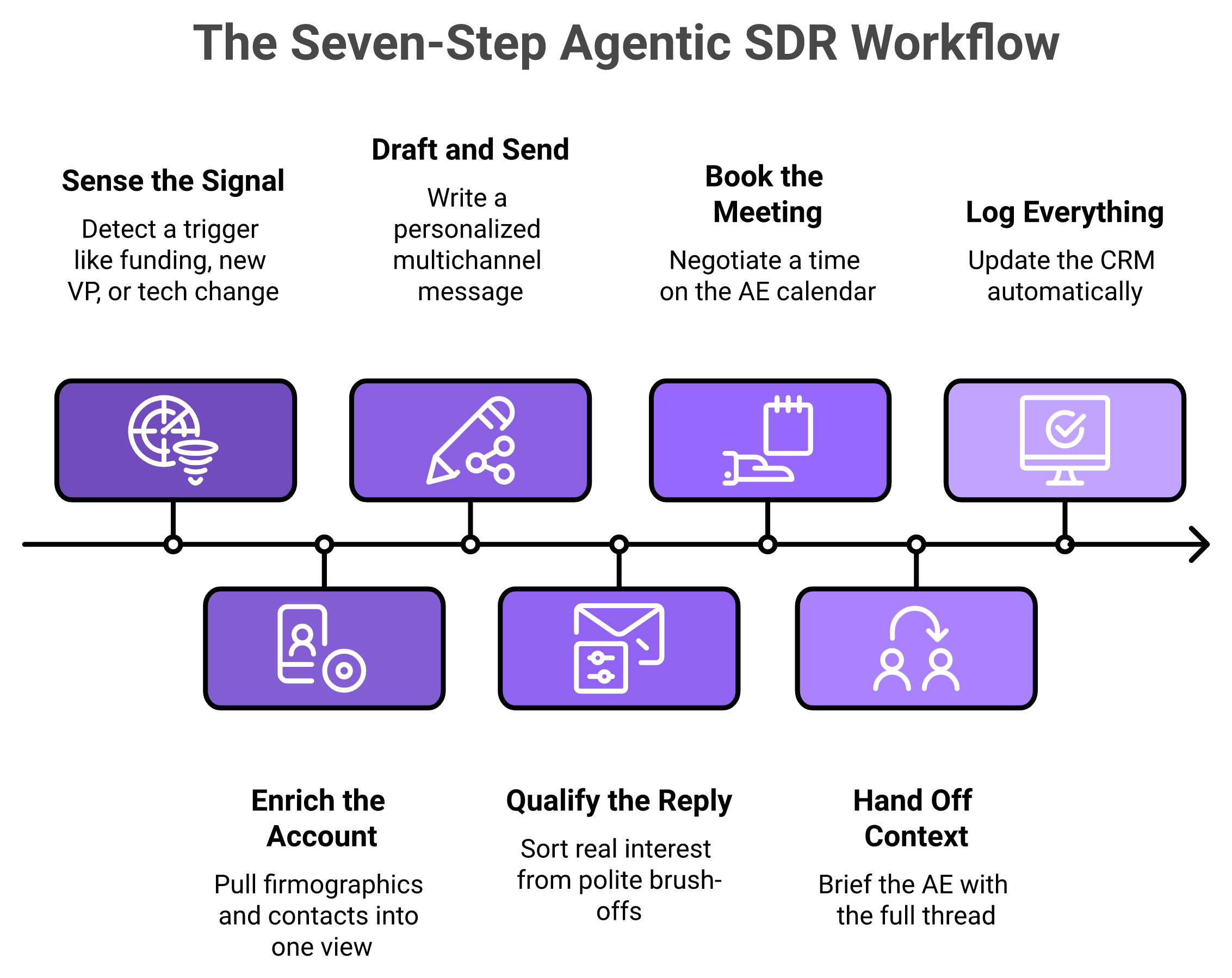
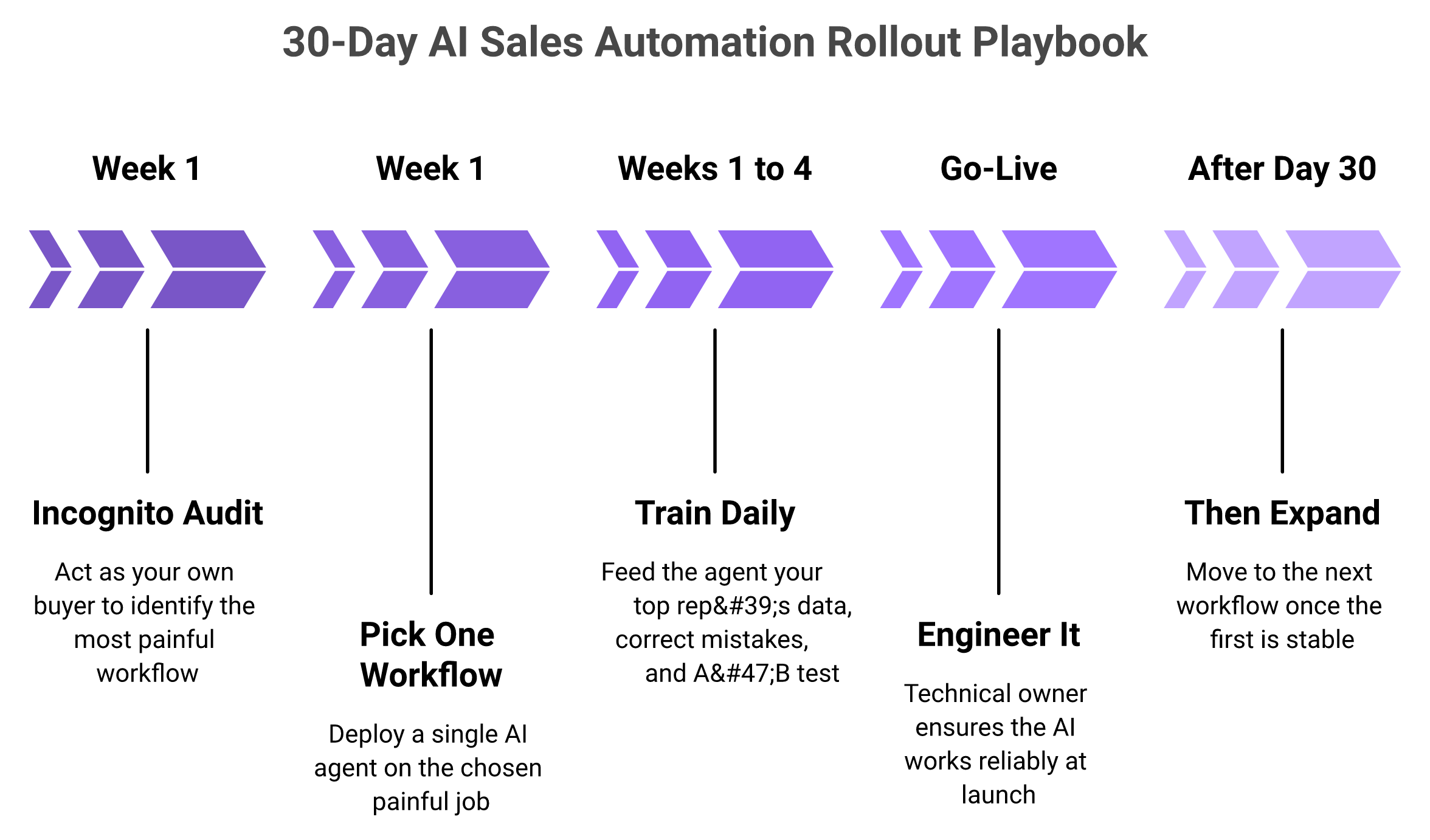

.png)
.png)
.png)

