Sales Process Automation in 2026: A Stage-by-Stage Guide With Tools, Templates, and an ROI Calculator
Written by
Ishan Chhabra
Last Updated :
June 18, 2026
Skim in :
7
mins
In this article
Revenue teams love Oliv
Here’s why:
All your deal data unified (from 30+ tools and tabs).
Insights are delivered to you directly, no digging.
AI agents automate tasks for you.
Thank you! Your submission has been received!
Oops! Something went wrong while submitting the form.
Meet Oliv’s AI Agents
Hi! I’m, Deal Driver
I track deals, flag risks, send weekly pipeline updates and give sales managers full visibility into deal progress
Hi! I’m, CRM Manager
I maintain CRM hygiene by updating core, custom and qualification fields all without your team lifting a finger
Hi! I’m, Forecaster
I build accurate forecasts based on real deal movement and tell you which deals to pull in to hit your number
Hi! I’m, Coach
I believe performance fuels revenue. I spot skill gaps, score calls and build coaching plans to help every rep level up
Hi! I’m, Prospector
I dig into target accounts to surface the right contacts, tailor and time outreach so you always strike when it counts
Hi! I’m, Pipeline tracker
I call reps to get deal updates, and deliver a real-time, CRM-synced roll-up view of deal progress
Hi! I’m, Analyst
I answer complex pipeline questions, uncover deal patterns, and build reports that guide strategic decisions
TL;DR
Sales process automation in 2026 shifts from rigid rule-based triggers to agentic AI that picks a goal, adapts when blocked, and acts inside the workflow.
Clean your data first, then automate in sequence: capture and enrichment, scoring and routing, follow-ups, CRM logging, and finally forecasting.
CRM-centric automation fails because reps treat the CRM as a dumb repository; bolting AI onto stale data amplifies the mess rather than fixing it.
Use the 10/80/10 rule: humans own ideation and quality checks, agents handle execution, and humans keep negotiation and complex enterprise trust.
Buy for fast-moving core needs and build only for a true moat; model ROI on reclaimed hours, revenue per rep, and honest tooling cost.
Avoid anti-patterns, build compliance in for the August 2026 EU AI Act, run a phased 90-day rollout, and adapt the playbook by vertical.
Q1: What Is Sales Process Automation in 2026, and Why Is the "Agentic" Definition Different? [toc=1. What It Is in 2026]
Sales process automation uses technology to remove repetitive selling tasks, like lead capture, routing, follow-ups, logging, and forecasting, so reps sell instead of updating systems. In 2026 the definition shifts. Traditional automation is a vending machine, with fixed input and fixed output. An AI agent behaves like a smart employee that picks a goal, improvises when blocked, and pursues it relentlessly. Chat to agents is the real story.
⚠️ The two cylinders most revenue engines run on
Picture a Friday standup. A RevOps lead pulls up a dashboard, and three of the seven reps have pipeline that hasn't moved in nine days. Nobody updated it. The data is stale, and the forecast built on it is fiction.
That is the quiet failure most teams live with. Reps spend roughly 64.8% of their time on work that doesn't sell anything, like research, logging, and admin. The selling engine fires on two cylinders, not eight.
💡 The plain-English definition (and where it breaks)
So here is the simplest way I explain it to a busy AE. Sales process automation hands the boring, repeatable steps to software. IBM defines it as using technology to cut repetitive tasks and lift team productivity.
Older automation follows rigid rules. If a form fails, the whole flow stops, exactly like a vending machine that jams when your payment glitches. It cannot adapt.
🤖 Vending machine versus smart employee
The 2026 shift: automation moves from a vending machine model to an agent that pursues goals and adapts.
This is the 2026 distinction that actually matters. A vending machine gives fixed output for fixed input. An agent acts more like a coach or a problem solver.
An agent picks a goal, rejigs the plan when something breaks, junks it if it isn't working, and improvises when it is. I think the teams who get this are pulling ahead fast. The operators and founders running agentic sales tools, in my experience, are working at a different tempo than peers still living inside chat windows.
I could be slightly off on the exact multiple, but the gap is real and widening. The shift from "chat to agents" is the line between teams that scale with intelligence and teams that scale with headcount.
✅ What this lets you do on Monday
Stop thinking about automation as a set of triggers. Start thinking about it as a goal you hand to an agent.
Instead of "send email A when stage changes to B," you say "advance this deal, and tell me what's blocking it." That reframe is the whole game.
At Oliv, we built around this agentic definition from day one rather than bolting a chat box onto an existing CRM. The platform reads deal-level context across calls, emails, and Slack, then acts on it, which sets up the bolt-on problem I'll unpack in a later section. It is the kind of shift the move from revenue ops to intelligence to orchestration has been building toward.
Q2: What Are the Stages of an Automated Sales Process, and What Should You Automate First? [toc=2. Stage-by-Stage Map]
Before automating anything, clean your data, because automation amplifies whatever it's fed. Then sequence the work: lead capture and enrichment, scoring and routing, follow-up sequences, CRM logging, and finally forecasting. Start with the most repetitive, lowest-judgment task, which is usually research and enrichment. That step can drop from 7.5 minutes to 45 seconds per lead. Don't automate qualification judgment first. Automate the keystrokes around it.
🧹 Step zero: clean data, or skip everything
I learned this the hard way watching teams automate on top of garbage. If your CRM is half-empty and full of duplicates, automation just makes bad decisions faster.
Salesforce found that 74% of teams using AI prioritize data quality first. That is not housekeeping. That is the foundation the whole stack stands on.
🏭 The Revenue Factory view
I think of the funnel as a manufacturing line. Volume times conversion rate equals output, and every micro-stage can be instrumented and measured.
When you see it this way, "what to automate" stops being a guess. You find the stage leaking the most time or deals, and you instrument that first. This is the heart of how a revenue intelligence platform earns its place.
📋 The stage-by-stage map
Here is the order I'd hand a RevOps lead trying to build this without breaking the team.
Stage
What gets automated
Expected payoff
Capture and enrich
Lead intake, data appends, deduping
Research drops to ~45 seconds per lead
Score and route
Lead scoring, instant assignment
Faster speed-to-lead, less manual triage
Nurture
Follow-up sequences, reminders
Fewer dropped deals, consistent touches
Log activity
Call notes, email sync, CRM updates
Reps reclaim selling hours
Forecast
Pipeline rollups, slippage flags
Cleaner Monday forecast
⚡ The automate-first rule
Start where judgment is lowest and repetition is highest. Research and enrichment fit perfectly, because the steps are identical every time.
Do not automate qualification judgment first. That is where human read matters most early on. Automate the keystrokes around the judgment, not the judgment itself.
One more lesson from scaling: bring in RevOps early, often around 3 to 4 million ARR. Instrument the customer journey before scale breaks the process, not after.
At Oliv, the agents operate at the deal level across the full cycle, not just one meeting or one stage. They stitch context from calls, emails, Slack, and Telegram, so the stage map runs on real signal instead of whatever a rep remembered to type in on Friday. If forecasting is the stage you most want to harden, our AI sales forecasting software guide goes deeper.
Q3: Why Does CRM-Centric Automation Keep Failing, and What Is the "Bolt-On" Trap? [toc=3. Why CRM Automation Fails]
CRM-centric automation fails because reps treat the CRM as a dumb repository. They update it weekly only because management requires it, so the data feeding your automation is stale. Bolting AI onto that broken foundation amplifies the mess. The fix isn't another feature. It's an AI-native system that reads the underlying data directly instead of waiting for manual entry.
Bolt-on AI inherits stale CRM data, while an AI-native agent reads the deal directly for grounded answers.
❌ The standard read gets this backwards
Most teams believe the answer is simple. Add an AI feature to Salesforce, and the CRM gets smart. I think that read is wrong.
The CRM was never the brain. As a product, it largely failed at helping reps sell. It became a dumb repository, where reps dump information weekly because a manager asks, not because it makes them money.
When the underlying data is stale and reluctant, an AI layer on top inherits all of it. Garbage in, confident garbage out.
🧱 Where the bolt-on actually breaks
Here is the concrete failure mode. Rule-based AI assumes clean, single records. Real CRMs are messy.
A rep is told to sell to Google. They accidentally create a duplicate account. Rule-based engines like Salesforce Einstein struggle here, because two accounts give them no easy way to know which logic applies. The "simple rule" has no answer, so the automation quietly produces the wrong thing.
This is why bolting on small AI features, here and there, doesn't fix a broken core. You need a different architecture, not another widget. We unpack this further in our breakdown of Salesforce Agentforce reviews.
Operators feel this in setup and adoption, not just theory.
"It can be complex to set up and often requires skilled administrators or developers to customize and integrate properly, which adds time and cost. The user interface, though improved with Lightning, may still feel clunky or unintuitive to some agents, leading to slower adoption." Verified User in Marketing and Advertising, Enterprise Salesforce Agentforce G2 Verified Review
"The price of Agentforce is not clear and hard to find. Adoption is low because of the lack of knowledge on the subject as AI is a new field. Customers are finding issues in deploying and using agents in Salesforce." Anusha T., Web Developer Salesforce Agentforce G2 Verified Review
"You need to activate einstein and other stuff if you want to use agentforce. but why don't you enable dependency if i directly wanna start agentforce in a single click?" shivam a., Product Researcher Salesforce Agentforce G2 Verified Review
✅ The better architecture
A true agent doesn't wait politely for a rep to update a field. It goes to the underlying data, applies its own logic, and returns an answer.
That is the difference between asking the CRM and reading the deal. The standard playbook keeps polishing the repository. The better move is to stop depending on manual entry at all.
This is where Oliv sits. As an AI-native system, it ingests deal data directly and lets RevOps analyze it in a spreadsheet-like interface, without the wonky-API custom-code tax that legacy tools demand just to get data out. If you are weighing the move away from a bolted-on stack, our roundup of Agentforce alternatives and competitors lays out the options.
Q4: How Do AI Agents Work Across the Pipeline, and Where Should Humans Still Touch the Deal? [toc=4. AI Agents & Human Moments]
AI agents now handle high-volume, low-judgment work, like research, drafting follow-ups, logging, and building forecast one-pagers, while humans own ideation and relationship-defining moments. Use the 10/80/10 rule: humans do 10% ideation and 10% quality check, and agents do 80% execution. Keep humans on negotiation, multi-threaded enterprise trust, and judgment calls. By 2026, expect many teams to run roughly 50% human and 50% AI.
🍰 The three-layer cake
The cleanest way I've found to explain how agents work is a three-layer cake. Each layer does a different job.
Baseline data layer. Recording and transcription. This is commoditized and should be cheap or free.
Intelligence layer. LLMs track qualification fields, like MEDDIC, the framework that scores Metrics, Economic buyer, Decision criteria, and more.
Agent layer. Proactive outputs, like deal one-pagers and reports, pushed to leadership without anyone asking.
Most legacy tools stop at layer one. The value lives in layers two and three. Our guide to the best revenue intelligence software platforms shows which tools climb past recording.
🗺️ GPS, not just a map
The 10/80/10 rule: agents run execution while humans own ideation, quality checks, negotiation, and trust.
Here is a parallel I lean on. A sales process is like Google Maps, showing the whole route. A qualification methodology like MEDDIC works like GPS, telling you the exact next turn to close.
Agents sit in that GPS role. They read where the deal is, then tell you the next move, instead of leaving you to stare at a static map.
By 2027, Gartner expects 95% of seller research to start with AI, up from under 20% in 2024. The research turn is already automating itself.
⚖️ The 10/80/10 split
This is the rule I'd tape to a monitor. Humans handle the bookends. Agents handle the middle.
Phase
Owner
What it covers
10% ideation
Human
Define the ideal customer and the goal
80% execution
Agent
Research, drafting, logging, reports
10% integration
Human
Quick quality sniff-test before it ships
I might be wrong on the exact ratios for your team. But the principle holds: let agents do the work so you keep doing the intelligence.
🤝 The moments to keep human
Not everything should be handed off, and the category quietly oversells "replace your reps." I'd push back on that hard.
Keep humans on these:
Negotiation and pricing pressure.
Multi-threaded enterprise trust, where several stakeholders need a real relationship.
Judgment calls where the data is ambiguous.
There's proof agents can execute. A horizontal clone agent, not even built for sales, once closed a $70,000 sponsorship deal on its own. Impressive, and also a reminder to define exactly where the human stays in the loop.
At Oliv, the agents live in the intelligence and agent layers, tracking qualification fields and generating proactive deal one-pagers. We deliberately don't do real-time, in-call coaching, because that live moment belongs to the human selling. That is a trade-off we chose on purpose, and one we explore in our look at the best sales coaching software.
Q5: Should You Build Sales Automation In-House or Buy an Agent? [toc=5. Build vs Buy]
Buy for anything core and fast-moving, and build only for a genuinely proprietary edge. Even capable internal builds go stale in months as models shift, because you're not Vercel. The pragmatic test: run the "incognito test" on your own funnel, find what makes you cringe most, and buy the agent that fixes it. Redirect your engineering to your actual moat.
⚠️ The scar tissue both sides carry
I've sat on both sides of this. I've built a dozen working apps in a few months, fast, cheap, and genuinely useful. So I get the pull to build.
But here's the other side of that same lesson. Even good internal builds rot fast, because the model landscape moves under you. What ships clean today feels dated in a quarter.
💸 The cost math operators forget
Building looks cheap until you price the upkeep. Token costs for narrow tasks are tiny now. Scraping hundreds of business sites can cost just cents per site using lean models like DeepSeek or Qwen.
So the raw compute isn't your problem. The maintenance, the breakage, and the opportunity cost of your best engineer babysitting a brittle script, that's the real bill. This is part of why teams shortlist the best AI sales tools instead of building from scratch.
🧪 The incognito test
Here's a decision rule I trust more than any vendor demo. Open your own product in an incognito browser. Try to buy, try to get support, and try to book a call.
Do it quietly, and you will probably cringe. Pick the thing that makes you cringe most, and go buy the agent that fixes it. That's your buy list, ranked by pain.
The market is crowded, and operators feel the lock-in pain when they buy wrong.
"It was a big mistake on our part to commit to a two year term. Gong is a really powerful tool but its probably the highest end option on the market, and now were stuck with a tool that works technically but isnt the right business decision." Iris P., Head of Marketing Gong G2 Verified Review
"Outreach isnt for Hubspot CRM users. They dont have native Hubspot CRM integration and the current integration is via Hubspot." Vamsi C., Revenue Operations Outreach G2 Verified Review
✅ A four-criteria buy/build rubric
Use this before you commit a single sprint.
Criterion
Lean buy
Lean build
Is it core to your moat?
No
Yes
How fast does the tech move?
Fast
Slow and stable
Do mature vendors already nail it?
Yes
No
Can you maintain it long-term?
No
Yes, easily
Incumbents like Salesforce and HubSpot have a real edge here, because they already own the data and the workflows. Fighting them with a weekend build rarely wins.
This is the case for Oliv as the "buy" that skips the integration tax. Instead of building custom code just to pull deal data out, like the wonky-API work Gong setups often demand, Oliv ingests it directly and lets RevOps analyze it in a spreadsheet-like view out of the box. If you are weighing options, our roundup of Gong alternatives is a useful starting point.
Q6: How Do You Build a Sales Automation ROI Calculator a CFO Will Believe? [toc=6. ROI Calculator & Benchmarks]
Model ROI on three inputs: hours reclaimed (reps lose roughly 64.8% of time to admin), revenue per rep, and tooling cost. Benchmark against SaaStr targets, which sit near $500K to $1M ARR per rep today, with AI-powered teams pushing toward $3M to $5M. Multiply reclaimed selling hours by pipeline conversion, subtract tool cost, and you have a number that survives the forecast scrub.
📉 Why most ROI decks die in the CFO meeting
The pain is real and recent. In 2025, a striking share of enterprises missed revenue targets even after pouring money into AI. Roughly 87% fell short despite record AI investment.
That number tells your CFO something true. Spending on AI is not the same as returning on it. So your model has to show mechanism, not vibes.
🧮 The three inputs that hold up
Keep the model boring and defensible. Three inputs do most of the work.
Hours reclaimed. Reps lose about 64.8% of time to non-selling work. Reclaim even part of that.
Revenue per rep. Old benchmark was $300K to $500K. AI-powered teams now target $3M to $5M.
Tooling cost. Model it honestly, including hidden action-based pricing.
⏰ The calculation, step by step
A defensible ROI chain: reclaimed hours become selling capacity, then pipeline, minus tool cost equals net gain.
Here is the formula I'd defend in any boardroom.
Take weekly admin hours per rep, and estimate the share an agent can absorb.
Convert reclaimed hours into added selling capacity.
Multiply by your historical pipeline conversion rate.
Subtract annual tool cost to get net gain.
Watch the pricing trap closely. Some vendors quote an opaque action model, like roughly $0.10 per action, while others quote $500 per seat all-inclusive. Those two structures produce wildly different annual bills, so model both. Our breakdown of Salesforce Agentforce pricing shows how confusing this gets.
The mechanism is proven, not theoretical. Salesforce found 83% of teams using AI grew revenue, versus 66% without it. That delta is the spine of your ROI story.
💰 The headcount line nobody wants to say out loud
There's a cost most decks hide. A junior SDR who churns after a year can burn six figures with little to show. I just couldn't justify paying $150K for someone to quit, again.
That isn't cruelty. It's the honest comparison your CFO already runs in their head, so put it in the model.
For Oliv, I'd anchor the ROI in reclaimed forecast-scrub time. Every Thursday and Friday, managers and reps burn one to two hours each prepping the forecast. Oliv's agents assemble that automatically, and you convert those recovered hours straight into selling capacity in the model above. Our guide to AI sales forecasting software walks through how that works in practice.
Q7: What Does an Automated Weekly Forecast and Deal Review Actually Look Like? [toc=7. Automated Forecasting]
Today, managers spend one to two hours every Thursday and Friday interrogating each rep's pipeline, then hand-build the Monday forecast. Automated, an agent reads deal data continuously, flags slipping deals against qualification fields, and generates the forecast one-pager itself. The manager's job shifts from data assembly to judgment, including the discipline to push unqualifiable deals off the forecast.
⏰ Situation: the Thursday-Friday ritual
Picture Maya, a mid-market sales manager. Every Thursday and Friday, she sits with each rep for one to two hours.
She wants to understand what the rep worked on and how the pipeline moved. Then she manually drops it all into a forecast, and builds the report she'll show on Monday. Two days, gone, every single week.
⚠️ Complication: the data fights back
The trouble is the inputs. Reps update the CRM late, or not at all, so Maya is reconstructing reality from memory and Slack threads.
Managing sales without clean analytics is like driving without GPS or Waze. You're guessing at every turn. And guesses roll straight into a forecast leadership treats as fact. This is exactly the gap Gong forecasting tries to close, with mixed results.
Reps feel this drag too, even with tools meant to help.
"Searching for calls is not easy, moving around in the calls is not easy, and understanding the pipeline management portion of it is almost impossible." John S., Senior Account Executive Gong G2 Verified Review
"Clari is a tool for sales leaders, it adds no value to reps as far as I can see." Msoave, r/SalesOperations Reddit Thread
✅ Resolution: the agent does the scrub
Now flip it. An agent reads deal data continuously across calls, emails, and CRM activity.
It flags deals that slipped, checks them against qualification fields, and drafts the forecast one-pager before Maya sits down. Her two-day scrub becomes a 20-minute review. When configured well, reps actually warm to this, as one RVP noted.
"4 months later everyone of my reps loves it because it makes updating salesforce 10x easier. Forecasting for the quarter is so much simpler and cleaner now." ChimpDaddy2015, r/sales Reddit Thread
🧭 The judgment that stays human
Automation handles assembly. Maya handles the call. Here's the discipline I'd coach: if a rep can't articulate the exact status of a deal, push it off the forecast.
Make them remove it. That single habit cleans your number more than any tool.
This is exactly where Oliv operates. Gong largely understands a deal at the meeting level. Oliv tracks and analyzes the full sales cycle at the deal level, pipeline movement, coaching, and forecasting, and auto-generates the report that used to eat Maya's Thursday and Friday. See how this stacks up in our Gong vs Oliv comparison.
Q8: Which Sales Automation Tools Win in 2026, and How Do AI-Native Agents Compare to Gong, Outreach, and Agentforce? [toc=8. Tool Comparison]
Evaluate tools on three axes: intelligence latency, workflow integration, and pricing transparency. Call recording is now commoditized, so the real edge is what happens after the call. A 5-minute, deal-level intelligence window beats a 20 to 30 minute meeting-level summary. Agentforce-style tools stay chat-focused and weakly integrated, while AI-native agents act inside the workflow. Match the tool to your deal complexity, not the brand.
🛠️ The adoption-killer most stacks ignore
Here's the workflow that quietly kills tool adoption. A rep needs to write a follow-up email after a call.
So they pull the transcript from Gong, paste it into a custom GPT, copy the output into Outlook, then hunt for a relevant PDF to attach. That's so much manual work that most reps just skip it. The tool gets blamed, but the workflow is the real problem. Our review of the best AI for sales calls digs into where this breaks.
📊 The three-axis comparison
Recording is commoditized now. The differentiation is delay, depth, and how deeply the tool lives in your workflow.
Tool
Intelligence latency
Integration depth
Known friction
Gong
Meeting-level summary, slower turnaround
Strong CI, weak data portability
Bulk export and API limits
Outreach
Sequence-based, not deal intelligence
Solid Salesforce, weak HubSpot
Sync breaks, glitches
Agentforce
Chat-prompt driven
Requires Einstein, heavy setup
Low adoption, unclear pricing
Oliv (AI-native)
~5-minute, deal-level
Reads deal data directly
Full customization takes 2 to 4 weeks
The data-access pain with legacy tools is well documented.
"Frustrating Data Access Limitations. It requires downloading calls individually, which is impractical and inefficient for a large volume of data." Neel P., Sales Operations Manager Gong G2 Verified Review
"Adoption is low because of the lack of knowledge on the subject as AI is a new field. Customers are finding issues in deploying and using agents in Salesforce." Anusha T., Web Developer Salesforce Agentforce G2 Verified Review
"They dont have native Hubspot CRM integration. The Hubspot Outreach sync breaks once in every two weeks." Vamsi C., Revenue Operations Outreach G2 Verified Review
🎯 Scenario-based picks
Don't buy the brand. Buy the fit.
High-volume SMB outbound: a sequencing tool like Outreach, if your CRM is Salesforce, not HubSpot.
Coaching-heavy enterprise: Gong, if you can absorb the cost and export limits.
Deal-level forecasting and RevOps analysis: an AI-native agent that reads deals directly.
⚠️ The B2B-versus-B2C tell
One quiet structural point. Salesforce has leaned hard into its B2C data cloud, which leaves B2B selling underserved. As I'd put it, B2C bots help people return shirts, while B2B agents help close million-dollar deals. Those are different jobs.
This is where Oliv fits the third bucket. It delivers deal-level intelligence in roughly a 5-minute window after the call, not a 20 to 30 minute meeting summary, and lets RevOps slice that data in a spreadsheet-like interface. It's AI-native, not an AI feature bolted onto a decade-old core. For a wider view, see our roundup of the best revenue intelligence software platforms.
Q9: What Are the Anti-Patterns That Make Sales Automation Backfire? [toc=9. Anti-Patterns to Avoid]
Automation backfires when you scale a broken process, because bad systems get amplified, not fixed. The classic tells are "Hello [First_Name]" merge-field failures, pilots that never reach production, and outsourcing your own thinking to the model. The rule is simple: fix the underlying workflow before you automate it, and let the agent do the work so you can do the intelligence.
❌ Anti-pattern 1: automating a broken process
The standard read says automation fixes messy sales ops. I think that gets it backwards.
If your systems are weak, automation just amplifies the mess faster. We've all gotten the email that opens "Hello [First_Name]," because a merge field failed at scale. That's a small symptom of a bigger truth, that you scaled chaos.
⚠️ Anti-pattern 2: the pilot trap
Here's a pattern I keep seeing. A pilot starts with promise, lots of energy, and a few wins. Then it quietly fades.
The team struggles to move it into production, so it dies on the vine. Operators feel this drift even with funded tools, a pattern we cover in our look at the Gong implementation timeline.
"Weve had a disappointing experience with Gong Engage. Our team is struggling with low adoption, and they wont even spend the time to support us during this transition." Verified Reviewer Gong G2 Verified Review
"Adoption is low because of the lack of knowledge on the subject as AI is a new field. Customers are finding issues in deploying and using agents in Salesforce." Anusha T., Web Developer Salesforce Agentforce G2 Verified Review
The fix is the 30-day training rule. Each day, your AI agent will say some dumb things, maybe a hallucination, which means a confident but wrong output. You correct it for an hour or two daily, and by day 30 it performs. Our breakdown of Agentforce implementation shows where these curves usually stall.
💸 Anti-pattern 3: outsourcing your thinking
This one's subtle, and it's the one I worry about most. AI will make you dumb if you hand it your problem-solving.
The move is the opposite. Get the AI to do the work, so you keep doing the intelligence. Let it draft, scrape, and summarize, while you own the judgment. That balance sits at the heart of the best AI sales tools.
🤔 The honest trade-off nobody mentions
Here's where I'll be candid about what we got wrong early. Agents never sleep, so the review burden is real.
One teammate of ours spent 10 to 15 hours a week just reviewing agent outputs. This is not a job for lazy people, because the agents work all night and the queue never empties. Anyone selling you zero-effort automation is skipping that part.
This is exactly where Oliv tries to lower the slop tax. Instead of spraying generative text everywhere and forcing huge manual review, Oliv works on structured deal data, so the output is grounded and the QA load drops. It is one reason we frame the shift as moving from revenue ops to intelligence to orchestration.
I'm sitting with one open question, though. As agents get cheaper to run, does the review bottleneck become the new constraint on every sales team? If you've felt that pinch already, I'd genuinely like to hear how you're handling it.
Q10: How Do You Stay Compliant When AI Agents Are Selling for You? [toc=10. Compliance by Design]
From August 2, 2026, the EU AI Act (Article 50) requires any AI agent interacting with people to disclose that it is AI, with fines up to €35M or 7% of global turnover. Layer on two-party consent, where 13 to 14 US states plus places like Germany and California require all-party consent to record. Then add SOC 2 and GDPR as procurement gates. Build disclosure and consent into the workflow, not as an afterthought.
⚠️ Article 50 disclosure: the August 2026 line
This page covers the rules that bite first. The EU AI Act's transparency duty (Article 50) takes effect on August 2, 2026.
Any AI agent that talks to a person must disclose it is artificial. This applies regardless of where you build it, if EU users are involved. Penalties reach €35M or 7% of global turnover.
What to do: add a clear AI-disclosure line to any agent-driven outreach or chat touching EU contacts. Our overview of AI for sales calls covers where disclosure fits the flow.
✅ Two-party consent for recording
Call recording is where most sales teams quietly break the law. In two-party (or all-party) consent states, every person on the call must agree before recording starts.
Roughly 13 to 14 US states enforce this, including California, plus jurisdictions like Germany. The safe default is simple. Treat every call as all-party consent, everywhere.
What to do: bake a consent prompt into your call-recording and conversation-intelligence flow, not a post-call apology. For vendor specifics, see our notes on Gong DPA and security.
💰 SOC 2 and GDPR as procurement gates
For mid-market and enterprise buyers, two acronyms decide deals. SOC 2, a security-controls audit, and GDPR, the EU data-privacy law, are now standard checkboxes.
If your automation vendor can't show both, procurement stalls. So vet this before you fall in love with a demo. A capable revenue intelligence platform should clear these gates on day one.
🤔 The contested part: do you announce the AI?
Here's where smart operators disagree, and the law only sets the floor. Some insist on disclosing AI use in every email.
Others tell me that, in practice, nobody minds, as long as the message adds real value. I lean toward meeting the legal bar first, then using judgment on the rest. There's no clean universal answer yet.
One more layer matters in regulated work. In finance, you must create an audit trail, because accounting has demanded traceability for 500 years. You physically link the data, so the customer, and their auditor, stay comfortable.
This is part of why we built Oliv with a SOC 2 and GDPR posture, plus an auditable deal-intelligence trail. For regulated mid-market and enterprise teams, that record of what the agent saw and did is not a nice-to-have. It is the thing that lets the deal clear legal, the kind of rigor we expect from any revenue intelligence software platform.
Q11: How Do You Roll Out Automation in 90 Days, and How Does the Playbook Change by Vertical? [toc=11. Rollout & Vertical Blueprints]
Plan a phased 90-day rollout: weeks 1 to 4 instrument and clean data, weeks 5 to 8 pilot one stage, and weeks 9 to 12 expand and harden. The core discipline is the 30-day training rule, where you correct the agent daily and it performs reliably by day 30. Then adapt by vertical. High-velocity SMB SaaS automates qualification aggressively, while complex enterprise and regulated services keep more human gates and audit trails.
⏰ The 90-day phased rollout
By the end of this, you'll have a working agent, not a stalled pilot. Move in three phases.
Phase
Weeks
Focus
Instrument
1 to 4
Clean data, connect sources, define one goal
Pilot
5 to 8
Automate a single stage, like enrichment
Expand
9 to 12
Add stages, harden, measure against benchmarks
Start narrow. A focused pilot beats a big-bang rollout that nobody trusts.
✅ The 30-day training rule, and a memory hack
Training an agent feels scary, but it isn't. Each day it sends outputs, and some will be dumb or hallucinated.
You spend an hour or two correcting those mistakes, daily. By day 30, it's genuinely good. To make corrections stick, add a file called memory.md to its workspace.
Tell the agent this: when I correct you, or you learn something new, update the relevant section in memory.md, and keep it current. That one habit compounds fast, much like a disciplined MEDDIC sales methodology compounds across a team.
💡 Train on your best rep
Here's the highest-leverage move. Take what works for your best performer, upload that text, and train the agent on it.
Then let it A/B test from there, because agents are excellent at running A/B tests. A lazy one-line prompt can also be sharpened with a tool like Prompt Cowboy into a tight, methodology-specific instruction set. This pairs well with structured coaching, as we cover in the best sales coaching software guide.
A quick warning from experience. When we rolled out AI RevOps, one teammate quit that day, because he hadn't actually closed anything in 30 days. Automation surfaces non-performance fast, so prepare for that human moment.
🧭 How the playbook shifts by vertical
One blueprint does not fit every motion. Here's the honest "it depends."
Vertical
Automate aggressively
Keep human
SMB SaaS, high velocity
Qualification, sequences
Light final check
Enterprise, complex deals
Research, logging, prep
Negotiation, multi-threading
Regulated services
Drafting, summaries
Approvals, audit trail
There's a real debate on whether deep domain expertise matters more than deal-size skill. I won't pretend it's settled, because both camps have closed real revenue.
We built Oliv to onboard on your existing deal data and your best-rep playbook, so the 30-day curve starts from your reality, not a generic template. If you're sitting on a forecast you don't trust, tell me what you're trying to get right, and let's reason through where an agent actually fits, the same lens we apply in our AI sales forecasting software guide.
Q1: What Is Sales Process Automation in 2026, and Why Is the "Agentic" Definition Different? [toc=1. What It Is in 2026]
Sales process automation uses technology to remove repetitive selling tasks, like lead capture, routing, follow-ups, logging, and forecasting, so reps sell instead of updating systems. In 2026 the definition shifts. Traditional automation is a vending machine, with fixed input and fixed output. An AI agent behaves like a smart employee that picks a goal, improvises when blocked, and pursues it relentlessly. Chat to agents is the real story.
⚠️ The two cylinders most revenue engines run on
Picture a Friday standup. A RevOps lead pulls up a dashboard, and three of the seven reps have pipeline that hasn't moved in nine days. Nobody updated it. The data is stale, and the forecast built on it is fiction.
That is the quiet failure most teams live with. Reps spend roughly 64.8% of their time on work that doesn't sell anything, like research, logging, and admin. The selling engine fires on two cylinders, not eight.
💡 The plain-English definition (and where it breaks)
So here is the simplest way I explain it to a busy AE. Sales process automation hands the boring, repeatable steps to software. IBM defines it as using technology to cut repetitive tasks and lift team productivity.
Older automation follows rigid rules. If a form fails, the whole flow stops, exactly like a vending machine that jams when your payment glitches. It cannot adapt.
🤖 Vending machine versus smart employee
The 2026 shift: automation moves from a vending machine model to an agent that pursues goals and adapts.
This is the 2026 distinction that actually matters. A vending machine gives fixed output for fixed input. An agent acts more like a coach or a problem solver.
An agent picks a goal, rejigs the plan when something breaks, junks it if it isn't working, and improvises when it is. I think the teams who get this are pulling ahead fast. The operators and founders running agentic sales tools, in my experience, are working at a different tempo than peers still living inside chat windows.
I could be slightly off on the exact multiple, but the gap is real and widening. The shift from "chat to agents" is the line between teams that scale with intelligence and teams that scale with headcount.
✅ What this lets you do on Monday
Stop thinking about automation as a set of triggers. Start thinking about it as a goal you hand to an agent.
Instead of "send email A when stage changes to B," you say "advance this deal, and tell me what's blocking it." That reframe is the whole game.
At Oliv, we built around this agentic definition from day one rather than bolting a chat box onto an existing CRM. The platform reads deal-level context across calls, emails, and Slack, then acts on it, which sets up the bolt-on problem I'll unpack in a later section. It is the kind of shift the move from revenue ops to intelligence to orchestration has been building toward.
Q2: What Are the Stages of an Automated Sales Process, and What Should You Automate First? [toc=2. Stage-by-Stage Map]
Before automating anything, clean your data, because automation amplifies whatever it's fed. Then sequence the work: lead capture and enrichment, scoring and routing, follow-up sequences, CRM logging, and finally forecasting. Start with the most repetitive, lowest-judgment task, which is usually research and enrichment. That step can drop from 7.5 minutes to 45 seconds per lead. Don't automate qualification judgment first. Automate the keystrokes around it.
🧹 Step zero: clean data, or skip everything
I learned this the hard way watching teams automate on top of garbage. If your CRM is half-empty and full of duplicates, automation just makes bad decisions faster.
Salesforce found that 74% of teams using AI prioritize data quality first. That is not housekeeping. That is the foundation the whole stack stands on.
🏭 The Revenue Factory view
I think of the funnel as a manufacturing line. Volume times conversion rate equals output, and every micro-stage can be instrumented and measured.
When you see it this way, "what to automate" stops being a guess. You find the stage leaking the most time or deals, and you instrument that first. This is the heart of how a revenue intelligence platform earns its place.
📋 The stage-by-stage map
Here is the order I'd hand a RevOps lead trying to build this without breaking the team.
Stage
What gets automated
Expected payoff
Capture and enrich
Lead intake, data appends, deduping
Research drops to ~45 seconds per lead
Score and route
Lead scoring, instant assignment
Faster speed-to-lead, less manual triage
Nurture
Follow-up sequences, reminders
Fewer dropped deals, consistent touches
Log activity
Call notes, email sync, CRM updates
Reps reclaim selling hours
Forecast
Pipeline rollups, slippage flags
Cleaner Monday forecast
⚡ The automate-first rule
Start where judgment is lowest and repetition is highest. Research and enrichment fit perfectly, because the steps are identical every time.
Do not automate qualification judgment first. That is where human read matters most early on. Automate the keystrokes around the judgment, not the judgment itself.
One more lesson from scaling: bring in RevOps early, often around 3 to 4 million ARR. Instrument the customer journey before scale breaks the process, not after.
At Oliv, the agents operate at the deal level across the full cycle, not just one meeting or one stage. They stitch context from calls, emails, Slack, and Telegram, so the stage map runs on real signal instead of whatever a rep remembered to type in on Friday. If forecasting is the stage you most want to harden, our AI sales forecasting software guide goes deeper.
Q3: Why Does CRM-Centric Automation Keep Failing, and What Is the "Bolt-On" Trap? [toc=3. Why CRM Automation Fails]
CRM-centric automation fails because reps treat the CRM as a dumb repository. They update it weekly only because management requires it, so the data feeding your automation is stale. Bolting AI onto that broken foundation amplifies the mess. The fix isn't another feature. It's an AI-native system that reads the underlying data directly instead of waiting for manual entry.
Bolt-on AI inherits stale CRM data, while an AI-native agent reads the deal directly for grounded answers.
❌ The standard read gets this backwards
Most teams believe the answer is simple. Add an AI feature to Salesforce, and the CRM gets smart. I think that read is wrong.
The CRM was never the brain. As a product, it largely failed at helping reps sell. It became a dumb repository, where reps dump information weekly because a manager asks, not because it makes them money.
When the underlying data is stale and reluctant, an AI layer on top inherits all of it. Garbage in, confident garbage out.
🧱 Where the bolt-on actually breaks
Here is the concrete failure mode. Rule-based AI assumes clean, single records. Real CRMs are messy.
A rep is told to sell to Google. They accidentally create a duplicate account. Rule-based engines like Salesforce Einstein struggle here, because two accounts give them no easy way to know which logic applies. The "simple rule" has no answer, so the automation quietly produces the wrong thing.
This is why bolting on small AI features, here and there, doesn't fix a broken core. You need a different architecture, not another widget. We unpack this further in our breakdown of Salesforce Agentforce reviews.
Operators feel this in setup and adoption, not just theory.
"It can be complex to set up and often requires skilled administrators or developers to customize and integrate properly, which adds time and cost. The user interface, though improved with Lightning, may still feel clunky or unintuitive to some agents, leading to slower adoption." Verified User in Marketing and Advertising, Enterprise Salesforce Agentforce G2 Verified Review
"The price of Agentforce is not clear and hard to find. Adoption is low because of the lack of knowledge on the subject as AI is a new field. Customers are finding issues in deploying and using agents in Salesforce." Anusha T., Web Developer Salesforce Agentforce G2 Verified Review
"You need to activate einstein and other stuff if you want to use agentforce. but why don't you enable dependency if i directly wanna start agentforce in a single click?" shivam a., Product Researcher Salesforce Agentforce G2 Verified Review
✅ The better architecture
A true agent doesn't wait politely for a rep to update a field. It goes to the underlying data, applies its own logic, and returns an answer.
That is the difference between asking the CRM and reading the deal. The standard playbook keeps polishing the repository. The better move is to stop depending on manual entry at all.
This is where Oliv sits. As an AI-native system, it ingests deal data directly and lets RevOps analyze it in a spreadsheet-like interface, without the wonky-API custom-code tax that legacy tools demand just to get data out. If you are weighing the move away from a bolted-on stack, our roundup of Agentforce alternatives and competitors lays out the options.
Q4: How Do AI Agents Work Across the Pipeline, and Where Should Humans Still Touch the Deal? [toc=4. AI Agents & Human Moments]
AI agents now handle high-volume, low-judgment work, like research, drafting follow-ups, logging, and building forecast one-pagers, while humans own ideation and relationship-defining moments. Use the 10/80/10 rule: humans do 10% ideation and 10% quality check, and agents do 80% execution. Keep humans on negotiation, multi-threaded enterprise trust, and judgment calls. By 2026, expect many teams to run roughly 50% human and 50% AI.
🍰 The three-layer cake
The cleanest way I've found to explain how agents work is a three-layer cake. Each layer does a different job.
Baseline data layer. Recording and transcription. This is commoditized and should be cheap or free.
Intelligence layer. LLMs track qualification fields, like MEDDIC, the framework that scores Metrics, Economic buyer, Decision criteria, and more.
Agent layer. Proactive outputs, like deal one-pagers and reports, pushed to leadership without anyone asking.
Most legacy tools stop at layer one. The value lives in layers two and three. Our guide to the best revenue intelligence software platforms shows which tools climb past recording.
🗺️ GPS, not just a map
The 10/80/10 rule: agents run execution while humans own ideation, quality checks, negotiation, and trust.
Here is a parallel I lean on. A sales process is like Google Maps, showing the whole route. A qualification methodology like MEDDIC works like GPS, telling you the exact next turn to close.
Agents sit in that GPS role. They read where the deal is, then tell you the next move, instead of leaving you to stare at a static map.
By 2027, Gartner expects 95% of seller research to start with AI, up from under 20% in 2024. The research turn is already automating itself.
⚖️ The 10/80/10 split
This is the rule I'd tape to a monitor. Humans handle the bookends. Agents handle the middle.
Phase
Owner
What it covers
10% ideation
Human
Define the ideal customer and the goal
80% execution
Agent
Research, drafting, logging, reports
10% integration
Human
Quick quality sniff-test before it ships
I might be wrong on the exact ratios for your team. But the principle holds: let agents do the work so you keep doing the intelligence.
🤝 The moments to keep human
Not everything should be handed off, and the category quietly oversells "replace your reps." I'd push back on that hard.
Keep humans on these:
Negotiation and pricing pressure.
Multi-threaded enterprise trust, where several stakeholders need a real relationship.
Judgment calls where the data is ambiguous.
There's proof agents can execute. A horizontal clone agent, not even built for sales, once closed a $70,000 sponsorship deal on its own. Impressive, and also a reminder to define exactly where the human stays in the loop.
At Oliv, the agents live in the intelligence and agent layers, tracking qualification fields and generating proactive deal one-pagers. We deliberately don't do real-time, in-call coaching, because that live moment belongs to the human selling. That is a trade-off we chose on purpose, and one we explore in our look at the best sales coaching software.
Q5: Should You Build Sales Automation In-House or Buy an Agent? [toc=5. Build vs Buy]
Buy for anything core and fast-moving, and build only for a genuinely proprietary edge. Even capable internal builds go stale in months as models shift, because you're not Vercel. The pragmatic test: run the "incognito test" on your own funnel, find what makes you cringe most, and buy the agent that fixes it. Redirect your engineering to your actual moat.
⚠️ The scar tissue both sides carry
I've sat on both sides of this. I've built a dozen working apps in a few months, fast, cheap, and genuinely useful. So I get the pull to build.
But here's the other side of that same lesson. Even good internal builds rot fast, because the model landscape moves under you. What ships clean today feels dated in a quarter.
💸 The cost math operators forget
Building looks cheap until you price the upkeep. Token costs for narrow tasks are tiny now. Scraping hundreds of business sites can cost just cents per site using lean models like DeepSeek or Qwen.
So the raw compute isn't your problem. The maintenance, the breakage, and the opportunity cost of your best engineer babysitting a brittle script, that's the real bill. This is part of why teams shortlist the best AI sales tools instead of building from scratch.
🧪 The incognito test
Here's a decision rule I trust more than any vendor demo. Open your own product in an incognito browser. Try to buy, try to get support, and try to book a call.
Do it quietly, and you will probably cringe. Pick the thing that makes you cringe most, and go buy the agent that fixes it. That's your buy list, ranked by pain.
The market is crowded, and operators feel the lock-in pain when they buy wrong.
"It was a big mistake on our part to commit to a two year term. Gong is a really powerful tool but its probably the highest end option on the market, and now were stuck with a tool that works technically but isnt the right business decision." Iris P., Head of Marketing Gong G2 Verified Review
"Outreach isnt for Hubspot CRM users. They dont have native Hubspot CRM integration and the current integration is via Hubspot." Vamsi C., Revenue Operations Outreach G2 Verified Review
✅ A four-criteria buy/build rubric
Use this before you commit a single sprint.
Criterion
Lean buy
Lean build
Is it core to your moat?
No
Yes
How fast does the tech move?
Fast
Slow and stable
Do mature vendors already nail it?
Yes
No
Can you maintain it long-term?
No
Yes, easily
Incumbents like Salesforce and HubSpot have a real edge here, because they already own the data and the workflows. Fighting them with a weekend build rarely wins.
This is the case for Oliv as the "buy" that skips the integration tax. Instead of building custom code just to pull deal data out, like the wonky-API work Gong setups often demand, Oliv ingests it directly and lets RevOps analyze it in a spreadsheet-like view out of the box. If you are weighing options, our roundup of Gong alternatives is a useful starting point.
Q6: How Do You Build a Sales Automation ROI Calculator a CFO Will Believe? [toc=6. ROI Calculator & Benchmarks]
Model ROI on three inputs: hours reclaimed (reps lose roughly 64.8% of time to admin), revenue per rep, and tooling cost. Benchmark against SaaStr targets, which sit near $500K to $1M ARR per rep today, with AI-powered teams pushing toward $3M to $5M. Multiply reclaimed selling hours by pipeline conversion, subtract tool cost, and you have a number that survives the forecast scrub.
📉 Why most ROI decks die in the CFO meeting
The pain is real and recent. In 2025, a striking share of enterprises missed revenue targets even after pouring money into AI. Roughly 87% fell short despite record AI investment.
That number tells your CFO something true. Spending on AI is not the same as returning on it. So your model has to show mechanism, not vibes.
🧮 The three inputs that hold up
Keep the model boring and defensible. Three inputs do most of the work.
Hours reclaimed. Reps lose about 64.8% of time to non-selling work. Reclaim even part of that.
Revenue per rep. Old benchmark was $300K to $500K. AI-powered teams now target $3M to $5M.
Tooling cost. Model it honestly, including hidden action-based pricing.
⏰ The calculation, step by step
A defensible ROI chain: reclaimed hours become selling capacity, then pipeline, minus tool cost equals net gain.
Here is the formula I'd defend in any boardroom.
Take weekly admin hours per rep, and estimate the share an agent can absorb.
Convert reclaimed hours into added selling capacity.
Multiply by your historical pipeline conversion rate.
Subtract annual tool cost to get net gain.
Watch the pricing trap closely. Some vendors quote an opaque action model, like roughly $0.10 per action, while others quote $500 per seat all-inclusive. Those two structures produce wildly different annual bills, so model both. Our breakdown of Salesforce Agentforce pricing shows how confusing this gets.
The mechanism is proven, not theoretical. Salesforce found 83% of teams using AI grew revenue, versus 66% without it. That delta is the spine of your ROI story.
💰 The headcount line nobody wants to say out loud
There's a cost most decks hide. A junior SDR who churns after a year can burn six figures with little to show. I just couldn't justify paying $150K for someone to quit, again.
That isn't cruelty. It's the honest comparison your CFO already runs in their head, so put it in the model.
For Oliv, I'd anchor the ROI in reclaimed forecast-scrub time. Every Thursday and Friday, managers and reps burn one to two hours each prepping the forecast. Oliv's agents assemble that automatically, and you convert those recovered hours straight into selling capacity in the model above. Our guide to AI sales forecasting software walks through how that works in practice.
Q7: What Does an Automated Weekly Forecast and Deal Review Actually Look Like? [toc=7. Automated Forecasting]
Today, managers spend one to two hours every Thursday and Friday interrogating each rep's pipeline, then hand-build the Monday forecast. Automated, an agent reads deal data continuously, flags slipping deals against qualification fields, and generates the forecast one-pager itself. The manager's job shifts from data assembly to judgment, including the discipline to push unqualifiable deals off the forecast.
⏰ Situation: the Thursday-Friday ritual
Picture Maya, a mid-market sales manager. Every Thursday and Friday, she sits with each rep for one to two hours.
She wants to understand what the rep worked on and how the pipeline moved. Then she manually drops it all into a forecast, and builds the report she'll show on Monday. Two days, gone, every single week.
⚠️ Complication: the data fights back
The trouble is the inputs. Reps update the CRM late, or not at all, so Maya is reconstructing reality from memory and Slack threads.
Managing sales without clean analytics is like driving without GPS or Waze. You're guessing at every turn. And guesses roll straight into a forecast leadership treats as fact. This is exactly the gap Gong forecasting tries to close, with mixed results.
Reps feel this drag too, even with tools meant to help.
"Searching for calls is not easy, moving around in the calls is not easy, and understanding the pipeline management portion of it is almost impossible." John S., Senior Account Executive Gong G2 Verified Review
"Clari is a tool for sales leaders, it adds no value to reps as far as I can see." Msoave, r/SalesOperations Reddit Thread
✅ Resolution: the agent does the scrub
Now flip it. An agent reads deal data continuously across calls, emails, and CRM activity.
It flags deals that slipped, checks them against qualification fields, and drafts the forecast one-pager before Maya sits down. Her two-day scrub becomes a 20-minute review. When configured well, reps actually warm to this, as one RVP noted.
"4 months later everyone of my reps loves it because it makes updating salesforce 10x easier. Forecasting for the quarter is so much simpler and cleaner now." ChimpDaddy2015, r/sales Reddit Thread
🧭 The judgment that stays human
Automation handles assembly. Maya handles the call. Here's the discipline I'd coach: if a rep can't articulate the exact status of a deal, push it off the forecast.
Make them remove it. That single habit cleans your number more than any tool.
This is exactly where Oliv operates. Gong largely understands a deal at the meeting level. Oliv tracks and analyzes the full sales cycle at the deal level, pipeline movement, coaching, and forecasting, and auto-generates the report that used to eat Maya's Thursday and Friday. See how this stacks up in our Gong vs Oliv comparison.
Q8: Which Sales Automation Tools Win in 2026, and How Do AI-Native Agents Compare to Gong, Outreach, and Agentforce? [toc=8. Tool Comparison]
Evaluate tools on three axes: intelligence latency, workflow integration, and pricing transparency. Call recording is now commoditized, so the real edge is what happens after the call. A 5-minute, deal-level intelligence window beats a 20 to 30 minute meeting-level summary. Agentforce-style tools stay chat-focused and weakly integrated, while AI-native agents act inside the workflow. Match the tool to your deal complexity, not the brand.
🛠️ The adoption-killer most stacks ignore
Here's the workflow that quietly kills tool adoption. A rep needs to write a follow-up email after a call.
So they pull the transcript from Gong, paste it into a custom GPT, copy the output into Outlook, then hunt for a relevant PDF to attach. That's so much manual work that most reps just skip it. The tool gets blamed, but the workflow is the real problem. Our review of the best AI for sales calls digs into where this breaks.
📊 The three-axis comparison
Recording is commoditized now. The differentiation is delay, depth, and how deeply the tool lives in your workflow.
Tool
Intelligence latency
Integration depth
Known friction
Gong
Meeting-level summary, slower turnaround
Strong CI, weak data portability
Bulk export and API limits
Outreach
Sequence-based, not deal intelligence
Solid Salesforce, weak HubSpot
Sync breaks, glitches
Agentforce
Chat-prompt driven
Requires Einstein, heavy setup
Low adoption, unclear pricing
Oliv (AI-native)
~5-minute, deal-level
Reads deal data directly
Full customization takes 2 to 4 weeks
The data-access pain with legacy tools is well documented.
"Frustrating Data Access Limitations. It requires downloading calls individually, which is impractical and inefficient for a large volume of data." Neel P., Sales Operations Manager Gong G2 Verified Review
"Adoption is low because of the lack of knowledge on the subject as AI is a new field. Customers are finding issues in deploying and using agents in Salesforce." Anusha T., Web Developer Salesforce Agentforce G2 Verified Review
"They dont have native Hubspot CRM integration. The Hubspot Outreach sync breaks once in every two weeks." Vamsi C., Revenue Operations Outreach G2 Verified Review
🎯 Scenario-based picks
Don't buy the brand. Buy the fit.
High-volume SMB outbound: a sequencing tool like Outreach, if your CRM is Salesforce, not HubSpot.
Coaching-heavy enterprise: Gong, if you can absorb the cost and export limits.
Deal-level forecasting and RevOps analysis: an AI-native agent that reads deals directly.
⚠️ The B2B-versus-B2C tell
One quiet structural point. Salesforce has leaned hard into its B2C data cloud, which leaves B2B selling underserved. As I'd put it, B2C bots help people return shirts, while B2B agents help close million-dollar deals. Those are different jobs.
This is where Oliv fits the third bucket. It delivers deal-level intelligence in roughly a 5-minute window after the call, not a 20 to 30 minute meeting summary, and lets RevOps slice that data in a spreadsheet-like interface. It's AI-native, not an AI feature bolted onto a decade-old core. For a wider view, see our roundup of the best revenue intelligence software platforms.
Q9: What Are the Anti-Patterns That Make Sales Automation Backfire? [toc=9. Anti-Patterns to Avoid]
Automation backfires when you scale a broken process, because bad systems get amplified, not fixed. The classic tells are "Hello [First_Name]" merge-field failures, pilots that never reach production, and outsourcing your own thinking to the model. The rule is simple: fix the underlying workflow before you automate it, and let the agent do the work so you can do the intelligence.
❌ Anti-pattern 1: automating a broken process
The standard read says automation fixes messy sales ops. I think that gets it backwards.
If your systems are weak, automation just amplifies the mess faster. We've all gotten the email that opens "Hello [First_Name]," because a merge field failed at scale. That's a small symptom of a bigger truth, that you scaled chaos.
⚠️ Anti-pattern 2: the pilot trap
Here's a pattern I keep seeing. A pilot starts with promise, lots of energy, and a few wins. Then it quietly fades.
The team struggles to move it into production, so it dies on the vine. Operators feel this drift even with funded tools, a pattern we cover in our look at the Gong implementation timeline.
"Weve had a disappointing experience with Gong Engage. Our team is struggling with low adoption, and they wont even spend the time to support us during this transition." Verified Reviewer Gong G2 Verified Review
"Adoption is low because of the lack of knowledge on the subject as AI is a new field. Customers are finding issues in deploying and using agents in Salesforce." Anusha T., Web Developer Salesforce Agentforce G2 Verified Review
The fix is the 30-day training rule. Each day, your AI agent will say some dumb things, maybe a hallucination, which means a confident but wrong output. You correct it for an hour or two daily, and by day 30 it performs. Our breakdown of Agentforce implementation shows where these curves usually stall.
💸 Anti-pattern 3: outsourcing your thinking
This one's subtle, and it's the one I worry about most. AI will make you dumb if you hand it your problem-solving.
The move is the opposite. Get the AI to do the work, so you keep doing the intelligence. Let it draft, scrape, and summarize, while you own the judgment. That balance sits at the heart of the best AI sales tools.
🤔 The honest trade-off nobody mentions
Here's where I'll be candid about what we got wrong early. Agents never sleep, so the review burden is real.
One teammate of ours spent 10 to 15 hours a week just reviewing agent outputs. This is not a job for lazy people, because the agents work all night and the queue never empties. Anyone selling you zero-effort automation is skipping that part.
This is exactly where Oliv tries to lower the slop tax. Instead of spraying generative text everywhere and forcing huge manual review, Oliv works on structured deal data, so the output is grounded and the QA load drops. It is one reason we frame the shift as moving from revenue ops to intelligence to orchestration.
I'm sitting with one open question, though. As agents get cheaper to run, does the review bottleneck become the new constraint on every sales team? If you've felt that pinch already, I'd genuinely like to hear how you're handling it.
Q10: How Do You Stay Compliant When AI Agents Are Selling for You? [toc=10. Compliance by Design]
From August 2, 2026, the EU AI Act (Article 50) requires any AI agent interacting with people to disclose that it is AI, with fines up to €35M or 7% of global turnover. Layer on two-party consent, where 13 to 14 US states plus places like Germany and California require all-party consent to record. Then add SOC 2 and GDPR as procurement gates. Build disclosure and consent into the workflow, not as an afterthought.
⚠️ Article 50 disclosure: the August 2026 line
This page covers the rules that bite first. The EU AI Act's transparency duty (Article 50) takes effect on August 2, 2026.
Any AI agent that talks to a person must disclose it is artificial. This applies regardless of where you build it, if EU users are involved. Penalties reach €35M or 7% of global turnover.
What to do: add a clear AI-disclosure line to any agent-driven outreach or chat touching EU contacts. Our overview of AI for sales calls covers where disclosure fits the flow.
✅ Two-party consent for recording
Call recording is where most sales teams quietly break the law. In two-party (or all-party) consent states, every person on the call must agree before recording starts.
Roughly 13 to 14 US states enforce this, including California, plus jurisdictions like Germany. The safe default is simple. Treat every call as all-party consent, everywhere.
What to do: bake a consent prompt into your call-recording and conversation-intelligence flow, not a post-call apology. For vendor specifics, see our notes on Gong DPA and security.
💰 SOC 2 and GDPR as procurement gates
For mid-market and enterprise buyers, two acronyms decide deals. SOC 2, a security-controls audit, and GDPR, the EU data-privacy law, are now standard checkboxes.
If your automation vendor can't show both, procurement stalls. So vet this before you fall in love with a demo. A capable revenue intelligence platform should clear these gates on day one.
🤔 The contested part: do you announce the AI?
Here's where smart operators disagree, and the law only sets the floor. Some insist on disclosing AI use in every email.
Others tell me that, in practice, nobody minds, as long as the message adds real value. I lean toward meeting the legal bar first, then using judgment on the rest. There's no clean universal answer yet.
One more layer matters in regulated work. In finance, you must create an audit trail, because accounting has demanded traceability for 500 years. You physically link the data, so the customer, and their auditor, stay comfortable.
This is part of why we built Oliv with a SOC 2 and GDPR posture, plus an auditable deal-intelligence trail. For regulated mid-market and enterprise teams, that record of what the agent saw and did is not a nice-to-have. It is the thing that lets the deal clear legal, the kind of rigor we expect from any revenue intelligence software platform.
Q11: How Do You Roll Out Automation in 90 Days, and How Does the Playbook Change by Vertical? [toc=11. Rollout & Vertical Blueprints]
Plan a phased 90-day rollout: weeks 1 to 4 instrument and clean data, weeks 5 to 8 pilot one stage, and weeks 9 to 12 expand and harden. The core discipline is the 30-day training rule, where you correct the agent daily and it performs reliably by day 30. Then adapt by vertical. High-velocity SMB SaaS automates qualification aggressively, while complex enterprise and regulated services keep more human gates and audit trails.
⏰ The 90-day phased rollout
By the end of this, you'll have a working agent, not a stalled pilot. Move in three phases.
Phase
Weeks
Focus
Instrument
1 to 4
Clean data, connect sources, define one goal
Pilot
5 to 8
Automate a single stage, like enrichment
Expand
9 to 12
Add stages, harden, measure against benchmarks
Start narrow. A focused pilot beats a big-bang rollout that nobody trusts.
✅ The 30-day training rule, and a memory hack
Training an agent feels scary, but it isn't. Each day it sends outputs, and some will be dumb or hallucinated.
You spend an hour or two correcting those mistakes, daily. By day 30, it's genuinely good. To make corrections stick, add a file called memory.md to its workspace.
Tell the agent this: when I correct you, or you learn something new, update the relevant section in memory.md, and keep it current. That one habit compounds fast, much like a disciplined MEDDIC sales methodology compounds across a team.
💡 Train on your best rep
Here's the highest-leverage move. Take what works for your best performer, upload that text, and train the agent on it.
Then let it A/B test from there, because agents are excellent at running A/B tests. A lazy one-line prompt can also be sharpened with a tool like Prompt Cowboy into a tight, methodology-specific instruction set. This pairs well with structured coaching, as we cover in the best sales coaching software guide.
A quick warning from experience. When we rolled out AI RevOps, one teammate quit that day, because he hadn't actually closed anything in 30 days. Automation surfaces non-performance fast, so prepare for that human moment.
🧭 How the playbook shifts by vertical
One blueprint does not fit every motion. Here's the honest "it depends."
Vertical
Automate aggressively
Keep human
SMB SaaS, high velocity
Qualification, sequences
Light final check
Enterprise, complex deals
Research, logging, prep
Negotiation, multi-threading
Regulated services
Drafting, summaries
Approvals, audit trail
There's a real debate on whether deep domain expertise matters more than deal-size skill. I won't pretend it's settled, because both camps have closed real revenue.
We built Oliv to onboard on your existing deal data and your best-rep playbook, so the 30-day curve starts from your reality, not a generic template. If you're sitting on a forecast you don't trust, tell me what you're trying to get right, and let's reason through where an agent actually fits, the same lens we apply in our AI sales forecasting software guide.
Q1: What Is Sales Process Automation in 2026, and Why Is the "Agentic" Definition Different? [toc=1. What It Is in 2026]
Sales process automation uses technology to remove repetitive selling tasks, like lead capture, routing, follow-ups, logging, and forecasting, so reps sell instead of updating systems. In 2026 the definition shifts. Traditional automation is a vending machine, with fixed input and fixed output. An AI agent behaves like a smart employee that picks a goal, improvises when blocked, and pursues it relentlessly. Chat to agents is the real story.
⚠️ The two cylinders most revenue engines run on
Picture a Friday standup. A RevOps lead pulls up a dashboard, and three of the seven reps have pipeline that hasn't moved in nine days. Nobody updated it. The data is stale, and the forecast built on it is fiction.
That is the quiet failure most teams live with. Reps spend roughly 64.8% of their time on work that doesn't sell anything, like research, logging, and admin. The selling engine fires on two cylinders, not eight.
💡 The plain-English definition (and where it breaks)
So here is the simplest way I explain it to a busy AE. Sales process automation hands the boring, repeatable steps to software. IBM defines it as using technology to cut repetitive tasks and lift team productivity.
Older automation follows rigid rules. If a form fails, the whole flow stops, exactly like a vending machine that jams when your payment glitches. It cannot adapt.
🤖 Vending machine versus smart employee
The 2026 shift: automation moves from a vending machine model to an agent that pursues goals and adapts.
This is the 2026 distinction that actually matters. A vending machine gives fixed output for fixed input. An agent acts more like a coach or a problem solver.
An agent picks a goal, rejigs the plan when something breaks, junks it if it isn't working, and improvises when it is. I think the teams who get this are pulling ahead fast. The operators and founders running agentic sales tools, in my experience, are working at a different tempo than peers still living inside chat windows.
I could be slightly off on the exact multiple, but the gap is real and widening. The shift from "chat to agents" is the line between teams that scale with intelligence and teams that scale with headcount.
✅ What this lets you do on Monday
Stop thinking about automation as a set of triggers. Start thinking about it as a goal you hand to an agent.
Instead of "send email A when stage changes to B," you say "advance this deal, and tell me what's blocking it." That reframe is the whole game.
At Oliv, we built around this agentic definition from day one rather than bolting a chat box onto an existing CRM. The platform reads deal-level context across calls, emails, and Slack, then acts on it, which sets up the bolt-on problem I'll unpack in a later section. It is the kind of shift the move from revenue ops to intelligence to orchestration has been building toward.
Q2: What Are the Stages of an Automated Sales Process, and What Should You Automate First? [toc=2. Stage-by-Stage Map]
Before automating anything, clean your data, because automation amplifies whatever it's fed. Then sequence the work: lead capture and enrichment, scoring and routing, follow-up sequences, CRM logging, and finally forecasting. Start with the most repetitive, lowest-judgment task, which is usually research and enrichment. That step can drop from 7.5 minutes to 45 seconds per lead. Don't automate qualification judgment first. Automate the keystrokes around it.
🧹 Step zero: clean data, or skip everything
I learned this the hard way watching teams automate on top of garbage. If your CRM is half-empty and full of duplicates, automation just makes bad decisions faster.
Salesforce found that 74% of teams using AI prioritize data quality first. That is not housekeeping. That is the foundation the whole stack stands on.
🏭 The Revenue Factory view
I think of the funnel as a manufacturing line. Volume times conversion rate equals output, and every micro-stage can be instrumented and measured.
When you see it this way, "what to automate" stops being a guess. You find the stage leaking the most time or deals, and you instrument that first. This is the heart of how a revenue intelligence platform earns its place.
📋 The stage-by-stage map
Here is the order I'd hand a RevOps lead trying to build this without breaking the team.
Stage
What gets automated
Expected payoff
Capture and enrich
Lead intake, data appends, deduping
Research drops to ~45 seconds per lead
Score and route
Lead scoring, instant assignment
Faster speed-to-lead, less manual triage
Nurture
Follow-up sequences, reminders
Fewer dropped deals, consistent touches
Log activity
Call notes, email sync, CRM updates
Reps reclaim selling hours
Forecast
Pipeline rollups, slippage flags
Cleaner Monday forecast
⚡ The automate-first rule
Start where judgment is lowest and repetition is highest. Research and enrichment fit perfectly, because the steps are identical every time.
Do not automate qualification judgment first. That is where human read matters most early on. Automate the keystrokes around the judgment, not the judgment itself.
One more lesson from scaling: bring in RevOps early, often around 3 to 4 million ARR. Instrument the customer journey before scale breaks the process, not after.
At Oliv, the agents operate at the deal level across the full cycle, not just one meeting or one stage. They stitch context from calls, emails, Slack, and Telegram, so the stage map runs on real signal instead of whatever a rep remembered to type in on Friday. If forecasting is the stage you most want to harden, our AI sales forecasting software guide goes deeper.
Q3: Why Does CRM-Centric Automation Keep Failing, and What Is the "Bolt-On" Trap? [toc=3. Why CRM Automation Fails]
CRM-centric automation fails because reps treat the CRM as a dumb repository. They update it weekly only because management requires it, so the data feeding your automation is stale. Bolting AI onto that broken foundation amplifies the mess. The fix isn't another feature. It's an AI-native system that reads the underlying data directly instead of waiting for manual entry.
Bolt-on AI inherits stale CRM data, while an AI-native agent reads the deal directly for grounded answers.
❌ The standard read gets this backwards
Most teams believe the answer is simple. Add an AI feature to Salesforce, and the CRM gets smart. I think that read is wrong.
The CRM was never the brain. As a product, it largely failed at helping reps sell. It became a dumb repository, where reps dump information weekly because a manager asks, not because it makes them money.
When the underlying data is stale and reluctant, an AI layer on top inherits all of it. Garbage in, confident garbage out.
🧱 Where the bolt-on actually breaks
Here is the concrete failure mode. Rule-based AI assumes clean, single records. Real CRMs are messy.
A rep is told to sell to Google. They accidentally create a duplicate account. Rule-based engines like Salesforce Einstein struggle here, because two accounts give them no easy way to know which logic applies. The "simple rule" has no answer, so the automation quietly produces the wrong thing.
This is why bolting on small AI features, here and there, doesn't fix a broken core. You need a different architecture, not another widget. We unpack this further in our breakdown of Salesforce Agentforce reviews.
Operators feel this in setup and adoption, not just theory.
"It can be complex to set up and often requires skilled administrators or developers to customize and integrate properly, which adds time and cost. The user interface, though improved with Lightning, may still feel clunky or unintuitive to some agents, leading to slower adoption." Verified User in Marketing and Advertising, Enterprise Salesforce Agentforce G2 Verified Review
"The price of Agentforce is not clear and hard to find. Adoption is low because of the lack of knowledge on the subject as AI is a new field. Customers are finding issues in deploying and using agents in Salesforce." Anusha T., Web Developer Salesforce Agentforce G2 Verified Review
"You need to activate einstein and other stuff if you want to use agentforce. but why don't you enable dependency if i directly wanna start agentforce in a single click?" shivam a., Product Researcher Salesforce Agentforce G2 Verified Review
✅ The better architecture
A true agent doesn't wait politely for a rep to update a field. It goes to the underlying data, applies its own logic, and returns an answer.
That is the difference between asking the CRM and reading the deal. The standard playbook keeps polishing the repository. The better move is to stop depending on manual entry at all.
This is where Oliv sits. As an AI-native system, it ingests deal data directly and lets RevOps analyze it in a spreadsheet-like interface, without the wonky-API custom-code tax that legacy tools demand just to get data out. If you are weighing the move away from a bolted-on stack, our roundup of Agentforce alternatives and competitors lays out the options.
Q4: How Do AI Agents Work Across the Pipeline, and Where Should Humans Still Touch the Deal? [toc=4. AI Agents & Human Moments]
AI agents now handle high-volume, low-judgment work, like research, drafting follow-ups, logging, and building forecast one-pagers, while humans own ideation and relationship-defining moments. Use the 10/80/10 rule: humans do 10% ideation and 10% quality check, and agents do 80% execution. Keep humans on negotiation, multi-threaded enterprise trust, and judgment calls. By 2026, expect many teams to run roughly 50% human and 50% AI.
🍰 The three-layer cake
The cleanest way I've found to explain how agents work is a three-layer cake. Each layer does a different job.
Baseline data layer. Recording and transcription. This is commoditized and should be cheap or free.
Intelligence layer. LLMs track qualification fields, like MEDDIC, the framework that scores Metrics, Economic buyer, Decision criteria, and more.
Agent layer. Proactive outputs, like deal one-pagers and reports, pushed to leadership without anyone asking.
Most legacy tools stop at layer one. The value lives in layers two and three. Our guide to the best revenue intelligence software platforms shows which tools climb past recording.
🗺️ GPS, not just a map
The 10/80/10 rule: agents run execution while humans own ideation, quality checks, negotiation, and trust.
Here is a parallel I lean on. A sales process is like Google Maps, showing the whole route. A qualification methodology like MEDDIC works like GPS, telling you the exact next turn to close.
Agents sit in that GPS role. They read where the deal is, then tell you the next move, instead of leaving you to stare at a static map.
By 2027, Gartner expects 95% of seller research to start with AI, up from under 20% in 2024. The research turn is already automating itself.
⚖️ The 10/80/10 split
This is the rule I'd tape to a monitor. Humans handle the bookends. Agents handle the middle.
Phase
Owner
What it covers
10% ideation
Human
Define the ideal customer and the goal
80% execution
Agent
Research, drafting, logging, reports
10% integration
Human
Quick quality sniff-test before it ships
I might be wrong on the exact ratios for your team. But the principle holds: let agents do the work so you keep doing the intelligence.
🤝 The moments to keep human
Not everything should be handed off, and the category quietly oversells "replace your reps." I'd push back on that hard.
Keep humans on these:
Negotiation and pricing pressure.
Multi-threaded enterprise trust, where several stakeholders need a real relationship.
Judgment calls where the data is ambiguous.
There's proof agents can execute. A horizontal clone agent, not even built for sales, once closed a $70,000 sponsorship deal on its own. Impressive, and also a reminder to define exactly where the human stays in the loop.
At Oliv, the agents live in the intelligence and agent layers, tracking qualification fields and generating proactive deal one-pagers. We deliberately don't do real-time, in-call coaching, because that live moment belongs to the human selling. That is a trade-off we chose on purpose, and one we explore in our look at the best sales coaching software.
Q5: Should You Build Sales Automation In-House or Buy an Agent? [toc=5. Build vs Buy]
Buy for anything core and fast-moving, and build only for a genuinely proprietary edge. Even capable internal builds go stale in months as models shift, because you're not Vercel. The pragmatic test: run the "incognito test" on your own funnel, find what makes you cringe most, and buy the agent that fixes it. Redirect your engineering to your actual moat.
⚠️ The scar tissue both sides carry
I've sat on both sides of this. I've built a dozen working apps in a few months, fast, cheap, and genuinely useful. So I get the pull to build.
But here's the other side of that same lesson. Even good internal builds rot fast, because the model landscape moves under you. What ships clean today feels dated in a quarter.
💸 The cost math operators forget
Building looks cheap until you price the upkeep. Token costs for narrow tasks are tiny now. Scraping hundreds of business sites can cost just cents per site using lean models like DeepSeek or Qwen.
So the raw compute isn't your problem. The maintenance, the breakage, and the opportunity cost of your best engineer babysitting a brittle script, that's the real bill. This is part of why teams shortlist the best AI sales tools instead of building from scratch.
🧪 The incognito test
Here's a decision rule I trust more than any vendor demo. Open your own product in an incognito browser. Try to buy, try to get support, and try to book a call.
Do it quietly, and you will probably cringe. Pick the thing that makes you cringe most, and go buy the agent that fixes it. That's your buy list, ranked by pain.
The market is crowded, and operators feel the lock-in pain when they buy wrong.
"It was a big mistake on our part to commit to a two year term. Gong is a really powerful tool but its probably the highest end option on the market, and now were stuck with a tool that works technically but isnt the right business decision." Iris P., Head of Marketing Gong G2 Verified Review
"Outreach isnt for Hubspot CRM users. They dont have native Hubspot CRM integration and the current integration is via Hubspot." Vamsi C., Revenue Operations Outreach G2 Verified Review
✅ A four-criteria buy/build rubric
Use this before you commit a single sprint.
Criterion
Lean buy
Lean build
Is it core to your moat?
No
Yes
How fast does the tech move?
Fast
Slow and stable
Do mature vendors already nail it?
Yes
No
Can you maintain it long-term?
No
Yes, easily
Incumbents like Salesforce and HubSpot have a real edge here, because they already own the data and the workflows. Fighting them with a weekend build rarely wins.
This is the case for Oliv as the "buy" that skips the integration tax. Instead of building custom code just to pull deal data out, like the wonky-API work Gong setups often demand, Oliv ingests it directly and lets RevOps analyze it in a spreadsheet-like view out of the box. If you are weighing options, our roundup of Gong alternatives is a useful starting point.
Q6: How Do You Build a Sales Automation ROI Calculator a CFO Will Believe? [toc=6. ROI Calculator & Benchmarks]
Model ROI on three inputs: hours reclaimed (reps lose roughly 64.8% of time to admin), revenue per rep, and tooling cost. Benchmark against SaaStr targets, which sit near $500K to $1M ARR per rep today, with AI-powered teams pushing toward $3M to $5M. Multiply reclaimed selling hours by pipeline conversion, subtract tool cost, and you have a number that survives the forecast scrub.
📉 Why most ROI decks die in the CFO meeting
The pain is real and recent. In 2025, a striking share of enterprises missed revenue targets even after pouring money into AI. Roughly 87% fell short despite record AI investment.
That number tells your CFO something true. Spending on AI is not the same as returning on it. So your model has to show mechanism, not vibes.
🧮 The three inputs that hold up
Keep the model boring and defensible. Three inputs do most of the work.
Hours reclaimed. Reps lose about 64.8% of time to non-selling work. Reclaim even part of that.
Revenue per rep. Old benchmark was $300K to $500K. AI-powered teams now target $3M to $5M.
Tooling cost. Model it honestly, including hidden action-based pricing.
⏰ The calculation, step by step
A defensible ROI chain: reclaimed hours become selling capacity, then pipeline, minus tool cost equals net gain.
Here is the formula I'd defend in any boardroom.
Take weekly admin hours per rep, and estimate the share an agent can absorb.
Convert reclaimed hours into added selling capacity.
Multiply by your historical pipeline conversion rate.
Subtract annual tool cost to get net gain.
Watch the pricing trap closely. Some vendors quote an opaque action model, like roughly $0.10 per action, while others quote $500 per seat all-inclusive. Those two structures produce wildly different annual bills, so model both. Our breakdown of Salesforce Agentforce pricing shows how confusing this gets.
The mechanism is proven, not theoretical. Salesforce found 83% of teams using AI grew revenue, versus 66% without it. That delta is the spine of your ROI story.
💰 The headcount line nobody wants to say out loud
There's a cost most decks hide. A junior SDR who churns after a year can burn six figures with little to show. I just couldn't justify paying $150K for someone to quit, again.
That isn't cruelty. It's the honest comparison your CFO already runs in their head, so put it in the model.
For Oliv, I'd anchor the ROI in reclaimed forecast-scrub time. Every Thursday and Friday, managers and reps burn one to two hours each prepping the forecast. Oliv's agents assemble that automatically, and you convert those recovered hours straight into selling capacity in the model above. Our guide to AI sales forecasting software walks through how that works in practice.
Q7: What Does an Automated Weekly Forecast and Deal Review Actually Look Like? [toc=7. Automated Forecasting]
Today, managers spend one to two hours every Thursday and Friday interrogating each rep's pipeline, then hand-build the Monday forecast. Automated, an agent reads deal data continuously, flags slipping deals against qualification fields, and generates the forecast one-pager itself. The manager's job shifts from data assembly to judgment, including the discipline to push unqualifiable deals off the forecast.
⏰ Situation: the Thursday-Friday ritual
Picture Maya, a mid-market sales manager. Every Thursday and Friday, she sits with each rep for one to two hours.
She wants to understand what the rep worked on and how the pipeline moved. Then she manually drops it all into a forecast, and builds the report she'll show on Monday. Two days, gone, every single week.
⚠️ Complication: the data fights back
The trouble is the inputs. Reps update the CRM late, or not at all, so Maya is reconstructing reality from memory and Slack threads.
Managing sales without clean analytics is like driving without GPS or Waze. You're guessing at every turn. And guesses roll straight into a forecast leadership treats as fact. This is exactly the gap Gong forecasting tries to close, with mixed results.
Reps feel this drag too, even with tools meant to help.
"Searching for calls is not easy, moving around in the calls is not easy, and understanding the pipeline management portion of it is almost impossible." John S., Senior Account Executive Gong G2 Verified Review
"Clari is a tool for sales leaders, it adds no value to reps as far as I can see." Msoave, r/SalesOperations Reddit Thread
✅ Resolution: the agent does the scrub
Now flip it. An agent reads deal data continuously across calls, emails, and CRM activity.
It flags deals that slipped, checks them against qualification fields, and drafts the forecast one-pager before Maya sits down. Her two-day scrub becomes a 20-minute review. When configured well, reps actually warm to this, as one RVP noted.
"4 months later everyone of my reps loves it because it makes updating salesforce 10x easier. Forecasting for the quarter is so much simpler and cleaner now." ChimpDaddy2015, r/sales Reddit Thread
🧭 The judgment that stays human
Automation handles assembly. Maya handles the call. Here's the discipline I'd coach: if a rep can't articulate the exact status of a deal, push it off the forecast.
Make them remove it. That single habit cleans your number more than any tool.
This is exactly where Oliv operates. Gong largely understands a deal at the meeting level. Oliv tracks and analyzes the full sales cycle at the deal level, pipeline movement, coaching, and forecasting, and auto-generates the report that used to eat Maya's Thursday and Friday. See how this stacks up in our Gong vs Oliv comparison.
Q8: Which Sales Automation Tools Win in 2026, and How Do AI-Native Agents Compare to Gong, Outreach, and Agentforce? [toc=8. Tool Comparison]
Evaluate tools on three axes: intelligence latency, workflow integration, and pricing transparency. Call recording is now commoditized, so the real edge is what happens after the call. A 5-minute, deal-level intelligence window beats a 20 to 30 minute meeting-level summary. Agentforce-style tools stay chat-focused and weakly integrated, while AI-native agents act inside the workflow. Match the tool to your deal complexity, not the brand.
🛠️ The adoption-killer most stacks ignore
Here's the workflow that quietly kills tool adoption. A rep needs to write a follow-up email after a call.
So they pull the transcript from Gong, paste it into a custom GPT, copy the output into Outlook, then hunt for a relevant PDF to attach. That's so much manual work that most reps just skip it. The tool gets blamed, but the workflow is the real problem. Our review of the best AI for sales calls digs into where this breaks.
📊 The three-axis comparison
Recording is commoditized now. The differentiation is delay, depth, and how deeply the tool lives in your workflow.
Tool
Intelligence latency
Integration depth
Known friction
Gong
Meeting-level summary, slower turnaround
Strong CI, weak data portability
Bulk export and API limits
Outreach
Sequence-based, not deal intelligence
Solid Salesforce, weak HubSpot
Sync breaks, glitches
Agentforce
Chat-prompt driven
Requires Einstein, heavy setup
Low adoption, unclear pricing
Oliv (AI-native)
~5-minute, deal-level
Reads deal data directly
Full customization takes 2 to 4 weeks
The data-access pain with legacy tools is well documented.
"Frustrating Data Access Limitations. It requires downloading calls individually, which is impractical and inefficient for a large volume of data." Neel P., Sales Operations Manager Gong G2 Verified Review
"Adoption is low because of the lack of knowledge on the subject as AI is a new field. Customers are finding issues in deploying and using agents in Salesforce." Anusha T., Web Developer Salesforce Agentforce G2 Verified Review
"They dont have native Hubspot CRM integration. The Hubspot Outreach sync breaks once in every two weeks." Vamsi C., Revenue Operations Outreach G2 Verified Review
🎯 Scenario-based picks
Don't buy the brand. Buy the fit.
High-volume SMB outbound: a sequencing tool like Outreach, if your CRM is Salesforce, not HubSpot.
Coaching-heavy enterprise: Gong, if you can absorb the cost and export limits.
Deal-level forecasting and RevOps analysis: an AI-native agent that reads deals directly.
⚠️ The B2B-versus-B2C tell
One quiet structural point. Salesforce has leaned hard into its B2C data cloud, which leaves B2B selling underserved. As I'd put it, B2C bots help people return shirts, while B2B agents help close million-dollar deals. Those are different jobs.
This is where Oliv fits the third bucket. It delivers deal-level intelligence in roughly a 5-minute window after the call, not a 20 to 30 minute meeting summary, and lets RevOps slice that data in a spreadsheet-like interface. It's AI-native, not an AI feature bolted onto a decade-old core. For a wider view, see our roundup of the best revenue intelligence software platforms.
Q9: What Are the Anti-Patterns That Make Sales Automation Backfire? [toc=9. Anti-Patterns to Avoid]
Automation backfires when you scale a broken process, because bad systems get amplified, not fixed. The classic tells are "Hello [First_Name]" merge-field failures, pilots that never reach production, and outsourcing your own thinking to the model. The rule is simple: fix the underlying workflow before you automate it, and let the agent do the work so you can do the intelligence.
❌ Anti-pattern 1: automating a broken process
The standard read says automation fixes messy sales ops. I think that gets it backwards.
If your systems are weak, automation just amplifies the mess faster. We've all gotten the email that opens "Hello [First_Name]," because a merge field failed at scale. That's a small symptom of a bigger truth, that you scaled chaos.
⚠️ Anti-pattern 2: the pilot trap
Here's a pattern I keep seeing. A pilot starts with promise, lots of energy, and a few wins. Then it quietly fades.
The team struggles to move it into production, so it dies on the vine. Operators feel this drift even with funded tools, a pattern we cover in our look at the Gong implementation timeline.
"Weve had a disappointing experience with Gong Engage. Our team is struggling with low adoption, and they wont even spend the time to support us during this transition." Verified Reviewer Gong G2 Verified Review
"Adoption is low because of the lack of knowledge on the subject as AI is a new field. Customers are finding issues in deploying and using agents in Salesforce." Anusha T., Web Developer Salesforce Agentforce G2 Verified Review
The fix is the 30-day training rule. Each day, your AI agent will say some dumb things, maybe a hallucination, which means a confident but wrong output. You correct it for an hour or two daily, and by day 30 it performs. Our breakdown of Agentforce implementation shows where these curves usually stall.
💸 Anti-pattern 3: outsourcing your thinking
This one's subtle, and it's the one I worry about most. AI will make you dumb if you hand it your problem-solving.
The move is the opposite. Get the AI to do the work, so you keep doing the intelligence. Let it draft, scrape, and summarize, while you own the judgment. That balance sits at the heart of the best AI sales tools.
🤔 The honest trade-off nobody mentions
Here's where I'll be candid about what we got wrong early. Agents never sleep, so the review burden is real.
One teammate of ours spent 10 to 15 hours a week just reviewing agent outputs. This is not a job for lazy people, because the agents work all night and the queue never empties. Anyone selling you zero-effort automation is skipping that part.
This is exactly where Oliv tries to lower the slop tax. Instead of spraying generative text everywhere and forcing huge manual review, Oliv works on structured deal data, so the output is grounded and the QA load drops. It is one reason we frame the shift as moving from revenue ops to intelligence to orchestration.
I'm sitting with one open question, though. As agents get cheaper to run, does the review bottleneck become the new constraint on every sales team? If you've felt that pinch already, I'd genuinely like to hear how you're handling it.
Q10: How Do You Stay Compliant When AI Agents Are Selling for You? [toc=10. Compliance by Design]
From August 2, 2026, the EU AI Act (Article 50) requires any AI agent interacting with people to disclose that it is AI, with fines up to €35M or 7% of global turnover. Layer on two-party consent, where 13 to 14 US states plus places like Germany and California require all-party consent to record. Then add SOC 2 and GDPR as procurement gates. Build disclosure and consent into the workflow, not as an afterthought.
⚠️ Article 50 disclosure: the August 2026 line
This page covers the rules that bite first. The EU AI Act's transparency duty (Article 50) takes effect on August 2, 2026.
Any AI agent that talks to a person must disclose it is artificial. This applies regardless of where you build it, if EU users are involved. Penalties reach €35M or 7% of global turnover.
What to do: add a clear AI-disclosure line to any agent-driven outreach or chat touching EU contacts. Our overview of AI for sales calls covers where disclosure fits the flow.
✅ Two-party consent for recording
Call recording is where most sales teams quietly break the law. In two-party (or all-party) consent states, every person on the call must agree before recording starts.
Roughly 13 to 14 US states enforce this, including California, plus jurisdictions like Germany. The safe default is simple. Treat every call as all-party consent, everywhere.
What to do: bake a consent prompt into your call-recording and conversation-intelligence flow, not a post-call apology. For vendor specifics, see our notes on Gong DPA and security.
💰 SOC 2 and GDPR as procurement gates
For mid-market and enterprise buyers, two acronyms decide deals. SOC 2, a security-controls audit, and GDPR, the EU data-privacy law, are now standard checkboxes.
If your automation vendor can't show both, procurement stalls. So vet this before you fall in love with a demo. A capable revenue intelligence platform should clear these gates on day one.
🤔 The contested part: do you announce the AI?
Here's where smart operators disagree, and the law only sets the floor. Some insist on disclosing AI use in every email.
Others tell me that, in practice, nobody minds, as long as the message adds real value. I lean toward meeting the legal bar first, then using judgment on the rest. There's no clean universal answer yet.
One more layer matters in regulated work. In finance, you must create an audit trail, because accounting has demanded traceability for 500 years. You physically link the data, so the customer, and their auditor, stay comfortable.
This is part of why we built Oliv with a SOC 2 and GDPR posture, plus an auditable deal-intelligence trail. For regulated mid-market and enterprise teams, that record of what the agent saw and did is not a nice-to-have. It is the thing that lets the deal clear legal, the kind of rigor we expect from any revenue intelligence software platform.
Q11: How Do You Roll Out Automation in 90 Days, and How Does the Playbook Change by Vertical? [toc=11. Rollout & Vertical Blueprints]
Plan a phased 90-day rollout: weeks 1 to 4 instrument and clean data, weeks 5 to 8 pilot one stage, and weeks 9 to 12 expand and harden. The core discipline is the 30-day training rule, where you correct the agent daily and it performs reliably by day 30. Then adapt by vertical. High-velocity SMB SaaS automates qualification aggressively, while complex enterprise and regulated services keep more human gates and audit trails.
⏰ The 90-day phased rollout
By the end of this, you'll have a working agent, not a stalled pilot. Move in three phases.
Phase
Weeks
Focus
Instrument
1 to 4
Clean data, connect sources, define one goal
Pilot
5 to 8
Automate a single stage, like enrichment
Expand
9 to 12
Add stages, harden, measure against benchmarks
Start narrow. A focused pilot beats a big-bang rollout that nobody trusts.
✅ The 30-day training rule, and a memory hack
Training an agent feels scary, but it isn't. Each day it sends outputs, and some will be dumb or hallucinated.
You spend an hour or two correcting those mistakes, daily. By day 30, it's genuinely good. To make corrections stick, add a file called memory.md to its workspace.
Tell the agent this: when I correct you, or you learn something new, update the relevant section in memory.md, and keep it current. That one habit compounds fast, much like a disciplined MEDDIC sales methodology compounds across a team.
💡 Train on your best rep
Here's the highest-leverage move. Take what works for your best performer, upload that text, and train the agent on it.
Then let it A/B test from there, because agents are excellent at running A/B tests. A lazy one-line prompt can also be sharpened with a tool like Prompt Cowboy into a tight, methodology-specific instruction set. This pairs well with structured coaching, as we cover in the best sales coaching software guide.
A quick warning from experience. When we rolled out AI RevOps, one teammate quit that day, because he hadn't actually closed anything in 30 days. Automation surfaces non-performance fast, so prepare for that human moment.
🧭 How the playbook shifts by vertical
One blueprint does not fit every motion. Here's the honest "it depends."
Vertical
Automate aggressively
Keep human
SMB SaaS, high velocity
Qualification, sequences
Light final check
Enterprise, complex deals
Research, logging, prep
Negotiation, multi-threading
Regulated services
Drafting, summaries
Approvals, audit trail
There's a real debate on whether deep domain expertise matters more than deal-size skill. I won't pretend it's settled, because both camps have closed real revenue.
We built Oliv to onboard on your existing deal data and your best-rep playbook, so the 30-day curve starts from your reality, not a generic template. If you're sitting on a forecast you don't trust, tell me what you're trying to get right, and let's reason through where an agent actually fits, the same lens we apply in our AI sales forecasting software guide.
Q1: What Is Sales Process Automation in 2026, and Why Is the "Agentic" Definition Different? [toc=1. What It Is in 2026]
Sales process automation uses technology to remove repetitive selling tasks, like lead capture, routing, follow-ups, logging, and forecasting, so reps sell instead of updating systems. In 2026 the definition shifts. Traditional automation is a vending machine, with fixed input and fixed output. An AI agent behaves like a smart employee that picks a goal, improvises when blocked, and pursues it relentlessly. Chat to agents is the real story.
⚠️ The two cylinders most revenue engines run on
Picture a Friday standup. A RevOps lead pulls up a dashboard, and three of the seven reps have pipeline that hasn't moved in nine days. Nobody updated it. The data is stale, and the forecast built on it is fiction.
That is the quiet failure most teams live with. Reps spend roughly 64.8% of their time on work that doesn't sell anything, like research, logging, and admin. The selling engine fires on two cylinders, not eight.
💡 The plain-English definition (and where it breaks)
So here is the simplest way I explain it to a busy AE. Sales process automation hands the boring, repeatable steps to software. IBM defines it as using technology to cut repetitive tasks and lift team productivity.
Older automation follows rigid rules. If a form fails, the whole flow stops, exactly like a vending machine that jams when your payment glitches. It cannot adapt.
🤖 Vending machine versus smart employee
The 2026 shift: automation moves from a vending machine model to an agent that pursues goals and adapts.
This is the 2026 distinction that actually matters. A vending machine gives fixed output for fixed input. An agent acts more like a coach or a problem solver.
An agent picks a goal, rejigs the plan when something breaks, junks it if it isn't working, and improvises when it is. I think the teams who get this are pulling ahead fast. The operators and founders running agentic sales tools, in my experience, are working at a different tempo than peers still living inside chat windows.
I could be slightly off on the exact multiple, but the gap is real and widening. The shift from "chat to agents" is the line between teams that scale with intelligence and teams that scale with headcount.
✅ What this lets you do on Monday
Stop thinking about automation as a set of triggers. Start thinking about it as a goal you hand to an agent.
Instead of "send email A when stage changes to B," you say "advance this deal, and tell me what's blocking it." That reframe is the whole game.
At Oliv, we built around this agentic definition from day one rather than bolting a chat box onto an existing CRM. The platform reads deal-level context across calls, emails, and Slack, then acts on it, which sets up the bolt-on problem I'll unpack in a later section. It is the kind of shift the move from revenue ops to intelligence to orchestration has been building toward.
Q2: What Are the Stages of an Automated Sales Process, and What Should You Automate First? [toc=2. Stage-by-Stage Map]
Before automating anything, clean your data, because automation amplifies whatever it's fed. Then sequence the work: lead capture and enrichment, scoring and routing, follow-up sequences, CRM logging, and finally forecasting. Start with the most repetitive, lowest-judgment task, which is usually research and enrichment. That step can drop from 7.5 minutes to 45 seconds per lead. Don't automate qualification judgment first. Automate the keystrokes around it.
🧹 Step zero: clean data, or skip everything
I learned this the hard way watching teams automate on top of garbage. If your CRM is half-empty and full of duplicates, automation just makes bad decisions faster.
Salesforce found that 74% of teams using AI prioritize data quality first. That is not housekeeping. That is the foundation the whole stack stands on.
🏭 The Revenue Factory view
I think of the funnel as a manufacturing line. Volume times conversion rate equals output, and every micro-stage can be instrumented and measured.
When you see it this way, "what to automate" stops being a guess. You find the stage leaking the most time or deals, and you instrument that first. This is the heart of how a revenue intelligence platform earns its place.
📋 The stage-by-stage map
Here is the order I'd hand a RevOps lead trying to build this without breaking the team.
Stage
What gets automated
Expected payoff
Capture and enrich
Lead intake, data appends, deduping
Research drops to ~45 seconds per lead
Score and route
Lead scoring, instant assignment
Faster speed-to-lead, less manual triage
Nurture
Follow-up sequences, reminders
Fewer dropped deals, consistent touches
Log activity
Call notes, email sync, CRM updates
Reps reclaim selling hours
Forecast
Pipeline rollups, slippage flags
Cleaner Monday forecast
⚡ The automate-first rule
Start where judgment is lowest and repetition is highest. Research and enrichment fit perfectly, because the steps are identical every time.
Do not automate qualification judgment first. That is where human read matters most early on. Automate the keystrokes around the judgment, not the judgment itself.
One more lesson from scaling: bring in RevOps early, often around 3 to 4 million ARR. Instrument the customer journey before scale breaks the process, not after.
At Oliv, the agents operate at the deal level across the full cycle, not just one meeting or one stage. They stitch context from calls, emails, Slack, and Telegram, so the stage map runs on real signal instead of whatever a rep remembered to type in on Friday. If forecasting is the stage you most want to harden, our AI sales forecasting software guide goes deeper.
Q3: Why Does CRM-Centric Automation Keep Failing, and What Is the "Bolt-On" Trap? [toc=3. Why CRM Automation Fails]
CRM-centric automation fails because reps treat the CRM as a dumb repository. They update it weekly only because management requires it, so the data feeding your automation is stale. Bolting AI onto that broken foundation amplifies the mess. The fix isn't another feature. It's an AI-native system that reads the underlying data directly instead of waiting for manual entry.
Bolt-on AI inherits stale CRM data, while an AI-native agent reads the deal directly for grounded answers.
❌ The standard read gets this backwards
Most teams believe the answer is simple. Add an AI feature to Salesforce, and the CRM gets smart. I think that read is wrong.
The CRM was never the brain. As a product, it largely failed at helping reps sell. It became a dumb repository, where reps dump information weekly because a manager asks, not because it makes them money.
When the underlying data is stale and reluctant, an AI layer on top inherits all of it. Garbage in, confident garbage out.
🧱 Where the bolt-on actually breaks
Here is the concrete failure mode. Rule-based AI assumes clean, single records. Real CRMs are messy.
A rep is told to sell to Google. They accidentally create a duplicate account. Rule-based engines like Salesforce Einstein struggle here, because two accounts give them no easy way to know which logic applies. The "simple rule" has no answer, so the automation quietly produces the wrong thing.
This is why bolting on small AI features, here and there, doesn't fix a broken core. You need a different architecture, not another widget. We unpack this further in our breakdown of Salesforce Agentforce reviews.
Operators feel this in setup and adoption, not just theory.
"It can be complex to set up and often requires skilled administrators or developers to customize and integrate properly, which adds time and cost. The user interface, though improved with Lightning, may still feel clunky or unintuitive to some agents, leading to slower adoption." Verified User in Marketing and Advertising, Enterprise Salesforce Agentforce G2 Verified Review
"The price of Agentforce is not clear and hard to find. Adoption is low because of the lack of knowledge on the subject as AI is a new field. Customers are finding issues in deploying and using agents in Salesforce." Anusha T., Web Developer Salesforce Agentforce G2 Verified Review
"You need to activate einstein and other stuff if you want to use agentforce. but why don't you enable dependency if i directly wanna start agentforce in a single click?" shivam a., Product Researcher Salesforce Agentforce G2 Verified Review
✅ The better architecture
A true agent doesn't wait politely for a rep to update a field. It goes to the underlying data, applies its own logic, and returns an answer.
That is the difference between asking the CRM and reading the deal. The standard playbook keeps polishing the repository. The better move is to stop depending on manual entry at all.
This is where Oliv sits. As an AI-native system, it ingests deal data directly and lets RevOps analyze it in a spreadsheet-like interface, without the wonky-API custom-code tax that legacy tools demand just to get data out. If you are weighing the move away from a bolted-on stack, our roundup of Agentforce alternatives and competitors lays out the options.
Q4: How Do AI Agents Work Across the Pipeline, and Where Should Humans Still Touch the Deal? [toc=4. AI Agents & Human Moments]
AI agents now handle high-volume, low-judgment work, like research, drafting follow-ups, logging, and building forecast one-pagers, while humans own ideation and relationship-defining moments. Use the 10/80/10 rule: humans do 10% ideation and 10% quality check, and agents do 80% execution. Keep humans on negotiation, multi-threaded enterprise trust, and judgment calls. By 2026, expect many teams to run roughly 50% human and 50% AI.
🍰 The three-layer cake
The cleanest way I've found to explain how agents work is a three-layer cake. Each layer does a different job.
Baseline data layer. Recording and transcription. This is commoditized and should be cheap or free.
Intelligence layer. LLMs track qualification fields, like MEDDIC, the framework that scores Metrics, Economic buyer, Decision criteria, and more.
Agent layer. Proactive outputs, like deal one-pagers and reports, pushed to leadership without anyone asking.
Most legacy tools stop at layer one. The value lives in layers two and three. Our guide to the best revenue intelligence software platforms shows which tools climb past recording.
🗺️ GPS, not just a map
The 10/80/10 rule: agents run execution while humans own ideation, quality checks, negotiation, and trust.
Here is a parallel I lean on. A sales process is like Google Maps, showing the whole route. A qualification methodology like MEDDIC works like GPS, telling you the exact next turn to close.
Agents sit in that GPS role. They read where the deal is, then tell you the next move, instead of leaving you to stare at a static map.
By 2027, Gartner expects 95% of seller research to start with AI, up from under 20% in 2024. The research turn is already automating itself.
⚖️ The 10/80/10 split
This is the rule I'd tape to a monitor. Humans handle the bookends. Agents handle the middle.
Phase
Owner
What it covers
10% ideation
Human
Define the ideal customer and the goal
80% execution
Agent
Research, drafting, logging, reports
10% integration
Human
Quick quality sniff-test before it ships
I might be wrong on the exact ratios for your team. But the principle holds: let agents do the work so you keep doing the intelligence.
🤝 The moments to keep human
Not everything should be handed off, and the category quietly oversells "replace your reps." I'd push back on that hard.
Keep humans on these:
Negotiation and pricing pressure.
Multi-threaded enterprise trust, where several stakeholders need a real relationship.
Judgment calls where the data is ambiguous.
There's proof agents can execute. A horizontal clone agent, not even built for sales, once closed a $70,000 sponsorship deal on its own. Impressive, and also a reminder to define exactly where the human stays in the loop.
At Oliv, the agents live in the intelligence and agent layers, tracking qualification fields and generating proactive deal one-pagers. We deliberately don't do real-time, in-call coaching, because that live moment belongs to the human selling. That is a trade-off we chose on purpose, and one we explore in our look at the best sales coaching software.
Q5: Should You Build Sales Automation In-House or Buy an Agent? [toc=5. Build vs Buy]
Buy for anything core and fast-moving, and build only for a genuinely proprietary edge. Even capable internal builds go stale in months as models shift, because you're not Vercel. The pragmatic test: run the "incognito test" on your own funnel, find what makes you cringe most, and buy the agent that fixes it. Redirect your engineering to your actual moat.
⚠️ The scar tissue both sides carry
I've sat on both sides of this. I've built a dozen working apps in a few months, fast, cheap, and genuinely useful. So I get the pull to build.
But here's the other side of that same lesson. Even good internal builds rot fast, because the model landscape moves under you. What ships clean today feels dated in a quarter.
💸 The cost math operators forget
Building looks cheap until you price the upkeep. Token costs for narrow tasks are tiny now. Scraping hundreds of business sites can cost just cents per site using lean models like DeepSeek or Qwen.
So the raw compute isn't your problem. The maintenance, the breakage, and the opportunity cost of your best engineer babysitting a brittle script, that's the real bill. This is part of why teams shortlist the best AI sales tools instead of building from scratch.
🧪 The incognito test
Here's a decision rule I trust more than any vendor demo. Open your own product in an incognito browser. Try to buy, try to get support, and try to book a call.
Do it quietly, and you will probably cringe. Pick the thing that makes you cringe most, and go buy the agent that fixes it. That's your buy list, ranked by pain.
The market is crowded, and operators feel the lock-in pain when they buy wrong.
"It was a big mistake on our part to commit to a two year term. Gong is a really powerful tool but its probably the highest end option on the market, and now were stuck with a tool that works technically but isnt the right business decision." Iris P., Head of Marketing Gong G2 Verified Review
"Outreach isnt for Hubspot CRM users. They dont have native Hubspot CRM integration and the current integration is via Hubspot." Vamsi C., Revenue Operations Outreach G2 Verified Review
✅ A four-criteria buy/build rubric
Use this before you commit a single sprint.
Criterion
Lean buy
Lean build
Is it core to your moat?
No
Yes
How fast does the tech move?
Fast
Slow and stable
Do mature vendors already nail it?
Yes
No
Can you maintain it long-term?
No
Yes, easily
Incumbents like Salesforce and HubSpot have a real edge here, because they already own the data and the workflows. Fighting them with a weekend build rarely wins.
This is the case for Oliv as the "buy" that skips the integration tax. Instead of building custom code just to pull deal data out, like the wonky-API work Gong setups often demand, Oliv ingests it directly and lets RevOps analyze it in a spreadsheet-like view out of the box. If you are weighing options, our roundup of Gong alternatives is a useful starting point.
Q6: How Do You Build a Sales Automation ROI Calculator a CFO Will Believe? [toc=6. ROI Calculator & Benchmarks]
Model ROI on three inputs: hours reclaimed (reps lose roughly 64.8% of time to admin), revenue per rep, and tooling cost. Benchmark against SaaStr targets, which sit near $500K to $1M ARR per rep today, with AI-powered teams pushing toward $3M to $5M. Multiply reclaimed selling hours by pipeline conversion, subtract tool cost, and you have a number that survives the forecast scrub.
📉 Why most ROI decks die in the CFO meeting
The pain is real and recent. In 2025, a striking share of enterprises missed revenue targets even after pouring money into AI. Roughly 87% fell short despite record AI investment.
That number tells your CFO something true. Spending on AI is not the same as returning on it. So your model has to show mechanism, not vibes.
🧮 The three inputs that hold up
Keep the model boring and defensible. Three inputs do most of the work.
Hours reclaimed. Reps lose about 64.8% of time to non-selling work. Reclaim even part of that.
Revenue per rep. Old benchmark was $300K to $500K. AI-powered teams now target $3M to $5M.
Tooling cost. Model it honestly, including hidden action-based pricing.
⏰ The calculation, step by step
A defensible ROI chain: reclaimed hours become selling capacity, then pipeline, minus tool cost equals net gain.
Here is the formula I'd defend in any boardroom.
Take weekly admin hours per rep, and estimate the share an agent can absorb.
Convert reclaimed hours into added selling capacity.
Multiply by your historical pipeline conversion rate.
Subtract annual tool cost to get net gain.
Watch the pricing trap closely. Some vendors quote an opaque action model, like roughly $0.10 per action, while others quote $500 per seat all-inclusive. Those two structures produce wildly different annual bills, so model both. Our breakdown of Salesforce Agentforce pricing shows how confusing this gets.
The mechanism is proven, not theoretical. Salesforce found 83% of teams using AI grew revenue, versus 66% without it. That delta is the spine of your ROI story.
💰 The headcount line nobody wants to say out loud
There's a cost most decks hide. A junior SDR who churns after a year can burn six figures with little to show. I just couldn't justify paying $150K for someone to quit, again.
That isn't cruelty. It's the honest comparison your CFO already runs in their head, so put it in the model.
For Oliv, I'd anchor the ROI in reclaimed forecast-scrub time. Every Thursday and Friday, managers and reps burn one to two hours each prepping the forecast. Oliv's agents assemble that automatically, and you convert those recovered hours straight into selling capacity in the model above. Our guide to AI sales forecasting software walks through how that works in practice.
Q7: What Does an Automated Weekly Forecast and Deal Review Actually Look Like? [toc=7. Automated Forecasting]
Today, managers spend one to two hours every Thursday and Friday interrogating each rep's pipeline, then hand-build the Monday forecast. Automated, an agent reads deal data continuously, flags slipping deals against qualification fields, and generates the forecast one-pager itself. The manager's job shifts from data assembly to judgment, including the discipline to push unqualifiable deals off the forecast.
⏰ Situation: the Thursday-Friday ritual
Picture Maya, a mid-market sales manager. Every Thursday and Friday, she sits with each rep for one to two hours.
She wants to understand what the rep worked on and how the pipeline moved. Then she manually drops it all into a forecast, and builds the report she'll show on Monday. Two days, gone, every single week.
⚠️ Complication: the data fights back
The trouble is the inputs. Reps update the CRM late, or not at all, so Maya is reconstructing reality from memory and Slack threads.
Managing sales without clean analytics is like driving without GPS or Waze. You're guessing at every turn. And guesses roll straight into a forecast leadership treats as fact. This is exactly the gap Gong forecasting tries to close, with mixed results.
Reps feel this drag too, even with tools meant to help.
"Searching for calls is not easy, moving around in the calls is not easy, and understanding the pipeline management portion of it is almost impossible." John S., Senior Account Executive Gong G2 Verified Review
"Clari is a tool for sales leaders, it adds no value to reps as far as I can see." Msoave, r/SalesOperations Reddit Thread
✅ Resolution: the agent does the scrub
Now flip it. An agent reads deal data continuously across calls, emails, and CRM activity.
It flags deals that slipped, checks them against qualification fields, and drafts the forecast one-pager before Maya sits down. Her two-day scrub becomes a 20-minute review. When configured well, reps actually warm to this, as one RVP noted.
"4 months later everyone of my reps loves it because it makes updating salesforce 10x easier. Forecasting for the quarter is so much simpler and cleaner now." ChimpDaddy2015, r/sales Reddit Thread
🧭 The judgment that stays human
Automation handles assembly. Maya handles the call. Here's the discipline I'd coach: if a rep can't articulate the exact status of a deal, push it off the forecast.
Make them remove it. That single habit cleans your number more than any tool.
This is exactly where Oliv operates. Gong largely understands a deal at the meeting level. Oliv tracks and analyzes the full sales cycle at the deal level, pipeline movement, coaching, and forecasting, and auto-generates the report that used to eat Maya's Thursday and Friday. See how this stacks up in our Gong vs Oliv comparison.
Q8: Which Sales Automation Tools Win in 2026, and How Do AI-Native Agents Compare to Gong, Outreach, and Agentforce? [toc=8. Tool Comparison]
Evaluate tools on three axes: intelligence latency, workflow integration, and pricing transparency. Call recording is now commoditized, so the real edge is what happens after the call. A 5-minute, deal-level intelligence window beats a 20 to 30 minute meeting-level summary. Agentforce-style tools stay chat-focused and weakly integrated, while AI-native agents act inside the workflow. Match the tool to your deal complexity, not the brand.
🛠️ The adoption-killer most stacks ignore
Here's the workflow that quietly kills tool adoption. A rep needs to write a follow-up email after a call.
So they pull the transcript from Gong, paste it into a custom GPT, copy the output into Outlook, then hunt for a relevant PDF to attach. That's so much manual work that most reps just skip it. The tool gets blamed, but the workflow is the real problem. Our review of the best AI for sales calls digs into where this breaks.
📊 The three-axis comparison
Recording is commoditized now. The differentiation is delay, depth, and how deeply the tool lives in your workflow.
Tool
Intelligence latency
Integration depth
Known friction
Gong
Meeting-level summary, slower turnaround
Strong CI, weak data portability
Bulk export and API limits
Outreach
Sequence-based, not deal intelligence
Solid Salesforce, weak HubSpot
Sync breaks, glitches
Agentforce
Chat-prompt driven
Requires Einstein, heavy setup
Low adoption, unclear pricing
Oliv (AI-native)
~5-minute, deal-level
Reads deal data directly
Full customization takes 2 to 4 weeks
The data-access pain with legacy tools is well documented.
"Frustrating Data Access Limitations. It requires downloading calls individually, which is impractical and inefficient for a large volume of data." Neel P., Sales Operations Manager Gong G2 Verified Review
"Adoption is low because of the lack of knowledge on the subject as AI is a new field. Customers are finding issues in deploying and using agents in Salesforce." Anusha T., Web Developer Salesforce Agentforce G2 Verified Review
"They dont have native Hubspot CRM integration. The Hubspot Outreach sync breaks once in every two weeks." Vamsi C., Revenue Operations Outreach G2 Verified Review
🎯 Scenario-based picks
Don't buy the brand. Buy the fit.
High-volume SMB outbound: a sequencing tool like Outreach, if your CRM is Salesforce, not HubSpot.
Coaching-heavy enterprise: Gong, if you can absorb the cost and export limits.
Deal-level forecasting and RevOps analysis: an AI-native agent that reads deals directly.
⚠️ The B2B-versus-B2C tell
One quiet structural point. Salesforce has leaned hard into its B2C data cloud, which leaves B2B selling underserved. As I'd put it, B2C bots help people return shirts, while B2B agents help close million-dollar deals. Those are different jobs.
This is where Oliv fits the third bucket. It delivers deal-level intelligence in roughly a 5-minute window after the call, not a 20 to 30 minute meeting summary, and lets RevOps slice that data in a spreadsheet-like interface. It's AI-native, not an AI feature bolted onto a decade-old core. For a wider view, see our roundup of the best revenue intelligence software platforms.
Q9: What Are the Anti-Patterns That Make Sales Automation Backfire? [toc=9. Anti-Patterns to Avoid]
Automation backfires when you scale a broken process, because bad systems get amplified, not fixed. The classic tells are "Hello [First_Name]" merge-field failures, pilots that never reach production, and outsourcing your own thinking to the model. The rule is simple: fix the underlying workflow before you automate it, and let the agent do the work so you can do the intelligence.
❌ Anti-pattern 1: automating a broken process
The standard read says automation fixes messy sales ops. I think that gets it backwards.
If your systems are weak, automation just amplifies the mess faster. We've all gotten the email that opens "Hello [First_Name]," because a merge field failed at scale. That's a small symptom of a bigger truth, that you scaled chaos.
⚠️ Anti-pattern 2: the pilot trap
Here's a pattern I keep seeing. A pilot starts with promise, lots of energy, and a few wins. Then it quietly fades.
The team struggles to move it into production, so it dies on the vine. Operators feel this drift even with funded tools, a pattern we cover in our look at the Gong implementation timeline.
"Weve had a disappointing experience with Gong Engage. Our team is struggling with low adoption, and they wont even spend the time to support us during this transition." Verified Reviewer Gong G2 Verified Review
"Adoption is low because of the lack of knowledge on the subject as AI is a new field. Customers are finding issues in deploying and using agents in Salesforce." Anusha T., Web Developer Salesforce Agentforce G2 Verified Review
The fix is the 30-day training rule. Each day, your AI agent will say some dumb things, maybe a hallucination, which means a confident but wrong output. You correct it for an hour or two daily, and by day 30 it performs. Our breakdown of Agentforce implementation shows where these curves usually stall.
💸 Anti-pattern 3: outsourcing your thinking
This one's subtle, and it's the one I worry about most. AI will make you dumb if you hand it your problem-solving.
The move is the opposite. Get the AI to do the work, so you keep doing the intelligence. Let it draft, scrape, and summarize, while you own the judgment. That balance sits at the heart of the best AI sales tools.
🤔 The honest trade-off nobody mentions
Here's where I'll be candid about what we got wrong early. Agents never sleep, so the review burden is real.
One teammate of ours spent 10 to 15 hours a week just reviewing agent outputs. This is not a job for lazy people, because the agents work all night and the queue never empties. Anyone selling you zero-effort automation is skipping that part.
This is exactly where Oliv tries to lower the slop tax. Instead of spraying generative text everywhere and forcing huge manual review, Oliv works on structured deal data, so the output is grounded and the QA load drops. It is one reason we frame the shift as moving from revenue ops to intelligence to orchestration.
I'm sitting with one open question, though. As agents get cheaper to run, does the review bottleneck become the new constraint on every sales team? If you've felt that pinch already, I'd genuinely like to hear how you're handling it.
Q10: How Do You Stay Compliant When AI Agents Are Selling for You? [toc=10. Compliance by Design]
From August 2, 2026, the EU AI Act (Article 50) requires any AI agent interacting with people to disclose that it is AI, with fines up to €35M or 7% of global turnover. Layer on two-party consent, where 13 to 14 US states plus places like Germany and California require all-party consent to record. Then add SOC 2 and GDPR as procurement gates. Build disclosure and consent into the workflow, not as an afterthought.
⚠️ Article 50 disclosure: the August 2026 line
This page covers the rules that bite first. The EU AI Act's transparency duty (Article 50) takes effect on August 2, 2026.
Any AI agent that talks to a person must disclose it is artificial. This applies regardless of where you build it, if EU users are involved. Penalties reach €35M or 7% of global turnover.
What to do: add a clear AI-disclosure line to any agent-driven outreach or chat touching EU contacts. Our overview of AI for sales calls covers where disclosure fits the flow.
✅ Two-party consent for recording
Call recording is where most sales teams quietly break the law. In two-party (or all-party) consent states, every person on the call must agree before recording starts.
Roughly 13 to 14 US states enforce this, including California, plus jurisdictions like Germany. The safe default is simple. Treat every call as all-party consent, everywhere.
What to do: bake a consent prompt into your call-recording and conversation-intelligence flow, not a post-call apology. For vendor specifics, see our notes on Gong DPA and security.
💰 SOC 2 and GDPR as procurement gates
For mid-market and enterprise buyers, two acronyms decide deals. SOC 2, a security-controls audit, and GDPR, the EU data-privacy law, are now standard checkboxes.
If your automation vendor can't show both, procurement stalls. So vet this before you fall in love with a demo. A capable revenue intelligence platform should clear these gates on day one.
🤔 The contested part: do you announce the AI?
Here's where smart operators disagree, and the law only sets the floor. Some insist on disclosing AI use in every email.
Others tell me that, in practice, nobody minds, as long as the message adds real value. I lean toward meeting the legal bar first, then using judgment on the rest. There's no clean universal answer yet.
One more layer matters in regulated work. In finance, you must create an audit trail, because accounting has demanded traceability for 500 years. You physically link the data, so the customer, and their auditor, stay comfortable.
This is part of why we built Oliv with a SOC 2 and GDPR posture, plus an auditable deal-intelligence trail. For regulated mid-market and enterprise teams, that record of what the agent saw and did is not a nice-to-have. It is the thing that lets the deal clear legal, the kind of rigor we expect from any revenue intelligence software platform.
Q11: How Do You Roll Out Automation in 90 Days, and How Does the Playbook Change by Vertical? [toc=11. Rollout & Vertical Blueprints]
Plan a phased 90-day rollout: weeks 1 to 4 instrument and clean data, weeks 5 to 8 pilot one stage, and weeks 9 to 12 expand and harden. The core discipline is the 30-day training rule, where you correct the agent daily and it performs reliably by day 30. Then adapt by vertical. High-velocity SMB SaaS automates qualification aggressively, while complex enterprise and regulated services keep more human gates and audit trails.
⏰ The 90-day phased rollout
By the end of this, you'll have a working agent, not a stalled pilot. Move in three phases.
Phase
Weeks
Focus
Instrument
1 to 4
Clean data, connect sources, define one goal
Pilot
5 to 8
Automate a single stage, like enrichment
Expand
9 to 12
Add stages, harden, measure against benchmarks
Start narrow. A focused pilot beats a big-bang rollout that nobody trusts.
✅ The 30-day training rule, and a memory hack
Training an agent feels scary, but it isn't. Each day it sends outputs, and some will be dumb or hallucinated.
You spend an hour or two correcting those mistakes, daily. By day 30, it's genuinely good. To make corrections stick, add a file called memory.md to its workspace.
Tell the agent this: when I correct you, or you learn something new, update the relevant section in memory.md, and keep it current. That one habit compounds fast, much like a disciplined MEDDIC sales methodology compounds across a team.
💡 Train on your best rep
Here's the highest-leverage move. Take what works for your best performer, upload that text, and train the agent on it.
Then let it A/B test from there, because agents are excellent at running A/B tests. A lazy one-line prompt can also be sharpened with a tool like Prompt Cowboy into a tight, methodology-specific instruction set. This pairs well with structured coaching, as we cover in the best sales coaching software guide.
A quick warning from experience. When we rolled out AI RevOps, one teammate quit that day, because he hadn't actually closed anything in 30 days. Automation surfaces non-performance fast, so prepare for that human moment.
🧭 How the playbook shifts by vertical
One blueprint does not fit every motion. Here's the honest "it depends."
Vertical
Automate aggressively
Keep human
SMB SaaS, high velocity
Qualification, sequences
Light final check
Enterprise, complex deals
Research, logging, prep
Negotiation, multi-threading
Regulated services
Drafting, summaries
Approvals, audit trail
There's a real debate on whether deep domain expertise matters more than deal-size skill. I won't pretend it's settled, because both camps have closed real revenue.
We built Oliv to onboard on your existing deal data and your best-rep playbook, so the 30-day curve starts from your reality, not a generic template. If you're sitting on a forecast you don't trust, tell me what you're trying to get right, and let's reason through where an agent actually fits, the same lens we apply in our AI sales forecasting software guide.
FAQ's
What is sales process automation in 2026, and how is it different from older automation?
Sales process automation uses technology to remove repetitive selling tasks, like lead capture, routing, follow-ups, logging, and forecasting, so reps spend time selling instead of updating systems.
The 2026 shift is the agentic part. Older automation behaves like a vending machine, with fixed input and fixed output. If a form fails, the whole flow jams. An AI agent behaves more like a smart employee. It picks a goal, improvises when blocked, and pursues it relentlessly.
We built around this agentic definition from day one, rather than bolting a chat box onto an existing CRM. Our platform reads deal-level context across calls, emails, and Slack, then acts on it. You can see how this thinking maps to the broader market in our guide to the best AI sales tools.
The practical reframe matters. Instead of telling the system "send email A when stage changes to B," you hand an agent a goal, like "advance this deal, and tell me what is blocking it." That single change is what separates teams scaling with intelligence from teams scaling with headcount.
What should we automate first in our sales process?
Before automating anything, clean your data, because automation amplifies whatever it is fed. Salesforce found that 74% of teams using AI prioritize data quality first.
After that, sequence the work by judgment and repetition. Start with the most repetitive, lowest-judgment task, which is usually research and enrichment. That step can drop from roughly 7.5 minutes to 45 seconds per lead.
Here is the order we recommend:
Capture and enrich lead data first.
Score and route leads instantly.
Nurture with follow-up sequences.
Log activity automatically.
Forecast with continuous pipeline rollups.
Do not automate qualification judgment first. That is where human read matters most early on. Automate the keystrokes around the judgment, not the judgment itself.
Our agents operate at the deal level across the full cycle, so the stage map runs on real signal instead of whatever a rep remembered to type on Friday. If forecasting is the stage you most want to harden, our guide to AI sales forecasting software goes deeper.
Why does CRM-centric sales automation keep failing?
CRM-centric automation fails because reps treat the CRM as a dumb repository. They update it weekly only because management requires it, so the data feeding your automation is stale.
Bolting an AI feature onto that broken foundation just inherits the mess. Garbage in, confident garbage out.
The concrete failure mode is messy records. Rule-based AI assumes clean, single accounts, but real CRMs are full of duplicates. When a rep accidentally creates a second "Google" account, rule-based engines have no clean way to know which logic applies, so the automation quietly produces the wrong thing.
The fix is not another widget. It is an AI-native system that reads the underlying data directly instead of waiting for manual entry. A true agent goes to the deal data, applies its own logic, and returns an answer.
That is where we sit. We ingest deal data directly and let RevOps analyze it in a spreadsheet-like interface, without the custom-code tax legacy tools demand. If you are weighing the move away from a bolted-on stack, our roundup of Agentforce alternatives and competitors lays out the options.
Should we build sales automation in-house or buy an agent?
Buy for anything core and fast-moving, and build only for a genuinely proprietary edge. Even capable internal builds go stale within months as the model landscape shifts under you.
The cost math fools people. Raw token costs for narrow tasks are tiny now, sometimes cents per site to scrape. The real bill is maintenance, breakage, and the opportunity cost of your best engineer babysitting a brittle script.
We like a simple decision rule, the incognito test:
Open your own product in an incognito browser.
Try to buy, get support, and book a call.
Pick the thing that makes you cringe most, and buy the agent that fixes it.
Incumbents already own the data and the workflows, so fighting them with a weekend build rarely wins. Redirect your engineering to your actual moat.
We position ourselves as the buy that skips the integration tax. Instead of custom code just to pull deal data out, we ingest it directly out of the box. If you are comparing options, our roundup of Gong alternatives is a useful starting point.
How do we build a sales automation ROI calculator a CFO will believe?
Model ROI on three defensible inputs, so the number survives a forecast scrub.
Hours reclaimed: reps lose roughly 64.8% of time to non-selling admin work.
Revenue per rep: the old benchmark was $300K to $500K; AI-powered teams now target $3M to $5M.
Tooling cost: model it honestly, including opaque action-based pricing.
The calculation is simple. Take weekly admin hours per rep, estimate the share an agent absorbs, convert reclaimed hours into selling capacity, multiply by your historical pipeline conversion rate, then subtract annual tool cost.
The mechanism is proven, not theoretical. Salesforce found 83% of teams using AI grew revenue, versus 66% without it. That delta is the spine of your ROI story.
We anchor ROI in reclaimed forecast-scrub time. Every Thursday and Friday, managers and reps each burn one to two hours prepping the forecast. Our agents assemble that automatically, and you convert recovered hours straight into selling capacity. Our guide to AI sales forecasting software walks through how that works in practice.
How do we stay compliant when AI agents are selling for us?
Build disclosure and consent into the workflow, not as an afterthought. Three layers matter most in 2026.
EU AI Act (Article 50): from August 2, 2026, any AI agent interacting with people must disclose it is AI, with fines up to €35M or 7% of global turnover.
Two-party consent: 13 to 14 US states, plus jurisdictions like Germany and California, require all-party consent to record. The safe default is to treat every call as all-party.
SOC 2 and GDPR: these are standard procurement gates for mid-market and enterprise buyers.
There is a contested judgment call on whether to announce AI in every email. We lean toward meeting the legal floor first, then using judgment on the rest.
In regulated work, an audit trail is non-negotiable, because accounting has demanded traceability for centuries. We built our platform with a SOC 2 and GDPR posture, plus an auditable deal-intelligence trail. That rigor is what we expect from any serious revenue intelligence platform.
How do we roll out sales automation in 90 days without the pilot stalling?
Run a phased 90-day rollout, then adapt by vertical.
Weeks 1 to 4: instrument and clean data, connect sources, and define one goal.
Weeks 5 to 8: pilot a single stage, like enrichment.
Weeks 9 to 12: expand, harden, and measure against benchmarks.
The core discipline is the 30-day training rule. Each day the agent makes some mistakes, you correct them for an hour or two, and by day 30 it performs reliably. A memory.md file in its workspace makes corrections stick.
Then adapt by vertical. High-velocity SMB SaaS automates qualification aggressively, while complex enterprise and regulated services keep more human gates and audit trails.
One honest warning: automation surfaces non-performance fast, so prepare for that human moment with your team.
We onboard on your existing deal data and your best-rep playbook, so the 30-day curve starts from your reality, not a generic template. If you want help mapping this, our guide on the best sales coaching software shows how training and rollout reinforce each other.
Enjoyed the read? Join our founder for a quick 7-minute chat — no pitch, just a real conversation on how we’re rethinking RevOps with AI.
Revenue teams love Oliv
Here’s why:
All your deal data unified (from 30+ tools and tabs).
Insights are delivered to you directly, no digging.
AI agents automate tasks for you.
Thank you! Your submission has been received!
Oops! Something went wrong while submitting the form.
Meet Oliv’s AI Agents
Hi! I’m, Deal Driver
I track deals, flag risks, send weekly pipeline updates and give sales managers full visibility into deal progress
Hi! I’m, CRM Manager
I maintain CRM hygiene by updating core, custom and qualification fields, all without your team lifting a finger
Hi! I’m, Forecaster
I build accurate forecasts based on real deal movement and tell you which deals to pull in to hit your number
Hi! I’m, Coach
I believe performance fuels revenue. I spot skill gaps, score calls and build coaching plans to help every rep level up
Hi! I’m, Prospector
I dig into target accounts to surface the right contacts, tailor and time outreach so you always strike when it counts
Hi! I’m, Pipeline tracker
I call reps to get deal updates, and deliver a real-time, CRM-synced roll-up view of deal progress
Hi! I’m, Analyst
I answer complex pipeline questions, uncover deal patterns, and build reports that guide strategic decisions
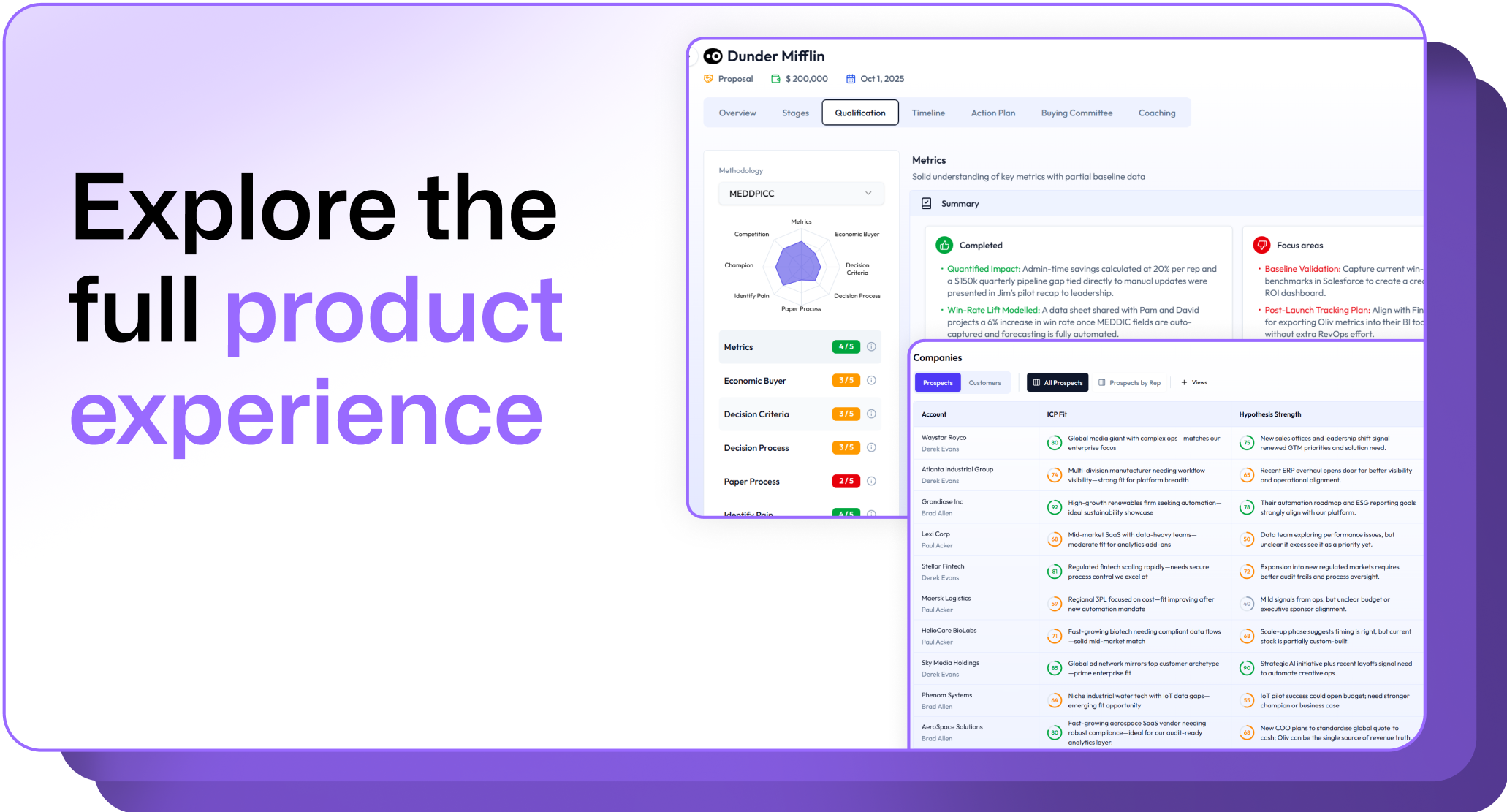
.avif)
.png)







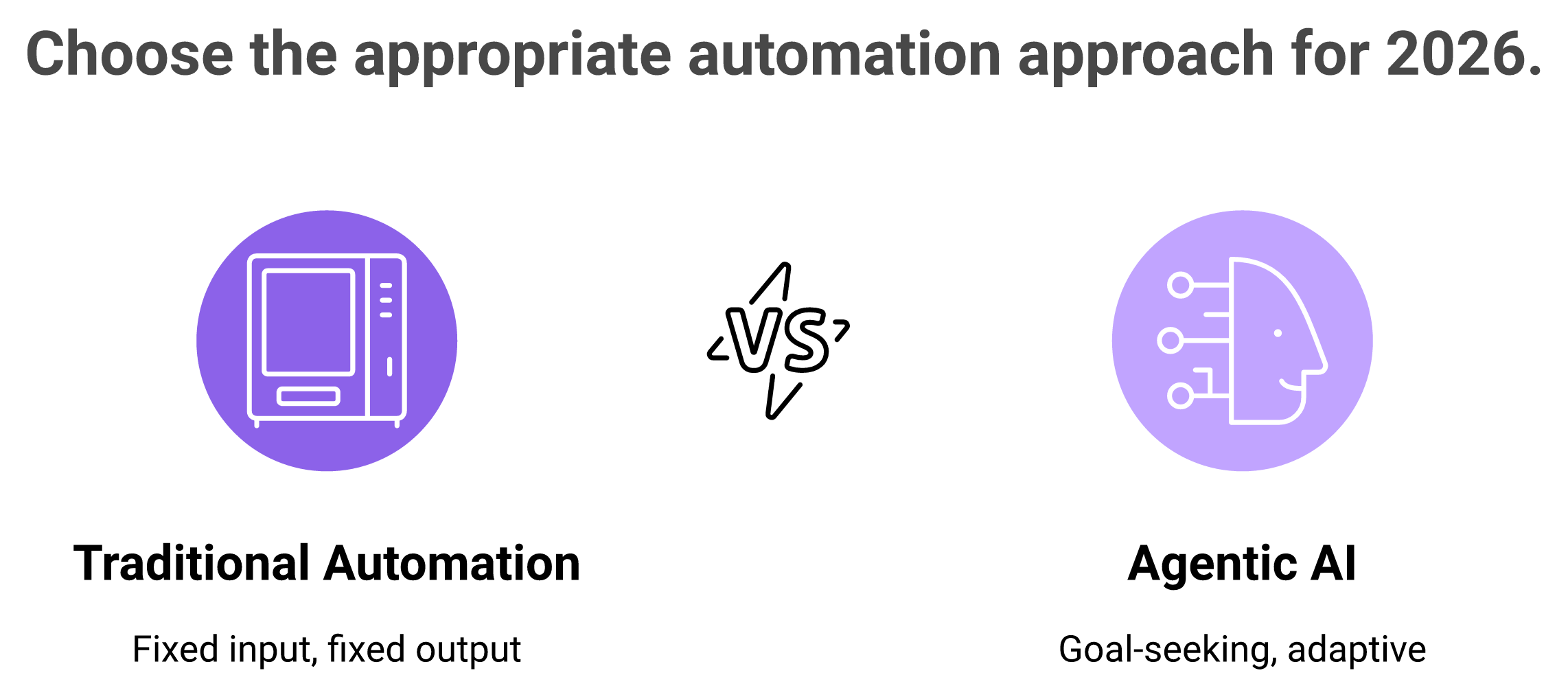
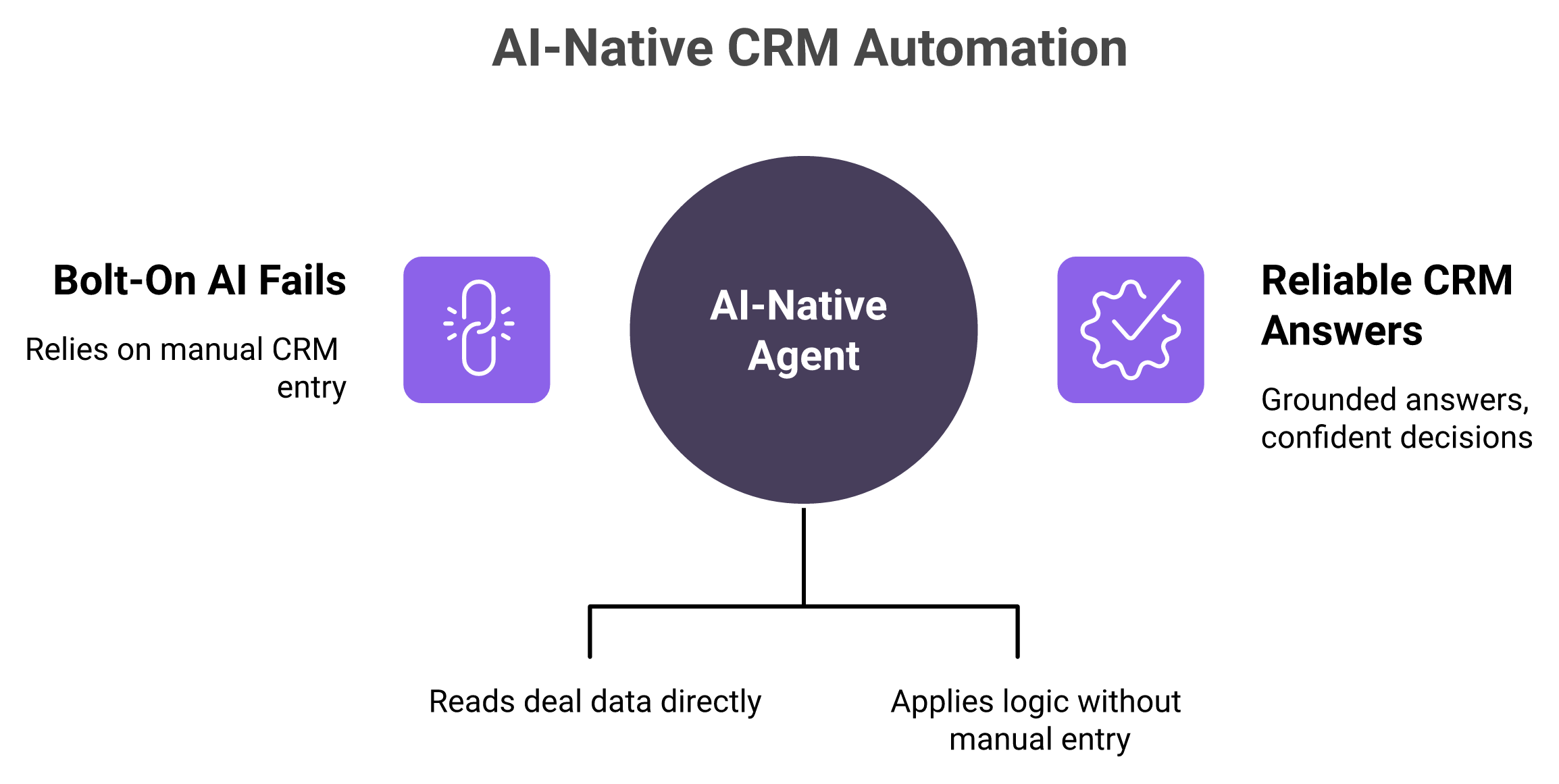
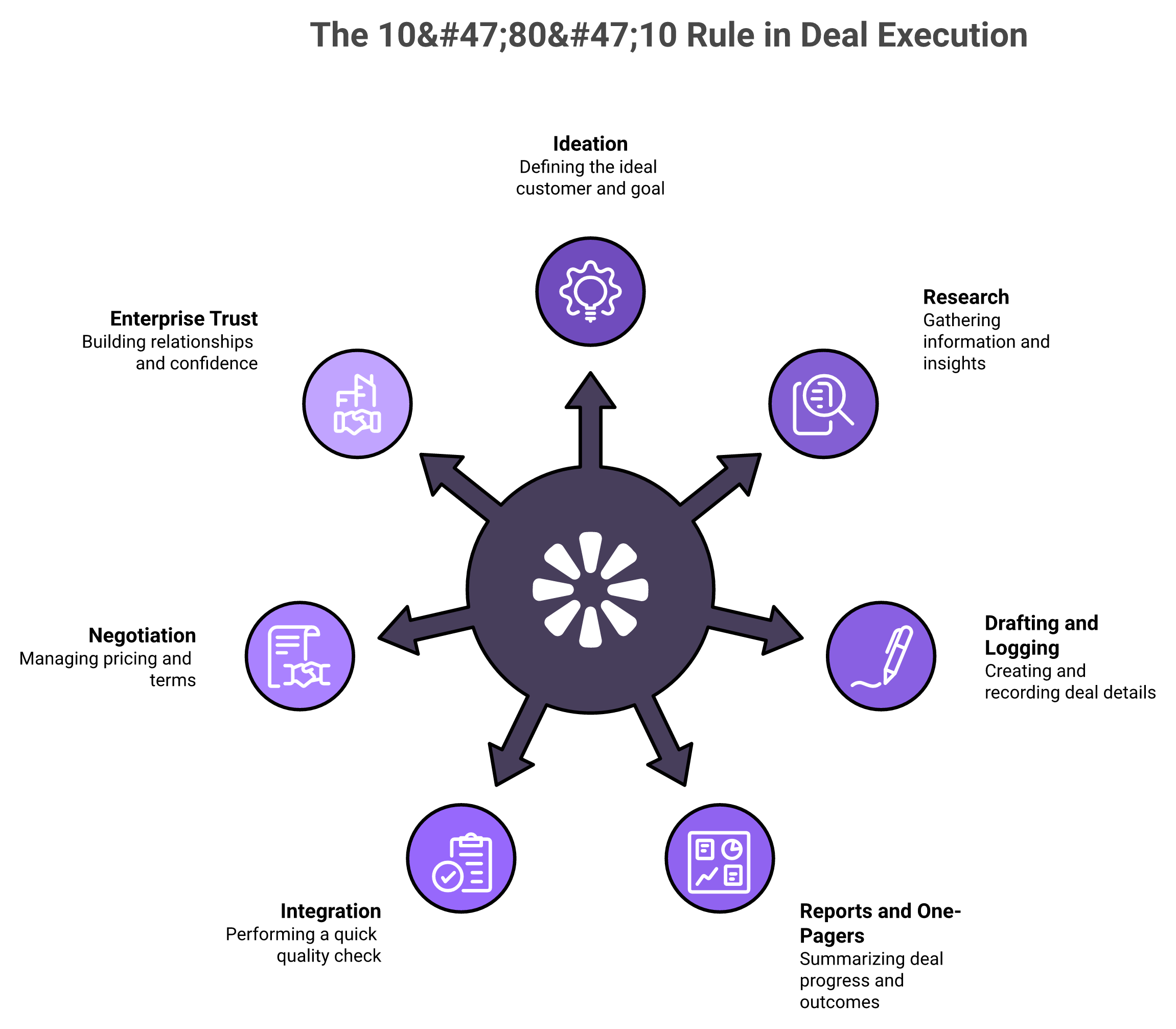
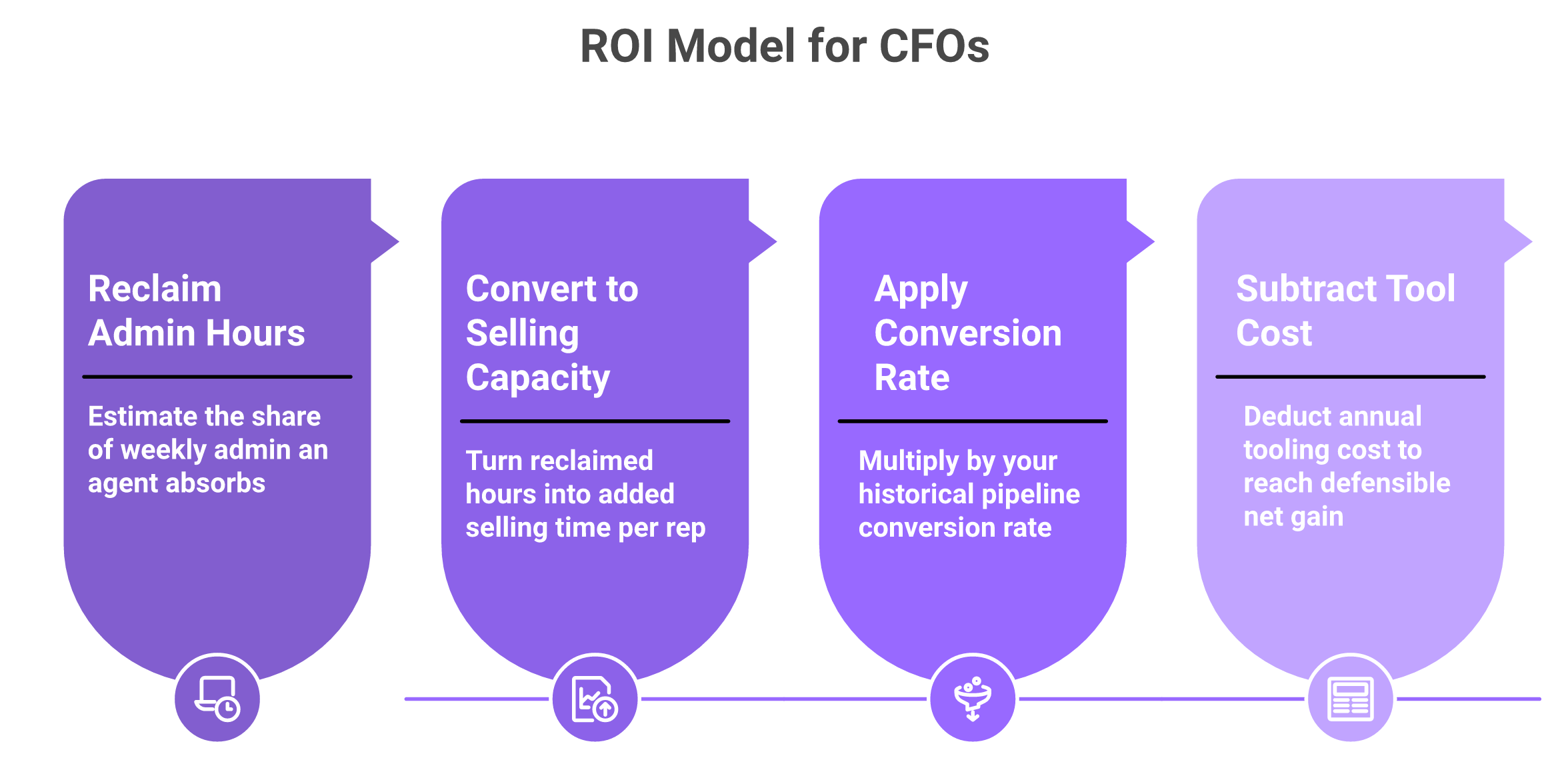

.png)
.png)
.png)

