9 Best AI Deal Intelligence Tools Ranked by Risk Detection, Forecast Accuracy, and Coaching Depth
Written by
Ishan Chhabra
Last Updated :
June 18, 2026
Skim in :
8
mins
In this article
Revenue teams love Oliv
Here’s why:
All your deal data unified (from 30+ tools and tabs).
Insights are delivered to you directly, no digging.
AI agents automate tasks for you.
Thank you! Your submission has been received!
Oops! Something went wrong while submitting the form.
Meet Oliv’s AI Agents
Hi! I’m, Deal Driver
I track deals, flag risks, send weekly pipeline updates and give sales managers full visibility into deal progress
Hi! I’m, CRM Manager
I maintain CRM hygiene by updating core, custom and qualification fields all without your team lifting a finger
Hi! I’m, Forecaster
I build accurate forecasts based on real deal movement and tell you which deals to pull in to hit your number
Hi! I’m, Coach
I believe performance fuels revenue. I spot skill gaps, score calls and build coaching plans to help every rep level up
Hi! I’m, Prospector
I dig into target accounts to surface the right contacts, tailor and time outreach so you always strike when it counts
Hi! I’m, Pipeline tracker
I call reps to get deal updates, and deliver a real-time, CRM-synced roll-up view of deal progress
Hi! I’m, Analyst
I answer complex pipeline questions, uncover deal patterns, and build reports that guide strategic decisions
TL;DR
AI deal intelligence captures signals across the whole deal, scores risk and win probability, forecasts the roll-up, and coaches reps on qualification gaps.
The category splits on one axis: meeting-level tools understand a single call, while deal-level platforms track the entire sales cycle continuously.
We ranked nine tools on five weighted criteria: risk detection, forecast accuracy, coaching depth, setup and CRM integration, and pricing and governance.
Only 7% of orgs hit 90%+ forecast accuracy, and activity volume often masks stalled deals, so signal content matters more than interaction count.
The deeper divide is observation versus action: analytic dashboards report problems, while agentic platforms draft follow-ups and update the CRM themselves.
Pick by scenario not logo, run a 30-day pilot against your current forecast, and weight CRM export, governance, and predictable pricing before committing.
Q1. What Are the 9 Best AI Deal Intelligence Tools for Mid-Market Sales and RevOps in 2026? [toc=1. 9 Best Deal Intelligence Tools]
The nine best AI deal intelligence tools for 2026 are Oliv.ai, Gong, Clari, Aviso, BoostUp, People.ai, Salesforce Einstein, Outreach Commit, and Chorus (ZoomInfo). They split on one axis: meeting-level understanding versus deal-level understanding. Gong understands a single call. Oliv.ai tracks the whole sales cycle, including pipeline movement, MEDDICC coaching, and forecasting, at a 5-minute delay versus the 20 to 30 minute industry norm.
🎯 The Real Split Nobody Tells You About
A RevOps lead pinged me at 11pm last quarter, staring at a Gong dashboard before a Monday forecast call. Her reps looked "active." Dozens of logged emails, plenty of calls. Three of her biggest deals slipped anyway.
That gap is the whole story. Most tools here capture activity. Far fewer understand the deal. Deal intelligence (software that scores risk, forecasts outcomes, and coaches reps across the full cycle, not one meeting) is where this category is splitting in 2026.
Here is the honest read. "Note-takers" record the call and stop. The leaders running a growth machine on two cylinders need something that connects calls, emails, CRM movement, and stakeholder signals into one deal-level view. Our take on the best revenue intelligence software platforms goes deeper on that shift.
⏰ Why Processing Speed Is a Tell
I might be wrong on where every vendor lands in six months. But one number keeps surfacing when you actually run these tools side by side. Gong posts a roughly 20 to 30 minute delay after a call before insights land. Oliv.ai processes in about 5 minutes.
Five minutes versus thirty sounds small. It is not. It decides whether a rep acts before the prospect's next meeting or after.
📋 The 9 Tools at a Glance
Below is the ranked list, with a one-line verdict for each.
Oliv.ai ⭐⭐⭐⭐⭐ The deal-level, agent-first platform that works the cycle for you, not just the call.
Gong ⭐⭐⭐⭐ The conversation-intelligence leader, strong on calls, pricey and meeting-bound on deals.
Clari ⭐⭐⭐⭐ The forecasting and pipeline-inspection workhorse RevOps leaders run their Monday calls on.
Aviso ⭐⭐⭐⭐ Predictive forecasting built for enterprise, accurate but heavy to stand up.
BoostUp ⭐⭐⭐⭐ Flexible revenue command center with strong forecasting configurability.
People.ai ⭐⭐⭐ Activity-capture and data foundation for large, complex sales orgs.
Salesforce Einstein ⭐⭐⭐ Native CRM scoring, convenient if you live in Salesforce, redaction-prone on activity.
Outreach Commit ⭐⭐⭐ Forecasting bolt-on to a sequencing tool, fine for engagement-led teams.
Chorus (ZoomInfo) ⭐⭐⭐ Conversation intelligence tied into the ZoomInfo data ecosystem.
🗂️ Master Comparison Matrix
9 Best AI Deal Intelligence Tools Compared (2026)
Tool
Core strength
Deal vs. meeting level
Processing delay
Agentic action
Star rating
Oliv.ai
Full-cycle deal intelligence and agents
Deal level
~5 min
Yes, agent-first
⭐⭐⭐⭐⭐
Gong
Conversation intelligence, trackers
Meeting level
~20 to 30 min
Limited
⭐⭐⭐⭐
Clari
Forecasting, pipeline inspection
Deal/forecast level
Near real-time sync
Limited
⭐⭐⭐⭐
Aviso
Predictive forecasting (enterprise)
Forecast level
Batch/predictive
Partial
⭐⭐⭐⭐
BoostUp
Configurable revenue command center
Deal/forecast level
Near real-time sync
Partial
⭐⭐⭐⭐
People.ai
Activity capture and data foundation
Activity level
Batch capture
Limited
⭐⭐⭐
Salesforce Einstein
Native CRM scoring and forecasting
Activity/deal level
Native sync
Partial (Agentforce)
⭐⭐⭐
Outreach Commit
Sequencing with forecasting bolt-on
Forecast level
Near real-time sync
Limited
⭐⭐⭐
Chorus (ZoomInfo)
Conversation intelligence in ZoomInfo stack
Meeting level
Post-call processing
Limited
⭐⭐⭐
1.1 ⭐ Oliv.ai: Deal-Level, Agent-First
Oliv orchestration platform connecting AI agents for AEs, managers, customer success, and RevOps, illustrating the agentic, deal-level execution layer behind modern AI deal intelligence.
What it does: Oliv.ai is a generative-AI-native, agent-first revenue platform. We built it to understand deals, not just meetings. It stitches signals from calls, emails, and CRM into one deal-level view, then scores risk, coaches on MEDDICC, and drafts the forecast.
Why deal level matters: Gong understands at a meeting level. Oliv understands at a deal level. It tracks the entire sales cycle, including pipeline movement, coaching, and forecasting. You can see how we stack up in our Gong vs. Oliv comparison.
💰 Pricing and Implementation
Modular pricing, roughly $19 to $120 per user per month depending on the agents you turn on.
Processing lands in about 5 minutes after a call, versus Gong's 20 to 30 minutes.
Full customization still takes 2 to 4 weeks. Enterprise rollouts often start as a narrow pilot, then expand.
✅ Pros and ❌ Cons
✅ Deal-level signal capture across calls, email, and CRM, not just transcripts.
✅ Agent-first. The work gets done for the rep, not handed back as a dashboard.
✅ Two-way CRM sync and a spreadsheet-like analysis surface for RevOps.
❌ Voice Agent is still in alpha.
❌ Full customization needs 2 to 4 weeks, so it is not a same-day switch.
⚠️ Not built for B2C support or pure call-recording use cases.
Use case: Mid-market Sales Managers and RevOps leaders who want the Thursday-Friday forecast scrub handled by agents, with risk flagged before deals slip. See where it fits among the best AI sales tools.
1.2 Gong: The Conversation-Intelligence Leader
Gong team interaction dashboard tracking talk ratio, monologue length, and question rate, showing the meeting-level coaching depth buyers weigh in AI deal intelligence tools.
What it does: Gong records and analyzes calls and emails, surfaces trackers and insights, and adds Forecast and Engage as paid modules. It is strong at the meeting layer.
Key features: Conversation intelligence, Smart Trackers, deal boards, and a Forecast add-on. Trackers are widely praised, though setup can be heavy. Our breakdown of Gong features covers the full suite.
💰 Pricing and Implementation
Premium pricing, often the highest-end option in the category.
Forecast and Engage cost extra on top of the core platform.
Powerful, but tracker setup and AI training take real effort.
✅ Pros and ❌ Cons
✅ Best-in-class conversation intelligence and trackers.
✅ Centralizes call, email, and meeting context in one view.
❌ Meeting level, not deal level. Activity volume can look healthy while the deal stalls.
❌ Data export is restrictive. Bulk call export often needs the API and dev work.
💸 Expensive, with multi-year terms that lock smaller teams in.
💬 What Users Say
"Gong has become the single source of truth for our sales team. From deal management to forecasting it's been really easy to gain adoption. The additional products like forecast or engage come at an additional cost." Scott T., Director of SalesGong G2 Verified Review
"It was a big mistake on our part to commit to a two year term. Gong is a really powerful tool but it's probably the highest end option on the market, and now we're stuck with a tool that works technically but isn't the right business decision." Iris P., Head of Marketing and Sales PartnershipsGong G2 Verified Review
"If you're considering switching platforms, start engaging the Gong API documentation immediately to download all of your call data. Their current solution is far from convenient. It requires downloading calls individually." Neel P., Sales Operations ManagerGong G2 Verified Review
📅 Product Update Tracker
Gong Product Evolution Timeline
Timeline
What changed
Through 2025
Core conversation intelligence, Smart Trackers, deal boards, and paid Forecast and Engage modules, with restrictive bulk-export limits flagged by users.
Early 2026
Expanded conversational AI ("ask the account") and tighter deal-board summaries.
Expected ahead
Deeper agentic actions and improved data portability are the most-requested directions buyers cite.
Clari board dashboard displaying booked, commit, and pipeline figures across top deals, reflecting the forecast accuracy and roll-up inspection central to AI deal intelligence.
What it does: Clari is built for forecasting and pipeline inspection. RevOps leaders run weekly forecast calls on it, screen-sharing pipeline views straight to the executive team.
Key features: Opportunity inspection, waterfall and pulse analytics, two-way Salesforce sync, and the CoPilot conversation-intelligence add-on. Our overview of Clari features has the details.
💰 Pricing and Implementation
Enterprise-tier pricing, quoted per seat.
Two-way CRM sync is a core strength.
Setup rewards commitment. Migrating Salesforce fields and hierarchies can get fiddly.
✅ Pros and ❌ Cons
✅ Clean, fast forecasting and pipeline-inspection views for live calls.
✅ Reliable two-way Salesforce integration.
❌ Dashboards feel limited versus how flexible the underlying data is.
❌ Setup and field migration can be complex, especially with custom CRM setups.
⚠️ Weighted-number calculations are not always transparent to reps.
💬 What Users Say
"Love the user-friendly features and the visibility it provides into our Sales forecast. We use Clari every week on our forecast call with our ELT. The integration with Salesforce refreshes the data consistently." Andrew P., Business Development ManagerClari G2 Verified Review
"Fairly easy to use but could use UI improvements. I have to maintain my own separate spreadsheet to track deals because I can only capture what my leaders want to see." Verified User in Human ResourcesClari G2 Verified Review
"I find the setup process challenging, especially when migrating fields from Salesforce, as it can't handle formula fields directly. This requires creating and maintaining duplicate fields." Josiah R., Head of Sales OperationsClari G2 Verified Review
📅 Product Update Tracker
Clari Product Evolution Timeline
Timeline
What changed
Through 2025
Forecasting, opportunity inspection, waterfall analytics, and two-way Salesforce sync, plus the CoPilot conversation-intelligence layer noted by reviewers.
Early 2026
Tighter CoPilot call-intelligence and pipeline-inspection refinements.
Expected ahead
More flexible dashboards and clearer weighted-forecast transparency are the top user requests.
Aviso adaptive metrics dashboard comparing forecast, average selling price, win rate, time to close, and coverage ratio by region and product, reflecting the forecast accuracy AI deal intelligence delivers.
What it does: Aviso is a predictive forecasting and revenue-intelligence platform aimed at enterprise teams, using machine learning to predict deal outcomes from pipeline and engagement signals.
Key features: AI forecast predictions, deal-risk scoring, pipeline analytics, and conversational guidance for sellers. Our roundup of best AI sales forecasting software places it in context.
💰 Pricing and Implementation
Enterprise pricing, typically custom-quoted.
Strong predictive accuracy when fed clean data.
Implementation is heavier. It rewards teams with a dedicated RevOps function.
✅ Pros and ❌ Cons
✅ Mature predictive forecasting and deal-risk scoring.
✅ Built to handle large, complex enterprise pipelines.
❌ Setup and adoption are heavier than lighter mid-market tools.
❌ Less focused on call-level coaching than conversation-first rivals.
⚠️ Accuracy depends on CRM data quality, like every model in this category.
Use case: Enterprise RevOps teams that want predictive forecast lift and can invest in onboarding to get it.
1.5 BoostUp: Configurable Revenue Command Center
BoostUp forecasting dashboard charting target, commit, and booked revenue across quarterly weeks, showing the configurable forecast tracking that defines AI deal intelligence command centers.
What it does: BoostUp is a revenue intelligence and forecasting platform built around a flexible "command center" for pipeline, deals, and forecasts. It leans on configurability for RevOps teams with non-standard processes.
Key features: Customizable forecasting models, deal-risk scoring, pipeline analytics, and conversation intelligence in one workspace. See how it compares across the revenue intelligence platforms landscape.
💰 Pricing and Implementation
Enterprise pricing, custom-quoted per seat.
Strong configurability, which is its main draw.
Setup time tracks with how custom your forecast hierarchy is.
✅ Pros and ❌ Cons
✅ Highly configurable forecasting and deal-scoring models.
✅ Combines forecasting and conversation intelligence in one place.
❌ Configurability adds onboarding overhead for lean teams.
❌ Less brand recognition than Gong or Clari, so internal buy-in can take longer.
⚠️ Forecast quality still depends on clean CRM data, like every model here.
Use case: Mid-market and enterprise RevOps teams with bespoke forecast structures that off-the-shelf tools fight.
1.6 People.ai: The Activity-Data Foundation
Strategic account engagement dashboard ranking accounts by engagement level, intent score, and ARR, illustrating how AI deal intelligence surfaces deal risk from signal data.
What it does: People.ai captures sales activity automatically and feeds a data foundation for forecasting, account intelligence, and analytics. It is built for large, complex orgs that need clean activity data at scale.
Key features: Automated activity capture, account and opportunity data enrichment, and analytics that feed CRM and forecasting tools.
💰 Pricing and Implementation
Enterprise pricing, quoted per seat.
Aimed at large orgs with mature data needs.
Implementation is a project, not a plug-in.
✅ Pros and ❌ Cons
✅ Strong automated activity capture and data hygiene at scale.
✅ Feeds downstream forecasting and analytics cleanly.
❌ More of a data layer than a rep-facing coaching tool.
❌ Heavier fit for enterprise than for a 25-rep mid-market team.
⚠️ Value shows up indirectly, through better data, not direct coaching.
Use case: Enterprise RevOps and analytics teams that need trustworthy activity data feeding everything else.
1.7 Salesforce Einstein: Native CRM Scoring
What it does: Einstein adds AI scoring, forecasting, and activity capture natively inside Salesforce. If you already live in Salesforce, it is the convenient default.
Key features: Opportunity scoring, Einstein forecasting, automated activity capture, and the newer Agentforce agent layer. Our analysis of Salesforce Einstein features covers the stack.
💰 Pricing and Implementation
Add-on pricing on top of Salesforce licenses.
Agentforce uses a click-credit model, roughly $0.10 per action, with an all-inclusive tier near $500 per seat.
Convenient if Salesforce-native, but setup has many clicks and toggles.
✅ Pros and ❌ Cons
✅ Native to Salesforce, so no separate platform to adopt.
✅ Agentforce adds low-code agent building inside existing workflows.
❌ Activity capture redacts emails it wrongly flags as sensitive, breaking the customer picture.
❌ Heavy clicking and tab-switching, per user reviews.
💸 Per-action pricing can get unpredictable at scale.
💬 What Users Say
"I love all the customization available with the topics and actions, but it still needs some serious debugging. I built the default agent, went well, then went to create a second agent and could not get past an error." Jessica C., Senior Business AnalystSalesforce Agentforce G2 Verified Review
"Lots of clicking to get select the right options. UX needs improvement. Everything opens in a new browser tab clustering the browser. Lots of jumping back and forth between tabs to enable settings." Verified User in ConsultingSalesforce Agentforce G2 Verified Review
"Can be complex to set up and customize. Expensive, especially for smaller teams. Steep learning curve for new users. Slow performance if not optimized. Overwhelming with too many features at once." Shubham G., Senior BDMSalesforce Agentforce G2 Verified Review
📅 Product Update Tracker
Salesforce Einstein and Agentforce Product Timeline
Timeline
What changed
Through 2025
Einstein opportunity scoring, forecasting, and activity capture, with the redaction behavior users flag as a blind spot.
Early 2026
Agentforce expanded with low-code agent building and click-credit pricing near $0.10 per action.
Expected ahead
Tighter agent reliability and fewer setup clicks are the most-cited user requests.
1.8 Outreach Commit: Forecasting on a Sequencing Tool
What it does: Outreach is primarily a sales engagement and sequencing platform, with Commit layered on for forecasting and deal health. It fits teams whose center of gravity is outbound engagement.
Key features: Sequencing, dialer, email tracking, and the Commit forecasting module. See our Gong vs. Outreach comparison for how the engagement layer differs.
💰 Pricing and Implementation
Per-seat pricing, often with multi-year, auto-renewing terms.
Best value if you already run outbound in Outreach.
Onboarding and integrations can be glitchy, per users.
✅ Pros and ❌ Cons
✅ Strong sequencing, prospect management, and Salesforce sync.
✅ Good email and activity tracking for outbound teams.
❌ Forecasting is a bolt-on, not the core strength.
❌ Reports are hard to parse, and support response can lag.
💸 Evergreen contracts auto-renew, which users find rigid.
💬 What Users Say
"Outreach is really really good for emailing, sequencing, and prospect management. It talks to Salesforce really well. Dialing features are not great, and for high volume teams, this will be a huge lag." Ethan R., Sales Development RepresentativeOutreach G2 Verified Review
"The engage product is stagnant. Looks to have the same features, UX, integrations and issues as it had 5 years ago. Frequent requests for a product roadmap or understanding how AI is involved is glossed over." Matthew T., Head of Revenue OperationsOutreach G2 Verified Review
"Their agreements are evergreen, automatically renewing annually. If you miss the cancellation deadline by even a few hours, they enforce renewal for the entire year without any willingness to negotiate." Kevin H., CTO and Co-FounderOutreach G2 Verified Review
📅 Product Update Tracker
Outreach Commit Product Timeline
Timeline
What changed
Through 2025
Core sequencing, dialer, and the Commit forecasting module, with users flagging stagnant engagement features.
Early 2026
Incremental reporting and AI-assist additions across the engagement category.
Expected ahead
A clearer AI roadmap and smoother CRM sync top user requests.
1.9 Chorus (ZoomInfo): Conversation Intelligence in the ZoomInfo Stack
What it does: Chorus is ZoomInfo's conversation intelligence tool, recording and analyzing calls and tying insights into the ZoomInfo data ecosystem. It is meeting-level by design, like Gong.
Key features: Call recording, transcription, feedback metrics, and integration with ZoomInfo's contact and intent data. Our Gong vs. Chorus comparison breaks down the trade-offs.
💰 Pricing and Implementation
Per-seat pricing, often bundled with ZoomInfo.
Easy to start recording and reviewing calls.
Some setup paths, like importing old calls, are hard to find.
✅ Pros and ❌ Cons
✅ Rich feedback metrics and solid call analysis.
✅ Ties into ZoomInfo's prospect and intent data.
❌ Meeting level, not deal level, so it shares Gong's deal-tracking gap.
❌ Navigation and import paths are buried, per users.
⚠️ Best as part of a ZoomInfo stack, less compelling standalone.
💬 What Users Say
"The quantity of feedback metrics is amazing! Trying to find where I could import previous calls or videos was very frustrating. Why in the world is it inside settings and then halfway down as an option?" Clayton Z., Director of TechnologyChorus by ZoomInfo G2 Verified Review
📅 Product Update Tracker
Chorus by ZoomInfo Product Timeline
Timeline
What changed
Through 2025
Core call recording, transcription, and feedback metrics, integrated into the ZoomInfo data platform.
Early 2026
Tighter ZoomInfo intent-data linkage and conversation-analysis updates.
Expected ahead
Cleaner navigation and deeper deal-level analysis are the directions users ask for.
🔑 Where These Tools Land
Here is the honest read across the list. Einstein and Chorus are convenient if you already live in Salesforce or ZoomInfo, but both carry meeting-level or redaction gaps that hide the real deal picture. Outreach Commit is a forecasting bolt-on to an engagement tool, fine for outbound-led teams, weaker as a deal-intelligence core.
BoostUp and People.ai serve enterprise RevOps well, one through configurability, the other through activity-data hygiene. Neither leads with rep-facing, agent-first coaching.
That is the thread running through all nine. Most of these tools observe the deal or feed data about it. Oliv.ai was built to work the deal, at the deal level, in about five minutes, then act on it. Where my head is right now: that observe-versus-act gap is exactly what the next sections rank on, and our take on the best sales coaching software picks it up from there.
Q2. How Did We Rank These Tools? Our Deal Intelligence Selection Criteria [toc=2. Selection Criteria]
We scored each tool on five weighted criteria: Risk Detection and Signal Capture (25%), Forecast Accuracy and Lift (25%), Coaching Depth and MEDDICC (20%), Setup, Usability and CRM Integration (15%), and Pricing Transparency and Governance (15%). Scores convert to stars: 0 to 20 = 1 star, 21 to 40 = 2, 41 to 60 = 3, 61 to 80 = 4, 81 to 100 = 5. Oliv.ai earns 5 stars on its agentic, deal-level architecture.
📊 The Five Criteria, and Why Each One Earns Its Weight
I built this rubric around one rule. We rank on what reps and RevOps leaders feel on Monday, not on what vendors publish about themselves.
Two axes carry the most weight, at 25% each. Risk detection matters because deals slip quietly while dashboards look busy. Forecast accuracy matters because only 7% of sales organizations hit 90% or higher accuracy. Our guide to the best AI sales forecasting software explains why.
⚖️ The Rubric in One Table
Deal Intelligence Scoring Rubric
Criterion
Weight
What we actually check
Risk Detection and Signal Capture
25%
Does it read signal content, or just count activity volume?
Forecast Accuracy and Lift
25%
Measurable lift over a manual roll-up, on clean data.
Coaching Depth and MEDDICC
20%
Does it coach to qualification fields, not just sentiment?
Setup, Usability and CRM Integration
15%
Two-way CRM sync, low clicks, fast adoption.
Pricing Transparency and Governance
15%
Clear pricing, SOC 2, GDPR, EU AI Act readiness.
The two 25% axes plus the 20% coaching axis map straight to this article's title. That is deliberate. The remaining 30% covers the practical reality of buying and running the tool. Our breakdown of the best revenue intelligence software platforms applies the same lens.
⭐ How Scores Become Stars (and What We Ignored)
Each tool earns a 0 to 100 score across the five criteria. We then convert: 0 to 20 is 1 star, 21 to 40 is 2 stars, 41 to 60 is 3 stars, 61 to 80 is 4 stars, and 81 to 100 is 5 stars.
🚫 What We Refused to Weight
Here is the part most "best tools" lists hide. We did not score logo walls, funding raised, or analyst-quadrant placement.
Why? Because a RevOps lead drowning in dashboards once told me those signals never once fixed her forecast. The standard read gets this backwards. Buyers now want proof, not promises, and weak claims get screenshotted and roasted.
One honesty note on Oliv.ai. We earn 5 stars because deal-level capture lifts our risk and coaching scores, but I will not pretend that is neutral. Full customization still takes 2 to 4 weeks, and our Voice Agent is in alpha. Score the rubric yourself, and check our math against the best sales coaching software.
Q3. What Exactly Is AI Deal Intelligence, and How Is It Different from Conversation and Sales Intelligence? [toc=3. What Is Deal Intelligence]
AI deal intelligence captures every signal across an entire deal, including calls, emails, CRM movement, and stakeholder activity, then scores deal health and win probability, forecasts the roll-up, and coaches reps on qualification gaps. It differs from conversation intelligence (one meeting) and sales intelligence (top-of-funnel prospect data). Think of it as a three-layer cake: a free recording layer, an intelligence layer tracking MEDDICC, and an agent layer producing leadership reports.
🍰 The Three-Layer Cake Way to Think About It
Let me define the category the way I actually explain it to operators. Picture a three-layer cake.
The bottom layer just records and transcribes the call. That layer should be close to free now. The middle layer is intelligence, where a model tracks qualification fields like MEDDICC. The top layer is agents, which turn all that into proactive reports for leadership. Our overview of revenue intelligence platforms maps these layers in detail.
📖 The Five Terms, Defined Once
Most confusion in this category comes from undefined jargon. Here are the five that matter.
Core Deal Intelligence Terms, Defined
Term
Plain definition
Deal health
A score for how likely a single deal is to close on time.
Win probability
The percentage chance a deal closes, based on signals.
Activity capture
Auto-logging calls, emails, and meetings into the CRM.
Multi-threading
Having live contacts across several stakeholders, not one.
Forecast roll-up
Summing rep-level forecasts into one team number.
🗺️ GPS Versus Map: How Methodology Rides Along
Here is an analogy that lands with reps. Your sales process is like Google Maps. It shows the route.
A qualification methodology like MEDDPICC works like a GPS layered on that map. It reroutes you when a deal goes off course. Deal intelligence is the system running both, in real workflow, not in a slide. Our deep dive on the MEDDIC sales methodology shows what that looks like inside a live opportunity.
🧩 Why a CRM Alone Is Dead Air
A CRM by itself is a dumb repository. Reps update it weekly because management asks, not because it helps them sell.
That is the gap. Conversation intelligence understands one meeting. Sales intelligence finds you new prospects at the top of the funnel. Deal intelligence connects the whole cycle and acts on it. You can see the contrast in our best sales intelligence platform guide.
When we built Oliv.ai, we put the value in the top two layers, the intelligence and the agents, not the recording. That is the difference between a tool that watches your deal and one that works it.
Q4. Ranked by Risk Detection, Forecast Accuracy, and Coaching Depth: Where Does Each Tool Win? [toc=4. Risk, Forecast, Coaching]
On risk detection, the best tools read what is inside interactions, not raw volume. Many log a flurry of emails as "high activity" while a deal quietly stalls. On forecasting, only 7% of orgs hit 90%+ accuracy, and AI lands within 5% of actual revenue in 73% of clean-data deployments versus 58% human-only. On coaching, methodology-aware MEDDICC feedback beats sentiment summaries, especially with 13-person buying committees.
🚨 Risk Detection: Why Activity Volume Lies
Here is the trap I see most. A dashboard shows an AE and a prospect trading lots of emails and calls, so the deal looks "active." What is actually said inside those emails often does not show up.
That is the activity-volume fallacy. Worse, some tools redact the signal. Einstein activity capture flags ordinary emails as sensitive and hides them, so you cannot build a complete customer picture. Our Salesforce Einstein reviews cover that gap in depth.
⚠️ Where Tools Land on Risk
Real risk detection frames engagement quality and deal velocity, not interaction count. Oliv.ai scores signal content at the deal level, which is why it leads this axis.
"We used Gong as a call recorder. Their current solution is far from convenient. It requires downloading calls individually." Neel P., Sales Operations ManagerGong G2 Verified Review
📈 Forecast Accuracy: The Thursday Scrub Nobody Misses
Now the forecast. Every Thursday and Friday, managers sit with reps for one to two hours each, rebuilding pipeline by hand. Then they hand-key it into the Monday report.
That ritual is exactly what AI forecasting replaces, when the data is clean. The numbers back it: 87% of enterprises missed 2025 revenue targets despite record AI spend, so accuracy is the whole game. See how we approach Gong forecasting by comparison.
⏰ A Tactic You Can Use Monday
Here is a hard-won rule. If a rep cannot articulate the exact status of a deal after your qualifying questions, push it off the forecast.
"Love the user-friendly features and the visibility it provides into our Sales forecast. We use Clari every week on our forecast call with our ELT." Andrew P., Business Development ManagerClari G2 Verified Review
Clari and Aviso earn their stars here. Oliv.ai automates the scrub itself, turning it into a continuous, auditable forecast. Our roundup of the best Clari alternatives and competitors goes further.
🎓 Coaching Depth: People-Person Is Not Enough
The last axis is coaching. A transcript summarizer tells you the mood of a call. A real deal coach tells you which MEDDICC field is missing.
That gap matters more now. With 73% of B2B purchases involving three or more departments and around 13 people, single-threaded deals die. Being a "people person" is no longer a sufficient skill. Our take on the best AI for sales calls shows how coaching shifts.
🛠️ Make Your AI Coach Sharper
One tactic: tools like Prompt Cowboy turn a lazy one-line prompt into a tight, MEDDIC or BANT-specific coaching prompt.
"I love conversational AI. I wish they were a little more responsive to customer requests. They say a feature is coming in a certain quarter and then it doesn't." Amanda R., Director, Customer SuccessGong G2 Verified Review
🏆 The Tri-Axis Scoreboard
Risk, Forecast, and Coaching by Tool
Tool
Risk Detection
Forecast Accuracy
Coaching Depth
Oliv.ai
Deal-level signal scoring
Auto forecast-scrub
Full-cycle MEDDICC
Gong
Meeting-level, volume-prone
Forecast add-on
Strong call coaching
Clari
Pipeline inspection
Forecasting strength
Limited (via CoPilot)
Aviso
Predictive risk scoring
Predictive lift
Light
Where my head is right now: most tools win one axis. Oliv.ai was built to win all three at the deal level, which is the whole reason this article ranks the way it does, and our view on the best AI sales tools carries the thread forward.
Q5. Observation vs. Action: Are You Buying an Analytic Dashboard or an Agentic Executor? [toc=5. Observation vs. Action]
Most deal intelligence tools observe; few act. An analytic platform shows you a stalled deal. An agentic one drafts the follow-up, attaches the right collateral, and updates the CRM itself. The difference is a vending machine versus a smart employee: automation breaks when the script fails, while an agent rejigs the plan. Today's reps stitch together Gong transcripts, ChatGPT, and Outlook by hand. Agentic tools collapse that loop.
🤔 The Question Behind Every Demo
Here is the question I would ask before signing anything. Does this tool watch the deal, or does it work the deal?
Most platforms in this category watch. They surface a red dashboard and hand the work back to you. That is the old model, and the category quietly avoids saying so out loud. Our view on moving from revenue ops to intelligence to orchestration traces that shift.
🔁 The SDR Loop Nobody Admits To
Watch a rep write one follow-up email. The real workflow is brutal.
They pull a transcript from Gong, paste it into a custom ChatGPT prompt, copy the output into Outlook, then hunt for a relevant PDF to attach. It is so much work that most reps just skip it. The tool "worked," but nothing got done. Our take on the best AI for sales calls shows how that loop collapses.
🥤 Vending Machine Versus Smart Employee
Here is the reframe that changed how I see this. Old automation is a vending machine.
You press B4, and if the payment fails, the whole thing jams. An agent is different. It behaves like a smart employee who rejigs the plan when something breaks, junks what is not working, and improvises when it is.
🚀 Why This Is the Real Split
The shift right now is from chat to agents. Operators using agents report being far more productive than peers still typing one-line prompts into chat windows.
That is why "SaaS" is becoming a slightly dirty word. Nobody wants more software to log into. The buyer-guide framing now splits this market into analytic tools and agentic ones, for exactly this reason. Our guide to the best revenue orchestration platform tools covers the agentic side.
When we built Oliv.ai, we put it on the action side of that line. It does not just flag a stalled deal. It produces the proactive one-pager and the next step, so the rep acts instead of stitching tools together. You can see the contrast in our Gong vs. Oliv comparison.
Where my head is right now: in two years, the tools you log into become agents that work for you. Revenue orchestration gives way to revenue engineering. Which side of that line is your current stack on?
Q6. Integrations, Governance, and Pricing: What's the Hidden Cost of the "Center of the Universe" Trap? [toc=6. Integrations, Governance, Pricing]
Integration openness is now a buying criterion. Some platforms pull all your data in, but make exporting it back to the CRM hard, a "center of the universe" trap with wonky APIs that need custom RevOps code. Pricing is murky too. Salesforce's click-credit model runs about $0.10 per action. With the EU AI Act's autonomous-agent rules landing in 2026, governance and data residency are now gating items.
🕳️ The One-Way Data Trap
Here is a cost nobody puts on the quote. Some tools are great at pulling your data in, but bad at letting it out.
Gong provides one-way integrations. It tries to be the center of your universe by ingesting everything, then makes it hard to export back into the CRM that actually matters. Its API is "wonky," so RevOps teams write custom code just to get their own data out. Our breakdown of Gong integrations goes deeper.
💸 Reviewers Have Lived This
This is not theory. Buyers describe the export pain directly.
"Their current solution is far from convenient. It requires downloading calls individually, which is impractical and inefficient for a large volume of data." Neel P., Sales Operations ManagerGong G2 Verified Review
"I find the setup process challenging, especially when migrating fields from Salesforce, as it can't handle formula fields directly. This requires creating and maintaining duplicate fields." Josiah R., Head of Sales OperationsClari G2 Verified Review
💰 Pricing You Cannot Forecast
Pricing opacity is the second hidden cost. Salesforce's Agentforce uses a click-credit model, roughly $0.10 per action, with an all-inclusive tier near $500 per seat.
Per-action pricing is hard to forecast. The more your agents work, the more unpredictable your bill. Governance adds another risk: Einstein activity capture redacts ordinary emails it wrongly flags as sensitive, so you never get the full customer picture. Our Salesforce Agentforce pricing breakdown covers the math.
⚖️ The 2026 Readiness Scorecard
Integration, Pricing, and Governance Readiness Scorecard (2026)
Factor
What to verify before you buy
Data portability
Two-way CRM export without custom code.
Pricing model
Flat, predictable seats, not per-action surprises.
Governance
SOC 2, GDPR, and EU AI Act readiness.
Data residency
Where deal data lives, and who can see it.
The EU AI Act's rules on autonomous agents land in 2026, so governance is no longer a footnote. Buyers now want proof on these points, not promises. Our look at Gong DPA and security shows what to check.
We built Oliv.ai for open, two-way CRM sync and a spreadsheet-like analysis surface, with SOC 2 Type II, GDPR, and CCPA in place. I will still be honest: a full custom rollout takes 2 to 4 weeks. What governance question is your security team going to ask first?
Q7. Which Tool Should You Actually Pick, and What's the Quantified ROI by Role? [toc=7. Buyer-Fit and ROI]
Pick by scenario, not logo. Mid-market RevOps standardizing forecasts should weight accuracy and CRM export. A Sales Manager fixing stalled deals should weight risk detection and coaching depth. AI-leveraged teams chase $3 to $5 million in revenue per rep versus the old $300,000 to $500,000, and daily AI users are 2 to 2.5x more likely to exceed quota. Run one tool against your current forecast for 30 days before committing.
🎯 Match the Tool to Your Actual Pain
Stop shopping by brand. Start with the problem on your desk this quarter.
If your Monday forecast is a mess, weight accuracy and clean CRM export. If deals keep stalling silently, weight risk detection and coaching depth instead. Our guide to the best AI sales forecasting software helps you weigh the first.
🧭 The Buyer-Fit Cheat Sheet
Buyer-Fit by Role and Pain
Your role and pain
Weight most
Strong fits
RevOps, messy forecast
Accuracy, CRM export
Clari, Aviso, Oliv.ai
Sales Manager, stalled deals
Risk detection, coaching
Oliv.ai, Gong
AE, manual follow-up grind
Agentic execution
Oliv.ai
Outbound-led team
Engagement, sequencing
Outreach
📈 The ROI Math That Actually Lands
Now the numbers. The ambition has changed from $300,000 to $500,000 per rep toward $3 to $5 million for AI-leveraged teams.
That is not magic. Daily AI users are 2 to 2.5x more likely to beat quota, and broader benchmarks show real productivity lift. The point is leverage, not headcount. Our roundup of the best AI sales tools quantifies where that leverage comes from.
⏰ A 30-Day Pilot, Not a Leap
Here is the low-risk move. Run one tool against your current forecast for 30 days.
Each day, correct what it gets wrong. By day 30, it is sharp. Use the 10/80/10 split: 10% setting it up, 80% letting the agent run, and 10% checking the output. Our guide to the best sales coaching software shows how that discipline compounds.
"Once set up and installed, Clari is very intuitive to use. Our sales leadership uses it exclusively for daily reviews and analysis, preferring it over Salesforce." Rob W., Sr. Director of Revenue OperationsClari G2 Verified Review
"It was a big mistake on our part to commit to a two year term. Now we're stuck with a tool that works technically but isn't the right business decision." Iris P., Head of Marketing and Sales PartnershipsGong G2 Verified Review
For mid-market teams who want deal-level intelligence that acts, not just observes, Oliv.ai is where I would start the pilot. I could be wrong on your exact fit, so tell me what you are building, and I will tell you honestly if we are the wrong call. You can also compare us in our best Clari alternatives and competitors guide.
Q1. What Are the 9 Best AI Deal Intelligence Tools for Mid-Market Sales and RevOps in 2026? [toc=1. 9 Best Deal Intelligence Tools]
The nine best AI deal intelligence tools for 2026 are Oliv.ai, Gong, Clari, Aviso, BoostUp, People.ai, Salesforce Einstein, Outreach Commit, and Chorus (ZoomInfo). They split on one axis: meeting-level understanding versus deal-level understanding. Gong understands a single call. Oliv.ai tracks the whole sales cycle, including pipeline movement, MEDDICC coaching, and forecasting, at a 5-minute delay versus the 20 to 30 minute industry norm.
🎯 The Real Split Nobody Tells You About
A RevOps lead pinged me at 11pm last quarter, staring at a Gong dashboard before a Monday forecast call. Her reps looked "active." Dozens of logged emails, plenty of calls. Three of her biggest deals slipped anyway.
That gap is the whole story. Most tools here capture activity. Far fewer understand the deal. Deal intelligence (software that scores risk, forecasts outcomes, and coaches reps across the full cycle, not one meeting) is where this category is splitting in 2026.
Here is the honest read. "Note-takers" record the call and stop. The leaders running a growth machine on two cylinders need something that connects calls, emails, CRM movement, and stakeholder signals into one deal-level view. Our take on the best revenue intelligence software platforms goes deeper on that shift.
⏰ Why Processing Speed Is a Tell
I might be wrong on where every vendor lands in six months. But one number keeps surfacing when you actually run these tools side by side. Gong posts a roughly 20 to 30 minute delay after a call before insights land. Oliv.ai processes in about 5 minutes.
Five minutes versus thirty sounds small. It is not. It decides whether a rep acts before the prospect's next meeting or after.
📋 The 9 Tools at a Glance
Below is the ranked list, with a one-line verdict for each.
Oliv.ai ⭐⭐⭐⭐⭐ The deal-level, agent-first platform that works the cycle for you, not just the call.
Gong ⭐⭐⭐⭐ The conversation-intelligence leader, strong on calls, pricey and meeting-bound on deals.
Clari ⭐⭐⭐⭐ The forecasting and pipeline-inspection workhorse RevOps leaders run their Monday calls on.
Aviso ⭐⭐⭐⭐ Predictive forecasting built for enterprise, accurate but heavy to stand up.
BoostUp ⭐⭐⭐⭐ Flexible revenue command center with strong forecasting configurability.
People.ai ⭐⭐⭐ Activity-capture and data foundation for large, complex sales orgs.
Salesforce Einstein ⭐⭐⭐ Native CRM scoring, convenient if you live in Salesforce, redaction-prone on activity.
Outreach Commit ⭐⭐⭐ Forecasting bolt-on to a sequencing tool, fine for engagement-led teams.
Chorus (ZoomInfo) ⭐⭐⭐ Conversation intelligence tied into the ZoomInfo data ecosystem.
🗂️ Master Comparison Matrix
9 Best AI Deal Intelligence Tools Compared (2026)
Tool
Core strength
Deal vs. meeting level
Processing delay
Agentic action
Star rating
Oliv.ai
Full-cycle deal intelligence and agents
Deal level
~5 min
Yes, agent-first
⭐⭐⭐⭐⭐
Gong
Conversation intelligence, trackers
Meeting level
~20 to 30 min
Limited
⭐⭐⭐⭐
Clari
Forecasting, pipeline inspection
Deal/forecast level
Near real-time sync
Limited
⭐⭐⭐⭐
Aviso
Predictive forecasting (enterprise)
Forecast level
Batch/predictive
Partial
⭐⭐⭐⭐
BoostUp
Configurable revenue command center
Deal/forecast level
Near real-time sync
Partial
⭐⭐⭐⭐
People.ai
Activity capture and data foundation
Activity level
Batch capture
Limited
⭐⭐⭐
Salesforce Einstein
Native CRM scoring and forecasting
Activity/deal level
Native sync
Partial (Agentforce)
⭐⭐⭐
Outreach Commit
Sequencing with forecasting bolt-on
Forecast level
Near real-time sync
Limited
⭐⭐⭐
Chorus (ZoomInfo)
Conversation intelligence in ZoomInfo stack
Meeting level
Post-call processing
Limited
⭐⭐⭐
1.1 ⭐ Oliv.ai: Deal-Level, Agent-First
Oliv orchestration platform connecting AI agents for AEs, managers, customer success, and RevOps, illustrating the agentic, deal-level execution layer behind modern AI deal intelligence.
What it does: Oliv.ai is a generative-AI-native, agent-first revenue platform. We built it to understand deals, not just meetings. It stitches signals from calls, emails, and CRM into one deal-level view, then scores risk, coaches on MEDDICC, and drafts the forecast.
Why deal level matters: Gong understands at a meeting level. Oliv understands at a deal level. It tracks the entire sales cycle, including pipeline movement, coaching, and forecasting. You can see how we stack up in our Gong vs. Oliv comparison.
💰 Pricing and Implementation
Modular pricing, roughly $19 to $120 per user per month depending on the agents you turn on.
Processing lands in about 5 minutes after a call, versus Gong's 20 to 30 minutes.
Full customization still takes 2 to 4 weeks. Enterprise rollouts often start as a narrow pilot, then expand.
✅ Pros and ❌ Cons
✅ Deal-level signal capture across calls, email, and CRM, not just transcripts.
✅ Agent-first. The work gets done for the rep, not handed back as a dashboard.
✅ Two-way CRM sync and a spreadsheet-like analysis surface for RevOps.
❌ Voice Agent is still in alpha.
❌ Full customization needs 2 to 4 weeks, so it is not a same-day switch.
⚠️ Not built for B2C support or pure call-recording use cases.
Use case: Mid-market Sales Managers and RevOps leaders who want the Thursday-Friday forecast scrub handled by agents, with risk flagged before deals slip. See where it fits among the best AI sales tools.
1.2 Gong: The Conversation-Intelligence Leader
Gong team interaction dashboard tracking talk ratio, monologue length, and question rate, showing the meeting-level coaching depth buyers weigh in AI deal intelligence tools.
What it does: Gong records and analyzes calls and emails, surfaces trackers and insights, and adds Forecast and Engage as paid modules. It is strong at the meeting layer.
Key features: Conversation intelligence, Smart Trackers, deal boards, and a Forecast add-on. Trackers are widely praised, though setup can be heavy. Our breakdown of Gong features covers the full suite.
💰 Pricing and Implementation
Premium pricing, often the highest-end option in the category.
Forecast and Engage cost extra on top of the core platform.
Powerful, but tracker setup and AI training take real effort.
✅ Pros and ❌ Cons
✅ Best-in-class conversation intelligence and trackers.
✅ Centralizes call, email, and meeting context in one view.
❌ Meeting level, not deal level. Activity volume can look healthy while the deal stalls.
❌ Data export is restrictive. Bulk call export often needs the API and dev work.
💸 Expensive, with multi-year terms that lock smaller teams in.
💬 What Users Say
"Gong has become the single source of truth for our sales team. From deal management to forecasting it's been really easy to gain adoption. The additional products like forecast or engage come at an additional cost." Scott T., Director of SalesGong G2 Verified Review
"It was a big mistake on our part to commit to a two year term. Gong is a really powerful tool but it's probably the highest end option on the market, and now we're stuck with a tool that works technically but isn't the right business decision." Iris P., Head of Marketing and Sales PartnershipsGong G2 Verified Review
"If you're considering switching platforms, start engaging the Gong API documentation immediately to download all of your call data. Their current solution is far from convenient. It requires downloading calls individually." Neel P., Sales Operations ManagerGong G2 Verified Review
📅 Product Update Tracker
Gong Product Evolution Timeline
Timeline
What changed
Through 2025
Core conversation intelligence, Smart Trackers, deal boards, and paid Forecast and Engage modules, with restrictive bulk-export limits flagged by users.
Early 2026
Expanded conversational AI ("ask the account") and tighter deal-board summaries.
Expected ahead
Deeper agentic actions and improved data portability are the most-requested directions buyers cite.
Clari board dashboard displaying booked, commit, and pipeline figures across top deals, reflecting the forecast accuracy and roll-up inspection central to AI deal intelligence.
What it does: Clari is built for forecasting and pipeline inspection. RevOps leaders run weekly forecast calls on it, screen-sharing pipeline views straight to the executive team.
Key features: Opportunity inspection, waterfall and pulse analytics, two-way Salesforce sync, and the CoPilot conversation-intelligence add-on. Our overview of Clari features has the details.
💰 Pricing and Implementation
Enterprise-tier pricing, quoted per seat.
Two-way CRM sync is a core strength.
Setup rewards commitment. Migrating Salesforce fields and hierarchies can get fiddly.
✅ Pros and ❌ Cons
✅ Clean, fast forecasting and pipeline-inspection views for live calls.
✅ Reliable two-way Salesforce integration.
❌ Dashboards feel limited versus how flexible the underlying data is.
❌ Setup and field migration can be complex, especially with custom CRM setups.
⚠️ Weighted-number calculations are not always transparent to reps.
💬 What Users Say
"Love the user-friendly features and the visibility it provides into our Sales forecast. We use Clari every week on our forecast call with our ELT. The integration with Salesforce refreshes the data consistently." Andrew P., Business Development ManagerClari G2 Verified Review
"Fairly easy to use but could use UI improvements. I have to maintain my own separate spreadsheet to track deals because I can only capture what my leaders want to see." Verified User in Human ResourcesClari G2 Verified Review
"I find the setup process challenging, especially when migrating fields from Salesforce, as it can't handle formula fields directly. This requires creating and maintaining duplicate fields." Josiah R., Head of Sales OperationsClari G2 Verified Review
📅 Product Update Tracker
Clari Product Evolution Timeline
Timeline
What changed
Through 2025
Forecasting, opportunity inspection, waterfall analytics, and two-way Salesforce sync, plus the CoPilot conversation-intelligence layer noted by reviewers.
Early 2026
Tighter CoPilot call-intelligence and pipeline-inspection refinements.
Expected ahead
More flexible dashboards and clearer weighted-forecast transparency are the top user requests.
Aviso adaptive metrics dashboard comparing forecast, average selling price, win rate, time to close, and coverage ratio by region and product, reflecting the forecast accuracy AI deal intelligence delivers.
What it does: Aviso is a predictive forecasting and revenue-intelligence platform aimed at enterprise teams, using machine learning to predict deal outcomes from pipeline and engagement signals.
Key features: AI forecast predictions, deal-risk scoring, pipeline analytics, and conversational guidance for sellers. Our roundup of best AI sales forecasting software places it in context.
💰 Pricing and Implementation
Enterprise pricing, typically custom-quoted.
Strong predictive accuracy when fed clean data.
Implementation is heavier. It rewards teams with a dedicated RevOps function.
✅ Pros and ❌ Cons
✅ Mature predictive forecasting and deal-risk scoring.
✅ Built to handle large, complex enterprise pipelines.
❌ Setup and adoption are heavier than lighter mid-market tools.
❌ Less focused on call-level coaching than conversation-first rivals.
⚠️ Accuracy depends on CRM data quality, like every model in this category.
Use case: Enterprise RevOps teams that want predictive forecast lift and can invest in onboarding to get it.
1.5 BoostUp: Configurable Revenue Command Center
BoostUp forecasting dashboard charting target, commit, and booked revenue across quarterly weeks, showing the configurable forecast tracking that defines AI deal intelligence command centers.
What it does: BoostUp is a revenue intelligence and forecasting platform built around a flexible "command center" for pipeline, deals, and forecasts. It leans on configurability for RevOps teams with non-standard processes.
Key features: Customizable forecasting models, deal-risk scoring, pipeline analytics, and conversation intelligence in one workspace. See how it compares across the revenue intelligence platforms landscape.
💰 Pricing and Implementation
Enterprise pricing, custom-quoted per seat.
Strong configurability, which is its main draw.
Setup time tracks with how custom your forecast hierarchy is.
✅ Pros and ❌ Cons
✅ Highly configurable forecasting and deal-scoring models.
✅ Combines forecasting and conversation intelligence in one place.
❌ Configurability adds onboarding overhead for lean teams.
❌ Less brand recognition than Gong or Clari, so internal buy-in can take longer.
⚠️ Forecast quality still depends on clean CRM data, like every model here.
Use case: Mid-market and enterprise RevOps teams with bespoke forecast structures that off-the-shelf tools fight.
1.6 People.ai: The Activity-Data Foundation
Strategic account engagement dashboard ranking accounts by engagement level, intent score, and ARR, illustrating how AI deal intelligence surfaces deal risk from signal data.
What it does: People.ai captures sales activity automatically and feeds a data foundation for forecasting, account intelligence, and analytics. It is built for large, complex orgs that need clean activity data at scale.
Key features: Automated activity capture, account and opportunity data enrichment, and analytics that feed CRM and forecasting tools.
💰 Pricing and Implementation
Enterprise pricing, quoted per seat.
Aimed at large orgs with mature data needs.
Implementation is a project, not a plug-in.
✅ Pros and ❌ Cons
✅ Strong automated activity capture and data hygiene at scale.
✅ Feeds downstream forecasting and analytics cleanly.
❌ More of a data layer than a rep-facing coaching tool.
❌ Heavier fit for enterprise than for a 25-rep mid-market team.
⚠️ Value shows up indirectly, through better data, not direct coaching.
Use case: Enterprise RevOps and analytics teams that need trustworthy activity data feeding everything else.
1.7 Salesforce Einstein: Native CRM Scoring
What it does: Einstein adds AI scoring, forecasting, and activity capture natively inside Salesforce. If you already live in Salesforce, it is the convenient default.
Key features: Opportunity scoring, Einstein forecasting, automated activity capture, and the newer Agentforce agent layer. Our analysis of Salesforce Einstein features covers the stack.
💰 Pricing and Implementation
Add-on pricing on top of Salesforce licenses.
Agentforce uses a click-credit model, roughly $0.10 per action, with an all-inclusive tier near $500 per seat.
Convenient if Salesforce-native, but setup has many clicks and toggles.
✅ Pros and ❌ Cons
✅ Native to Salesforce, so no separate platform to adopt.
✅ Agentforce adds low-code agent building inside existing workflows.
❌ Activity capture redacts emails it wrongly flags as sensitive, breaking the customer picture.
❌ Heavy clicking and tab-switching, per user reviews.
💸 Per-action pricing can get unpredictable at scale.
💬 What Users Say
"I love all the customization available with the topics and actions, but it still needs some serious debugging. I built the default agent, went well, then went to create a second agent and could not get past an error." Jessica C., Senior Business AnalystSalesforce Agentforce G2 Verified Review
"Lots of clicking to get select the right options. UX needs improvement. Everything opens in a new browser tab clustering the browser. Lots of jumping back and forth between tabs to enable settings." Verified User in ConsultingSalesforce Agentforce G2 Verified Review
"Can be complex to set up and customize. Expensive, especially for smaller teams. Steep learning curve for new users. Slow performance if not optimized. Overwhelming with too many features at once." Shubham G., Senior BDMSalesforce Agentforce G2 Verified Review
📅 Product Update Tracker
Salesforce Einstein and Agentforce Product Timeline
Timeline
What changed
Through 2025
Einstein opportunity scoring, forecasting, and activity capture, with the redaction behavior users flag as a blind spot.
Early 2026
Agentforce expanded with low-code agent building and click-credit pricing near $0.10 per action.
Expected ahead
Tighter agent reliability and fewer setup clicks are the most-cited user requests.
1.8 Outreach Commit: Forecasting on a Sequencing Tool
What it does: Outreach is primarily a sales engagement and sequencing platform, with Commit layered on for forecasting and deal health. It fits teams whose center of gravity is outbound engagement.
Key features: Sequencing, dialer, email tracking, and the Commit forecasting module. See our Gong vs. Outreach comparison for how the engagement layer differs.
💰 Pricing and Implementation
Per-seat pricing, often with multi-year, auto-renewing terms.
Best value if you already run outbound in Outreach.
Onboarding and integrations can be glitchy, per users.
✅ Pros and ❌ Cons
✅ Strong sequencing, prospect management, and Salesforce sync.
✅ Good email and activity tracking for outbound teams.
❌ Forecasting is a bolt-on, not the core strength.
❌ Reports are hard to parse, and support response can lag.
💸 Evergreen contracts auto-renew, which users find rigid.
💬 What Users Say
"Outreach is really really good for emailing, sequencing, and prospect management. It talks to Salesforce really well. Dialing features are not great, and for high volume teams, this will be a huge lag." Ethan R., Sales Development RepresentativeOutreach G2 Verified Review
"The engage product is stagnant. Looks to have the same features, UX, integrations and issues as it had 5 years ago. Frequent requests for a product roadmap or understanding how AI is involved is glossed over." Matthew T., Head of Revenue OperationsOutreach G2 Verified Review
"Their agreements are evergreen, automatically renewing annually. If you miss the cancellation deadline by even a few hours, they enforce renewal for the entire year without any willingness to negotiate." Kevin H., CTO and Co-FounderOutreach G2 Verified Review
📅 Product Update Tracker
Outreach Commit Product Timeline
Timeline
What changed
Through 2025
Core sequencing, dialer, and the Commit forecasting module, with users flagging stagnant engagement features.
Early 2026
Incremental reporting and AI-assist additions across the engagement category.
Expected ahead
A clearer AI roadmap and smoother CRM sync top user requests.
1.9 Chorus (ZoomInfo): Conversation Intelligence in the ZoomInfo Stack
What it does: Chorus is ZoomInfo's conversation intelligence tool, recording and analyzing calls and tying insights into the ZoomInfo data ecosystem. It is meeting-level by design, like Gong.
Key features: Call recording, transcription, feedback metrics, and integration with ZoomInfo's contact and intent data. Our Gong vs. Chorus comparison breaks down the trade-offs.
💰 Pricing and Implementation
Per-seat pricing, often bundled with ZoomInfo.
Easy to start recording and reviewing calls.
Some setup paths, like importing old calls, are hard to find.
✅ Pros and ❌ Cons
✅ Rich feedback metrics and solid call analysis.
✅ Ties into ZoomInfo's prospect and intent data.
❌ Meeting level, not deal level, so it shares Gong's deal-tracking gap.
❌ Navigation and import paths are buried, per users.
⚠️ Best as part of a ZoomInfo stack, less compelling standalone.
💬 What Users Say
"The quantity of feedback metrics is amazing! Trying to find where I could import previous calls or videos was very frustrating. Why in the world is it inside settings and then halfway down as an option?" Clayton Z., Director of TechnologyChorus by ZoomInfo G2 Verified Review
📅 Product Update Tracker
Chorus by ZoomInfo Product Timeline
Timeline
What changed
Through 2025
Core call recording, transcription, and feedback metrics, integrated into the ZoomInfo data platform.
Early 2026
Tighter ZoomInfo intent-data linkage and conversation-analysis updates.
Expected ahead
Cleaner navigation and deeper deal-level analysis are the directions users ask for.
🔑 Where These Tools Land
Here is the honest read across the list. Einstein and Chorus are convenient if you already live in Salesforce or ZoomInfo, but both carry meeting-level or redaction gaps that hide the real deal picture. Outreach Commit is a forecasting bolt-on to an engagement tool, fine for outbound-led teams, weaker as a deal-intelligence core.
BoostUp and People.ai serve enterprise RevOps well, one through configurability, the other through activity-data hygiene. Neither leads with rep-facing, agent-first coaching.
That is the thread running through all nine. Most of these tools observe the deal or feed data about it. Oliv.ai was built to work the deal, at the deal level, in about five minutes, then act on it. Where my head is right now: that observe-versus-act gap is exactly what the next sections rank on, and our take on the best sales coaching software picks it up from there.
Q2. How Did We Rank These Tools? Our Deal Intelligence Selection Criteria [toc=2. Selection Criteria]
We scored each tool on five weighted criteria: Risk Detection and Signal Capture (25%), Forecast Accuracy and Lift (25%), Coaching Depth and MEDDICC (20%), Setup, Usability and CRM Integration (15%), and Pricing Transparency and Governance (15%). Scores convert to stars: 0 to 20 = 1 star, 21 to 40 = 2, 41 to 60 = 3, 61 to 80 = 4, 81 to 100 = 5. Oliv.ai earns 5 stars on its agentic, deal-level architecture.
📊 The Five Criteria, and Why Each One Earns Its Weight
I built this rubric around one rule. We rank on what reps and RevOps leaders feel on Monday, not on what vendors publish about themselves.
Two axes carry the most weight, at 25% each. Risk detection matters because deals slip quietly while dashboards look busy. Forecast accuracy matters because only 7% of sales organizations hit 90% or higher accuracy. Our guide to the best AI sales forecasting software explains why.
⚖️ The Rubric in One Table
Deal Intelligence Scoring Rubric
Criterion
Weight
What we actually check
Risk Detection and Signal Capture
25%
Does it read signal content, or just count activity volume?
Forecast Accuracy and Lift
25%
Measurable lift over a manual roll-up, on clean data.
Coaching Depth and MEDDICC
20%
Does it coach to qualification fields, not just sentiment?
Setup, Usability and CRM Integration
15%
Two-way CRM sync, low clicks, fast adoption.
Pricing Transparency and Governance
15%
Clear pricing, SOC 2, GDPR, EU AI Act readiness.
The two 25% axes plus the 20% coaching axis map straight to this article's title. That is deliberate. The remaining 30% covers the practical reality of buying and running the tool. Our breakdown of the best revenue intelligence software platforms applies the same lens.
⭐ How Scores Become Stars (and What We Ignored)
Each tool earns a 0 to 100 score across the five criteria. We then convert: 0 to 20 is 1 star, 21 to 40 is 2 stars, 41 to 60 is 3 stars, 61 to 80 is 4 stars, and 81 to 100 is 5 stars.
🚫 What We Refused to Weight
Here is the part most "best tools" lists hide. We did not score logo walls, funding raised, or analyst-quadrant placement.
Why? Because a RevOps lead drowning in dashboards once told me those signals never once fixed her forecast. The standard read gets this backwards. Buyers now want proof, not promises, and weak claims get screenshotted and roasted.
One honesty note on Oliv.ai. We earn 5 stars because deal-level capture lifts our risk and coaching scores, but I will not pretend that is neutral. Full customization still takes 2 to 4 weeks, and our Voice Agent is in alpha. Score the rubric yourself, and check our math against the best sales coaching software.
Q3. What Exactly Is AI Deal Intelligence, and How Is It Different from Conversation and Sales Intelligence? [toc=3. What Is Deal Intelligence]
AI deal intelligence captures every signal across an entire deal, including calls, emails, CRM movement, and stakeholder activity, then scores deal health and win probability, forecasts the roll-up, and coaches reps on qualification gaps. It differs from conversation intelligence (one meeting) and sales intelligence (top-of-funnel prospect data). Think of it as a three-layer cake: a free recording layer, an intelligence layer tracking MEDDICC, and an agent layer producing leadership reports.
🍰 The Three-Layer Cake Way to Think About It
Let me define the category the way I actually explain it to operators. Picture a three-layer cake.
The bottom layer just records and transcribes the call. That layer should be close to free now. The middle layer is intelligence, where a model tracks qualification fields like MEDDICC. The top layer is agents, which turn all that into proactive reports for leadership. Our overview of revenue intelligence platforms maps these layers in detail.
📖 The Five Terms, Defined Once
Most confusion in this category comes from undefined jargon. Here are the five that matter.
Core Deal Intelligence Terms, Defined
Term
Plain definition
Deal health
A score for how likely a single deal is to close on time.
Win probability
The percentage chance a deal closes, based on signals.
Activity capture
Auto-logging calls, emails, and meetings into the CRM.
Multi-threading
Having live contacts across several stakeholders, not one.
Forecast roll-up
Summing rep-level forecasts into one team number.
🗺️ GPS Versus Map: How Methodology Rides Along
Here is an analogy that lands with reps. Your sales process is like Google Maps. It shows the route.
A qualification methodology like MEDDPICC works like a GPS layered on that map. It reroutes you when a deal goes off course. Deal intelligence is the system running both, in real workflow, not in a slide. Our deep dive on the MEDDIC sales methodology shows what that looks like inside a live opportunity.
🧩 Why a CRM Alone Is Dead Air
A CRM by itself is a dumb repository. Reps update it weekly because management asks, not because it helps them sell.
That is the gap. Conversation intelligence understands one meeting. Sales intelligence finds you new prospects at the top of the funnel. Deal intelligence connects the whole cycle and acts on it. You can see the contrast in our best sales intelligence platform guide.
When we built Oliv.ai, we put the value in the top two layers, the intelligence and the agents, not the recording. That is the difference between a tool that watches your deal and one that works it.
Q4. Ranked by Risk Detection, Forecast Accuracy, and Coaching Depth: Where Does Each Tool Win? [toc=4. Risk, Forecast, Coaching]
On risk detection, the best tools read what is inside interactions, not raw volume. Many log a flurry of emails as "high activity" while a deal quietly stalls. On forecasting, only 7% of orgs hit 90%+ accuracy, and AI lands within 5% of actual revenue in 73% of clean-data deployments versus 58% human-only. On coaching, methodology-aware MEDDICC feedback beats sentiment summaries, especially with 13-person buying committees.
🚨 Risk Detection: Why Activity Volume Lies
Here is the trap I see most. A dashboard shows an AE and a prospect trading lots of emails and calls, so the deal looks "active." What is actually said inside those emails often does not show up.
That is the activity-volume fallacy. Worse, some tools redact the signal. Einstein activity capture flags ordinary emails as sensitive and hides them, so you cannot build a complete customer picture. Our Salesforce Einstein reviews cover that gap in depth.
⚠️ Where Tools Land on Risk
Real risk detection frames engagement quality and deal velocity, not interaction count. Oliv.ai scores signal content at the deal level, which is why it leads this axis.
"We used Gong as a call recorder. Their current solution is far from convenient. It requires downloading calls individually." Neel P., Sales Operations ManagerGong G2 Verified Review
📈 Forecast Accuracy: The Thursday Scrub Nobody Misses
Now the forecast. Every Thursday and Friday, managers sit with reps for one to two hours each, rebuilding pipeline by hand. Then they hand-key it into the Monday report.
That ritual is exactly what AI forecasting replaces, when the data is clean. The numbers back it: 87% of enterprises missed 2025 revenue targets despite record AI spend, so accuracy is the whole game. See how we approach Gong forecasting by comparison.
⏰ A Tactic You Can Use Monday
Here is a hard-won rule. If a rep cannot articulate the exact status of a deal after your qualifying questions, push it off the forecast.
"Love the user-friendly features and the visibility it provides into our Sales forecast. We use Clari every week on our forecast call with our ELT." Andrew P., Business Development ManagerClari G2 Verified Review
Clari and Aviso earn their stars here. Oliv.ai automates the scrub itself, turning it into a continuous, auditable forecast. Our roundup of the best Clari alternatives and competitors goes further.
🎓 Coaching Depth: People-Person Is Not Enough
The last axis is coaching. A transcript summarizer tells you the mood of a call. A real deal coach tells you which MEDDICC field is missing.
That gap matters more now. With 73% of B2B purchases involving three or more departments and around 13 people, single-threaded deals die. Being a "people person" is no longer a sufficient skill. Our take on the best AI for sales calls shows how coaching shifts.
🛠️ Make Your AI Coach Sharper
One tactic: tools like Prompt Cowboy turn a lazy one-line prompt into a tight, MEDDIC or BANT-specific coaching prompt.
"I love conversational AI. I wish they were a little more responsive to customer requests. They say a feature is coming in a certain quarter and then it doesn't." Amanda R., Director, Customer SuccessGong G2 Verified Review
🏆 The Tri-Axis Scoreboard
Risk, Forecast, and Coaching by Tool
Tool
Risk Detection
Forecast Accuracy
Coaching Depth
Oliv.ai
Deal-level signal scoring
Auto forecast-scrub
Full-cycle MEDDICC
Gong
Meeting-level, volume-prone
Forecast add-on
Strong call coaching
Clari
Pipeline inspection
Forecasting strength
Limited (via CoPilot)
Aviso
Predictive risk scoring
Predictive lift
Light
Where my head is right now: most tools win one axis. Oliv.ai was built to win all three at the deal level, which is the whole reason this article ranks the way it does, and our view on the best AI sales tools carries the thread forward.
Q5. Observation vs. Action: Are You Buying an Analytic Dashboard or an Agentic Executor? [toc=5. Observation vs. Action]
Most deal intelligence tools observe; few act. An analytic platform shows you a stalled deal. An agentic one drafts the follow-up, attaches the right collateral, and updates the CRM itself. The difference is a vending machine versus a smart employee: automation breaks when the script fails, while an agent rejigs the plan. Today's reps stitch together Gong transcripts, ChatGPT, and Outlook by hand. Agentic tools collapse that loop.
🤔 The Question Behind Every Demo
Here is the question I would ask before signing anything. Does this tool watch the deal, or does it work the deal?
Most platforms in this category watch. They surface a red dashboard and hand the work back to you. That is the old model, and the category quietly avoids saying so out loud. Our view on moving from revenue ops to intelligence to orchestration traces that shift.
🔁 The SDR Loop Nobody Admits To
Watch a rep write one follow-up email. The real workflow is brutal.
They pull a transcript from Gong, paste it into a custom ChatGPT prompt, copy the output into Outlook, then hunt for a relevant PDF to attach. It is so much work that most reps just skip it. The tool "worked," but nothing got done. Our take on the best AI for sales calls shows how that loop collapses.
🥤 Vending Machine Versus Smart Employee
Here is the reframe that changed how I see this. Old automation is a vending machine.
You press B4, and if the payment fails, the whole thing jams. An agent is different. It behaves like a smart employee who rejigs the plan when something breaks, junks what is not working, and improvises when it is.
🚀 Why This Is the Real Split
The shift right now is from chat to agents. Operators using agents report being far more productive than peers still typing one-line prompts into chat windows.
That is why "SaaS" is becoming a slightly dirty word. Nobody wants more software to log into. The buyer-guide framing now splits this market into analytic tools and agentic ones, for exactly this reason. Our guide to the best revenue orchestration platform tools covers the agentic side.
When we built Oliv.ai, we put it on the action side of that line. It does not just flag a stalled deal. It produces the proactive one-pager and the next step, so the rep acts instead of stitching tools together. You can see the contrast in our Gong vs. Oliv comparison.
Where my head is right now: in two years, the tools you log into become agents that work for you. Revenue orchestration gives way to revenue engineering. Which side of that line is your current stack on?
Q6. Integrations, Governance, and Pricing: What's the Hidden Cost of the "Center of the Universe" Trap? [toc=6. Integrations, Governance, Pricing]
Integration openness is now a buying criterion. Some platforms pull all your data in, but make exporting it back to the CRM hard, a "center of the universe" trap with wonky APIs that need custom RevOps code. Pricing is murky too. Salesforce's click-credit model runs about $0.10 per action. With the EU AI Act's autonomous-agent rules landing in 2026, governance and data residency are now gating items.
🕳️ The One-Way Data Trap
Here is a cost nobody puts on the quote. Some tools are great at pulling your data in, but bad at letting it out.
Gong provides one-way integrations. It tries to be the center of your universe by ingesting everything, then makes it hard to export back into the CRM that actually matters. Its API is "wonky," so RevOps teams write custom code just to get their own data out. Our breakdown of Gong integrations goes deeper.
💸 Reviewers Have Lived This
This is not theory. Buyers describe the export pain directly.
"Their current solution is far from convenient. It requires downloading calls individually, which is impractical and inefficient for a large volume of data." Neel P., Sales Operations ManagerGong G2 Verified Review
"I find the setup process challenging, especially when migrating fields from Salesforce, as it can't handle formula fields directly. This requires creating and maintaining duplicate fields." Josiah R., Head of Sales OperationsClari G2 Verified Review
💰 Pricing You Cannot Forecast
Pricing opacity is the second hidden cost. Salesforce's Agentforce uses a click-credit model, roughly $0.10 per action, with an all-inclusive tier near $500 per seat.
Per-action pricing is hard to forecast. The more your agents work, the more unpredictable your bill. Governance adds another risk: Einstein activity capture redacts ordinary emails it wrongly flags as sensitive, so you never get the full customer picture. Our Salesforce Agentforce pricing breakdown covers the math.
⚖️ The 2026 Readiness Scorecard
Integration, Pricing, and Governance Readiness Scorecard (2026)
Factor
What to verify before you buy
Data portability
Two-way CRM export without custom code.
Pricing model
Flat, predictable seats, not per-action surprises.
Governance
SOC 2, GDPR, and EU AI Act readiness.
Data residency
Where deal data lives, and who can see it.
The EU AI Act's rules on autonomous agents land in 2026, so governance is no longer a footnote. Buyers now want proof on these points, not promises. Our look at Gong DPA and security shows what to check.
We built Oliv.ai for open, two-way CRM sync and a spreadsheet-like analysis surface, with SOC 2 Type II, GDPR, and CCPA in place. I will still be honest: a full custom rollout takes 2 to 4 weeks. What governance question is your security team going to ask first?
Q7. Which Tool Should You Actually Pick, and What's the Quantified ROI by Role? [toc=7. Buyer-Fit and ROI]
Pick by scenario, not logo. Mid-market RevOps standardizing forecasts should weight accuracy and CRM export. A Sales Manager fixing stalled deals should weight risk detection and coaching depth. AI-leveraged teams chase $3 to $5 million in revenue per rep versus the old $300,000 to $500,000, and daily AI users are 2 to 2.5x more likely to exceed quota. Run one tool against your current forecast for 30 days before committing.
🎯 Match the Tool to Your Actual Pain
Stop shopping by brand. Start with the problem on your desk this quarter.
If your Monday forecast is a mess, weight accuracy and clean CRM export. If deals keep stalling silently, weight risk detection and coaching depth instead. Our guide to the best AI sales forecasting software helps you weigh the first.
🧭 The Buyer-Fit Cheat Sheet
Buyer-Fit by Role and Pain
Your role and pain
Weight most
Strong fits
RevOps, messy forecast
Accuracy, CRM export
Clari, Aviso, Oliv.ai
Sales Manager, stalled deals
Risk detection, coaching
Oliv.ai, Gong
AE, manual follow-up grind
Agentic execution
Oliv.ai
Outbound-led team
Engagement, sequencing
Outreach
📈 The ROI Math That Actually Lands
Now the numbers. The ambition has changed from $300,000 to $500,000 per rep toward $3 to $5 million for AI-leveraged teams.
That is not magic. Daily AI users are 2 to 2.5x more likely to beat quota, and broader benchmarks show real productivity lift. The point is leverage, not headcount. Our roundup of the best AI sales tools quantifies where that leverage comes from.
⏰ A 30-Day Pilot, Not a Leap
Here is the low-risk move. Run one tool against your current forecast for 30 days.
Each day, correct what it gets wrong. By day 30, it is sharp. Use the 10/80/10 split: 10% setting it up, 80% letting the agent run, and 10% checking the output. Our guide to the best sales coaching software shows how that discipline compounds.
"Once set up and installed, Clari is very intuitive to use. Our sales leadership uses it exclusively for daily reviews and analysis, preferring it over Salesforce." Rob W., Sr. Director of Revenue OperationsClari G2 Verified Review
"It was a big mistake on our part to commit to a two year term. Now we're stuck with a tool that works technically but isn't the right business decision." Iris P., Head of Marketing and Sales PartnershipsGong G2 Verified Review
For mid-market teams who want deal-level intelligence that acts, not just observes, Oliv.ai is where I would start the pilot. I could be wrong on your exact fit, so tell me what you are building, and I will tell you honestly if we are the wrong call. You can also compare us in our best Clari alternatives and competitors guide.
Q1. What Are the 9 Best AI Deal Intelligence Tools for Mid-Market Sales and RevOps in 2026? [toc=1. 9 Best Deal Intelligence Tools]
The nine best AI deal intelligence tools for 2026 are Oliv.ai, Gong, Clari, Aviso, BoostUp, People.ai, Salesforce Einstein, Outreach Commit, and Chorus (ZoomInfo). They split on one axis: meeting-level understanding versus deal-level understanding. Gong understands a single call. Oliv.ai tracks the whole sales cycle, including pipeline movement, MEDDICC coaching, and forecasting, at a 5-minute delay versus the 20 to 30 minute industry norm.
🎯 The Real Split Nobody Tells You About
A RevOps lead pinged me at 11pm last quarter, staring at a Gong dashboard before a Monday forecast call. Her reps looked "active." Dozens of logged emails, plenty of calls. Three of her biggest deals slipped anyway.
That gap is the whole story. Most tools here capture activity. Far fewer understand the deal. Deal intelligence (software that scores risk, forecasts outcomes, and coaches reps across the full cycle, not one meeting) is where this category is splitting in 2026.
Here is the honest read. "Note-takers" record the call and stop. The leaders running a growth machine on two cylinders need something that connects calls, emails, CRM movement, and stakeholder signals into one deal-level view. Our take on the best revenue intelligence software platforms goes deeper on that shift.
⏰ Why Processing Speed Is a Tell
I might be wrong on where every vendor lands in six months. But one number keeps surfacing when you actually run these tools side by side. Gong posts a roughly 20 to 30 minute delay after a call before insights land. Oliv.ai processes in about 5 minutes.
Five minutes versus thirty sounds small. It is not. It decides whether a rep acts before the prospect's next meeting or after.
📋 The 9 Tools at a Glance
Below is the ranked list, with a one-line verdict for each.
Oliv.ai ⭐⭐⭐⭐⭐ The deal-level, agent-first platform that works the cycle for you, not just the call.
Gong ⭐⭐⭐⭐ The conversation-intelligence leader, strong on calls, pricey and meeting-bound on deals.
Clari ⭐⭐⭐⭐ The forecasting and pipeline-inspection workhorse RevOps leaders run their Monday calls on.
Aviso ⭐⭐⭐⭐ Predictive forecasting built for enterprise, accurate but heavy to stand up.
BoostUp ⭐⭐⭐⭐ Flexible revenue command center with strong forecasting configurability.
People.ai ⭐⭐⭐ Activity-capture and data foundation for large, complex sales orgs.
Salesforce Einstein ⭐⭐⭐ Native CRM scoring, convenient if you live in Salesforce, redaction-prone on activity.
Outreach Commit ⭐⭐⭐ Forecasting bolt-on to a sequencing tool, fine for engagement-led teams.
Chorus (ZoomInfo) ⭐⭐⭐ Conversation intelligence tied into the ZoomInfo data ecosystem.
🗂️ Master Comparison Matrix
9 Best AI Deal Intelligence Tools Compared (2026)
Tool
Core strength
Deal vs. meeting level
Processing delay
Agentic action
Star rating
Oliv.ai
Full-cycle deal intelligence and agents
Deal level
~5 min
Yes, agent-first
⭐⭐⭐⭐⭐
Gong
Conversation intelligence, trackers
Meeting level
~20 to 30 min
Limited
⭐⭐⭐⭐
Clari
Forecasting, pipeline inspection
Deal/forecast level
Near real-time sync
Limited
⭐⭐⭐⭐
Aviso
Predictive forecasting (enterprise)
Forecast level
Batch/predictive
Partial
⭐⭐⭐⭐
BoostUp
Configurable revenue command center
Deal/forecast level
Near real-time sync
Partial
⭐⭐⭐⭐
People.ai
Activity capture and data foundation
Activity level
Batch capture
Limited
⭐⭐⭐
Salesforce Einstein
Native CRM scoring and forecasting
Activity/deal level
Native sync
Partial (Agentforce)
⭐⭐⭐
Outreach Commit
Sequencing with forecasting bolt-on
Forecast level
Near real-time sync
Limited
⭐⭐⭐
Chorus (ZoomInfo)
Conversation intelligence in ZoomInfo stack
Meeting level
Post-call processing
Limited
⭐⭐⭐
1.1 ⭐ Oliv.ai: Deal-Level, Agent-First
Oliv orchestration platform connecting AI agents for AEs, managers, customer success, and RevOps, illustrating the agentic, deal-level execution layer behind modern AI deal intelligence.
What it does: Oliv.ai is a generative-AI-native, agent-first revenue platform. We built it to understand deals, not just meetings. It stitches signals from calls, emails, and CRM into one deal-level view, then scores risk, coaches on MEDDICC, and drafts the forecast.
Why deal level matters: Gong understands at a meeting level. Oliv understands at a deal level. It tracks the entire sales cycle, including pipeline movement, coaching, and forecasting. You can see how we stack up in our Gong vs. Oliv comparison.
💰 Pricing and Implementation
Modular pricing, roughly $19 to $120 per user per month depending on the agents you turn on.
Processing lands in about 5 minutes after a call, versus Gong's 20 to 30 minutes.
Full customization still takes 2 to 4 weeks. Enterprise rollouts often start as a narrow pilot, then expand.
✅ Pros and ❌ Cons
✅ Deal-level signal capture across calls, email, and CRM, not just transcripts.
✅ Agent-first. The work gets done for the rep, not handed back as a dashboard.
✅ Two-way CRM sync and a spreadsheet-like analysis surface for RevOps.
❌ Voice Agent is still in alpha.
❌ Full customization needs 2 to 4 weeks, so it is not a same-day switch.
⚠️ Not built for B2C support or pure call-recording use cases.
Use case: Mid-market Sales Managers and RevOps leaders who want the Thursday-Friday forecast scrub handled by agents, with risk flagged before deals slip. See where it fits among the best AI sales tools.
1.2 Gong: The Conversation-Intelligence Leader
Gong team interaction dashboard tracking talk ratio, monologue length, and question rate, showing the meeting-level coaching depth buyers weigh in AI deal intelligence tools.
What it does: Gong records and analyzes calls and emails, surfaces trackers and insights, and adds Forecast and Engage as paid modules. It is strong at the meeting layer.
Key features: Conversation intelligence, Smart Trackers, deal boards, and a Forecast add-on. Trackers are widely praised, though setup can be heavy. Our breakdown of Gong features covers the full suite.
💰 Pricing and Implementation
Premium pricing, often the highest-end option in the category.
Forecast and Engage cost extra on top of the core platform.
Powerful, but tracker setup and AI training take real effort.
✅ Pros and ❌ Cons
✅ Best-in-class conversation intelligence and trackers.
✅ Centralizes call, email, and meeting context in one view.
❌ Meeting level, not deal level. Activity volume can look healthy while the deal stalls.
❌ Data export is restrictive. Bulk call export often needs the API and dev work.
💸 Expensive, with multi-year terms that lock smaller teams in.
💬 What Users Say
"Gong has become the single source of truth for our sales team. From deal management to forecasting it's been really easy to gain adoption. The additional products like forecast or engage come at an additional cost." Scott T., Director of SalesGong G2 Verified Review
"It was a big mistake on our part to commit to a two year term. Gong is a really powerful tool but it's probably the highest end option on the market, and now we're stuck with a tool that works technically but isn't the right business decision." Iris P., Head of Marketing and Sales PartnershipsGong G2 Verified Review
"If you're considering switching platforms, start engaging the Gong API documentation immediately to download all of your call data. Their current solution is far from convenient. It requires downloading calls individually." Neel P., Sales Operations ManagerGong G2 Verified Review
📅 Product Update Tracker
Gong Product Evolution Timeline
Timeline
What changed
Through 2025
Core conversation intelligence, Smart Trackers, deal boards, and paid Forecast and Engage modules, with restrictive bulk-export limits flagged by users.
Early 2026
Expanded conversational AI ("ask the account") and tighter deal-board summaries.
Expected ahead
Deeper agentic actions and improved data portability are the most-requested directions buyers cite.
Clari board dashboard displaying booked, commit, and pipeline figures across top deals, reflecting the forecast accuracy and roll-up inspection central to AI deal intelligence.
What it does: Clari is built for forecasting and pipeline inspection. RevOps leaders run weekly forecast calls on it, screen-sharing pipeline views straight to the executive team.
Key features: Opportunity inspection, waterfall and pulse analytics, two-way Salesforce sync, and the CoPilot conversation-intelligence add-on. Our overview of Clari features has the details.
💰 Pricing and Implementation
Enterprise-tier pricing, quoted per seat.
Two-way CRM sync is a core strength.
Setup rewards commitment. Migrating Salesforce fields and hierarchies can get fiddly.
✅ Pros and ❌ Cons
✅ Clean, fast forecasting and pipeline-inspection views for live calls.
✅ Reliable two-way Salesforce integration.
❌ Dashboards feel limited versus how flexible the underlying data is.
❌ Setup and field migration can be complex, especially with custom CRM setups.
⚠️ Weighted-number calculations are not always transparent to reps.
💬 What Users Say
"Love the user-friendly features and the visibility it provides into our Sales forecast. We use Clari every week on our forecast call with our ELT. The integration with Salesforce refreshes the data consistently." Andrew P., Business Development ManagerClari G2 Verified Review
"Fairly easy to use but could use UI improvements. I have to maintain my own separate spreadsheet to track deals because I can only capture what my leaders want to see." Verified User in Human ResourcesClari G2 Verified Review
"I find the setup process challenging, especially when migrating fields from Salesforce, as it can't handle formula fields directly. This requires creating and maintaining duplicate fields." Josiah R., Head of Sales OperationsClari G2 Verified Review
📅 Product Update Tracker
Clari Product Evolution Timeline
Timeline
What changed
Through 2025
Forecasting, opportunity inspection, waterfall analytics, and two-way Salesforce sync, plus the CoPilot conversation-intelligence layer noted by reviewers.
Early 2026
Tighter CoPilot call-intelligence and pipeline-inspection refinements.
Expected ahead
More flexible dashboards and clearer weighted-forecast transparency are the top user requests.
Aviso adaptive metrics dashboard comparing forecast, average selling price, win rate, time to close, and coverage ratio by region and product, reflecting the forecast accuracy AI deal intelligence delivers.
What it does: Aviso is a predictive forecasting and revenue-intelligence platform aimed at enterprise teams, using machine learning to predict deal outcomes from pipeline and engagement signals.
Key features: AI forecast predictions, deal-risk scoring, pipeline analytics, and conversational guidance for sellers. Our roundup of best AI sales forecasting software places it in context.
💰 Pricing and Implementation
Enterprise pricing, typically custom-quoted.
Strong predictive accuracy when fed clean data.
Implementation is heavier. It rewards teams with a dedicated RevOps function.
✅ Pros and ❌ Cons
✅ Mature predictive forecasting and deal-risk scoring.
✅ Built to handle large, complex enterprise pipelines.
❌ Setup and adoption are heavier than lighter mid-market tools.
❌ Less focused on call-level coaching than conversation-first rivals.
⚠️ Accuracy depends on CRM data quality, like every model in this category.
Use case: Enterprise RevOps teams that want predictive forecast lift and can invest in onboarding to get it.
1.5 BoostUp: Configurable Revenue Command Center
BoostUp forecasting dashboard charting target, commit, and booked revenue across quarterly weeks, showing the configurable forecast tracking that defines AI deal intelligence command centers.
What it does: BoostUp is a revenue intelligence and forecasting platform built around a flexible "command center" for pipeline, deals, and forecasts. It leans on configurability for RevOps teams with non-standard processes.
Key features: Customizable forecasting models, deal-risk scoring, pipeline analytics, and conversation intelligence in one workspace. See how it compares across the revenue intelligence platforms landscape.
💰 Pricing and Implementation
Enterprise pricing, custom-quoted per seat.
Strong configurability, which is its main draw.
Setup time tracks with how custom your forecast hierarchy is.
✅ Pros and ❌ Cons
✅ Highly configurable forecasting and deal-scoring models.
✅ Combines forecasting and conversation intelligence in one place.
❌ Configurability adds onboarding overhead for lean teams.
❌ Less brand recognition than Gong or Clari, so internal buy-in can take longer.
⚠️ Forecast quality still depends on clean CRM data, like every model here.
Use case: Mid-market and enterprise RevOps teams with bespoke forecast structures that off-the-shelf tools fight.
1.6 People.ai: The Activity-Data Foundation
Strategic account engagement dashboard ranking accounts by engagement level, intent score, and ARR, illustrating how AI deal intelligence surfaces deal risk from signal data.
What it does: People.ai captures sales activity automatically and feeds a data foundation for forecasting, account intelligence, and analytics. It is built for large, complex orgs that need clean activity data at scale.
Key features: Automated activity capture, account and opportunity data enrichment, and analytics that feed CRM and forecasting tools.
💰 Pricing and Implementation
Enterprise pricing, quoted per seat.
Aimed at large orgs with mature data needs.
Implementation is a project, not a plug-in.
✅ Pros and ❌ Cons
✅ Strong automated activity capture and data hygiene at scale.
✅ Feeds downstream forecasting and analytics cleanly.
❌ More of a data layer than a rep-facing coaching tool.
❌ Heavier fit for enterprise than for a 25-rep mid-market team.
⚠️ Value shows up indirectly, through better data, not direct coaching.
Use case: Enterprise RevOps and analytics teams that need trustworthy activity data feeding everything else.
1.7 Salesforce Einstein: Native CRM Scoring
What it does: Einstein adds AI scoring, forecasting, and activity capture natively inside Salesforce. If you already live in Salesforce, it is the convenient default.
Key features: Opportunity scoring, Einstein forecasting, automated activity capture, and the newer Agentforce agent layer. Our analysis of Salesforce Einstein features covers the stack.
💰 Pricing and Implementation
Add-on pricing on top of Salesforce licenses.
Agentforce uses a click-credit model, roughly $0.10 per action, with an all-inclusive tier near $500 per seat.
Convenient if Salesforce-native, but setup has many clicks and toggles.
✅ Pros and ❌ Cons
✅ Native to Salesforce, so no separate platform to adopt.
✅ Agentforce adds low-code agent building inside existing workflows.
❌ Activity capture redacts emails it wrongly flags as sensitive, breaking the customer picture.
❌ Heavy clicking and tab-switching, per user reviews.
💸 Per-action pricing can get unpredictable at scale.
💬 What Users Say
"I love all the customization available with the topics and actions, but it still needs some serious debugging. I built the default agent, went well, then went to create a second agent and could not get past an error." Jessica C., Senior Business AnalystSalesforce Agentforce G2 Verified Review
"Lots of clicking to get select the right options. UX needs improvement. Everything opens in a new browser tab clustering the browser. Lots of jumping back and forth between tabs to enable settings." Verified User in ConsultingSalesforce Agentforce G2 Verified Review
"Can be complex to set up and customize. Expensive, especially for smaller teams. Steep learning curve for new users. Slow performance if not optimized. Overwhelming with too many features at once." Shubham G., Senior BDMSalesforce Agentforce G2 Verified Review
📅 Product Update Tracker
Salesforce Einstein and Agentforce Product Timeline
Timeline
What changed
Through 2025
Einstein opportunity scoring, forecasting, and activity capture, with the redaction behavior users flag as a blind spot.
Early 2026
Agentforce expanded with low-code agent building and click-credit pricing near $0.10 per action.
Expected ahead
Tighter agent reliability and fewer setup clicks are the most-cited user requests.
1.8 Outreach Commit: Forecasting on a Sequencing Tool
What it does: Outreach is primarily a sales engagement and sequencing platform, with Commit layered on for forecasting and deal health. It fits teams whose center of gravity is outbound engagement.
Key features: Sequencing, dialer, email tracking, and the Commit forecasting module. See our Gong vs. Outreach comparison for how the engagement layer differs.
💰 Pricing and Implementation
Per-seat pricing, often with multi-year, auto-renewing terms.
Best value if you already run outbound in Outreach.
Onboarding and integrations can be glitchy, per users.
✅ Pros and ❌ Cons
✅ Strong sequencing, prospect management, and Salesforce sync.
✅ Good email and activity tracking for outbound teams.
❌ Forecasting is a bolt-on, not the core strength.
❌ Reports are hard to parse, and support response can lag.
💸 Evergreen contracts auto-renew, which users find rigid.
💬 What Users Say
"Outreach is really really good for emailing, sequencing, and prospect management. It talks to Salesforce really well. Dialing features are not great, and for high volume teams, this will be a huge lag." Ethan R., Sales Development RepresentativeOutreach G2 Verified Review
"The engage product is stagnant. Looks to have the same features, UX, integrations and issues as it had 5 years ago. Frequent requests for a product roadmap or understanding how AI is involved is glossed over." Matthew T., Head of Revenue OperationsOutreach G2 Verified Review
"Their agreements are evergreen, automatically renewing annually. If you miss the cancellation deadline by even a few hours, they enforce renewal for the entire year without any willingness to negotiate." Kevin H., CTO and Co-FounderOutreach G2 Verified Review
📅 Product Update Tracker
Outreach Commit Product Timeline
Timeline
What changed
Through 2025
Core sequencing, dialer, and the Commit forecasting module, with users flagging stagnant engagement features.
Early 2026
Incremental reporting and AI-assist additions across the engagement category.
Expected ahead
A clearer AI roadmap and smoother CRM sync top user requests.
1.9 Chorus (ZoomInfo): Conversation Intelligence in the ZoomInfo Stack
What it does: Chorus is ZoomInfo's conversation intelligence tool, recording and analyzing calls and tying insights into the ZoomInfo data ecosystem. It is meeting-level by design, like Gong.
Key features: Call recording, transcription, feedback metrics, and integration with ZoomInfo's contact and intent data. Our Gong vs. Chorus comparison breaks down the trade-offs.
💰 Pricing and Implementation
Per-seat pricing, often bundled with ZoomInfo.
Easy to start recording and reviewing calls.
Some setup paths, like importing old calls, are hard to find.
✅ Pros and ❌ Cons
✅ Rich feedback metrics and solid call analysis.
✅ Ties into ZoomInfo's prospect and intent data.
❌ Meeting level, not deal level, so it shares Gong's deal-tracking gap.
❌ Navigation and import paths are buried, per users.
⚠️ Best as part of a ZoomInfo stack, less compelling standalone.
💬 What Users Say
"The quantity of feedback metrics is amazing! Trying to find where I could import previous calls or videos was very frustrating. Why in the world is it inside settings and then halfway down as an option?" Clayton Z., Director of TechnologyChorus by ZoomInfo G2 Verified Review
📅 Product Update Tracker
Chorus by ZoomInfo Product Timeline
Timeline
What changed
Through 2025
Core call recording, transcription, and feedback metrics, integrated into the ZoomInfo data platform.
Early 2026
Tighter ZoomInfo intent-data linkage and conversation-analysis updates.
Expected ahead
Cleaner navigation and deeper deal-level analysis are the directions users ask for.
🔑 Where These Tools Land
Here is the honest read across the list. Einstein and Chorus are convenient if you already live in Salesforce or ZoomInfo, but both carry meeting-level or redaction gaps that hide the real deal picture. Outreach Commit is a forecasting bolt-on to an engagement tool, fine for outbound-led teams, weaker as a deal-intelligence core.
BoostUp and People.ai serve enterprise RevOps well, one through configurability, the other through activity-data hygiene. Neither leads with rep-facing, agent-first coaching.
That is the thread running through all nine. Most of these tools observe the deal or feed data about it. Oliv.ai was built to work the deal, at the deal level, in about five minutes, then act on it. Where my head is right now: that observe-versus-act gap is exactly what the next sections rank on, and our take on the best sales coaching software picks it up from there.
Q2. How Did We Rank These Tools? Our Deal Intelligence Selection Criteria [toc=2. Selection Criteria]
We scored each tool on five weighted criteria: Risk Detection and Signal Capture (25%), Forecast Accuracy and Lift (25%), Coaching Depth and MEDDICC (20%), Setup, Usability and CRM Integration (15%), and Pricing Transparency and Governance (15%). Scores convert to stars: 0 to 20 = 1 star, 21 to 40 = 2, 41 to 60 = 3, 61 to 80 = 4, 81 to 100 = 5. Oliv.ai earns 5 stars on its agentic, deal-level architecture.
📊 The Five Criteria, and Why Each One Earns Its Weight
I built this rubric around one rule. We rank on what reps and RevOps leaders feel on Monday, not on what vendors publish about themselves.
Two axes carry the most weight, at 25% each. Risk detection matters because deals slip quietly while dashboards look busy. Forecast accuracy matters because only 7% of sales organizations hit 90% or higher accuracy. Our guide to the best AI sales forecasting software explains why.
⚖️ The Rubric in One Table
Deal Intelligence Scoring Rubric
Criterion
Weight
What we actually check
Risk Detection and Signal Capture
25%
Does it read signal content, or just count activity volume?
Forecast Accuracy and Lift
25%
Measurable lift over a manual roll-up, on clean data.
Coaching Depth and MEDDICC
20%
Does it coach to qualification fields, not just sentiment?
Setup, Usability and CRM Integration
15%
Two-way CRM sync, low clicks, fast adoption.
Pricing Transparency and Governance
15%
Clear pricing, SOC 2, GDPR, EU AI Act readiness.
The two 25% axes plus the 20% coaching axis map straight to this article's title. That is deliberate. The remaining 30% covers the practical reality of buying and running the tool. Our breakdown of the best revenue intelligence software platforms applies the same lens.
⭐ How Scores Become Stars (and What We Ignored)
Each tool earns a 0 to 100 score across the five criteria. We then convert: 0 to 20 is 1 star, 21 to 40 is 2 stars, 41 to 60 is 3 stars, 61 to 80 is 4 stars, and 81 to 100 is 5 stars.
🚫 What We Refused to Weight
Here is the part most "best tools" lists hide. We did not score logo walls, funding raised, or analyst-quadrant placement.
Why? Because a RevOps lead drowning in dashboards once told me those signals never once fixed her forecast. The standard read gets this backwards. Buyers now want proof, not promises, and weak claims get screenshotted and roasted.
One honesty note on Oliv.ai. We earn 5 stars because deal-level capture lifts our risk and coaching scores, but I will not pretend that is neutral. Full customization still takes 2 to 4 weeks, and our Voice Agent is in alpha. Score the rubric yourself, and check our math against the best sales coaching software.
Q3. What Exactly Is AI Deal Intelligence, and How Is It Different from Conversation and Sales Intelligence? [toc=3. What Is Deal Intelligence]
AI deal intelligence captures every signal across an entire deal, including calls, emails, CRM movement, and stakeholder activity, then scores deal health and win probability, forecasts the roll-up, and coaches reps on qualification gaps. It differs from conversation intelligence (one meeting) and sales intelligence (top-of-funnel prospect data). Think of it as a three-layer cake: a free recording layer, an intelligence layer tracking MEDDICC, and an agent layer producing leadership reports.
🍰 The Three-Layer Cake Way to Think About It
Let me define the category the way I actually explain it to operators. Picture a three-layer cake.
The bottom layer just records and transcribes the call. That layer should be close to free now. The middle layer is intelligence, where a model tracks qualification fields like MEDDICC. The top layer is agents, which turn all that into proactive reports for leadership. Our overview of revenue intelligence platforms maps these layers in detail.
📖 The Five Terms, Defined Once
Most confusion in this category comes from undefined jargon. Here are the five that matter.
Core Deal Intelligence Terms, Defined
Term
Plain definition
Deal health
A score for how likely a single deal is to close on time.
Win probability
The percentage chance a deal closes, based on signals.
Activity capture
Auto-logging calls, emails, and meetings into the CRM.
Multi-threading
Having live contacts across several stakeholders, not one.
Forecast roll-up
Summing rep-level forecasts into one team number.
🗺️ GPS Versus Map: How Methodology Rides Along
Here is an analogy that lands with reps. Your sales process is like Google Maps. It shows the route.
A qualification methodology like MEDDPICC works like a GPS layered on that map. It reroutes you when a deal goes off course. Deal intelligence is the system running both, in real workflow, not in a slide. Our deep dive on the MEDDIC sales methodology shows what that looks like inside a live opportunity.
🧩 Why a CRM Alone Is Dead Air
A CRM by itself is a dumb repository. Reps update it weekly because management asks, not because it helps them sell.
That is the gap. Conversation intelligence understands one meeting. Sales intelligence finds you new prospects at the top of the funnel. Deal intelligence connects the whole cycle and acts on it. You can see the contrast in our best sales intelligence platform guide.
When we built Oliv.ai, we put the value in the top two layers, the intelligence and the agents, not the recording. That is the difference between a tool that watches your deal and one that works it.
Q4. Ranked by Risk Detection, Forecast Accuracy, and Coaching Depth: Where Does Each Tool Win? [toc=4. Risk, Forecast, Coaching]
On risk detection, the best tools read what is inside interactions, not raw volume. Many log a flurry of emails as "high activity" while a deal quietly stalls. On forecasting, only 7% of orgs hit 90%+ accuracy, and AI lands within 5% of actual revenue in 73% of clean-data deployments versus 58% human-only. On coaching, methodology-aware MEDDICC feedback beats sentiment summaries, especially with 13-person buying committees.
🚨 Risk Detection: Why Activity Volume Lies
Here is the trap I see most. A dashboard shows an AE and a prospect trading lots of emails and calls, so the deal looks "active." What is actually said inside those emails often does not show up.
That is the activity-volume fallacy. Worse, some tools redact the signal. Einstein activity capture flags ordinary emails as sensitive and hides them, so you cannot build a complete customer picture. Our Salesforce Einstein reviews cover that gap in depth.
⚠️ Where Tools Land on Risk
Real risk detection frames engagement quality and deal velocity, not interaction count. Oliv.ai scores signal content at the deal level, which is why it leads this axis.
"We used Gong as a call recorder. Their current solution is far from convenient. It requires downloading calls individually." Neel P., Sales Operations ManagerGong G2 Verified Review
📈 Forecast Accuracy: The Thursday Scrub Nobody Misses
Now the forecast. Every Thursday and Friday, managers sit with reps for one to two hours each, rebuilding pipeline by hand. Then they hand-key it into the Monday report.
That ritual is exactly what AI forecasting replaces, when the data is clean. The numbers back it: 87% of enterprises missed 2025 revenue targets despite record AI spend, so accuracy is the whole game. See how we approach Gong forecasting by comparison.
⏰ A Tactic You Can Use Monday
Here is a hard-won rule. If a rep cannot articulate the exact status of a deal after your qualifying questions, push it off the forecast.
"Love the user-friendly features and the visibility it provides into our Sales forecast. We use Clari every week on our forecast call with our ELT." Andrew P., Business Development ManagerClari G2 Verified Review
Clari and Aviso earn their stars here. Oliv.ai automates the scrub itself, turning it into a continuous, auditable forecast. Our roundup of the best Clari alternatives and competitors goes further.
🎓 Coaching Depth: People-Person Is Not Enough
The last axis is coaching. A transcript summarizer tells you the mood of a call. A real deal coach tells you which MEDDICC field is missing.
That gap matters more now. With 73% of B2B purchases involving three or more departments and around 13 people, single-threaded deals die. Being a "people person" is no longer a sufficient skill. Our take on the best AI for sales calls shows how coaching shifts.
🛠️ Make Your AI Coach Sharper
One tactic: tools like Prompt Cowboy turn a lazy one-line prompt into a tight, MEDDIC or BANT-specific coaching prompt.
"I love conversational AI. I wish they were a little more responsive to customer requests. They say a feature is coming in a certain quarter and then it doesn't." Amanda R., Director, Customer SuccessGong G2 Verified Review
🏆 The Tri-Axis Scoreboard
Risk, Forecast, and Coaching by Tool
Tool
Risk Detection
Forecast Accuracy
Coaching Depth
Oliv.ai
Deal-level signal scoring
Auto forecast-scrub
Full-cycle MEDDICC
Gong
Meeting-level, volume-prone
Forecast add-on
Strong call coaching
Clari
Pipeline inspection
Forecasting strength
Limited (via CoPilot)
Aviso
Predictive risk scoring
Predictive lift
Light
Where my head is right now: most tools win one axis. Oliv.ai was built to win all three at the deal level, which is the whole reason this article ranks the way it does, and our view on the best AI sales tools carries the thread forward.
Q5. Observation vs. Action: Are You Buying an Analytic Dashboard or an Agentic Executor? [toc=5. Observation vs. Action]
Most deal intelligence tools observe; few act. An analytic platform shows you a stalled deal. An agentic one drafts the follow-up, attaches the right collateral, and updates the CRM itself. The difference is a vending machine versus a smart employee: automation breaks when the script fails, while an agent rejigs the plan. Today's reps stitch together Gong transcripts, ChatGPT, and Outlook by hand. Agentic tools collapse that loop.
🤔 The Question Behind Every Demo
Here is the question I would ask before signing anything. Does this tool watch the deal, or does it work the deal?
Most platforms in this category watch. They surface a red dashboard and hand the work back to you. That is the old model, and the category quietly avoids saying so out loud. Our view on moving from revenue ops to intelligence to orchestration traces that shift.
🔁 The SDR Loop Nobody Admits To
Watch a rep write one follow-up email. The real workflow is brutal.
They pull a transcript from Gong, paste it into a custom ChatGPT prompt, copy the output into Outlook, then hunt for a relevant PDF to attach. It is so much work that most reps just skip it. The tool "worked," but nothing got done. Our take on the best AI for sales calls shows how that loop collapses.
🥤 Vending Machine Versus Smart Employee
Here is the reframe that changed how I see this. Old automation is a vending machine.
You press B4, and if the payment fails, the whole thing jams. An agent is different. It behaves like a smart employee who rejigs the plan when something breaks, junks what is not working, and improvises when it is.
🚀 Why This Is the Real Split
The shift right now is from chat to agents. Operators using agents report being far more productive than peers still typing one-line prompts into chat windows.
That is why "SaaS" is becoming a slightly dirty word. Nobody wants more software to log into. The buyer-guide framing now splits this market into analytic tools and agentic ones, for exactly this reason. Our guide to the best revenue orchestration platform tools covers the agentic side.
When we built Oliv.ai, we put it on the action side of that line. It does not just flag a stalled deal. It produces the proactive one-pager and the next step, so the rep acts instead of stitching tools together. You can see the contrast in our Gong vs. Oliv comparison.
Where my head is right now: in two years, the tools you log into become agents that work for you. Revenue orchestration gives way to revenue engineering. Which side of that line is your current stack on?
Q6. Integrations, Governance, and Pricing: What's the Hidden Cost of the "Center of the Universe" Trap? [toc=6. Integrations, Governance, Pricing]
Integration openness is now a buying criterion. Some platforms pull all your data in, but make exporting it back to the CRM hard, a "center of the universe" trap with wonky APIs that need custom RevOps code. Pricing is murky too. Salesforce's click-credit model runs about $0.10 per action. With the EU AI Act's autonomous-agent rules landing in 2026, governance and data residency are now gating items.
🕳️ The One-Way Data Trap
Here is a cost nobody puts on the quote. Some tools are great at pulling your data in, but bad at letting it out.
Gong provides one-way integrations. It tries to be the center of your universe by ingesting everything, then makes it hard to export back into the CRM that actually matters. Its API is "wonky," so RevOps teams write custom code just to get their own data out. Our breakdown of Gong integrations goes deeper.
💸 Reviewers Have Lived This
This is not theory. Buyers describe the export pain directly.
"Their current solution is far from convenient. It requires downloading calls individually, which is impractical and inefficient for a large volume of data." Neel P., Sales Operations ManagerGong G2 Verified Review
"I find the setup process challenging, especially when migrating fields from Salesforce, as it can't handle formula fields directly. This requires creating and maintaining duplicate fields." Josiah R., Head of Sales OperationsClari G2 Verified Review
💰 Pricing You Cannot Forecast
Pricing opacity is the second hidden cost. Salesforce's Agentforce uses a click-credit model, roughly $0.10 per action, with an all-inclusive tier near $500 per seat.
Per-action pricing is hard to forecast. The more your agents work, the more unpredictable your bill. Governance adds another risk: Einstein activity capture redacts ordinary emails it wrongly flags as sensitive, so you never get the full customer picture. Our Salesforce Agentforce pricing breakdown covers the math.
⚖️ The 2026 Readiness Scorecard
Integration, Pricing, and Governance Readiness Scorecard (2026)
Factor
What to verify before you buy
Data portability
Two-way CRM export without custom code.
Pricing model
Flat, predictable seats, not per-action surprises.
Governance
SOC 2, GDPR, and EU AI Act readiness.
Data residency
Where deal data lives, and who can see it.
The EU AI Act's rules on autonomous agents land in 2026, so governance is no longer a footnote. Buyers now want proof on these points, not promises. Our look at Gong DPA and security shows what to check.
We built Oliv.ai for open, two-way CRM sync and a spreadsheet-like analysis surface, with SOC 2 Type II, GDPR, and CCPA in place. I will still be honest: a full custom rollout takes 2 to 4 weeks. What governance question is your security team going to ask first?
Q7. Which Tool Should You Actually Pick, and What's the Quantified ROI by Role? [toc=7. Buyer-Fit and ROI]
Pick by scenario, not logo. Mid-market RevOps standardizing forecasts should weight accuracy and CRM export. A Sales Manager fixing stalled deals should weight risk detection and coaching depth. AI-leveraged teams chase $3 to $5 million in revenue per rep versus the old $300,000 to $500,000, and daily AI users are 2 to 2.5x more likely to exceed quota. Run one tool against your current forecast for 30 days before committing.
🎯 Match the Tool to Your Actual Pain
Stop shopping by brand. Start with the problem on your desk this quarter.
If your Monday forecast is a mess, weight accuracy and clean CRM export. If deals keep stalling silently, weight risk detection and coaching depth instead. Our guide to the best AI sales forecasting software helps you weigh the first.
🧭 The Buyer-Fit Cheat Sheet
Buyer-Fit by Role and Pain
Your role and pain
Weight most
Strong fits
RevOps, messy forecast
Accuracy, CRM export
Clari, Aviso, Oliv.ai
Sales Manager, stalled deals
Risk detection, coaching
Oliv.ai, Gong
AE, manual follow-up grind
Agentic execution
Oliv.ai
Outbound-led team
Engagement, sequencing
Outreach
📈 The ROI Math That Actually Lands
Now the numbers. The ambition has changed from $300,000 to $500,000 per rep toward $3 to $5 million for AI-leveraged teams.
That is not magic. Daily AI users are 2 to 2.5x more likely to beat quota, and broader benchmarks show real productivity lift. The point is leverage, not headcount. Our roundup of the best AI sales tools quantifies where that leverage comes from.
⏰ A 30-Day Pilot, Not a Leap
Here is the low-risk move. Run one tool against your current forecast for 30 days.
Each day, correct what it gets wrong. By day 30, it is sharp. Use the 10/80/10 split: 10% setting it up, 80% letting the agent run, and 10% checking the output. Our guide to the best sales coaching software shows how that discipline compounds.
"Once set up and installed, Clari is very intuitive to use. Our sales leadership uses it exclusively for daily reviews and analysis, preferring it over Salesforce." Rob W., Sr. Director of Revenue OperationsClari G2 Verified Review
"It was a big mistake on our part to commit to a two year term. Now we're stuck with a tool that works technically but isn't the right business decision." Iris P., Head of Marketing and Sales PartnershipsGong G2 Verified Review
For mid-market teams who want deal-level intelligence that acts, not just observes, Oliv.ai is where I would start the pilot. I could be wrong on your exact fit, so tell me what you are building, and I will tell you honestly if we are the wrong call. You can also compare us in our best Clari alternatives and competitors guide.
Q1. What Are the 9 Best AI Deal Intelligence Tools for Mid-Market Sales and RevOps in 2026? [toc=1. 9 Best Deal Intelligence Tools]
The nine best AI deal intelligence tools for 2026 are Oliv.ai, Gong, Clari, Aviso, BoostUp, People.ai, Salesforce Einstein, Outreach Commit, and Chorus (ZoomInfo). They split on one axis: meeting-level understanding versus deal-level understanding. Gong understands a single call. Oliv.ai tracks the whole sales cycle, including pipeline movement, MEDDICC coaching, and forecasting, at a 5-minute delay versus the 20 to 30 minute industry norm.
🎯 The Real Split Nobody Tells You About
A RevOps lead pinged me at 11pm last quarter, staring at a Gong dashboard before a Monday forecast call. Her reps looked "active." Dozens of logged emails, plenty of calls. Three of her biggest deals slipped anyway.
That gap is the whole story. Most tools here capture activity. Far fewer understand the deal. Deal intelligence (software that scores risk, forecasts outcomes, and coaches reps across the full cycle, not one meeting) is where this category is splitting in 2026.
Here is the honest read. "Note-takers" record the call and stop. The leaders running a growth machine on two cylinders need something that connects calls, emails, CRM movement, and stakeholder signals into one deal-level view. Our take on the best revenue intelligence software platforms goes deeper on that shift.
⏰ Why Processing Speed Is a Tell
I might be wrong on where every vendor lands in six months. But one number keeps surfacing when you actually run these tools side by side. Gong posts a roughly 20 to 30 minute delay after a call before insights land. Oliv.ai processes in about 5 minutes.
Five minutes versus thirty sounds small. It is not. It decides whether a rep acts before the prospect's next meeting or after.
📋 The 9 Tools at a Glance
Below is the ranked list, with a one-line verdict for each.
Oliv.ai ⭐⭐⭐⭐⭐ The deal-level, agent-first platform that works the cycle for you, not just the call.
Gong ⭐⭐⭐⭐ The conversation-intelligence leader, strong on calls, pricey and meeting-bound on deals.
Clari ⭐⭐⭐⭐ The forecasting and pipeline-inspection workhorse RevOps leaders run their Monday calls on.
Aviso ⭐⭐⭐⭐ Predictive forecasting built for enterprise, accurate but heavy to stand up.
BoostUp ⭐⭐⭐⭐ Flexible revenue command center with strong forecasting configurability.
People.ai ⭐⭐⭐ Activity-capture and data foundation for large, complex sales orgs.
Salesforce Einstein ⭐⭐⭐ Native CRM scoring, convenient if you live in Salesforce, redaction-prone on activity.
Outreach Commit ⭐⭐⭐ Forecasting bolt-on to a sequencing tool, fine for engagement-led teams.
Chorus (ZoomInfo) ⭐⭐⭐ Conversation intelligence tied into the ZoomInfo data ecosystem.
🗂️ Master Comparison Matrix
9 Best AI Deal Intelligence Tools Compared (2026)
Tool
Core strength
Deal vs. meeting level
Processing delay
Agentic action
Star rating
Oliv.ai
Full-cycle deal intelligence and agents
Deal level
~5 min
Yes, agent-first
⭐⭐⭐⭐⭐
Gong
Conversation intelligence, trackers
Meeting level
~20 to 30 min
Limited
⭐⭐⭐⭐
Clari
Forecasting, pipeline inspection
Deal/forecast level
Near real-time sync
Limited
⭐⭐⭐⭐
Aviso
Predictive forecasting (enterprise)
Forecast level
Batch/predictive
Partial
⭐⭐⭐⭐
BoostUp
Configurable revenue command center
Deal/forecast level
Near real-time sync
Partial
⭐⭐⭐⭐
People.ai
Activity capture and data foundation
Activity level
Batch capture
Limited
⭐⭐⭐
Salesforce Einstein
Native CRM scoring and forecasting
Activity/deal level
Native sync
Partial (Agentforce)
⭐⭐⭐
Outreach Commit
Sequencing with forecasting bolt-on
Forecast level
Near real-time sync
Limited
⭐⭐⭐
Chorus (ZoomInfo)
Conversation intelligence in ZoomInfo stack
Meeting level
Post-call processing
Limited
⭐⭐⭐
1.1 ⭐ Oliv.ai: Deal-Level, Agent-First
Oliv orchestration platform connecting AI agents for AEs, managers, customer success, and RevOps, illustrating the agentic, deal-level execution layer behind modern AI deal intelligence.
What it does: Oliv.ai is a generative-AI-native, agent-first revenue platform. We built it to understand deals, not just meetings. It stitches signals from calls, emails, and CRM into one deal-level view, then scores risk, coaches on MEDDICC, and drafts the forecast.
Why deal level matters: Gong understands at a meeting level. Oliv understands at a deal level. It tracks the entire sales cycle, including pipeline movement, coaching, and forecasting. You can see how we stack up in our Gong vs. Oliv comparison.
💰 Pricing and Implementation
Modular pricing, roughly $19 to $120 per user per month depending on the agents you turn on.
Processing lands in about 5 minutes after a call, versus Gong's 20 to 30 minutes.
Full customization still takes 2 to 4 weeks. Enterprise rollouts often start as a narrow pilot, then expand.
✅ Pros and ❌ Cons
✅ Deal-level signal capture across calls, email, and CRM, not just transcripts.
✅ Agent-first. The work gets done for the rep, not handed back as a dashboard.
✅ Two-way CRM sync and a spreadsheet-like analysis surface for RevOps.
❌ Voice Agent is still in alpha.
❌ Full customization needs 2 to 4 weeks, so it is not a same-day switch.
⚠️ Not built for B2C support or pure call-recording use cases.
Use case: Mid-market Sales Managers and RevOps leaders who want the Thursday-Friday forecast scrub handled by agents, with risk flagged before deals slip. See where it fits among the best AI sales tools.
1.2 Gong: The Conversation-Intelligence Leader
Gong team interaction dashboard tracking talk ratio, monologue length, and question rate, showing the meeting-level coaching depth buyers weigh in AI deal intelligence tools.
What it does: Gong records and analyzes calls and emails, surfaces trackers and insights, and adds Forecast and Engage as paid modules. It is strong at the meeting layer.
Key features: Conversation intelligence, Smart Trackers, deal boards, and a Forecast add-on. Trackers are widely praised, though setup can be heavy. Our breakdown of Gong features covers the full suite.
💰 Pricing and Implementation
Premium pricing, often the highest-end option in the category.
Forecast and Engage cost extra on top of the core platform.
Powerful, but tracker setup and AI training take real effort.
✅ Pros and ❌ Cons
✅ Best-in-class conversation intelligence and trackers.
✅ Centralizes call, email, and meeting context in one view.
❌ Meeting level, not deal level. Activity volume can look healthy while the deal stalls.
❌ Data export is restrictive. Bulk call export often needs the API and dev work.
💸 Expensive, with multi-year terms that lock smaller teams in.
💬 What Users Say
"Gong has become the single source of truth for our sales team. From deal management to forecasting it's been really easy to gain adoption. The additional products like forecast or engage come at an additional cost." Scott T., Director of SalesGong G2 Verified Review
"It was a big mistake on our part to commit to a two year term. Gong is a really powerful tool but it's probably the highest end option on the market, and now we're stuck with a tool that works technically but isn't the right business decision." Iris P., Head of Marketing and Sales PartnershipsGong G2 Verified Review
"If you're considering switching platforms, start engaging the Gong API documentation immediately to download all of your call data. Their current solution is far from convenient. It requires downloading calls individually." Neel P., Sales Operations ManagerGong G2 Verified Review
📅 Product Update Tracker
Gong Product Evolution Timeline
Timeline
What changed
Through 2025
Core conversation intelligence, Smart Trackers, deal boards, and paid Forecast and Engage modules, with restrictive bulk-export limits flagged by users.
Early 2026
Expanded conversational AI ("ask the account") and tighter deal-board summaries.
Expected ahead
Deeper agentic actions and improved data portability are the most-requested directions buyers cite.
Clari board dashboard displaying booked, commit, and pipeline figures across top deals, reflecting the forecast accuracy and roll-up inspection central to AI deal intelligence.
What it does: Clari is built for forecasting and pipeline inspection. RevOps leaders run weekly forecast calls on it, screen-sharing pipeline views straight to the executive team.
Key features: Opportunity inspection, waterfall and pulse analytics, two-way Salesforce sync, and the CoPilot conversation-intelligence add-on. Our overview of Clari features has the details.
💰 Pricing and Implementation
Enterprise-tier pricing, quoted per seat.
Two-way CRM sync is a core strength.
Setup rewards commitment. Migrating Salesforce fields and hierarchies can get fiddly.
✅ Pros and ❌ Cons
✅ Clean, fast forecasting and pipeline-inspection views for live calls.
✅ Reliable two-way Salesforce integration.
❌ Dashboards feel limited versus how flexible the underlying data is.
❌ Setup and field migration can be complex, especially with custom CRM setups.
⚠️ Weighted-number calculations are not always transparent to reps.
💬 What Users Say
"Love the user-friendly features and the visibility it provides into our Sales forecast. We use Clari every week on our forecast call with our ELT. The integration with Salesforce refreshes the data consistently." Andrew P., Business Development ManagerClari G2 Verified Review
"Fairly easy to use but could use UI improvements. I have to maintain my own separate spreadsheet to track deals because I can only capture what my leaders want to see." Verified User in Human ResourcesClari G2 Verified Review
"I find the setup process challenging, especially when migrating fields from Salesforce, as it can't handle formula fields directly. This requires creating and maintaining duplicate fields." Josiah R., Head of Sales OperationsClari G2 Verified Review
📅 Product Update Tracker
Clari Product Evolution Timeline
Timeline
What changed
Through 2025
Forecasting, opportunity inspection, waterfall analytics, and two-way Salesforce sync, plus the CoPilot conversation-intelligence layer noted by reviewers.
Early 2026
Tighter CoPilot call-intelligence and pipeline-inspection refinements.
Expected ahead
More flexible dashboards and clearer weighted-forecast transparency are the top user requests.
Aviso adaptive metrics dashboard comparing forecast, average selling price, win rate, time to close, and coverage ratio by region and product, reflecting the forecast accuracy AI deal intelligence delivers.
What it does: Aviso is a predictive forecasting and revenue-intelligence platform aimed at enterprise teams, using machine learning to predict deal outcomes from pipeline and engagement signals.
Key features: AI forecast predictions, deal-risk scoring, pipeline analytics, and conversational guidance for sellers. Our roundup of best AI sales forecasting software places it in context.
💰 Pricing and Implementation
Enterprise pricing, typically custom-quoted.
Strong predictive accuracy when fed clean data.
Implementation is heavier. It rewards teams with a dedicated RevOps function.
✅ Pros and ❌ Cons
✅ Mature predictive forecasting and deal-risk scoring.
✅ Built to handle large, complex enterprise pipelines.
❌ Setup and adoption are heavier than lighter mid-market tools.
❌ Less focused on call-level coaching than conversation-first rivals.
⚠️ Accuracy depends on CRM data quality, like every model in this category.
Use case: Enterprise RevOps teams that want predictive forecast lift and can invest in onboarding to get it.
1.5 BoostUp: Configurable Revenue Command Center
BoostUp forecasting dashboard charting target, commit, and booked revenue across quarterly weeks, showing the configurable forecast tracking that defines AI deal intelligence command centers.
What it does: BoostUp is a revenue intelligence and forecasting platform built around a flexible "command center" for pipeline, deals, and forecasts. It leans on configurability for RevOps teams with non-standard processes.
Key features: Customizable forecasting models, deal-risk scoring, pipeline analytics, and conversation intelligence in one workspace. See how it compares across the revenue intelligence platforms landscape.
💰 Pricing and Implementation
Enterprise pricing, custom-quoted per seat.
Strong configurability, which is its main draw.
Setup time tracks with how custom your forecast hierarchy is.
✅ Pros and ❌ Cons
✅ Highly configurable forecasting and deal-scoring models.
✅ Combines forecasting and conversation intelligence in one place.
❌ Configurability adds onboarding overhead for lean teams.
❌ Less brand recognition than Gong or Clari, so internal buy-in can take longer.
⚠️ Forecast quality still depends on clean CRM data, like every model here.
Use case: Mid-market and enterprise RevOps teams with bespoke forecast structures that off-the-shelf tools fight.
1.6 People.ai: The Activity-Data Foundation
Strategic account engagement dashboard ranking accounts by engagement level, intent score, and ARR, illustrating how AI deal intelligence surfaces deal risk from signal data.
What it does: People.ai captures sales activity automatically and feeds a data foundation for forecasting, account intelligence, and analytics. It is built for large, complex orgs that need clean activity data at scale.
Key features: Automated activity capture, account and opportunity data enrichment, and analytics that feed CRM and forecasting tools.
💰 Pricing and Implementation
Enterprise pricing, quoted per seat.
Aimed at large orgs with mature data needs.
Implementation is a project, not a plug-in.
✅ Pros and ❌ Cons
✅ Strong automated activity capture and data hygiene at scale.
✅ Feeds downstream forecasting and analytics cleanly.
❌ More of a data layer than a rep-facing coaching tool.
❌ Heavier fit for enterprise than for a 25-rep mid-market team.
⚠️ Value shows up indirectly, through better data, not direct coaching.
Use case: Enterprise RevOps and analytics teams that need trustworthy activity data feeding everything else.
1.7 Salesforce Einstein: Native CRM Scoring
What it does: Einstein adds AI scoring, forecasting, and activity capture natively inside Salesforce. If you already live in Salesforce, it is the convenient default.
Key features: Opportunity scoring, Einstein forecasting, automated activity capture, and the newer Agentforce agent layer. Our analysis of Salesforce Einstein features covers the stack.
💰 Pricing and Implementation
Add-on pricing on top of Salesforce licenses.
Agentforce uses a click-credit model, roughly $0.10 per action, with an all-inclusive tier near $500 per seat.
Convenient if Salesforce-native, but setup has many clicks and toggles.
✅ Pros and ❌ Cons
✅ Native to Salesforce, so no separate platform to adopt.
✅ Agentforce adds low-code agent building inside existing workflows.
❌ Activity capture redacts emails it wrongly flags as sensitive, breaking the customer picture.
❌ Heavy clicking and tab-switching, per user reviews.
💸 Per-action pricing can get unpredictable at scale.
💬 What Users Say
"I love all the customization available with the topics and actions, but it still needs some serious debugging. I built the default agent, went well, then went to create a second agent and could not get past an error." Jessica C., Senior Business AnalystSalesforce Agentforce G2 Verified Review
"Lots of clicking to get select the right options. UX needs improvement. Everything opens in a new browser tab clustering the browser. Lots of jumping back and forth between tabs to enable settings." Verified User in ConsultingSalesforce Agentforce G2 Verified Review
"Can be complex to set up and customize. Expensive, especially for smaller teams. Steep learning curve for new users. Slow performance if not optimized. Overwhelming with too many features at once." Shubham G., Senior BDMSalesforce Agentforce G2 Verified Review
📅 Product Update Tracker
Salesforce Einstein and Agentforce Product Timeline
Timeline
What changed
Through 2025
Einstein opportunity scoring, forecasting, and activity capture, with the redaction behavior users flag as a blind spot.
Early 2026
Agentforce expanded with low-code agent building and click-credit pricing near $0.10 per action.
Expected ahead
Tighter agent reliability and fewer setup clicks are the most-cited user requests.
1.8 Outreach Commit: Forecasting on a Sequencing Tool
What it does: Outreach is primarily a sales engagement and sequencing platform, with Commit layered on for forecasting and deal health. It fits teams whose center of gravity is outbound engagement.
Key features: Sequencing, dialer, email tracking, and the Commit forecasting module. See our Gong vs. Outreach comparison for how the engagement layer differs.
💰 Pricing and Implementation
Per-seat pricing, often with multi-year, auto-renewing terms.
Best value if you already run outbound in Outreach.
Onboarding and integrations can be glitchy, per users.
✅ Pros and ❌ Cons
✅ Strong sequencing, prospect management, and Salesforce sync.
✅ Good email and activity tracking for outbound teams.
❌ Forecasting is a bolt-on, not the core strength.
❌ Reports are hard to parse, and support response can lag.
💸 Evergreen contracts auto-renew, which users find rigid.
💬 What Users Say
"Outreach is really really good for emailing, sequencing, and prospect management. It talks to Salesforce really well. Dialing features are not great, and for high volume teams, this will be a huge lag." Ethan R., Sales Development RepresentativeOutreach G2 Verified Review
"The engage product is stagnant. Looks to have the same features, UX, integrations and issues as it had 5 years ago. Frequent requests for a product roadmap or understanding how AI is involved is glossed over." Matthew T., Head of Revenue OperationsOutreach G2 Verified Review
"Their agreements are evergreen, automatically renewing annually. If you miss the cancellation deadline by even a few hours, they enforce renewal for the entire year without any willingness to negotiate." Kevin H., CTO and Co-FounderOutreach G2 Verified Review
📅 Product Update Tracker
Outreach Commit Product Timeline
Timeline
What changed
Through 2025
Core sequencing, dialer, and the Commit forecasting module, with users flagging stagnant engagement features.
Early 2026
Incremental reporting and AI-assist additions across the engagement category.
Expected ahead
A clearer AI roadmap and smoother CRM sync top user requests.
1.9 Chorus (ZoomInfo): Conversation Intelligence in the ZoomInfo Stack
What it does: Chorus is ZoomInfo's conversation intelligence tool, recording and analyzing calls and tying insights into the ZoomInfo data ecosystem. It is meeting-level by design, like Gong.
Key features: Call recording, transcription, feedback metrics, and integration with ZoomInfo's contact and intent data. Our Gong vs. Chorus comparison breaks down the trade-offs.
💰 Pricing and Implementation
Per-seat pricing, often bundled with ZoomInfo.
Easy to start recording and reviewing calls.
Some setup paths, like importing old calls, are hard to find.
✅ Pros and ❌ Cons
✅ Rich feedback metrics and solid call analysis.
✅ Ties into ZoomInfo's prospect and intent data.
❌ Meeting level, not deal level, so it shares Gong's deal-tracking gap.
❌ Navigation and import paths are buried, per users.
⚠️ Best as part of a ZoomInfo stack, less compelling standalone.
💬 What Users Say
"The quantity of feedback metrics is amazing! Trying to find where I could import previous calls or videos was very frustrating. Why in the world is it inside settings and then halfway down as an option?" Clayton Z., Director of TechnologyChorus by ZoomInfo G2 Verified Review
📅 Product Update Tracker
Chorus by ZoomInfo Product Timeline
Timeline
What changed
Through 2025
Core call recording, transcription, and feedback metrics, integrated into the ZoomInfo data platform.
Early 2026
Tighter ZoomInfo intent-data linkage and conversation-analysis updates.
Expected ahead
Cleaner navigation and deeper deal-level analysis are the directions users ask for.
🔑 Where These Tools Land
Here is the honest read across the list. Einstein and Chorus are convenient if you already live in Salesforce or ZoomInfo, but both carry meeting-level or redaction gaps that hide the real deal picture. Outreach Commit is a forecasting bolt-on to an engagement tool, fine for outbound-led teams, weaker as a deal-intelligence core.
BoostUp and People.ai serve enterprise RevOps well, one through configurability, the other through activity-data hygiene. Neither leads with rep-facing, agent-first coaching.
That is the thread running through all nine. Most of these tools observe the deal or feed data about it. Oliv.ai was built to work the deal, at the deal level, in about five minutes, then act on it. Where my head is right now: that observe-versus-act gap is exactly what the next sections rank on, and our take on the best sales coaching software picks it up from there.
Q2. How Did We Rank These Tools? Our Deal Intelligence Selection Criteria [toc=2. Selection Criteria]
We scored each tool on five weighted criteria: Risk Detection and Signal Capture (25%), Forecast Accuracy and Lift (25%), Coaching Depth and MEDDICC (20%), Setup, Usability and CRM Integration (15%), and Pricing Transparency and Governance (15%). Scores convert to stars: 0 to 20 = 1 star, 21 to 40 = 2, 41 to 60 = 3, 61 to 80 = 4, 81 to 100 = 5. Oliv.ai earns 5 stars on its agentic, deal-level architecture.
📊 The Five Criteria, and Why Each One Earns Its Weight
I built this rubric around one rule. We rank on what reps and RevOps leaders feel on Monday, not on what vendors publish about themselves.
Two axes carry the most weight, at 25% each. Risk detection matters because deals slip quietly while dashboards look busy. Forecast accuracy matters because only 7% of sales organizations hit 90% or higher accuracy. Our guide to the best AI sales forecasting software explains why.
⚖️ The Rubric in One Table
Deal Intelligence Scoring Rubric
Criterion
Weight
What we actually check
Risk Detection and Signal Capture
25%
Does it read signal content, or just count activity volume?
Forecast Accuracy and Lift
25%
Measurable lift over a manual roll-up, on clean data.
Coaching Depth and MEDDICC
20%
Does it coach to qualification fields, not just sentiment?
Setup, Usability and CRM Integration
15%
Two-way CRM sync, low clicks, fast adoption.
Pricing Transparency and Governance
15%
Clear pricing, SOC 2, GDPR, EU AI Act readiness.
The two 25% axes plus the 20% coaching axis map straight to this article's title. That is deliberate. The remaining 30% covers the practical reality of buying and running the tool. Our breakdown of the best revenue intelligence software platforms applies the same lens.
⭐ How Scores Become Stars (and What We Ignored)
Each tool earns a 0 to 100 score across the five criteria. We then convert: 0 to 20 is 1 star, 21 to 40 is 2 stars, 41 to 60 is 3 stars, 61 to 80 is 4 stars, and 81 to 100 is 5 stars.
🚫 What We Refused to Weight
Here is the part most "best tools" lists hide. We did not score logo walls, funding raised, or analyst-quadrant placement.
Why? Because a RevOps lead drowning in dashboards once told me those signals never once fixed her forecast. The standard read gets this backwards. Buyers now want proof, not promises, and weak claims get screenshotted and roasted.
One honesty note on Oliv.ai. We earn 5 stars because deal-level capture lifts our risk and coaching scores, but I will not pretend that is neutral. Full customization still takes 2 to 4 weeks, and our Voice Agent is in alpha. Score the rubric yourself, and check our math against the best sales coaching software.
Q3. What Exactly Is AI Deal Intelligence, and How Is It Different from Conversation and Sales Intelligence? [toc=3. What Is Deal Intelligence]
AI deal intelligence captures every signal across an entire deal, including calls, emails, CRM movement, and stakeholder activity, then scores deal health and win probability, forecasts the roll-up, and coaches reps on qualification gaps. It differs from conversation intelligence (one meeting) and sales intelligence (top-of-funnel prospect data). Think of it as a three-layer cake: a free recording layer, an intelligence layer tracking MEDDICC, and an agent layer producing leadership reports.
🍰 The Three-Layer Cake Way to Think About It
Let me define the category the way I actually explain it to operators. Picture a three-layer cake.
The bottom layer just records and transcribes the call. That layer should be close to free now. The middle layer is intelligence, where a model tracks qualification fields like MEDDICC. The top layer is agents, which turn all that into proactive reports for leadership. Our overview of revenue intelligence platforms maps these layers in detail.
📖 The Five Terms, Defined Once
Most confusion in this category comes from undefined jargon. Here are the five that matter.
Core Deal Intelligence Terms, Defined
Term
Plain definition
Deal health
A score for how likely a single deal is to close on time.
Win probability
The percentage chance a deal closes, based on signals.
Activity capture
Auto-logging calls, emails, and meetings into the CRM.
Multi-threading
Having live contacts across several stakeholders, not one.
Forecast roll-up
Summing rep-level forecasts into one team number.
🗺️ GPS Versus Map: How Methodology Rides Along
Here is an analogy that lands with reps. Your sales process is like Google Maps. It shows the route.
A qualification methodology like MEDDPICC works like a GPS layered on that map. It reroutes you when a deal goes off course. Deal intelligence is the system running both, in real workflow, not in a slide. Our deep dive on the MEDDIC sales methodology shows what that looks like inside a live opportunity.
🧩 Why a CRM Alone Is Dead Air
A CRM by itself is a dumb repository. Reps update it weekly because management asks, not because it helps them sell.
That is the gap. Conversation intelligence understands one meeting. Sales intelligence finds you new prospects at the top of the funnel. Deal intelligence connects the whole cycle and acts on it. You can see the contrast in our best sales intelligence platform guide.
When we built Oliv.ai, we put the value in the top two layers, the intelligence and the agents, not the recording. That is the difference between a tool that watches your deal and one that works it.
Q4. Ranked by Risk Detection, Forecast Accuracy, and Coaching Depth: Where Does Each Tool Win? [toc=4. Risk, Forecast, Coaching]
On risk detection, the best tools read what is inside interactions, not raw volume. Many log a flurry of emails as "high activity" while a deal quietly stalls. On forecasting, only 7% of orgs hit 90%+ accuracy, and AI lands within 5% of actual revenue in 73% of clean-data deployments versus 58% human-only. On coaching, methodology-aware MEDDICC feedback beats sentiment summaries, especially with 13-person buying committees.
🚨 Risk Detection: Why Activity Volume Lies
Here is the trap I see most. A dashboard shows an AE and a prospect trading lots of emails and calls, so the deal looks "active." What is actually said inside those emails often does not show up.
That is the activity-volume fallacy. Worse, some tools redact the signal. Einstein activity capture flags ordinary emails as sensitive and hides them, so you cannot build a complete customer picture. Our Salesforce Einstein reviews cover that gap in depth.
⚠️ Where Tools Land on Risk
Real risk detection frames engagement quality and deal velocity, not interaction count. Oliv.ai scores signal content at the deal level, which is why it leads this axis.
"We used Gong as a call recorder. Their current solution is far from convenient. It requires downloading calls individually." Neel P., Sales Operations ManagerGong G2 Verified Review
📈 Forecast Accuracy: The Thursday Scrub Nobody Misses
Now the forecast. Every Thursday and Friday, managers sit with reps for one to two hours each, rebuilding pipeline by hand. Then they hand-key it into the Monday report.
That ritual is exactly what AI forecasting replaces, when the data is clean. The numbers back it: 87% of enterprises missed 2025 revenue targets despite record AI spend, so accuracy is the whole game. See how we approach Gong forecasting by comparison.
⏰ A Tactic You Can Use Monday
Here is a hard-won rule. If a rep cannot articulate the exact status of a deal after your qualifying questions, push it off the forecast.
"Love the user-friendly features and the visibility it provides into our Sales forecast. We use Clari every week on our forecast call with our ELT." Andrew P., Business Development ManagerClari G2 Verified Review
Clari and Aviso earn their stars here. Oliv.ai automates the scrub itself, turning it into a continuous, auditable forecast. Our roundup of the best Clari alternatives and competitors goes further.
🎓 Coaching Depth: People-Person Is Not Enough
The last axis is coaching. A transcript summarizer tells you the mood of a call. A real deal coach tells you which MEDDICC field is missing.
That gap matters more now. With 73% of B2B purchases involving three or more departments and around 13 people, single-threaded deals die. Being a "people person" is no longer a sufficient skill. Our take on the best AI for sales calls shows how coaching shifts.
🛠️ Make Your AI Coach Sharper
One tactic: tools like Prompt Cowboy turn a lazy one-line prompt into a tight, MEDDIC or BANT-specific coaching prompt.
"I love conversational AI. I wish they were a little more responsive to customer requests. They say a feature is coming in a certain quarter and then it doesn't." Amanda R., Director, Customer SuccessGong G2 Verified Review
🏆 The Tri-Axis Scoreboard
Risk, Forecast, and Coaching by Tool
Tool
Risk Detection
Forecast Accuracy
Coaching Depth
Oliv.ai
Deal-level signal scoring
Auto forecast-scrub
Full-cycle MEDDICC
Gong
Meeting-level, volume-prone
Forecast add-on
Strong call coaching
Clari
Pipeline inspection
Forecasting strength
Limited (via CoPilot)
Aviso
Predictive risk scoring
Predictive lift
Light
Where my head is right now: most tools win one axis. Oliv.ai was built to win all three at the deal level, which is the whole reason this article ranks the way it does, and our view on the best AI sales tools carries the thread forward.
Q5. Observation vs. Action: Are You Buying an Analytic Dashboard or an Agentic Executor? [toc=5. Observation vs. Action]
Most deal intelligence tools observe; few act. An analytic platform shows you a stalled deal. An agentic one drafts the follow-up, attaches the right collateral, and updates the CRM itself. The difference is a vending machine versus a smart employee: automation breaks when the script fails, while an agent rejigs the plan. Today's reps stitch together Gong transcripts, ChatGPT, and Outlook by hand. Agentic tools collapse that loop.
🤔 The Question Behind Every Demo
Here is the question I would ask before signing anything. Does this tool watch the deal, or does it work the deal?
Most platforms in this category watch. They surface a red dashboard and hand the work back to you. That is the old model, and the category quietly avoids saying so out loud. Our view on moving from revenue ops to intelligence to orchestration traces that shift.
🔁 The SDR Loop Nobody Admits To
Watch a rep write one follow-up email. The real workflow is brutal.
They pull a transcript from Gong, paste it into a custom ChatGPT prompt, copy the output into Outlook, then hunt for a relevant PDF to attach. It is so much work that most reps just skip it. The tool "worked," but nothing got done. Our take on the best AI for sales calls shows how that loop collapses.
🥤 Vending Machine Versus Smart Employee
Here is the reframe that changed how I see this. Old automation is a vending machine.
You press B4, and if the payment fails, the whole thing jams. An agent is different. It behaves like a smart employee who rejigs the plan when something breaks, junks what is not working, and improvises when it is.
🚀 Why This Is the Real Split
The shift right now is from chat to agents. Operators using agents report being far more productive than peers still typing one-line prompts into chat windows.
That is why "SaaS" is becoming a slightly dirty word. Nobody wants more software to log into. The buyer-guide framing now splits this market into analytic tools and agentic ones, for exactly this reason. Our guide to the best revenue orchestration platform tools covers the agentic side.
When we built Oliv.ai, we put it on the action side of that line. It does not just flag a stalled deal. It produces the proactive one-pager and the next step, so the rep acts instead of stitching tools together. You can see the contrast in our Gong vs. Oliv comparison.
Where my head is right now: in two years, the tools you log into become agents that work for you. Revenue orchestration gives way to revenue engineering. Which side of that line is your current stack on?
Q6. Integrations, Governance, and Pricing: What's the Hidden Cost of the "Center of the Universe" Trap? [toc=6. Integrations, Governance, Pricing]
Integration openness is now a buying criterion. Some platforms pull all your data in, but make exporting it back to the CRM hard, a "center of the universe" trap with wonky APIs that need custom RevOps code. Pricing is murky too. Salesforce's click-credit model runs about $0.10 per action. With the EU AI Act's autonomous-agent rules landing in 2026, governance and data residency are now gating items.
🕳️ The One-Way Data Trap
Here is a cost nobody puts on the quote. Some tools are great at pulling your data in, but bad at letting it out.
Gong provides one-way integrations. It tries to be the center of your universe by ingesting everything, then makes it hard to export back into the CRM that actually matters. Its API is "wonky," so RevOps teams write custom code just to get their own data out. Our breakdown of Gong integrations goes deeper.
💸 Reviewers Have Lived This
This is not theory. Buyers describe the export pain directly.
"Their current solution is far from convenient. It requires downloading calls individually, which is impractical and inefficient for a large volume of data." Neel P., Sales Operations ManagerGong G2 Verified Review
"I find the setup process challenging, especially when migrating fields from Salesforce, as it can't handle formula fields directly. This requires creating and maintaining duplicate fields." Josiah R., Head of Sales OperationsClari G2 Verified Review
💰 Pricing You Cannot Forecast
Pricing opacity is the second hidden cost. Salesforce's Agentforce uses a click-credit model, roughly $0.10 per action, with an all-inclusive tier near $500 per seat.
Per-action pricing is hard to forecast. The more your agents work, the more unpredictable your bill. Governance adds another risk: Einstein activity capture redacts ordinary emails it wrongly flags as sensitive, so you never get the full customer picture. Our Salesforce Agentforce pricing breakdown covers the math.
⚖️ The 2026 Readiness Scorecard
Integration, Pricing, and Governance Readiness Scorecard (2026)
Factor
What to verify before you buy
Data portability
Two-way CRM export without custom code.
Pricing model
Flat, predictable seats, not per-action surprises.
Governance
SOC 2, GDPR, and EU AI Act readiness.
Data residency
Where deal data lives, and who can see it.
The EU AI Act's rules on autonomous agents land in 2026, so governance is no longer a footnote. Buyers now want proof on these points, not promises. Our look at Gong DPA and security shows what to check.
We built Oliv.ai for open, two-way CRM sync and a spreadsheet-like analysis surface, with SOC 2 Type II, GDPR, and CCPA in place. I will still be honest: a full custom rollout takes 2 to 4 weeks. What governance question is your security team going to ask first?
Q7. Which Tool Should You Actually Pick, and What's the Quantified ROI by Role? [toc=7. Buyer-Fit and ROI]
Pick by scenario, not logo. Mid-market RevOps standardizing forecasts should weight accuracy and CRM export. A Sales Manager fixing stalled deals should weight risk detection and coaching depth. AI-leveraged teams chase $3 to $5 million in revenue per rep versus the old $300,000 to $500,000, and daily AI users are 2 to 2.5x more likely to exceed quota. Run one tool against your current forecast for 30 days before committing.
🎯 Match the Tool to Your Actual Pain
Stop shopping by brand. Start with the problem on your desk this quarter.
If your Monday forecast is a mess, weight accuracy and clean CRM export. If deals keep stalling silently, weight risk detection and coaching depth instead. Our guide to the best AI sales forecasting software helps you weigh the first.
🧭 The Buyer-Fit Cheat Sheet
Buyer-Fit by Role and Pain
Your role and pain
Weight most
Strong fits
RevOps, messy forecast
Accuracy, CRM export
Clari, Aviso, Oliv.ai
Sales Manager, stalled deals
Risk detection, coaching
Oliv.ai, Gong
AE, manual follow-up grind
Agentic execution
Oliv.ai
Outbound-led team
Engagement, sequencing
Outreach
📈 The ROI Math That Actually Lands
Now the numbers. The ambition has changed from $300,000 to $500,000 per rep toward $3 to $5 million for AI-leveraged teams.
That is not magic. Daily AI users are 2 to 2.5x more likely to beat quota, and broader benchmarks show real productivity lift. The point is leverage, not headcount. Our roundup of the best AI sales tools quantifies where that leverage comes from.
⏰ A 30-Day Pilot, Not a Leap
Here is the low-risk move. Run one tool against your current forecast for 30 days.
Each day, correct what it gets wrong. By day 30, it is sharp. Use the 10/80/10 split: 10% setting it up, 80% letting the agent run, and 10% checking the output. Our guide to the best sales coaching software shows how that discipline compounds.
"Once set up and installed, Clari is very intuitive to use. Our sales leadership uses it exclusively for daily reviews and analysis, preferring it over Salesforce." Rob W., Sr. Director of Revenue OperationsClari G2 Verified Review
"It was a big mistake on our part to commit to a two year term. Now we're stuck with a tool that works technically but isn't the right business decision." Iris P., Head of Marketing and Sales PartnershipsGong G2 Verified Review
For mid-market teams who want deal-level intelligence that acts, not just observes, Oliv.ai is where I would start the pilot. I could be wrong on your exact fit, so tell me what you are building, and I will tell you honestly if we are the wrong call. You can also compare us in our best Clari alternatives and competitors guide.
FAQ's
What is AI deal intelligence and how is it different from conversation intelligence?
We define AI deal intelligence as software that captures every signal across an entire deal, including calls, emails, CRM movement, and stakeholder activity, then scores deal health, forecasts the roll-up, and coaches reps on qualification gaps.
The key difference comes down to scope:
Conversation intelligence understands one meeting, like a call transcript or sentiment summary.
Sales intelligence finds new prospects at the top of the funnel.
Deal intelligence connects the whole cycle and acts on it.
We think of it as a three-layer cake. The bottom layer records and transcribes. The middle layer tracks qualification fields like MEDDICC. The top layer runs agents that produce proactive reports for leadership.
A CRM alone is a dumb repository that reps update because management asks. Deal intelligence turns that static data into live guidance. For a deeper breakdown, see our guide to revenue intelligence platforms and how the layers connect across a real opportunity.
Which are the best AI deal intelligence tools for mid-market sales and RevOps in 2026?
We ranked nine tools for 2026: Oliv.ai, Gong, Clari, Aviso, BoostUp, People.ai, Salesforce Einstein, Outreach Commit, and Chorus (ZoomInfo).
They split cleanly:
Meeting-level tools like Gong and Chorus understand a single call well.
Forecast-level tools like Clari and Aviso shine on pipeline inspection.
Deal-level, agent-first platforms like Oliv.ai track the full cycle and act on it.
Each fits a different problem. If your Monday forecast is messy, weight accuracy and CRM export. If deals stall silently, weight risk detection and coaching depth instead.
We did not score logo walls or funding. We scored what reps and RevOps leaders feel on Monday. For the full evaluation lens we applied, see our roundup of the best revenue intelligence software platforms, which uses the same criteria. Start your shortlist by matching tools to your single biggest pain, not the most recognizable brand.
How accurate is AI sales forecasting compared to manual forecasting?
We see a real gap. Only 7% of sales organizations hit 90% or higher forecast accuracy, and 87% of enterprises missed their 2025 revenue targets despite record AI spend.
On clean data, AI forecasting lands within 5% of actual revenue in about 73% of deployments, versus roughly 58% for human-only forecasting. The phrase "on clean data" matters, because accuracy depends on CRM hygiene.
Here is what AI replaces:
The Thursday and Friday forecast scrub, where managers rebuild pipeline with each rep for one to two hours.
The manual hand-keying of numbers into a Monday roll-up.
The guesswork on which deals actually close.
Our rule: if a rep cannot articulate a deal's exact status after qualifying questions, push it off the forecast. We automate that scrub into a continuous, auditable forecast. For more on the models and lift, see our guide to the best AI sales forecasting software and how to evaluate accuracy claims.
What is the difference between agentic and analytic deal intelligence tools?
We frame this as observation versus action. An analytic platform observes the deal and hands the work back to you as a dashboard. An agentic platform works the deal, drafting the follow-up, attaching collateral, and updating the CRM itself.
The analogy we use is a vending machine versus a smart employee:
A vending machine jams when the script fails.
A smart employee rejigs the plan, junks what is not working, and improvises.
Today, most reps stitch tools together by hand. They pull a transcript, paste it into a prompt, copy the output into email, then hunt for a PDF. It is so much work that most skip it.
Agentic tools collapse that loop. The shift right now is from chat to agents, which is why "SaaS" is becoming a slightly dirty word. We built our platform on the action side of that line. See how this plays out in our guide to the best revenue orchestration platform tools.
How much does AI deal intelligence software cost, and what hidden costs should we watch for?
We see pricing range widely, and the sticker price is rarely the full story. Modular, agent-based pricing can start around $19 to $120 per user per month, while Salesforce's Agentforce uses a click-credit model near $0.10 per action, with an all-inclusive tier close to $500 per seat.
The hidden costs that catch buyers:
One-way integrations that ingest your data but make CRM export hard, needing custom RevOps code.
Per-action pricing that gets unpredictable as agents do more work.
Multi-year, evergreen contracts that auto-renew and resist negotiation.
Governance is now a gating item too. The EU AI Act's autonomous-agent rules land in 2026, so SOC 2, GDPR, and data residency belong on your scorecard. We push for open, two-way CRM sync and predictable seats. For a deeper teardown of opaque pricing, see our Salesforce Agentforce pricing breakdown before you sign anything.
Why does activity volume fail as a measure of deal risk?
We call this the activity-volume fallacy. A dashboard shows an AE and a prospect trading lots of emails and calls, so the deal looks "active." What is actually said inside those interactions often does not show up.
Real risk lives in signal content, not interaction count:
Engagement quality matters more than email volume.
Deal velocity and stakeholder spread reveal true health.
Single-threaded deals stall, even when activity looks high.
Worse, some tools hide the signal. Salesforce Einstein activity capture redacts ordinary emails it wrongly flags as sensitive, so you never build a complete customer picture.
This matters more now, because 73% of B2B purchases involve three or more departments and around 13 people. A flurry of activity with one champion is not a healthy deal. We score signal content at the deal level instead. For how this reshapes coaching and risk, see our guide to the best sales coaching software and what real risk detection looks like.
How should we run a low-risk pilot before buying a deal intelligence tool?
We recommend a 30-day pilot, not a leap. Run one tool against your current forecast for 30 days, and correct what it gets wrong each day. By day 30, it is sharp and earning trust.
Use the 10/80/10 split:
10% setting it up and connecting your CRM.
80% letting the agent run on real deals.
10% checking the output for accuracy.
Pick by scenario, not logo. A RevOps leader standardizing forecasts should weight accuracy and clean CRM export. A Sales Manager fixing stalled deals should weight risk detection and coaching depth.
The ROI math is real. AI-leveraged teams chase $3 to $5 million revenue per rep versus the old $300,000 to $500,000, and daily AI users are 2 to 2.5x more likely to beat quota. Full customization can take 2 to 4 weeks, so plan a narrow pilot first. For tooling that fits a pilot fast, explore the best AI sales tools and shortlist by your single biggest pain.
Enjoyed the read? Join our founder for a quick 7-minute chat — no pitch, just a real conversation on how we’re rethinking RevOps with AI.
Revenue teams love Oliv
Here’s why:
All your deal data unified (from 30+ tools and tabs).
Insights are delivered to you directly, no digging.
AI agents automate tasks for you.
Thank you! Your submission has been received!
Oops! Something went wrong while submitting the form.
Meet Oliv’s AI Agents
Hi! I’m, Deal Driver
I track deals, flag risks, send weekly pipeline updates and give sales managers full visibility into deal progress
Hi! I’m, CRM Manager
I maintain CRM hygiene by updating core, custom and qualification fields, all without your team lifting a finger
Hi! I’m, Forecaster
I build accurate forecasts based on real deal movement and tell you which deals to pull in to hit your number
Hi! I’m, Coach
I believe performance fuels revenue. I spot skill gaps, score calls and build coaching plans to help every rep level up
Hi! I’m, Prospector
I dig into target accounts to surface the right contacts, tailor and time outreach so you always strike when it counts
Hi! I’m, Pipeline tracker
I call reps to get deal updates, and deliver a real-time, CRM-synced roll-up view of deal progress
Hi! I’m, Analyst
I answer complex pipeline questions, uncover deal patterns, and build reports that guide strategic decisions
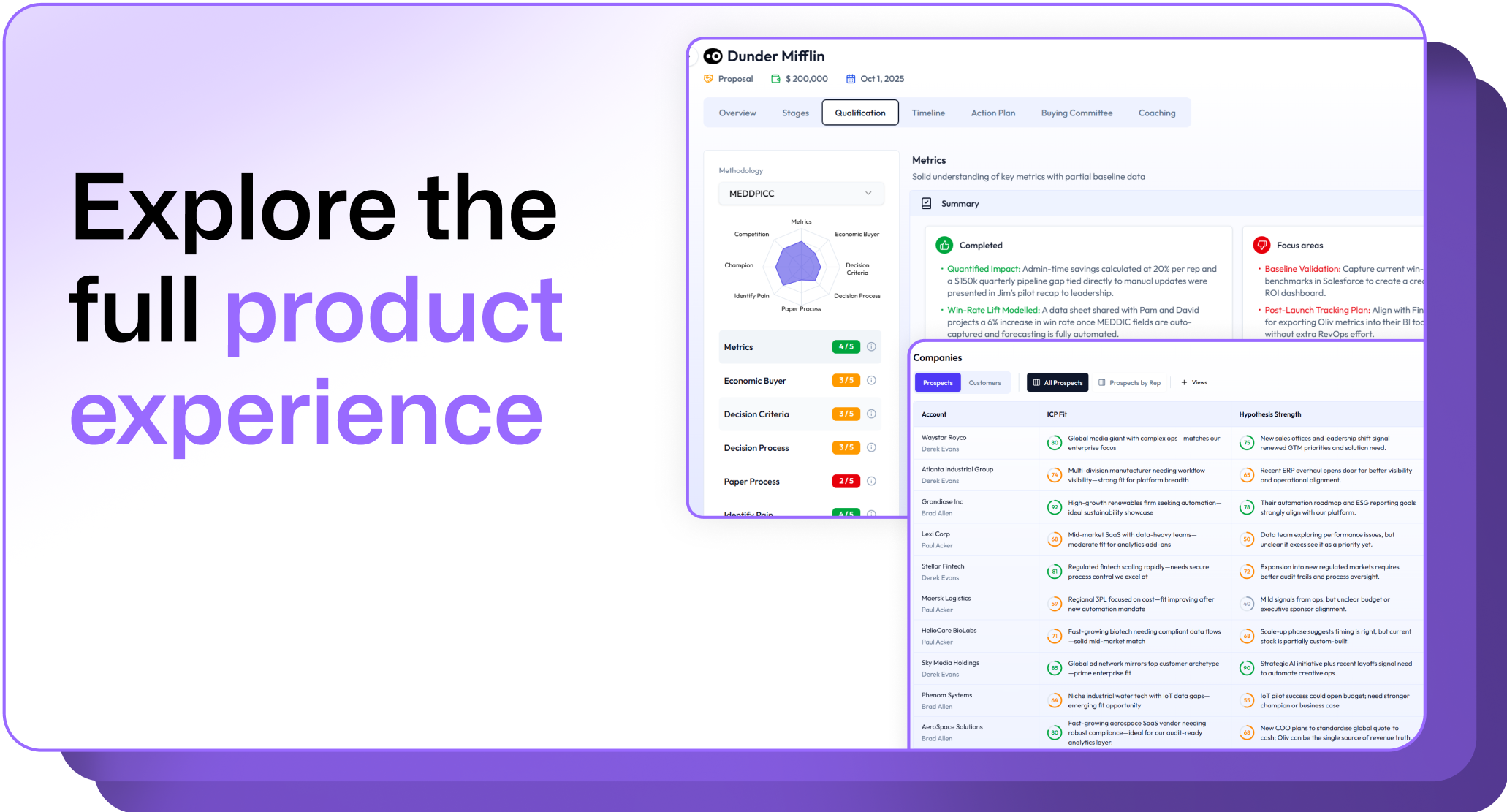
.avif)
.png)







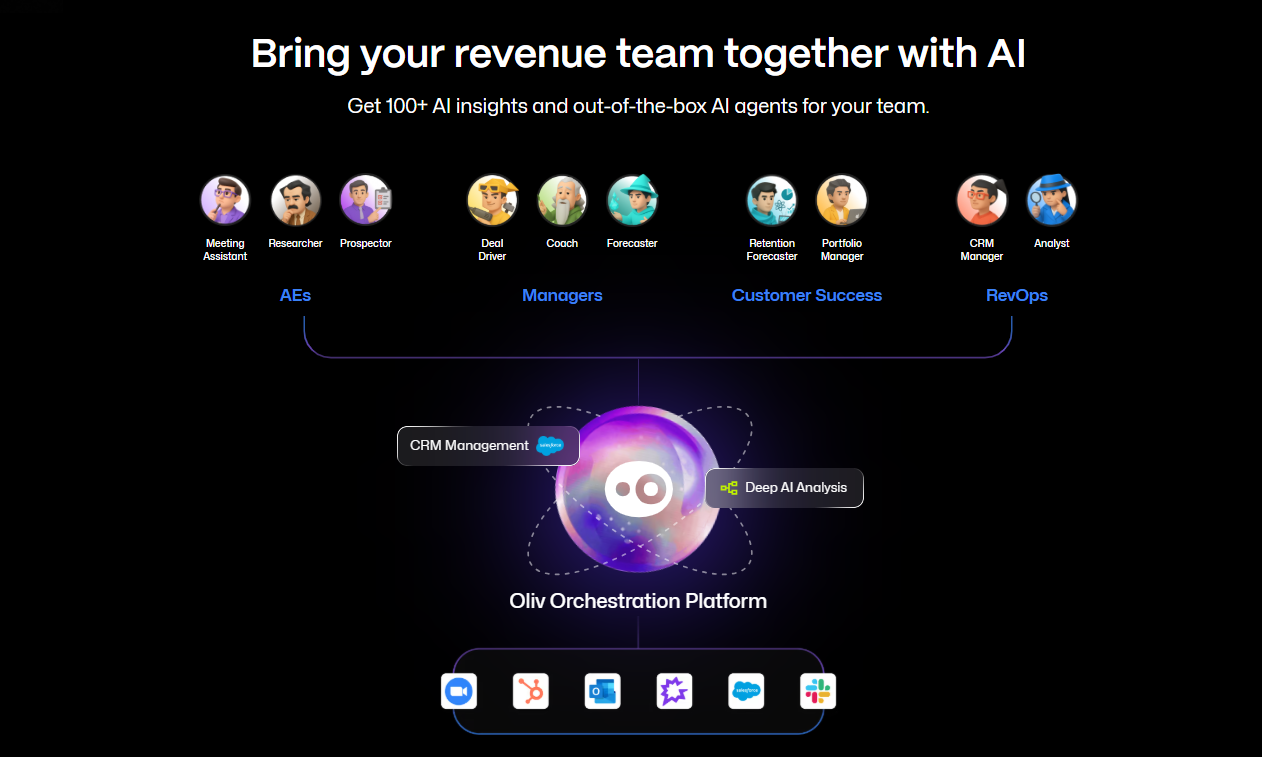
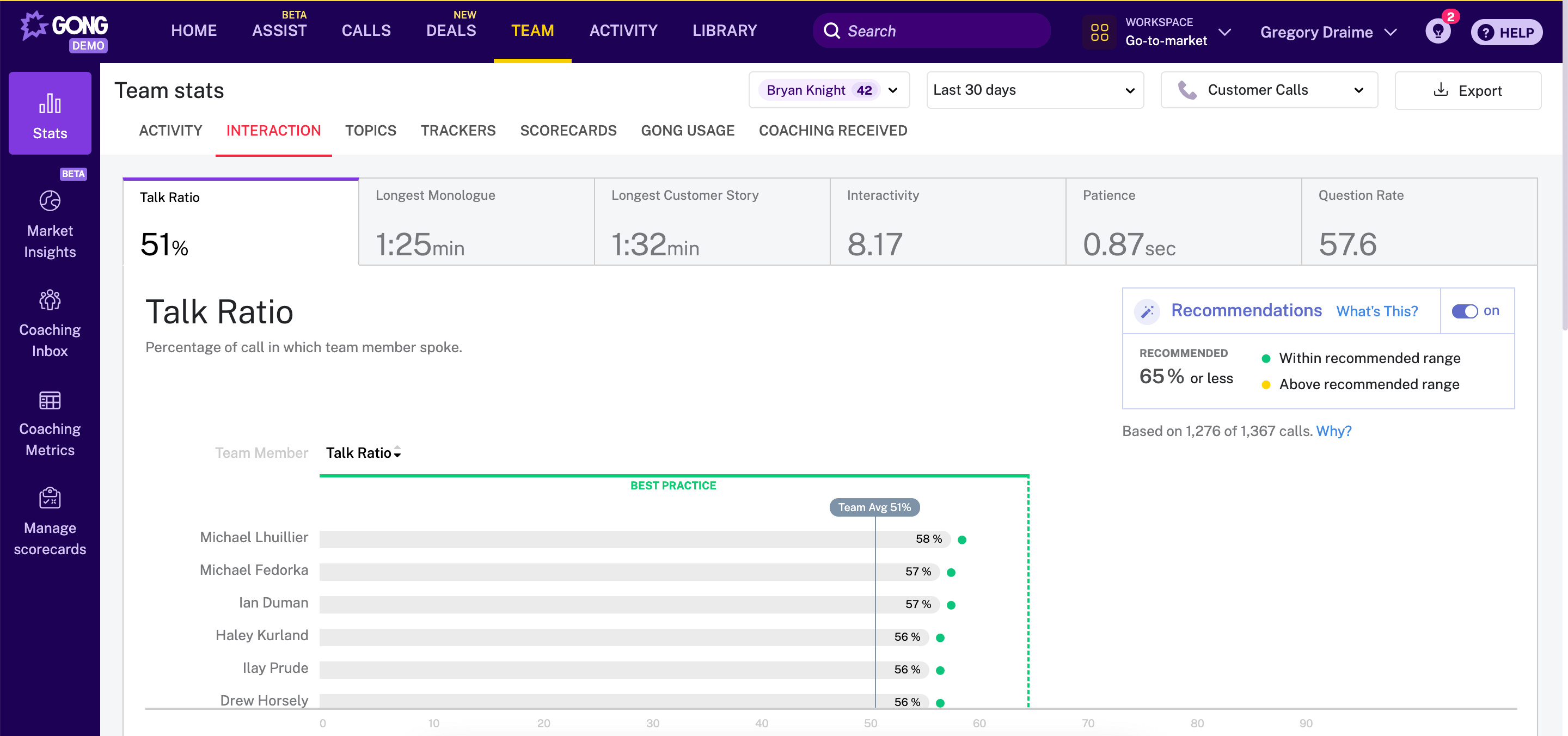
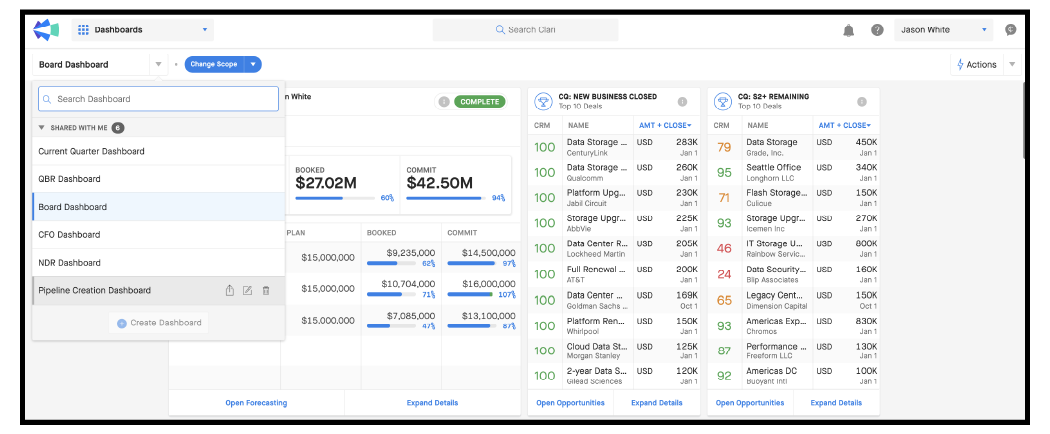
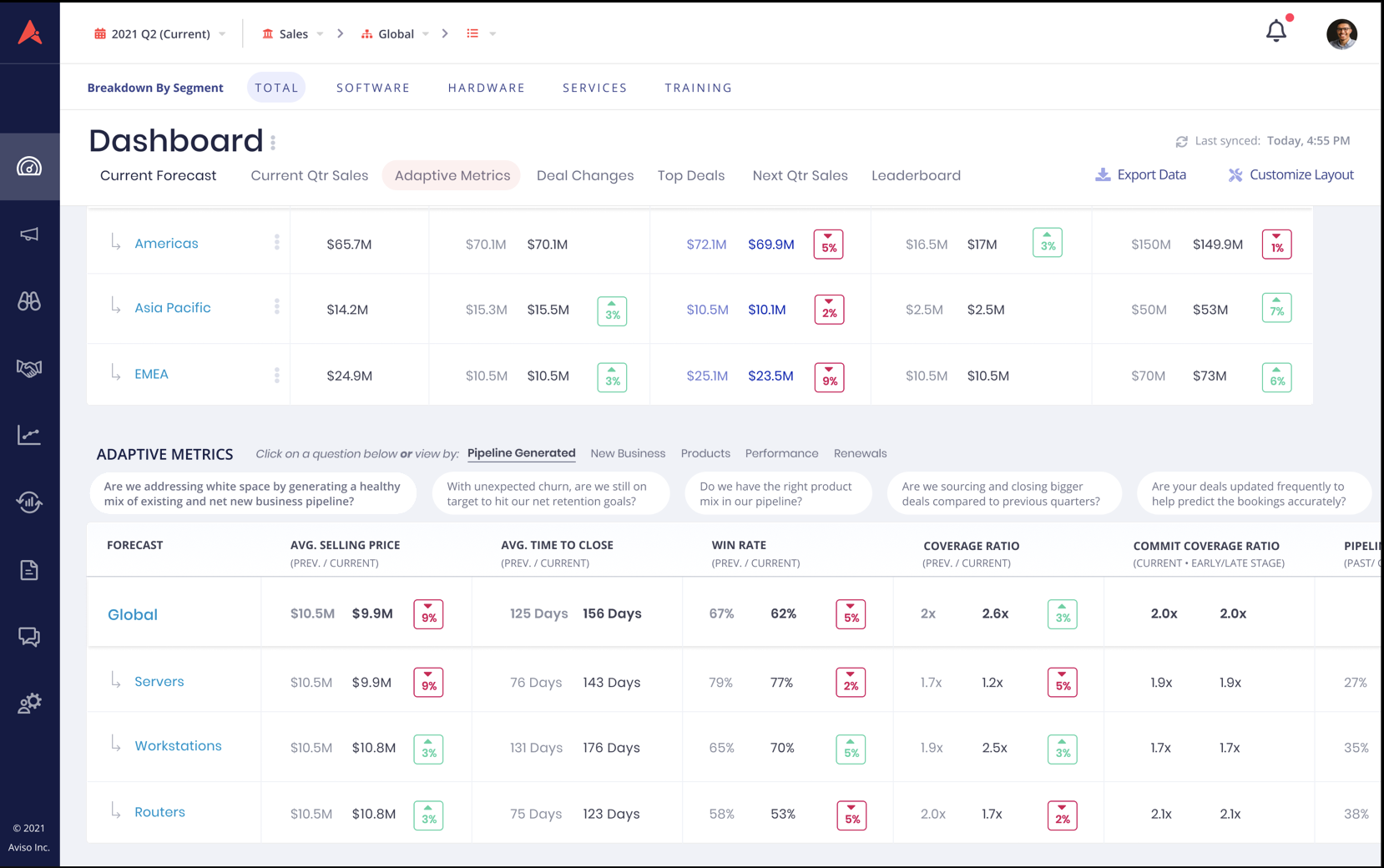
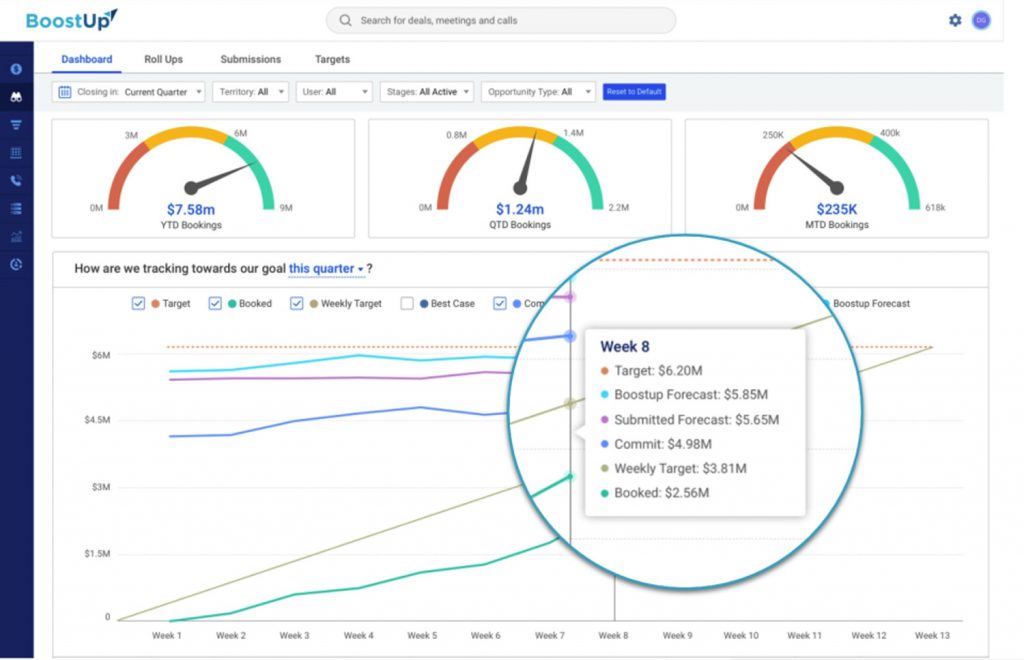
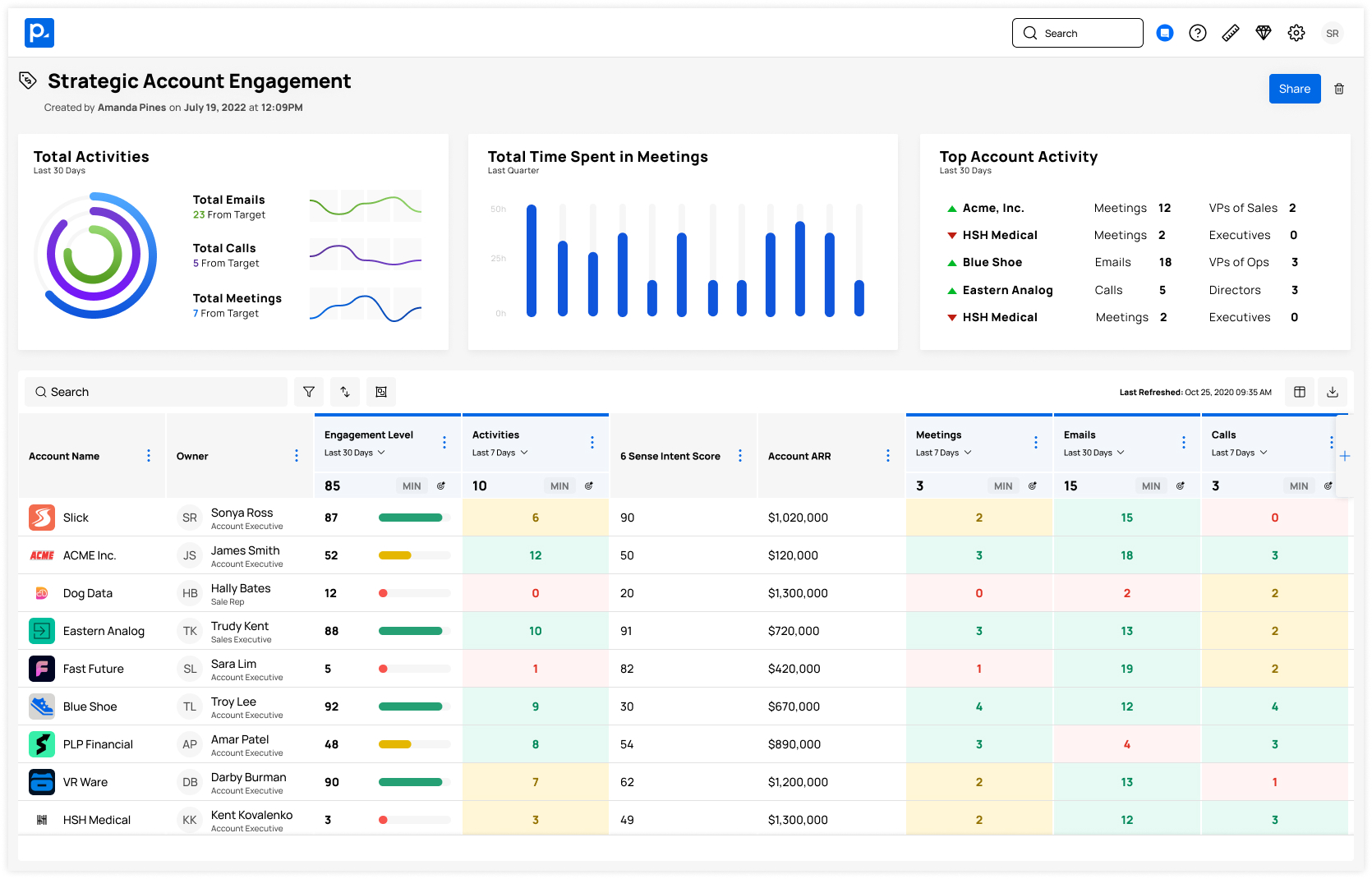

.png)
.png)
.png)

