AI for Customer Retention: Use Cases, Architectures, Tactics, Tools, and Implementation Frameworks
Written by
Ishan Chhabra
Last Updated :
June 18, 2026
Skim in :
7
mins
In this article
Revenue teams love Oliv
Here’s why:
All your deal data unified (from 30+ tools and tabs).
Insights are delivered to you directly, no digging.
AI agents automate tasks for you.
Thank you! Your submission has been received!
Oops! Something went wrong while submitting the form.
Meet Oliv’s AI Agents
Hi! I’m, Deal Driver
I track deals, flag risks, send weekly pipeline updates and give sales managers full visibility into deal progress
Hi! I’m, CRM Manager
I maintain CRM hygiene by updating core, custom and qualification fields all without your team lifting a finger
Hi! I’m, Forecaster
I build accurate forecasts based on real deal movement and tell you which deals to pull in to hit your number
Hi! I’m, Coach
I believe performance fuels revenue. I spot skill gaps, score calls and build coaching plans to help every rep level up
Hi! I’m, Prospector
I dig into target accounts to surface the right contacts, tailor and time outreach so you always strike when it counts
Hi! I’m, Pipeline tracker
I call reps to get deal updates, and deliver a real-time, CRM-synced roll-up view of deal progress
Hi! I’m, Analyst
I answer complex pipeline questions, uncover deal patterns, and build reports that guide strategic decisions
TL;DR
AI for customer retention predicts who will churn from signals like usage drops and silence, then acts by scoring risk, drafting outreach, and triggering save plays.
Reactive dashboards are now a liability; the sharper metric is Last Meaningful Engagement, not last activity, because silent accounts churn quietly.
A working stack has three layers: commodity data, intelligence models, and an agent layer that acts; most teams stall at layer one.
Buy over build for most teams, since internal note-takers stall at six to seven months on CRM write-back and handoffs, not the model.
Maturity runs Manual, Reactive, Predictive, Agentic; the jump that matters is from seeing risk to acting on it, lifting NRR toward 115 to 130 percent.
Prove impact with a holdout group and track NRR, GRR, logo churn, and LTV, while meeting SOC 2, GDPR, and the August 2026 EU AI Act rules.
Q1. What is AI for customer retention (and why is reactive churn management already obsolete)? [toc=1. What It Is & Why Now]
AI for customer retention uses machine learning and AI agents to spot churn signals like usage drops, silence, and sentiment shifts, then act on them before a customer cancels. Older tools record activity and show you a dashboard. Agentic AI closes the loop: it scores the risk, drafts the outreach, and triggers the play. The shift is from reacting to cancellations to intervening in the quiet weeks before them.
🔎 The blind spot nobody staffs for
A Customer Success Manager I worked with described her worst Monday. A logo she thought was healthy sent the cancel email at 9 a.m.
The account had gone quiet three weeks earlier. Nobody noticed, because her dashboard only showed "last activity," and a rep had been blasting check-in emails into the void.
Here is the thing most retention playbooks get backwards. The danger is not the loud, angry customer. It is the silent one who simply stops showing up.
🧠 The concept: from recording to acting
Let me define it plainly. AI for customer retention is software that predicts who will leave and does something about it without waiting to be asked.
Think of a vending machine versus a smart employee. A vending machine fails silently if the payment does not register, and just sits there. A good agent rejigs the plan, junks it if it is not working, and improvises if it is.
That difference, between a tool that surfaces a flag and one that acts on it, is the whole story. Gartner predicts that by 2028, at least 70% of customers will start their service journey through a conversational AI interface. The front door is already changing.
The core shift in AI for customer retention: from tools that record a risk flag to agents that act on it before the customer cancels.
⏰ Why "reactive" is now a liability
Most teams track last activity. We think the sharper metric is Last Meaningful Engagement: when did you actually have a real meeting or relevant call, not just when did a rep send another email? This is the same signal gap we unpack in our guide to the best revenue intelligence software platforms.
There is a difference between the two, and confusing them is how silent churn hides. One founder I trust described the ideal behavior simply. The system figures out that a customer who had heavy usage last week went silent this week, then sends them an email asking what happened, before the renewal date.
🌀 The resilience paradox
Here is the part the category avoids saying out loud. The more retention tools you bolt on, the more brittle and complex your system becomes.
You add a health-score tool, a survey tool, and a CS platform. Now you have three dashboards and still no single answer to "who is about to leave, and what do I do today?"
How Oliv approaches this
At Oliv AI, we built our agents to close that loop instead of widening it. Where legacy tools surface a risk flag and hand it back to a human, Oliv's agents score the account, draft the outreach, and flag the play, so the silent customer gets noticed before they ask for the cancel link. That is the practical line between an assistant that waits and one of the genuinely best AI sales tools that acts.
Your Monday move: define the inactivity window you are currently blind to. Pick one signal, like seven days of zero logins, and decide what should happen the moment it trips.
Q2. How does AI predict churn before a customer cancels (signals, scoring, and risk tiers)? [toc=2. Churn Prediction & Risk Tiers]
AI predicts churn by scoring behaviors that come before cancellation: declining usage, support spikes, login gaps, sentiment dips, and missed payments. A model weights each signal into a churn-probability score, then sorts accounts into healthy, watch, and at-risk tiers. The practical version is a simple points system that fires an alert before the renewal date, not after the cancel request.
📉 Why login counts lie
A RevOps lead once told me her team chased "low logins" for a quarter and saved almost nobody. The logins were noise.
Here is a hard truth from sales that applies cleanly to retention. Activity metrics without a link to indicators of advancement are hollow, and glorified scorekeepers make horrible forecasters. This is the same gap we cover in our breakdown of the best AI sales forecasting software.
A customer can log in daily and still be furious. Another can log in rarely and renew happily. Raw activity is not health.
🧮 The scoring system, in plain English
So how does the model actually decide? It assigns points to behaviors that history says precede churn. Here is a real, replicable example of an at-risk identification framework. I like it because it is specific enough to build on Monday:
Query volume drops by more than 50%: assign 25 points.
Zero queries for seven straight days: assign 30+ points.
Add smaller weights for support-ticket spikes, failed payments, and sentiment dips.
Add the points. The total sorts each account into a tier.
🚦 Risk tiers, and what each one triggers
Tier
Score band
What the team does
Healthy
Low
Monitor, look for expansion
Watch
Medium
Light-touch nudge, check usage
At-risk
High
Human outreach plus a specific save play
Critical
Very high
Escalate to a CSM same day
The point is not the exact numbers. The point is that you publish your thresholds instead of keeping them vague, so the whole team acts the same way.
📊 What "good" churn even looks like
You need a benchmark to know if your scoring is working. B2B SaaS averages roughly 3.5% annual churn, with voluntary churn near 2.6%.
It also varies sharply by segment. One benchmark set puts enterprise near 3.8%, mid-market near 5.2%, and SMB near 7.5%. Set your target by segment, not as one company-wide number.
How Oliv approaches this
The catch with scoring is data quality. If your signals sit in five disconnected tools, the score is guessing.
At Oliv AI, our agents score on CRM-accurate account context, not raw clicks, the approach we detail across the revenue intelligence platforms space. One founder demo showed an agent building this exact at-risk scoring task through natural language, no code written, just instructions in plain English. That is the bar: scoring tied to deal and account reality, not a vanity activity feed.
Your Monday move: build a v1 rubric from three signals you already track. Ship it rough, then tune it weekly.
Q3. What does an AI customer-retention architecture actually look like? [toc=3. Reference Architecture]
A working AI retention stack has three layers. The data layer collects usage, CRM, support, and product signals, and is increasingly a commodity. The intelligence layer runs models that turn raw signals into context and risk scores. The agent layer acts: drafting outreach, updating the CRM, and producing leadership one-pagers. Most teams over-invest in layer one and never reach layer three, where retention actually changes.
🏗️ The three-layer cake
I find the cleanest way to picture this is a three-layer cake. Each layer does one job, and the value climbs as you go up:
Baseline data layer. Recording, transcription, usage logs. This is a commodity now.
Intelligence layer. Models that read the data for context and risk signals.
Agent layer. Proactive reports, draft outreach, and one-pagers for leadership.
A working AI retention architecture has three layers, but value only appears at the top agent layer where the system finally acts.
🏢 The office building analogy
Another way to see it. Infrastructure is the hallways and bathrooms, the boring plumbing.
The data fabric is the intelligence and context running through the building. The agents are the 500 employees who actually do the work. A building with great plumbing and no employees produces nothing.
⚠️ The failure mode nobody warns you about
Here is where architectures quietly break. Your data layer can corrupt the picture before the model even sees it.
Salesforce Einstein Activity Capture, for example, can redact activities it flags as sensitive, even when they are not, which leaves you unable to build a complete customer view, a limitation we examine in our Salesforce Einstein reviews. One enterprise reviewer put the data problem bluntly:
"Its biggest handicap is that it does not allow for data storage or data migration. You cant really input the data from Einstein into another platform. One does not have access to the data of employees that leave the organization." Verified Reviewer Salesforce Einstein Gartner Peer Insights
If the data layer hoards or hides data, every layer above it inherits the blind spot.
🔓 Why UI moats are melting
Here is where my head is right now, and I could be off on the timeline. The old moat was "CRUD plus business logic," a pretty interface sitting on a database.
Agents do not need that abstraction. They can go to the underlying database, apply their own logic, and return the answer. The interface stops being the product. The action does.
How Oliv approaches this
Most vendors sell you layer one and call it AI. At Oliv AI, the Context Graph is our intelligence layer, combining accurate CRM object association with revenue-specific language models, and our agents are the layer-three workers most stacks never build. The result is a system that does not just store the customer picture, it acts on it, which is why we rank among the best sales intelligence platforms. That is the part the "we already have the recordings" crowd underestimates.
Your Monday move: audit which layer your current stack stops at. If everything ends in a dashboard, you are stuck at layer one.
Q4. What are the highest-impact AI retention use cases and tactics across the lifecycle? [toc=4. Use Cases & Tactics]
The highest-leverage AI retention tactics map to the customer lifecycle. Activation monitoring catches customers who never reached value. Inactivity outreach re-engages silent accounts. At-risk alerts route human attention. AI-drafted QBRs prove value at renewal. And surgical reactivation targets dormant accounts eligible for a specific offer. The winning pattern is always: detect a signal, decide the next action, run the play, measure the lift.
⭐ The activation epiphany
Let me start with a story that reframed how I see retention. A team gave an agent access to their ChartMogul revenue data and asked a simple question: why did MRR move?
The agent found a crazy spike in September that vanished by December. The reason was not pricing or competition. People simply were not activating. Retention problems often hide as activation problems you never diagnosed.
✅ The five plays that actually move retention
Here is where each tactic fits, and what it does:
Onboarding and activation monitoring. Catch the customer who signed but never reached first value. Signal: no key action in 14 days. Action: trigger a guided setup nudge.
Inactivity-triggered outreach. Re-engage the silent account before renewal. Signal: usage drop or zero queries for a week. Action: a "what happened?" email, not a generic check-in.
Predictive at-risk alerts. Route scarce human time to the accounts most likely to leave.
AI-drafted QBRs. An agent drafts data-rich Quarterly Business Review decks, pulling live customer outcomes and benchmarking peers, so renewals are backed by proof, not vibes.
Surgical reactivation. Target dormant accounts eligible for a specific service.
💰 The $4 million reactivation
The reactivation play deserves its own line, because the numbers got my attention. One team used an analyst agent to spot dormant customers who were actually eligible for a particular service.
They contacted only those people. The founder called it "surgical, laser-focused reactivation," and it surfaced a roughly $4 million revenue opportunity. That is the difference between a generic "we miss you" blast and a targeted, eligibility-based play.
🔁 The loop that ties it together
Notice the pattern under all five plays. Detect a signal, decide the next-best action, run the journey, then measure the lift against a holdout.
Every high-impact retention play runs on the same loop: detect a signal, decide the action, run the play, then measure the lift against a holdout.
Skip the holdout and you cannot tell a working play from a recovering market. The loop is the tactic. The individual plays are just where you point it. For the coaching layer of this loop, see our roundup of the best sales coaching software.
How Oliv approaches this
Most tools can flag a risk. Far fewer will write the follow-up and update the CRM without being told. At Oliv AI, our retention and upsell agents do exactly that, flagging risks and drafting follow-ups unprompted, so the QBR deck and the reactivation list show up ready for review instead of sitting on a CS manager's to-do list, far beyond what a basic Gong feature set delivers. The work gets done, not just surfaced.
Your Monday move: pick the one play with the clearest signal you already capture, probably inactivity, and wire a single automated outreach to it this week.
Q5. Which AI customer-retention tools should you compare, and how do they differ? [toc=5. Tools Comparison]
The best AI retention tools fall into three camps. Customer-success platforms like Gainsight and ChurnZero handle health scores and playbooks. Conversation-intelligence tools like Gong and Chorus record calls and surface signals. Agentic platforms like Oliv AI and Agentforce act on those signals. The honest dividing line is simple: does the tool hand work back to a human, or finish it?
🧭 The one question that sorts every tool
I have watched too many teams buy on feature checklists and regret it in six months. The checklist hides the only question that matters.
Does the tool tell you a customer is at risk, or does it actually do something about it? A dashboard that flags churn still leaves the save play sitting on someone's to-do list. That gap is where retention quietly dies.
📊 The comparison that actually matters
Here is how I would line up the categories. Compare on data portability, agentic depth, CRM write-back, and total cost, not on how many trackers each one ships. We go deeper on this in our roundup of the best revenue intelligence software platforms.
Criterion
Conversation intelligence (Gong, Chorus)
CS platforms (Gainsight, ChurnZero)
Agentic (Oliv AI)
Core job
Record, transcribe, surface signals
Health scores, playbooks
Detect, draft, and act
Data portability
Often one-way, hard bulk export
CRM-dependent
Two-way CRM sync
Acts autonomously
No, hands back to human
Partly, human-run plays
Yes, agents do the work
Best-fit segment
Coaching-heavy sales orgs
Established CS teams
Lean teams wanting leverage
⚠️ The data-export trap
Gong is genuinely strong at conversation intelligence. The trade-off shows up when you try to get your own data back out, a theme that runs through the Gong reviews we analyzed:
"If your business needs easy, bulk access to call data or plans to integrate with other platforms, these limitations can create challenges. The lack of robust data export options has made it hard to justify the platforms cost." Neel P., Sales Operations Manager Gong G2 Verified Review
Cost is the other honest snag, especially for smaller teams:
"Gong is a really powerful tool but its probably the highest end option on the market, and now were stuck with a tool that works technically but isnt the right business decision." Iris P., Head of Marketing Gong G2 Verified Review
🤖 "Agentic" does not always mean agentic
Agentforce carries the agent label, but operators report it leans chat-heavy and click-heavy in practice, as we cover in our Salesforce Agentforce reviews analyzed:
"Lots of clicking to get select the right options. UX needs improvement. Everything opens in a new browser tabs clustering the browser." Verified Reviewer Salesforce Agentforce G2 Verified Review
I put it this way to peers. B2C bots help people return shirts. B2B agents help close and keep million-dollar accounts. They are not the same job.
How Oliv approaches this
Think treadmill versus personal trainer. Gong and Chorus are an expensive treadmill, you still do all the running. At Oliv AI, our agents do the heavy lifting, working two-way with Salesforce, HubSpot, and Zoho to make your existing CRM smarter instead of trapping your data, which is why we place among the best AI sales tools. We are built for lean revenue teams who want action, not another dashboard to babysit. If you only need pure call recording, we are honestly not your tool.
Your Monday move: list your current retention tools and mark each "acts" or "hands back." The hand-backs are your real cost.
Q6. Build vs. buy: should you build your own retention AI in-house? [toc=6. Build vs Buy]
Building retention AI in-house looks cheap because you already have the recordings and the data. In practice, most internal builds stall in six to seven months, stuck as note-takers nobody connects to the deal. Buy when you need production reliability, CRM-accurate write-back, and cross-team workflows fast. Build only if retention AI is your actual core product.
🛠️ The "we have the recordings" trap
I lost a deal last year to exactly this thinking. The prospect liked what we solved, then said they would build it internally because they had all the call recordings.
For three or four months, they got insights. Then the hard questions hit. How do you relate those insights to the overall deal? How do you pass them to the extended team? That is where the homegrown version goes quiet.
📉 Why internal note-takers fade
Here is the pattern I keep seeing. Companies build their own note-taker, it works for a while, then it fails around six or seven months in. The same stall shows up when teams underestimate the Gong implementation timeline.
The reason is rarely the model. It is the operational glue, the CRM write-back, the handoffs, and the daily correction. Recording is the commodity part. Acting on the recording is the hard part nobody budgets for.
🦗 The "crickets" reality
I could be biased here, since I sell a bought solution. But the field data is stark.
We did a call with a public B2B company worth over $10 billion, the kind you would assume is an AI leader. We asked how much of their AI retention work they had actually built themselves. It was crickets on a call of 20 people. The wider signal matches: roughly 87% of enterprises missed their 2025 revenue targets despite record AI investment. Spend is not the same as shipped.
✅ A four-question build-vs-buy check
Run these before you greenlight an internal build:
Is retention AI your core product, or a support function?
Can your team own daily agent correction, not just the initial model?
Do you need CRM-accurate write-back across the extended team?
Can you wait 6 to 12 months for production reliability?
If you answered "support function" and "no" to the rest, buy. Many teams reach this point while weighing Gong alternatives.
How Oliv approaches this
We do not ask you to bet a year on an internal build. At Oliv AI, the path is deliberately small: audit your workflow, find the bottleneck, deploy one agent, validate the ROI, then expand. That land-and-expand cadence is what avoids the six-month stall, because you prove value on one play before committing to the next. The complexity is real, and we own it with you rather than handing you a blank model.
Your Monday move: answer the four questions above honestly. Write the answers down before anyone pitches you a roadmap.
Q7. What's the AI retention maturity model, and where does your team sit today? [toc=7. Maturity Model]
AI retention maturity runs in four stages. Manual means weekly rep scrubs feeding a Monday forecast. Reactive means dashboards flag churn after it happens. Predictive means models score risk early. Agentic means agents detect, draft, and act, with humans reviewing. Most mid-market teams sit between Reactive and Predictive. The jump that matters is from seeing risk to acting on it.
🗓️ Stage zero: the Thursday scrub
Let me describe the bottom of the ladder, because most teams live there. Every Thursday and Friday, managers sit with reps for one to two hours.
They talk through the week, then manually put it into the forecast and build the report they show every Monday. It works, but it eats two days and scales terribly. That is the manual stage, and it is more common than anyone admits. Better AI sales forecasting software collapses that two-day scrub.
📈 The four stages, side by side
Here is the climb, with what each stage feels like and what to do next:
Stage
What it feels like
Typical NRR
Next move
Manual
Weekly scrubs, spreadsheets
Below 100%
Centralize signals
Reactive
Dashboards flag churn late
~100%
Add predictive scoring
Predictive
Risk scored early
105 to 115%
Automate the response
Agentic
Agents act, humans review
115 to 130%
Expand agent coverage
The inflection is between Predictive and Agentic. Seeing risk early is useless if a human still has to do everything about it.
🎯 What the top stage looks like
I find this maps cleanly onto the Bowtie model, which extends the sales funnel through onboarding, adoption, and expansion. Retention lives on the right half of that bowtie, the same shift we trace from revenue ops to intelligence to orchestration.
The most striking version I have seen ran an eight-figure topline with roughly 1.2 humans and 20 agents. That is not a typo. The humans set strategy. The agents did the repetitive retention work.
How Oliv approaches this
The agentic stage is exactly what we build for. At Oliv AI, the goal is to replace admin with agents so your humans spend their hours on strategy, relationships, and saving accounts, not on building Monday's report, which is why we rank among the best sales intelligence platforms. If your team is still living in the Thursday scrub, the first step is not buying everything. It is moving one repetitive task to an agent and watching what happens to your NRR.
Your Monday move: locate your team on the table above, honestly. Pick the single next move for your stage and start there.
Q8. What does a 90-day AI retention rollout actually look like? [toc=8. 90-Day Roadmap]
By the end of this, you will have a working agent and proof it moves retention. Days 1 to 30: pick one churn signal, deploy one agent, and correct it daily. Days 31 to 60: validate it against a holdout and wire it into the CRM. Days 61 to 90: expand to a second play. The non-negotiable is the daily correction loop in month one.
⏰ Why most rollouts die in the pilot
Here is the fear I want to name first. A lot of pilots start with promise and then fade, because customers struggle to move from pilot to production.
The fix is not a bigger pilot. It is picking one narrow signal and getting one agent into real use fast. Scope is the discipline that beats the pilot trap.
The 90-day AI retention rollout in three phases: deploy and train one agent, validate it against a holdout, then carefully expand to a second play.
📅 Days 1 to 30: pick one signal, train daily
Choose your clearest signal, probably inactivity, and deploy one agent against it. Then expect it to say dumb things at first.
The agent will make mistakes, maybe even hallucinate (confidently invent things). You correct it for an hour or two each day. Do this for 30 days, and by the 30th day, it is genuinely good. That daily correction is the whole secret, not the initial setup, the same lesson we share for the best AI for sales calls.
🧱 Days 31 to 60: validate and connect
Now prove it works. Run the agent on most at-risk accounts, hold a control group back, and measure the difference.
Then connect outputs to your CRM and the extended team, so insights reach the people who act. I use the 10/80/10 rule here: 10% ideation, 80% letting the agent do the heavy lifting, and 10% quality check. A simple memory.md hack helps too. Keep a file the agent updates whenever you correct it, so lessons stick.
🚀 Days 61 to 90: expand carefully
With one play proven, add a second, maybe QBR drafting or reactivation. Resist the urge to launch five at once.
Stop obsessing over clever prompts and focus on context engineering instead. Load the agent with deep context about your business, so your instructions can stay simple and still produce strong results. Be honest about the cost: reviewing agent output is real work, often 10 to 15 hours a week early on. This is not a job for lazy people, and it pairs well with strong sales coaching software.
How Oliv approaches this
This 90-day shape mirrors how we onboard at Oliv AI: find the bottleneck, deploy one agent, validate ROI, then expand to the next play. Full customization still takes two to four weeks, and we would rather tell you that upfront than oversell a one-click magic setup.
Your Monday move: name the one signal and the one agent you will start with. Block 60 minutes a day for correction, on your calendar, this week.
Q9. What are the risks, mistakes to avoid, and compliance duties (SOC 2, GDPR, EU AI Act)? [toc=9. Risks, Mistakes & Compliance]
Lead with the deadline. From August 2026, the EU AI Act's high-risk rules bite, demanding human oversight (Article 26) and event logs kept for at least six months. On top of that, you need SOC 2 Type II for security and GDPR for data residency. The big mistakes are simpler: outsourcing your thinking to AI, skipping human review, and shipping "hello {first name}" slop.
⚠️ The compliance layer, in plain English
Let me translate the jargon, because it trips up most teams. Here is what each rule actually asks of you.
SOC 2 Type II: an audit proving your security controls work over time, not just on paper.
GDPR residency: EU customer data stays handled under EU rules, with clear consent.
EU AI Act (high-risk): a human must oversee AI decisions, and you log them for six months.
If you sell into Europe, treat August 2026 as a hard date, not a someday. For how we handle this layer, see our notes on Gong DPA and security.
💰 Borrow the finance audit-trail standard
Here is a vantage point from inside the work. Finance teams never let a number move without a trail showing who touched it and when.
Retention AI deserves the same bar. Every agent action should leave a record you can replay in an audit. If you cannot answer "why did the AI do that," you are not compliant, and you are not safe.
❌ The three mistakes that quietly hurt you
I might be wrong on the ranking, but these three burn teams most often:
Outsourcing problem-solving. If you let AI think for you, your own judgment atrophies. Use it to draft, not to decide.
Skipping the human check. Reviewing agent output is real work, often 10 to 15 hours a week early on. Budget for it.
Shipping AI slop. A "Hi {first name}" email screams automation and kills trust faster than no email at all.
The standard read says AI removes work. The honest read says it relocates work, from doing to reviewing. This is where the best AI sales tools earn their keep.
How Oliv approaches this
This is exactly why we built a human-in-the-loop step at Oliv AI. Our agents nudge reps to validate data before anything writes back to the CRM, and every action lands in an audit log, a discipline we expect from any of the best revenue intelligence software platforms. We hold SOC 2 Type II, GDPR, and CCPA certifications, because IT and Legal sit on the buying committee for a reason. The agent proposes; a human still owns the call.
Here is the question I am sitting with. As the EU AI Act lands, will "explainable by default" become the feature buyers screen for first, ahead of accuracy? I think it might. Tell me where you land on that.
Q10. How do you measure whether your AI retention program is actually working? [toc=10. Measurement & ROI]
Bottom line up front: measure incremental lift, not vanity dashboards. Track four numbers on one executive scoreboard: net revenue retention (NRR), gross revenue retention (GRR), logo churn, and lifetime value (LTV). Then prove the AI caused the change with a holdout group. Benchmarks worth chasing: NRR of 115 to 130%, GRR of 85 to 95%. Without a control group, you are measuring correlation, not impact.
🎯 The scoreboard that belongs in the boardroom
Keep it to four metrics, because more than that and nobody reads it. Here is the set and what each one tells you.
Metric
What it answers
Healthy SaaS range
NRR
Are we growing existing accounts?
115 to 130%
GRR
How much do we keep before upsell?
85 to 95%
Logo churn
How many customers walk?
Lower is better
LTV
What is a customer worth over time?
Rising over time
🧪 The holdout discipline nobody loves
Here is the part teams skip, and it is the only part that proves ROI. Hold a control group back from the AI, and compare it to the treated group.
That gap is your incremental lift, the churn you actually prevented. Without it, you are crediting the AI for saves that might have happened anyway. An incomplete perspective on the numbers is, functionally, an incorrect answer.
📉 Why dashboard-watchers make bad forecasters
I will say the quiet part out loud. Glorified scorekeepers make horrible forecasters, because watching a number is not the same as moving it. This is why we obsess over the best AI sales forecasting software.
The economics back this up. When a single rep can drive $3 to $5 million in revenue at roughly 60% margins, retention is not a cost center, it is the cheapest growth you have. Keeping a customer often runs 15 to 20 times cheaper than winning a new one.
🗣️ What operators say the proof looks like
Buyers want depth, not just activity counts. One CS leader put the gap bluntly:
"I lead the CSM team... with Gong, I have trouble understanding breadth versus depth... Oliv is the first time I've ever been speechless. That's incredible." Akil Sharperson, Triple Whale Oliv Customer Validation
The forecasting angle matters just as much for RevOps:
"Suraj Ramesh (Sprinto) sought to solve for accurate forecasting that isn't solely rep-driven." Suraj Ramesh, Sprinto Oliv Customer Validation
How Oliv approaches this
At Oliv AI, the Forecaster Agent inspects every deal line by line and drops a board-ready roll-up, with risk commentary, into manager inboxes every Monday. No manual scrubs, no spreadsheet roll-ups the night before. You walk into the forecast call with a number you can defend, the standard we hold the best sales intelligence platforms to.
Where my head is right now: the next board fight will not be "what is our NRR," it will be "prove the AI caused it." Are you ready to show a holdout? I would love to hear how you are setting yours up.
Q11. What does AI retention look like by segment, SMB, mid-market, and enterprise case studies? [toc=11. Segment & Vertical Case Studies]
Retention AI plays differently by segment. SMBs (5 to 25 reps) fight roughly 7.5% annual churn with lean teams and need out-of-the-box automation. Mid-market (25 to 200 reps) sits near 5.2% churn, where data fragmentation starts hurting visibility. Enterprises (100+ reps) run around 3.8% churn but stall on dirty data and homegrown builds. The team shape and the priority play change at each stage.
🏪 SMB: lean teams, leverage over headcount
Situation: a sub-25-rep team with no dedicated RevOps and no time to babysit dashboards.
Complication: churn near 7.5% hurts most here, because every logo is a bigger slice of revenue. They cannot hire their way out.
Resolution: automation, not headcount. The most extreme version I have seen ran an eight-figure topline with roughly 1.2 humans and about 20 agents. SMBs win by letting agents do the repetitive retention work, often the cheapest of the best AI sales tools to deploy.
🏢 Mid-market: the fragmentation wall
Situation: 25 to 200 reps, multiple tools, data scattered across calls, email, and Slack.
Complication: around 5.2% churn, and visibility breaks down because no single system sees the whole deal. Reactivation revenue leaks out unnoticed. Teams here often start comparing Gong alternatives.
Resolution: unify the data first, then act. One pattern I keep seeing is a stuck reactivation motion worth millions, sometimes a $4M unlock, once dormant accounts finally get surfaced and worked.
🏛️ Enterprise: the "we'll build it" trap
Situation: 100-plus reps, big budgets, and an AI mandate from leadership.
Complication: they assume scale equals capability. On a call with a $10B-plus public B2B company, we asked how much retention AI they had built in-house. Crickets, on a call of 20 people.
Resolution: enterprises win as an intelligence layer over the existing CRM, not a year-long internal build. Start with one high-value play, then expand, the path we map from revenue ops to intelligence to orchestration.
💬 What the segment pain sounds like
Mid-market RevOps leaders describe the fragmentation directly:
"I have to maintain my own separate spreadsheet to track deals because I can only capture what my leaders want to see about a deal." Verified Reviewer, HR Clari G2 Verified Review
And the cost pain that pushes smaller teams to switch:
"Gong is a really powerful tool but its probably the highest end option on the market, and now were stuck with a tool that works technically but isnt the right business decision." Iris P., Head of Marketing Gong G2 Verified Review
How Oliv approaches this
Our sweet spot is mid-market, roughly 200 to 5,000 employees and $10M to $500M ARR, where fragmentation bites hardest. At Oliv AI, we make the existing CRM autonomous instead of replacing it, which is why enterprises adopt us as one of the best sales intelligence platforms and SMBs adopt us for out-of-the-box leverage. Honestly, if you are pure B2C support, Agentforce fits you better than we do.
The hypothesis I am testing: segment, not industry, predicts retention-AI success more than anything else. Does that match what you have seen in your own book?
Q1. What is AI for customer retention (and why is reactive churn management already obsolete)? [toc=1. What It Is & Why Now]
AI for customer retention uses machine learning and AI agents to spot churn signals like usage drops, silence, and sentiment shifts, then act on them before a customer cancels. Older tools record activity and show you a dashboard. Agentic AI closes the loop: it scores the risk, drafts the outreach, and triggers the play. The shift is from reacting to cancellations to intervening in the quiet weeks before them.
🔎 The blind spot nobody staffs for
A Customer Success Manager I worked with described her worst Monday. A logo she thought was healthy sent the cancel email at 9 a.m.
The account had gone quiet three weeks earlier. Nobody noticed, because her dashboard only showed "last activity," and a rep had been blasting check-in emails into the void.
Here is the thing most retention playbooks get backwards. The danger is not the loud, angry customer. It is the silent one who simply stops showing up.
🧠 The concept: from recording to acting
Let me define it plainly. AI for customer retention is software that predicts who will leave and does something about it without waiting to be asked.
Think of a vending machine versus a smart employee. A vending machine fails silently if the payment does not register, and just sits there. A good agent rejigs the plan, junks it if it is not working, and improvises if it is.
That difference, between a tool that surfaces a flag and one that acts on it, is the whole story. Gartner predicts that by 2028, at least 70% of customers will start their service journey through a conversational AI interface. The front door is already changing.
The core shift in AI for customer retention: from tools that record a risk flag to agents that act on it before the customer cancels.
⏰ Why "reactive" is now a liability
Most teams track last activity. We think the sharper metric is Last Meaningful Engagement: when did you actually have a real meeting or relevant call, not just when did a rep send another email? This is the same signal gap we unpack in our guide to the best revenue intelligence software platforms.
There is a difference between the two, and confusing them is how silent churn hides. One founder I trust described the ideal behavior simply. The system figures out that a customer who had heavy usage last week went silent this week, then sends them an email asking what happened, before the renewal date.
🌀 The resilience paradox
Here is the part the category avoids saying out loud. The more retention tools you bolt on, the more brittle and complex your system becomes.
You add a health-score tool, a survey tool, and a CS platform. Now you have three dashboards and still no single answer to "who is about to leave, and what do I do today?"
How Oliv approaches this
At Oliv AI, we built our agents to close that loop instead of widening it. Where legacy tools surface a risk flag and hand it back to a human, Oliv's agents score the account, draft the outreach, and flag the play, so the silent customer gets noticed before they ask for the cancel link. That is the practical line between an assistant that waits and one of the genuinely best AI sales tools that acts.
Your Monday move: define the inactivity window you are currently blind to. Pick one signal, like seven days of zero logins, and decide what should happen the moment it trips.
Q2. How does AI predict churn before a customer cancels (signals, scoring, and risk tiers)? [toc=2. Churn Prediction & Risk Tiers]
AI predicts churn by scoring behaviors that come before cancellation: declining usage, support spikes, login gaps, sentiment dips, and missed payments. A model weights each signal into a churn-probability score, then sorts accounts into healthy, watch, and at-risk tiers. The practical version is a simple points system that fires an alert before the renewal date, not after the cancel request.
📉 Why login counts lie
A RevOps lead once told me her team chased "low logins" for a quarter and saved almost nobody. The logins were noise.
Here is a hard truth from sales that applies cleanly to retention. Activity metrics without a link to indicators of advancement are hollow, and glorified scorekeepers make horrible forecasters. This is the same gap we cover in our breakdown of the best AI sales forecasting software.
A customer can log in daily and still be furious. Another can log in rarely and renew happily. Raw activity is not health.
🧮 The scoring system, in plain English
So how does the model actually decide? It assigns points to behaviors that history says precede churn. Here is a real, replicable example of an at-risk identification framework. I like it because it is specific enough to build on Monday:
Query volume drops by more than 50%: assign 25 points.
Zero queries for seven straight days: assign 30+ points.
Add smaller weights for support-ticket spikes, failed payments, and sentiment dips.
Add the points. The total sorts each account into a tier.
🚦 Risk tiers, and what each one triggers
Tier
Score band
What the team does
Healthy
Low
Monitor, look for expansion
Watch
Medium
Light-touch nudge, check usage
At-risk
High
Human outreach plus a specific save play
Critical
Very high
Escalate to a CSM same day
The point is not the exact numbers. The point is that you publish your thresholds instead of keeping them vague, so the whole team acts the same way.
📊 What "good" churn even looks like
You need a benchmark to know if your scoring is working. B2B SaaS averages roughly 3.5% annual churn, with voluntary churn near 2.6%.
It also varies sharply by segment. One benchmark set puts enterprise near 3.8%, mid-market near 5.2%, and SMB near 7.5%. Set your target by segment, not as one company-wide number.
How Oliv approaches this
The catch with scoring is data quality. If your signals sit in five disconnected tools, the score is guessing.
At Oliv AI, our agents score on CRM-accurate account context, not raw clicks, the approach we detail across the revenue intelligence platforms space. One founder demo showed an agent building this exact at-risk scoring task through natural language, no code written, just instructions in plain English. That is the bar: scoring tied to deal and account reality, not a vanity activity feed.
Your Monday move: build a v1 rubric from three signals you already track. Ship it rough, then tune it weekly.
Q3. What does an AI customer-retention architecture actually look like? [toc=3. Reference Architecture]
A working AI retention stack has three layers. The data layer collects usage, CRM, support, and product signals, and is increasingly a commodity. The intelligence layer runs models that turn raw signals into context and risk scores. The agent layer acts: drafting outreach, updating the CRM, and producing leadership one-pagers. Most teams over-invest in layer one and never reach layer three, where retention actually changes.
🏗️ The three-layer cake
I find the cleanest way to picture this is a three-layer cake. Each layer does one job, and the value climbs as you go up:
Baseline data layer. Recording, transcription, usage logs. This is a commodity now.
Intelligence layer. Models that read the data for context and risk signals.
Agent layer. Proactive reports, draft outreach, and one-pagers for leadership.
A working AI retention architecture has three layers, but value only appears at the top agent layer where the system finally acts.
🏢 The office building analogy
Another way to see it. Infrastructure is the hallways and bathrooms, the boring plumbing.
The data fabric is the intelligence and context running through the building. The agents are the 500 employees who actually do the work. A building with great plumbing and no employees produces nothing.
⚠️ The failure mode nobody warns you about
Here is where architectures quietly break. Your data layer can corrupt the picture before the model even sees it.
Salesforce Einstein Activity Capture, for example, can redact activities it flags as sensitive, even when they are not, which leaves you unable to build a complete customer view, a limitation we examine in our Salesforce Einstein reviews. One enterprise reviewer put the data problem bluntly:
"Its biggest handicap is that it does not allow for data storage or data migration. You cant really input the data from Einstein into another platform. One does not have access to the data of employees that leave the organization." Verified Reviewer Salesforce Einstein Gartner Peer Insights
If the data layer hoards or hides data, every layer above it inherits the blind spot.
🔓 Why UI moats are melting
Here is where my head is right now, and I could be off on the timeline. The old moat was "CRUD plus business logic," a pretty interface sitting on a database.
Agents do not need that abstraction. They can go to the underlying database, apply their own logic, and return the answer. The interface stops being the product. The action does.
How Oliv approaches this
Most vendors sell you layer one and call it AI. At Oliv AI, the Context Graph is our intelligence layer, combining accurate CRM object association with revenue-specific language models, and our agents are the layer-three workers most stacks never build. The result is a system that does not just store the customer picture, it acts on it, which is why we rank among the best sales intelligence platforms. That is the part the "we already have the recordings" crowd underestimates.
Your Monday move: audit which layer your current stack stops at. If everything ends in a dashboard, you are stuck at layer one.
Q4. What are the highest-impact AI retention use cases and tactics across the lifecycle? [toc=4. Use Cases & Tactics]
The highest-leverage AI retention tactics map to the customer lifecycle. Activation monitoring catches customers who never reached value. Inactivity outreach re-engages silent accounts. At-risk alerts route human attention. AI-drafted QBRs prove value at renewal. And surgical reactivation targets dormant accounts eligible for a specific offer. The winning pattern is always: detect a signal, decide the next action, run the play, measure the lift.
⭐ The activation epiphany
Let me start with a story that reframed how I see retention. A team gave an agent access to their ChartMogul revenue data and asked a simple question: why did MRR move?
The agent found a crazy spike in September that vanished by December. The reason was not pricing or competition. People simply were not activating. Retention problems often hide as activation problems you never diagnosed.
✅ The five plays that actually move retention
Here is where each tactic fits, and what it does:
Onboarding and activation monitoring. Catch the customer who signed but never reached first value. Signal: no key action in 14 days. Action: trigger a guided setup nudge.
Inactivity-triggered outreach. Re-engage the silent account before renewal. Signal: usage drop or zero queries for a week. Action: a "what happened?" email, not a generic check-in.
Predictive at-risk alerts. Route scarce human time to the accounts most likely to leave.
AI-drafted QBRs. An agent drafts data-rich Quarterly Business Review decks, pulling live customer outcomes and benchmarking peers, so renewals are backed by proof, not vibes.
Surgical reactivation. Target dormant accounts eligible for a specific service.
💰 The $4 million reactivation
The reactivation play deserves its own line, because the numbers got my attention. One team used an analyst agent to spot dormant customers who were actually eligible for a particular service.
They contacted only those people. The founder called it "surgical, laser-focused reactivation," and it surfaced a roughly $4 million revenue opportunity. That is the difference between a generic "we miss you" blast and a targeted, eligibility-based play.
🔁 The loop that ties it together
Notice the pattern under all five plays. Detect a signal, decide the next-best action, run the journey, then measure the lift against a holdout.
Every high-impact retention play runs on the same loop: detect a signal, decide the action, run the play, then measure the lift against a holdout.
Skip the holdout and you cannot tell a working play from a recovering market. The loop is the tactic. The individual plays are just where you point it. For the coaching layer of this loop, see our roundup of the best sales coaching software.
How Oliv approaches this
Most tools can flag a risk. Far fewer will write the follow-up and update the CRM without being told. At Oliv AI, our retention and upsell agents do exactly that, flagging risks and drafting follow-ups unprompted, so the QBR deck and the reactivation list show up ready for review instead of sitting on a CS manager's to-do list, far beyond what a basic Gong feature set delivers. The work gets done, not just surfaced.
Your Monday move: pick the one play with the clearest signal you already capture, probably inactivity, and wire a single automated outreach to it this week.
Q5. Which AI customer-retention tools should you compare, and how do they differ? [toc=5. Tools Comparison]
The best AI retention tools fall into three camps. Customer-success platforms like Gainsight and ChurnZero handle health scores and playbooks. Conversation-intelligence tools like Gong and Chorus record calls and surface signals. Agentic platforms like Oliv AI and Agentforce act on those signals. The honest dividing line is simple: does the tool hand work back to a human, or finish it?
🧭 The one question that sorts every tool
I have watched too many teams buy on feature checklists and regret it in six months. The checklist hides the only question that matters.
Does the tool tell you a customer is at risk, or does it actually do something about it? A dashboard that flags churn still leaves the save play sitting on someone's to-do list. That gap is where retention quietly dies.
📊 The comparison that actually matters
Here is how I would line up the categories. Compare on data portability, agentic depth, CRM write-back, and total cost, not on how many trackers each one ships. We go deeper on this in our roundup of the best revenue intelligence software platforms.
Criterion
Conversation intelligence (Gong, Chorus)
CS platforms (Gainsight, ChurnZero)
Agentic (Oliv AI)
Core job
Record, transcribe, surface signals
Health scores, playbooks
Detect, draft, and act
Data portability
Often one-way, hard bulk export
CRM-dependent
Two-way CRM sync
Acts autonomously
No, hands back to human
Partly, human-run plays
Yes, agents do the work
Best-fit segment
Coaching-heavy sales orgs
Established CS teams
Lean teams wanting leverage
⚠️ The data-export trap
Gong is genuinely strong at conversation intelligence. The trade-off shows up when you try to get your own data back out, a theme that runs through the Gong reviews we analyzed:
"If your business needs easy, bulk access to call data or plans to integrate with other platforms, these limitations can create challenges. The lack of robust data export options has made it hard to justify the platforms cost." Neel P., Sales Operations Manager Gong G2 Verified Review
Cost is the other honest snag, especially for smaller teams:
"Gong is a really powerful tool but its probably the highest end option on the market, and now were stuck with a tool that works technically but isnt the right business decision." Iris P., Head of Marketing Gong G2 Verified Review
🤖 "Agentic" does not always mean agentic
Agentforce carries the agent label, but operators report it leans chat-heavy and click-heavy in practice, as we cover in our Salesforce Agentforce reviews analyzed:
"Lots of clicking to get select the right options. UX needs improvement. Everything opens in a new browser tabs clustering the browser." Verified Reviewer Salesforce Agentforce G2 Verified Review
I put it this way to peers. B2C bots help people return shirts. B2B agents help close and keep million-dollar accounts. They are not the same job.
How Oliv approaches this
Think treadmill versus personal trainer. Gong and Chorus are an expensive treadmill, you still do all the running. At Oliv AI, our agents do the heavy lifting, working two-way with Salesforce, HubSpot, and Zoho to make your existing CRM smarter instead of trapping your data, which is why we place among the best AI sales tools. We are built for lean revenue teams who want action, not another dashboard to babysit. If you only need pure call recording, we are honestly not your tool.
Your Monday move: list your current retention tools and mark each "acts" or "hands back." The hand-backs are your real cost.
Q6. Build vs. buy: should you build your own retention AI in-house? [toc=6. Build vs Buy]
Building retention AI in-house looks cheap because you already have the recordings and the data. In practice, most internal builds stall in six to seven months, stuck as note-takers nobody connects to the deal. Buy when you need production reliability, CRM-accurate write-back, and cross-team workflows fast. Build only if retention AI is your actual core product.
🛠️ The "we have the recordings" trap
I lost a deal last year to exactly this thinking. The prospect liked what we solved, then said they would build it internally because they had all the call recordings.
For three or four months, they got insights. Then the hard questions hit. How do you relate those insights to the overall deal? How do you pass them to the extended team? That is where the homegrown version goes quiet.
📉 Why internal note-takers fade
Here is the pattern I keep seeing. Companies build their own note-taker, it works for a while, then it fails around six or seven months in. The same stall shows up when teams underestimate the Gong implementation timeline.
The reason is rarely the model. It is the operational glue, the CRM write-back, the handoffs, and the daily correction. Recording is the commodity part. Acting on the recording is the hard part nobody budgets for.
🦗 The "crickets" reality
I could be biased here, since I sell a bought solution. But the field data is stark.
We did a call with a public B2B company worth over $10 billion, the kind you would assume is an AI leader. We asked how much of their AI retention work they had actually built themselves. It was crickets on a call of 20 people. The wider signal matches: roughly 87% of enterprises missed their 2025 revenue targets despite record AI investment. Spend is not the same as shipped.
✅ A four-question build-vs-buy check
Run these before you greenlight an internal build:
Is retention AI your core product, or a support function?
Can your team own daily agent correction, not just the initial model?
Do you need CRM-accurate write-back across the extended team?
Can you wait 6 to 12 months for production reliability?
If you answered "support function" and "no" to the rest, buy. Many teams reach this point while weighing Gong alternatives.
How Oliv approaches this
We do not ask you to bet a year on an internal build. At Oliv AI, the path is deliberately small: audit your workflow, find the bottleneck, deploy one agent, validate the ROI, then expand. That land-and-expand cadence is what avoids the six-month stall, because you prove value on one play before committing to the next. The complexity is real, and we own it with you rather than handing you a blank model.
Your Monday move: answer the four questions above honestly. Write the answers down before anyone pitches you a roadmap.
Q7. What's the AI retention maturity model, and where does your team sit today? [toc=7. Maturity Model]
AI retention maturity runs in four stages. Manual means weekly rep scrubs feeding a Monday forecast. Reactive means dashboards flag churn after it happens. Predictive means models score risk early. Agentic means agents detect, draft, and act, with humans reviewing. Most mid-market teams sit between Reactive and Predictive. The jump that matters is from seeing risk to acting on it.
🗓️ Stage zero: the Thursday scrub
Let me describe the bottom of the ladder, because most teams live there. Every Thursday and Friday, managers sit with reps for one to two hours.
They talk through the week, then manually put it into the forecast and build the report they show every Monday. It works, but it eats two days and scales terribly. That is the manual stage, and it is more common than anyone admits. Better AI sales forecasting software collapses that two-day scrub.
📈 The four stages, side by side
Here is the climb, with what each stage feels like and what to do next:
Stage
What it feels like
Typical NRR
Next move
Manual
Weekly scrubs, spreadsheets
Below 100%
Centralize signals
Reactive
Dashboards flag churn late
~100%
Add predictive scoring
Predictive
Risk scored early
105 to 115%
Automate the response
Agentic
Agents act, humans review
115 to 130%
Expand agent coverage
The inflection is between Predictive and Agentic. Seeing risk early is useless if a human still has to do everything about it.
🎯 What the top stage looks like
I find this maps cleanly onto the Bowtie model, which extends the sales funnel through onboarding, adoption, and expansion. Retention lives on the right half of that bowtie, the same shift we trace from revenue ops to intelligence to orchestration.
The most striking version I have seen ran an eight-figure topline with roughly 1.2 humans and 20 agents. That is not a typo. The humans set strategy. The agents did the repetitive retention work.
How Oliv approaches this
The agentic stage is exactly what we build for. At Oliv AI, the goal is to replace admin with agents so your humans spend their hours on strategy, relationships, and saving accounts, not on building Monday's report, which is why we rank among the best sales intelligence platforms. If your team is still living in the Thursday scrub, the first step is not buying everything. It is moving one repetitive task to an agent and watching what happens to your NRR.
Your Monday move: locate your team on the table above, honestly. Pick the single next move for your stage and start there.
Q8. What does a 90-day AI retention rollout actually look like? [toc=8. 90-Day Roadmap]
By the end of this, you will have a working agent and proof it moves retention. Days 1 to 30: pick one churn signal, deploy one agent, and correct it daily. Days 31 to 60: validate it against a holdout and wire it into the CRM. Days 61 to 90: expand to a second play. The non-negotiable is the daily correction loop in month one.
⏰ Why most rollouts die in the pilot
Here is the fear I want to name first. A lot of pilots start with promise and then fade, because customers struggle to move from pilot to production.
The fix is not a bigger pilot. It is picking one narrow signal and getting one agent into real use fast. Scope is the discipline that beats the pilot trap.
The 90-day AI retention rollout in three phases: deploy and train one agent, validate it against a holdout, then carefully expand to a second play.
📅 Days 1 to 30: pick one signal, train daily
Choose your clearest signal, probably inactivity, and deploy one agent against it. Then expect it to say dumb things at first.
The agent will make mistakes, maybe even hallucinate (confidently invent things). You correct it for an hour or two each day. Do this for 30 days, and by the 30th day, it is genuinely good. That daily correction is the whole secret, not the initial setup, the same lesson we share for the best AI for sales calls.
🧱 Days 31 to 60: validate and connect
Now prove it works. Run the agent on most at-risk accounts, hold a control group back, and measure the difference.
Then connect outputs to your CRM and the extended team, so insights reach the people who act. I use the 10/80/10 rule here: 10% ideation, 80% letting the agent do the heavy lifting, and 10% quality check. A simple memory.md hack helps too. Keep a file the agent updates whenever you correct it, so lessons stick.
🚀 Days 61 to 90: expand carefully
With one play proven, add a second, maybe QBR drafting or reactivation. Resist the urge to launch five at once.
Stop obsessing over clever prompts and focus on context engineering instead. Load the agent with deep context about your business, so your instructions can stay simple and still produce strong results. Be honest about the cost: reviewing agent output is real work, often 10 to 15 hours a week early on. This is not a job for lazy people, and it pairs well with strong sales coaching software.
How Oliv approaches this
This 90-day shape mirrors how we onboard at Oliv AI: find the bottleneck, deploy one agent, validate ROI, then expand to the next play. Full customization still takes two to four weeks, and we would rather tell you that upfront than oversell a one-click magic setup.
Your Monday move: name the one signal and the one agent you will start with. Block 60 minutes a day for correction, on your calendar, this week.
Q9. What are the risks, mistakes to avoid, and compliance duties (SOC 2, GDPR, EU AI Act)? [toc=9. Risks, Mistakes & Compliance]
Lead with the deadline. From August 2026, the EU AI Act's high-risk rules bite, demanding human oversight (Article 26) and event logs kept for at least six months. On top of that, you need SOC 2 Type II for security and GDPR for data residency. The big mistakes are simpler: outsourcing your thinking to AI, skipping human review, and shipping "hello {first name}" slop.
⚠️ The compliance layer, in plain English
Let me translate the jargon, because it trips up most teams. Here is what each rule actually asks of you.
SOC 2 Type II: an audit proving your security controls work over time, not just on paper.
GDPR residency: EU customer data stays handled under EU rules, with clear consent.
EU AI Act (high-risk): a human must oversee AI decisions, and you log them for six months.
If you sell into Europe, treat August 2026 as a hard date, not a someday. For how we handle this layer, see our notes on Gong DPA and security.
💰 Borrow the finance audit-trail standard
Here is a vantage point from inside the work. Finance teams never let a number move without a trail showing who touched it and when.
Retention AI deserves the same bar. Every agent action should leave a record you can replay in an audit. If you cannot answer "why did the AI do that," you are not compliant, and you are not safe.
❌ The three mistakes that quietly hurt you
I might be wrong on the ranking, but these three burn teams most often:
Outsourcing problem-solving. If you let AI think for you, your own judgment atrophies. Use it to draft, not to decide.
Skipping the human check. Reviewing agent output is real work, often 10 to 15 hours a week early on. Budget for it.
Shipping AI slop. A "Hi {first name}" email screams automation and kills trust faster than no email at all.
The standard read says AI removes work. The honest read says it relocates work, from doing to reviewing. This is where the best AI sales tools earn their keep.
How Oliv approaches this
This is exactly why we built a human-in-the-loop step at Oliv AI. Our agents nudge reps to validate data before anything writes back to the CRM, and every action lands in an audit log, a discipline we expect from any of the best revenue intelligence software platforms. We hold SOC 2 Type II, GDPR, and CCPA certifications, because IT and Legal sit on the buying committee for a reason. The agent proposes; a human still owns the call.
Here is the question I am sitting with. As the EU AI Act lands, will "explainable by default" become the feature buyers screen for first, ahead of accuracy? I think it might. Tell me where you land on that.
Q10. How do you measure whether your AI retention program is actually working? [toc=10. Measurement & ROI]
Bottom line up front: measure incremental lift, not vanity dashboards. Track four numbers on one executive scoreboard: net revenue retention (NRR), gross revenue retention (GRR), logo churn, and lifetime value (LTV). Then prove the AI caused the change with a holdout group. Benchmarks worth chasing: NRR of 115 to 130%, GRR of 85 to 95%. Without a control group, you are measuring correlation, not impact.
🎯 The scoreboard that belongs in the boardroom
Keep it to four metrics, because more than that and nobody reads it. Here is the set and what each one tells you.
Metric
What it answers
Healthy SaaS range
NRR
Are we growing existing accounts?
115 to 130%
GRR
How much do we keep before upsell?
85 to 95%
Logo churn
How many customers walk?
Lower is better
LTV
What is a customer worth over time?
Rising over time
🧪 The holdout discipline nobody loves
Here is the part teams skip, and it is the only part that proves ROI. Hold a control group back from the AI, and compare it to the treated group.
That gap is your incremental lift, the churn you actually prevented. Without it, you are crediting the AI for saves that might have happened anyway. An incomplete perspective on the numbers is, functionally, an incorrect answer.
📉 Why dashboard-watchers make bad forecasters
I will say the quiet part out loud. Glorified scorekeepers make horrible forecasters, because watching a number is not the same as moving it. This is why we obsess over the best AI sales forecasting software.
The economics back this up. When a single rep can drive $3 to $5 million in revenue at roughly 60% margins, retention is not a cost center, it is the cheapest growth you have. Keeping a customer often runs 15 to 20 times cheaper than winning a new one.
🗣️ What operators say the proof looks like
Buyers want depth, not just activity counts. One CS leader put the gap bluntly:
"I lead the CSM team... with Gong, I have trouble understanding breadth versus depth... Oliv is the first time I've ever been speechless. That's incredible." Akil Sharperson, Triple Whale Oliv Customer Validation
The forecasting angle matters just as much for RevOps:
"Suraj Ramesh (Sprinto) sought to solve for accurate forecasting that isn't solely rep-driven." Suraj Ramesh, Sprinto Oliv Customer Validation
How Oliv approaches this
At Oliv AI, the Forecaster Agent inspects every deal line by line and drops a board-ready roll-up, with risk commentary, into manager inboxes every Monday. No manual scrubs, no spreadsheet roll-ups the night before. You walk into the forecast call with a number you can defend, the standard we hold the best sales intelligence platforms to.
Where my head is right now: the next board fight will not be "what is our NRR," it will be "prove the AI caused it." Are you ready to show a holdout? I would love to hear how you are setting yours up.
Q11. What does AI retention look like by segment, SMB, mid-market, and enterprise case studies? [toc=11. Segment & Vertical Case Studies]
Retention AI plays differently by segment. SMBs (5 to 25 reps) fight roughly 7.5% annual churn with lean teams and need out-of-the-box automation. Mid-market (25 to 200 reps) sits near 5.2% churn, where data fragmentation starts hurting visibility. Enterprises (100+ reps) run around 3.8% churn but stall on dirty data and homegrown builds. The team shape and the priority play change at each stage.
🏪 SMB: lean teams, leverage over headcount
Situation: a sub-25-rep team with no dedicated RevOps and no time to babysit dashboards.
Complication: churn near 7.5% hurts most here, because every logo is a bigger slice of revenue. They cannot hire their way out.
Resolution: automation, not headcount. The most extreme version I have seen ran an eight-figure topline with roughly 1.2 humans and about 20 agents. SMBs win by letting agents do the repetitive retention work, often the cheapest of the best AI sales tools to deploy.
🏢 Mid-market: the fragmentation wall
Situation: 25 to 200 reps, multiple tools, data scattered across calls, email, and Slack.
Complication: around 5.2% churn, and visibility breaks down because no single system sees the whole deal. Reactivation revenue leaks out unnoticed. Teams here often start comparing Gong alternatives.
Resolution: unify the data first, then act. One pattern I keep seeing is a stuck reactivation motion worth millions, sometimes a $4M unlock, once dormant accounts finally get surfaced and worked.
🏛️ Enterprise: the "we'll build it" trap
Situation: 100-plus reps, big budgets, and an AI mandate from leadership.
Complication: they assume scale equals capability. On a call with a $10B-plus public B2B company, we asked how much retention AI they had built in-house. Crickets, on a call of 20 people.
Resolution: enterprises win as an intelligence layer over the existing CRM, not a year-long internal build. Start with one high-value play, then expand, the path we map from revenue ops to intelligence to orchestration.
💬 What the segment pain sounds like
Mid-market RevOps leaders describe the fragmentation directly:
"I have to maintain my own separate spreadsheet to track deals because I can only capture what my leaders want to see about a deal." Verified Reviewer, HR Clari G2 Verified Review
And the cost pain that pushes smaller teams to switch:
"Gong is a really powerful tool but its probably the highest end option on the market, and now were stuck with a tool that works technically but isnt the right business decision." Iris P., Head of Marketing Gong G2 Verified Review
How Oliv approaches this
Our sweet spot is mid-market, roughly 200 to 5,000 employees and $10M to $500M ARR, where fragmentation bites hardest. At Oliv AI, we make the existing CRM autonomous instead of replacing it, which is why enterprises adopt us as one of the best sales intelligence platforms and SMBs adopt us for out-of-the-box leverage. Honestly, if you are pure B2C support, Agentforce fits you better than we do.
The hypothesis I am testing: segment, not industry, predicts retention-AI success more than anything else. Does that match what you have seen in your own book?
Q1. What is AI for customer retention (and why is reactive churn management already obsolete)? [toc=1. What It Is & Why Now]
AI for customer retention uses machine learning and AI agents to spot churn signals like usage drops, silence, and sentiment shifts, then act on them before a customer cancels. Older tools record activity and show you a dashboard. Agentic AI closes the loop: it scores the risk, drafts the outreach, and triggers the play. The shift is from reacting to cancellations to intervening in the quiet weeks before them.
🔎 The blind spot nobody staffs for
A Customer Success Manager I worked with described her worst Monday. A logo she thought was healthy sent the cancel email at 9 a.m.
The account had gone quiet three weeks earlier. Nobody noticed, because her dashboard only showed "last activity," and a rep had been blasting check-in emails into the void.
Here is the thing most retention playbooks get backwards. The danger is not the loud, angry customer. It is the silent one who simply stops showing up.
🧠 The concept: from recording to acting
Let me define it plainly. AI for customer retention is software that predicts who will leave and does something about it without waiting to be asked.
Think of a vending machine versus a smart employee. A vending machine fails silently if the payment does not register, and just sits there. A good agent rejigs the plan, junks it if it is not working, and improvises if it is.
That difference, between a tool that surfaces a flag and one that acts on it, is the whole story. Gartner predicts that by 2028, at least 70% of customers will start their service journey through a conversational AI interface. The front door is already changing.
The core shift in AI for customer retention: from tools that record a risk flag to agents that act on it before the customer cancels.
⏰ Why "reactive" is now a liability
Most teams track last activity. We think the sharper metric is Last Meaningful Engagement: when did you actually have a real meeting or relevant call, not just when did a rep send another email? This is the same signal gap we unpack in our guide to the best revenue intelligence software platforms.
There is a difference between the two, and confusing them is how silent churn hides. One founder I trust described the ideal behavior simply. The system figures out that a customer who had heavy usage last week went silent this week, then sends them an email asking what happened, before the renewal date.
🌀 The resilience paradox
Here is the part the category avoids saying out loud. The more retention tools you bolt on, the more brittle and complex your system becomes.
You add a health-score tool, a survey tool, and a CS platform. Now you have three dashboards and still no single answer to "who is about to leave, and what do I do today?"
How Oliv approaches this
At Oliv AI, we built our agents to close that loop instead of widening it. Where legacy tools surface a risk flag and hand it back to a human, Oliv's agents score the account, draft the outreach, and flag the play, so the silent customer gets noticed before they ask for the cancel link. That is the practical line between an assistant that waits and one of the genuinely best AI sales tools that acts.
Your Monday move: define the inactivity window you are currently blind to. Pick one signal, like seven days of zero logins, and decide what should happen the moment it trips.
Q2. How does AI predict churn before a customer cancels (signals, scoring, and risk tiers)? [toc=2. Churn Prediction & Risk Tiers]
AI predicts churn by scoring behaviors that come before cancellation: declining usage, support spikes, login gaps, sentiment dips, and missed payments. A model weights each signal into a churn-probability score, then sorts accounts into healthy, watch, and at-risk tiers. The practical version is a simple points system that fires an alert before the renewal date, not after the cancel request.
📉 Why login counts lie
A RevOps lead once told me her team chased "low logins" for a quarter and saved almost nobody. The logins were noise.
Here is a hard truth from sales that applies cleanly to retention. Activity metrics without a link to indicators of advancement are hollow, and glorified scorekeepers make horrible forecasters. This is the same gap we cover in our breakdown of the best AI sales forecasting software.
A customer can log in daily and still be furious. Another can log in rarely and renew happily. Raw activity is not health.
🧮 The scoring system, in plain English
So how does the model actually decide? It assigns points to behaviors that history says precede churn. Here is a real, replicable example of an at-risk identification framework. I like it because it is specific enough to build on Monday:
Query volume drops by more than 50%: assign 25 points.
Zero queries for seven straight days: assign 30+ points.
Add smaller weights for support-ticket spikes, failed payments, and sentiment dips.
Add the points. The total sorts each account into a tier.
🚦 Risk tiers, and what each one triggers
Tier
Score band
What the team does
Healthy
Low
Monitor, look for expansion
Watch
Medium
Light-touch nudge, check usage
At-risk
High
Human outreach plus a specific save play
Critical
Very high
Escalate to a CSM same day
The point is not the exact numbers. The point is that you publish your thresholds instead of keeping them vague, so the whole team acts the same way.
📊 What "good" churn even looks like
You need a benchmark to know if your scoring is working. B2B SaaS averages roughly 3.5% annual churn, with voluntary churn near 2.6%.
It also varies sharply by segment. One benchmark set puts enterprise near 3.8%, mid-market near 5.2%, and SMB near 7.5%. Set your target by segment, not as one company-wide number.
How Oliv approaches this
The catch with scoring is data quality. If your signals sit in five disconnected tools, the score is guessing.
At Oliv AI, our agents score on CRM-accurate account context, not raw clicks, the approach we detail across the revenue intelligence platforms space. One founder demo showed an agent building this exact at-risk scoring task through natural language, no code written, just instructions in plain English. That is the bar: scoring tied to deal and account reality, not a vanity activity feed.
Your Monday move: build a v1 rubric from three signals you already track. Ship it rough, then tune it weekly.
Q3. What does an AI customer-retention architecture actually look like? [toc=3. Reference Architecture]
A working AI retention stack has three layers. The data layer collects usage, CRM, support, and product signals, and is increasingly a commodity. The intelligence layer runs models that turn raw signals into context and risk scores. The agent layer acts: drafting outreach, updating the CRM, and producing leadership one-pagers. Most teams over-invest in layer one and never reach layer three, where retention actually changes.
🏗️ The three-layer cake
I find the cleanest way to picture this is a three-layer cake. Each layer does one job, and the value climbs as you go up:
Baseline data layer. Recording, transcription, usage logs. This is a commodity now.
Intelligence layer. Models that read the data for context and risk signals.
Agent layer. Proactive reports, draft outreach, and one-pagers for leadership.
A working AI retention architecture has three layers, but value only appears at the top agent layer where the system finally acts.
🏢 The office building analogy
Another way to see it. Infrastructure is the hallways and bathrooms, the boring plumbing.
The data fabric is the intelligence and context running through the building. The agents are the 500 employees who actually do the work. A building with great plumbing and no employees produces nothing.
⚠️ The failure mode nobody warns you about
Here is where architectures quietly break. Your data layer can corrupt the picture before the model even sees it.
Salesforce Einstein Activity Capture, for example, can redact activities it flags as sensitive, even when they are not, which leaves you unable to build a complete customer view, a limitation we examine in our Salesforce Einstein reviews. One enterprise reviewer put the data problem bluntly:
"Its biggest handicap is that it does not allow for data storage or data migration. You cant really input the data from Einstein into another platform. One does not have access to the data of employees that leave the organization." Verified Reviewer Salesforce Einstein Gartner Peer Insights
If the data layer hoards or hides data, every layer above it inherits the blind spot.
🔓 Why UI moats are melting
Here is where my head is right now, and I could be off on the timeline. The old moat was "CRUD plus business logic," a pretty interface sitting on a database.
Agents do not need that abstraction. They can go to the underlying database, apply their own logic, and return the answer. The interface stops being the product. The action does.
How Oliv approaches this
Most vendors sell you layer one and call it AI. At Oliv AI, the Context Graph is our intelligence layer, combining accurate CRM object association with revenue-specific language models, and our agents are the layer-three workers most stacks never build. The result is a system that does not just store the customer picture, it acts on it, which is why we rank among the best sales intelligence platforms. That is the part the "we already have the recordings" crowd underestimates.
Your Monday move: audit which layer your current stack stops at. If everything ends in a dashboard, you are stuck at layer one.
Q4. What are the highest-impact AI retention use cases and tactics across the lifecycle? [toc=4. Use Cases & Tactics]
The highest-leverage AI retention tactics map to the customer lifecycle. Activation monitoring catches customers who never reached value. Inactivity outreach re-engages silent accounts. At-risk alerts route human attention. AI-drafted QBRs prove value at renewal. And surgical reactivation targets dormant accounts eligible for a specific offer. The winning pattern is always: detect a signal, decide the next action, run the play, measure the lift.
⭐ The activation epiphany
Let me start with a story that reframed how I see retention. A team gave an agent access to their ChartMogul revenue data and asked a simple question: why did MRR move?
The agent found a crazy spike in September that vanished by December. The reason was not pricing or competition. People simply were not activating. Retention problems often hide as activation problems you never diagnosed.
✅ The five plays that actually move retention
Here is where each tactic fits, and what it does:
Onboarding and activation monitoring. Catch the customer who signed but never reached first value. Signal: no key action in 14 days. Action: trigger a guided setup nudge.
Inactivity-triggered outreach. Re-engage the silent account before renewal. Signal: usage drop or zero queries for a week. Action: a "what happened?" email, not a generic check-in.
Predictive at-risk alerts. Route scarce human time to the accounts most likely to leave.
AI-drafted QBRs. An agent drafts data-rich Quarterly Business Review decks, pulling live customer outcomes and benchmarking peers, so renewals are backed by proof, not vibes.
Surgical reactivation. Target dormant accounts eligible for a specific service.
💰 The $4 million reactivation
The reactivation play deserves its own line, because the numbers got my attention. One team used an analyst agent to spot dormant customers who were actually eligible for a particular service.
They contacted only those people. The founder called it "surgical, laser-focused reactivation," and it surfaced a roughly $4 million revenue opportunity. That is the difference between a generic "we miss you" blast and a targeted, eligibility-based play.
🔁 The loop that ties it together
Notice the pattern under all five plays. Detect a signal, decide the next-best action, run the journey, then measure the lift against a holdout.
Every high-impact retention play runs on the same loop: detect a signal, decide the action, run the play, then measure the lift against a holdout.
Skip the holdout and you cannot tell a working play from a recovering market. The loop is the tactic. The individual plays are just where you point it. For the coaching layer of this loop, see our roundup of the best sales coaching software.
How Oliv approaches this
Most tools can flag a risk. Far fewer will write the follow-up and update the CRM without being told. At Oliv AI, our retention and upsell agents do exactly that, flagging risks and drafting follow-ups unprompted, so the QBR deck and the reactivation list show up ready for review instead of sitting on a CS manager's to-do list, far beyond what a basic Gong feature set delivers. The work gets done, not just surfaced.
Your Monday move: pick the one play with the clearest signal you already capture, probably inactivity, and wire a single automated outreach to it this week.
Q5. Which AI customer-retention tools should you compare, and how do they differ? [toc=5. Tools Comparison]
The best AI retention tools fall into three camps. Customer-success platforms like Gainsight and ChurnZero handle health scores and playbooks. Conversation-intelligence tools like Gong and Chorus record calls and surface signals. Agentic platforms like Oliv AI and Agentforce act on those signals. The honest dividing line is simple: does the tool hand work back to a human, or finish it?
🧭 The one question that sorts every tool
I have watched too many teams buy on feature checklists and regret it in six months. The checklist hides the only question that matters.
Does the tool tell you a customer is at risk, or does it actually do something about it? A dashboard that flags churn still leaves the save play sitting on someone's to-do list. That gap is where retention quietly dies.
📊 The comparison that actually matters
Here is how I would line up the categories. Compare on data portability, agentic depth, CRM write-back, and total cost, not on how many trackers each one ships. We go deeper on this in our roundup of the best revenue intelligence software platforms.
Criterion
Conversation intelligence (Gong, Chorus)
CS platforms (Gainsight, ChurnZero)
Agentic (Oliv AI)
Core job
Record, transcribe, surface signals
Health scores, playbooks
Detect, draft, and act
Data portability
Often one-way, hard bulk export
CRM-dependent
Two-way CRM sync
Acts autonomously
No, hands back to human
Partly, human-run plays
Yes, agents do the work
Best-fit segment
Coaching-heavy sales orgs
Established CS teams
Lean teams wanting leverage
⚠️ The data-export trap
Gong is genuinely strong at conversation intelligence. The trade-off shows up when you try to get your own data back out, a theme that runs through the Gong reviews we analyzed:
"If your business needs easy, bulk access to call data or plans to integrate with other platforms, these limitations can create challenges. The lack of robust data export options has made it hard to justify the platforms cost." Neel P., Sales Operations Manager Gong G2 Verified Review
Cost is the other honest snag, especially for smaller teams:
"Gong is a really powerful tool but its probably the highest end option on the market, and now were stuck with a tool that works technically but isnt the right business decision." Iris P., Head of Marketing Gong G2 Verified Review
🤖 "Agentic" does not always mean agentic
Agentforce carries the agent label, but operators report it leans chat-heavy and click-heavy in practice, as we cover in our Salesforce Agentforce reviews analyzed:
"Lots of clicking to get select the right options. UX needs improvement. Everything opens in a new browser tabs clustering the browser." Verified Reviewer Salesforce Agentforce G2 Verified Review
I put it this way to peers. B2C bots help people return shirts. B2B agents help close and keep million-dollar accounts. They are not the same job.
How Oliv approaches this
Think treadmill versus personal trainer. Gong and Chorus are an expensive treadmill, you still do all the running. At Oliv AI, our agents do the heavy lifting, working two-way with Salesforce, HubSpot, and Zoho to make your existing CRM smarter instead of trapping your data, which is why we place among the best AI sales tools. We are built for lean revenue teams who want action, not another dashboard to babysit. If you only need pure call recording, we are honestly not your tool.
Your Monday move: list your current retention tools and mark each "acts" or "hands back." The hand-backs are your real cost.
Q6. Build vs. buy: should you build your own retention AI in-house? [toc=6. Build vs Buy]
Building retention AI in-house looks cheap because you already have the recordings and the data. In practice, most internal builds stall in six to seven months, stuck as note-takers nobody connects to the deal. Buy when you need production reliability, CRM-accurate write-back, and cross-team workflows fast. Build only if retention AI is your actual core product.
🛠️ The "we have the recordings" trap
I lost a deal last year to exactly this thinking. The prospect liked what we solved, then said they would build it internally because they had all the call recordings.
For three or four months, they got insights. Then the hard questions hit. How do you relate those insights to the overall deal? How do you pass them to the extended team? That is where the homegrown version goes quiet.
📉 Why internal note-takers fade
Here is the pattern I keep seeing. Companies build their own note-taker, it works for a while, then it fails around six or seven months in. The same stall shows up when teams underestimate the Gong implementation timeline.
The reason is rarely the model. It is the operational glue, the CRM write-back, the handoffs, and the daily correction. Recording is the commodity part. Acting on the recording is the hard part nobody budgets for.
🦗 The "crickets" reality
I could be biased here, since I sell a bought solution. But the field data is stark.
We did a call with a public B2B company worth over $10 billion, the kind you would assume is an AI leader. We asked how much of their AI retention work they had actually built themselves. It was crickets on a call of 20 people. The wider signal matches: roughly 87% of enterprises missed their 2025 revenue targets despite record AI investment. Spend is not the same as shipped.
✅ A four-question build-vs-buy check
Run these before you greenlight an internal build:
Is retention AI your core product, or a support function?
Can your team own daily agent correction, not just the initial model?
Do you need CRM-accurate write-back across the extended team?
Can you wait 6 to 12 months for production reliability?
If you answered "support function" and "no" to the rest, buy. Many teams reach this point while weighing Gong alternatives.
How Oliv approaches this
We do not ask you to bet a year on an internal build. At Oliv AI, the path is deliberately small: audit your workflow, find the bottleneck, deploy one agent, validate the ROI, then expand. That land-and-expand cadence is what avoids the six-month stall, because you prove value on one play before committing to the next. The complexity is real, and we own it with you rather than handing you a blank model.
Your Monday move: answer the four questions above honestly. Write the answers down before anyone pitches you a roadmap.
Q7. What's the AI retention maturity model, and where does your team sit today? [toc=7. Maturity Model]
AI retention maturity runs in four stages. Manual means weekly rep scrubs feeding a Monday forecast. Reactive means dashboards flag churn after it happens. Predictive means models score risk early. Agentic means agents detect, draft, and act, with humans reviewing. Most mid-market teams sit between Reactive and Predictive. The jump that matters is from seeing risk to acting on it.
🗓️ Stage zero: the Thursday scrub
Let me describe the bottom of the ladder, because most teams live there. Every Thursday and Friday, managers sit with reps for one to two hours.
They talk through the week, then manually put it into the forecast and build the report they show every Monday. It works, but it eats two days and scales terribly. That is the manual stage, and it is more common than anyone admits. Better AI sales forecasting software collapses that two-day scrub.
📈 The four stages, side by side
Here is the climb, with what each stage feels like and what to do next:
Stage
What it feels like
Typical NRR
Next move
Manual
Weekly scrubs, spreadsheets
Below 100%
Centralize signals
Reactive
Dashboards flag churn late
~100%
Add predictive scoring
Predictive
Risk scored early
105 to 115%
Automate the response
Agentic
Agents act, humans review
115 to 130%
Expand agent coverage
The inflection is between Predictive and Agentic. Seeing risk early is useless if a human still has to do everything about it.
🎯 What the top stage looks like
I find this maps cleanly onto the Bowtie model, which extends the sales funnel through onboarding, adoption, and expansion. Retention lives on the right half of that bowtie, the same shift we trace from revenue ops to intelligence to orchestration.
The most striking version I have seen ran an eight-figure topline with roughly 1.2 humans and 20 agents. That is not a typo. The humans set strategy. The agents did the repetitive retention work.
How Oliv approaches this
The agentic stage is exactly what we build for. At Oliv AI, the goal is to replace admin with agents so your humans spend their hours on strategy, relationships, and saving accounts, not on building Monday's report, which is why we rank among the best sales intelligence platforms. If your team is still living in the Thursday scrub, the first step is not buying everything. It is moving one repetitive task to an agent and watching what happens to your NRR.
Your Monday move: locate your team on the table above, honestly. Pick the single next move for your stage and start there.
Q8. What does a 90-day AI retention rollout actually look like? [toc=8. 90-Day Roadmap]
By the end of this, you will have a working agent and proof it moves retention. Days 1 to 30: pick one churn signal, deploy one agent, and correct it daily. Days 31 to 60: validate it against a holdout and wire it into the CRM. Days 61 to 90: expand to a second play. The non-negotiable is the daily correction loop in month one.
⏰ Why most rollouts die in the pilot
Here is the fear I want to name first. A lot of pilots start with promise and then fade, because customers struggle to move from pilot to production.
The fix is not a bigger pilot. It is picking one narrow signal and getting one agent into real use fast. Scope is the discipline that beats the pilot trap.
The 90-day AI retention rollout in three phases: deploy and train one agent, validate it against a holdout, then carefully expand to a second play.
📅 Days 1 to 30: pick one signal, train daily
Choose your clearest signal, probably inactivity, and deploy one agent against it. Then expect it to say dumb things at first.
The agent will make mistakes, maybe even hallucinate (confidently invent things). You correct it for an hour or two each day. Do this for 30 days, and by the 30th day, it is genuinely good. That daily correction is the whole secret, not the initial setup, the same lesson we share for the best AI for sales calls.
🧱 Days 31 to 60: validate and connect
Now prove it works. Run the agent on most at-risk accounts, hold a control group back, and measure the difference.
Then connect outputs to your CRM and the extended team, so insights reach the people who act. I use the 10/80/10 rule here: 10% ideation, 80% letting the agent do the heavy lifting, and 10% quality check. A simple memory.md hack helps too. Keep a file the agent updates whenever you correct it, so lessons stick.
🚀 Days 61 to 90: expand carefully
With one play proven, add a second, maybe QBR drafting or reactivation. Resist the urge to launch five at once.
Stop obsessing over clever prompts and focus on context engineering instead. Load the agent with deep context about your business, so your instructions can stay simple and still produce strong results. Be honest about the cost: reviewing agent output is real work, often 10 to 15 hours a week early on. This is not a job for lazy people, and it pairs well with strong sales coaching software.
How Oliv approaches this
This 90-day shape mirrors how we onboard at Oliv AI: find the bottleneck, deploy one agent, validate ROI, then expand to the next play. Full customization still takes two to four weeks, and we would rather tell you that upfront than oversell a one-click magic setup.
Your Monday move: name the one signal and the one agent you will start with. Block 60 minutes a day for correction, on your calendar, this week.
Q9. What are the risks, mistakes to avoid, and compliance duties (SOC 2, GDPR, EU AI Act)? [toc=9. Risks, Mistakes & Compliance]
Lead with the deadline. From August 2026, the EU AI Act's high-risk rules bite, demanding human oversight (Article 26) and event logs kept for at least six months. On top of that, you need SOC 2 Type II for security and GDPR for data residency. The big mistakes are simpler: outsourcing your thinking to AI, skipping human review, and shipping "hello {first name}" slop.
⚠️ The compliance layer, in plain English
Let me translate the jargon, because it trips up most teams. Here is what each rule actually asks of you.
SOC 2 Type II: an audit proving your security controls work over time, not just on paper.
GDPR residency: EU customer data stays handled under EU rules, with clear consent.
EU AI Act (high-risk): a human must oversee AI decisions, and you log them for six months.
If you sell into Europe, treat August 2026 as a hard date, not a someday. For how we handle this layer, see our notes on Gong DPA and security.
💰 Borrow the finance audit-trail standard
Here is a vantage point from inside the work. Finance teams never let a number move without a trail showing who touched it and when.
Retention AI deserves the same bar. Every agent action should leave a record you can replay in an audit. If you cannot answer "why did the AI do that," you are not compliant, and you are not safe.
❌ The three mistakes that quietly hurt you
I might be wrong on the ranking, but these three burn teams most often:
Outsourcing problem-solving. If you let AI think for you, your own judgment atrophies. Use it to draft, not to decide.
Skipping the human check. Reviewing agent output is real work, often 10 to 15 hours a week early on. Budget for it.
Shipping AI slop. A "Hi {first name}" email screams automation and kills trust faster than no email at all.
The standard read says AI removes work. The honest read says it relocates work, from doing to reviewing. This is where the best AI sales tools earn their keep.
How Oliv approaches this
This is exactly why we built a human-in-the-loop step at Oliv AI. Our agents nudge reps to validate data before anything writes back to the CRM, and every action lands in an audit log, a discipline we expect from any of the best revenue intelligence software platforms. We hold SOC 2 Type II, GDPR, and CCPA certifications, because IT and Legal sit on the buying committee for a reason. The agent proposes; a human still owns the call.
Here is the question I am sitting with. As the EU AI Act lands, will "explainable by default" become the feature buyers screen for first, ahead of accuracy? I think it might. Tell me where you land on that.
Q10. How do you measure whether your AI retention program is actually working? [toc=10. Measurement & ROI]
Bottom line up front: measure incremental lift, not vanity dashboards. Track four numbers on one executive scoreboard: net revenue retention (NRR), gross revenue retention (GRR), logo churn, and lifetime value (LTV). Then prove the AI caused the change with a holdout group. Benchmarks worth chasing: NRR of 115 to 130%, GRR of 85 to 95%. Without a control group, you are measuring correlation, not impact.
🎯 The scoreboard that belongs in the boardroom
Keep it to four metrics, because more than that and nobody reads it. Here is the set and what each one tells you.
Metric
What it answers
Healthy SaaS range
NRR
Are we growing existing accounts?
115 to 130%
GRR
How much do we keep before upsell?
85 to 95%
Logo churn
How many customers walk?
Lower is better
LTV
What is a customer worth over time?
Rising over time
🧪 The holdout discipline nobody loves
Here is the part teams skip, and it is the only part that proves ROI. Hold a control group back from the AI, and compare it to the treated group.
That gap is your incremental lift, the churn you actually prevented. Without it, you are crediting the AI for saves that might have happened anyway. An incomplete perspective on the numbers is, functionally, an incorrect answer.
📉 Why dashboard-watchers make bad forecasters
I will say the quiet part out loud. Glorified scorekeepers make horrible forecasters, because watching a number is not the same as moving it. This is why we obsess over the best AI sales forecasting software.
The economics back this up. When a single rep can drive $3 to $5 million in revenue at roughly 60% margins, retention is not a cost center, it is the cheapest growth you have. Keeping a customer often runs 15 to 20 times cheaper than winning a new one.
🗣️ What operators say the proof looks like
Buyers want depth, not just activity counts. One CS leader put the gap bluntly:
"I lead the CSM team... with Gong, I have trouble understanding breadth versus depth... Oliv is the first time I've ever been speechless. That's incredible." Akil Sharperson, Triple Whale Oliv Customer Validation
The forecasting angle matters just as much for RevOps:
"Suraj Ramesh (Sprinto) sought to solve for accurate forecasting that isn't solely rep-driven." Suraj Ramesh, Sprinto Oliv Customer Validation
How Oliv approaches this
At Oliv AI, the Forecaster Agent inspects every deal line by line and drops a board-ready roll-up, with risk commentary, into manager inboxes every Monday. No manual scrubs, no spreadsheet roll-ups the night before. You walk into the forecast call with a number you can defend, the standard we hold the best sales intelligence platforms to.
Where my head is right now: the next board fight will not be "what is our NRR," it will be "prove the AI caused it." Are you ready to show a holdout? I would love to hear how you are setting yours up.
Q11. What does AI retention look like by segment, SMB, mid-market, and enterprise case studies? [toc=11. Segment & Vertical Case Studies]
Retention AI plays differently by segment. SMBs (5 to 25 reps) fight roughly 7.5% annual churn with lean teams and need out-of-the-box automation. Mid-market (25 to 200 reps) sits near 5.2% churn, where data fragmentation starts hurting visibility. Enterprises (100+ reps) run around 3.8% churn but stall on dirty data and homegrown builds. The team shape and the priority play change at each stage.
🏪 SMB: lean teams, leverage over headcount
Situation: a sub-25-rep team with no dedicated RevOps and no time to babysit dashboards.
Complication: churn near 7.5% hurts most here, because every logo is a bigger slice of revenue. They cannot hire their way out.
Resolution: automation, not headcount. The most extreme version I have seen ran an eight-figure topline with roughly 1.2 humans and about 20 agents. SMBs win by letting agents do the repetitive retention work, often the cheapest of the best AI sales tools to deploy.
🏢 Mid-market: the fragmentation wall
Situation: 25 to 200 reps, multiple tools, data scattered across calls, email, and Slack.
Complication: around 5.2% churn, and visibility breaks down because no single system sees the whole deal. Reactivation revenue leaks out unnoticed. Teams here often start comparing Gong alternatives.
Resolution: unify the data first, then act. One pattern I keep seeing is a stuck reactivation motion worth millions, sometimes a $4M unlock, once dormant accounts finally get surfaced and worked.
🏛️ Enterprise: the "we'll build it" trap
Situation: 100-plus reps, big budgets, and an AI mandate from leadership.
Complication: they assume scale equals capability. On a call with a $10B-plus public B2B company, we asked how much retention AI they had built in-house. Crickets, on a call of 20 people.
Resolution: enterprises win as an intelligence layer over the existing CRM, not a year-long internal build. Start with one high-value play, then expand, the path we map from revenue ops to intelligence to orchestration.
💬 What the segment pain sounds like
Mid-market RevOps leaders describe the fragmentation directly:
"I have to maintain my own separate spreadsheet to track deals because I can only capture what my leaders want to see about a deal." Verified Reviewer, HR Clari G2 Verified Review
And the cost pain that pushes smaller teams to switch:
"Gong is a really powerful tool but its probably the highest end option on the market, and now were stuck with a tool that works technically but isnt the right business decision." Iris P., Head of Marketing Gong G2 Verified Review
How Oliv approaches this
Our sweet spot is mid-market, roughly 200 to 5,000 employees and $10M to $500M ARR, where fragmentation bites hardest. At Oliv AI, we make the existing CRM autonomous instead of replacing it, which is why enterprises adopt us as one of the best sales intelligence platforms and SMBs adopt us for out-of-the-box leverage. Honestly, if you are pure B2C support, Agentforce fits you better than we do.
The hypothesis I am testing: segment, not industry, predicts retention-AI success more than anything else. Does that match what you have seen in your own book?
Q1. What is AI for customer retention (and why is reactive churn management already obsolete)? [toc=1. What It Is & Why Now]
AI for customer retention uses machine learning and AI agents to spot churn signals like usage drops, silence, and sentiment shifts, then act on them before a customer cancels. Older tools record activity and show you a dashboard. Agentic AI closes the loop: it scores the risk, drafts the outreach, and triggers the play. The shift is from reacting to cancellations to intervening in the quiet weeks before them.
🔎 The blind spot nobody staffs for
A Customer Success Manager I worked with described her worst Monday. A logo she thought was healthy sent the cancel email at 9 a.m.
The account had gone quiet three weeks earlier. Nobody noticed, because her dashboard only showed "last activity," and a rep had been blasting check-in emails into the void.
Here is the thing most retention playbooks get backwards. The danger is not the loud, angry customer. It is the silent one who simply stops showing up.
🧠 The concept: from recording to acting
Let me define it plainly. AI for customer retention is software that predicts who will leave and does something about it without waiting to be asked.
Think of a vending machine versus a smart employee. A vending machine fails silently if the payment does not register, and just sits there. A good agent rejigs the plan, junks it if it is not working, and improvises if it is.
That difference, between a tool that surfaces a flag and one that acts on it, is the whole story. Gartner predicts that by 2028, at least 70% of customers will start their service journey through a conversational AI interface. The front door is already changing.
The core shift in AI for customer retention: from tools that record a risk flag to agents that act on it before the customer cancels.
⏰ Why "reactive" is now a liability
Most teams track last activity. We think the sharper metric is Last Meaningful Engagement: when did you actually have a real meeting or relevant call, not just when did a rep send another email? This is the same signal gap we unpack in our guide to the best revenue intelligence software platforms.
There is a difference between the two, and confusing them is how silent churn hides. One founder I trust described the ideal behavior simply. The system figures out that a customer who had heavy usage last week went silent this week, then sends them an email asking what happened, before the renewal date.
🌀 The resilience paradox
Here is the part the category avoids saying out loud. The more retention tools you bolt on, the more brittle and complex your system becomes.
You add a health-score tool, a survey tool, and a CS platform. Now you have three dashboards and still no single answer to "who is about to leave, and what do I do today?"
How Oliv approaches this
At Oliv AI, we built our agents to close that loop instead of widening it. Where legacy tools surface a risk flag and hand it back to a human, Oliv's agents score the account, draft the outreach, and flag the play, so the silent customer gets noticed before they ask for the cancel link. That is the practical line between an assistant that waits and one of the genuinely best AI sales tools that acts.
Your Monday move: define the inactivity window you are currently blind to. Pick one signal, like seven days of zero logins, and decide what should happen the moment it trips.
Q2. How does AI predict churn before a customer cancels (signals, scoring, and risk tiers)? [toc=2. Churn Prediction & Risk Tiers]
AI predicts churn by scoring behaviors that come before cancellation: declining usage, support spikes, login gaps, sentiment dips, and missed payments. A model weights each signal into a churn-probability score, then sorts accounts into healthy, watch, and at-risk tiers. The practical version is a simple points system that fires an alert before the renewal date, not after the cancel request.
📉 Why login counts lie
A RevOps lead once told me her team chased "low logins" for a quarter and saved almost nobody. The logins were noise.
Here is a hard truth from sales that applies cleanly to retention. Activity metrics without a link to indicators of advancement are hollow, and glorified scorekeepers make horrible forecasters. This is the same gap we cover in our breakdown of the best AI sales forecasting software.
A customer can log in daily and still be furious. Another can log in rarely and renew happily. Raw activity is not health.
🧮 The scoring system, in plain English
So how does the model actually decide? It assigns points to behaviors that history says precede churn. Here is a real, replicable example of an at-risk identification framework. I like it because it is specific enough to build on Monday:
Query volume drops by more than 50%: assign 25 points.
Zero queries for seven straight days: assign 30+ points.
Add smaller weights for support-ticket spikes, failed payments, and sentiment dips.
Add the points. The total sorts each account into a tier.
🚦 Risk tiers, and what each one triggers
Tier
Score band
What the team does
Healthy
Low
Monitor, look for expansion
Watch
Medium
Light-touch nudge, check usage
At-risk
High
Human outreach plus a specific save play
Critical
Very high
Escalate to a CSM same day
The point is not the exact numbers. The point is that you publish your thresholds instead of keeping them vague, so the whole team acts the same way.
📊 What "good" churn even looks like
You need a benchmark to know if your scoring is working. B2B SaaS averages roughly 3.5% annual churn, with voluntary churn near 2.6%.
It also varies sharply by segment. One benchmark set puts enterprise near 3.8%, mid-market near 5.2%, and SMB near 7.5%. Set your target by segment, not as one company-wide number.
How Oliv approaches this
The catch with scoring is data quality. If your signals sit in five disconnected tools, the score is guessing.
At Oliv AI, our agents score on CRM-accurate account context, not raw clicks, the approach we detail across the revenue intelligence platforms space. One founder demo showed an agent building this exact at-risk scoring task through natural language, no code written, just instructions in plain English. That is the bar: scoring tied to deal and account reality, not a vanity activity feed.
Your Monday move: build a v1 rubric from three signals you already track. Ship it rough, then tune it weekly.
Q3. What does an AI customer-retention architecture actually look like? [toc=3. Reference Architecture]
A working AI retention stack has three layers. The data layer collects usage, CRM, support, and product signals, and is increasingly a commodity. The intelligence layer runs models that turn raw signals into context and risk scores. The agent layer acts: drafting outreach, updating the CRM, and producing leadership one-pagers. Most teams over-invest in layer one and never reach layer three, where retention actually changes.
🏗️ The three-layer cake
I find the cleanest way to picture this is a three-layer cake. Each layer does one job, and the value climbs as you go up:
Baseline data layer. Recording, transcription, usage logs. This is a commodity now.
Intelligence layer. Models that read the data for context and risk signals.
Agent layer. Proactive reports, draft outreach, and one-pagers for leadership.
A working AI retention architecture has three layers, but value only appears at the top agent layer where the system finally acts.
🏢 The office building analogy
Another way to see it. Infrastructure is the hallways and bathrooms, the boring plumbing.
The data fabric is the intelligence and context running through the building. The agents are the 500 employees who actually do the work. A building with great plumbing and no employees produces nothing.
⚠️ The failure mode nobody warns you about
Here is where architectures quietly break. Your data layer can corrupt the picture before the model even sees it.
Salesforce Einstein Activity Capture, for example, can redact activities it flags as sensitive, even when they are not, which leaves you unable to build a complete customer view, a limitation we examine in our Salesforce Einstein reviews. One enterprise reviewer put the data problem bluntly:
"Its biggest handicap is that it does not allow for data storage or data migration. You cant really input the data from Einstein into another platform. One does not have access to the data of employees that leave the organization." Verified Reviewer Salesforce Einstein Gartner Peer Insights
If the data layer hoards or hides data, every layer above it inherits the blind spot.
🔓 Why UI moats are melting
Here is where my head is right now, and I could be off on the timeline. The old moat was "CRUD plus business logic," a pretty interface sitting on a database.
Agents do not need that abstraction. They can go to the underlying database, apply their own logic, and return the answer. The interface stops being the product. The action does.
How Oliv approaches this
Most vendors sell you layer one and call it AI. At Oliv AI, the Context Graph is our intelligence layer, combining accurate CRM object association with revenue-specific language models, and our agents are the layer-three workers most stacks never build. The result is a system that does not just store the customer picture, it acts on it, which is why we rank among the best sales intelligence platforms. That is the part the "we already have the recordings" crowd underestimates.
Your Monday move: audit which layer your current stack stops at. If everything ends in a dashboard, you are stuck at layer one.
Q4. What are the highest-impact AI retention use cases and tactics across the lifecycle? [toc=4. Use Cases & Tactics]
The highest-leverage AI retention tactics map to the customer lifecycle. Activation monitoring catches customers who never reached value. Inactivity outreach re-engages silent accounts. At-risk alerts route human attention. AI-drafted QBRs prove value at renewal. And surgical reactivation targets dormant accounts eligible for a specific offer. The winning pattern is always: detect a signal, decide the next action, run the play, measure the lift.
⭐ The activation epiphany
Let me start with a story that reframed how I see retention. A team gave an agent access to their ChartMogul revenue data and asked a simple question: why did MRR move?
The agent found a crazy spike in September that vanished by December. The reason was not pricing or competition. People simply were not activating. Retention problems often hide as activation problems you never diagnosed.
✅ The five plays that actually move retention
Here is where each tactic fits, and what it does:
Onboarding and activation monitoring. Catch the customer who signed but never reached first value. Signal: no key action in 14 days. Action: trigger a guided setup nudge.
Inactivity-triggered outreach. Re-engage the silent account before renewal. Signal: usage drop or zero queries for a week. Action: a "what happened?" email, not a generic check-in.
Predictive at-risk alerts. Route scarce human time to the accounts most likely to leave.
AI-drafted QBRs. An agent drafts data-rich Quarterly Business Review decks, pulling live customer outcomes and benchmarking peers, so renewals are backed by proof, not vibes.
Surgical reactivation. Target dormant accounts eligible for a specific service.
💰 The $4 million reactivation
The reactivation play deserves its own line, because the numbers got my attention. One team used an analyst agent to spot dormant customers who were actually eligible for a particular service.
They contacted only those people. The founder called it "surgical, laser-focused reactivation," and it surfaced a roughly $4 million revenue opportunity. That is the difference between a generic "we miss you" blast and a targeted, eligibility-based play.
🔁 The loop that ties it together
Notice the pattern under all five plays. Detect a signal, decide the next-best action, run the journey, then measure the lift against a holdout.
Every high-impact retention play runs on the same loop: detect a signal, decide the action, run the play, then measure the lift against a holdout.
Skip the holdout and you cannot tell a working play from a recovering market. The loop is the tactic. The individual plays are just where you point it. For the coaching layer of this loop, see our roundup of the best sales coaching software.
How Oliv approaches this
Most tools can flag a risk. Far fewer will write the follow-up and update the CRM without being told. At Oliv AI, our retention and upsell agents do exactly that, flagging risks and drafting follow-ups unprompted, so the QBR deck and the reactivation list show up ready for review instead of sitting on a CS manager's to-do list, far beyond what a basic Gong feature set delivers. The work gets done, not just surfaced.
Your Monday move: pick the one play with the clearest signal you already capture, probably inactivity, and wire a single automated outreach to it this week.
Q5. Which AI customer-retention tools should you compare, and how do they differ? [toc=5. Tools Comparison]
The best AI retention tools fall into three camps. Customer-success platforms like Gainsight and ChurnZero handle health scores and playbooks. Conversation-intelligence tools like Gong and Chorus record calls and surface signals. Agentic platforms like Oliv AI and Agentforce act on those signals. The honest dividing line is simple: does the tool hand work back to a human, or finish it?
🧭 The one question that sorts every tool
I have watched too many teams buy on feature checklists and regret it in six months. The checklist hides the only question that matters.
Does the tool tell you a customer is at risk, or does it actually do something about it? A dashboard that flags churn still leaves the save play sitting on someone's to-do list. That gap is where retention quietly dies.
📊 The comparison that actually matters
Here is how I would line up the categories. Compare on data portability, agentic depth, CRM write-back, and total cost, not on how many trackers each one ships. We go deeper on this in our roundup of the best revenue intelligence software platforms.
Criterion
Conversation intelligence (Gong, Chorus)
CS platforms (Gainsight, ChurnZero)
Agentic (Oliv AI)
Core job
Record, transcribe, surface signals
Health scores, playbooks
Detect, draft, and act
Data portability
Often one-way, hard bulk export
CRM-dependent
Two-way CRM sync
Acts autonomously
No, hands back to human
Partly, human-run plays
Yes, agents do the work
Best-fit segment
Coaching-heavy sales orgs
Established CS teams
Lean teams wanting leverage
⚠️ The data-export trap
Gong is genuinely strong at conversation intelligence. The trade-off shows up when you try to get your own data back out, a theme that runs through the Gong reviews we analyzed:
"If your business needs easy, bulk access to call data or plans to integrate with other platforms, these limitations can create challenges. The lack of robust data export options has made it hard to justify the platforms cost." Neel P., Sales Operations Manager Gong G2 Verified Review
Cost is the other honest snag, especially for smaller teams:
"Gong is a really powerful tool but its probably the highest end option on the market, and now were stuck with a tool that works technically but isnt the right business decision." Iris P., Head of Marketing Gong G2 Verified Review
🤖 "Agentic" does not always mean agentic
Agentforce carries the agent label, but operators report it leans chat-heavy and click-heavy in practice, as we cover in our Salesforce Agentforce reviews analyzed:
"Lots of clicking to get select the right options. UX needs improvement. Everything opens in a new browser tabs clustering the browser." Verified Reviewer Salesforce Agentforce G2 Verified Review
I put it this way to peers. B2C bots help people return shirts. B2B agents help close and keep million-dollar accounts. They are not the same job.
How Oliv approaches this
Think treadmill versus personal trainer. Gong and Chorus are an expensive treadmill, you still do all the running. At Oliv AI, our agents do the heavy lifting, working two-way with Salesforce, HubSpot, and Zoho to make your existing CRM smarter instead of trapping your data, which is why we place among the best AI sales tools. We are built for lean revenue teams who want action, not another dashboard to babysit. If you only need pure call recording, we are honestly not your tool.
Your Monday move: list your current retention tools and mark each "acts" or "hands back." The hand-backs are your real cost.
Q6. Build vs. buy: should you build your own retention AI in-house? [toc=6. Build vs Buy]
Building retention AI in-house looks cheap because you already have the recordings and the data. In practice, most internal builds stall in six to seven months, stuck as note-takers nobody connects to the deal. Buy when you need production reliability, CRM-accurate write-back, and cross-team workflows fast. Build only if retention AI is your actual core product.
🛠️ The "we have the recordings" trap
I lost a deal last year to exactly this thinking. The prospect liked what we solved, then said they would build it internally because they had all the call recordings.
For three or four months, they got insights. Then the hard questions hit. How do you relate those insights to the overall deal? How do you pass them to the extended team? That is where the homegrown version goes quiet.
📉 Why internal note-takers fade
Here is the pattern I keep seeing. Companies build their own note-taker, it works for a while, then it fails around six or seven months in. The same stall shows up when teams underestimate the Gong implementation timeline.
The reason is rarely the model. It is the operational glue, the CRM write-back, the handoffs, and the daily correction. Recording is the commodity part. Acting on the recording is the hard part nobody budgets for.
🦗 The "crickets" reality
I could be biased here, since I sell a bought solution. But the field data is stark.
We did a call with a public B2B company worth over $10 billion, the kind you would assume is an AI leader. We asked how much of their AI retention work they had actually built themselves. It was crickets on a call of 20 people. The wider signal matches: roughly 87% of enterprises missed their 2025 revenue targets despite record AI investment. Spend is not the same as shipped.
✅ A four-question build-vs-buy check
Run these before you greenlight an internal build:
Is retention AI your core product, or a support function?
Can your team own daily agent correction, not just the initial model?
Do you need CRM-accurate write-back across the extended team?
Can you wait 6 to 12 months for production reliability?
If you answered "support function" and "no" to the rest, buy. Many teams reach this point while weighing Gong alternatives.
How Oliv approaches this
We do not ask you to bet a year on an internal build. At Oliv AI, the path is deliberately small: audit your workflow, find the bottleneck, deploy one agent, validate the ROI, then expand. That land-and-expand cadence is what avoids the six-month stall, because you prove value on one play before committing to the next. The complexity is real, and we own it with you rather than handing you a blank model.
Your Monday move: answer the four questions above honestly. Write the answers down before anyone pitches you a roadmap.
Q7. What's the AI retention maturity model, and where does your team sit today? [toc=7. Maturity Model]
AI retention maturity runs in four stages. Manual means weekly rep scrubs feeding a Monday forecast. Reactive means dashboards flag churn after it happens. Predictive means models score risk early. Agentic means agents detect, draft, and act, with humans reviewing. Most mid-market teams sit between Reactive and Predictive. The jump that matters is from seeing risk to acting on it.
🗓️ Stage zero: the Thursday scrub
Let me describe the bottom of the ladder, because most teams live there. Every Thursday and Friday, managers sit with reps for one to two hours.
They talk through the week, then manually put it into the forecast and build the report they show every Monday. It works, but it eats two days and scales terribly. That is the manual stage, and it is more common than anyone admits. Better AI sales forecasting software collapses that two-day scrub.
📈 The four stages, side by side
Here is the climb, with what each stage feels like and what to do next:
Stage
What it feels like
Typical NRR
Next move
Manual
Weekly scrubs, spreadsheets
Below 100%
Centralize signals
Reactive
Dashboards flag churn late
~100%
Add predictive scoring
Predictive
Risk scored early
105 to 115%
Automate the response
Agentic
Agents act, humans review
115 to 130%
Expand agent coverage
The inflection is between Predictive and Agentic. Seeing risk early is useless if a human still has to do everything about it.
🎯 What the top stage looks like
I find this maps cleanly onto the Bowtie model, which extends the sales funnel through onboarding, adoption, and expansion. Retention lives on the right half of that bowtie, the same shift we trace from revenue ops to intelligence to orchestration.
The most striking version I have seen ran an eight-figure topline with roughly 1.2 humans and 20 agents. That is not a typo. The humans set strategy. The agents did the repetitive retention work.
How Oliv approaches this
The agentic stage is exactly what we build for. At Oliv AI, the goal is to replace admin with agents so your humans spend their hours on strategy, relationships, and saving accounts, not on building Monday's report, which is why we rank among the best sales intelligence platforms. If your team is still living in the Thursday scrub, the first step is not buying everything. It is moving one repetitive task to an agent and watching what happens to your NRR.
Your Monday move: locate your team on the table above, honestly. Pick the single next move for your stage and start there.
Q8. What does a 90-day AI retention rollout actually look like? [toc=8. 90-Day Roadmap]
By the end of this, you will have a working agent and proof it moves retention. Days 1 to 30: pick one churn signal, deploy one agent, and correct it daily. Days 31 to 60: validate it against a holdout and wire it into the CRM. Days 61 to 90: expand to a second play. The non-negotiable is the daily correction loop in month one.
⏰ Why most rollouts die in the pilot
Here is the fear I want to name first. A lot of pilots start with promise and then fade, because customers struggle to move from pilot to production.
The fix is not a bigger pilot. It is picking one narrow signal and getting one agent into real use fast. Scope is the discipline that beats the pilot trap.
The 90-day AI retention rollout in three phases: deploy and train one agent, validate it against a holdout, then carefully expand to a second play.
📅 Days 1 to 30: pick one signal, train daily
Choose your clearest signal, probably inactivity, and deploy one agent against it. Then expect it to say dumb things at first.
The agent will make mistakes, maybe even hallucinate (confidently invent things). You correct it for an hour or two each day. Do this for 30 days, and by the 30th day, it is genuinely good. That daily correction is the whole secret, not the initial setup, the same lesson we share for the best AI for sales calls.
🧱 Days 31 to 60: validate and connect
Now prove it works. Run the agent on most at-risk accounts, hold a control group back, and measure the difference.
Then connect outputs to your CRM and the extended team, so insights reach the people who act. I use the 10/80/10 rule here: 10% ideation, 80% letting the agent do the heavy lifting, and 10% quality check. A simple memory.md hack helps too. Keep a file the agent updates whenever you correct it, so lessons stick.
🚀 Days 61 to 90: expand carefully
With one play proven, add a second, maybe QBR drafting or reactivation. Resist the urge to launch five at once.
Stop obsessing over clever prompts and focus on context engineering instead. Load the agent with deep context about your business, so your instructions can stay simple and still produce strong results. Be honest about the cost: reviewing agent output is real work, often 10 to 15 hours a week early on. This is not a job for lazy people, and it pairs well with strong sales coaching software.
How Oliv approaches this
This 90-day shape mirrors how we onboard at Oliv AI: find the bottleneck, deploy one agent, validate ROI, then expand to the next play. Full customization still takes two to four weeks, and we would rather tell you that upfront than oversell a one-click magic setup.
Your Monday move: name the one signal and the one agent you will start with. Block 60 minutes a day for correction, on your calendar, this week.
Q9. What are the risks, mistakes to avoid, and compliance duties (SOC 2, GDPR, EU AI Act)? [toc=9. Risks, Mistakes & Compliance]
Lead with the deadline. From August 2026, the EU AI Act's high-risk rules bite, demanding human oversight (Article 26) and event logs kept for at least six months. On top of that, you need SOC 2 Type II for security and GDPR for data residency. The big mistakes are simpler: outsourcing your thinking to AI, skipping human review, and shipping "hello {first name}" slop.
⚠️ The compliance layer, in plain English
Let me translate the jargon, because it trips up most teams. Here is what each rule actually asks of you.
SOC 2 Type II: an audit proving your security controls work over time, not just on paper.
GDPR residency: EU customer data stays handled under EU rules, with clear consent.
EU AI Act (high-risk): a human must oversee AI decisions, and you log them for six months.
If you sell into Europe, treat August 2026 as a hard date, not a someday. For how we handle this layer, see our notes on Gong DPA and security.
💰 Borrow the finance audit-trail standard
Here is a vantage point from inside the work. Finance teams never let a number move without a trail showing who touched it and when.
Retention AI deserves the same bar. Every agent action should leave a record you can replay in an audit. If you cannot answer "why did the AI do that," you are not compliant, and you are not safe.
❌ The three mistakes that quietly hurt you
I might be wrong on the ranking, but these three burn teams most often:
Outsourcing problem-solving. If you let AI think for you, your own judgment atrophies. Use it to draft, not to decide.
Skipping the human check. Reviewing agent output is real work, often 10 to 15 hours a week early on. Budget for it.
Shipping AI slop. A "Hi {first name}" email screams automation and kills trust faster than no email at all.
The standard read says AI removes work. The honest read says it relocates work, from doing to reviewing. This is where the best AI sales tools earn their keep.
How Oliv approaches this
This is exactly why we built a human-in-the-loop step at Oliv AI. Our agents nudge reps to validate data before anything writes back to the CRM, and every action lands in an audit log, a discipline we expect from any of the best revenue intelligence software platforms. We hold SOC 2 Type II, GDPR, and CCPA certifications, because IT and Legal sit on the buying committee for a reason. The agent proposes; a human still owns the call.
Here is the question I am sitting with. As the EU AI Act lands, will "explainable by default" become the feature buyers screen for first, ahead of accuracy? I think it might. Tell me where you land on that.
Q10. How do you measure whether your AI retention program is actually working? [toc=10. Measurement & ROI]
Bottom line up front: measure incremental lift, not vanity dashboards. Track four numbers on one executive scoreboard: net revenue retention (NRR), gross revenue retention (GRR), logo churn, and lifetime value (LTV). Then prove the AI caused the change with a holdout group. Benchmarks worth chasing: NRR of 115 to 130%, GRR of 85 to 95%. Without a control group, you are measuring correlation, not impact.
🎯 The scoreboard that belongs in the boardroom
Keep it to four metrics, because more than that and nobody reads it. Here is the set and what each one tells you.
Metric
What it answers
Healthy SaaS range
NRR
Are we growing existing accounts?
115 to 130%
GRR
How much do we keep before upsell?
85 to 95%
Logo churn
How many customers walk?
Lower is better
LTV
What is a customer worth over time?
Rising over time
🧪 The holdout discipline nobody loves
Here is the part teams skip, and it is the only part that proves ROI. Hold a control group back from the AI, and compare it to the treated group.
That gap is your incremental lift, the churn you actually prevented. Without it, you are crediting the AI for saves that might have happened anyway. An incomplete perspective on the numbers is, functionally, an incorrect answer.
📉 Why dashboard-watchers make bad forecasters
I will say the quiet part out loud. Glorified scorekeepers make horrible forecasters, because watching a number is not the same as moving it. This is why we obsess over the best AI sales forecasting software.
The economics back this up. When a single rep can drive $3 to $5 million in revenue at roughly 60% margins, retention is not a cost center, it is the cheapest growth you have. Keeping a customer often runs 15 to 20 times cheaper than winning a new one.
🗣️ What operators say the proof looks like
Buyers want depth, not just activity counts. One CS leader put the gap bluntly:
"I lead the CSM team... with Gong, I have trouble understanding breadth versus depth... Oliv is the first time I've ever been speechless. That's incredible." Akil Sharperson, Triple Whale Oliv Customer Validation
The forecasting angle matters just as much for RevOps:
"Suraj Ramesh (Sprinto) sought to solve for accurate forecasting that isn't solely rep-driven." Suraj Ramesh, Sprinto Oliv Customer Validation
How Oliv approaches this
At Oliv AI, the Forecaster Agent inspects every deal line by line and drops a board-ready roll-up, with risk commentary, into manager inboxes every Monday. No manual scrubs, no spreadsheet roll-ups the night before. You walk into the forecast call with a number you can defend, the standard we hold the best sales intelligence platforms to.
Where my head is right now: the next board fight will not be "what is our NRR," it will be "prove the AI caused it." Are you ready to show a holdout? I would love to hear how you are setting yours up.
Q11. What does AI retention look like by segment, SMB, mid-market, and enterprise case studies? [toc=11. Segment & Vertical Case Studies]
Retention AI plays differently by segment. SMBs (5 to 25 reps) fight roughly 7.5% annual churn with lean teams and need out-of-the-box automation. Mid-market (25 to 200 reps) sits near 5.2% churn, where data fragmentation starts hurting visibility. Enterprises (100+ reps) run around 3.8% churn but stall on dirty data and homegrown builds. The team shape and the priority play change at each stage.
🏪 SMB: lean teams, leverage over headcount
Situation: a sub-25-rep team with no dedicated RevOps and no time to babysit dashboards.
Complication: churn near 7.5% hurts most here, because every logo is a bigger slice of revenue. They cannot hire their way out.
Resolution: automation, not headcount. The most extreme version I have seen ran an eight-figure topline with roughly 1.2 humans and about 20 agents. SMBs win by letting agents do the repetitive retention work, often the cheapest of the best AI sales tools to deploy.
🏢 Mid-market: the fragmentation wall
Situation: 25 to 200 reps, multiple tools, data scattered across calls, email, and Slack.
Complication: around 5.2% churn, and visibility breaks down because no single system sees the whole deal. Reactivation revenue leaks out unnoticed. Teams here often start comparing Gong alternatives.
Resolution: unify the data first, then act. One pattern I keep seeing is a stuck reactivation motion worth millions, sometimes a $4M unlock, once dormant accounts finally get surfaced and worked.
🏛️ Enterprise: the "we'll build it" trap
Situation: 100-plus reps, big budgets, and an AI mandate from leadership.
Complication: they assume scale equals capability. On a call with a $10B-plus public B2B company, we asked how much retention AI they had built in-house. Crickets, on a call of 20 people.
Resolution: enterprises win as an intelligence layer over the existing CRM, not a year-long internal build. Start with one high-value play, then expand, the path we map from revenue ops to intelligence to orchestration.
💬 What the segment pain sounds like
Mid-market RevOps leaders describe the fragmentation directly:
"I have to maintain my own separate spreadsheet to track deals because I can only capture what my leaders want to see about a deal." Verified Reviewer, HR Clari G2 Verified Review
And the cost pain that pushes smaller teams to switch:
"Gong is a really powerful tool but its probably the highest end option on the market, and now were stuck with a tool that works technically but isnt the right business decision." Iris P., Head of Marketing Gong G2 Verified Review
How Oliv approaches this
Our sweet spot is mid-market, roughly 200 to 5,000 employees and $10M to $500M ARR, where fragmentation bites hardest. At Oliv AI, we make the existing CRM autonomous instead of replacing it, which is why enterprises adopt us as one of the best sales intelligence platforms and SMBs adopt us for out-of-the-box leverage. Honestly, if you are pure B2C support, Agentforce fits you better than we do.
The hypothesis I am testing: segment, not industry, predicts retention-AI success more than anything else. Does that match what you have seen in your own book?
FAQ's
What is AI for customer retention and how is it different from churn dashboards?
We define AI for customer retention as software that predicts who will leave and then does something about it without waiting to be asked. Older tools record activity and surface a flag on a dashboard. Agentic AI closes the loop: it scores the risk, drafts the outreach, and triggers the play.
The difference matters because the danger is rarely the loud, angry customer. It is the silent one who quietly stops showing up three weeks before the cancel email lands. A dashboard that only shows last activity cannot catch that.
We think the sharper signal is Last Meaningful Engagement, when a real meeting or relevant call actually happened, not just when a rep sent another email. That is the gap we unpack across the best revenue intelligence software platforms. The practical takeaway is simple: stop bolting on another dashboard and start asking which inactivity window you are currently blind to.
How does AI predict churn before a customer actually cancels?
We predict churn by scoring the behaviors that come before cancellation rather than waiting for the cancel request. The signals that matter include declining usage, support-ticket spikes, login gaps, sentiment dips, and missed payments.
A model weights each signal into a churn-probability score, then sorts accounts into tiers. A replicable starter rubric looks like this:
Query volume drops by more than 50 percent: assign 25 points.
Zero queries for seven straight days: assign 30-plus points.
Add smaller weights for support spikes, failed payments, and sentiment dips.
The total sorts each account into healthy, watch, at-risk, or critical, and each tier triggers a defined action. Raw activity is not health; a customer can log in daily and still be furious. The catch is data quality, because signals scattered across five tools make the score a guess. We score on CRM-accurate account context, the approach detailed across our revenue intelligence platforms coverage, so the number reflects deal reality, not a vanity feed.
Which AI customer retention tools should we compare, and how do they differ?
We group the tools into three camps. Customer-success platforms like Gainsight and ChurnZero handle health scores and playbooks. Conversation-intelligence tools like Gong and Chorus record calls and surface signals. Agentic platforms act on those signals.
The honest dividing line is one question: does the tool hand the work back to a human, or finish it? A dashboard that flags churn still leaves the save play sitting on someone's to-do list, and that gap is where retention quietly dies.
We would compare on data portability, agentic depth, CRM write-back, and total cost, not on how many trackers each one ships. Gong is strong at conversation intelligence, but reviewers flag data-export limits and high cost, a theme running through the Gong reviews we analyzed. Our agents instead work two-way with Salesforce, HubSpot, and Zoho, which is why we sit among the best AI sales tools for lean revenue teams. If you only need pure call recording, we are honestly not your tool.
Should we build our own retention AI in-house or buy a platform?
We see most teams underestimate this. Building looks cheap because you already have the recordings and the data, but in practice internal builds stall at six to seven months, stuck as note-takers nobody connects to the deal.
The reason is rarely the model. It is the operational glue: CRM write-back, handoffs, and daily correction. Recording is the commodity part; acting on the recording is the hard part nobody budgets for. Run these four questions before greenlighting a build:
Is retention AI your core product, or a support function?
Can your team own daily agent correction, not just the initial model?
Do you need CRM-accurate write-back across the extended team?
Can you wait 6 to 12 months for production reliability?
If you answered support function and no to the rest, buy. Many teams reach this conclusion while weighing Gong alternatives. Our path stays small: audit the workflow, deploy one agent, validate ROI, then expand, which avoids the six-month stall.
What does a 90-day AI retention rollout actually look like?
We structure it so you finish with a working agent and proof it moves retention. The shape is three 30-day blocks, and the non-negotiable is a daily correction loop in month one.
Days 1 to 30: pick your clearest signal, probably inactivity, deploy one agent, and correct it for an hour or two daily until it is genuinely good by day 30.
Days 31 to 60: validate against a holdout group, then connect outputs to your CRM and the extended team.
Days 61 to 90: expand to a second play like QBR drafting or reactivation, resisting the urge to launch five at once.
Most pilots die because teams struggle to move from pilot to production, so scope is the discipline that beats the trap. Focus on context engineering over clever prompts, and budget honestly for review, often 10 to 15 hours a week early on. This mirrors how we onboard, and it pairs well with the discipline behind the best AI for sales calls. Full customization still takes two to four weeks.
What compliance duties apply to AI for customer retention, including SOC 2, GDPR, and the EU AI Act?
We lead with the deadline. From August 2026, the EU AI Act's high-risk rules bite, demanding human oversight under Article 26 and event logs kept for at least six months. On top of that, you need SOC 2 Type II for security and GDPR for data residency.
In plain English:
SOC 2 Type II: an audit proving your security controls work over time, not just on paper.
GDPR residency: EU customer data stays handled under EU rules, with clear consent.
EU AI Act, high-risk: a human must oversee AI decisions, and you log them for six months.
We borrow the finance audit-trail standard: every agent action should leave a record you can replay. That is why we built a human-in-the-loop step that nudges reps to validate data before anything writes back to the CRM, with every action logged, a discipline we expect from any of the best revenue intelligence software platforms. We hold SOC 2 Type II, GDPR, and CCPA certifications, because IT and Legal sit on the buying committee for a reason.
How do we measure whether our AI customer retention program is actually working?
We measure incremental lift, not vanity dashboards. The executive scoreboard stays to four numbers so people actually read it:
NRR: are we growing existing accounts? Healthy range is 115 to 130 percent.
GRR: how much do we keep before upsell? Healthy range is 85 to 95 percent.
Logo churn: how many customers walk? Lower is better.
LTV: what is a customer worth over time? It should rise.
The part teams skip is the only part that proves ROI: hold a control group back from the AI and compare it to the treated group. That gap is the churn you actually prevented. Without it, you are crediting the AI for saves that might have happened anyway, which is measuring correlation, not impact. The economics justify the rigor, since keeping a customer often runs 15 to 20 times cheaper than winning a new one. This is the same discipline behind the best AI sales forecasting software, and our Forecaster Agent delivers a board-ready roll-up every Monday.
Enjoyed the read? Join our founder for a quick 7-minute chat — no pitch, just a real conversation on how we’re rethinking RevOps with AI.
Revenue teams love Oliv
Here’s why:
All your deal data unified (from 30+ tools and tabs).
Insights are delivered to you directly, no digging.
AI agents automate tasks for you.
Thank you! Your submission has been received!
Oops! Something went wrong while submitting the form.
Meet Oliv’s AI Agents
Hi! I’m, Deal Driver
I track deals, flag risks, send weekly pipeline updates and give sales managers full visibility into deal progress
Hi! I’m, CRM Manager
I maintain CRM hygiene by updating core, custom and qualification fields, all without your team lifting a finger
Hi! I’m, Forecaster
I build accurate forecasts based on real deal movement and tell you which deals to pull in to hit your number
Hi! I’m, Coach
I believe performance fuels revenue. I spot skill gaps, score calls and build coaching plans to help every rep level up
Hi! I’m, Prospector
I dig into target accounts to surface the right contacts, tailor and time outreach so you always strike when it counts
Hi! I’m, Pipeline tracker
I call reps to get deal updates, and deliver a real-time, CRM-synced roll-up view of deal progress
Hi! I’m, Analyst
I answer complex pipeline questions, uncover deal patterns, and build reports that guide strategic decisions
.avif)
.png)







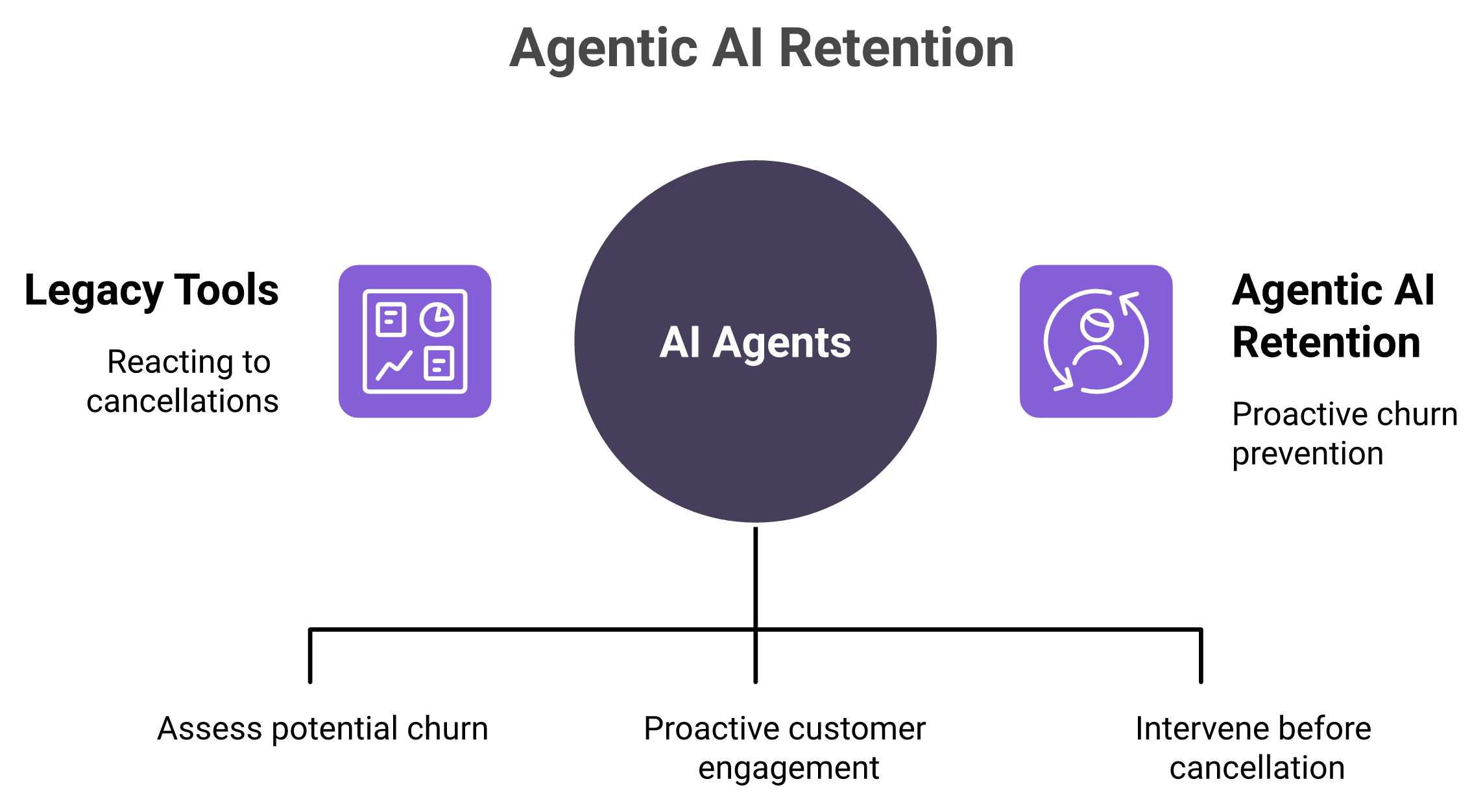
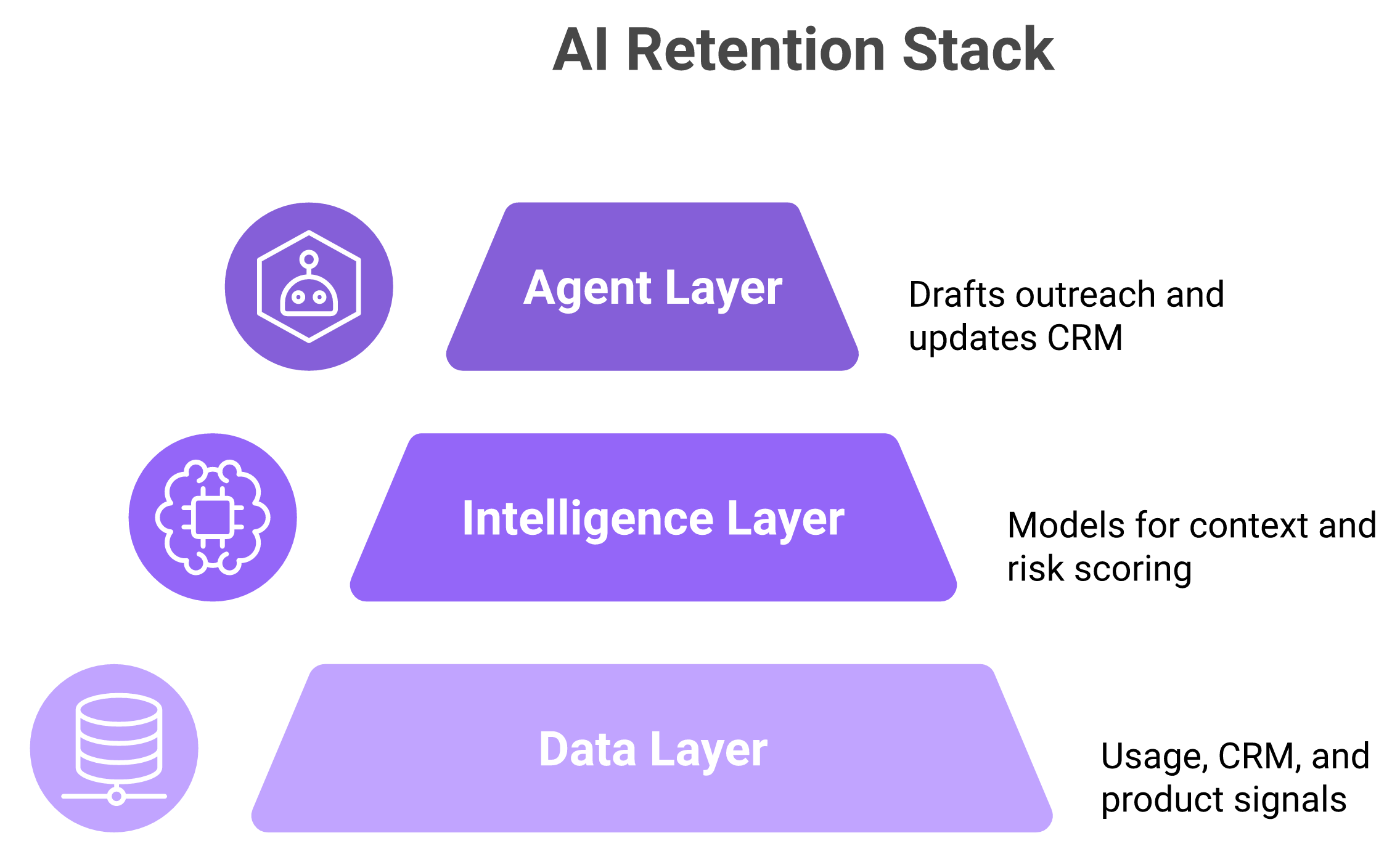
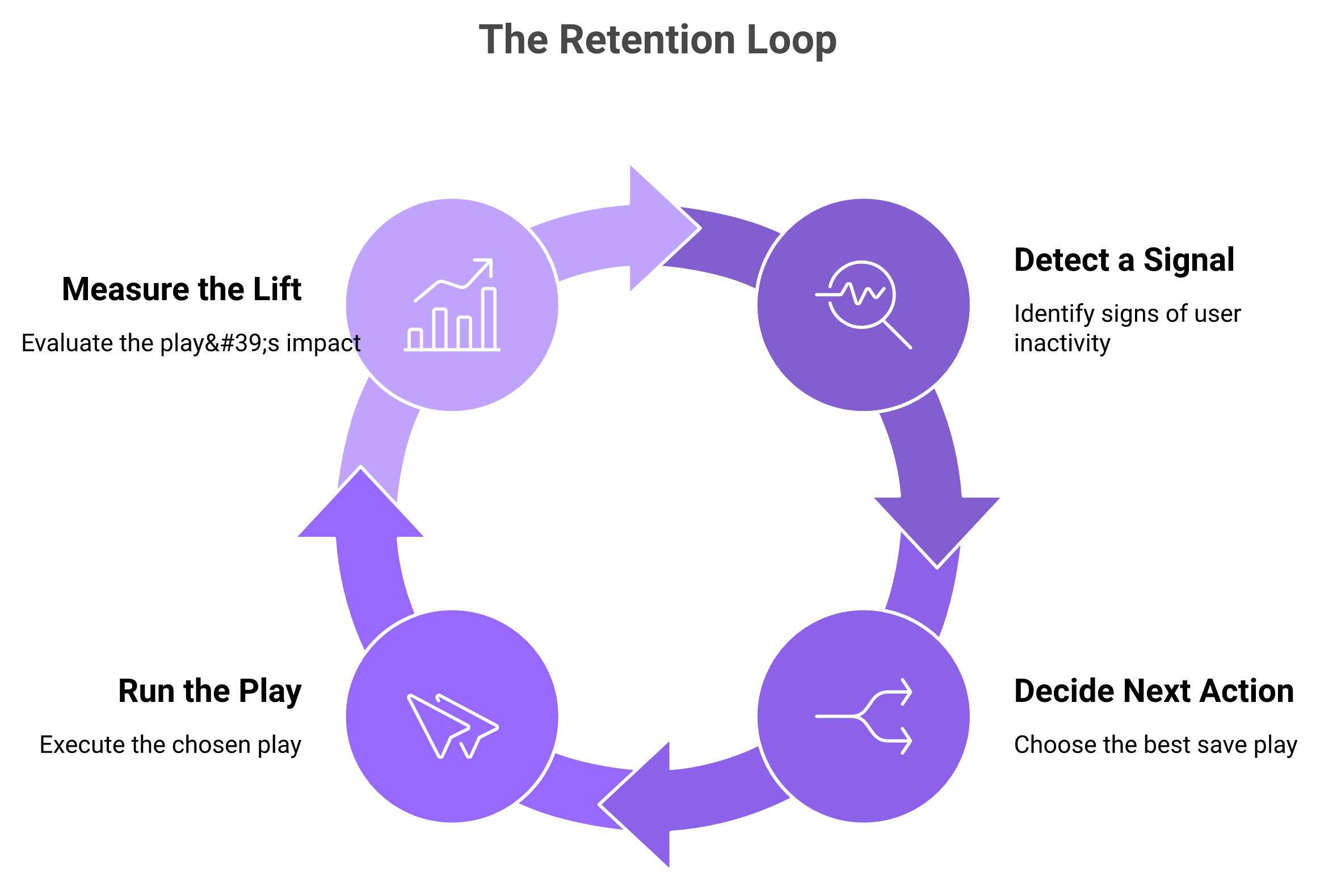
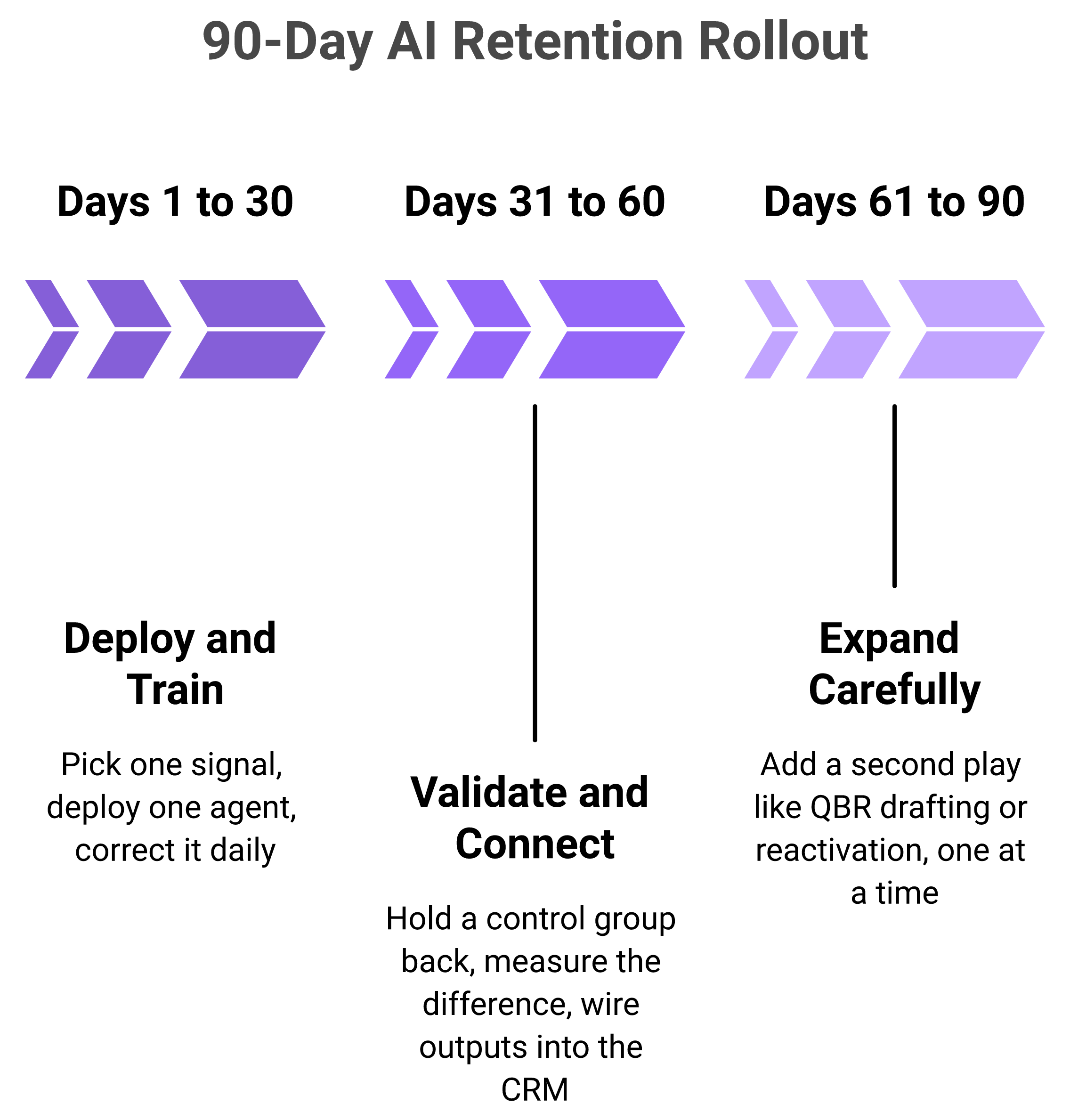

.png)
.png)
.png)

