ChurnZero Pricing Breakdown: Per-User Costs, Hidden Fees, and Negotiation Tips
Written by
Ishan Chhabra
Last Updated :
February 7, 2026
Skim in :
7
mins
In this article
Still got questions?
Come discuss this article with me.
Hi, I'm Ishan, Founder and CEO of Oliv.
I'm always up for a conversation about revenue intelligence, AI agents, or what's actually working (and what's not) across revenue teams.
I'd love to hear your perspective.
Thank you! Your submission has been received!
Oops! Something went wrong while submitting the form.
Meet Oliv’s AI Agents
Hi! I’m, Deal Driver
I track deals, flag risks, send weekly pipeline updates and give sales managers full visibility into deal progress
Hi! I’m, CRM Manager
I maintain CRM hygiene by updating core, custom and qualification fields all without your team lifting a finger
Hi! I’m, Forecaster
I build accurate forecasts based on real deal movement and tell you which deals to pull in to hit your number
Hi! I’m, Coach
I believe performance fuels revenue. I spot skill gaps, score calls and build coaching plans to help every rep level up
Hi! I’m, Prospector
I dig into target accounts to surface the right contacts, tailor and time outreach so you always strike when it counts
Hi! I’m, Pipeline tracker
I call reps to get deal updates, and deliver a real-time, CRM-synced roll-up view of deal progress
Hi! I’m, Analyst
I answer complex pipeline questions, uncover deal patterns, and build reports that guide strategic decisions
TL;DR
ChurnZero annual pricing ranges from $10,700 (3 users, Professional) to $180,100 (250 users, Enterprise) at median negotiated rates.
Per-user costs drop 87 to 88% at scale, from $3,561 to $6,035 (3 users) down to $458 to $720 (250 users).
Hidden fees including SSO, managed account overages, and forced Enterprise upgrades can inflate total cost by 30 to 60%.
Implementation takes 3 months minimum and costs $1,500 to $15,000, with full subscription fees running during the deployment gap.
Buyers routinely achieve 45 to 71% off list pricing using Q4 timing, multi-year terms, and user-mix optimization.
AI-native alternatives like Oliv.ai deliver churn signals and account intelligence in days, not quarters, at a fraction of the cost.
Q1: How Much Does ChurnZero Actually Cost in 2026? (The Short Answer) [toc=2026 Cost Overview]
ChurnZero pricing ranges from $10,700 to $180,100 per year depending on edition, team size, and negotiation leverage, based on 31 verified purchase contracts tracked by Vendr. There is no free trial and no free plan. All deals require a sales conversation.
💰 2026 Price Ranges at a Glance
ChurnZero 2026 Price Ranges by Company Stage
Company Stage
Edition
Annual Cost (Median)
Typical Team Size
Early-stage / Small CS team
Professional
$10,700 - $13,400
3 - 8 users
Mid-market
Professional
$15,700 - $41,000
15 - 75 users
Mid-market
Enterprise
$26,000 - $65,300
15 - 75 users
Enterprise / Large CS org
Enterprise
$114,500 - $180,100
150 - 250 users
These are negotiated figures, not list prices. Buyers typically achieve 15 to 25% below the 50th percentile shown above, with strong negotiators landing closer to the 25th percentile.
⚠️ No Free Trial, No Free Plan
Unlike some competitors that offer starter tiers (Totango's free Community plan, for example), ChurnZero requires a paid annual contract for both editions. There is no self-serve signup, no freemium tier, and no free trial period. Every engagement starts with a sales demo.
✅ Who Is ChurnZero Best For?
ChurnZero is purpose-built for mid-market to enterprise SaaS and subscription businesses with:
5+ Customer Success Managers on staff
A dedicated (or emerging) CS Ops function
100 to 5,000+ customer accounts to manage
Budget for a 3-month implementation timeline
If your CS team has fewer than 5 people, or you are looking for fast time-to-value without months of configuration, ChurnZero may be over-engineered for your current stage.
The pricing reality is clear: ChurnZero delivers strong value for well-resourced CS organizations, but it is a significant investment that requires careful evaluation, especially for smaller teams where per-user costs can exceed $3,500/year.
✅ A Different Approach for Leaner Teams
Oliv.ai note: For leaner CS teams seeking intelligence without the enterprise price tag, AI-native platforms like Oliv.ai deliver churn signals and account health insights starting at a fraction of ChurnZero's entry point, with setup measured in minutes, not months.
Q2: How Does ChurnZero's Pricing Model Actually Work? (The Three-Part Structure) [toc=Pricing Model Structure]
ChurnZero uses a hybrid pricing model that combines a fixed platform fee with variable per-user costs and optional overage charges. Understanding these three layers is essential before engaging their sales team. Most buyers do not discover the full structure until deep into the negotiation.
Visual breakdown of ChurnZero's three-part pricing model: mandatory platform fee at the base, per-user seat costs scaling with team size, and optional managed account overage charges.
💸 Layer 1: Platform Fee (Required)
Every ChurnZero contract starts with a mandatory platform fee. This is a fixed annual charge granting access to the core platform infrastructure, regardless of whether you have 3 users or 250 users. Both Professional and Enterprise editions require it. Think of it as the "base price of admission" before any user seats are added.
💸 Layer 2: Per-User Seats (Required, Scales with Team Size)
This is the primary variable cost. ChurnZero charges based on the number of internal team members who need platform access, not the number of customer accounts being managed. There are three seat types:
Each plan includes a base allocation of managed customer accounts. You only pay extra if you exceed that limit. Overages are billed in increments of 100 accounts at $3,000 to $8,000 per block annually.
Typical base allocations by team size:
5 to 15 users: 500 to 1,000 accounts included
20 to 50 users: 1,500 to 3,000 accounts included
100+ users: 5,000+ accounts included
⚠️ Key Misconception: It Is NOT Per-Account Pricing
A common misunderstanding is that ChurnZero charges per customer account. It does not, in the base pricing. The per-user seat cost is the main scaling factor. The managed accounts fee only triggers when growth pushes you past your allocation, making it a hidden cost for fast-scaling companies. This is an area where understanding your total sales tech stack costs becomes critical before committing to a multi-year contract.
Oliv.ai note: Oliv.ai takes a different approach with modular, transparent pricing, no mandatory platform fees, no per-account overages, and no gated features behind tier upgrades. Teams pay only for the AI agents they deploy.
Q3: ChurnZero Per-User Pricing: Professional vs. Enterprise Across 7 User Brackets [toc=Per-User Price Tables]
The tables below represent real negotiated outcomes from 31 verified ChurnZero purchases tracked by Vendr, not list prices, not estimates.
💰 ChurnZero Professional: Annual Pricing by User Count
ChurnZero Professional: Annual Pricing by User Count
Full Users
25th Percentile
Median (50th)
75th Percentile
Per-User (Median)
3
$9,800
$10,700
$13,400
$3,561
8
$11,600
$12,800
$16,000
$1,598
15
$14,300
$15,700
$19,700
$1,049
35
$21,500
$24,100
$30,200
$689
75
$34,200
$41,000
$51,200
$547
150
$60,500
$72,500
$90,600
$483
250
$95,600
$114,600
$143,200
$458
💰 ChurnZero Enterprise: Annual Pricing by User Count
ChurnZero Enterprise: Annual Pricing by User Count
Full Users
25th Percentile
Median (50th)
75th Percentile
Per-User (Median)
3
$16,400
$18,100
$22,600
$6,035
8
$19,200
$21,400
$26,700
$2,673
15
$22,800
$26,000
$32,500
$1,732
35
$32,600
$39,100
$48,900
$1,117
75
$54,500
$65,300
$81,600
$871
150
$95,500
$114,500
$143,100
$763
250
$150,200
$180,100
$220,200
$720
⭐ Volume Discount Curve
The per-user cost drops dramatically as team size increases. The steepest savings occur between 3 to 15 users, with another meaningful break at 50+:
Professional: $3,561/user (3 users) to $458/user (250 users), an 87% reduction
Enterprise: $6,035/user (3 users) to $720/user (250 users), an 88% reduction
✅ Professional vs. Enterprise: What Is Gated?
ChurnZero Professional vs. Enterprise Feature Comparison
Feature
Professional
Enterprise
Churn scores, segmentation, reporting
✅ Included
✅ Included
Journeys and playbook automation
✅ Included
✅ Included
Slack and Zendesk integrations
✅ Included
✅ Included
Public REST API access
❌ Not available
✅ Included
Custom dashboards
❌ Not available
✅ Included
Account insights
❌ Not available
✅ Included
Renewal hub
❌ Not available
✅ Included
Conditional logic in plays
❌ Not available
✅ Included
Executive Users (add-on)
✅ Available
❌ Not available
Light Users (add-on)
❌ Not available
✅ Available
Enterprise costs 60 to 70% more than Professional at smaller team sizes (3 to 15 users), but the premium narrows to 50 to 60% at 150+ users. For reference, list price benchmarks show Professional at approximately $38,939 (10 users) and Enterprise at approximately $64,289 (15 users) before negotiation. Understanding how these tiers compare is important when evaluating the future of revenue intelligence platforms and where pricing is headed.
Oliv.ai note: Oliv.ai does not gate intelligence features behind tier upgrades. Health monitoring, churn signals, and account insights are available across plans without requiring an Enterprise commitment.
Q4: How Much Does ChurnZero Implementation and Onboarding Cost? [toc=Implementation Costs]
Beyond the annual subscription, ChurnZero charges a one-time implementation fee that varies by team size and deployment complexity. This cost covers data migration, CRM integration, playbook setup, and initial training. But the real expense is often the 3-month deployment timeline during which teams pay full subscription fees before realizing meaningful value.
💰 Implementation Cost by Team Size
ChurnZero Implementation Costs by Team Size
Team Size
List Price
Negotiated Price
What Is Included
Small (5 to 10 users)
$2,000 - $5,000
$1,500 - $3,500
Basic data migration, CRM integration (Salesforce/HubSpot), 2 to 3 training sessions
Mid-Market (20 to 50 users)
$5,000 - $10,000
$3,500 - $7,000
Full data migration, multi-system integrations, custom playbook setup, 4 to 6 training sessions
Enterprise (100+ users)
$10,000 - $20,000
$7,000 - $15,000
Complex data migration, enterprise integrations, custom health scoring, dedicated onboarding specialist
⏰ Timeline: Full deployment typically takes 3 months for Salesforce and SaaS platform integrations. Some enterprise buyers report timelines extending to 6+ months for complex multi-system environments. This is a key factor when comparing how to build a revenue operations function efficiently.
❌ The Hidden Cost: Time-to-Value Gap in Traditional CS Platforms
The implementation cost itself is only half the story. Legacy CS platforms like ChurnZero, Gainsight, and Totango share a structural limitation: they require dedicated CS Ops resources, custom health score calibration, playbook configuration, and multi-system integration work, all before a single CSM sees actionable insight. During those 3 to 6 months, teams pay full subscription costs with minimal return.
✅ The AI-Era Shift: Intelligence Without the Infrastructure
Modern AI-native platforms have fundamentally rethought onboarding. Rather than requiring months of configuration to teach the system your processes, they use large language models to understand deal context and customer signals from day one, delivering insights within hours, not quarters. No health score calibration. No playbook design. No dedicated admin. This is part of the broader shift from revenue ops to intelligence to AI-Native Revenue Orchestration.
✅ How Oliv.ai Approaches This Differently
We achieve baseline configuration in 5 minutes and deliver core value within 1 to 2 days. The platform requires approximately 2 to 4 hours of collaborative setup, compared to ChurnZero's 3-month deployment, and offers free data migration from legacy platforms. Our Health Monitor and MAP Manager agents begin surfacing churn risks and tracking onboarding milestones immediately after CRM connection, with zero dedicated admin resources required.
For perspective: ChurnZero's Year 1 total cost for a 20-person team is approximately $24,500 (including $6,000 implementation). With Oliv.ai, those 3 months of subscription fees spent waiting for ChurnZero to become operational simply do not exist, the intelligence layer is active from day one.
Q5: ChurnZero's Hidden Fees, Overages, and 2-Year Total Cost of Ownership [toc=Hidden Fees and TCO]
ChurnZero's quoted subscription is only part of the real cost. Across 31 verified contracts, 4 to 6 additional cost layers routinely inflate the final bill by 30 to 60%, and most buyers do not discover them until after the first invoice.
💸 The Hidden Fee Checklist
ChurnZero Hidden Fees Beyond Base Subscription
Hidden Fee
Cost Range
Notes
SSO/SAML
$2,000 - $5,000/yr
Free on Enterprise; paid add-on for Professional
Custom Dashboards
❌ Enterprise upgrade required
Professional-to-Enterprise upgrade adds 60 to 70% to contract
REST API Access
❌ Enterprise-only
No option to add to Professional at any price
Executive User Seats
$1,200 - $2,400/yr per seat
Negotiated: $500 - $1,200 with bundling (40 to 70% off)
Additional Training
$1,000 - $2,500/session
Beyond initial onboarding package
Managed Account Overages
$3,000 - $8,000 per 100-account block/yr
Triggers when exceeding base allocation
⚠️ Overage Modeling: 3 Company Scenarios
Account overages are the biggest hidden cost for fast-scaling companies. Here is what it looks like at three growth stages (Professional, 20 Full Users):
ChurnZero Managed Account Overage Scenarios
Scenario
Accounts Managed
Included
Overage Blocks
Annual Overage Cost
Startup
500
1,500
0
$0
Growth-stage
1,500
1,500
0
$0
Scale-up
2,000
1,500
5 blocks
$15,000 - $40,000
At 2,000 accounts, the overage alone can exceed the base subscription, turning an $18,500 platform into a $58,500 to $74,500 annual commitment. Understanding your full sales tech stack costs is essential before signing.
❌ The Legacy Platform Cost Trap
Traditional CS platforms gate critical features behind tier upgrades, then compound costs through renewal increases. Without a negotiated cap, ChurnZero applies 5 to 10% annual increases. Over two years, this compounding creates significant TCO creep:
ChurnZero 2-year TCO breakdown across three buyer scenarios: 5-user startup Professional ($25,200), 20-user mid-market Professional ($43,600), and 100-user Enterprise ($186,200).
✅ How Oliv.ai Eliminates the Hidden-Cost Problem
New-generation platforms dismantle this bundling model entirely. Intelligence features are embedded in the core product, not locked behind premium gates. No overage billing, no tier-gated APIs, no surprise renewal increases. This is the direction the future of revenue intelligence is headed.
We offer modular, transparent pricing with no mandatory platform fees, no gated API access, and no per-account overages. Teams purchase only the AI agents they need, Health Monitor, Retention Forecaster, MAP Manager, with full feature access across all plans. Full open data export policy means zero vendor lock-in.
For context: ChurnZero's 2-year TCO for a 35-user Professional deployment reaches $55,220 negotiated ($132,500 list). When managing 2,000 accounts with overages, Year 1 alone hits $74,500. Oliv delivers equivalent intelligence without a single hidden cost layer.
Q6: How to Negotiate a Better ChurnZero Contract: 7 Proven Tactics [toc=Negotiation Tactics]
ChurnZero's list-to-negotiated price gap is among the widest in the CS platform category. Buyers typically achieve 45 to 71% off list pricing. But reaching the lower end requires a deliberate strategy. Here are seven proven tactics sourced from 31 verified Vendr contracts.
💰 Tactic 1: Time Your Purchase for Q4
ChurnZero's fiscal year ends in December. Reps are under quota pressure in Q4, yielding an additional 5 to 10% discount compared to Q1 through Q3 deals.
💰 Tactic 2: Commit to Multi-Year Terms
ChurnZero Multi-Year Discount Ranges
Term Length
Typical Discount Range
Additional Savings vs. 1-Year
1-Year
45 - 55% off list
Baseline
2-Year
55 - 65% off list
+10 - 15% savings
3-Year
60 - 71% off list
+15 - 20% savings
⚠️ Trade-off: Longer commitments lock in savings but reduce flexibility if your CS team scales down.
💰 Tactic 3: Optimize Your User Mix (70/30 Full/Light)
Instead of buying all Full User seats, propose a 70% Full / 30% Light User ratio (Enterprise only). Light Users cost less, reducing blended per-user cost by 15 to 20%. Negotiate the right to convert Light Users to Full Users at the same discounted rate throughout the contract. This is the same kind of optimization that teams building a revenue operations function apply across their entire tech stack.
💰 Tactic 4: Lock in Renewal Protection (3 to 5% Cap)
Without a cap, ChurnZero applies 5 to 10% annual increases at renewal. Push for a renewal protection clause that limits annual increases to 3 to 5%. This single clause saves thousands over a multi-year deal.
💰 Tactic 5: Pre-Negotiate Expansion Pricing
Lock in pre-negotiated rates for adding users or managed account blocks mid-contract. Buyers who negotiate expansion pricing upfront save an average of 28% on future growth compared to those who add capacity at prevailing rates.
💰 Tactic 6: Bundle Executive User Seats Strategically
Executive User seats (Professional plan) list at $1,200 to $2,400/year each. When bundled with the initial contract, buyers achieve 40 to 70% off, bringing the negotiated cost to $500 to $1,200 per seat annually.
💰 Tactic 7: Leverage Prepayment or Early Renewal
Offering upfront annual payment or renewing 60 to 90 days before contract expiration signals commitment and gives your ChurnZero rep deal-closing leverage with their finance team. This typically yields an additional 5 to 10% discount.
Oliv.ai note: Oliv.ai's modular pricing eliminates the negotiation burden entirely. No platform fees to haggle, no tier-gated features to unlock, and no multi-year commitments required to reach fair pricing. Teams looking to reduce their sales tech stack costs can start with individual agents and scale as needed.
Q7: ChurnZero vs. Gainsight vs. Totango vs. Vitally: 2026 Pricing Comparison [toc=Competitor Pricing Comparison]
Choosing a CS platform is not just about features. It is about total cost, implementation burden, and whether the platform matches your team's maturity. Here is how ChurnZero stacks up against the four most common alternatives in 2026.
💰 Side-by-Side Pricing Comparison
2026 CS Platform Pricing Comparison
Platform
Annual Cost Range
Pricing Model
Impl. Timeline
Best For
ChurnZero
$10,700 - $180,100
Platform fee + per-user
3 months
Mid-market SaaS, 5 - 250 CSMs
Gainsight
$24,000 - $200,000+
Per-user, tiered
3 - 6 months
Enterprise, 25+ CSMs with CS Ops
Totango
$15,000 - $100,000+
Per-user, tiered
4 - 8 weeks
Mid-market, modular needs
Vitally
$15,000 - $60,000
Per-user, custom
2 - 4 weeks
Startup to mid-market, lean teams
Custify
$6,000 - $24,000
Per-user
2 - 4 weeks
Early-stage, budget-conscious
Gainsight commands the highest ceiling, with a median $60,000/yr for Essentials at 25 users, while ChurnZero's hybrid model makes pricing harder to predict due to managed account overages.
❌ The Shared Limitation of Incumbent Platforms
All five share a structural constraint: designed for dashboard-first, configuration-heavy workflow management. They excel at managing CS operations at scale but require significant upfront investment in configuration, health score calibration, and dedicated CS Ops resources. For teams with fewer than 10 CSMs, this means paying enterprise prices for half-configured capabilities. This is a pattern seen across legacy tools, from CS platforms to conversation intelligence pricing models.
A new category is forming: AI-led customer intelligence. Rather than requiring months of health score calibration and playbook design, these platforms deliver churn signals, expansion opportunities, and account health insights using LLMs that understand customer context from day one. This mirrors the broader shift from revenue ops to intelligence to AI-Native Revenue Orchestration.
✅ Where Oliv.ai Fits
For leaner CS teams wanting signals without complexity, Oliv.ai operates as an intelligence layer, not a workflow platform. Our Health Monitor Agent scans weekly for churn risks, the Retention Forecaster alerts before risk peaks, and the QBR Builder drafts data-rich review decks, all without a single playbook to configure. Setup takes hours, not months.
The question shifts from "which CS platform?" to "do I need a platform or an intelligence layer?" For 50+ CSM operations, ChurnZero or Gainsight remain strong choices. For teams that want signals fast, Oliv delivers at a fraction of the cost and time.
Q8: Who Should Buy ChurnZero, and Who Should Consider an AI-First Alternative? [toc=Buyer Fit Guide]
After evaluating ChurnZero's full cost picture, subscription, implementation, hidden fees, and TCO, the natural question becomes fit. ChurnZero reports strong outcomes for the right buyer: 65% onboarding time reduction, 13x CSM coverage, and 21% gross revenue retention improvement. But those results require the right operational foundation.
✅ Where ChurnZero Wins
ChurnZero is the right tool for organizations that need to manage customer success at scale:
Team size: 20 to 250+ CSMs with dedicated CS Ops headcount
Decision tree helping CS leaders determine if ChurnZero is the right fit based on team size (3-15 vs 20-250+ CSMs), dedicated CS Ops availability, and budget for $25K-$180K/yr platforms.
⚠️ Where ChurnZero Over-Serves
For teams of 5 to 15 users, the math shifts unfavorably:
Per-user costs remain high ($1,049 to $6,035/yr)
3-month implementation is a sunk cost before first insight
Professional plan gates API access and custom dashboards behind Enterprise upgrade (60 to 70% more)
Smaller CS teams no longer face a binary choice between "no tooling" and "enterprise CS platform." Oliv.ai is purpose-built for 3 to 30 person CS teams needing proactive churn signals and account intelligence without months of setup. Our Health Monitor, MAP Manager, Retention Forecaster, and Expansion Signal Detector are operational in days, not quarters. No platform fees. No managed account overages. The question shifts from "which CS platform?" to "do I need a platform or an intelligence layer"
⭐ Decision Framework
ChurnZero vs. Oliv.ai Buyer Fit Matrix
Criteria
ChurnZero / Gainsight
Oliv.ai
CS team size
20 - 250+ CSMs
3 - 30 CSMs
CS Ops headcount
Dedicated function
No dedicated admin
Implementation runway
3 - 6 months
Value in days
Primary need
Workflow orchestration and automation
Signals, intelligence and alerts
Budget
$25K - $180K/yr
Fraction of legacy platform cost
Some teams adopt a hybrid approach: Oliv as the intelligence layer on top of a lightweight CRM, avoiding the CS platform tax entirely while gaining the churn prevention and account insight capabilities that traditionally required a six-figure platform investment. This is the same principle driving the evolution from traditional revenue orchestration platforms toward AI-native alternatives.
Q9: ChurnZero Pricing Changes Over Time: What's Happened From 2022 to 2026? [toc=Historical Pricing Trends]
ChurnZero does not publish pricing publicly, making historical tracking difficult. However, data points from Reddit threads, Vendr benchmarks, and review platforms reveal a clear trajectory: prices have risen, feature-gating has tightened, and competitive pressure from AI-native tools is beginning to reshape the landscape.
💰 Available Price Data Points: 2022 to 2026
ChurnZero Historical Pricing Data Points (2022 to 2026)
Mid-market base platform estimated at $40,000 to $60,000/yr
2025 to 2026
Vendr (31 verified contracts)
Professional median: $10,700 (3 users) to $114,600 (250 users); Enterprise: $18,100 to $180,100
⚠️ Note: The 2022 Reddit figure and 2024 Nerdisa estimate reflect different scoping assumptions (team size, edition, managed accounts). Direct year-over-year comparisons should account for these variables.
⚠️ How Discount Ranges Have Shifted
In 2022, Reddit users reported that ChurnZero reps explicitly stated they "don't discount and don't want low-margin business." By 2025 to 2026, Vendr data shows negotiated discounts of 45 to 71% are standard, a significant shift in pricing posture. This change likely reflects increased competition from Totango (free Community tier), Vitally (lower price point), and emerging AI-native alternatives. This pricing pressure mirrors trends across the broader future of revenue intelligence landscape.
❌ Feature-Gating Has Tightened
Over this period, several capabilities moved firmly behind the Enterprise paywall:
REST API access: Enterprise-only (no Professional add-on option)
Custom dashboards: Enterprise-only
Account insights: Enterprise-only
Renewal hub: Enterprise-only
Conditional logic in plays: Enterprise-only
This strategy increases the effective cost for teams needing API integrations or custom reporting, pushing them toward Enterprise contracts that cost 60 to 70% more. Teams evaluating their options should understand how reducing sales tech stack costs can offset these forced upgrades.
⭐ The AI-Native Pricing Pressure
The emergence of AI-native CS tools in 2024 to 2026 is applying downward pressure on traditional platform pricing. Platforms delivering intelligence without configuration overhead are forcing incumbents to justify implementation timelines and per-user economics.
"Churnzero will require you to pay all 3. A platform fee over 30k per year, a per user license in the $1,400 per year range, and a price of under $10 per year for each account in the system." — Reddit user, r/CustomerSuccess (2022)
Oliv.ai note: As traditional CS platforms raise prices and tighten feature-gating, AI-native alternatives like Oliv.ai offer transparent, modular pricing that does not increase with feature access, a structural advantage that compounds over time.
Q10: Real Buyer Experiences: What ChurnZero Customers Actually Say About Pricing [toc=Real Buyer Experiences]
Aggregator sites list price ranges, but they cannot tell you what buyers actually felt after signing. Here is what real ChurnZero customers report across G2 and Reddit, unfiltered perspectives on cost, value, and surprises.
💰 What Buyers Say About Cost vs. Value
Sentiment on pricing splits sharply by company size. Larger teams consistently report strong value, while smaller teams feel the pinch.
"ChurnZero has completely changed the way both our CSMs and leadership interact with customers. All customer information is in one place, and unlike our Sales system, CSMs can quickly and easily set up customized dashboards, journeys, plays and automation without costly consultants and long wait times." — Nancy S., Director of Customer Success, Mid-Market, G2 Verified Review (5/5 ⭐)
⚠️ Common Buyer Surprises
Several patterns emerge that pricing pages and sales demos do not prepare teams for:
Dashboard limitations on Professional: Multiple reviewers flag that custom dashboards are gated behind Enterprise, leaving Professional users with inflexible defaults.
Reporting requires workarounds: Operations managers consistently mention needing multiple dashboards to surface the data they need.
Implementation takes longer than expected: Complex environments still require months despite ChurnZero's relatively streamlined deployment.
Reddit threads and G2 reviews surface recurring regrets:
Enterprise upgrade pressure: Teams starting on Professional discover mid-contract they need API access or custom dashboards, gated to Enterprise with no add-on option.
Data quality dependency: Multiple Reddit users emphasize "garbage in, garbage out." ChurnZero's effectiveness depends entirely on clean CRM data. This is the same data quality challenge that plagues legacy tools across revenue operations.
The learning curve is real: G2's AI summary flags 55 mentions of "challenging learning curve" and 41 mentions of "non-intuitive features."
Oliv.ai note: For teams where ChurnZero's cost-to-value ratio does not align, particularly smaller teams or those without CS Ops, Oliv.ai delivers account intelligence and churn signals without the implementation overhead or feature-gating surprises.
This section is optimized for FAQ schema markup to capture "People Also Ask" results in search.
1. Does ChurnZero offer a free trial or free plan?
No. ChurnZero does not offer a free trial, free plan, or freemium tier. Both Professional and Enterprise editions require a paid annual contract. Every engagement starts with a sales demo and custom quote.
2. How much does ChurnZero cost per user per month?
It depends on team size. At median negotiated rates, per-user costs range from $38/month (250 users, Professional) to $503/month (3 users, Enterprise). The per-user cost drops sharply with scale, an 87 to 88% reduction from 3 to 250 users.
3. What is ChurnZero's annual contract price?
Annual contracts range from $10,700 (3-user Professional) to $180,100 (250-user Enterprise) at median negotiated pricing. List prices are significantly higher. Buyers typically achieve 45 to 71% off list.
4. Is ChurnZero worth it for startups?
⚠️ Generally, no. For teams with fewer than 5 CSMs, per-user costs exceed $3,500/year, implementation takes 3 months, and Professional plan limitations (no API, no custom dashboards) constrain value. AI-native alternatives offer faster time-to-value at lower cost.
5. What is the difference between ChurnZero Professional and Enterprise?
Enterprise includes REST API access, custom dashboards, account insights, renewal hub, and conditional logic in plays, all gated from Professional. Enterprise costs 60 to 70% more at small team sizes, narrowing to 50 to 60% more at scale.
6. How long does ChurnZero implementation take?
Typically 3 months for full deployment with CRM integration. Enterprise deployments with complex multi-system environments can extend to 6+ months. Implementation fees range from $1,500 to $15,000 depending on team size. Compare this to the implementation timelines of other platforms in the revenue intelligence space.
7. Can you negotiate ChurnZero pricing?
Yes, significantly. Buyers achieve 45 to 71% off list pricing. Key levers: Q4 timing (5 to 10% extra), multi-year terms (10 to 20% extra), 70/30 Full/Light user mix (15 to 20% savings), and renewal caps (3 to 5% vs. 5 to 10% standard increase).
8. What are ChurnZero's hidden fees?
Watch for: SSO/SAML ($2K to $5K/yr on Professional), managed account overages ($3K to $8K per 100-account block), Executive User seats ($1,200 to $2,400/yr), additional training ($1K to $2.5K/session), and the Enterprise upgrade required for API access and custom dashboards.
ChurnZero is generally more affordable. ChurnZero ranges from $10,700 to $180,100/yr vs. Gainsight's $24,000 to $200,000+/yr. Gainsight targets larger enterprises (25+ CSMs) with deeper functionality but longer implementation (3 to 6 months) and higher TCO.
10. What happens to ChurnZero pricing at renewal?
Without a negotiated cap, expect 5 to 10% annual increases. Push for a renewal protection clause capping increases at 3 to 5%. Also pre-negotiate expansion pricing for adding users or account blocks mid-contract to save approximately 28% vs. prevailing rates.
✅ Looking for Simpler Pricing?
Oliv.ai note: If the pricing complexity above feels overwhelming, Oliv.ai offers a simpler model: modular agents, transparent per-user pricing, no platform fees, and no feature-gating. This is the direction modern revenue orchestration platforms are heading.
Q1: How Much Does ChurnZero Actually Cost in 2026? (The Short Answer) [toc=2026 Cost Overview]
ChurnZero pricing ranges from $10,700 to $180,100 per year depending on edition, team size, and negotiation leverage, based on 31 verified purchase contracts tracked by Vendr. There is no free trial and no free plan. All deals require a sales conversation.
💰 2026 Price Ranges at a Glance
ChurnZero 2026 Price Ranges by Company Stage
Company Stage
Edition
Annual Cost (Median)
Typical Team Size
Early-stage / Small CS team
Professional
$10,700 - $13,400
3 - 8 users
Mid-market
Professional
$15,700 - $41,000
15 - 75 users
Mid-market
Enterprise
$26,000 - $65,300
15 - 75 users
Enterprise / Large CS org
Enterprise
$114,500 - $180,100
150 - 250 users
These are negotiated figures, not list prices. Buyers typically achieve 15 to 25% below the 50th percentile shown above, with strong negotiators landing closer to the 25th percentile.
⚠️ No Free Trial, No Free Plan
Unlike some competitors that offer starter tiers (Totango's free Community plan, for example), ChurnZero requires a paid annual contract for both editions. There is no self-serve signup, no freemium tier, and no free trial period. Every engagement starts with a sales demo.
✅ Who Is ChurnZero Best For?
ChurnZero is purpose-built for mid-market to enterprise SaaS and subscription businesses with:
5+ Customer Success Managers on staff
A dedicated (or emerging) CS Ops function
100 to 5,000+ customer accounts to manage
Budget for a 3-month implementation timeline
If your CS team has fewer than 5 people, or you are looking for fast time-to-value without months of configuration, ChurnZero may be over-engineered for your current stage.
The pricing reality is clear: ChurnZero delivers strong value for well-resourced CS organizations, but it is a significant investment that requires careful evaluation, especially for smaller teams where per-user costs can exceed $3,500/year.
✅ A Different Approach for Leaner Teams
Oliv.ai note: For leaner CS teams seeking intelligence without the enterprise price tag, AI-native platforms like Oliv.ai deliver churn signals and account health insights starting at a fraction of ChurnZero's entry point, with setup measured in minutes, not months.
Q2: How Does ChurnZero's Pricing Model Actually Work? (The Three-Part Structure) [toc=Pricing Model Structure]
ChurnZero uses a hybrid pricing model that combines a fixed platform fee with variable per-user costs and optional overage charges. Understanding these three layers is essential before engaging their sales team. Most buyers do not discover the full structure until deep into the negotiation.
Visual breakdown of ChurnZero's three-part pricing model: mandatory platform fee at the base, per-user seat costs scaling with team size, and optional managed account overage charges.
💸 Layer 1: Platform Fee (Required)
Every ChurnZero contract starts with a mandatory platform fee. This is a fixed annual charge granting access to the core platform infrastructure, regardless of whether you have 3 users or 250 users. Both Professional and Enterprise editions require it. Think of it as the "base price of admission" before any user seats are added.
💸 Layer 2: Per-User Seats (Required, Scales with Team Size)
This is the primary variable cost. ChurnZero charges based on the number of internal team members who need platform access, not the number of customer accounts being managed. There are three seat types:
Each plan includes a base allocation of managed customer accounts. You only pay extra if you exceed that limit. Overages are billed in increments of 100 accounts at $3,000 to $8,000 per block annually.
Typical base allocations by team size:
5 to 15 users: 500 to 1,000 accounts included
20 to 50 users: 1,500 to 3,000 accounts included
100+ users: 5,000+ accounts included
⚠️ Key Misconception: It Is NOT Per-Account Pricing
A common misunderstanding is that ChurnZero charges per customer account. It does not, in the base pricing. The per-user seat cost is the main scaling factor. The managed accounts fee only triggers when growth pushes you past your allocation, making it a hidden cost for fast-scaling companies. This is an area where understanding your total sales tech stack costs becomes critical before committing to a multi-year contract.
Oliv.ai note: Oliv.ai takes a different approach with modular, transparent pricing, no mandatory platform fees, no per-account overages, and no gated features behind tier upgrades. Teams pay only for the AI agents they deploy.
Q3: ChurnZero Per-User Pricing: Professional vs. Enterprise Across 7 User Brackets [toc=Per-User Price Tables]
The tables below represent real negotiated outcomes from 31 verified ChurnZero purchases tracked by Vendr, not list prices, not estimates.
💰 ChurnZero Professional: Annual Pricing by User Count
ChurnZero Professional: Annual Pricing by User Count
Full Users
25th Percentile
Median (50th)
75th Percentile
Per-User (Median)
3
$9,800
$10,700
$13,400
$3,561
8
$11,600
$12,800
$16,000
$1,598
15
$14,300
$15,700
$19,700
$1,049
35
$21,500
$24,100
$30,200
$689
75
$34,200
$41,000
$51,200
$547
150
$60,500
$72,500
$90,600
$483
250
$95,600
$114,600
$143,200
$458
💰 ChurnZero Enterprise: Annual Pricing by User Count
ChurnZero Enterprise: Annual Pricing by User Count
Full Users
25th Percentile
Median (50th)
75th Percentile
Per-User (Median)
3
$16,400
$18,100
$22,600
$6,035
8
$19,200
$21,400
$26,700
$2,673
15
$22,800
$26,000
$32,500
$1,732
35
$32,600
$39,100
$48,900
$1,117
75
$54,500
$65,300
$81,600
$871
150
$95,500
$114,500
$143,100
$763
250
$150,200
$180,100
$220,200
$720
⭐ Volume Discount Curve
The per-user cost drops dramatically as team size increases. The steepest savings occur between 3 to 15 users, with another meaningful break at 50+:
Professional: $3,561/user (3 users) to $458/user (250 users), an 87% reduction
Enterprise: $6,035/user (3 users) to $720/user (250 users), an 88% reduction
✅ Professional vs. Enterprise: What Is Gated?
ChurnZero Professional vs. Enterprise Feature Comparison
Feature
Professional
Enterprise
Churn scores, segmentation, reporting
✅ Included
✅ Included
Journeys and playbook automation
✅ Included
✅ Included
Slack and Zendesk integrations
✅ Included
✅ Included
Public REST API access
❌ Not available
✅ Included
Custom dashboards
❌ Not available
✅ Included
Account insights
❌ Not available
✅ Included
Renewal hub
❌ Not available
✅ Included
Conditional logic in plays
❌ Not available
✅ Included
Executive Users (add-on)
✅ Available
❌ Not available
Light Users (add-on)
❌ Not available
✅ Available
Enterprise costs 60 to 70% more than Professional at smaller team sizes (3 to 15 users), but the premium narrows to 50 to 60% at 150+ users. For reference, list price benchmarks show Professional at approximately $38,939 (10 users) and Enterprise at approximately $64,289 (15 users) before negotiation. Understanding how these tiers compare is important when evaluating the future of revenue intelligence platforms and where pricing is headed.
Oliv.ai note: Oliv.ai does not gate intelligence features behind tier upgrades. Health monitoring, churn signals, and account insights are available across plans without requiring an Enterprise commitment.
Q4: How Much Does ChurnZero Implementation and Onboarding Cost? [toc=Implementation Costs]
Beyond the annual subscription, ChurnZero charges a one-time implementation fee that varies by team size and deployment complexity. This cost covers data migration, CRM integration, playbook setup, and initial training. But the real expense is often the 3-month deployment timeline during which teams pay full subscription fees before realizing meaningful value.
💰 Implementation Cost by Team Size
ChurnZero Implementation Costs by Team Size
Team Size
List Price
Negotiated Price
What Is Included
Small (5 to 10 users)
$2,000 - $5,000
$1,500 - $3,500
Basic data migration, CRM integration (Salesforce/HubSpot), 2 to 3 training sessions
Mid-Market (20 to 50 users)
$5,000 - $10,000
$3,500 - $7,000
Full data migration, multi-system integrations, custom playbook setup, 4 to 6 training sessions
Enterprise (100+ users)
$10,000 - $20,000
$7,000 - $15,000
Complex data migration, enterprise integrations, custom health scoring, dedicated onboarding specialist
⏰ Timeline: Full deployment typically takes 3 months for Salesforce and SaaS platform integrations. Some enterprise buyers report timelines extending to 6+ months for complex multi-system environments. This is a key factor when comparing how to build a revenue operations function efficiently.
❌ The Hidden Cost: Time-to-Value Gap in Traditional CS Platforms
The implementation cost itself is only half the story. Legacy CS platforms like ChurnZero, Gainsight, and Totango share a structural limitation: they require dedicated CS Ops resources, custom health score calibration, playbook configuration, and multi-system integration work, all before a single CSM sees actionable insight. During those 3 to 6 months, teams pay full subscription costs with minimal return.
✅ The AI-Era Shift: Intelligence Without the Infrastructure
Modern AI-native platforms have fundamentally rethought onboarding. Rather than requiring months of configuration to teach the system your processes, they use large language models to understand deal context and customer signals from day one, delivering insights within hours, not quarters. No health score calibration. No playbook design. No dedicated admin. This is part of the broader shift from revenue ops to intelligence to AI-Native Revenue Orchestration.
✅ How Oliv.ai Approaches This Differently
We achieve baseline configuration in 5 minutes and deliver core value within 1 to 2 days. The platform requires approximately 2 to 4 hours of collaborative setup, compared to ChurnZero's 3-month deployment, and offers free data migration from legacy platforms. Our Health Monitor and MAP Manager agents begin surfacing churn risks and tracking onboarding milestones immediately after CRM connection, with zero dedicated admin resources required.
For perspective: ChurnZero's Year 1 total cost for a 20-person team is approximately $24,500 (including $6,000 implementation). With Oliv.ai, those 3 months of subscription fees spent waiting for ChurnZero to become operational simply do not exist, the intelligence layer is active from day one.
Q5: ChurnZero's Hidden Fees, Overages, and 2-Year Total Cost of Ownership [toc=Hidden Fees and TCO]
ChurnZero's quoted subscription is only part of the real cost. Across 31 verified contracts, 4 to 6 additional cost layers routinely inflate the final bill by 30 to 60%, and most buyers do not discover them until after the first invoice.
💸 The Hidden Fee Checklist
ChurnZero Hidden Fees Beyond Base Subscription
Hidden Fee
Cost Range
Notes
SSO/SAML
$2,000 - $5,000/yr
Free on Enterprise; paid add-on for Professional
Custom Dashboards
❌ Enterprise upgrade required
Professional-to-Enterprise upgrade adds 60 to 70% to contract
REST API Access
❌ Enterprise-only
No option to add to Professional at any price
Executive User Seats
$1,200 - $2,400/yr per seat
Negotiated: $500 - $1,200 with bundling (40 to 70% off)
Additional Training
$1,000 - $2,500/session
Beyond initial onboarding package
Managed Account Overages
$3,000 - $8,000 per 100-account block/yr
Triggers when exceeding base allocation
⚠️ Overage Modeling: 3 Company Scenarios
Account overages are the biggest hidden cost for fast-scaling companies. Here is what it looks like at three growth stages (Professional, 20 Full Users):
ChurnZero Managed Account Overage Scenarios
Scenario
Accounts Managed
Included
Overage Blocks
Annual Overage Cost
Startup
500
1,500
0
$0
Growth-stage
1,500
1,500
0
$0
Scale-up
2,000
1,500
5 blocks
$15,000 - $40,000
At 2,000 accounts, the overage alone can exceed the base subscription, turning an $18,500 platform into a $58,500 to $74,500 annual commitment. Understanding your full sales tech stack costs is essential before signing.
❌ The Legacy Platform Cost Trap
Traditional CS platforms gate critical features behind tier upgrades, then compound costs through renewal increases. Without a negotiated cap, ChurnZero applies 5 to 10% annual increases. Over two years, this compounding creates significant TCO creep:
ChurnZero 2-year TCO breakdown across three buyer scenarios: 5-user startup Professional ($25,200), 20-user mid-market Professional ($43,600), and 100-user Enterprise ($186,200).
✅ How Oliv.ai Eliminates the Hidden-Cost Problem
New-generation platforms dismantle this bundling model entirely. Intelligence features are embedded in the core product, not locked behind premium gates. No overage billing, no tier-gated APIs, no surprise renewal increases. This is the direction the future of revenue intelligence is headed.
We offer modular, transparent pricing with no mandatory platform fees, no gated API access, and no per-account overages. Teams purchase only the AI agents they need, Health Monitor, Retention Forecaster, MAP Manager, with full feature access across all plans. Full open data export policy means zero vendor lock-in.
For context: ChurnZero's 2-year TCO for a 35-user Professional deployment reaches $55,220 negotiated ($132,500 list). When managing 2,000 accounts with overages, Year 1 alone hits $74,500. Oliv delivers equivalent intelligence without a single hidden cost layer.
Q6: How to Negotiate a Better ChurnZero Contract: 7 Proven Tactics [toc=Negotiation Tactics]
ChurnZero's list-to-negotiated price gap is among the widest in the CS platform category. Buyers typically achieve 45 to 71% off list pricing. But reaching the lower end requires a deliberate strategy. Here are seven proven tactics sourced from 31 verified Vendr contracts.
💰 Tactic 1: Time Your Purchase for Q4
ChurnZero's fiscal year ends in December. Reps are under quota pressure in Q4, yielding an additional 5 to 10% discount compared to Q1 through Q3 deals.
💰 Tactic 2: Commit to Multi-Year Terms
ChurnZero Multi-Year Discount Ranges
Term Length
Typical Discount Range
Additional Savings vs. 1-Year
1-Year
45 - 55% off list
Baseline
2-Year
55 - 65% off list
+10 - 15% savings
3-Year
60 - 71% off list
+15 - 20% savings
⚠️ Trade-off: Longer commitments lock in savings but reduce flexibility if your CS team scales down.
💰 Tactic 3: Optimize Your User Mix (70/30 Full/Light)
Instead of buying all Full User seats, propose a 70% Full / 30% Light User ratio (Enterprise only). Light Users cost less, reducing blended per-user cost by 15 to 20%. Negotiate the right to convert Light Users to Full Users at the same discounted rate throughout the contract. This is the same kind of optimization that teams building a revenue operations function apply across their entire tech stack.
💰 Tactic 4: Lock in Renewal Protection (3 to 5% Cap)
Without a cap, ChurnZero applies 5 to 10% annual increases at renewal. Push for a renewal protection clause that limits annual increases to 3 to 5%. This single clause saves thousands over a multi-year deal.
💰 Tactic 5: Pre-Negotiate Expansion Pricing
Lock in pre-negotiated rates for adding users or managed account blocks mid-contract. Buyers who negotiate expansion pricing upfront save an average of 28% on future growth compared to those who add capacity at prevailing rates.
💰 Tactic 6: Bundle Executive User Seats Strategically
Executive User seats (Professional plan) list at $1,200 to $2,400/year each. When bundled with the initial contract, buyers achieve 40 to 70% off, bringing the negotiated cost to $500 to $1,200 per seat annually.
💰 Tactic 7: Leverage Prepayment or Early Renewal
Offering upfront annual payment or renewing 60 to 90 days before contract expiration signals commitment and gives your ChurnZero rep deal-closing leverage with their finance team. This typically yields an additional 5 to 10% discount.
Oliv.ai note: Oliv.ai's modular pricing eliminates the negotiation burden entirely. No platform fees to haggle, no tier-gated features to unlock, and no multi-year commitments required to reach fair pricing. Teams looking to reduce their sales tech stack costs can start with individual agents and scale as needed.
Q7: ChurnZero vs. Gainsight vs. Totango vs. Vitally: 2026 Pricing Comparison [toc=Competitor Pricing Comparison]
Choosing a CS platform is not just about features. It is about total cost, implementation burden, and whether the platform matches your team's maturity. Here is how ChurnZero stacks up against the four most common alternatives in 2026.
💰 Side-by-Side Pricing Comparison
2026 CS Platform Pricing Comparison
Platform
Annual Cost Range
Pricing Model
Impl. Timeline
Best For
ChurnZero
$10,700 - $180,100
Platform fee + per-user
3 months
Mid-market SaaS, 5 - 250 CSMs
Gainsight
$24,000 - $200,000+
Per-user, tiered
3 - 6 months
Enterprise, 25+ CSMs with CS Ops
Totango
$15,000 - $100,000+
Per-user, tiered
4 - 8 weeks
Mid-market, modular needs
Vitally
$15,000 - $60,000
Per-user, custom
2 - 4 weeks
Startup to mid-market, lean teams
Custify
$6,000 - $24,000
Per-user
2 - 4 weeks
Early-stage, budget-conscious
Gainsight commands the highest ceiling, with a median $60,000/yr for Essentials at 25 users, while ChurnZero's hybrid model makes pricing harder to predict due to managed account overages.
❌ The Shared Limitation of Incumbent Platforms
All five share a structural constraint: designed for dashboard-first, configuration-heavy workflow management. They excel at managing CS operations at scale but require significant upfront investment in configuration, health score calibration, and dedicated CS Ops resources. For teams with fewer than 10 CSMs, this means paying enterprise prices for half-configured capabilities. This is a pattern seen across legacy tools, from CS platforms to conversation intelligence pricing models.
A new category is forming: AI-led customer intelligence. Rather than requiring months of health score calibration and playbook design, these platforms deliver churn signals, expansion opportunities, and account health insights using LLMs that understand customer context from day one. This mirrors the broader shift from revenue ops to intelligence to AI-Native Revenue Orchestration.
✅ Where Oliv.ai Fits
For leaner CS teams wanting signals without complexity, Oliv.ai operates as an intelligence layer, not a workflow platform. Our Health Monitor Agent scans weekly for churn risks, the Retention Forecaster alerts before risk peaks, and the QBR Builder drafts data-rich review decks, all without a single playbook to configure. Setup takes hours, not months.
The question shifts from "which CS platform?" to "do I need a platform or an intelligence layer?" For 50+ CSM operations, ChurnZero or Gainsight remain strong choices. For teams that want signals fast, Oliv delivers at a fraction of the cost and time.
Q8: Who Should Buy ChurnZero, and Who Should Consider an AI-First Alternative? [toc=Buyer Fit Guide]
After evaluating ChurnZero's full cost picture, subscription, implementation, hidden fees, and TCO, the natural question becomes fit. ChurnZero reports strong outcomes for the right buyer: 65% onboarding time reduction, 13x CSM coverage, and 21% gross revenue retention improvement. But those results require the right operational foundation.
✅ Where ChurnZero Wins
ChurnZero is the right tool for organizations that need to manage customer success at scale:
Team size: 20 to 250+ CSMs with dedicated CS Ops headcount
Decision tree helping CS leaders determine if ChurnZero is the right fit based on team size (3-15 vs 20-250+ CSMs), dedicated CS Ops availability, and budget for $25K-$180K/yr platforms.
⚠️ Where ChurnZero Over-Serves
For teams of 5 to 15 users, the math shifts unfavorably:
Per-user costs remain high ($1,049 to $6,035/yr)
3-month implementation is a sunk cost before first insight
Professional plan gates API access and custom dashboards behind Enterprise upgrade (60 to 70% more)
Smaller CS teams no longer face a binary choice between "no tooling" and "enterprise CS platform." Oliv.ai is purpose-built for 3 to 30 person CS teams needing proactive churn signals and account intelligence without months of setup. Our Health Monitor, MAP Manager, Retention Forecaster, and Expansion Signal Detector are operational in days, not quarters. No platform fees. No managed account overages. The question shifts from "which CS platform?" to "do I need a platform or an intelligence layer"
⭐ Decision Framework
ChurnZero vs. Oliv.ai Buyer Fit Matrix
Criteria
ChurnZero / Gainsight
Oliv.ai
CS team size
20 - 250+ CSMs
3 - 30 CSMs
CS Ops headcount
Dedicated function
No dedicated admin
Implementation runway
3 - 6 months
Value in days
Primary need
Workflow orchestration and automation
Signals, intelligence and alerts
Budget
$25K - $180K/yr
Fraction of legacy platform cost
Some teams adopt a hybrid approach: Oliv as the intelligence layer on top of a lightweight CRM, avoiding the CS platform tax entirely while gaining the churn prevention and account insight capabilities that traditionally required a six-figure platform investment. This is the same principle driving the evolution from traditional revenue orchestration platforms toward AI-native alternatives.
Q9: ChurnZero Pricing Changes Over Time: What's Happened From 2022 to 2026? [toc=Historical Pricing Trends]
ChurnZero does not publish pricing publicly, making historical tracking difficult. However, data points from Reddit threads, Vendr benchmarks, and review platforms reveal a clear trajectory: prices have risen, feature-gating has tightened, and competitive pressure from AI-native tools is beginning to reshape the landscape.
💰 Available Price Data Points: 2022 to 2026
ChurnZero Historical Pricing Data Points (2022 to 2026)
Mid-market base platform estimated at $40,000 to $60,000/yr
2025 to 2026
Vendr (31 verified contracts)
Professional median: $10,700 (3 users) to $114,600 (250 users); Enterprise: $18,100 to $180,100
⚠️ Note: The 2022 Reddit figure and 2024 Nerdisa estimate reflect different scoping assumptions (team size, edition, managed accounts). Direct year-over-year comparisons should account for these variables.
⚠️ How Discount Ranges Have Shifted
In 2022, Reddit users reported that ChurnZero reps explicitly stated they "don't discount and don't want low-margin business." By 2025 to 2026, Vendr data shows negotiated discounts of 45 to 71% are standard, a significant shift in pricing posture. This change likely reflects increased competition from Totango (free Community tier), Vitally (lower price point), and emerging AI-native alternatives. This pricing pressure mirrors trends across the broader future of revenue intelligence landscape.
❌ Feature-Gating Has Tightened
Over this period, several capabilities moved firmly behind the Enterprise paywall:
REST API access: Enterprise-only (no Professional add-on option)
Custom dashboards: Enterprise-only
Account insights: Enterprise-only
Renewal hub: Enterprise-only
Conditional logic in plays: Enterprise-only
This strategy increases the effective cost for teams needing API integrations or custom reporting, pushing them toward Enterprise contracts that cost 60 to 70% more. Teams evaluating their options should understand how reducing sales tech stack costs can offset these forced upgrades.
⭐ The AI-Native Pricing Pressure
The emergence of AI-native CS tools in 2024 to 2026 is applying downward pressure on traditional platform pricing. Platforms delivering intelligence without configuration overhead are forcing incumbents to justify implementation timelines and per-user economics.
"Churnzero will require you to pay all 3. A platform fee over 30k per year, a per user license in the $1,400 per year range, and a price of under $10 per year for each account in the system." — Reddit user, r/CustomerSuccess (2022)
Oliv.ai note: As traditional CS platforms raise prices and tighten feature-gating, AI-native alternatives like Oliv.ai offer transparent, modular pricing that does not increase with feature access, a structural advantage that compounds over time.
Q10: Real Buyer Experiences: What ChurnZero Customers Actually Say About Pricing [toc=Real Buyer Experiences]
Aggregator sites list price ranges, but they cannot tell you what buyers actually felt after signing. Here is what real ChurnZero customers report across G2 and Reddit, unfiltered perspectives on cost, value, and surprises.
💰 What Buyers Say About Cost vs. Value
Sentiment on pricing splits sharply by company size. Larger teams consistently report strong value, while smaller teams feel the pinch.
"ChurnZero has completely changed the way both our CSMs and leadership interact with customers. All customer information is in one place, and unlike our Sales system, CSMs can quickly and easily set up customized dashboards, journeys, plays and automation without costly consultants and long wait times." — Nancy S., Director of Customer Success, Mid-Market, G2 Verified Review (5/5 ⭐)
⚠️ Common Buyer Surprises
Several patterns emerge that pricing pages and sales demos do not prepare teams for:
Dashboard limitations on Professional: Multiple reviewers flag that custom dashboards are gated behind Enterprise, leaving Professional users with inflexible defaults.
Reporting requires workarounds: Operations managers consistently mention needing multiple dashboards to surface the data they need.
Implementation takes longer than expected: Complex environments still require months despite ChurnZero's relatively streamlined deployment.
Reddit threads and G2 reviews surface recurring regrets:
Enterprise upgrade pressure: Teams starting on Professional discover mid-contract they need API access or custom dashboards, gated to Enterprise with no add-on option.
Data quality dependency: Multiple Reddit users emphasize "garbage in, garbage out." ChurnZero's effectiveness depends entirely on clean CRM data. This is the same data quality challenge that plagues legacy tools across revenue operations.
The learning curve is real: G2's AI summary flags 55 mentions of "challenging learning curve" and 41 mentions of "non-intuitive features."
Oliv.ai note: For teams where ChurnZero's cost-to-value ratio does not align, particularly smaller teams or those without CS Ops, Oliv.ai delivers account intelligence and churn signals without the implementation overhead or feature-gating surprises.
This section is optimized for FAQ schema markup to capture "People Also Ask" results in search.
1. Does ChurnZero offer a free trial or free plan?
No. ChurnZero does not offer a free trial, free plan, or freemium tier. Both Professional and Enterprise editions require a paid annual contract. Every engagement starts with a sales demo and custom quote.
2. How much does ChurnZero cost per user per month?
It depends on team size. At median negotiated rates, per-user costs range from $38/month (250 users, Professional) to $503/month (3 users, Enterprise). The per-user cost drops sharply with scale, an 87 to 88% reduction from 3 to 250 users.
3. What is ChurnZero's annual contract price?
Annual contracts range from $10,700 (3-user Professional) to $180,100 (250-user Enterprise) at median negotiated pricing. List prices are significantly higher. Buyers typically achieve 45 to 71% off list.
4. Is ChurnZero worth it for startups?
⚠️ Generally, no. For teams with fewer than 5 CSMs, per-user costs exceed $3,500/year, implementation takes 3 months, and Professional plan limitations (no API, no custom dashboards) constrain value. AI-native alternatives offer faster time-to-value at lower cost.
5. What is the difference between ChurnZero Professional and Enterprise?
Enterprise includes REST API access, custom dashboards, account insights, renewal hub, and conditional logic in plays, all gated from Professional. Enterprise costs 60 to 70% more at small team sizes, narrowing to 50 to 60% more at scale.
6. How long does ChurnZero implementation take?
Typically 3 months for full deployment with CRM integration. Enterprise deployments with complex multi-system environments can extend to 6+ months. Implementation fees range from $1,500 to $15,000 depending on team size. Compare this to the implementation timelines of other platforms in the revenue intelligence space.
7. Can you negotiate ChurnZero pricing?
Yes, significantly. Buyers achieve 45 to 71% off list pricing. Key levers: Q4 timing (5 to 10% extra), multi-year terms (10 to 20% extra), 70/30 Full/Light user mix (15 to 20% savings), and renewal caps (3 to 5% vs. 5 to 10% standard increase).
8. What are ChurnZero's hidden fees?
Watch for: SSO/SAML ($2K to $5K/yr on Professional), managed account overages ($3K to $8K per 100-account block), Executive User seats ($1,200 to $2,400/yr), additional training ($1K to $2.5K/session), and the Enterprise upgrade required for API access and custom dashboards.
ChurnZero is generally more affordable. ChurnZero ranges from $10,700 to $180,100/yr vs. Gainsight's $24,000 to $200,000+/yr. Gainsight targets larger enterprises (25+ CSMs) with deeper functionality but longer implementation (3 to 6 months) and higher TCO.
10. What happens to ChurnZero pricing at renewal?
Without a negotiated cap, expect 5 to 10% annual increases. Push for a renewal protection clause capping increases at 3 to 5%. Also pre-negotiate expansion pricing for adding users or account blocks mid-contract to save approximately 28% vs. prevailing rates.
✅ Looking for Simpler Pricing?
Oliv.ai note: If the pricing complexity above feels overwhelming, Oliv.ai offers a simpler model: modular agents, transparent per-user pricing, no platform fees, and no feature-gating. This is the direction modern revenue orchestration platforms are heading.
Q1: How Much Does ChurnZero Actually Cost in 2026? (The Short Answer) [toc=2026 Cost Overview]
ChurnZero pricing ranges from $10,700 to $180,100 per year depending on edition, team size, and negotiation leverage, based on 31 verified purchase contracts tracked by Vendr. There is no free trial and no free plan. All deals require a sales conversation.
💰 2026 Price Ranges at a Glance
ChurnZero 2026 Price Ranges by Company Stage
Company Stage
Edition
Annual Cost (Median)
Typical Team Size
Early-stage / Small CS team
Professional
$10,700 - $13,400
3 - 8 users
Mid-market
Professional
$15,700 - $41,000
15 - 75 users
Mid-market
Enterprise
$26,000 - $65,300
15 - 75 users
Enterprise / Large CS org
Enterprise
$114,500 - $180,100
150 - 250 users
These are negotiated figures, not list prices. Buyers typically achieve 15 to 25% below the 50th percentile shown above, with strong negotiators landing closer to the 25th percentile.
⚠️ No Free Trial, No Free Plan
Unlike some competitors that offer starter tiers (Totango's free Community plan, for example), ChurnZero requires a paid annual contract for both editions. There is no self-serve signup, no freemium tier, and no free trial period. Every engagement starts with a sales demo.
✅ Who Is ChurnZero Best For?
ChurnZero is purpose-built for mid-market to enterprise SaaS and subscription businesses with:
5+ Customer Success Managers on staff
A dedicated (or emerging) CS Ops function
100 to 5,000+ customer accounts to manage
Budget for a 3-month implementation timeline
If your CS team has fewer than 5 people, or you are looking for fast time-to-value without months of configuration, ChurnZero may be over-engineered for your current stage.
The pricing reality is clear: ChurnZero delivers strong value for well-resourced CS organizations, but it is a significant investment that requires careful evaluation, especially for smaller teams where per-user costs can exceed $3,500/year.
✅ A Different Approach for Leaner Teams
Oliv.ai note: For leaner CS teams seeking intelligence without the enterprise price tag, AI-native platforms like Oliv.ai deliver churn signals and account health insights starting at a fraction of ChurnZero's entry point, with setup measured in minutes, not months.
Q2: How Does ChurnZero's Pricing Model Actually Work? (The Three-Part Structure) [toc=Pricing Model Structure]
ChurnZero uses a hybrid pricing model that combines a fixed platform fee with variable per-user costs and optional overage charges. Understanding these three layers is essential before engaging their sales team. Most buyers do not discover the full structure until deep into the negotiation.
Visual breakdown of ChurnZero's three-part pricing model: mandatory platform fee at the base, per-user seat costs scaling with team size, and optional managed account overage charges.
💸 Layer 1: Platform Fee (Required)
Every ChurnZero contract starts with a mandatory platform fee. This is a fixed annual charge granting access to the core platform infrastructure, regardless of whether you have 3 users or 250 users. Both Professional and Enterprise editions require it. Think of it as the "base price of admission" before any user seats are added.
💸 Layer 2: Per-User Seats (Required, Scales with Team Size)
This is the primary variable cost. ChurnZero charges based on the number of internal team members who need platform access, not the number of customer accounts being managed. There are three seat types:
Each plan includes a base allocation of managed customer accounts. You only pay extra if you exceed that limit. Overages are billed in increments of 100 accounts at $3,000 to $8,000 per block annually.
Typical base allocations by team size:
5 to 15 users: 500 to 1,000 accounts included
20 to 50 users: 1,500 to 3,000 accounts included
100+ users: 5,000+ accounts included
⚠️ Key Misconception: It Is NOT Per-Account Pricing
A common misunderstanding is that ChurnZero charges per customer account. It does not, in the base pricing. The per-user seat cost is the main scaling factor. The managed accounts fee only triggers when growth pushes you past your allocation, making it a hidden cost for fast-scaling companies. This is an area where understanding your total sales tech stack costs becomes critical before committing to a multi-year contract.
Oliv.ai note: Oliv.ai takes a different approach with modular, transparent pricing, no mandatory platform fees, no per-account overages, and no gated features behind tier upgrades. Teams pay only for the AI agents they deploy.
Q3: ChurnZero Per-User Pricing: Professional vs. Enterprise Across 7 User Brackets [toc=Per-User Price Tables]
The tables below represent real negotiated outcomes from 31 verified ChurnZero purchases tracked by Vendr, not list prices, not estimates.
💰 ChurnZero Professional: Annual Pricing by User Count
ChurnZero Professional: Annual Pricing by User Count
Full Users
25th Percentile
Median (50th)
75th Percentile
Per-User (Median)
3
$9,800
$10,700
$13,400
$3,561
8
$11,600
$12,800
$16,000
$1,598
15
$14,300
$15,700
$19,700
$1,049
35
$21,500
$24,100
$30,200
$689
75
$34,200
$41,000
$51,200
$547
150
$60,500
$72,500
$90,600
$483
250
$95,600
$114,600
$143,200
$458
💰 ChurnZero Enterprise: Annual Pricing by User Count
ChurnZero Enterprise: Annual Pricing by User Count
Full Users
25th Percentile
Median (50th)
75th Percentile
Per-User (Median)
3
$16,400
$18,100
$22,600
$6,035
8
$19,200
$21,400
$26,700
$2,673
15
$22,800
$26,000
$32,500
$1,732
35
$32,600
$39,100
$48,900
$1,117
75
$54,500
$65,300
$81,600
$871
150
$95,500
$114,500
$143,100
$763
250
$150,200
$180,100
$220,200
$720
⭐ Volume Discount Curve
The per-user cost drops dramatically as team size increases. The steepest savings occur between 3 to 15 users, with another meaningful break at 50+:
Professional: $3,561/user (3 users) to $458/user (250 users), an 87% reduction
Enterprise: $6,035/user (3 users) to $720/user (250 users), an 88% reduction
✅ Professional vs. Enterprise: What Is Gated?
ChurnZero Professional vs. Enterprise Feature Comparison
Feature
Professional
Enterprise
Churn scores, segmentation, reporting
✅ Included
✅ Included
Journeys and playbook automation
✅ Included
✅ Included
Slack and Zendesk integrations
✅ Included
✅ Included
Public REST API access
❌ Not available
✅ Included
Custom dashboards
❌ Not available
✅ Included
Account insights
❌ Not available
✅ Included
Renewal hub
❌ Not available
✅ Included
Conditional logic in plays
❌ Not available
✅ Included
Executive Users (add-on)
✅ Available
❌ Not available
Light Users (add-on)
❌ Not available
✅ Available
Enterprise costs 60 to 70% more than Professional at smaller team sizes (3 to 15 users), but the premium narrows to 50 to 60% at 150+ users. For reference, list price benchmarks show Professional at approximately $38,939 (10 users) and Enterprise at approximately $64,289 (15 users) before negotiation. Understanding how these tiers compare is important when evaluating the future of revenue intelligence platforms and where pricing is headed.
Oliv.ai note: Oliv.ai does not gate intelligence features behind tier upgrades. Health monitoring, churn signals, and account insights are available across plans without requiring an Enterprise commitment.
Q4: How Much Does ChurnZero Implementation and Onboarding Cost? [toc=Implementation Costs]
Beyond the annual subscription, ChurnZero charges a one-time implementation fee that varies by team size and deployment complexity. This cost covers data migration, CRM integration, playbook setup, and initial training. But the real expense is often the 3-month deployment timeline during which teams pay full subscription fees before realizing meaningful value.
💰 Implementation Cost by Team Size
ChurnZero Implementation Costs by Team Size
Team Size
List Price
Negotiated Price
What Is Included
Small (5 to 10 users)
$2,000 - $5,000
$1,500 - $3,500
Basic data migration, CRM integration (Salesforce/HubSpot), 2 to 3 training sessions
Mid-Market (20 to 50 users)
$5,000 - $10,000
$3,500 - $7,000
Full data migration, multi-system integrations, custom playbook setup, 4 to 6 training sessions
Enterprise (100+ users)
$10,000 - $20,000
$7,000 - $15,000
Complex data migration, enterprise integrations, custom health scoring, dedicated onboarding specialist
⏰ Timeline: Full deployment typically takes 3 months for Salesforce and SaaS platform integrations. Some enterprise buyers report timelines extending to 6+ months for complex multi-system environments. This is a key factor when comparing how to build a revenue operations function efficiently.
❌ The Hidden Cost: Time-to-Value Gap in Traditional CS Platforms
The implementation cost itself is only half the story. Legacy CS platforms like ChurnZero, Gainsight, and Totango share a structural limitation: they require dedicated CS Ops resources, custom health score calibration, playbook configuration, and multi-system integration work, all before a single CSM sees actionable insight. During those 3 to 6 months, teams pay full subscription costs with minimal return.
✅ The AI-Era Shift: Intelligence Without the Infrastructure
Modern AI-native platforms have fundamentally rethought onboarding. Rather than requiring months of configuration to teach the system your processes, they use large language models to understand deal context and customer signals from day one, delivering insights within hours, not quarters. No health score calibration. No playbook design. No dedicated admin. This is part of the broader shift from revenue ops to intelligence to AI-Native Revenue Orchestration.
✅ How Oliv.ai Approaches This Differently
We achieve baseline configuration in 5 minutes and deliver core value within 1 to 2 days. The platform requires approximately 2 to 4 hours of collaborative setup, compared to ChurnZero's 3-month deployment, and offers free data migration from legacy platforms. Our Health Monitor and MAP Manager agents begin surfacing churn risks and tracking onboarding milestones immediately after CRM connection, with zero dedicated admin resources required.
For perspective: ChurnZero's Year 1 total cost for a 20-person team is approximately $24,500 (including $6,000 implementation). With Oliv.ai, those 3 months of subscription fees spent waiting for ChurnZero to become operational simply do not exist, the intelligence layer is active from day one.
Q5: ChurnZero's Hidden Fees, Overages, and 2-Year Total Cost of Ownership [toc=Hidden Fees and TCO]
ChurnZero's quoted subscription is only part of the real cost. Across 31 verified contracts, 4 to 6 additional cost layers routinely inflate the final bill by 30 to 60%, and most buyers do not discover them until after the first invoice.
💸 The Hidden Fee Checklist
ChurnZero Hidden Fees Beyond Base Subscription
Hidden Fee
Cost Range
Notes
SSO/SAML
$2,000 - $5,000/yr
Free on Enterprise; paid add-on for Professional
Custom Dashboards
❌ Enterprise upgrade required
Professional-to-Enterprise upgrade adds 60 to 70% to contract
REST API Access
❌ Enterprise-only
No option to add to Professional at any price
Executive User Seats
$1,200 - $2,400/yr per seat
Negotiated: $500 - $1,200 with bundling (40 to 70% off)
Additional Training
$1,000 - $2,500/session
Beyond initial onboarding package
Managed Account Overages
$3,000 - $8,000 per 100-account block/yr
Triggers when exceeding base allocation
⚠️ Overage Modeling: 3 Company Scenarios
Account overages are the biggest hidden cost for fast-scaling companies. Here is what it looks like at three growth stages (Professional, 20 Full Users):
ChurnZero Managed Account Overage Scenarios
Scenario
Accounts Managed
Included
Overage Blocks
Annual Overage Cost
Startup
500
1,500
0
$0
Growth-stage
1,500
1,500
0
$0
Scale-up
2,000
1,500
5 blocks
$15,000 - $40,000
At 2,000 accounts, the overage alone can exceed the base subscription, turning an $18,500 platform into a $58,500 to $74,500 annual commitment. Understanding your full sales tech stack costs is essential before signing.
❌ The Legacy Platform Cost Trap
Traditional CS platforms gate critical features behind tier upgrades, then compound costs through renewal increases. Without a negotiated cap, ChurnZero applies 5 to 10% annual increases. Over two years, this compounding creates significant TCO creep:
ChurnZero 2-year TCO breakdown across three buyer scenarios: 5-user startup Professional ($25,200), 20-user mid-market Professional ($43,600), and 100-user Enterprise ($186,200).
✅ How Oliv.ai Eliminates the Hidden-Cost Problem
New-generation platforms dismantle this bundling model entirely. Intelligence features are embedded in the core product, not locked behind premium gates. No overage billing, no tier-gated APIs, no surprise renewal increases. This is the direction the future of revenue intelligence is headed.
We offer modular, transparent pricing with no mandatory platform fees, no gated API access, and no per-account overages. Teams purchase only the AI agents they need, Health Monitor, Retention Forecaster, MAP Manager, with full feature access across all plans. Full open data export policy means zero vendor lock-in.
For context: ChurnZero's 2-year TCO for a 35-user Professional deployment reaches $55,220 negotiated ($132,500 list). When managing 2,000 accounts with overages, Year 1 alone hits $74,500. Oliv delivers equivalent intelligence without a single hidden cost layer.
Q6: How to Negotiate a Better ChurnZero Contract: 7 Proven Tactics [toc=Negotiation Tactics]
ChurnZero's list-to-negotiated price gap is among the widest in the CS platform category. Buyers typically achieve 45 to 71% off list pricing. But reaching the lower end requires a deliberate strategy. Here are seven proven tactics sourced from 31 verified Vendr contracts.
💰 Tactic 1: Time Your Purchase for Q4
ChurnZero's fiscal year ends in December. Reps are under quota pressure in Q4, yielding an additional 5 to 10% discount compared to Q1 through Q3 deals.
💰 Tactic 2: Commit to Multi-Year Terms
ChurnZero Multi-Year Discount Ranges
Term Length
Typical Discount Range
Additional Savings vs. 1-Year
1-Year
45 - 55% off list
Baseline
2-Year
55 - 65% off list
+10 - 15% savings
3-Year
60 - 71% off list
+15 - 20% savings
⚠️ Trade-off: Longer commitments lock in savings but reduce flexibility if your CS team scales down.
💰 Tactic 3: Optimize Your User Mix (70/30 Full/Light)
Instead of buying all Full User seats, propose a 70% Full / 30% Light User ratio (Enterprise only). Light Users cost less, reducing blended per-user cost by 15 to 20%. Negotiate the right to convert Light Users to Full Users at the same discounted rate throughout the contract. This is the same kind of optimization that teams building a revenue operations function apply across their entire tech stack.
💰 Tactic 4: Lock in Renewal Protection (3 to 5% Cap)
Without a cap, ChurnZero applies 5 to 10% annual increases at renewal. Push for a renewal protection clause that limits annual increases to 3 to 5%. This single clause saves thousands over a multi-year deal.
💰 Tactic 5: Pre-Negotiate Expansion Pricing
Lock in pre-negotiated rates for adding users or managed account blocks mid-contract. Buyers who negotiate expansion pricing upfront save an average of 28% on future growth compared to those who add capacity at prevailing rates.
💰 Tactic 6: Bundle Executive User Seats Strategically
Executive User seats (Professional plan) list at $1,200 to $2,400/year each. When bundled with the initial contract, buyers achieve 40 to 70% off, bringing the negotiated cost to $500 to $1,200 per seat annually.
💰 Tactic 7: Leverage Prepayment or Early Renewal
Offering upfront annual payment or renewing 60 to 90 days before contract expiration signals commitment and gives your ChurnZero rep deal-closing leverage with their finance team. This typically yields an additional 5 to 10% discount.
Oliv.ai note: Oliv.ai's modular pricing eliminates the negotiation burden entirely. No platform fees to haggle, no tier-gated features to unlock, and no multi-year commitments required to reach fair pricing. Teams looking to reduce their sales tech stack costs can start with individual agents and scale as needed.
Q7: ChurnZero vs. Gainsight vs. Totango vs. Vitally: 2026 Pricing Comparison [toc=Competitor Pricing Comparison]
Choosing a CS platform is not just about features. It is about total cost, implementation burden, and whether the platform matches your team's maturity. Here is how ChurnZero stacks up against the four most common alternatives in 2026.
💰 Side-by-Side Pricing Comparison
2026 CS Platform Pricing Comparison
Platform
Annual Cost Range
Pricing Model
Impl. Timeline
Best For
ChurnZero
$10,700 - $180,100
Platform fee + per-user
3 months
Mid-market SaaS, 5 - 250 CSMs
Gainsight
$24,000 - $200,000+
Per-user, tiered
3 - 6 months
Enterprise, 25+ CSMs with CS Ops
Totango
$15,000 - $100,000+
Per-user, tiered
4 - 8 weeks
Mid-market, modular needs
Vitally
$15,000 - $60,000
Per-user, custom
2 - 4 weeks
Startup to mid-market, lean teams
Custify
$6,000 - $24,000
Per-user
2 - 4 weeks
Early-stage, budget-conscious
Gainsight commands the highest ceiling, with a median $60,000/yr for Essentials at 25 users, while ChurnZero's hybrid model makes pricing harder to predict due to managed account overages.
❌ The Shared Limitation of Incumbent Platforms
All five share a structural constraint: designed for dashboard-first, configuration-heavy workflow management. They excel at managing CS operations at scale but require significant upfront investment in configuration, health score calibration, and dedicated CS Ops resources. For teams with fewer than 10 CSMs, this means paying enterprise prices for half-configured capabilities. This is a pattern seen across legacy tools, from CS platforms to conversation intelligence pricing models.
A new category is forming: AI-led customer intelligence. Rather than requiring months of health score calibration and playbook design, these platforms deliver churn signals, expansion opportunities, and account health insights using LLMs that understand customer context from day one. This mirrors the broader shift from revenue ops to intelligence to AI-Native Revenue Orchestration.
✅ Where Oliv.ai Fits
For leaner CS teams wanting signals without complexity, Oliv.ai operates as an intelligence layer, not a workflow platform. Our Health Monitor Agent scans weekly for churn risks, the Retention Forecaster alerts before risk peaks, and the QBR Builder drafts data-rich review decks, all without a single playbook to configure. Setup takes hours, not months.
The question shifts from "which CS platform?" to "do I need a platform or an intelligence layer?" For 50+ CSM operations, ChurnZero or Gainsight remain strong choices. For teams that want signals fast, Oliv delivers at a fraction of the cost and time.
Q8: Who Should Buy ChurnZero, and Who Should Consider an AI-First Alternative? [toc=Buyer Fit Guide]
After evaluating ChurnZero's full cost picture, subscription, implementation, hidden fees, and TCO, the natural question becomes fit. ChurnZero reports strong outcomes for the right buyer: 65% onboarding time reduction, 13x CSM coverage, and 21% gross revenue retention improvement. But those results require the right operational foundation.
✅ Where ChurnZero Wins
ChurnZero is the right tool for organizations that need to manage customer success at scale:
Team size: 20 to 250+ CSMs with dedicated CS Ops headcount
Decision tree helping CS leaders determine if ChurnZero is the right fit based on team size (3-15 vs 20-250+ CSMs), dedicated CS Ops availability, and budget for $25K-$180K/yr platforms.
⚠️ Where ChurnZero Over-Serves
For teams of 5 to 15 users, the math shifts unfavorably:
Per-user costs remain high ($1,049 to $6,035/yr)
3-month implementation is a sunk cost before first insight
Professional plan gates API access and custom dashboards behind Enterprise upgrade (60 to 70% more)
Smaller CS teams no longer face a binary choice between "no tooling" and "enterprise CS platform." Oliv.ai is purpose-built for 3 to 30 person CS teams needing proactive churn signals and account intelligence without months of setup. Our Health Monitor, MAP Manager, Retention Forecaster, and Expansion Signal Detector are operational in days, not quarters. No platform fees. No managed account overages. The question shifts from "which CS platform?" to "do I need a platform or an intelligence layer"
⭐ Decision Framework
ChurnZero vs. Oliv.ai Buyer Fit Matrix
Criteria
ChurnZero / Gainsight
Oliv.ai
CS team size
20 - 250+ CSMs
3 - 30 CSMs
CS Ops headcount
Dedicated function
No dedicated admin
Implementation runway
3 - 6 months
Value in days
Primary need
Workflow orchestration and automation
Signals, intelligence and alerts
Budget
$25K - $180K/yr
Fraction of legacy platform cost
Some teams adopt a hybrid approach: Oliv as the intelligence layer on top of a lightweight CRM, avoiding the CS platform tax entirely while gaining the churn prevention and account insight capabilities that traditionally required a six-figure platform investment. This is the same principle driving the evolution from traditional revenue orchestration platforms toward AI-native alternatives.
Q9: ChurnZero Pricing Changes Over Time: What's Happened From 2022 to 2026? [toc=Historical Pricing Trends]
ChurnZero does not publish pricing publicly, making historical tracking difficult. However, data points from Reddit threads, Vendr benchmarks, and review platforms reveal a clear trajectory: prices have risen, feature-gating has tightened, and competitive pressure from AI-native tools is beginning to reshape the landscape.
💰 Available Price Data Points: 2022 to 2026
ChurnZero Historical Pricing Data Points (2022 to 2026)
Mid-market base platform estimated at $40,000 to $60,000/yr
2025 to 2026
Vendr (31 verified contracts)
Professional median: $10,700 (3 users) to $114,600 (250 users); Enterprise: $18,100 to $180,100
⚠️ Note: The 2022 Reddit figure and 2024 Nerdisa estimate reflect different scoping assumptions (team size, edition, managed accounts). Direct year-over-year comparisons should account for these variables.
⚠️ How Discount Ranges Have Shifted
In 2022, Reddit users reported that ChurnZero reps explicitly stated they "don't discount and don't want low-margin business." By 2025 to 2026, Vendr data shows negotiated discounts of 45 to 71% are standard, a significant shift in pricing posture. This change likely reflects increased competition from Totango (free Community tier), Vitally (lower price point), and emerging AI-native alternatives. This pricing pressure mirrors trends across the broader future of revenue intelligence landscape.
❌ Feature-Gating Has Tightened
Over this period, several capabilities moved firmly behind the Enterprise paywall:
REST API access: Enterprise-only (no Professional add-on option)
Custom dashboards: Enterprise-only
Account insights: Enterprise-only
Renewal hub: Enterprise-only
Conditional logic in plays: Enterprise-only
This strategy increases the effective cost for teams needing API integrations or custom reporting, pushing them toward Enterprise contracts that cost 60 to 70% more. Teams evaluating their options should understand how reducing sales tech stack costs can offset these forced upgrades.
⭐ The AI-Native Pricing Pressure
The emergence of AI-native CS tools in 2024 to 2026 is applying downward pressure on traditional platform pricing. Platforms delivering intelligence without configuration overhead are forcing incumbents to justify implementation timelines and per-user economics.
"Churnzero will require you to pay all 3. A platform fee over 30k per year, a per user license in the $1,400 per year range, and a price of under $10 per year for each account in the system." — Reddit user, r/CustomerSuccess (2022)
Oliv.ai note: As traditional CS platforms raise prices and tighten feature-gating, AI-native alternatives like Oliv.ai offer transparent, modular pricing that does not increase with feature access, a structural advantage that compounds over time.
Q10: Real Buyer Experiences: What ChurnZero Customers Actually Say About Pricing [toc=Real Buyer Experiences]
Aggregator sites list price ranges, but they cannot tell you what buyers actually felt after signing. Here is what real ChurnZero customers report across G2 and Reddit, unfiltered perspectives on cost, value, and surprises.
💰 What Buyers Say About Cost vs. Value
Sentiment on pricing splits sharply by company size. Larger teams consistently report strong value, while smaller teams feel the pinch.
"ChurnZero has completely changed the way both our CSMs and leadership interact with customers. All customer information is in one place, and unlike our Sales system, CSMs can quickly and easily set up customized dashboards, journeys, plays and automation without costly consultants and long wait times." — Nancy S., Director of Customer Success, Mid-Market, G2 Verified Review (5/5 ⭐)
⚠️ Common Buyer Surprises
Several patterns emerge that pricing pages and sales demos do not prepare teams for:
Dashboard limitations on Professional: Multiple reviewers flag that custom dashboards are gated behind Enterprise, leaving Professional users with inflexible defaults.
Reporting requires workarounds: Operations managers consistently mention needing multiple dashboards to surface the data they need.
Implementation takes longer than expected: Complex environments still require months despite ChurnZero's relatively streamlined deployment.
Reddit threads and G2 reviews surface recurring regrets:
Enterprise upgrade pressure: Teams starting on Professional discover mid-contract they need API access or custom dashboards, gated to Enterprise with no add-on option.
Data quality dependency: Multiple Reddit users emphasize "garbage in, garbage out." ChurnZero's effectiveness depends entirely on clean CRM data. This is the same data quality challenge that plagues legacy tools across revenue operations.
The learning curve is real: G2's AI summary flags 55 mentions of "challenging learning curve" and 41 mentions of "non-intuitive features."
Oliv.ai note: For teams where ChurnZero's cost-to-value ratio does not align, particularly smaller teams or those without CS Ops, Oliv.ai delivers account intelligence and churn signals without the implementation overhead or feature-gating surprises.
This section is optimized for FAQ schema markup to capture "People Also Ask" results in search.
1. Does ChurnZero offer a free trial or free plan?
No. ChurnZero does not offer a free trial, free plan, or freemium tier. Both Professional and Enterprise editions require a paid annual contract. Every engagement starts with a sales demo and custom quote.
2. How much does ChurnZero cost per user per month?
It depends on team size. At median negotiated rates, per-user costs range from $38/month (250 users, Professional) to $503/month (3 users, Enterprise). The per-user cost drops sharply with scale, an 87 to 88% reduction from 3 to 250 users.
3. What is ChurnZero's annual contract price?
Annual contracts range from $10,700 (3-user Professional) to $180,100 (250-user Enterprise) at median negotiated pricing. List prices are significantly higher. Buyers typically achieve 45 to 71% off list.
4. Is ChurnZero worth it for startups?
⚠️ Generally, no. For teams with fewer than 5 CSMs, per-user costs exceed $3,500/year, implementation takes 3 months, and Professional plan limitations (no API, no custom dashboards) constrain value. AI-native alternatives offer faster time-to-value at lower cost.
5. What is the difference between ChurnZero Professional and Enterprise?
Enterprise includes REST API access, custom dashboards, account insights, renewal hub, and conditional logic in plays, all gated from Professional. Enterprise costs 60 to 70% more at small team sizes, narrowing to 50 to 60% more at scale.
6. How long does ChurnZero implementation take?
Typically 3 months for full deployment with CRM integration. Enterprise deployments with complex multi-system environments can extend to 6+ months. Implementation fees range from $1,500 to $15,000 depending on team size. Compare this to the implementation timelines of other platforms in the revenue intelligence space.
7. Can you negotiate ChurnZero pricing?
Yes, significantly. Buyers achieve 45 to 71% off list pricing. Key levers: Q4 timing (5 to 10% extra), multi-year terms (10 to 20% extra), 70/30 Full/Light user mix (15 to 20% savings), and renewal caps (3 to 5% vs. 5 to 10% standard increase).
8. What are ChurnZero's hidden fees?
Watch for: SSO/SAML ($2K to $5K/yr on Professional), managed account overages ($3K to $8K per 100-account block), Executive User seats ($1,200 to $2,400/yr), additional training ($1K to $2.5K/session), and the Enterprise upgrade required for API access and custom dashboards.
ChurnZero is generally more affordable. ChurnZero ranges from $10,700 to $180,100/yr vs. Gainsight's $24,000 to $200,000+/yr. Gainsight targets larger enterprises (25+ CSMs) with deeper functionality but longer implementation (3 to 6 months) and higher TCO.
10. What happens to ChurnZero pricing at renewal?
Without a negotiated cap, expect 5 to 10% annual increases. Push for a renewal protection clause capping increases at 3 to 5%. Also pre-negotiate expansion pricing for adding users or account blocks mid-contract to save approximately 28% vs. prevailing rates.
✅ Looking for Simpler Pricing?
Oliv.ai note: If the pricing complexity above feels overwhelming, Oliv.ai offers a simpler model: modular agents, transparent per-user pricing, no platform fees, and no feature-gating. This is the direction modern revenue orchestration platforms are heading.
Q1: How Much Does ChurnZero Actually Cost in 2026? (The Short Answer) [toc=2026 Cost Overview]
ChurnZero pricing ranges from $10,700 to $180,100 per year depending on edition, team size, and negotiation leverage, based on 31 verified purchase contracts tracked by Vendr. There is no free trial and no free plan. All deals require a sales conversation.
💰 2026 Price Ranges at a Glance
ChurnZero 2026 Price Ranges by Company Stage
Company Stage
Edition
Annual Cost (Median)
Typical Team Size
Early-stage / Small CS team
Professional
$10,700 - $13,400
3 - 8 users
Mid-market
Professional
$15,700 - $41,000
15 - 75 users
Mid-market
Enterprise
$26,000 - $65,300
15 - 75 users
Enterprise / Large CS org
Enterprise
$114,500 - $180,100
150 - 250 users
These are negotiated figures, not list prices. Buyers typically achieve 15 to 25% below the 50th percentile shown above, with strong negotiators landing closer to the 25th percentile.
⚠️ No Free Trial, No Free Plan
Unlike some competitors that offer starter tiers (Totango's free Community plan, for example), ChurnZero requires a paid annual contract for both editions. There is no self-serve signup, no freemium tier, and no free trial period. Every engagement starts with a sales demo.
✅ Who Is ChurnZero Best For?
ChurnZero is purpose-built for mid-market to enterprise SaaS and subscription businesses with:
5+ Customer Success Managers on staff
A dedicated (or emerging) CS Ops function
100 to 5,000+ customer accounts to manage
Budget for a 3-month implementation timeline
If your CS team has fewer than 5 people, or you are looking for fast time-to-value without months of configuration, ChurnZero may be over-engineered for your current stage.
The pricing reality is clear: ChurnZero delivers strong value for well-resourced CS organizations, but it is a significant investment that requires careful evaluation, especially for smaller teams where per-user costs can exceed $3,500/year.
✅ A Different Approach for Leaner Teams
Oliv.ai note: For leaner CS teams seeking intelligence without the enterprise price tag, AI-native platforms like Oliv.ai deliver churn signals and account health insights starting at a fraction of ChurnZero's entry point, with setup measured in minutes, not months.
Q2: How Does ChurnZero's Pricing Model Actually Work? (The Three-Part Structure) [toc=Pricing Model Structure]
ChurnZero uses a hybrid pricing model that combines a fixed platform fee with variable per-user costs and optional overage charges. Understanding these three layers is essential before engaging their sales team. Most buyers do not discover the full structure until deep into the negotiation.
Visual breakdown of ChurnZero's three-part pricing model: mandatory platform fee at the base, per-user seat costs scaling with team size, and optional managed account overage charges.
💸 Layer 1: Platform Fee (Required)
Every ChurnZero contract starts with a mandatory platform fee. This is a fixed annual charge granting access to the core platform infrastructure, regardless of whether you have 3 users or 250 users. Both Professional and Enterprise editions require it. Think of it as the "base price of admission" before any user seats are added.
💸 Layer 2: Per-User Seats (Required, Scales with Team Size)
This is the primary variable cost. ChurnZero charges based on the number of internal team members who need platform access, not the number of customer accounts being managed. There are three seat types:
Each plan includes a base allocation of managed customer accounts. You only pay extra if you exceed that limit. Overages are billed in increments of 100 accounts at $3,000 to $8,000 per block annually.
Typical base allocations by team size:
5 to 15 users: 500 to 1,000 accounts included
20 to 50 users: 1,500 to 3,000 accounts included
100+ users: 5,000+ accounts included
⚠️ Key Misconception: It Is NOT Per-Account Pricing
A common misunderstanding is that ChurnZero charges per customer account. It does not, in the base pricing. The per-user seat cost is the main scaling factor. The managed accounts fee only triggers when growth pushes you past your allocation, making it a hidden cost for fast-scaling companies. This is an area where understanding your total sales tech stack costs becomes critical before committing to a multi-year contract.
Oliv.ai note: Oliv.ai takes a different approach with modular, transparent pricing, no mandatory platform fees, no per-account overages, and no gated features behind tier upgrades. Teams pay only for the AI agents they deploy.
Q3: ChurnZero Per-User Pricing: Professional vs. Enterprise Across 7 User Brackets [toc=Per-User Price Tables]
The tables below represent real negotiated outcomes from 31 verified ChurnZero purchases tracked by Vendr, not list prices, not estimates.
💰 ChurnZero Professional: Annual Pricing by User Count
ChurnZero Professional: Annual Pricing by User Count
Full Users
25th Percentile
Median (50th)
75th Percentile
Per-User (Median)
3
$9,800
$10,700
$13,400
$3,561
8
$11,600
$12,800
$16,000
$1,598
15
$14,300
$15,700
$19,700
$1,049
35
$21,500
$24,100
$30,200
$689
75
$34,200
$41,000
$51,200
$547
150
$60,500
$72,500
$90,600
$483
250
$95,600
$114,600
$143,200
$458
💰 ChurnZero Enterprise: Annual Pricing by User Count
ChurnZero Enterprise: Annual Pricing by User Count
Full Users
25th Percentile
Median (50th)
75th Percentile
Per-User (Median)
3
$16,400
$18,100
$22,600
$6,035
8
$19,200
$21,400
$26,700
$2,673
15
$22,800
$26,000
$32,500
$1,732
35
$32,600
$39,100
$48,900
$1,117
75
$54,500
$65,300
$81,600
$871
150
$95,500
$114,500
$143,100
$763
250
$150,200
$180,100
$220,200
$720
⭐ Volume Discount Curve
The per-user cost drops dramatically as team size increases. The steepest savings occur between 3 to 15 users, with another meaningful break at 50+:
Professional: $3,561/user (3 users) to $458/user (250 users), an 87% reduction
Enterprise: $6,035/user (3 users) to $720/user (250 users), an 88% reduction
✅ Professional vs. Enterprise: What Is Gated?
ChurnZero Professional vs. Enterprise Feature Comparison
Feature
Professional
Enterprise
Churn scores, segmentation, reporting
✅ Included
✅ Included
Journeys and playbook automation
✅ Included
✅ Included
Slack and Zendesk integrations
✅ Included
✅ Included
Public REST API access
❌ Not available
✅ Included
Custom dashboards
❌ Not available
✅ Included
Account insights
❌ Not available
✅ Included
Renewal hub
❌ Not available
✅ Included
Conditional logic in plays
❌ Not available
✅ Included
Executive Users (add-on)
✅ Available
❌ Not available
Light Users (add-on)
❌ Not available
✅ Available
Enterprise costs 60 to 70% more than Professional at smaller team sizes (3 to 15 users), but the premium narrows to 50 to 60% at 150+ users. For reference, list price benchmarks show Professional at approximately $38,939 (10 users) and Enterprise at approximately $64,289 (15 users) before negotiation. Understanding how these tiers compare is important when evaluating the future of revenue intelligence platforms and where pricing is headed.
Oliv.ai note: Oliv.ai does not gate intelligence features behind tier upgrades. Health monitoring, churn signals, and account insights are available across plans without requiring an Enterprise commitment.
Q4: How Much Does ChurnZero Implementation and Onboarding Cost? [toc=Implementation Costs]
Beyond the annual subscription, ChurnZero charges a one-time implementation fee that varies by team size and deployment complexity. This cost covers data migration, CRM integration, playbook setup, and initial training. But the real expense is often the 3-month deployment timeline during which teams pay full subscription fees before realizing meaningful value.
💰 Implementation Cost by Team Size
ChurnZero Implementation Costs by Team Size
Team Size
List Price
Negotiated Price
What Is Included
Small (5 to 10 users)
$2,000 - $5,000
$1,500 - $3,500
Basic data migration, CRM integration (Salesforce/HubSpot), 2 to 3 training sessions
Mid-Market (20 to 50 users)
$5,000 - $10,000
$3,500 - $7,000
Full data migration, multi-system integrations, custom playbook setup, 4 to 6 training sessions
Enterprise (100+ users)
$10,000 - $20,000
$7,000 - $15,000
Complex data migration, enterprise integrations, custom health scoring, dedicated onboarding specialist
⏰ Timeline: Full deployment typically takes 3 months for Salesforce and SaaS platform integrations. Some enterprise buyers report timelines extending to 6+ months for complex multi-system environments. This is a key factor when comparing how to build a revenue operations function efficiently.
❌ The Hidden Cost: Time-to-Value Gap in Traditional CS Platforms
The implementation cost itself is only half the story. Legacy CS platforms like ChurnZero, Gainsight, and Totango share a structural limitation: they require dedicated CS Ops resources, custom health score calibration, playbook configuration, and multi-system integration work, all before a single CSM sees actionable insight. During those 3 to 6 months, teams pay full subscription costs with minimal return.
✅ The AI-Era Shift: Intelligence Without the Infrastructure
Modern AI-native platforms have fundamentally rethought onboarding. Rather than requiring months of configuration to teach the system your processes, they use large language models to understand deal context and customer signals from day one, delivering insights within hours, not quarters. No health score calibration. No playbook design. No dedicated admin. This is part of the broader shift from revenue ops to intelligence to AI-Native Revenue Orchestration.
✅ How Oliv.ai Approaches This Differently
We achieve baseline configuration in 5 minutes and deliver core value within 1 to 2 days. The platform requires approximately 2 to 4 hours of collaborative setup, compared to ChurnZero's 3-month deployment, and offers free data migration from legacy platforms. Our Health Monitor and MAP Manager agents begin surfacing churn risks and tracking onboarding milestones immediately after CRM connection, with zero dedicated admin resources required.
For perspective: ChurnZero's Year 1 total cost for a 20-person team is approximately $24,500 (including $6,000 implementation). With Oliv.ai, those 3 months of subscription fees spent waiting for ChurnZero to become operational simply do not exist, the intelligence layer is active from day one.
Q5: ChurnZero's Hidden Fees, Overages, and 2-Year Total Cost of Ownership [toc=Hidden Fees and TCO]
ChurnZero's quoted subscription is only part of the real cost. Across 31 verified contracts, 4 to 6 additional cost layers routinely inflate the final bill by 30 to 60%, and most buyers do not discover them until after the first invoice.
💸 The Hidden Fee Checklist
ChurnZero Hidden Fees Beyond Base Subscription
Hidden Fee
Cost Range
Notes
SSO/SAML
$2,000 - $5,000/yr
Free on Enterprise; paid add-on for Professional
Custom Dashboards
❌ Enterprise upgrade required
Professional-to-Enterprise upgrade adds 60 to 70% to contract
REST API Access
❌ Enterprise-only
No option to add to Professional at any price
Executive User Seats
$1,200 - $2,400/yr per seat
Negotiated: $500 - $1,200 with bundling (40 to 70% off)
Additional Training
$1,000 - $2,500/session
Beyond initial onboarding package
Managed Account Overages
$3,000 - $8,000 per 100-account block/yr
Triggers when exceeding base allocation
⚠️ Overage Modeling: 3 Company Scenarios
Account overages are the biggest hidden cost for fast-scaling companies. Here is what it looks like at three growth stages (Professional, 20 Full Users):
ChurnZero Managed Account Overage Scenarios
Scenario
Accounts Managed
Included
Overage Blocks
Annual Overage Cost
Startup
500
1,500
0
$0
Growth-stage
1,500
1,500
0
$0
Scale-up
2,000
1,500
5 blocks
$15,000 - $40,000
At 2,000 accounts, the overage alone can exceed the base subscription, turning an $18,500 platform into a $58,500 to $74,500 annual commitment. Understanding your full sales tech stack costs is essential before signing.
❌ The Legacy Platform Cost Trap
Traditional CS platforms gate critical features behind tier upgrades, then compound costs through renewal increases. Without a negotiated cap, ChurnZero applies 5 to 10% annual increases. Over two years, this compounding creates significant TCO creep:
ChurnZero 2-year TCO breakdown across three buyer scenarios: 5-user startup Professional ($25,200), 20-user mid-market Professional ($43,600), and 100-user Enterprise ($186,200).
✅ How Oliv.ai Eliminates the Hidden-Cost Problem
New-generation platforms dismantle this bundling model entirely. Intelligence features are embedded in the core product, not locked behind premium gates. No overage billing, no tier-gated APIs, no surprise renewal increases. This is the direction the future of revenue intelligence is headed.
We offer modular, transparent pricing with no mandatory platform fees, no gated API access, and no per-account overages. Teams purchase only the AI agents they need, Health Monitor, Retention Forecaster, MAP Manager, with full feature access across all plans. Full open data export policy means zero vendor lock-in.
For context: ChurnZero's 2-year TCO for a 35-user Professional deployment reaches $55,220 negotiated ($132,500 list). When managing 2,000 accounts with overages, Year 1 alone hits $74,500. Oliv delivers equivalent intelligence without a single hidden cost layer.
Q6: How to Negotiate a Better ChurnZero Contract: 7 Proven Tactics [toc=Negotiation Tactics]
ChurnZero's list-to-negotiated price gap is among the widest in the CS platform category. Buyers typically achieve 45 to 71% off list pricing. But reaching the lower end requires a deliberate strategy. Here are seven proven tactics sourced from 31 verified Vendr contracts.
💰 Tactic 1: Time Your Purchase for Q4
ChurnZero's fiscal year ends in December. Reps are under quota pressure in Q4, yielding an additional 5 to 10% discount compared to Q1 through Q3 deals.
💰 Tactic 2: Commit to Multi-Year Terms
ChurnZero Multi-Year Discount Ranges
Term Length
Typical Discount Range
Additional Savings vs. 1-Year
1-Year
45 - 55% off list
Baseline
2-Year
55 - 65% off list
+10 - 15% savings
3-Year
60 - 71% off list
+15 - 20% savings
⚠️ Trade-off: Longer commitments lock in savings but reduce flexibility if your CS team scales down.
💰 Tactic 3: Optimize Your User Mix (70/30 Full/Light)
Instead of buying all Full User seats, propose a 70% Full / 30% Light User ratio (Enterprise only). Light Users cost less, reducing blended per-user cost by 15 to 20%. Negotiate the right to convert Light Users to Full Users at the same discounted rate throughout the contract. This is the same kind of optimization that teams building a revenue operations function apply across their entire tech stack.
💰 Tactic 4: Lock in Renewal Protection (3 to 5% Cap)
Without a cap, ChurnZero applies 5 to 10% annual increases at renewal. Push for a renewal protection clause that limits annual increases to 3 to 5%. This single clause saves thousands over a multi-year deal.
💰 Tactic 5: Pre-Negotiate Expansion Pricing
Lock in pre-negotiated rates for adding users or managed account blocks mid-contract. Buyers who negotiate expansion pricing upfront save an average of 28% on future growth compared to those who add capacity at prevailing rates.
💰 Tactic 6: Bundle Executive User Seats Strategically
Executive User seats (Professional plan) list at $1,200 to $2,400/year each. When bundled with the initial contract, buyers achieve 40 to 70% off, bringing the negotiated cost to $500 to $1,200 per seat annually.
💰 Tactic 7: Leverage Prepayment or Early Renewal
Offering upfront annual payment or renewing 60 to 90 days before contract expiration signals commitment and gives your ChurnZero rep deal-closing leverage with their finance team. This typically yields an additional 5 to 10% discount.
Oliv.ai note: Oliv.ai's modular pricing eliminates the negotiation burden entirely. No platform fees to haggle, no tier-gated features to unlock, and no multi-year commitments required to reach fair pricing. Teams looking to reduce their sales tech stack costs can start with individual agents and scale as needed.
Q7: ChurnZero vs. Gainsight vs. Totango vs. Vitally: 2026 Pricing Comparison [toc=Competitor Pricing Comparison]
Choosing a CS platform is not just about features. It is about total cost, implementation burden, and whether the platform matches your team's maturity. Here is how ChurnZero stacks up against the four most common alternatives in 2026.
💰 Side-by-Side Pricing Comparison
2026 CS Platform Pricing Comparison
Platform
Annual Cost Range
Pricing Model
Impl. Timeline
Best For
ChurnZero
$10,700 - $180,100
Platform fee + per-user
3 months
Mid-market SaaS, 5 - 250 CSMs
Gainsight
$24,000 - $200,000+
Per-user, tiered
3 - 6 months
Enterprise, 25+ CSMs with CS Ops
Totango
$15,000 - $100,000+
Per-user, tiered
4 - 8 weeks
Mid-market, modular needs
Vitally
$15,000 - $60,000
Per-user, custom
2 - 4 weeks
Startup to mid-market, lean teams
Custify
$6,000 - $24,000
Per-user
2 - 4 weeks
Early-stage, budget-conscious
Gainsight commands the highest ceiling, with a median $60,000/yr for Essentials at 25 users, while ChurnZero's hybrid model makes pricing harder to predict due to managed account overages.
❌ The Shared Limitation of Incumbent Platforms
All five share a structural constraint: designed for dashboard-first, configuration-heavy workflow management. They excel at managing CS operations at scale but require significant upfront investment in configuration, health score calibration, and dedicated CS Ops resources. For teams with fewer than 10 CSMs, this means paying enterprise prices for half-configured capabilities. This is a pattern seen across legacy tools, from CS platforms to conversation intelligence pricing models.
A new category is forming: AI-led customer intelligence. Rather than requiring months of health score calibration and playbook design, these platforms deliver churn signals, expansion opportunities, and account health insights using LLMs that understand customer context from day one. This mirrors the broader shift from revenue ops to intelligence to AI-Native Revenue Orchestration.
✅ Where Oliv.ai Fits
For leaner CS teams wanting signals without complexity, Oliv.ai operates as an intelligence layer, not a workflow platform. Our Health Monitor Agent scans weekly for churn risks, the Retention Forecaster alerts before risk peaks, and the QBR Builder drafts data-rich review decks, all without a single playbook to configure. Setup takes hours, not months.
The question shifts from "which CS platform?" to "do I need a platform or an intelligence layer?" For 50+ CSM operations, ChurnZero or Gainsight remain strong choices. For teams that want signals fast, Oliv delivers at a fraction of the cost and time.
Q8: Who Should Buy ChurnZero, and Who Should Consider an AI-First Alternative? [toc=Buyer Fit Guide]
After evaluating ChurnZero's full cost picture, subscription, implementation, hidden fees, and TCO, the natural question becomes fit. ChurnZero reports strong outcomes for the right buyer: 65% onboarding time reduction, 13x CSM coverage, and 21% gross revenue retention improvement. But those results require the right operational foundation.
✅ Where ChurnZero Wins
ChurnZero is the right tool for organizations that need to manage customer success at scale:
Team size: 20 to 250+ CSMs with dedicated CS Ops headcount
Decision tree helping CS leaders determine if ChurnZero is the right fit based on team size (3-15 vs 20-250+ CSMs), dedicated CS Ops availability, and budget for $25K-$180K/yr platforms.
⚠️ Where ChurnZero Over-Serves
For teams of 5 to 15 users, the math shifts unfavorably:
Per-user costs remain high ($1,049 to $6,035/yr)
3-month implementation is a sunk cost before first insight
Professional plan gates API access and custom dashboards behind Enterprise upgrade (60 to 70% more)
Smaller CS teams no longer face a binary choice between "no tooling" and "enterprise CS platform." Oliv.ai is purpose-built for 3 to 30 person CS teams needing proactive churn signals and account intelligence without months of setup. Our Health Monitor, MAP Manager, Retention Forecaster, and Expansion Signal Detector are operational in days, not quarters. No platform fees. No managed account overages. The question shifts from "which CS platform?" to "do I need a platform or an intelligence layer"
⭐ Decision Framework
ChurnZero vs. Oliv.ai Buyer Fit Matrix
Criteria
ChurnZero / Gainsight
Oliv.ai
CS team size
20 - 250+ CSMs
3 - 30 CSMs
CS Ops headcount
Dedicated function
No dedicated admin
Implementation runway
3 - 6 months
Value in days
Primary need
Workflow orchestration and automation
Signals, intelligence and alerts
Budget
$25K - $180K/yr
Fraction of legacy platform cost
Some teams adopt a hybrid approach: Oliv as the intelligence layer on top of a lightweight CRM, avoiding the CS platform tax entirely while gaining the churn prevention and account insight capabilities that traditionally required a six-figure platform investment. This is the same principle driving the evolution from traditional revenue orchestration platforms toward AI-native alternatives.
Q9: ChurnZero Pricing Changes Over Time: What's Happened From 2022 to 2026? [toc=Historical Pricing Trends]
ChurnZero does not publish pricing publicly, making historical tracking difficult. However, data points from Reddit threads, Vendr benchmarks, and review platforms reveal a clear trajectory: prices have risen, feature-gating has tightened, and competitive pressure from AI-native tools is beginning to reshape the landscape.
💰 Available Price Data Points: 2022 to 2026
ChurnZero Historical Pricing Data Points (2022 to 2026)
Mid-market base platform estimated at $40,000 to $60,000/yr
2025 to 2026
Vendr (31 verified contracts)
Professional median: $10,700 (3 users) to $114,600 (250 users); Enterprise: $18,100 to $180,100
⚠️ Note: The 2022 Reddit figure and 2024 Nerdisa estimate reflect different scoping assumptions (team size, edition, managed accounts). Direct year-over-year comparisons should account for these variables.
⚠️ How Discount Ranges Have Shifted
In 2022, Reddit users reported that ChurnZero reps explicitly stated they "don't discount and don't want low-margin business." By 2025 to 2026, Vendr data shows negotiated discounts of 45 to 71% are standard, a significant shift in pricing posture. This change likely reflects increased competition from Totango (free Community tier), Vitally (lower price point), and emerging AI-native alternatives. This pricing pressure mirrors trends across the broader future of revenue intelligence landscape.
❌ Feature-Gating Has Tightened
Over this period, several capabilities moved firmly behind the Enterprise paywall:
REST API access: Enterprise-only (no Professional add-on option)
Custom dashboards: Enterprise-only
Account insights: Enterprise-only
Renewal hub: Enterprise-only
Conditional logic in plays: Enterprise-only
This strategy increases the effective cost for teams needing API integrations or custom reporting, pushing them toward Enterprise contracts that cost 60 to 70% more. Teams evaluating their options should understand how reducing sales tech stack costs can offset these forced upgrades.
⭐ The AI-Native Pricing Pressure
The emergence of AI-native CS tools in 2024 to 2026 is applying downward pressure on traditional platform pricing. Platforms delivering intelligence without configuration overhead are forcing incumbents to justify implementation timelines and per-user economics.
"Churnzero will require you to pay all 3. A platform fee over 30k per year, a per user license in the $1,400 per year range, and a price of under $10 per year for each account in the system." — Reddit user, r/CustomerSuccess (2022)
Oliv.ai note: As traditional CS platforms raise prices and tighten feature-gating, AI-native alternatives like Oliv.ai offer transparent, modular pricing that does not increase with feature access, a structural advantage that compounds over time.
Q10: Real Buyer Experiences: What ChurnZero Customers Actually Say About Pricing [toc=Real Buyer Experiences]
Aggregator sites list price ranges, but they cannot tell you what buyers actually felt after signing. Here is what real ChurnZero customers report across G2 and Reddit, unfiltered perspectives on cost, value, and surprises.
💰 What Buyers Say About Cost vs. Value
Sentiment on pricing splits sharply by company size. Larger teams consistently report strong value, while smaller teams feel the pinch.
"ChurnZero has completely changed the way both our CSMs and leadership interact with customers. All customer information is in one place, and unlike our Sales system, CSMs can quickly and easily set up customized dashboards, journeys, plays and automation without costly consultants and long wait times." — Nancy S., Director of Customer Success, Mid-Market, G2 Verified Review (5/5 ⭐)
⚠️ Common Buyer Surprises
Several patterns emerge that pricing pages and sales demos do not prepare teams for:
Dashboard limitations on Professional: Multiple reviewers flag that custom dashboards are gated behind Enterprise, leaving Professional users with inflexible defaults.
Reporting requires workarounds: Operations managers consistently mention needing multiple dashboards to surface the data they need.
Implementation takes longer than expected: Complex environments still require months despite ChurnZero's relatively streamlined deployment.
Reddit threads and G2 reviews surface recurring regrets:
Enterprise upgrade pressure: Teams starting on Professional discover mid-contract they need API access or custom dashboards, gated to Enterprise with no add-on option.
Data quality dependency: Multiple Reddit users emphasize "garbage in, garbage out." ChurnZero's effectiveness depends entirely on clean CRM data. This is the same data quality challenge that plagues legacy tools across revenue operations.
The learning curve is real: G2's AI summary flags 55 mentions of "challenging learning curve" and 41 mentions of "non-intuitive features."
Oliv.ai note: For teams where ChurnZero's cost-to-value ratio does not align, particularly smaller teams or those without CS Ops, Oliv.ai delivers account intelligence and churn signals without the implementation overhead or feature-gating surprises.
This section is optimized for FAQ schema markup to capture "People Also Ask" results in search.
1. Does ChurnZero offer a free trial or free plan?
No. ChurnZero does not offer a free trial, free plan, or freemium tier. Both Professional and Enterprise editions require a paid annual contract. Every engagement starts with a sales demo and custom quote.
2. How much does ChurnZero cost per user per month?
It depends on team size. At median negotiated rates, per-user costs range from $38/month (250 users, Professional) to $503/month (3 users, Enterprise). The per-user cost drops sharply with scale, an 87 to 88% reduction from 3 to 250 users.
3. What is ChurnZero's annual contract price?
Annual contracts range from $10,700 (3-user Professional) to $180,100 (250-user Enterprise) at median negotiated pricing. List prices are significantly higher. Buyers typically achieve 45 to 71% off list.
4. Is ChurnZero worth it for startups?
⚠️ Generally, no. For teams with fewer than 5 CSMs, per-user costs exceed $3,500/year, implementation takes 3 months, and Professional plan limitations (no API, no custom dashboards) constrain value. AI-native alternatives offer faster time-to-value at lower cost.
5. What is the difference between ChurnZero Professional and Enterprise?
Enterprise includes REST API access, custom dashboards, account insights, renewal hub, and conditional logic in plays, all gated from Professional. Enterprise costs 60 to 70% more at small team sizes, narrowing to 50 to 60% more at scale.
6. How long does ChurnZero implementation take?
Typically 3 months for full deployment with CRM integration. Enterprise deployments with complex multi-system environments can extend to 6+ months. Implementation fees range from $1,500 to $15,000 depending on team size. Compare this to the implementation timelines of other platforms in the revenue intelligence space.
7. Can you negotiate ChurnZero pricing?
Yes, significantly. Buyers achieve 45 to 71% off list pricing. Key levers: Q4 timing (5 to 10% extra), multi-year terms (10 to 20% extra), 70/30 Full/Light user mix (15 to 20% savings), and renewal caps (3 to 5% vs. 5 to 10% standard increase).
8. What are ChurnZero's hidden fees?
Watch for: SSO/SAML ($2K to $5K/yr on Professional), managed account overages ($3K to $8K per 100-account block), Executive User seats ($1,200 to $2,400/yr), additional training ($1K to $2.5K/session), and the Enterprise upgrade required for API access and custom dashboards.
ChurnZero is generally more affordable. ChurnZero ranges from $10,700 to $180,100/yr vs. Gainsight's $24,000 to $200,000+/yr. Gainsight targets larger enterprises (25+ CSMs) with deeper functionality but longer implementation (3 to 6 months) and higher TCO.
10. What happens to ChurnZero pricing at renewal?
Without a negotiated cap, expect 5 to 10% annual increases. Push for a renewal protection clause capping increases at 3 to 5%. Also pre-negotiate expansion pricing for adding users or account blocks mid-contract to save approximately 28% vs. prevailing rates.
✅ Looking for Simpler Pricing?
Oliv.ai note: If the pricing complexity above feels overwhelming, Oliv.ai offers a simpler model: modular agents, transparent per-user pricing, no platform fees, and no feature-gating. This is the direction modern revenue orchestration platforms are heading.
FAQ's
What does ChurnZero actually cost per user in 2026?
ChurnZero's per-user cost depends heavily on team size and edition. At median negotiated rates, Professional ranges from $3,561/user/year (3 users) to $458/user/year (250 users). Enterprise ranges from $6,035/user/year (3 users) to $720/user/year (250 users).
The volume discount curve is steep. The biggest per-user savings occur between 3 and 15 users, with another meaningful break at 50+. Teams of fewer than 10 users face disproportionately high per-user costs, often exceeding $1,500/user/year even on Professional.
For leaner CS teams that want account intelligence without enterprise-tier pricing, we offer modular agents that deliver churn signals and health monitoring at a fraction of legacy platform costs. See our pricing plans to compare.
Does ChurnZero offer a free trial or free plan?
No. ChurnZero does not offer a free trial, free plan, or freemium tier in 2026. Both the Professional and Enterprise editions require a paid annual contract. Every engagement begins with a sales demo and a custom quote based on team size and feature requirements.
This is a notable difference from competitors like Totango, which offers a free Community plan for small teams. For teams that want to evaluate a CS intelligence tool before committing to a long-term contract, we provide a different path. You can start exploring our platform and see value before signing an annual commitment.
What is the difference between ChurnZero Professional and Enterprise?
ChurnZero Professional includes core CS capabilities: churn scores, segmentation, reporting, journeys, playbook automation, and Slack/Zendesk integrations. Enterprise adds REST API access, custom dashboards, account insights, renewal hub, and conditional logic in plays.
The cost premium is significant. Enterprise costs 60 to 70% more than Professional at smaller team sizes (3 to 15 users), narrowing to 50 to 60% more at 150+ users. The critical gating decision for most teams is API access and custom dashboards, both Enterprise-only with no add-on option for Professional.
We take a different approach. Our platform does not gate intelligence features behind tier upgrades. Health monitoring, churn signals, and account insights are available across all plans without requiring an Enterprise commitment.
What hidden fees should I expect with ChurnZero?
Beyond the base subscription, ChurnZero contracts routinely include 4 to 6 additional cost layers that can inflate the final bill by 30 to 60%. The most common hidden fees include SSO/SAML ($2,000 to $5,000/year on Professional), managed account overages ($3,000 to $8,000 per 100-account block), Executive User seats ($1,200 to $2,400/year each), and additional training sessions ($1,000 to $2,500 per session).
The biggest surprise for fast-scaling companies is managed account overages. At 2,000 accounts with a 1,500-account base allocation, overage costs alone can exceed the base subscription. We built our pricing to eliminate these surprises entirely. Learn how to reduce your total sales tech stack costs without hidden fee layers.
How long does ChurnZero implementation take?
Full ChurnZero deployment typically takes 3 months for standard Salesforce and SaaS platform integrations. Enterprise deployments with complex multi-system environments can extend to 6+ months. Implementation fees range from $1,500 (negotiated, small team) to $15,000 (negotiated, enterprise).
The real cost is not just the implementation fee. It is the 3 to 6 months of full subscription payments during which the platform is not yet delivering meaningful value to CSMs. For a 20-person team, that time-to-value gap represents roughly $6,000 to $12,000 in subscription costs before first insight.
We achieve baseline configuration in 5 minutes and deliver core value within 1 to 2 days. Our Health Monitor and MAP Manager agents begin surfacing churn risks immediately after CRM connection. Book a quick demo to see the difference in deployment speed.
How much can I negotiate off ChurnZero's list price?
Significantly. Data from 31 verified contracts shows buyers routinely achieve 45 to 71% off list pricing. The key levers are Q4 timing (5 to 10% extra discount), multi-year commitments (10 to 20% additional savings), optimized user mix with 70% Full and 30% Light Users (15 to 20% blended savings), and renewal cap clauses (3 to 5% vs. the standard 5 to 10% annual increase).
For a 35-user Professional deployment, list price is approximately $60,000/year. Median negotiated price drops to $24,100/year. Best-case stacking of Q4 timing, 2-year term, and user-mix optimization can bring it to approximately $18,000/year.
We designed our pricing so negotiation is not required to reach fair value. Explore our transparent pricing with no platform fees or tier-gated features.
How does ChurnZero pricing compare to Gainsight and Totango?
ChurnZero ranges from $10,700 to $180,100/year. Gainsight commands $24,000 to $200,000+/year, targeting larger enterprises with 25+ CSMs. Totango sits at $15,000 to $100,000+/year with a free Community tier for small teams. Vitally covers $15,000 to $60,000/year for startup to mid-market teams.
All four share a structural constraint: they are dashboard-first, configuration-heavy platforms requiring significant upfront investment in health score calibration, playbook design, and dedicated CS Ops resources. For teams with fewer than 10 CSMs, this means paying enterprise prices for half-configured capabilities.
The emerging alternative is AI-led customer intelligence that delivers churn signals without months of setup. We operate as an intelligence layer, not a workflow platform. Explore the best revenue intelligence platforms to see how the category is evolving.
Enjoyed the read? Join our founder for a quick 7-minute chat — no pitch, just a real conversation on how we’re rethinking RevOps with AI.
Still got questions?
Come discuss this article with me.
Hi, I'm Ishan, Founder and CEO of Oliv.
I'm always up for a conversation about revenue intelligence, AI agents, or what's actually working (and what's not) across revenue teams.
I'd love to hear your perspective.
Thank you! Your submission has been received!
Oops! Something went wrong while submitting the form.
.avif)
.png)







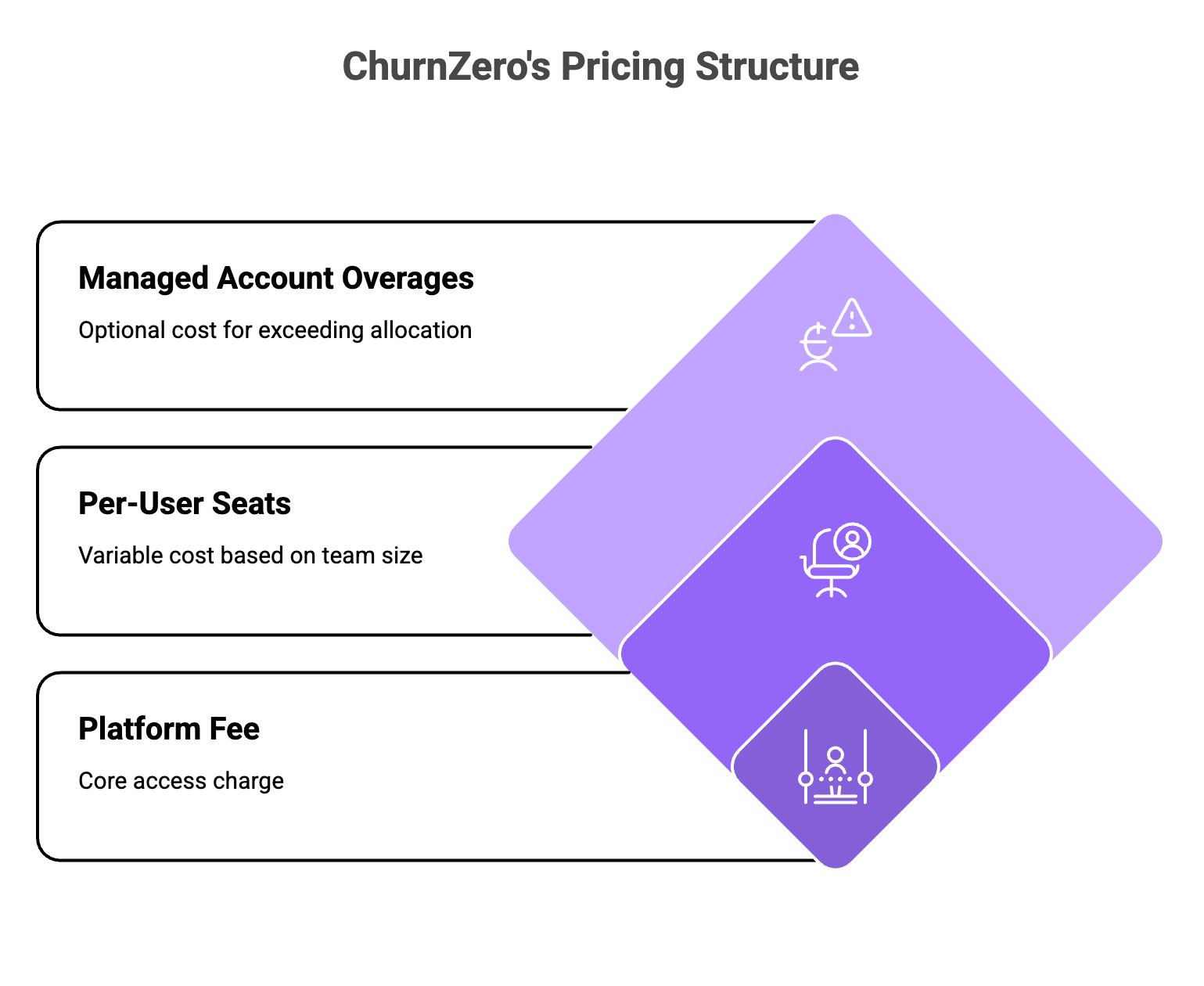
.png)
.png)