10 Best Sales Performance Analytics Software in 2026: Rep Scorecards, Territory Views, Quota Tracking, and Forecast Accuracy
Written by
Ishan Chhabra
Last Updated :
August 12, 2026
Skim in :
13
mins
In this article
Revenue teams love Oliv
Here’s why:
All your deal data unified (from 30+ tools and tabs).
Insights are delivered to you directly, no digging.
AI agents automate tasks for you.
Thank you! Your submission has been received!
Oops! Something went wrong while submitting the form.
Meet Oliv’s AI Agents
Hi! I’m, Deal Driver
I track deals, flag risks, send weekly pipeline updates and give sales managers full visibility into deal progress
Hi! I’m, CRM Manager
I maintain CRM hygiene by updating core, custom and qualification fields all without your team lifting a finger
Hi! I’m, Forecaster
I build accurate forecasts based on real deal movement and tell you which deals to pull in to hit your number
Hi! I’m, Coach
I believe performance fuels revenue. I spot skill gaps, score calls and build coaching plans to help every rep level up
Hi! I’m, Prospector
I dig into target accounts to surface the right contacts, tailor and time outreach so you always strike when it counts
Hi! I’m, Pipeline tracker
I call reps to get deal updates, and deliver a real-time, CRM-synced roll-up view of deal progress
Hi! I’m, Analyst
I answer complex pipeline questions, uncover deal patterns, and build reports that guide strategic decisions
TL;DR
Sales performance analytics measures people, not the org. Rep scorecards, territory balance, quota attainment, and forecast accuracy sit at individual level, unlike dashboard-style sales reporting.
Most tools in this category score what reps logged in the CRM, which is the exact data leaders already distrust when they suspect sandbagging or happy ears.
Only about 7% of sales organisations reach 90% forecast accuracy, the median sits at 70% to 79%, so a 13% to 17% quarterly miss is statistically typical.
Roughly 43.6% of B2B reps hit quota in Q2 2026 per RepVue, and The Bridge Group logged 48% AE attainment. Re-baseline scorecards to that range.
Territory design is the structural half. A 30% gap in objective achievement separates balanced from imbalanced maps, and only planning vendors model it.
Oliv AI ranks first for evidence-based rep diagnosis and forecast accuracy, and scores lowest in the list on territory, quota, and incentive compensation.
Q1. What are the 10 best sales performance analytics software tools in 2026? [toc=1. Best Tools Ranked]
The 10 best sales performance analytics tools in 2026 are Oliv AI, Gong, Clari, Salesloft, People.ai, Salesforce Einstein, Anaplan, Varicent, Xactly, and Aviso. Oliv AI ranks first because its Coach agent scores what was said on the call, not what a rep logged in the CRM. That produces a per-rep coaching action instead of a per-rep number.
Ask your CRM what will close this quarter. Then ask the team. You will get two different answers.
That gap is the whole problem. You can see the aggregate number slipping, but you cannot name which reps, which behaviours, or which territories caused it.
⏰ The timing problem nobody in this category admits
Almost everything here measures outputs after the period that produced them is already decided. Quota attainment, win rate, activity volume, and forecast variance are all lagging, and all after the fact.
Worse, the inputs are self-reported. A scorecard built from CRM fields measures what a rep logged, not what happened on the call.
So you get a precise-looking number about a quarter you can no longer influence. And it is assembled from data the rep controls.
❌ "We already have Salesforce reports and a forecasting tool"
I hear this in most first calls, and it deserves a straight answer. That layer scores what reps logged, which is the exact data you already distrust.
It also reports the number without naming the behaviour behind it. Knowing a rep sits at 62% of quota is reporting. Knowing their discovery calls skip qualification, and their deals stall at proposal, is performance analytics.
There is a serious counter-argument, and it holds for one half of this category. Sales performance management vendors would say the real leverage sits upstream, in territory design and quota setting. No coaching insight rescues a badly carved territory. Research across 500-plus companies found roughly a 30% gap in objective achievement between balanced and imbalanced territory maps.
⭐ The ranked list
Oliv AI
Gong
Clari
Salesloft
People.ai
Salesforce Einstein
Anaplan
Varicent
Xactly
Aviso
Four more appear in the table only: Forecastio, InsightSquared, Revenue Grid, and Terret (formerly BoostUp). They are credible, but each covers one narrow axis of the four in the title, so a full entry would pad the read rather than help the shortlist.
Comparison table: all 14 tools scored on the four axes
Sales Performance Analytics Tools Compared on Four Axes (2026)
#
Tool
Best for
Rep scorecard depth
Territory views
Forecast accuracy
Published pricing
Rating
1
Oliv AI
Evidence-based rep diagnosis plus forecast
Call-level, methodology-scored
None
Agent-generated from same record
$19 to $79 per seat, $0 platform fee, free view-only seats
⭐⭐⭐⭐⭐
2
Gong
Conversation coverage at scale
AI Call Reviewer scorecards
Limited
Configurable forecast boards
Not published
⭐⭐⭐⭐
3
Clari
Enterprise forecast hierarchy
Thin, CI context weak
Limited
Core strength
Not published
⭐⭐⭐⭐
4
Salesloft
Cadence and activity execution
Activity-based
None
Via Clari merger
Not published
⭐⭐⭐
5
People.ai
Activity capture and data hygiene
Activity-based
Account coverage
Feeds other tools
Not published
⭐⭐⭐
6
Salesforce Einstein
Teams standardising inside the CRM
CRM-field based
Native territory management
Einstein forecasting
Add-on, quote-based
⭐⭐⭐
7
Anaplan
Territory and quota modelling
None
Full modelling
Planning-side only
Quote-based
⭐⭐⭐⭐
8
Varicent
Incentive comp plus territory
None
Full modelling
Planning-side only
Quote-based
⭐⭐⭐⭐
9
Xactly
Comp plans tied to attainment
Attainment only
Full modelling
Planning-side only
Quote-based
⭐⭐⭐⭐
10
Aviso
Forecast roll-ups on a budget
Thin
Limited
Mixed user reports
Not published
⭐⭐
11
Forecastio
SMB forecast tracking
Minimal
None
Core focus
Published tiers
⭐⭐⭐
12
InsightSquared
Legacy BI-style sales reporting
Report-based
Limited
Historical models
Quote-based
⭐⭐
13
Revenue Grid
Activity capture and guided selling
Activity-based
None
Signal-based
Quote-based
⭐⭐⭐
14
Terret (formerly BoostUp)
Deal inspection and RevBI
Moderate
Limited
Core focus
Quote-based
⭐⭐⭐
Two columns here do not appear on any competing listicle: published pricing and free viewer seats. Both decide real total cost, because most managers only read a scorecard.
1.1 Oliv AI: rep scorecards built from the conversation, not the CRM field [toc=1.1 Oliv AI]
Four diagnostic panels frame the sales performance analytics problem: 30% selling time, disengaged champions, unmonitored rep coaching gaps, and a Q3 forecast patched from gut feel.
Oliv AI is an AI-native revenue intelligence and revenue orchestration platform. Its Coach agent builds per-rep skill-gap maps from actual calls, and scores deals against MEDDIC, BANT, or SPICED automatically. Managers get a coaching agenda before the weekly one-to-one, not a score after it. Forecaster produces the number from that same record.
✅ What it does differently
Oliv AI runs agents on top of your CRM and never replaces it. Activity resolves to the right account, contact, and opportunity, so a scorecard is not built on activity mapped to the wrong deal.
We priced it so the app layer stops eating the budget that should fund agents. The published ladder runs $19 to $79 per seat, with a $0 platform fee and free view-only seats.
⚠️ Where Oliv AI does not compete
Oliv AI does not do territory design, quota planning, or incentive compensation. Anaplan, Varicent, and Xactly own that half of the category outright.
I would rather say that plainly than pretend otherwise. If your gap is a badly carved map, buy a planning tool first, then worry about coaching.
Key features: Coach agent for skill-gap diagnosis, Forecaster agent, CRM Manager agent, Deal Driver agent, Context Graph for account and opportunity context, and a Chrome extension for live battlecards.
Implementation: Reviewers describe setup in five to fifteen minutes for a single user, and under a week for a team with onboarding support.
Best use case: A VP of Sales with six to ten front-line managers who needs the same evidence-backed coaching agenda produced for every manager, every week.
✅ Pros and ❌ cons
✅ Scores conversations, not self-reported CRM fields
✅ Published per-seat pricing with free viewer licences
✅ Fast setup, with onboarding engineers on larger rollouts
❌ No territory, quota, or incentive compensation modelling
❌ Dashboard and analytics customisation is still limited
❌ Occasional slowness reported by users
💬 What users actually say
"Oliv.ai has agents like the CRM agent, deal driver agent, and forecast agent, which are invaluable. The deal driver agent keeps tabs on all my deals and tells me where each deal is and which one needs my focus." - Verified reviewer, Oliv AI G2 Verified Review [15 Jun 2026]
"The Driver agent watches all my deals and flags any that are at risk, so I don't have to spend hours listening to recordings in tools like Gong and Clari." - Verified reviewer, Oliv AI G2 Verified Review [17 Jun 2026]
"I'd love to see few more options to customize dashboards and reports for different teams." - Verified reviewer, Oliv AI G2 Verified Review [26 Jun 2026]
Oliv AI ranks first here because it produces the per-rep coaching action rather than the per-rep number, and because it names the two rows it loses.
1.2 Gong: the strongest conversation coverage in the category [toc=1.2 Gong]
Gong Engage converts conversation signals into next-best actions across emails, calls, and LinkedIn steps, illustrating strong evidence capture upstream of per-rep coaching decisions.
Gong is the most widely deployed conversation intelligence platform in this list, and it earns that position. It records, transcribes, and analyses calls at scale, then feeds scorecards, deal boards, and forecast boards off that record.
⭐ What it does and what shipped recently
Gong repositioned from revenue intelligence to a Revenue AI Operating System, built around Gong Assistant, Agent Studio, AI Theme Spotter, and Data Extractor. Automated scorecards arrived through AI Call Reviewer in August 2025.
Gong Product Update Timeline (2025 to Expected)
Period
What changed
Through 2025
Smart Trackers, deal boards, and manual coaching scorecards carried the workflow. AI Call Reviewer added automated call scoring, and configurable forecast boards shipped in November 2025.
Feb to May 2026
Mission Andromeda launched Gong Enable, conversational guidance, and unified account management on 25 February 2026. May added AI Trainer audio coaching and Theme Spotter to smart trackers.
Expected next
Bidirectional MCP server support, so Gong pulls third-party data into briefs and exposes insights to external AI platforms. Brief generation via API is also listed as coming soon.
Pricing: Gong publishes no list price. Per-seat pricing became visible inside the admin centre for eligible direct-purchase accounts in June 2025, but no public figure exists. Treat any number you see on a blog as unverified.
Implementation: Reviewers repeatedly flag tracker configuration as the hard part, not the recording itself.
✅ Pros and ❌ cons
✅ Deepest conversation coverage and transcript quality in the category
✅ Automated call scoring and configurable forecast boards
✅ Very large integration ecosystem
❌ Tracker and keyword setup described as difficult
❌ Bulk data export gated behind plan upgrades
❌ Limits reported on writing data back into Salesforce
💬 What users actually say
"I found the AI tracker setup to be quite difficult... Moreover, I cannot download all the data myself unless we upgrade the plan, which isn't ideal and results in me not fully utilizing Gong." - Verified reviewer, Gong G2 Verified Review [03 Oct 2025]
"limitations of getting data back into salesforce" - Verified reviewer, Gong G2 Verified Review [21 May 2026]
"The fact that you can't edit a recording (to only share a portion with a client), and the fact that if you stop working with the tool you lose the data." - Verified reviewer, Gong G2 Verified Review [19 Mar 2026]
Oliv AI takes a different line on the same data: an open export policy with no lock-in, and free view-only seats for the managers who only read the scorecard. Teams comparing forecasting tooling or auditing forecast accuracy at CRO level should score both on export rights before signing.
1.3 Clari: the enterprise forecast hierarchy, with a visibility problem [toc=1.3 Clari]
Clari ranks seller actions by Smart Priority score with contributing factors listed, reflecting pipeline prioritisation and forecast hierarchy strengths rather than call-level skill diagnosis.
Clari is built around forecasting and pipeline inspection at enterprise scale. It emerged from stealth in April 2014 with $6M from Sequoia, aimed squarely at forecast accuracy. That focus still shows: reviewers praise the weekly forecast workflow and drop-in Salesforce fit.
⭐ What it does and where it fits
Clari rolls up commit, best case, and pipeline across a management hierarchy. Copilot adds conversation intelligence, and Groove (acquired August 2023) added sales engagement.
The merger with Salesloft, announced 7 August 2025, folded both companies into one Revenue AI platform under Andy Byrne. March 2026 brought the first cross-platform release.
Clari Product Update Timeline (2025 to Expected)
Period
What shipped
Through 2025
Forecast roll-ups, Copilot conversation intelligence, Groove engagement, and Align. The Salesloft merger agreement was announced on 7 August 2025.
March 2026
First unified release: send AI emails from Clari, create Salesloft tasks, and send follow-up emails through Salesloft from inside the Clari interface.
Expected next
Deeper consolidation of the Clari, Align, Copilot, Groove, and Salesloft release trains under the Revenue Context positioning.
Pricing: Not published. Quote-based, and enterprise reviewers report licence consumption tied to hierarchy nodes. See the full Clari pricing breakdown.
Implementation: Reviewers describe setup as easy for basic forecasting, harder for standardised inspection views.
Best use case: A large org with a deep management hierarchy that runs a formal weekly commit call.
✅ Pros and ❌ cons
✅ Clean weekly forecast and opportunity analysis workflow
✅ Strong Salesforce integration for roll-ups
✅ Broad platform after the Groove and Salesloft additions
❌ Conversation intelligence lacks deal context, per reviewers
❌ No custom reporting, and weak CRM writeback for MEDDIC values
❌ Connection drops with Salesforce and Gmail reported
💬 What users actually say
"The conversation intelligence tool is lacking, and we don't have the context of the deals against the conversation intelligence findings. There's no custom reporting. The CRM writeback is not good; we cannot send MEDDIC values back to Salesforce." Verified reviewer, ClariG2 Verified Review [13 Jul 2026]
"It truly shines in weekly forecasts and opportunity analysis... I'm concerned that the advanced 'Flow View' and 'Waterfall View' aren't working well." Verified reviewer, ClariG2 Verified Review [16 Nov 2025]
"It consistently loses connection both with Salesforce and with our gmail based email platform and calendar, requiring page refreshes and restarts." Verified reviewer, ClariG2 Verified Review [03 Jun 2026]
1.4 Salesloft: execution engine first, performance analytics second [toc=1.4 Salesloft]
Salesloft surfaces account research, logged calls, opens, and recommended buying-group contacts, showing activity-level analytics rather than rep-level scorecards or quota attainment diagnosis.
Salesloft is a sales engagement platform. It sequences outreach, runs cadences, and dials, and it now sits inside the merged Clari organisation. For rep performance analytics, the data it produces is activity data, not conversation evidence.
⚠️ What that means for a scorecard
Activity counts tell you a rep sent 40 emails. They do not tell you whether discovery skipped qualification. That distinction is the whole point of this article.
I would only put Salesloft on this shortlist if execution consistency is your gap, not diagnosis. Teams weighing both sides usually start with a head-to-head on conversation coverage.
Pricing: Not published. Quote-based.
Implementation: Reviewers repeatedly describe integration friction and a steep learning curve.
Best use case: High-volume outbound teams that need cadence discipline across many accounts.
✅ Pros and ❌ cons
✅ Solid cadence and template structure at volume
✅ Keeps follow-ups from slipping
✅ Now bundled into a larger forecasting platform
❌ Usability and UX complaints are frequent and blunt
❌ Meeting logging and data sync issues reported
❌ Thin as a rep performance diagnosis layer
💬 What users actually say
"Salesloft helps organize outreach at scale and keeps follow-ups from falling through the cracks... Integrating Salesloft came with a lot of challenges, and even now, it feels like the platform still has some kinks." Verified reviewer, SalesloftG2 Verified Review [22 Jul 2025]
"For months, randomly, one-off emails sent from Salesloft (not sequences) would appear blank in the recipient's mailbox... UX is overwhelming and clunky. No automations based on conditional logic." Verified reviewer, SalesloftG2 Verified Review [24 Sep 2025]
"The UX is horrible, the features don't work, it's not clear, I waste a lot of time on the software and I am extremely frustrated." Verified reviewer, SalesloftG2 Verified Review [05 Jan 2026]
People.ai captures email, calendar, and meeting activity, then matches it to CRM accounts and opportunities. That matching layer is the product. It was placed as a Challenger or Visionary in Gartner's first Revenue Action Orchestration Magic Quadrant, December 2025.
⭐ Why RevOps buys it
The value is data completeness. If your scorecards are built on partial activity, every downstream number inherits that gap. This is the same argument behind serious CRM data quality automation work.
The limit is that completeness is not diagnosis. A complete activity record still does not tell a manager which skill to coach.
Pricing: Not published. Quote-based, enterprise-weighted.
Implementation: Typically a RevOps-led project, not a rep-led rollout.
Best use case: Enterprises with messy CRM data that need clean activity attribution before any scorecard is credible.
✅ Pros and ❌ cons
✅ Strong automated activity capture and CRM matching
✅ Verified analyst placement in the December 2025 Magic Quadrant
✅ Feeds cleaner inputs to forecasting and reporting tools
❌ Activity data, not conversation evidence
❌ No territory or quota planning
❌ Pricing opacity makes budget planning hard
1.6 Salesforce Einstein: the system your data already lives in [toc=1.6 Salesforce Einstein]
Salesforce is the CRM most of this data comes from. Einstein adds opportunity scoring and forecasting, and native territory management handles coverage. For many teams, it is the default starting point rather than a purchase decision.
⚠️ The activity association problem
Einstein Activity Capture matches emails and meetings to records using rules. Where duplicate accounts exist, and in mid-market Salesforce orgs they usually do, those rules misfire.
A scorecard built on misattributed activity is worse than no scorecard. It looks authoritative and it is wrong. Buyers auditing this usually read the Salesforce Einstein reviews before committing.
Pricing: Add-on licensing, quote-based, on top of Sales Cloud seats.
Implementation: Fast if your org is clean. Slow and painful if it is not.
Best use case: Teams standardising inside Salesforce who need territory management and basic Einstein forecasting without adding vendors.
✅ Pros and ❌ cons
✅ No new system of record, and native territory management
✅ Opportunity scoring available where data quality supports it
✅ Admin and reporting skills already exist in most orgs
❌ Scores what reps logged, which is the core problem here
❌ Rule-based activity association breaks on duplicate accounts
❌ Coaching diagnosis is essentially absent
1.7 Anaplan: territory and quota modelling at scale [toc=1.7 Anaplan]
Anaplan is a connected planning platform, and sales territory and quota planning is one of its strongest use cases. It models coverage, capacity, and quota allocation before the year starts. That is upstream of everything a scorecard measures.
💰 Why this matters more than coaching sometimes
Territory research across 500-plus companies found roughly a 30% gap in sales objective achievement between well-designed and imbalanced maps. Alexander Group puts the productivity lift from territory optimisation at 10% to 20%.
Run the test before you buy anything. Compute the coefficient of variation across territories on revenue potential and account count. Above 15%, your problem is the map.
Pricing: Quote-based, enterprise contracts.
Implementation: A modelling project measured in months, usually RevOps and finance led. Growth-stage teams should read the scaling revenue operations guide first.
Best use case: Companies rebalancing territories or quotas across several hundred reps.
✅ Pros and ❌ cons
✅ Deep territory, capacity, and quota modelling
✅ Scenario planning finance teams already trust
✅ Fixes the structural half of attainment variance
❌ No conversation or rep behaviour diagnosis
❌ Long implementation cycles
❌ Overkill for teams under roughly 50 reps
1.8 Varicent: incentive compensation plus territory design [toc=1.8 Varicent]
Varicent handles sales performance management: incentive compensation, quota, and territory. It answers a different question from the rest of this list. Not "why is this rep missing", but "is the plan itself achievable".
⏰ The attainment baseline that changes the conversation
Roughly 43.6% of B2B reps hit quota in Q2 2026 across 252 companies in RepVue's Cloud Sales Index. The Bridge Group logged 48% AE annual attainment, down from 51% in 2024.
If half your team misses by design, coaching is not your first lever. The comp and quota model is. Once the plan is sound, the productivity metrics you track start telling you something useful.
Pricing: Quote-based.
Implementation: Comp plan migration is the long pole, usually a quarter or more.
Best use case: Orgs where commission disputes and quota credibility are the visible symptom.
✅ Pros and ❌ cons
✅ Strong incentive compensation and quota administration
✅ Territory design in the same platform
✅ Audit trails comp and finance teams need
❌ No rep-level conversation diagnosis
❌ Heavy configuration overhead
❌ Not a coaching or forecasting tool for front-line managers
1.9 Xactly: comp plans tied directly to attainment [toc=1.9 Xactly]
Xactly is the other established name in incentive compensation and sales planning. Its territory and quota tooling sits alongside comp administration and benchmark data. It scores highest here on the quota-tracking axis, and zero on conversation evidence.
✅ Where it earns the slot
The attainment number on a rep scorecard has to come from somewhere defensible. Xactly is where many enterprises calculate it.
That is the honest division of labour in this category. Planning systems set the target, and diagnosis systems explain the miss.
Pricing: Quote-based.
Implementation: Comp plan modelling and data mapping, typically multi-month.
Best use case: Enterprises with complex, multi-tier commission structures.
✅ Pros and ❌ cons
✅ Mature incentive compensation engine
✅ Quota and territory planning built in
✅ Benchmark data for plan design
❌ Nothing on rep behaviour or call evidence
❌ Slow to change once plans are live
❌ Front-line managers rarely log in
1.10 Aviso: budget forecasting with real user friction [toc=1.10 Aviso]
Aviso offers AI forecasting and pipeline management, often at a lower price point than Clari. It rounds out the list because it appears on shortlists for exactly that reason. The review evidence is the most negative in this comparison, and buyers should read it before signing.
⚠️ Read the reviews before the demo
Performance and Salesforce sync complaints appear repeatedly across 2025 reviews. Some users report supplementing it with Excel.
Filtering by owner for one-to-ones does work well, per one reviewer. That is a narrow win inside a broad set of complaints, and it rarely survives a serious AI sales forecasting software comparison.
Pricing: Not published. Quote-based.
Implementation: Reviewers report weak internal enablement and training.
Best use case: Teams that need basic forecast roll-ups and cannot fund an enterprise contract.
✅ Pros and ❌ cons
✅ Owner-level filtering useful for one-to-ones
✅ Lower-cost alternative to enterprise forecasting suites
✅ Covers standard roll-up workflows
❌ Slow performance, especially switching segments
❌ Salesforce sync failures reported
❌ Exports lose customisations and filters
💬 What users actually say
"Extremely slow performance, especially when switching between segments. Exporting data loses all customisations and filters. Analytics are ineffective and add no real value." Verified reviewer, AvisoG2 Verified Review [24 Jun 2025]
"The solution is slow, often times it doesn't sync with SFDC, the reports are terrible and don't represent what is being pulled by the data." Verified reviewer, AvisoG2 Verified Review [18 Feb 2025]
"I like being able to filter by group on the left-hand side. I often filter by the owner name so that I can easily zero in on one individual when I'm doing a one-on-one." Verified reviewer, AvisoG2 Verified Review [08 Dec 2025]
⭐ The four table-only tools, and why
Forecastio, InsightSquared, Revenue Grid, and Terret (formerly BoostUp) each cover one axis well. None spans rep scorecards, territory, quota, and forecast accuracy together. Terret's rename is a useful reminder that this category churns through acquisitions and rebrands, so verify corporate status before you sign anything.
Oliv AI sits at the top of this list for one reason worth restating after ten entries: it scores the conversation rather than the CRM field, and hands the manager the coaching action instead of the number. Our read is that most of this category still optimises the measurement, not the outcome, which is the gap AI agents for RevOps are built to close.
Q2. How were these tools scored, and what should your own criteria weight? [toc=2. Scoring Criteria]
Six weighted criteria drive the ranking: evidence-based rep diagnosis 25%, quota and attainment tracking 20%, territory and coverage views 20%, forecast accuracy without manual roll-up 20%, pricing transparency 10%, and AI auditability and logging 5%. Scores convert to stars in 20-point bands. Oliv AI scores 5 stars overall. Anaplan, Varicent, and Xactly lead the territory and quota criteria outright.
⭐ Why the weights are published before the scores
This category measures outputs after the quarter that produced them is already decided. So the heaviest weight goes to the one thing that can still change an outcome: naming the cause early.
Criteria reverse-engineered from a single vendor's feature list are obvious to any VP who has run a shortlist. Publishing the weights first is the only way this reads as analysis rather than a pitch, which is the same discipline behind a serious revenue intelligence platform comparison.
Scoring Criteria and Weights for Sales Performance Analytics Tools
Criterion
Weight
What a full score requires
Evidence-based rep diagnosis
25%
Scores built from calls and emails, not CRM fields, with per-field traceability
Quota and attainment tracking
20%
Attainment visible by rep, manager, and territory in one view
Territory and coverage views
20%
Modelling of revenue potential, account count, and workload balance
Forecast accuracy without manual roll-up
20%
The number assembles itself from the same record, with no Thursday chase
Pricing transparency
10%
Published per-seat pricing, and a clear answer on view-only seats
AI auditability and logging
5%
Exportable log of every AI action taken on rep performance data
💰 The seat question most buyers ask too late
Count the people who read a scorecard versus the people who edit one. In most orgs, that ratio is roughly five to one.
If view-only manager seats are billed, your total cost doubles quietly. One Clari reviewer describes a separate user needed per node in the forecast hierarchy, each consuming a Salesforce licence, which is exactly the kind of line item that drives revenue tech stack consolidation.
"The conversation intelligence tool is lacking, and we don't have the context of the deals against the conversation intelligence findings. There's no custom reporting." Verified reviewer, ClariG2 Verified Review [13 Jul 2026]
⚠️ The compliance criterion nobody scored last year
The EU AI Act's Article 50 transparency duties became enforceable on 2 August 2026. Article 12 covers automatic logging, and Article 14 covers human oversight for high-risk flows.
Penalties reach EUR 35M or 7% of global turnover. If AI scores your reps, ask every vendor for a 30-day export of AI actions before you sign, and run the same checks in your AI CRM trust and governance evaluation.
❌ Where the star bands fall apart
Stars flatten real trade-offs, so read the criterion rows, not the average. A five-star tool can score zero on the axis you actually need.
Oliv AI scores highest in this list on evidence-based rep diagnosis and forecast accuracy, and lowest on territory and quota planning, which it does not build. Anaplan, Varicent, and Xactly own that half, and I would rather send you there than pretend otherwise.
Q3. What separates sales performance analytics from sales reporting, and what benchmarks should you hold vendors to? [toc=3. Benchmarks and Definitions]
Sales reporting describes the org: dashboards, custom metrics, CRM sync, and executive views. Sales performance analytics describes people: rep scorecards, territory balance, quota attainment, and forecast accuracy at individual level. Reporting says the team is at 78% of plan. Performance analytics names which reps, which behaviour, and which territory produced the gap, early enough to change it.
⏰ The same quarter, read two ways
Reporting says Q3 closed at 78% of plan, with win rate down four points. True, and useless on a Monday.
Performance analytics says four reps carry the miss. Three skipped qualification on discovery calls, and one holds a territory with half the account potential of its neighbour. That split is the practical difference between revenue reporting software and people-level diagnosis.
Sales Reporting vs Sales Performance Analytics
Question
Reporting answers
Performance analytics answers
How are we doing?
Yes
Yes
Which reps caused it?
Partly
Yes
Which behaviour caused it?
No
Yes
Can I act before the quarter closes?
No
Yes
📊 Benchmark one: what "accurate" forecasting actually means
Only about 7% of sales organisations reach 90% or better forecast accuracy, and the median sits at 70% to 79%. The median B2B team misses its quarterly forecast by 13% to 17%.
So a 15% miss is normal, not failure. A healthy target band is plus or minus 10% on total and plus or minus 5% on commit, which is the standard behind evidence-based forecast commits.
Forecast Accuracy Variance Bands
Variance band
What it means
Within 5% on commit
Top decile discipline
Within 10% on total
Healthy and defensible
13% to 17%
Statistically typical
Above 20%
The process, not the reps
Pull commit versus closed-won for your last four quarters. Compute your own variance before you believe any vendor's AI forecasting claim.
📉 Benchmark two: the attainment baseline for scorecards
Roughly 43.6% of B2B reps met or exceeded quota in Q2 2026 across 252 companies in RepVue's Cloud Sales Index. The Bridge Group logged 48% AE annual attainment, down from 51% in 2024.
Most scorecards are still built as if 100% is the expected case. Re-baseline your thresholds to 43% to 48%, so coaching flags real underperformance instead of a broken quota model.
💸 Benchmark three: the admin tax on your own data
Reps spend about 40% of the week actually selling, and 16% goes to manual data entry, close to a full day. Salesforce surveyed 4,050 sales professionals across 23 countries for that number.
Every hand-filled scorecard field is a tax on the thing you are measuring. List each one this week, then auto-capture it or delete it from the scorecard.
I hear the same sentence from VPs constantly. They know which reps are struggling, but cannot pinpoint whether the gap is discovery, objection handling, or closing. No dashboard answers that, because the dashboard is reading fields the rep typed, which is why skill-gap diagnosis sits outside reporting entirely.
Q4. Why does Oliv AI rank first for rep scorecards and forecast accuracy? [toc=4. Oliv AI Reviewed]
Oliv AI is an AI-native revenue intelligence and revenue orchestration platform. Its Coach agent builds per-rep skill-gap maps from actual calls, scores deals against MEDDIC, BANT, or SPICED automatically, and delivers a coaching agenda before the weekly one-to-one rather than a score after it. Forecaster produces the number from the same record. Oliv does not do territory design, quota planning, or incentive compensation.
⭐ Diagnosis from evidence, not self-report
The scorecard problem is circular. You build it from CRM fields, then use it to check whether the rep is telling you the truth about those fields.
Oliv AI breaks that loop by scoring the conversation itself, so a skipped qualification step shows up whether or not anyone logged it. Every scored item ties back to the moment that produced it, which is what makes it survivable in a performance conversation.
⏰ The forecast falls out of the same record
Most teams assemble the forecast on Thursday and Friday, with managers chasing reps for a story before the number exists. That chase is the tell that the number is manufactured, not measured.
Oliv AI's Forecaster agent derives the roll-up from the same activity and conversation record the scorecards run on. No separate exercise, and no second version of the truth.
✅ Why the underlying data holds up
Scorecards break when activity attaches to the wrong deal, which happens constantly in orgs with duplicate accounts. Rule-based matching cannot fix that reliably, and it is the root of most CRM data strategy failures.
Oliv AI resolves activity to the specific account, contact, and opportunity before anything is scored. Our agents run on top of Salesforce, HubSpot, and Zoho, and never replace the CRM.
💰 The economics, stated plainly
Most managers only read a scorecard. Charging them a full seat to do that is a tax on visibility, and it is one of the fastest ways to reduce sales tech stack costs.
Oliv AI publishes a per-seat ladder from $19 to $79, with a $0 platform fee and free view-only seats.
⚠️ Where it loses
Territory design, quota planning, and incentive compensation are not part of the platform. If your attainment gap is structural, buy Anaplan, Varicent, or Xactly first.
Reviewers also flag limited dashboard customisation and occasional slowness. Both are real, and neither is fatal for the daily coaching use case.
💬 What users actually say
"Oliv.ai has agents like the CRM agent, deal driver agent, and forecast agent, which are invaluable. The forecast agent assists with preparing weekly and monthly forecasts." Verified reviewer, Oliv AIG2 Verified Review [15 Jun 2026]
"It helps in automating and updating our CRM after calls... allowing managers to coach their reps with actionable insight rather than just going through call recordings." Verified reviewer, Oliv AIG2 Verified Review [26 Jun 2026]
"The only downside is that the platform can be a bit glitchy at times, but the support team is always quick to address and resolve any bugs." Verified reviewer, Oliv AIG2 Verified Review [02 Jul 2026]
Oliv AI ranks first here for one narrow reason: it hands the manager the coaching action instead of the number, and names the two rows it loses.
Q5. How do Gong, Clari, Salesloft, People.ai, and Salesforce score on rep-level evidence? [toc=5. Revenue Intelligence Vendors]
Gong placed highest on both axes of Gartner's first Revenue Action Orchestration Magic Quadrant in December 2025, and led all four use cases including Coach. Clari is a Leader in the same quadrant and merged with Salesloft that month. Salesloft and People.ai sit as Challenger or Visionary. All read conversation and activity data directly, which separates them from CRM-field scorecards.
⭐ Gong: the coverage leader, gated on data access
Gong earns its placement. Automated call scoring shipped through AI Call Reviewer in August 2025, and Mission Andromeda added Gong Enable on 25 February 2026.
The friction shows up in getting your own data out. Reviewers describe tracker setup as difficult, and bulk export as plan-gated, which is a recurring theme across documented Gong limitations and challenges.
"I found the AI tracker setup to be quite difficult... I cannot download all the data myself unless we upgrade the plan, which isn't ideal and results in me not fully utilizing Gong." Verified reviewer, GongG2 Verified Review [03 Oct 2025]
Score: strong on evidence capture, weaker on turning that evidence into a per-rep action you can hand a manager.
⚠️ Clari: the forecast is clean, the derivation is not
Clari's weekly forecast workflow is genuinely good, and enterprise reviewers say so. The gap sits between the conversation layer and the deal record.
Reviewers also report a separate user needed per node in the forecast hierarchy, each consuming a Salesforce licence. The pattern shows up repeatedly in Clari reviews and user feedback.
"The CRM writeback is not good; we cannot send MEDDIC values back to Salesforce or update fields in Salesforce from the conversation intelligence. The AI is not as flexible as we need it to be." Verified reviewer, ClariG2 Verified Review [13 Jul 2026]
💸 Salesloft: activity discipline, not diagnosis
Salesloft keeps cadences running and follow-ups from slipping, which matters at volume. The data it produces is activity data.
Activity counts cannot tell you whether discovery skipped qualification. That is the line between execution tooling and true revenue intelligence.
"Integrating Salesloft came with a lot of challenges, and even now, it feels like the platform still has some kinks. I often have trouble logging meetings." Verified reviewer, SalesloftG2 Verified Review [22 Jul 2025]
✅ People.ai: completeness before diagnosis
People.ai's strength is matching email, calendar, and meeting activity to the right CRM objects. If your scorecards run on partial activity, every number downstream inherits that hole.
Completeness is necessary. It is not the same as knowing which skill to coach on Monday.
❌ Salesforce Einstein: the source system, with a matching flaw
Salesforce is where the data lives, and native territory management is a real advantage. Einstein adds opportunity scoring on top.
Einstein Activity Capture associates activity by rule, and duplicate accounts break rules. In mid-market orgs, duplicates are the norm, so a confident-looking scorecard can be quietly wrong.
Revenue Intelligence Vendors on Rep-Level Evidence
Vendor
Reads conversations
Per-rep coaching action
Free view-only seats
Gong
Yes
Partial
No published policy
Clari
Yes
Partial
Licence per hierarchy node reported
Salesloft
Activity only
No
No published policy
People.ai
Activity only
No
No published policy
Salesforce Einstein
CRM fields
No
Seat-based
Oliv AI
Yes
Yes
Yes, free
Oliv AI charges nothing for view-only seats, which is the direct contrast with a forecast hierarchy that consumes a CRM licence per node. Most managers only read the scorecard, so that line item decides real cost.
Q6. Do you need a separate tool for territory and quota planning? [toc=6. Territory and Quota Tools]
Yes, if territory carving, quota setting, or incentive compensation is the constraint. Research across 500-plus companies found roughly a 30% gap in sales objective achievement between well-designed and imbalanced territory maps, and redesign alone lifts sales 2% to 7%. No coaching insight rescues a badly carved territory. Revenue intelligence tools, Oliv AI included, do not model this. Anaplan, Varicent, and Xactly do.
📐 Run this test before you buy anything
Export territory-level revenue potential, account count, and workload. Compute the coefficient of variation, which is the standard deviation divided by the mean.
Above 15%, your problem is the map, not the reps. Alexander Group puts the productivity lift from territory optimisation at 10% to 20%.
⭐ Anaplan: modelling coverage before the year starts
Anaplan is a connected planning platform, and territory and quota planning is one of its strongest applications. It models coverage, capacity, and allocation across large rep populations.
The trade-off is scope and time. It does nothing with conversations, and implementation runs in months, not weeks, which matters when you are still building the revenue operations function.
Best fit: rebalancing several hundred reps, with finance and RevOps co-owning the model.
💰 Varicent: is the plan itself achievable?
Varicent handles incentive compensation, quota, and territory in one place. It answers a different question from coaching tools.
That question matters right now. Roughly 43.6% of B2B reps hit quota in Q2 2026 across 252 companies in RepVue's Cloud Sales Index, and The Bridge Group logged 48% AE annual attainment, down from 51% in 2024.
If half your team misses by design, fix the plan before you fix the reps. Only then do sales performance optimization efforts pay back.
✅ Xactly: where the attainment number gets calculated
Xactly runs comp administration, quota, and territory planning, with benchmark data for plan design. The attainment figure on a rep scorecard has to come from somewhere defensible, and for many enterprises this is it.
It scores near the top on quota tracking and zero on conversation evidence. That division of labour is honest, not a weakness.
Front-line managers rarely log in, which tells you who the tool is actually built for.
⚠️ Aviso: cheaper forecasting, with documented friction
Aviso offers AI forecasting and pipeline management, often below enterprise price points. Owner-level filtering works well for one-to-ones, per reviewers.
"Extremely slow performance, especially when switching between segments. Exporting data loses all customisations and filters. Analytics are ineffective and add no real value." Verified reviewer, AvisoG2 Verified Review [24 Jun 2025]
"I like being able to filter by group on the left-hand side. I often filter by the owner name so that I can easily zero in on one individual when I'm doing a one-on-one." Verified reviewer, AvisoG2 Verified Review [08 Dec 2025]
❌ The honest split
Planning Software vs Diagnosis Software: Which One Do You Need?
Question
Buy planning software
Buy diagnosis software
Territory CV above 15%
Yes
No
Quota missed by most reps
Yes
Not first
Individual reps missing, plan holding
No
Yes
Cannot name the behaviour behind a miss
No
Yes
Oliv AI sits alongside these systems rather than against them, scoring rep behaviour inside territories that Anaplan, Varicent, or Xactly designed. That boundary is worth stating plainly, because a vendor who claims both halves is selling you a slide, not a system.
Q7. How do you turn a rep scorecard into a coaching conversation you can defend? [toc=7. Defensible Scorecards]
Compare what the rep logged against what the record shows: commit language on the call versus CRM stage, buying-committee coverage versus single-threaded contact history, and next-step dates that move without a customer interaction. Sandbagging is the gap between evidence and entry. Every scored item must tie back to the moment that produced it, reviewable and challengeable per field.
⏰ The situation every VP describes the same way
Three reps look like they are sandbagging, holding deals back to make next quarter easier. Two are happy-earing, hearing buying signals that were never said.
The manager knows. The manager cannot prove it, because the scorecard is built from the exact fields being distorted.
🔍 Three comparisons that produce evidence
Run these against the last 30 days, per rep:
Commit language on the call versus the stage in the CRM. A rep saying "they are still evaluating" while the deal sits in negotiation is a mismatch worth a conversation.
Buying-committee coverage versus contact history. One threaded contact on a six-figure deal is a risk, not a forecast.
Next-step dates that move without any customer interaction between them. Dates that slide on their own are the clearest sandbagging tell there is, and the earliest signal for deal slippage prevention.
None of these require an accusation. They require a question.
⭐ Standardising across eight managers
Coaching quality varies wildly across a management group, and the cause is usually preparation, not talent. Your best manager spends two hours before each one-to-one. The others spend ten minutes.
Fix the input, not the person. Use one rubric tied to the methodology you already run, generate the same per-rep agenda for every manager, and review manager coaching notes as a scorecard of their own.
Oliv AI resolves activity to the specific account, contact, and opportunity before scoring, so an agenda is not built on activity mapped to the wrong deal.
⚠️ "Can I defend an AI-generated scorecard in a performance conversation?"
This is the credible objection, and it deserves a real answer. Traceability is the whole answer.
Every scored item must link to the moment in the conversation that produced it. The rep should be able to open that moment and argue with the evidence, not with a black-box verdict.
The output is evidence for a coaching conversation. It is not an automated judgment about a person, and any vendor who blurs that line is creating an HR problem for you.
✅ The compliance question to ask every vendor
The EU AI Act's Article 50 transparency duties became enforceable on 2 August 2026. Article 12 covers automatic logging, Article 14 covers human oversight, and Article 26 puts log retention on the deployer, which is you.
Ask one question in every demo. Can I export a complete 30-day log of every AI action taken on rep performance data? Mid-market teams should pair that with a governance and SOC 2 buyer review.
If the answer is vague, you are the one holding the retention duty. That is a bad trade for a dashboard.
💰 What actually changes on Monday
Pick one rep. Run the three comparisons, open the two calls behind the biggest mismatch, and go into the one-to-one with a question instead of a number. That is the shortest path to coaching at scale.
Oliv AI links every score to the specific call moment behind it, and generates the same evidence-backed agenda for every manager in the group. Scorecards built from the conversation stop being an argument about whose data is right.
Where my head is right now: the next two years move this category from measuring the quarter to changing it, and the vendors who cannot show their evidence will not survive that shift. If you run this test on your own team, I would genuinely like to hear what the mismatch rate looks like.
Q1. What are the 10 best sales performance analytics software tools in 2026? [toc=1. Best Tools Ranked]
The 10 best sales performance analytics tools in 2026 are Oliv AI, Gong, Clari, Salesloft, People.ai, Salesforce Einstein, Anaplan, Varicent, Xactly, and Aviso. Oliv AI ranks first because its Coach agent scores what was said on the call, not what a rep logged in the CRM. That produces a per-rep coaching action instead of a per-rep number.
Ask your CRM what will close this quarter. Then ask the team. You will get two different answers.
That gap is the whole problem. You can see the aggregate number slipping, but you cannot name which reps, which behaviours, or which territories caused it.
⏰ The timing problem nobody in this category admits
Almost everything here measures outputs after the period that produced them is already decided. Quota attainment, win rate, activity volume, and forecast variance are all lagging, and all after the fact.
Worse, the inputs are self-reported. A scorecard built from CRM fields measures what a rep logged, not what happened on the call.
So you get a precise-looking number about a quarter you can no longer influence. And it is assembled from data the rep controls.
❌ "We already have Salesforce reports and a forecasting tool"
I hear this in most first calls, and it deserves a straight answer. That layer scores what reps logged, which is the exact data you already distrust.
It also reports the number without naming the behaviour behind it. Knowing a rep sits at 62% of quota is reporting. Knowing their discovery calls skip qualification, and their deals stall at proposal, is performance analytics.
There is a serious counter-argument, and it holds for one half of this category. Sales performance management vendors would say the real leverage sits upstream, in territory design and quota setting. No coaching insight rescues a badly carved territory. Research across 500-plus companies found roughly a 30% gap in objective achievement between balanced and imbalanced territory maps.
⭐ The ranked list
Oliv AI
Gong
Clari
Salesloft
People.ai
Salesforce Einstein
Anaplan
Varicent
Xactly
Aviso
Four more appear in the table only: Forecastio, InsightSquared, Revenue Grid, and Terret (formerly BoostUp). They are credible, but each covers one narrow axis of the four in the title, so a full entry would pad the read rather than help the shortlist.
Comparison table: all 14 tools scored on the four axes
Sales Performance Analytics Tools Compared on Four Axes (2026)
#
Tool
Best for
Rep scorecard depth
Territory views
Forecast accuracy
Published pricing
Rating
1
Oliv AI
Evidence-based rep diagnosis plus forecast
Call-level, methodology-scored
None
Agent-generated from same record
$19 to $79 per seat, $0 platform fee, free view-only seats
⭐⭐⭐⭐⭐
2
Gong
Conversation coverage at scale
AI Call Reviewer scorecards
Limited
Configurable forecast boards
Not published
⭐⭐⭐⭐
3
Clari
Enterprise forecast hierarchy
Thin, CI context weak
Limited
Core strength
Not published
⭐⭐⭐⭐
4
Salesloft
Cadence and activity execution
Activity-based
None
Via Clari merger
Not published
⭐⭐⭐
5
People.ai
Activity capture and data hygiene
Activity-based
Account coverage
Feeds other tools
Not published
⭐⭐⭐
6
Salesforce Einstein
Teams standardising inside the CRM
CRM-field based
Native territory management
Einstein forecasting
Add-on, quote-based
⭐⭐⭐
7
Anaplan
Territory and quota modelling
None
Full modelling
Planning-side only
Quote-based
⭐⭐⭐⭐
8
Varicent
Incentive comp plus territory
None
Full modelling
Planning-side only
Quote-based
⭐⭐⭐⭐
9
Xactly
Comp plans tied to attainment
Attainment only
Full modelling
Planning-side only
Quote-based
⭐⭐⭐⭐
10
Aviso
Forecast roll-ups on a budget
Thin
Limited
Mixed user reports
Not published
⭐⭐
11
Forecastio
SMB forecast tracking
Minimal
None
Core focus
Published tiers
⭐⭐⭐
12
InsightSquared
Legacy BI-style sales reporting
Report-based
Limited
Historical models
Quote-based
⭐⭐
13
Revenue Grid
Activity capture and guided selling
Activity-based
None
Signal-based
Quote-based
⭐⭐⭐
14
Terret (formerly BoostUp)
Deal inspection and RevBI
Moderate
Limited
Core focus
Quote-based
⭐⭐⭐
Two columns here do not appear on any competing listicle: published pricing and free viewer seats. Both decide real total cost, because most managers only read a scorecard.
1.1 Oliv AI: rep scorecards built from the conversation, not the CRM field [toc=1.1 Oliv AI]
Four diagnostic panels frame the sales performance analytics problem: 30% selling time, disengaged champions, unmonitored rep coaching gaps, and a Q3 forecast patched from gut feel.
Oliv AI is an AI-native revenue intelligence and revenue orchestration platform. Its Coach agent builds per-rep skill-gap maps from actual calls, and scores deals against MEDDIC, BANT, or SPICED automatically. Managers get a coaching agenda before the weekly one-to-one, not a score after it. Forecaster produces the number from that same record.
✅ What it does differently
Oliv AI runs agents on top of your CRM and never replaces it. Activity resolves to the right account, contact, and opportunity, so a scorecard is not built on activity mapped to the wrong deal.
We priced it so the app layer stops eating the budget that should fund agents. The published ladder runs $19 to $79 per seat, with a $0 platform fee and free view-only seats.
⚠️ Where Oliv AI does not compete
Oliv AI does not do territory design, quota planning, or incentive compensation. Anaplan, Varicent, and Xactly own that half of the category outright.
I would rather say that plainly than pretend otherwise. If your gap is a badly carved map, buy a planning tool first, then worry about coaching.
Key features: Coach agent for skill-gap diagnosis, Forecaster agent, CRM Manager agent, Deal Driver agent, Context Graph for account and opportunity context, and a Chrome extension for live battlecards.
Implementation: Reviewers describe setup in five to fifteen minutes for a single user, and under a week for a team with onboarding support.
Best use case: A VP of Sales with six to ten front-line managers who needs the same evidence-backed coaching agenda produced for every manager, every week.
✅ Pros and ❌ cons
✅ Scores conversations, not self-reported CRM fields
✅ Published per-seat pricing with free viewer licences
✅ Fast setup, with onboarding engineers on larger rollouts
❌ No territory, quota, or incentive compensation modelling
❌ Dashboard and analytics customisation is still limited
❌ Occasional slowness reported by users
💬 What users actually say
"Oliv.ai has agents like the CRM agent, deal driver agent, and forecast agent, which are invaluable. The deal driver agent keeps tabs on all my deals and tells me where each deal is and which one needs my focus." - Verified reviewer, Oliv AI G2 Verified Review [15 Jun 2026]
"The Driver agent watches all my deals and flags any that are at risk, so I don't have to spend hours listening to recordings in tools like Gong and Clari." - Verified reviewer, Oliv AI G2 Verified Review [17 Jun 2026]
"I'd love to see few more options to customize dashboards and reports for different teams." - Verified reviewer, Oliv AI G2 Verified Review [26 Jun 2026]
Oliv AI ranks first here because it produces the per-rep coaching action rather than the per-rep number, and because it names the two rows it loses.
1.2 Gong: the strongest conversation coverage in the category [toc=1.2 Gong]
Gong Engage converts conversation signals into next-best actions across emails, calls, and LinkedIn steps, illustrating strong evidence capture upstream of per-rep coaching decisions.
Gong is the most widely deployed conversation intelligence platform in this list, and it earns that position. It records, transcribes, and analyses calls at scale, then feeds scorecards, deal boards, and forecast boards off that record.
⭐ What it does and what shipped recently
Gong repositioned from revenue intelligence to a Revenue AI Operating System, built around Gong Assistant, Agent Studio, AI Theme Spotter, and Data Extractor. Automated scorecards arrived through AI Call Reviewer in August 2025.
Gong Product Update Timeline (2025 to Expected)
Period
What changed
Through 2025
Smart Trackers, deal boards, and manual coaching scorecards carried the workflow. AI Call Reviewer added automated call scoring, and configurable forecast boards shipped in November 2025.
Feb to May 2026
Mission Andromeda launched Gong Enable, conversational guidance, and unified account management on 25 February 2026. May added AI Trainer audio coaching and Theme Spotter to smart trackers.
Expected next
Bidirectional MCP server support, so Gong pulls third-party data into briefs and exposes insights to external AI platforms. Brief generation via API is also listed as coming soon.
Pricing: Gong publishes no list price. Per-seat pricing became visible inside the admin centre for eligible direct-purchase accounts in June 2025, but no public figure exists. Treat any number you see on a blog as unverified.
Implementation: Reviewers repeatedly flag tracker configuration as the hard part, not the recording itself.
✅ Pros and ❌ cons
✅ Deepest conversation coverage and transcript quality in the category
✅ Automated call scoring and configurable forecast boards
✅ Very large integration ecosystem
❌ Tracker and keyword setup described as difficult
❌ Bulk data export gated behind plan upgrades
❌ Limits reported on writing data back into Salesforce
💬 What users actually say
"I found the AI tracker setup to be quite difficult... Moreover, I cannot download all the data myself unless we upgrade the plan, which isn't ideal and results in me not fully utilizing Gong." - Verified reviewer, Gong G2 Verified Review [03 Oct 2025]
"limitations of getting data back into salesforce" - Verified reviewer, Gong G2 Verified Review [21 May 2026]
"The fact that you can't edit a recording (to only share a portion with a client), and the fact that if you stop working with the tool you lose the data." - Verified reviewer, Gong G2 Verified Review [19 Mar 2026]
Oliv AI takes a different line on the same data: an open export policy with no lock-in, and free view-only seats for the managers who only read the scorecard. Teams comparing forecasting tooling or auditing forecast accuracy at CRO level should score both on export rights before signing.
1.3 Clari: the enterprise forecast hierarchy, with a visibility problem [toc=1.3 Clari]
Clari ranks seller actions by Smart Priority score with contributing factors listed, reflecting pipeline prioritisation and forecast hierarchy strengths rather than call-level skill diagnosis.
Clari is built around forecasting and pipeline inspection at enterprise scale. It emerged from stealth in April 2014 with $6M from Sequoia, aimed squarely at forecast accuracy. That focus still shows: reviewers praise the weekly forecast workflow and drop-in Salesforce fit.
⭐ What it does and where it fits
Clari rolls up commit, best case, and pipeline across a management hierarchy. Copilot adds conversation intelligence, and Groove (acquired August 2023) added sales engagement.
The merger with Salesloft, announced 7 August 2025, folded both companies into one Revenue AI platform under Andy Byrne. March 2026 brought the first cross-platform release.
Clari Product Update Timeline (2025 to Expected)
Period
What shipped
Through 2025
Forecast roll-ups, Copilot conversation intelligence, Groove engagement, and Align. The Salesloft merger agreement was announced on 7 August 2025.
March 2026
First unified release: send AI emails from Clari, create Salesloft tasks, and send follow-up emails through Salesloft from inside the Clari interface.
Expected next
Deeper consolidation of the Clari, Align, Copilot, Groove, and Salesloft release trains under the Revenue Context positioning.
Pricing: Not published. Quote-based, and enterprise reviewers report licence consumption tied to hierarchy nodes. See the full Clari pricing breakdown.
Implementation: Reviewers describe setup as easy for basic forecasting, harder for standardised inspection views.
Best use case: A large org with a deep management hierarchy that runs a formal weekly commit call.
✅ Pros and ❌ cons
✅ Clean weekly forecast and opportunity analysis workflow
✅ Strong Salesforce integration for roll-ups
✅ Broad platform after the Groove and Salesloft additions
❌ Conversation intelligence lacks deal context, per reviewers
❌ No custom reporting, and weak CRM writeback for MEDDIC values
❌ Connection drops with Salesforce and Gmail reported
💬 What users actually say
"The conversation intelligence tool is lacking, and we don't have the context of the deals against the conversation intelligence findings. There's no custom reporting. The CRM writeback is not good; we cannot send MEDDIC values back to Salesforce." Verified reviewer, ClariG2 Verified Review [13 Jul 2026]
"It truly shines in weekly forecasts and opportunity analysis... I'm concerned that the advanced 'Flow View' and 'Waterfall View' aren't working well." Verified reviewer, ClariG2 Verified Review [16 Nov 2025]
"It consistently loses connection both with Salesforce and with our gmail based email platform and calendar, requiring page refreshes and restarts." Verified reviewer, ClariG2 Verified Review [03 Jun 2026]
1.4 Salesloft: execution engine first, performance analytics second [toc=1.4 Salesloft]
Salesloft surfaces account research, logged calls, opens, and recommended buying-group contacts, showing activity-level analytics rather than rep-level scorecards or quota attainment diagnosis.
Salesloft is a sales engagement platform. It sequences outreach, runs cadences, and dials, and it now sits inside the merged Clari organisation. For rep performance analytics, the data it produces is activity data, not conversation evidence.
⚠️ What that means for a scorecard
Activity counts tell you a rep sent 40 emails. They do not tell you whether discovery skipped qualification. That distinction is the whole point of this article.
I would only put Salesloft on this shortlist if execution consistency is your gap, not diagnosis. Teams weighing both sides usually start with a head-to-head on conversation coverage.
Pricing: Not published. Quote-based.
Implementation: Reviewers repeatedly describe integration friction and a steep learning curve.
Best use case: High-volume outbound teams that need cadence discipline across many accounts.
✅ Pros and ❌ cons
✅ Solid cadence and template structure at volume
✅ Keeps follow-ups from slipping
✅ Now bundled into a larger forecasting platform
❌ Usability and UX complaints are frequent and blunt
❌ Meeting logging and data sync issues reported
❌ Thin as a rep performance diagnosis layer
💬 What users actually say
"Salesloft helps organize outreach at scale and keeps follow-ups from falling through the cracks... Integrating Salesloft came with a lot of challenges, and even now, it feels like the platform still has some kinks." Verified reviewer, SalesloftG2 Verified Review [22 Jul 2025]
"For months, randomly, one-off emails sent from Salesloft (not sequences) would appear blank in the recipient's mailbox... UX is overwhelming and clunky. No automations based on conditional logic." Verified reviewer, SalesloftG2 Verified Review [24 Sep 2025]
"The UX is horrible, the features don't work, it's not clear, I waste a lot of time on the software and I am extremely frustrated." Verified reviewer, SalesloftG2 Verified Review [05 Jan 2026]
People.ai captures email, calendar, and meeting activity, then matches it to CRM accounts and opportunities. That matching layer is the product. It was placed as a Challenger or Visionary in Gartner's first Revenue Action Orchestration Magic Quadrant, December 2025.
⭐ Why RevOps buys it
The value is data completeness. If your scorecards are built on partial activity, every downstream number inherits that gap. This is the same argument behind serious CRM data quality automation work.
The limit is that completeness is not diagnosis. A complete activity record still does not tell a manager which skill to coach.
Pricing: Not published. Quote-based, enterprise-weighted.
Implementation: Typically a RevOps-led project, not a rep-led rollout.
Best use case: Enterprises with messy CRM data that need clean activity attribution before any scorecard is credible.
✅ Pros and ❌ cons
✅ Strong automated activity capture and CRM matching
✅ Verified analyst placement in the December 2025 Magic Quadrant
✅ Feeds cleaner inputs to forecasting and reporting tools
❌ Activity data, not conversation evidence
❌ No territory or quota planning
❌ Pricing opacity makes budget planning hard
1.6 Salesforce Einstein: the system your data already lives in [toc=1.6 Salesforce Einstein]
Salesforce is the CRM most of this data comes from. Einstein adds opportunity scoring and forecasting, and native territory management handles coverage. For many teams, it is the default starting point rather than a purchase decision.
⚠️ The activity association problem
Einstein Activity Capture matches emails and meetings to records using rules. Where duplicate accounts exist, and in mid-market Salesforce orgs they usually do, those rules misfire.
A scorecard built on misattributed activity is worse than no scorecard. It looks authoritative and it is wrong. Buyers auditing this usually read the Salesforce Einstein reviews before committing.
Pricing: Add-on licensing, quote-based, on top of Sales Cloud seats.
Implementation: Fast if your org is clean. Slow and painful if it is not.
Best use case: Teams standardising inside Salesforce who need territory management and basic Einstein forecasting without adding vendors.
✅ Pros and ❌ cons
✅ No new system of record, and native territory management
✅ Opportunity scoring available where data quality supports it
✅ Admin and reporting skills already exist in most orgs
❌ Scores what reps logged, which is the core problem here
❌ Rule-based activity association breaks on duplicate accounts
❌ Coaching diagnosis is essentially absent
1.7 Anaplan: territory and quota modelling at scale [toc=1.7 Anaplan]
Anaplan is a connected planning platform, and sales territory and quota planning is one of its strongest use cases. It models coverage, capacity, and quota allocation before the year starts. That is upstream of everything a scorecard measures.
💰 Why this matters more than coaching sometimes
Territory research across 500-plus companies found roughly a 30% gap in sales objective achievement between well-designed and imbalanced maps. Alexander Group puts the productivity lift from territory optimisation at 10% to 20%.
Run the test before you buy anything. Compute the coefficient of variation across territories on revenue potential and account count. Above 15%, your problem is the map.
Pricing: Quote-based, enterprise contracts.
Implementation: A modelling project measured in months, usually RevOps and finance led. Growth-stage teams should read the scaling revenue operations guide first.
Best use case: Companies rebalancing territories or quotas across several hundred reps.
✅ Pros and ❌ cons
✅ Deep territory, capacity, and quota modelling
✅ Scenario planning finance teams already trust
✅ Fixes the structural half of attainment variance
❌ No conversation or rep behaviour diagnosis
❌ Long implementation cycles
❌ Overkill for teams under roughly 50 reps
1.8 Varicent: incentive compensation plus territory design [toc=1.8 Varicent]
Varicent handles sales performance management: incentive compensation, quota, and territory. It answers a different question from the rest of this list. Not "why is this rep missing", but "is the plan itself achievable".
⏰ The attainment baseline that changes the conversation
Roughly 43.6% of B2B reps hit quota in Q2 2026 across 252 companies in RepVue's Cloud Sales Index. The Bridge Group logged 48% AE annual attainment, down from 51% in 2024.
If half your team misses by design, coaching is not your first lever. The comp and quota model is. Once the plan is sound, the productivity metrics you track start telling you something useful.
Pricing: Quote-based.
Implementation: Comp plan migration is the long pole, usually a quarter or more.
Best use case: Orgs where commission disputes and quota credibility are the visible symptom.
✅ Pros and ❌ cons
✅ Strong incentive compensation and quota administration
✅ Territory design in the same platform
✅ Audit trails comp and finance teams need
❌ No rep-level conversation diagnosis
❌ Heavy configuration overhead
❌ Not a coaching or forecasting tool for front-line managers
1.9 Xactly: comp plans tied directly to attainment [toc=1.9 Xactly]
Xactly is the other established name in incentive compensation and sales planning. Its territory and quota tooling sits alongside comp administration and benchmark data. It scores highest here on the quota-tracking axis, and zero on conversation evidence.
✅ Where it earns the slot
The attainment number on a rep scorecard has to come from somewhere defensible. Xactly is where many enterprises calculate it.
That is the honest division of labour in this category. Planning systems set the target, and diagnosis systems explain the miss.
Pricing: Quote-based.
Implementation: Comp plan modelling and data mapping, typically multi-month.
Best use case: Enterprises with complex, multi-tier commission structures.
✅ Pros and ❌ cons
✅ Mature incentive compensation engine
✅ Quota and territory planning built in
✅ Benchmark data for plan design
❌ Nothing on rep behaviour or call evidence
❌ Slow to change once plans are live
❌ Front-line managers rarely log in
1.10 Aviso: budget forecasting with real user friction [toc=1.10 Aviso]
Aviso offers AI forecasting and pipeline management, often at a lower price point than Clari. It rounds out the list because it appears on shortlists for exactly that reason. The review evidence is the most negative in this comparison, and buyers should read it before signing.
⚠️ Read the reviews before the demo
Performance and Salesforce sync complaints appear repeatedly across 2025 reviews. Some users report supplementing it with Excel.
Filtering by owner for one-to-ones does work well, per one reviewer. That is a narrow win inside a broad set of complaints, and it rarely survives a serious AI sales forecasting software comparison.
Pricing: Not published. Quote-based.
Implementation: Reviewers report weak internal enablement and training.
Best use case: Teams that need basic forecast roll-ups and cannot fund an enterprise contract.
✅ Pros and ❌ cons
✅ Owner-level filtering useful for one-to-ones
✅ Lower-cost alternative to enterprise forecasting suites
✅ Covers standard roll-up workflows
❌ Slow performance, especially switching segments
❌ Salesforce sync failures reported
❌ Exports lose customisations and filters
💬 What users actually say
"Extremely slow performance, especially when switching between segments. Exporting data loses all customisations and filters. Analytics are ineffective and add no real value." Verified reviewer, AvisoG2 Verified Review [24 Jun 2025]
"The solution is slow, often times it doesn't sync with SFDC, the reports are terrible and don't represent what is being pulled by the data." Verified reviewer, AvisoG2 Verified Review [18 Feb 2025]
"I like being able to filter by group on the left-hand side. I often filter by the owner name so that I can easily zero in on one individual when I'm doing a one-on-one." Verified reviewer, AvisoG2 Verified Review [08 Dec 2025]
⭐ The four table-only tools, and why
Forecastio, InsightSquared, Revenue Grid, and Terret (formerly BoostUp) each cover one axis well. None spans rep scorecards, territory, quota, and forecast accuracy together. Terret's rename is a useful reminder that this category churns through acquisitions and rebrands, so verify corporate status before you sign anything.
Oliv AI sits at the top of this list for one reason worth restating after ten entries: it scores the conversation rather than the CRM field, and hands the manager the coaching action instead of the number. Our read is that most of this category still optimises the measurement, not the outcome, which is the gap AI agents for RevOps are built to close.
Q2. How were these tools scored, and what should your own criteria weight? [toc=2. Scoring Criteria]
Six weighted criteria drive the ranking: evidence-based rep diagnosis 25%, quota and attainment tracking 20%, territory and coverage views 20%, forecast accuracy without manual roll-up 20%, pricing transparency 10%, and AI auditability and logging 5%. Scores convert to stars in 20-point bands. Oliv AI scores 5 stars overall. Anaplan, Varicent, and Xactly lead the territory and quota criteria outright.
⭐ Why the weights are published before the scores
This category measures outputs after the quarter that produced them is already decided. So the heaviest weight goes to the one thing that can still change an outcome: naming the cause early.
Criteria reverse-engineered from a single vendor's feature list are obvious to any VP who has run a shortlist. Publishing the weights first is the only way this reads as analysis rather than a pitch, which is the same discipline behind a serious revenue intelligence platform comparison.
Scoring Criteria and Weights for Sales Performance Analytics Tools
Criterion
Weight
What a full score requires
Evidence-based rep diagnosis
25%
Scores built from calls and emails, not CRM fields, with per-field traceability
Quota and attainment tracking
20%
Attainment visible by rep, manager, and territory in one view
Territory and coverage views
20%
Modelling of revenue potential, account count, and workload balance
Forecast accuracy without manual roll-up
20%
The number assembles itself from the same record, with no Thursday chase
Pricing transparency
10%
Published per-seat pricing, and a clear answer on view-only seats
AI auditability and logging
5%
Exportable log of every AI action taken on rep performance data
💰 The seat question most buyers ask too late
Count the people who read a scorecard versus the people who edit one. In most orgs, that ratio is roughly five to one.
If view-only manager seats are billed, your total cost doubles quietly. One Clari reviewer describes a separate user needed per node in the forecast hierarchy, each consuming a Salesforce licence, which is exactly the kind of line item that drives revenue tech stack consolidation.
"The conversation intelligence tool is lacking, and we don't have the context of the deals against the conversation intelligence findings. There's no custom reporting." Verified reviewer, ClariG2 Verified Review [13 Jul 2026]
⚠️ The compliance criterion nobody scored last year
The EU AI Act's Article 50 transparency duties became enforceable on 2 August 2026. Article 12 covers automatic logging, and Article 14 covers human oversight for high-risk flows.
Penalties reach EUR 35M or 7% of global turnover. If AI scores your reps, ask every vendor for a 30-day export of AI actions before you sign, and run the same checks in your AI CRM trust and governance evaluation.
❌ Where the star bands fall apart
Stars flatten real trade-offs, so read the criterion rows, not the average. A five-star tool can score zero on the axis you actually need.
Oliv AI scores highest in this list on evidence-based rep diagnosis and forecast accuracy, and lowest on territory and quota planning, which it does not build. Anaplan, Varicent, and Xactly own that half, and I would rather send you there than pretend otherwise.
Q3. What separates sales performance analytics from sales reporting, and what benchmarks should you hold vendors to? [toc=3. Benchmarks and Definitions]
Sales reporting describes the org: dashboards, custom metrics, CRM sync, and executive views. Sales performance analytics describes people: rep scorecards, territory balance, quota attainment, and forecast accuracy at individual level. Reporting says the team is at 78% of plan. Performance analytics names which reps, which behaviour, and which territory produced the gap, early enough to change it.
⏰ The same quarter, read two ways
Reporting says Q3 closed at 78% of plan, with win rate down four points. True, and useless on a Monday.
Performance analytics says four reps carry the miss. Three skipped qualification on discovery calls, and one holds a territory with half the account potential of its neighbour. That split is the practical difference between revenue reporting software and people-level diagnosis.
Sales Reporting vs Sales Performance Analytics
Question
Reporting answers
Performance analytics answers
How are we doing?
Yes
Yes
Which reps caused it?
Partly
Yes
Which behaviour caused it?
No
Yes
Can I act before the quarter closes?
No
Yes
📊 Benchmark one: what "accurate" forecasting actually means
Only about 7% of sales organisations reach 90% or better forecast accuracy, and the median sits at 70% to 79%. The median B2B team misses its quarterly forecast by 13% to 17%.
So a 15% miss is normal, not failure. A healthy target band is plus or minus 10% on total and plus or minus 5% on commit, which is the standard behind evidence-based forecast commits.
Forecast Accuracy Variance Bands
Variance band
What it means
Within 5% on commit
Top decile discipline
Within 10% on total
Healthy and defensible
13% to 17%
Statistically typical
Above 20%
The process, not the reps
Pull commit versus closed-won for your last four quarters. Compute your own variance before you believe any vendor's AI forecasting claim.
📉 Benchmark two: the attainment baseline for scorecards
Roughly 43.6% of B2B reps met or exceeded quota in Q2 2026 across 252 companies in RepVue's Cloud Sales Index. The Bridge Group logged 48% AE annual attainment, down from 51% in 2024.
Most scorecards are still built as if 100% is the expected case. Re-baseline your thresholds to 43% to 48%, so coaching flags real underperformance instead of a broken quota model.
💸 Benchmark three: the admin tax on your own data
Reps spend about 40% of the week actually selling, and 16% goes to manual data entry, close to a full day. Salesforce surveyed 4,050 sales professionals across 23 countries for that number.
Every hand-filled scorecard field is a tax on the thing you are measuring. List each one this week, then auto-capture it or delete it from the scorecard.
I hear the same sentence from VPs constantly. They know which reps are struggling, but cannot pinpoint whether the gap is discovery, objection handling, or closing. No dashboard answers that, because the dashboard is reading fields the rep typed, which is why skill-gap diagnosis sits outside reporting entirely.
Q4. Why does Oliv AI rank first for rep scorecards and forecast accuracy? [toc=4. Oliv AI Reviewed]
Oliv AI is an AI-native revenue intelligence and revenue orchestration platform. Its Coach agent builds per-rep skill-gap maps from actual calls, scores deals against MEDDIC, BANT, or SPICED automatically, and delivers a coaching agenda before the weekly one-to-one rather than a score after it. Forecaster produces the number from the same record. Oliv does not do territory design, quota planning, or incentive compensation.
⭐ Diagnosis from evidence, not self-report
The scorecard problem is circular. You build it from CRM fields, then use it to check whether the rep is telling you the truth about those fields.
Oliv AI breaks that loop by scoring the conversation itself, so a skipped qualification step shows up whether or not anyone logged it. Every scored item ties back to the moment that produced it, which is what makes it survivable in a performance conversation.
⏰ The forecast falls out of the same record
Most teams assemble the forecast on Thursday and Friday, with managers chasing reps for a story before the number exists. That chase is the tell that the number is manufactured, not measured.
Oliv AI's Forecaster agent derives the roll-up from the same activity and conversation record the scorecards run on. No separate exercise, and no second version of the truth.
✅ Why the underlying data holds up
Scorecards break when activity attaches to the wrong deal, which happens constantly in orgs with duplicate accounts. Rule-based matching cannot fix that reliably, and it is the root of most CRM data strategy failures.
Oliv AI resolves activity to the specific account, contact, and opportunity before anything is scored. Our agents run on top of Salesforce, HubSpot, and Zoho, and never replace the CRM.
💰 The economics, stated plainly
Most managers only read a scorecard. Charging them a full seat to do that is a tax on visibility, and it is one of the fastest ways to reduce sales tech stack costs.
Oliv AI publishes a per-seat ladder from $19 to $79, with a $0 platform fee and free view-only seats.
⚠️ Where it loses
Territory design, quota planning, and incentive compensation are not part of the platform. If your attainment gap is structural, buy Anaplan, Varicent, or Xactly first.
Reviewers also flag limited dashboard customisation and occasional slowness. Both are real, and neither is fatal for the daily coaching use case.
💬 What users actually say
"Oliv.ai has agents like the CRM agent, deal driver agent, and forecast agent, which are invaluable. The forecast agent assists with preparing weekly and monthly forecasts." Verified reviewer, Oliv AIG2 Verified Review [15 Jun 2026]
"It helps in automating and updating our CRM after calls... allowing managers to coach their reps with actionable insight rather than just going through call recordings." Verified reviewer, Oliv AIG2 Verified Review [26 Jun 2026]
"The only downside is that the platform can be a bit glitchy at times, but the support team is always quick to address and resolve any bugs." Verified reviewer, Oliv AIG2 Verified Review [02 Jul 2026]
Oliv AI ranks first here for one narrow reason: it hands the manager the coaching action instead of the number, and names the two rows it loses.
Q5. How do Gong, Clari, Salesloft, People.ai, and Salesforce score on rep-level evidence? [toc=5. Revenue Intelligence Vendors]
Gong placed highest on both axes of Gartner's first Revenue Action Orchestration Magic Quadrant in December 2025, and led all four use cases including Coach. Clari is a Leader in the same quadrant and merged with Salesloft that month. Salesloft and People.ai sit as Challenger or Visionary. All read conversation and activity data directly, which separates them from CRM-field scorecards.
⭐ Gong: the coverage leader, gated on data access
Gong earns its placement. Automated call scoring shipped through AI Call Reviewer in August 2025, and Mission Andromeda added Gong Enable on 25 February 2026.
The friction shows up in getting your own data out. Reviewers describe tracker setup as difficult, and bulk export as plan-gated, which is a recurring theme across documented Gong limitations and challenges.
"I found the AI tracker setup to be quite difficult... I cannot download all the data myself unless we upgrade the plan, which isn't ideal and results in me not fully utilizing Gong." Verified reviewer, GongG2 Verified Review [03 Oct 2025]
Score: strong on evidence capture, weaker on turning that evidence into a per-rep action you can hand a manager.
⚠️ Clari: the forecast is clean, the derivation is not
Clari's weekly forecast workflow is genuinely good, and enterprise reviewers say so. The gap sits between the conversation layer and the deal record.
Reviewers also report a separate user needed per node in the forecast hierarchy, each consuming a Salesforce licence. The pattern shows up repeatedly in Clari reviews and user feedback.
"The CRM writeback is not good; we cannot send MEDDIC values back to Salesforce or update fields in Salesforce from the conversation intelligence. The AI is not as flexible as we need it to be." Verified reviewer, ClariG2 Verified Review [13 Jul 2026]
💸 Salesloft: activity discipline, not diagnosis
Salesloft keeps cadences running and follow-ups from slipping, which matters at volume. The data it produces is activity data.
Activity counts cannot tell you whether discovery skipped qualification. That is the line between execution tooling and true revenue intelligence.
"Integrating Salesloft came with a lot of challenges, and even now, it feels like the platform still has some kinks. I often have trouble logging meetings." Verified reviewer, SalesloftG2 Verified Review [22 Jul 2025]
✅ People.ai: completeness before diagnosis
People.ai's strength is matching email, calendar, and meeting activity to the right CRM objects. If your scorecards run on partial activity, every number downstream inherits that hole.
Completeness is necessary. It is not the same as knowing which skill to coach on Monday.
❌ Salesforce Einstein: the source system, with a matching flaw
Salesforce is where the data lives, and native territory management is a real advantage. Einstein adds opportunity scoring on top.
Einstein Activity Capture associates activity by rule, and duplicate accounts break rules. In mid-market orgs, duplicates are the norm, so a confident-looking scorecard can be quietly wrong.
Revenue Intelligence Vendors on Rep-Level Evidence
Vendor
Reads conversations
Per-rep coaching action
Free view-only seats
Gong
Yes
Partial
No published policy
Clari
Yes
Partial
Licence per hierarchy node reported
Salesloft
Activity only
No
No published policy
People.ai
Activity only
No
No published policy
Salesforce Einstein
CRM fields
No
Seat-based
Oliv AI
Yes
Yes
Yes, free
Oliv AI charges nothing for view-only seats, which is the direct contrast with a forecast hierarchy that consumes a CRM licence per node. Most managers only read the scorecard, so that line item decides real cost.
Q6. Do you need a separate tool for territory and quota planning? [toc=6. Territory and Quota Tools]
Yes, if territory carving, quota setting, or incentive compensation is the constraint. Research across 500-plus companies found roughly a 30% gap in sales objective achievement between well-designed and imbalanced territory maps, and redesign alone lifts sales 2% to 7%. No coaching insight rescues a badly carved territory. Revenue intelligence tools, Oliv AI included, do not model this. Anaplan, Varicent, and Xactly do.
📐 Run this test before you buy anything
Export territory-level revenue potential, account count, and workload. Compute the coefficient of variation, which is the standard deviation divided by the mean.
Above 15%, your problem is the map, not the reps. Alexander Group puts the productivity lift from territory optimisation at 10% to 20%.
⭐ Anaplan: modelling coverage before the year starts
Anaplan is a connected planning platform, and territory and quota planning is one of its strongest applications. It models coverage, capacity, and allocation across large rep populations.
The trade-off is scope and time. It does nothing with conversations, and implementation runs in months, not weeks, which matters when you are still building the revenue operations function.
Best fit: rebalancing several hundred reps, with finance and RevOps co-owning the model.
💰 Varicent: is the plan itself achievable?
Varicent handles incentive compensation, quota, and territory in one place. It answers a different question from coaching tools.
That question matters right now. Roughly 43.6% of B2B reps hit quota in Q2 2026 across 252 companies in RepVue's Cloud Sales Index, and The Bridge Group logged 48% AE annual attainment, down from 51% in 2024.
If half your team misses by design, fix the plan before you fix the reps. Only then do sales performance optimization efforts pay back.
✅ Xactly: where the attainment number gets calculated
Xactly runs comp administration, quota, and territory planning, with benchmark data for plan design. The attainment figure on a rep scorecard has to come from somewhere defensible, and for many enterprises this is it.
It scores near the top on quota tracking and zero on conversation evidence. That division of labour is honest, not a weakness.
Front-line managers rarely log in, which tells you who the tool is actually built for.
⚠️ Aviso: cheaper forecasting, with documented friction
Aviso offers AI forecasting and pipeline management, often below enterprise price points. Owner-level filtering works well for one-to-ones, per reviewers.
"Extremely slow performance, especially when switching between segments. Exporting data loses all customisations and filters. Analytics are ineffective and add no real value." Verified reviewer, AvisoG2 Verified Review [24 Jun 2025]
"I like being able to filter by group on the left-hand side. I often filter by the owner name so that I can easily zero in on one individual when I'm doing a one-on-one." Verified reviewer, AvisoG2 Verified Review [08 Dec 2025]
❌ The honest split
Planning Software vs Diagnosis Software: Which One Do You Need?
Question
Buy planning software
Buy diagnosis software
Territory CV above 15%
Yes
No
Quota missed by most reps
Yes
Not first
Individual reps missing, plan holding
No
Yes
Cannot name the behaviour behind a miss
No
Yes
Oliv AI sits alongside these systems rather than against them, scoring rep behaviour inside territories that Anaplan, Varicent, or Xactly designed. That boundary is worth stating plainly, because a vendor who claims both halves is selling you a slide, not a system.
Q7. How do you turn a rep scorecard into a coaching conversation you can defend? [toc=7. Defensible Scorecards]
Compare what the rep logged against what the record shows: commit language on the call versus CRM stage, buying-committee coverage versus single-threaded contact history, and next-step dates that move without a customer interaction. Sandbagging is the gap between evidence and entry. Every scored item must tie back to the moment that produced it, reviewable and challengeable per field.
⏰ The situation every VP describes the same way
Three reps look like they are sandbagging, holding deals back to make next quarter easier. Two are happy-earing, hearing buying signals that were never said.
The manager knows. The manager cannot prove it, because the scorecard is built from the exact fields being distorted.
🔍 Three comparisons that produce evidence
Run these against the last 30 days, per rep:
Commit language on the call versus the stage in the CRM. A rep saying "they are still evaluating" while the deal sits in negotiation is a mismatch worth a conversation.
Buying-committee coverage versus contact history. One threaded contact on a six-figure deal is a risk, not a forecast.
Next-step dates that move without any customer interaction between them. Dates that slide on their own are the clearest sandbagging tell there is, and the earliest signal for deal slippage prevention.
None of these require an accusation. They require a question.
⭐ Standardising across eight managers
Coaching quality varies wildly across a management group, and the cause is usually preparation, not talent. Your best manager spends two hours before each one-to-one. The others spend ten minutes.
Fix the input, not the person. Use one rubric tied to the methodology you already run, generate the same per-rep agenda for every manager, and review manager coaching notes as a scorecard of their own.
Oliv AI resolves activity to the specific account, contact, and opportunity before scoring, so an agenda is not built on activity mapped to the wrong deal.
⚠️ "Can I defend an AI-generated scorecard in a performance conversation?"
This is the credible objection, and it deserves a real answer. Traceability is the whole answer.
Every scored item must link to the moment in the conversation that produced it. The rep should be able to open that moment and argue with the evidence, not with a black-box verdict.
The output is evidence for a coaching conversation. It is not an automated judgment about a person, and any vendor who blurs that line is creating an HR problem for you.
✅ The compliance question to ask every vendor
The EU AI Act's Article 50 transparency duties became enforceable on 2 August 2026. Article 12 covers automatic logging, Article 14 covers human oversight, and Article 26 puts log retention on the deployer, which is you.
Ask one question in every demo. Can I export a complete 30-day log of every AI action taken on rep performance data? Mid-market teams should pair that with a governance and SOC 2 buyer review.
If the answer is vague, you are the one holding the retention duty. That is a bad trade for a dashboard.
💰 What actually changes on Monday
Pick one rep. Run the three comparisons, open the two calls behind the biggest mismatch, and go into the one-to-one with a question instead of a number. That is the shortest path to coaching at scale.
Oliv AI links every score to the specific call moment behind it, and generates the same evidence-backed agenda for every manager in the group. Scorecards built from the conversation stop being an argument about whose data is right.
Where my head is right now: the next two years move this category from measuring the quarter to changing it, and the vendors who cannot show their evidence will not survive that shift. If you run this test on your own team, I would genuinely like to hear what the mismatch rate looks like.
Q1. What are the 10 best sales performance analytics software tools in 2026? [toc=1. Best Tools Ranked]
The 10 best sales performance analytics tools in 2026 are Oliv AI, Gong, Clari, Salesloft, People.ai, Salesforce Einstein, Anaplan, Varicent, Xactly, and Aviso. Oliv AI ranks first because its Coach agent scores what was said on the call, not what a rep logged in the CRM. That produces a per-rep coaching action instead of a per-rep number.
Ask your CRM what will close this quarter. Then ask the team. You will get two different answers.
That gap is the whole problem. You can see the aggregate number slipping, but you cannot name which reps, which behaviours, or which territories caused it.
⏰ The timing problem nobody in this category admits
Almost everything here measures outputs after the period that produced them is already decided. Quota attainment, win rate, activity volume, and forecast variance are all lagging, and all after the fact.
Worse, the inputs are self-reported. A scorecard built from CRM fields measures what a rep logged, not what happened on the call.
So you get a precise-looking number about a quarter you can no longer influence. And it is assembled from data the rep controls.
❌ "We already have Salesforce reports and a forecasting tool"
I hear this in most first calls, and it deserves a straight answer. That layer scores what reps logged, which is the exact data you already distrust.
It also reports the number without naming the behaviour behind it. Knowing a rep sits at 62% of quota is reporting. Knowing their discovery calls skip qualification, and their deals stall at proposal, is performance analytics.
There is a serious counter-argument, and it holds for one half of this category. Sales performance management vendors would say the real leverage sits upstream, in territory design and quota setting. No coaching insight rescues a badly carved territory. Research across 500-plus companies found roughly a 30% gap in objective achievement between balanced and imbalanced territory maps.
⭐ The ranked list
Oliv AI
Gong
Clari
Salesloft
People.ai
Salesforce Einstein
Anaplan
Varicent
Xactly
Aviso
Four more appear in the table only: Forecastio, InsightSquared, Revenue Grid, and Terret (formerly BoostUp). They are credible, but each covers one narrow axis of the four in the title, so a full entry would pad the read rather than help the shortlist.
Comparison table: all 14 tools scored on the four axes
Sales Performance Analytics Tools Compared on Four Axes (2026)
#
Tool
Best for
Rep scorecard depth
Territory views
Forecast accuracy
Published pricing
Rating
1
Oliv AI
Evidence-based rep diagnosis plus forecast
Call-level, methodology-scored
None
Agent-generated from same record
$19 to $79 per seat, $0 platform fee, free view-only seats
⭐⭐⭐⭐⭐
2
Gong
Conversation coverage at scale
AI Call Reviewer scorecards
Limited
Configurable forecast boards
Not published
⭐⭐⭐⭐
3
Clari
Enterprise forecast hierarchy
Thin, CI context weak
Limited
Core strength
Not published
⭐⭐⭐⭐
4
Salesloft
Cadence and activity execution
Activity-based
None
Via Clari merger
Not published
⭐⭐⭐
5
People.ai
Activity capture and data hygiene
Activity-based
Account coverage
Feeds other tools
Not published
⭐⭐⭐
6
Salesforce Einstein
Teams standardising inside the CRM
CRM-field based
Native territory management
Einstein forecasting
Add-on, quote-based
⭐⭐⭐
7
Anaplan
Territory and quota modelling
None
Full modelling
Planning-side only
Quote-based
⭐⭐⭐⭐
8
Varicent
Incentive comp plus territory
None
Full modelling
Planning-side only
Quote-based
⭐⭐⭐⭐
9
Xactly
Comp plans tied to attainment
Attainment only
Full modelling
Planning-side only
Quote-based
⭐⭐⭐⭐
10
Aviso
Forecast roll-ups on a budget
Thin
Limited
Mixed user reports
Not published
⭐⭐
11
Forecastio
SMB forecast tracking
Minimal
None
Core focus
Published tiers
⭐⭐⭐
12
InsightSquared
Legacy BI-style sales reporting
Report-based
Limited
Historical models
Quote-based
⭐⭐
13
Revenue Grid
Activity capture and guided selling
Activity-based
None
Signal-based
Quote-based
⭐⭐⭐
14
Terret (formerly BoostUp)
Deal inspection and RevBI
Moderate
Limited
Core focus
Quote-based
⭐⭐⭐
Two columns here do not appear on any competing listicle: published pricing and free viewer seats. Both decide real total cost, because most managers only read a scorecard.
1.1 Oliv AI: rep scorecards built from the conversation, not the CRM field [toc=1.1 Oliv AI]
Four diagnostic panels frame the sales performance analytics problem: 30% selling time, disengaged champions, unmonitored rep coaching gaps, and a Q3 forecast patched from gut feel.
Oliv AI is an AI-native revenue intelligence and revenue orchestration platform. Its Coach agent builds per-rep skill-gap maps from actual calls, and scores deals against MEDDIC, BANT, or SPICED automatically. Managers get a coaching agenda before the weekly one-to-one, not a score after it. Forecaster produces the number from that same record.
✅ What it does differently
Oliv AI runs agents on top of your CRM and never replaces it. Activity resolves to the right account, contact, and opportunity, so a scorecard is not built on activity mapped to the wrong deal.
We priced it so the app layer stops eating the budget that should fund agents. The published ladder runs $19 to $79 per seat, with a $0 platform fee and free view-only seats.
⚠️ Where Oliv AI does not compete
Oliv AI does not do territory design, quota planning, or incentive compensation. Anaplan, Varicent, and Xactly own that half of the category outright.
I would rather say that plainly than pretend otherwise. If your gap is a badly carved map, buy a planning tool first, then worry about coaching.
Key features: Coach agent for skill-gap diagnosis, Forecaster agent, CRM Manager agent, Deal Driver agent, Context Graph for account and opportunity context, and a Chrome extension for live battlecards.
Implementation: Reviewers describe setup in five to fifteen minutes for a single user, and under a week for a team with onboarding support.
Best use case: A VP of Sales with six to ten front-line managers who needs the same evidence-backed coaching agenda produced for every manager, every week.
✅ Pros and ❌ cons
✅ Scores conversations, not self-reported CRM fields
✅ Published per-seat pricing with free viewer licences
✅ Fast setup, with onboarding engineers on larger rollouts
❌ No territory, quota, or incentive compensation modelling
❌ Dashboard and analytics customisation is still limited
❌ Occasional slowness reported by users
💬 What users actually say
"Oliv.ai has agents like the CRM agent, deal driver agent, and forecast agent, which are invaluable. The deal driver agent keeps tabs on all my deals and tells me where each deal is and which one needs my focus." - Verified reviewer, Oliv AI G2 Verified Review [15 Jun 2026]
"The Driver agent watches all my deals and flags any that are at risk, so I don't have to spend hours listening to recordings in tools like Gong and Clari." - Verified reviewer, Oliv AI G2 Verified Review [17 Jun 2026]
"I'd love to see few more options to customize dashboards and reports for different teams." - Verified reviewer, Oliv AI G2 Verified Review [26 Jun 2026]
Oliv AI ranks first here because it produces the per-rep coaching action rather than the per-rep number, and because it names the two rows it loses.
1.2 Gong: the strongest conversation coverage in the category [toc=1.2 Gong]
Gong Engage converts conversation signals into next-best actions across emails, calls, and LinkedIn steps, illustrating strong evidence capture upstream of per-rep coaching decisions.
Gong is the most widely deployed conversation intelligence platform in this list, and it earns that position. It records, transcribes, and analyses calls at scale, then feeds scorecards, deal boards, and forecast boards off that record.
⭐ What it does and what shipped recently
Gong repositioned from revenue intelligence to a Revenue AI Operating System, built around Gong Assistant, Agent Studio, AI Theme Spotter, and Data Extractor. Automated scorecards arrived through AI Call Reviewer in August 2025.
Gong Product Update Timeline (2025 to Expected)
Period
What changed
Through 2025
Smart Trackers, deal boards, and manual coaching scorecards carried the workflow. AI Call Reviewer added automated call scoring, and configurable forecast boards shipped in November 2025.
Feb to May 2026
Mission Andromeda launched Gong Enable, conversational guidance, and unified account management on 25 February 2026. May added AI Trainer audio coaching and Theme Spotter to smart trackers.
Expected next
Bidirectional MCP server support, so Gong pulls third-party data into briefs and exposes insights to external AI platforms. Brief generation via API is also listed as coming soon.
Pricing: Gong publishes no list price. Per-seat pricing became visible inside the admin centre for eligible direct-purchase accounts in June 2025, but no public figure exists. Treat any number you see on a blog as unverified.
Implementation: Reviewers repeatedly flag tracker configuration as the hard part, not the recording itself.
✅ Pros and ❌ cons
✅ Deepest conversation coverage and transcript quality in the category
✅ Automated call scoring and configurable forecast boards
✅ Very large integration ecosystem
❌ Tracker and keyword setup described as difficult
❌ Bulk data export gated behind plan upgrades
❌ Limits reported on writing data back into Salesforce
💬 What users actually say
"I found the AI tracker setup to be quite difficult... Moreover, I cannot download all the data myself unless we upgrade the plan, which isn't ideal and results in me not fully utilizing Gong." - Verified reviewer, Gong G2 Verified Review [03 Oct 2025]
"limitations of getting data back into salesforce" - Verified reviewer, Gong G2 Verified Review [21 May 2026]
"The fact that you can't edit a recording (to only share a portion with a client), and the fact that if you stop working with the tool you lose the data." - Verified reviewer, Gong G2 Verified Review [19 Mar 2026]
Oliv AI takes a different line on the same data: an open export policy with no lock-in, and free view-only seats for the managers who only read the scorecard. Teams comparing forecasting tooling or auditing forecast accuracy at CRO level should score both on export rights before signing.
1.3 Clari: the enterprise forecast hierarchy, with a visibility problem [toc=1.3 Clari]
Clari ranks seller actions by Smart Priority score with contributing factors listed, reflecting pipeline prioritisation and forecast hierarchy strengths rather than call-level skill diagnosis.
Clari is built around forecasting and pipeline inspection at enterprise scale. It emerged from stealth in April 2014 with $6M from Sequoia, aimed squarely at forecast accuracy. That focus still shows: reviewers praise the weekly forecast workflow and drop-in Salesforce fit.
⭐ What it does and where it fits
Clari rolls up commit, best case, and pipeline across a management hierarchy. Copilot adds conversation intelligence, and Groove (acquired August 2023) added sales engagement.
The merger with Salesloft, announced 7 August 2025, folded both companies into one Revenue AI platform under Andy Byrne. March 2026 brought the first cross-platform release.
Clari Product Update Timeline (2025 to Expected)
Period
What shipped
Through 2025
Forecast roll-ups, Copilot conversation intelligence, Groove engagement, and Align. The Salesloft merger agreement was announced on 7 August 2025.
March 2026
First unified release: send AI emails from Clari, create Salesloft tasks, and send follow-up emails through Salesloft from inside the Clari interface.
Expected next
Deeper consolidation of the Clari, Align, Copilot, Groove, and Salesloft release trains under the Revenue Context positioning.
Pricing: Not published. Quote-based, and enterprise reviewers report licence consumption tied to hierarchy nodes. See the full Clari pricing breakdown.
Implementation: Reviewers describe setup as easy for basic forecasting, harder for standardised inspection views.
Best use case: A large org with a deep management hierarchy that runs a formal weekly commit call.
✅ Pros and ❌ cons
✅ Clean weekly forecast and opportunity analysis workflow
✅ Strong Salesforce integration for roll-ups
✅ Broad platform after the Groove and Salesloft additions
❌ Conversation intelligence lacks deal context, per reviewers
❌ No custom reporting, and weak CRM writeback for MEDDIC values
❌ Connection drops with Salesforce and Gmail reported
💬 What users actually say
"The conversation intelligence tool is lacking, and we don't have the context of the deals against the conversation intelligence findings. There's no custom reporting. The CRM writeback is not good; we cannot send MEDDIC values back to Salesforce." Verified reviewer, ClariG2 Verified Review [13 Jul 2026]
"It truly shines in weekly forecasts and opportunity analysis... I'm concerned that the advanced 'Flow View' and 'Waterfall View' aren't working well." Verified reviewer, ClariG2 Verified Review [16 Nov 2025]
"It consistently loses connection both with Salesforce and with our gmail based email platform and calendar, requiring page refreshes and restarts." Verified reviewer, ClariG2 Verified Review [03 Jun 2026]
1.4 Salesloft: execution engine first, performance analytics second [toc=1.4 Salesloft]
Salesloft surfaces account research, logged calls, opens, and recommended buying-group contacts, showing activity-level analytics rather than rep-level scorecards or quota attainment diagnosis.
Salesloft is a sales engagement platform. It sequences outreach, runs cadences, and dials, and it now sits inside the merged Clari organisation. For rep performance analytics, the data it produces is activity data, not conversation evidence.
⚠️ What that means for a scorecard
Activity counts tell you a rep sent 40 emails. They do not tell you whether discovery skipped qualification. That distinction is the whole point of this article.
I would only put Salesloft on this shortlist if execution consistency is your gap, not diagnosis. Teams weighing both sides usually start with a head-to-head on conversation coverage.
Pricing: Not published. Quote-based.
Implementation: Reviewers repeatedly describe integration friction and a steep learning curve.
Best use case: High-volume outbound teams that need cadence discipline across many accounts.
✅ Pros and ❌ cons
✅ Solid cadence and template structure at volume
✅ Keeps follow-ups from slipping
✅ Now bundled into a larger forecasting platform
❌ Usability and UX complaints are frequent and blunt
❌ Meeting logging and data sync issues reported
❌ Thin as a rep performance diagnosis layer
💬 What users actually say
"Salesloft helps organize outreach at scale and keeps follow-ups from falling through the cracks... Integrating Salesloft came with a lot of challenges, and even now, it feels like the platform still has some kinks." Verified reviewer, SalesloftG2 Verified Review [22 Jul 2025]
"For months, randomly, one-off emails sent from Salesloft (not sequences) would appear blank in the recipient's mailbox... UX is overwhelming and clunky. No automations based on conditional logic." Verified reviewer, SalesloftG2 Verified Review [24 Sep 2025]
"The UX is horrible, the features don't work, it's not clear, I waste a lot of time on the software and I am extremely frustrated." Verified reviewer, SalesloftG2 Verified Review [05 Jan 2026]
People.ai captures email, calendar, and meeting activity, then matches it to CRM accounts and opportunities. That matching layer is the product. It was placed as a Challenger or Visionary in Gartner's first Revenue Action Orchestration Magic Quadrant, December 2025.
⭐ Why RevOps buys it
The value is data completeness. If your scorecards are built on partial activity, every downstream number inherits that gap. This is the same argument behind serious CRM data quality automation work.
The limit is that completeness is not diagnosis. A complete activity record still does not tell a manager which skill to coach.
Pricing: Not published. Quote-based, enterprise-weighted.
Implementation: Typically a RevOps-led project, not a rep-led rollout.
Best use case: Enterprises with messy CRM data that need clean activity attribution before any scorecard is credible.
✅ Pros and ❌ cons
✅ Strong automated activity capture and CRM matching
✅ Verified analyst placement in the December 2025 Magic Quadrant
✅ Feeds cleaner inputs to forecasting and reporting tools
❌ Activity data, not conversation evidence
❌ No territory or quota planning
❌ Pricing opacity makes budget planning hard
1.6 Salesforce Einstein: the system your data already lives in [toc=1.6 Salesforce Einstein]
Salesforce is the CRM most of this data comes from. Einstein adds opportunity scoring and forecasting, and native territory management handles coverage. For many teams, it is the default starting point rather than a purchase decision.
⚠️ The activity association problem
Einstein Activity Capture matches emails and meetings to records using rules. Where duplicate accounts exist, and in mid-market Salesforce orgs they usually do, those rules misfire.
A scorecard built on misattributed activity is worse than no scorecard. It looks authoritative and it is wrong. Buyers auditing this usually read the Salesforce Einstein reviews before committing.
Pricing: Add-on licensing, quote-based, on top of Sales Cloud seats.
Implementation: Fast if your org is clean. Slow and painful if it is not.
Best use case: Teams standardising inside Salesforce who need territory management and basic Einstein forecasting without adding vendors.
✅ Pros and ❌ cons
✅ No new system of record, and native territory management
✅ Opportunity scoring available where data quality supports it
✅ Admin and reporting skills already exist in most orgs
❌ Scores what reps logged, which is the core problem here
❌ Rule-based activity association breaks on duplicate accounts
❌ Coaching diagnosis is essentially absent
1.7 Anaplan: territory and quota modelling at scale [toc=1.7 Anaplan]
Anaplan is a connected planning platform, and sales territory and quota planning is one of its strongest use cases. It models coverage, capacity, and quota allocation before the year starts. That is upstream of everything a scorecard measures.
💰 Why this matters more than coaching sometimes
Territory research across 500-plus companies found roughly a 30% gap in sales objective achievement between well-designed and imbalanced maps. Alexander Group puts the productivity lift from territory optimisation at 10% to 20%.
Run the test before you buy anything. Compute the coefficient of variation across territories on revenue potential and account count. Above 15%, your problem is the map.
Pricing: Quote-based, enterprise contracts.
Implementation: A modelling project measured in months, usually RevOps and finance led. Growth-stage teams should read the scaling revenue operations guide first.
Best use case: Companies rebalancing territories or quotas across several hundred reps.
✅ Pros and ❌ cons
✅ Deep territory, capacity, and quota modelling
✅ Scenario planning finance teams already trust
✅ Fixes the structural half of attainment variance
❌ No conversation or rep behaviour diagnosis
❌ Long implementation cycles
❌ Overkill for teams under roughly 50 reps
1.8 Varicent: incentive compensation plus territory design [toc=1.8 Varicent]
Varicent handles sales performance management: incentive compensation, quota, and territory. It answers a different question from the rest of this list. Not "why is this rep missing", but "is the plan itself achievable".
⏰ The attainment baseline that changes the conversation
Roughly 43.6% of B2B reps hit quota in Q2 2026 across 252 companies in RepVue's Cloud Sales Index. The Bridge Group logged 48% AE annual attainment, down from 51% in 2024.
If half your team misses by design, coaching is not your first lever. The comp and quota model is. Once the plan is sound, the productivity metrics you track start telling you something useful.
Pricing: Quote-based.
Implementation: Comp plan migration is the long pole, usually a quarter or more.
Best use case: Orgs where commission disputes and quota credibility are the visible symptom.
✅ Pros and ❌ cons
✅ Strong incentive compensation and quota administration
✅ Territory design in the same platform
✅ Audit trails comp and finance teams need
❌ No rep-level conversation diagnosis
❌ Heavy configuration overhead
❌ Not a coaching or forecasting tool for front-line managers
1.9 Xactly: comp plans tied directly to attainment [toc=1.9 Xactly]
Xactly is the other established name in incentive compensation and sales planning. Its territory and quota tooling sits alongside comp administration and benchmark data. It scores highest here on the quota-tracking axis, and zero on conversation evidence.
✅ Where it earns the slot
The attainment number on a rep scorecard has to come from somewhere defensible. Xactly is where many enterprises calculate it.
That is the honest division of labour in this category. Planning systems set the target, and diagnosis systems explain the miss.
Pricing: Quote-based.
Implementation: Comp plan modelling and data mapping, typically multi-month.
Best use case: Enterprises with complex, multi-tier commission structures.
✅ Pros and ❌ cons
✅ Mature incentive compensation engine
✅ Quota and territory planning built in
✅ Benchmark data for plan design
❌ Nothing on rep behaviour or call evidence
❌ Slow to change once plans are live
❌ Front-line managers rarely log in
1.10 Aviso: budget forecasting with real user friction [toc=1.10 Aviso]
Aviso offers AI forecasting and pipeline management, often at a lower price point than Clari. It rounds out the list because it appears on shortlists for exactly that reason. The review evidence is the most negative in this comparison, and buyers should read it before signing.
⚠️ Read the reviews before the demo
Performance and Salesforce sync complaints appear repeatedly across 2025 reviews. Some users report supplementing it with Excel.
Filtering by owner for one-to-ones does work well, per one reviewer. That is a narrow win inside a broad set of complaints, and it rarely survives a serious AI sales forecasting software comparison.
Pricing: Not published. Quote-based.
Implementation: Reviewers report weak internal enablement and training.
Best use case: Teams that need basic forecast roll-ups and cannot fund an enterprise contract.
✅ Pros and ❌ cons
✅ Owner-level filtering useful for one-to-ones
✅ Lower-cost alternative to enterprise forecasting suites
✅ Covers standard roll-up workflows
❌ Slow performance, especially switching segments
❌ Salesforce sync failures reported
❌ Exports lose customisations and filters
💬 What users actually say
"Extremely slow performance, especially when switching between segments. Exporting data loses all customisations and filters. Analytics are ineffective and add no real value." Verified reviewer, AvisoG2 Verified Review [24 Jun 2025]
"The solution is slow, often times it doesn't sync with SFDC, the reports are terrible and don't represent what is being pulled by the data." Verified reviewer, AvisoG2 Verified Review [18 Feb 2025]
"I like being able to filter by group on the left-hand side. I often filter by the owner name so that I can easily zero in on one individual when I'm doing a one-on-one." Verified reviewer, AvisoG2 Verified Review [08 Dec 2025]
⭐ The four table-only tools, and why
Forecastio, InsightSquared, Revenue Grid, and Terret (formerly BoostUp) each cover one axis well. None spans rep scorecards, territory, quota, and forecast accuracy together. Terret's rename is a useful reminder that this category churns through acquisitions and rebrands, so verify corporate status before you sign anything.
Oliv AI sits at the top of this list for one reason worth restating after ten entries: it scores the conversation rather than the CRM field, and hands the manager the coaching action instead of the number. Our read is that most of this category still optimises the measurement, not the outcome, which is the gap AI agents for RevOps are built to close.
Q2. How were these tools scored, and what should your own criteria weight? [toc=2. Scoring Criteria]
Six weighted criteria drive the ranking: evidence-based rep diagnosis 25%, quota and attainment tracking 20%, territory and coverage views 20%, forecast accuracy without manual roll-up 20%, pricing transparency 10%, and AI auditability and logging 5%. Scores convert to stars in 20-point bands. Oliv AI scores 5 stars overall. Anaplan, Varicent, and Xactly lead the territory and quota criteria outright.
⭐ Why the weights are published before the scores
This category measures outputs after the quarter that produced them is already decided. So the heaviest weight goes to the one thing that can still change an outcome: naming the cause early.
Criteria reverse-engineered from a single vendor's feature list are obvious to any VP who has run a shortlist. Publishing the weights first is the only way this reads as analysis rather than a pitch, which is the same discipline behind a serious revenue intelligence platform comparison.
Scoring Criteria and Weights for Sales Performance Analytics Tools
Criterion
Weight
What a full score requires
Evidence-based rep diagnosis
25%
Scores built from calls and emails, not CRM fields, with per-field traceability
Quota and attainment tracking
20%
Attainment visible by rep, manager, and territory in one view
Territory and coverage views
20%
Modelling of revenue potential, account count, and workload balance
Forecast accuracy without manual roll-up
20%
The number assembles itself from the same record, with no Thursday chase
Pricing transparency
10%
Published per-seat pricing, and a clear answer on view-only seats
AI auditability and logging
5%
Exportable log of every AI action taken on rep performance data
💰 The seat question most buyers ask too late
Count the people who read a scorecard versus the people who edit one. In most orgs, that ratio is roughly five to one.
If view-only manager seats are billed, your total cost doubles quietly. One Clari reviewer describes a separate user needed per node in the forecast hierarchy, each consuming a Salesforce licence, which is exactly the kind of line item that drives revenue tech stack consolidation.
"The conversation intelligence tool is lacking, and we don't have the context of the deals against the conversation intelligence findings. There's no custom reporting." Verified reviewer, ClariG2 Verified Review [13 Jul 2026]
⚠️ The compliance criterion nobody scored last year
The EU AI Act's Article 50 transparency duties became enforceable on 2 August 2026. Article 12 covers automatic logging, and Article 14 covers human oversight for high-risk flows.
Penalties reach EUR 35M or 7% of global turnover. If AI scores your reps, ask every vendor for a 30-day export of AI actions before you sign, and run the same checks in your AI CRM trust and governance evaluation.
❌ Where the star bands fall apart
Stars flatten real trade-offs, so read the criterion rows, not the average. A five-star tool can score zero on the axis you actually need.
Oliv AI scores highest in this list on evidence-based rep diagnosis and forecast accuracy, and lowest on territory and quota planning, which it does not build. Anaplan, Varicent, and Xactly own that half, and I would rather send you there than pretend otherwise.
Q3. What separates sales performance analytics from sales reporting, and what benchmarks should you hold vendors to? [toc=3. Benchmarks and Definitions]
Sales reporting describes the org: dashboards, custom metrics, CRM sync, and executive views. Sales performance analytics describes people: rep scorecards, territory balance, quota attainment, and forecast accuracy at individual level. Reporting says the team is at 78% of plan. Performance analytics names which reps, which behaviour, and which territory produced the gap, early enough to change it.
⏰ The same quarter, read two ways
Reporting says Q3 closed at 78% of plan, with win rate down four points. True, and useless on a Monday.
Performance analytics says four reps carry the miss. Three skipped qualification on discovery calls, and one holds a territory with half the account potential of its neighbour. That split is the practical difference between revenue reporting software and people-level diagnosis.
Sales Reporting vs Sales Performance Analytics
Question
Reporting answers
Performance analytics answers
How are we doing?
Yes
Yes
Which reps caused it?
Partly
Yes
Which behaviour caused it?
No
Yes
Can I act before the quarter closes?
No
Yes
📊 Benchmark one: what "accurate" forecasting actually means
Only about 7% of sales organisations reach 90% or better forecast accuracy, and the median sits at 70% to 79%. The median B2B team misses its quarterly forecast by 13% to 17%.
So a 15% miss is normal, not failure. A healthy target band is plus or minus 10% on total and plus or minus 5% on commit, which is the standard behind evidence-based forecast commits.
Forecast Accuracy Variance Bands
Variance band
What it means
Within 5% on commit
Top decile discipline
Within 10% on total
Healthy and defensible
13% to 17%
Statistically typical
Above 20%
The process, not the reps
Pull commit versus closed-won for your last four quarters. Compute your own variance before you believe any vendor's AI forecasting claim.
📉 Benchmark two: the attainment baseline for scorecards
Roughly 43.6% of B2B reps met or exceeded quota in Q2 2026 across 252 companies in RepVue's Cloud Sales Index. The Bridge Group logged 48% AE annual attainment, down from 51% in 2024.
Most scorecards are still built as if 100% is the expected case. Re-baseline your thresholds to 43% to 48%, so coaching flags real underperformance instead of a broken quota model.
💸 Benchmark three: the admin tax on your own data
Reps spend about 40% of the week actually selling, and 16% goes to manual data entry, close to a full day. Salesforce surveyed 4,050 sales professionals across 23 countries for that number.
Every hand-filled scorecard field is a tax on the thing you are measuring. List each one this week, then auto-capture it or delete it from the scorecard.
I hear the same sentence from VPs constantly. They know which reps are struggling, but cannot pinpoint whether the gap is discovery, objection handling, or closing. No dashboard answers that, because the dashboard is reading fields the rep typed, which is why skill-gap diagnosis sits outside reporting entirely.
Q4. Why does Oliv AI rank first for rep scorecards and forecast accuracy? [toc=4. Oliv AI Reviewed]
Oliv AI is an AI-native revenue intelligence and revenue orchestration platform. Its Coach agent builds per-rep skill-gap maps from actual calls, scores deals against MEDDIC, BANT, or SPICED automatically, and delivers a coaching agenda before the weekly one-to-one rather than a score after it. Forecaster produces the number from the same record. Oliv does not do territory design, quota planning, or incentive compensation.
⭐ Diagnosis from evidence, not self-report
The scorecard problem is circular. You build it from CRM fields, then use it to check whether the rep is telling you the truth about those fields.
Oliv AI breaks that loop by scoring the conversation itself, so a skipped qualification step shows up whether or not anyone logged it. Every scored item ties back to the moment that produced it, which is what makes it survivable in a performance conversation.
⏰ The forecast falls out of the same record
Most teams assemble the forecast on Thursday and Friday, with managers chasing reps for a story before the number exists. That chase is the tell that the number is manufactured, not measured.
Oliv AI's Forecaster agent derives the roll-up from the same activity and conversation record the scorecards run on. No separate exercise, and no second version of the truth.
✅ Why the underlying data holds up
Scorecards break when activity attaches to the wrong deal, which happens constantly in orgs with duplicate accounts. Rule-based matching cannot fix that reliably, and it is the root of most CRM data strategy failures.
Oliv AI resolves activity to the specific account, contact, and opportunity before anything is scored. Our agents run on top of Salesforce, HubSpot, and Zoho, and never replace the CRM.
💰 The economics, stated plainly
Most managers only read a scorecard. Charging them a full seat to do that is a tax on visibility, and it is one of the fastest ways to reduce sales tech stack costs.
Oliv AI publishes a per-seat ladder from $19 to $79, with a $0 platform fee and free view-only seats.
⚠️ Where it loses
Territory design, quota planning, and incentive compensation are not part of the platform. If your attainment gap is structural, buy Anaplan, Varicent, or Xactly first.
Reviewers also flag limited dashboard customisation and occasional slowness. Both are real, and neither is fatal for the daily coaching use case.
💬 What users actually say
"Oliv.ai has agents like the CRM agent, deal driver agent, and forecast agent, which are invaluable. The forecast agent assists with preparing weekly and monthly forecasts." Verified reviewer, Oliv AIG2 Verified Review [15 Jun 2026]
"It helps in automating and updating our CRM after calls... allowing managers to coach their reps with actionable insight rather than just going through call recordings." Verified reviewer, Oliv AIG2 Verified Review [26 Jun 2026]
"The only downside is that the platform can be a bit glitchy at times, but the support team is always quick to address and resolve any bugs." Verified reviewer, Oliv AIG2 Verified Review [02 Jul 2026]
Oliv AI ranks first here for one narrow reason: it hands the manager the coaching action instead of the number, and names the two rows it loses.
Q5. How do Gong, Clari, Salesloft, People.ai, and Salesforce score on rep-level evidence? [toc=5. Revenue Intelligence Vendors]
Gong placed highest on both axes of Gartner's first Revenue Action Orchestration Magic Quadrant in December 2025, and led all four use cases including Coach. Clari is a Leader in the same quadrant and merged with Salesloft that month. Salesloft and People.ai sit as Challenger or Visionary. All read conversation and activity data directly, which separates them from CRM-field scorecards.
⭐ Gong: the coverage leader, gated on data access
Gong earns its placement. Automated call scoring shipped through AI Call Reviewer in August 2025, and Mission Andromeda added Gong Enable on 25 February 2026.
The friction shows up in getting your own data out. Reviewers describe tracker setup as difficult, and bulk export as plan-gated, which is a recurring theme across documented Gong limitations and challenges.
"I found the AI tracker setup to be quite difficult... I cannot download all the data myself unless we upgrade the plan, which isn't ideal and results in me not fully utilizing Gong." Verified reviewer, GongG2 Verified Review [03 Oct 2025]
Score: strong on evidence capture, weaker on turning that evidence into a per-rep action you can hand a manager.
⚠️ Clari: the forecast is clean, the derivation is not
Clari's weekly forecast workflow is genuinely good, and enterprise reviewers say so. The gap sits between the conversation layer and the deal record.
Reviewers also report a separate user needed per node in the forecast hierarchy, each consuming a Salesforce licence. The pattern shows up repeatedly in Clari reviews and user feedback.
"The CRM writeback is not good; we cannot send MEDDIC values back to Salesforce or update fields in Salesforce from the conversation intelligence. The AI is not as flexible as we need it to be." Verified reviewer, ClariG2 Verified Review [13 Jul 2026]
💸 Salesloft: activity discipline, not diagnosis
Salesloft keeps cadences running and follow-ups from slipping, which matters at volume. The data it produces is activity data.
Activity counts cannot tell you whether discovery skipped qualification. That is the line between execution tooling and true revenue intelligence.
"Integrating Salesloft came with a lot of challenges, and even now, it feels like the platform still has some kinks. I often have trouble logging meetings." Verified reviewer, SalesloftG2 Verified Review [22 Jul 2025]
✅ People.ai: completeness before diagnosis
People.ai's strength is matching email, calendar, and meeting activity to the right CRM objects. If your scorecards run on partial activity, every number downstream inherits that hole.
Completeness is necessary. It is not the same as knowing which skill to coach on Monday.
❌ Salesforce Einstein: the source system, with a matching flaw
Salesforce is where the data lives, and native territory management is a real advantage. Einstein adds opportunity scoring on top.
Einstein Activity Capture associates activity by rule, and duplicate accounts break rules. In mid-market orgs, duplicates are the norm, so a confident-looking scorecard can be quietly wrong.
Revenue Intelligence Vendors on Rep-Level Evidence
Vendor
Reads conversations
Per-rep coaching action
Free view-only seats
Gong
Yes
Partial
No published policy
Clari
Yes
Partial
Licence per hierarchy node reported
Salesloft
Activity only
No
No published policy
People.ai
Activity only
No
No published policy
Salesforce Einstein
CRM fields
No
Seat-based
Oliv AI
Yes
Yes
Yes, free
Oliv AI charges nothing for view-only seats, which is the direct contrast with a forecast hierarchy that consumes a CRM licence per node. Most managers only read the scorecard, so that line item decides real cost.
Q6. Do you need a separate tool for territory and quota planning? [toc=6. Territory and Quota Tools]
Yes, if territory carving, quota setting, or incentive compensation is the constraint. Research across 500-plus companies found roughly a 30% gap in sales objective achievement between well-designed and imbalanced territory maps, and redesign alone lifts sales 2% to 7%. No coaching insight rescues a badly carved territory. Revenue intelligence tools, Oliv AI included, do not model this. Anaplan, Varicent, and Xactly do.
📐 Run this test before you buy anything
Export territory-level revenue potential, account count, and workload. Compute the coefficient of variation, which is the standard deviation divided by the mean.
Above 15%, your problem is the map, not the reps. Alexander Group puts the productivity lift from territory optimisation at 10% to 20%.
⭐ Anaplan: modelling coverage before the year starts
Anaplan is a connected planning platform, and territory and quota planning is one of its strongest applications. It models coverage, capacity, and allocation across large rep populations.
The trade-off is scope and time. It does nothing with conversations, and implementation runs in months, not weeks, which matters when you are still building the revenue operations function.
Best fit: rebalancing several hundred reps, with finance and RevOps co-owning the model.
💰 Varicent: is the plan itself achievable?
Varicent handles incentive compensation, quota, and territory in one place. It answers a different question from coaching tools.
That question matters right now. Roughly 43.6% of B2B reps hit quota in Q2 2026 across 252 companies in RepVue's Cloud Sales Index, and The Bridge Group logged 48% AE annual attainment, down from 51% in 2024.
If half your team misses by design, fix the plan before you fix the reps. Only then do sales performance optimization efforts pay back.
✅ Xactly: where the attainment number gets calculated
Xactly runs comp administration, quota, and territory planning, with benchmark data for plan design. The attainment figure on a rep scorecard has to come from somewhere defensible, and for many enterprises this is it.
It scores near the top on quota tracking and zero on conversation evidence. That division of labour is honest, not a weakness.
Front-line managers rarely log in, which tells you who the tool is actually built for.
⚠️ Aviso: cheaper forecasting, with documented friction
Aviso offers AI forecasting and pipeline management, often below enterprise price points. Owner-level filtering works well for one-to-ones, per reviewers.
"Extremely slow performance, especially when switching between segments. Exporting data loses all customisations and filters. Analytics are ineffective and add no real value." Verified reviewer, AvisoG2 Verified Review [24 Jun 2025]
"I like being able to filter by group on the left-hand side. I often filter by the owner name so that I can easily zero in on one individual when I'm doing a one-on-one." Verified reviewer, AvisoG2 Verified Review [08 Dec 2025]
❌ The honest split
Planning Software vs Diagnosis Software: Which One Do You Need?
Question
Buy planning software
Buy diagnosis software
Territory CV above 15%
Yes
No
Quota missed by most reps
Yes
Not first
Individual reps missing, plan holding
No
Yes
Cannot name the behaviour behind a miss
No
Yes
Oliv AI sits alongside these systems rather than against them, scoring rep behaviour inside territories that Anaplan, Varicent, or Xactly designed. That boundary is worth stating plainly, because a vendor who claims both halves is selling you a slide, not a system.
Q7. How do you turn a rep scorecard into a coaching conversation you can defend? [toc=7. Defensible Scorecards]
Compare what the rep logged against what the record shows: commit language on the call versus CRM stage, buying-committee coverage versus single-threaded contact history, and next-step dates that move without a customer interaction. Sandbagging is the gap between evidence and entry. Every scored item must tie back to the moment that produced it, reviewable and challengeable per field.
⏰ The situation every VP describes the same way
Three reps look like they are sandbagging, holding deals back to make next quarter easier. Two are happy-earing, hearing buying signals that were never said.
The manager knows. The manager cannot prove it, because the scorecard is built from the exact fields being distorted.
🔍 Three comparisons that produce evidence
Run these against the last 30 days, per rep:
Commit language on the call versus the stage in the CRM. A rep saying "they are still evaluating" while the deal sits in negotiation is a mismatch worth a conversation.
Buying-committee coverage versus contact history. One threaded contact on a six-figure deal is a risk, not a forecast.
Next-step dates that move without any customer interaction between them. Dates that slide on their own are the clearest sandbagging tell there is, and the earliest signal for deal slippage prevention.
None of these require an accusation. They require a question.
⭐ Standardising across eight managers
Coaching quality varies wildly across a management group, and the cause is usually preparation, not talent. Your best manager spends two hours before each one-to-one. The others spend ten minutes.
Fix the input, not the person. Use one rubric tied to the methodology you already run, generate the same per-rep agenda for every manager, and review manager coaching notes as a scorecard of their own.
Oliv AI resolves activity to the specific account, contact, and opportunity before scoring, so an agenda is not built on activity mapped to the wrong deal.
⚠️ "Can I defend an AI-generated scorecard in a performance conversation?"
This is the credible objection, and it deserves a real answer. Traceability is the whole answer.
Every scored item must link to the moment in the conversation that produced it. The rep should be able to open that moment and argue with the evidence, not with a black-box verdict.
The output is evidence for a coaching conversation. It is not an automated judgment about a person, and any vendor who blurs that line is creating an HR problem for you.
✅ The compliance question to ask every vendor
The EU AI Act's Article 50 transparency duties became enforceable on 2 August 2026. Article 12 covers automatic logging, Article 14 covers human oversight, and Article 26 puts log retention on the deployer, which is you.
Ask one question in every demo. Can I export a complete 30-day log of every AI action taken on rep performance data? Mid-market teams should pair that with a governance and SOC 2 buyer review.
If the answer is vague, you are the one holding the retention duty. That is a bad trade for a dashboard.
💰 What actually changes on Monday
Pick one rep. Run the three comparisons, open the two calls behind the biggest mismatch, and go into the one-to-one with a question instead of a number. That is the shortest path to coaching at scale.
Oliv AI links every score to the specific call moment behind it, and generates the same evidence-backed agenda for every manager in the group. Scorecards built from the conversation stop being an argument about whose data is right.
Where my head is right now: the next two years move this category from measuring the quarter to changing it, and the vendors who cannot show their evidence will not survive that shift. If you run this test on your own team, I would genuinely like to hear what the mismatch rate looks like.
Q1. What are the 10 best sales performance analytics software tools in 2026? [toc=1. Best Tools Ranked]
The 10 best sales performance analytics tools in 2026 are Oliv AI, Gong, Clari, Salesloft, People.ai, Salesforce Einstein, Anaplan, Varicent, Xactly, and Aviso. Oliv AI ranks first because its Coach agent scores what was said on the call, not what a rep logged in the CRM. That produces a per-rep coaching action instead of a per-rep number.
Ask your CRM what will close this quarter. Then ask the team. You will get two different answers.
That gap is the whole problem. You can see the aggregate number slipping, but you cannot name which reps, which behaviours, or which territories caused it.
⏰ The timing problem nobody in this category admits
Almost everything here measures outputs after the period that produced them is already decided. Quota attainment, win rate, activity volume, and forecast variance are all lagging, and all after the fact.
Worse, the inputs are self-reported. A scorecard built from CRM fields measures what a rep logged, not what happened on the call.
So you get a precise-looking number about a quarter you can no longer influence. And it is assembled from data the rep controls.
❌ "We already have Salesforce reports and a forecasting tool"
I hear this in most first calls, and it deserves a straight answer. That layer scores what reps logged, which is the exact data you already distrust.
It also reports the number without naming the behaviour behind it. Knowing a rep sits at 62% of quota is reporting. Knowing their discovery calls skip qualification, and their deals stall at proposal, is performance analytics.
There is a serious counter-argument, and it holds for one half of this category. Sales performance management vendors would say the real leverage sits upstream, in territory design and quota setting. No coaching insight rescues a badly carved territory. Research across 500-plus companies found roughly a 30% gap in objective achievement between balanced and imbalanced territory maps.
⭐ The ranked list
Oliv AI
Gong
Clari
Salesloft
People.ai
Salesforce Einstein
Anaplan
Varicent
Xactly
Aviso
Four more appear in the table only: Forecastio, InsightSquared, Revenue Grid, and Terret (formerly BoostUp). They are credible, but each covers one narrow axis of the four in the title, so a full entry would pad the read rather than help the shortlist.
Comparison table: all 14 tools scored on the four axes
Sales Performance Analytics Tools Compared on Four Axes (2026)
#
Tool
Best for
Rep scorecard depth
Territory views
Forecast accuracy
Published pricing
Rating
1
Oliv AI
Evidence-based rep diagnosis plus forecast
Call-level, methodology-scored
None
Agent-generated from same record
$19 to $79 per seat, $0 platform fee, free view-only seats
⭐⭐⭐⭐⭐
2
Gong
Conversation coverage at scale
AI Call Reviewer scorecards
Limited
Configurable forecast boards
Not published
⭐⭐⭐⭐
3
Clari
Enterprise forecast hierarchy
Thin, CI context weak
Limited
Core strength
Not published
⭐⭐⭐⭐
4
Salesloft
Cadence and activity execution
Activity-based
None
Via Clari merger
Not published
⭐⭐⭐
5
People.ai
Activity capture and data hygiene
Activity-based
Account coverage
Feeds other tools
Not published
⭐⭐⭐
6
Salesforce Einstein
Teams standardising inside the CRM
CRM-field based
Native territory management
Einstein forecasting
Add-on, quote-based
⭐⭐⭐
7
Anaplan
Territory and quota modelling
None
Full modelling
Planning-side only
Quote-based
⭐⭐⭐⭐
8
Varicent
Incentive comp plus territory
None
Full modelling
Planning-side only
Quote-based
⭐⭐⭐⭐
9
Xactly
Comp plans tied to attainment
Attainment only
Full modelling
Planning-side only
Quote-based
⭐⭐⭐⭐
10
Aviso
Forecast roll-ups on a budget
Thin
Limited
Mixed user reports
Not published
⭐⭐
11
Forecastio
SMB forecast tracking
Minimal
None
Core focus
Published tiers
⭐⭐⭐
12
InsightSquared
Legacy BI-style sales reporting
Report-based
Limited
Historical models
Quote-based
⭐⭐
13
Revenue Grid
Activity capture and guided selling
Activity-based
None
Signal-based
Quote-based
⭐⭐⭐
14
Terret (formerly BoostUp)
Deal inspection and RevBI
Moderate
Limited
Core focus
Quote-based
⭐⭐⭐
Two columns here do not appear on any competing listicle: published pricing and free viewer seats. Both decide real total cost, because most managers only read a scorecard.
1.1 Oliv AI: rep scorecards built from the conversation, not the CRM field [toc=1.1 Oliv AI]
Four diagnostic panels frame the sales performance analytics problem: 30% selling time, disengaged champions, unmonitored rep coaching gaps, and a Q3 forecast patched from gut feel.
Oliv AI is an AI-native revenue intelligence and revenue orchestration platform. Its Coach agent builds per-rep skill-gap maps from actual calls, and scores deals against MEDDIC, BANT, or SPICED automatically. Managers get a coaching agenda before the weekly one-to-one, not a score after it. Forecaster produces the number from that same record.
✅ What it does differently
Oliv AI runs agents on top of your CRM and never replaces it. Activity resolves to the right account, contact, and opportunity, so a scorecard is not built on activity mapped to the wrong deal.
We priced it so the app layer stops eating the budget that should fund agents. The published ladder runs $19 to $79 per seat, with a $0 platform fee and free view-only seats.
⚠️ Where Oliv AI does not compete
Oliv AI does not do territory design, quota planning, or incentive compensation. Anaplan, Varicent, and Xactly own that half of the category outright.
I would rather say that plainly than pretend otherwise. If your gap is a badly carved map, buy a planning tool first, then worry about coaching.
Key features: Coach agent for skill-gap diagnosis, Forecaster agent, CRM Manager agent, Deal Driver agent, Context Graph for account and opportunity context, and a Chrome extension for live battlecards.
Implementation: Reviewers describe setup in five to fifteen minutes for a single user, and under a week for a team with onboarding support.
Best use case: A VP of Sales with six to ten front-line managers who needs the same evidence-backed coaching agenda produced for every manager, every week.
✅ Pros and ❌ cons
✅ Scores conversations, not self-reported CRM fields
✅ Published per-seat pricing with free viewer licences
✅ Fast setup, with onboarding engineers on larger rollouts
❌ No territory, quota, or incentive compensation modelling
❌ Dashboard and analytics customisation is still limited
❌ Occasional slowness reported by users
💬 What users actually say
"Oliv.ai has agents like the CRM agent, deal driver agent, and forecast agent, which are invaluable. The deal driver agent keeps tabs on all my deals and tells me where each deal is and which one needs my focus." - Verified reviewer, Oliv AI G2 Verified Review [15 Jun 2026]
"The Driver agent watches all my deals and flags any that are at risk, so I don't have to spend hours listening to recordings in tools like Gong and Clari." - Verified reviewer, Oliv AI G2 Verified Review [17 Jun 2026]
"I'd love to see few more options to customize dashboards and reports for different teams." - Verified reviewer, Oliv AI G2 Verified Review [26 Jun 2026]
Oliv AI ranks first here because it produces the per-rep coaching action rather than the per-rep number, and because it names the two rows it loses.
1.2 Gong: the strongest conversation coverage in the category [toc=1.2 Gong]
Gong Engage converts conversation signals into next-best actions across emails, calls, and LinkedIn steps, illustrating strong evidence capture upstream of per-rep coaching decisions.
Gong is the most widely deployed conversation intelligence platform in this list, and it earns that position. It records, transcribes, and analyses calls at scale, then feeds scorecards, deal boards, and forecast boards off that record.
⭐ What it does and what shipped recently
Gong repositioned from revenue intelligence to a Revenue AI Operating System, built around Gong Assistant, Agent Studio, AI Theme Spotter, and Data Extractor. Automated scorecards arrived through AI Call Reviewer in August 2025.
Gong Product Update Timeline (2025 to Expected)
Period
What changed
Through 2025
Smart Trackers, deal boards, and manual coaching scorecards carried the workflow. AI Call Reviewer added automated call scoring, and configurable forecast boards shipped in November 2025.
Feb to May 2026
Mission Andromeda launched Gong Enable, conversational guidance, and unified account management on 25 February 2026. May added AI Trainer audio coaching and Theme Spotter to smart trackers.
Expected next
Bidirectional MCP server support, so Gong pulls third-party data into briefs and exposes insights to external AI platforms. Brief generation via API is also listed as coming soon.
Pricing: Gong publishes no list price. Per-seat pricing became visible inside the admin centre for eligible direct-purchase accounts in June 2025, but no public figure exists. Treat any number you see on a blog as unverified.
Implementation: Reviewers repeatedly flag tracker configuration as the hard part, not the recording itself.
✅ Pros and ❌ cons
✅ Deepest conversation coverage and transcript quality in the category
✅ Automated call scoring and configurable forecast boards
✅ Very large integration ecosystem
❌ Tracker and keyword setup described as difficult
❌ Bulk data export gated behind plan upgrades
❌ Limits reported on writing data back into Salesforce
💬 What users actually say
"I found the AI tracker setup to be quite difficult... Moreover, I cannot download all the data myself unless we upgrade the plan, which isn't ideal and results in me not fully utilizing Gong." - Verified reviewer, Gong G2 Verified Review [03 Oct 2025]
"limitations of getting data back into salesforce" - Verified reviewer, Gong G2 Verified Review [21 May 2026]
"The fact that you can't edit a recording (to only share a portion with a client), and the fact that if you stop working with the tool you lose the data." - Verified reviewer, Gong G2 Verified Review [19 Mar 2026]
Oliv AI takes a different line on the same data: an open export policy with no lock-in, and free view-only seats for the managers who only read the scorecard. Teams comparing forecasting tooling or auditing forecast accuracy at CRO level should score both on export rights before signing.
1.3 Clari: the enterprise forecast hierarchy, with a visibility problem [toc=1.3 Clari]
Clari ranks seller actions by Smart Priority score with contributing factors listed, reflecting pipeline prioritisation and forecast hierarchy strengths rather than call-level skill diagnosis.
Clari is built around forecasting and pipeline inspection at enterprise scale. It emerged from stealth in April 2014 with $6M from Sequoia, aimed squarely at forecast accuracy. That focus still shows: reviewers praise the weekly forecast workflow and drop-in Salesforce fit.
⭐ What it does and where it fits
Clari rolls up commit, best case, and pipeline across a management hierarchy. Copilot adds conversation intelligence, and Groove (acquired August 2023) added sales engagement.
The merger with Salesloft, announced 7 August 2025, folded both companies into one Revenue AI platform under Andy Byrne. March 2026 brought the first cross-platform release.
Clari Product Update Timeline (2025 to Expected)
Period
What shipped
Through 2025
Forecast roll-ups, Copilot conversation intelligence, Groove engagement, and Align. The Salesloft merger agreement was announced on 7 August 2025.
March 2026
First unified release: send AI emails from Clari, create Salesloft tasks, and send follow-up emails through Salesloft from inside the Clari interface.
Expected next
Deeper consolidation of the Clari, Align, Copilot, Groove, and Salesloft release trains under the Revenue Context positioning.
Pricing: Not published. Quote-based, and enterprise reviewers report licence consumption tied to hierarchy nodes. See the full Clari pricing breakdown.
Implementation: Reviewers describe setup as easy for basic forecasting, harder for standardised inspection views.
Best use case: A large org with a deep management hierarchy that runs a formal weekly commit call.
✅ Pros and ❌ cons
✅ Clean weekly forecast and opportunity analysis workflow
✅ Strong Salesforce integration for roll-ups
✅ Broad platform after the Groove and Salesloft additions
❌ Conversation intelligence lacks deal context, per reviewers
❌ No custom reporting, and weak CRM writeback for MEDDIC values
❌ Connection drops with Salesforce and Gmail reported
💬 What users actually say
"The conversation intelligence tool is lacking, and we don't have the context of the deals against the conversation intelligence findings. There's no custom reporting. The CRM writeback is not good; we cannot send MEDDIC values back to Salesforce." Verified reviewer, ClariG2 Verified Review [13 Jul 2026]
"It truly shines in weekly forecasts and opportunity analysis... I'm concerned that the advanced 'Flow View' and 'Waterfall View' aren't working well." Verified reviewer, ClariG2 Verified Review [16 Nov 2025]
"It consistently loses connection both with Salesforce and with our gmail based email platform and calendar, requiring page refreshes and restarts." Verified reviewer, ClariG2 Verified Review [03 Jun 2026]
1.4 Salesloft: execution engine first, performance analytics second [toc=1.4 Salesloft]
Salesloft surfaces account research, logged calls, opens, and recommended buying-group contacts, showing activity-level analytics rather than rep-level scorecards or quota attainment diagnosis.
Salesloft is a sales engagement platform. It sequences outreach, runs cadences, and dials, and it now sits inside the merged Clari organisation. For rep performance analytics, the data it produces is activity data, not conversation evidence.
⚠️ What that means for a scorecard
Activity counts tell you a rep sent 40 emails. They do not tell you whether discovery skipped qualification. That distinction is the whole point of this article.
I would only put Salesloft on this shortlist if execution consistency is your gap, not diagnosis. Teams weighing both sides usually start with a head-to-head on conversation coverage.
Pricing: Not published. Quote-based.
Implementation: Reviewers repeatedly describe integration friction and a steep learning curve.
Best use case: High-volume outbound teams that need cadence discipline across many accounts.
✅ Pros and ❌ cons
✅ Solid cadence and template structure at volume
✅ Keeps follow-ups from slipping
✅ Now bundled into a larger forecasting platform
❌ Usability and UX complaints are frequent and blunt
❌ Meeting logging and data sync issues reported
❌ Thin as a rep performance diagnosis layer
💬 What users actually say
"Salesloft helps organize outreach at scale and keeps follow-ups from falling through the cracks... Integrating Salesloft came with a lot of challenges, and even now, it feels like the platform still has some kinks." Verified reviewer, SalesloftG2 Verified Review [22 Jul 2025]
"For months, randomly, one-off emails sent from Salesloft (not sequences) would appear blank in the recipient's mailbox... UX is overwhelming and clunky. No automations based on conditional logic." Verified reviewer, SalesloftG2 Verified Review [24 Sep 2025]
"The UX is horrible, the features don't work, it's not clear, I waste a lot of time on the software and I am extremely frustrated." Verified reviewer, SalesloftG2 Verified Review [05 Jan 2026]
People.ai captures email, calendar, and meeting activity, then matches it to CRM accounts and opportunities. That matching layer is the product. It was placed as a Challenger or Visionary in Gartner's first Revenue Action Orchestration Magic Quadrant, December 2025.
⭐ Why RevOps buys it
The value is data completeness. If your scorecards are built on partial activity, every downstream number inherits that gap. This is the same argument behind serious CRM data quality automation work.
The limit is that completeness is not diagnosis. A complete activity record still does not tell a manager which skill to coach.
Pricing: Not published. Quote-based, enterprise-weighted.
Implementation: Typically a RevOps-led project, not a rep-led rollout.
Best use case: Enterprises with messy CRM data that need clean activity attribution before any scorecard is credible.
✅ Pros and ❌ cons
✅ Strong automated activity capture and CRM matching
✅ Verified analyst placement in the December 2025 Magic Quadrant
✅ Feeds cleaner inputs to forecasting and reporting tools
❌ Activity data, not conversation evidence
❌ No territory or quota planning
❌ Pricing opacity makes budget planning hard
1.6 Salesforce Einstein: the system your data already lives in [toc=1.6 Salesforce Einstein]
Salesforce is the CRM most of this data comes from. Einstein adds opportunity scoring and forecasting, and native territory management handles coverage. For many teams, it is the default starting point rather than a purchase decision.
⚠️ The activity association problem
Einstein Activity Capture matches emails and meetings to records using rules. Where duplicate accounts exist, and in mid-market Salesforce orgs they usually do, those rules misfire.
A scorecard built on misattributed activity is worse than no scorecard. It looks authoritative and it is wrong. Buyers auditing this usually read the Salesforce Einstein reviews before committing.
Pricing: Add-on licensing, quote-based, on top of Sales Cloud seats.
Implementation: Fast if your org is clean. Slow and painful if it is not.
Best use case: Teams standardising inside Salesforce who need territory management and basic Einstein forecasting without adding vendors.
✅ Pros and ❌ cons
✅ No new system of record, and native territory management
✅ Opportunity scoring available where data quality supports it
✅ Admin and reporting skills already exist in most orgs
❌ Scores what reps logged, which is the core problem here
❌ Rule-based activity association breaks on duplicate accounts
❌ Coaching diagnosis is essentially absent
1.7 Anaplan: territory and quota modelling at scale [toc=1.7 Anaplan]
Anaplan is a connected planning platform, and sales territory and quota planning is one of its strongest use cases. It models coverage, capacity, and quota allocation before the year starts. That is upstream of everything a scorecard measures.
💰 Why this matters more than coaching sometimes
Territory research across 500-plus companies found roughly a 30% gap in sales objective achievement between well-designed and imbalanced maps. Alexander Group puts the productivity lift from territory optimisation at 10% to 20%.
Run the test before you buy anything. Compute the coefficient of variation across territories on revenue potential and account count. Above 15%, your problem is the map.
Pricing: Quote-based, enterprise contracts.
Implementation: A modelling project measured in months, usually RevOps and finance led. Growth-stage teams should read the scaling revenue operations guide first.
Best use case: Companies rebalancing territories or quotas across several hundred reps.
✅ Pros and ❌ cons
✅ Deep territory, capacity, and quota modelling
✅ Scenario planning finance teams already trust
✅ Fixes the structural half of attainment variance
❌ No conversation or rep behaviour diagnosis
❌ Long implementation cycles
❌ Overkill for teams under roughly 50 reps
1.8 Varicent: incentive compensation plus territory design [toc=1.8 Varicent]
Varicent handles sales performance management: incentive compensation, quota, and territory. It answers a different question from the rest of this list. Not "why is this rep missing", but "is the plan itself achievable".
⏰ The attainment baseline that changes the conversation
Roughly 43.6% of B2B reps hit quota in Q2 2026 across 252 companies in RepVue's Cloud Sales Index. The Bridge Group logged 48% AE annual attainment, down from 51% in 2024.
If half your team misses by design, coaching is not your first lever. The comp and quota model is. Once the plan is sound, the productivity metrics you track start telling you something useful.
Pricing: Quote-based.
Implementation: Comp plan migration is the long pole, usually a quarter or more.
Best use case: Orgs where commission disputes and quota credibility are the visible symptom.
✅ Pros and ❌ cons
✅ Strong incentive compensation and quota administration
✅ Territory design in the same platform
✅ Audit trails comp and finance teams need
❌ No rep-level conversation diagnosis
❌ Heavy configuration overhead
❌ Not a coaching or forecasting tool for front-line managers
1.9 Xactly: comp plans tied directly to attainment [toc=1.9 Xactly]
Xactly is the other established name in incentive compensation and sales planning. Its territory and quota tooling sits alongside comp administration and benchmark data. It scores highest here on the quota-tracking axis, and zero on conversation evidence.
✅ Where it earns the slot
The attainment number on a rep scorecard has to come from somewhere defensible. Xactly is where many enterprises calculate it.
That is the honest division of labour in this category. Planning systems set the target, and diagnosis systems explain the miss.
Pricing: Quote-based.
Implementation: Comp plan modelling and data mapping, typically multi-month.
Best use case: Enterprises with complex, multi-tier commission structures.
✅ Pros and ❌ cons
✅ Mature incentive compensation engine
✅ Quota and territory planning built in
✅ Benchmark data for plan design
❌ Nothing on rep behaviour or call evidence
❌ Slow to change once plans are live
❌ Front-line managers rarely log in
1.10 Aviso: budget forecasting with real user friction [toc=1.10 Aviso]
Aviso offers AI forecasting and pipeline management, often at a lower price point than Clari. It rounds out the list because it appears on shortlists for exactly that reason. The review evidence is the most negative in this comparison, and buyers should read it before signing.
⚠️ Read the reviews before the demo
Performance and Salesforce sync complaints appear repeatedly across 2025 reviews. Some users report supplementing it with Excel.
Filtering by owner for one-to-ones does work well, per one reviewer. That is a narrow win inside a broad set of complaints, and it rarely survives a serious AI sales forecasting software comparison.
Pricing: Not published. Quote-based.
Implementation: Reviewers report weak internal enablement and training.
Best use case: Teams that need basic forecast roll-ups and cannot fund an enterprise contract.
✅ Pros and ❌ cons
✅ Owner-level filtering useful for one-to-ones
✅ Lower-cost alternative to enterprise forecasting suites
✅ Covers standard roll-up workflows
❌ Slow performance, especially switching segments
❌ Salesforce sync failures reported
❌ Exports lose customisations and filters
💬 What users actually say
"Extremely slow performance, especially when switching between segments. Exporting data loses all customisations and filters. Analytics are ineffective and add no real value." Verified reviewer, AvisoG2 Verified Review [24 Jun 2025]
"The solution is slow, often times it doesn't sync with SFDC, the reports are terrible and don't represent what is being pulled by the data." Verified reviewer, AvisoG2 Verified Review [18 Feb 2025]
"I like being able to filter by group on the left-hand side. I often filter by the owner name so that I can easily zero in on one individual when I'm doing a one-on-one." Verified reviewer, AvisoG2 Verified Review [08 Dec 2025]
⭐ The four table-only tools, and why
Forecastio, InsightSquared, Revenue Grid, and Terret (formerly BoostUp) each cover one axis well. None spans rep scorecards, territory, quota, and forecast accuracy together. Terret's rename is a useful reminder that this category churns through acquisitions and rebrands, so verify corporate status before you sign anything.
Oliv AI sits at the top of this list for one reason worth restating after ten entries: it scores the conversation rather than the CRM field, and hands the manager the coaching action instead of the number. Our read is that most of this category still optimises the measurement, not the outcome, which is the gap AI agents for RevOps are built to close.
Q2. How were these tools scored, and what should your own criteria weight? [toc=2. Scoring Criteria]
Six weighted criteria drive the ranking: evidence-based rep diagnosis 25%, quota and attainment tracking 20%, territory and coverage views 20%, forecast accuracy without manual roll-up 20%, pricing transparency 10%, and AI auditability and logging 5%. Scores convert to stars in 20-point bands. Oliv AI scores 5 stars overall. Anaplan, Varicent, and Xactly lead the territory and quota criteria outright.
⭐ Why the weights are published before the scores
This category measures outputs after the quarter that produced them is already decided. So the heaviest weight goes to the one thing that can still change an outcome: naming the cause early.
Criteria reverse-engineered from a single vendor's feature list are obvious to any VP who has run a shortlist. Publishing the weights first is the only way this reads as analysis rather than a pitch, which is the same discipline behind a serious revenue intelligence platform comparison.
Scoring Criteria and Weights for Sales Performance Analytics Tools
Criterion
Weight
What a full score requires
Evidence-based rep diagnosis
25%
Scores built from calls and emails, not CRM fields, with per-field traceability
Quota and attainment tracking
20%
Attainment visible by rep, manager, and territory in one view
Territory and coverage views
20%
Modelling of revenue potential, account count, and workload balance
Forecast accuracy without manual roll-up
20%
The number assembles itself from the same record, with no Thursday chase
Pricing transparency
10%
Published per-seat pricing, and a clear answer on view-only seats
AI auditability and logging
5%
Exportable log of every AI action taken on rep performance data
💰 The seat question most buyers ask too late
Count the people who read a scorecard versus the people who edit one. In most orgs, that ratio is roughly five to one.
If view-only manager seats are billed, your total cost doubles quietly. One Clari reviewer describes a separate user needed per node in the forecast hierarchy, each consuming a Salesforce licence, which is exactly the kind of line item that drives revenue tech stack consolidation.
"The conversation intelligence tool is lacking, and we don't have the context of the deals against the conversation intelligence findings. There's no custom reporting." Verified reviewer, ClariG2 Verified Review [13 Jul 2026]
⚠️ The compliance criterion nobody scored last year
The EU AI Act's Article 50 transparency duties became enforceable on 2 August 2026. Article 12 covers automatic logging, and Article 14 covers human oversight for high-risk flows.
Penalties reach EUR 35M or 7% of global turnover. If AI scores your reps, ask every vendor for a 30-day export of AI actions before you sign, and run the same checks in your AI CRM trust and governance evaluation.
❌ Where the star bands fall apart
Stars flatten real trade-offs, so read the criterion rows, not the average. A five-star tool can score zero on the axis you actually need.
Oliv AI scores highest in this list on evidence-based rep diagnosis and forecast accuracy, and lowest on territory and quota planning, which it does not build. Anaplan, Varicent, and Xactly own that half, and I would rather send you there than pretend otherwise.
Q3. What separates sales performance analytics from sales reporting, and what benchmarks should you hold vendors to? [toc=3. Benchmarks and Definitions]
Sales reporting describes the org: dashboards, custom metrics, CRM sync, and executive views. Sales performance analytics describes people: rep scorecards, territory balance, quota attainment, and forecast accuracy at individual level. Reporting says the team is at 78% of plan. Performance analytics names which reps, which behaviour, and which territory produced the gap, early enough to change it.
⏰ The same quarter, read two ways
Reporting says Q3 closed at 78% of plan, with win rate down four points. True, and useless on a Monday.
Performance analytics says four reps carry the miss. Three skipped qualification on discovery calls, and one holds a territory with half the account potential of its neighbour. That split is the practical difference between revenue reporting software and people-level diagnosis.
Sales Reporting vs Sales Performance Analytics
Question
Reporting answers
Performance analytics answers
How are we doing?
Yes
Yes
Which reps caused it?
Partly
Yes
Which behaviour caused it?
No
Yes
Can I act before the quarter closes?
No
Yes
📊 Benchmark one: what "accurate" forecasting actually means
Only about 7% of sales organisations reach 90% or better forecast accuracy, and the median sits at 70% to 79%. The median B2B team misses its quarterly forecast by 13% to 17%.
So a 15% miss is normal, not failure. A healthy target band is plus or minus 10% on total and plus or minus 5% on commit, which is the standard behind evidence-based forecast commits.
Forecast Accuracy Variance Bands
Variance band
What it means
Within 5% on commit
Top decile discipline
Within 10% on total
Healthy and defensible
13% to 17%
Statistically typical
Above 20%
The process, not the reps
Pull commit versus closed-won for your last four quarters. Compute your own variance before you believe any vendor's AI forecasting claim.
📉 Benchmark two: the attainment baseline for scorecards
Roughly 43.6% of B2B reps met or exceeded quota in Q2 2026 across 252 companies in RepVue's Cloud Sales Index. The Bridge Group logged 48% AE annual attainment, down from 51% in 2024.
Most scorecards are still built as if 100% is the expected case. Re-baseline your thresholds to 43% to 48%, so coaching flags real underperformance instead of a broken quota model.
💸 Benchmark three: the admin tax on your own data
Reps spend about 40% of the week actually selling, and 16% goes to manual data entry, close to a full day. Salesforce surveyed 4,050 sales professionals across 23 countries for that number.
Every hand-filled scorecard field is a tax on the thing you are measuring. List each one this week, then auto-capture it or delete it from the scorecard.
I hear the same sentence from VPs constantly. They know which reps are struggling, but cannot pinpoint whether the gap is discovery, objection handling, or closing. No dashboard answers that, because the dashboard is reading fields the rep typed, which is why skill-gap diagnosis sits outside reporting entirely.
Q4. Why does Oliv AI rank first for rep scorecards and forecast accuracy? [toc=4. Oliv AI Reviewed]
Oliv AI is an AI-native revenue intelligence and revenue orchestration platform. Its Coach agent builds per-rep skill-gap maps from actual calls, scores deals against MEDDIC, BANT, or SPICED automatically, and delivers a coaching agenda before the weekly one-to-one rather than a score after it. Forecaster produces the number from the same record. Oliv does not do territory design, quota planning, or incentive compensation.
⭐ Diagnosis from evidence, not self-report
The scorecard problem is circular. You build it from CRM fields, then use it to check whether the rep is telling you the truth about those fields.
Oliv AI breaks that loop by scoring the conversation itself, so a skipped qualification step shows up whether or not anyone logged it. Every scored item ties back to the moment that produced it, which is what makes it survivable in a performance conversation.
⏰ The forecast falls out of the same record
Most teams assemble the forecast on Thursday and Friday, with managers chasing reps for a story before the number exists. That chase is the tell that the number is manufactured, not measured.
Oliv AI's Forecaster agent derives the roll-up from the same activity and conversation record the scorecards run on. No separate exercise, and no second version of the truth.
✅ Why the underlying data holds up
Scorecards break when activity attaches to the wrong deal, which happens constantly in orgs with duplicate accounts. Rule-based matching cannot fix that reliably, and it is the root of most CRM data strategy failures.
Oliv AI resolves activity to the specific account, contact, and opportunity before anything is scored. Our agents run on top of Salesforce, HubSpot, and Zoho, and never replace the CRM.
💰 The economics, stated plainly
Most managers only read a scorecard. Charging them a full seat to do that is a tax on visibility, and it is one of the fastest ways to reduce sales tech stack costs.
Oliv AI publishes a per-seat ladder from $19 to $79, with a $0 platform fee and free view-only seats.
⚠️ Where it loses
Territory design, quota planning, and incentive compensation are not part of the platform. If your attainment gap is structural, buy Anaplan, Varicent, or Xactly first.
Reviewers also flag limited dashboard customisation and occasional slowness. Both are real, and neither is fatal for the daily coaching use case.
💬 What users actually say
"Oliv.ai has agents like the CRM agent, deal driver agent, and forecast agent, which are invaluable. The forecast agent assists with preparing weekly and monthly forecasts." Verified reviewer, Oliv AIG2 Verified Review [15 Jun 2026]
"It helps in automating and updating our CRM after calls... allowing managers to coach their reps with actionable insight rather than just going through call recordings." Verified reviewer, Oliv AIG2 Verified Review [26 Jun 2026]
"The only downside is that the platform can be a bit glitchy at times, but the support team is always quick to address and resolve any bugs." Verified reviewer, Oliv AIG2 Verified Review [02 Jul 2026]
Oliv AI ranks first here for one narrow reason: it hands the manager the coaching action instead of the number, and names the two rows it loses.
Q5. How do Gong, Clari, Salesloft, People.ai, and Salesforce score on rep-level evidence? [toc=5. Revenue Intelligence Vendors]
Gong placed highest on both axes of Gartner's first Revenue Action Orchestration Magic Quadrant in December 2025, and led all four use cases including Coach. Clari is a Leader in the same quadrant and merged with Salesloft that month. Salesloft and People.ai sit as Challenger or Visionary. All read conversation and activity data directly, which separates them from CRM-field scorecards.
⭐ Gong: the coverage leader, gated on data access
Gong earns its placement. Automated call scoring shipped through AI Call Reviewer in August 2025, and Mission Andromeda added Gong Enable on 25 February 2026.
The friction shows up in getting your own data out. Reviewers describe tracker setup as difficult, and bulk export as plan-gated, which is a recurring theme across documented Gong limitations and challenges.
"I found the AI tracker setup to be quite difficult... I cannot download all the data myself unless we upgrade the plan, which isn't ideal and results in me not fully utilizing Gong." Verified reviewer, GongG2 Verified Review [03 Oct 2025]
Score: strong on evidence capture, weaker on turning that evidence into a per-rep action you can hand a manager.
⚠️ Clari: the forecast is clean, the derivation is not
Clari's weekly forecast workflow is genuinely good, and enterprise reviewers say so. The gap sits between the conversation layer and the deal record.
Reviewers also report a separate user needed per node in the forecast hierarchy, each consuming a Salesforce licence. The pattern shows up repeatedly in Clari reviews and user feedback.
"The CRM writeback is not good; we cannot send MEDDIC values back to Salesforce or update fields in Salesforce from the conversation intelligence. The AI is not as flexible as we need it to be." Verified reviewer, ClariG2 Verified Review [13 Jul 2026]
💸 Salesloft: activity discipline, not diagnosis
Salesloft keeps cadences running and follow-ups from slipping, which matters at volume. The data it produces is activity data.
Activity counts cannot tell you whether discovery skipped qualification. That is the line between execution tooling and true revenue intelligence.
"Integrating Salesloft came with a lot of challenges, and even now, it feels like the platform still has some kinks. I often have trouble logging meetings." Verified reviewer, SalesloftG2 Verified Review [22 Jul 2025]
✅ People.ai: completeness before diagnosis
People.ai's strength is matching email, calendar, and meeting activity to the right CRM objects. If your scorecards run on partial activity, every number downstream inherits that hole.
Completeness is necessary. It is not the same as knowing which skill to coach on Monday.
❌ Salesforce Einstein: the source system, with a matching flaw
Salesforce is where the data lives, and native territory management is a real advantage. Einstein adds opportunity scoring on top.
Einstein Activity Capture associates activity by rule, and duplicate accounts break rules. In mid-market orgs, duplicates are the norm, so a confident-looking scorecard can be quietly wrong.
Revenue Intelligence Vendors on Rep-Level Evidence
Vendor
Reads conversations
Per-rep coaching action
Free view-only seats
Gong
Yes
Partial
No published policy
Clari
Yes
Partial
Licence per hierarchy node reported
Salesloft
Activity only
No
No published policy
People.ai
Activity only
No
No published policy
Salesforce Einstein
CRM fields
No
Seat-based
Oliv AI
Yes
Yes
Yes, free
Oliv AI charges nothing for view-only seats, which is the direct contrast with a forecast hierarchy that consumes a CRM licence per node. Most managers only read the scorecard, so that line item decides real cost.
Q6. Do you need a separate tool for territory and quota planning? [toc=6. Territory and Quota Tools]
Yes, if territory carving, quota setting, or incentive compensation is the constraint. Research across 500-plus companies found roughly a 30% gap in sales objective achievement between well-designed and imbalanced territory maps, and redesign alone lifts sales 2% to 7%. No coaching insight rescues a badly carved territory. Revenue intelligence tools, Oliv AI included, do not model this. Anaplan, Varicent, and Xactly do.
📐 Run this test before you buy anything
Export territory-level revenue potential, account count, and workload. Compute the coefficient of variation, which is the standard deviation divided by the mean.
Above 15%, your problem is the map, not the reps. Alexander Group puts the productivity lift from territory optimisation at 10% to 20%.
⭐ Anaplan: modelling coverage before the year starts
Anaplan is a connected planning platform, and territory and quota planning is one of its strongest applications. It models coverage, capacity, and allocation across large rep populations.
The trade-off is scope and time. It does nothing with conversations, and implementation runs in months, not weeks, which matters when you are still building the revenue operations function.
Best fit: rebalancing several hundred reps, with finance and RevOps co-owning the model.
💰 Varicent: is the plan itself achievable?
Varicent handles incentive compensation, quota, and territory in one place. It answers a different question from coaching tools.
That question matters right now. Roughly 43.6% of B2B reps hit quota in Q2 2026 across 252 companies in RepVue's Cloud Sales Index, and The Bridge Group logged 48% AE annual attainment, down from 51% in 2024.
If half your team misses by design, fix the plan before you fix the reps. Only then do sales performance optimization efforts pay back.
✅ Xactly: where the attainment number gets calculated
Xactly runs comp administration, quota, and territory planning, with benchmark data for plan design. The attainment figure on a rep scorecard has to come from somewhere defensible, and for many enterprises this is it.
It scores near the top on quota tracking and zero on conversation evidence. That division of labour is honest, not a weakness.
Front-line managers rarely log in, which tells you who the tool is actually built for.
⚠️ Aviso: cheaper forecasting, with documented friction
Aviso offers AI forecasting and pipeline management, often below enterprise price points. Owner-level filtering works well for one-to-ones, per reviewers.
"Extremely slow performance, especially when switching between segments. Exporting data loses all customisations and filters. Analytics are ineffective and add no real value." Verified reviewer, AvisoG2 Verified Review [24 Jun 2025]
"I like being able to filter by group on the left-hand side. I often filter by the owner name so that I can easily zero in on one individual when I'm doing a one-on-one." Verified reviewer, AvisoG2 Verified Review [08 Dec 2025]
❌ The honest split
Planning Software vs Diagnosis Software: Which One Do You Need?
Question
Buy planning software
Buy diagnosis software
Territory CV above 15%
Yes
No
Quota missed by most reps
Yes
Not first
Individual reps missing, plan holding
No
Yes
Cannot name the behaviour behind a miss
No
Yes
Oliv AI sits alongside these systems rather than against them, scoring rep behaviour inside territories that Anaplan, Varicent, or Xactly designed. That boundary is worth stating plainly, because a vendor who claims both halves is selling you a slide, not a system.
Q7. How do you turn a rep scorecard into a coaching conversation you can defend? [toc=7. Defensible Scorecards]
Compare what the rep logged against what the record shows: commit language on the call versus CRM stage, buying-committee coverage versus single-threaded contact history, and next-step dates that move without a customer interaction. Sandbagging is the gap between evidence and entry. Every scored item must tie back to the moment that produced it, reviewable and challengeable per field.
⏰ The situation every VP describes the same way
Three reps look like they are sandbagging, holding deals back to make next quarter easier. Two are happy-earing, hearing buying signals that were never said.
The manager knows. The manager cannot prove it, because the scorecard is built from the exact fields being distorted.
🔍 Three comparisons that produce evidence
Run these against the last 30 days, per rep:
Commit language on the call versus the stage in the CRM. A rep saying "they are still evaluating" while the deal sits in negotiation is a mismatch worth a conversation.
Buying-committee coverage versus contact history. One threaded contact on a six-figure deal is a risk, not a forecast.
Next-step dates that move without any customer interaction between them. Dates that slide on their own are the clearest sandbagging tell there is, and the earliest signal for deal slippage prevention.
None of these require an accusation. They require a question.
⭐ Standardising across eight managers
Coaching quality varies wildly across a management group, and the cause is usually preparation, not talent. Your best manager spends two hours before each one-to-one. The others spend ten minutes.
Fix the input, not the person. Use one rubric tied to the methodology you already run, generate the same per-rep agenda for every manager, and review manager coaching notes as a scorecard of their own.
Oliv AI resolves activity to the specific account, contact, and opportunity before scoring, so an agenda is not built on activity mapped to the wrong deal.
⚠️ "Can I defend an AI-generated scorecard in a performance conversation?"
This is the credible objection, and it deserves a real answer. Traceability is the whole answer.
Every scored item must link to the moment in the conversation that produced it. The rep should be able to open that moment and argue with the evidence, not with a black-box verdict.
The output is evidence for a coaching conversation. It is not an automated judgment about a person, and any vendor who blurs that line is creating an HR problem for you.
✅ The compliance question to ask every vendor
The EU AI Act's Article 50 transparency duties became enforceable on 2 August 2026. Article 12 covers automatic logging, Article 14 covers human oversight, and Article 26 puts log retention on the deployer, which is you.
Ask one question in every demo. Can I export a complete 30-day log of every AI action taken on rep performance data? Mid-market teams should pair that with a governance and SOC 2 buyer review.
If the answer is vague, you are the one holding the retention duty. That is a bad trade for a dashboard.
💰 What actually changes on Monday
Pick one rep. Run the three comparisons, open the two calls behind the biggest mismatch, and go into the one-to-one with a question instead of a number. That is the shortest path to coaching at scale.
Oliv AI links every score to the specific call moment behind it, and generates the same evidence-backed agenda for every manager in the group. Scorecards built from the conversation stop being an argument about whose data is right.
Where my head is right now: the next two years move this category from measuring the quarter to changing it, and the vendors who cannot show their evidence will not survive that shift. If you run this test on your own team, I would genuinely like to hear what the mismatch rate looks like.
FAQ's
What is the difference between sales performance analytics and sales reporting software?
Sales reporting describes the organisation. Sales performance analytics describes people.
Reporting gives you dashboards, custom metrics, CRM sync, and executive views. It tells you the team closed at 78% of plan with win rate down four points. That is true, and it is useless on a Monday morning.
Performance analytics works at individual level:
Rep scorecards built from behaviour, not just outcomes
Territory balance across revenue potential and account count
Quota attainment visible by rep, manager, and region
Forecast accuracy measured per node in the hierarchy
The practical test is whether the system can name the cause. Reporting says the number slipped. Performance analytics says four reps carry the miss, three of them skip qualification on discovery calls, and one holds a territory with half the potential of its neighbour.
The second difference is timing. Reporting is retrospective by design, so it describes a quarter you can no longer influence. Diagnosis has to arrive early enough to change the outcome.
How do I prove a rep is sandbagging without relying on gut feel?
You prove it by comparing what the rep logged against what the record shows. Sandbagging is the gap between evidence and entry.
Run three comparisons across the last 30 days, per rep:
Commit language versus CRM stage. A rep saying "they are still evaluating" on a call, while the deal sits in negotiation, is a mismatch worth a conversation.
Buying-committee coverage versus contact history. One threaded contact on a six-figure deal is a risk, not a forecast.
Next-step dates that move with no customer interaction between them. Dates that slide on their own are the clearest tell there is.
None of these require an accusation. They require a question, backed by something the rep can open and read.
The reason most scorecards cannot do this is circular. They are built from CRM fields, then used to check whether the rep is being honest about those same fields.
Oliv AI scores the conversation itself, so a skipped qualification step surfaces whether or not anyone logged it, and every scored item links back to the moment that produced it. That traceability is what makes the evidence survivable in a performance conversation. The same approach underpins automatic MEDDIC, BANT, and SPICED scoring from calls.
Can a tool identify which specific skill a rep is weak at, discovery, objection handling, or closing?
Yes, but only if the tool reads conversations rather than CRM fields. Activity counts and stage data cannot separate a discovery problem from a closing problem.
Skill-level diagnosis needs three things:
Full conversation coverage across calls, not a sampled subset a manager happened to review
A scoring rubric tied to the methodology your team already runs, so the output speaks the language your managers coach in
Pattern detection per rep, so one bad call is not mistaken for a habit
What a strong system produces is a skill-gap map. Rep A opens well but never quantifies pain. Rep B qualifies thoroughly and then loses momentum at proposal. Those are two entirely different coaching plans.
Oliv AI's Coach agent builds that map from actual calls and delivers a coaching agenda before the weekly one-to-one, rather than a score after the fact. We built it that way because a score arriving after the quarter closes changes nothing.
Do I need a separate sales performance management tool for territory and quota planning?
Yes, if territory carving, quota setting, or incentive compensation is your actual constraint. No coaching insight rescues a badly carved territory.
Research across more than 500 companies found roughly a 30% gap in sales objective achievement between well-designed and imbalanced territory maps, and redesign alone lifts sales by 2% to 7%. Alexander Group puts the productivity lift from territory optimisation at 10% to 20%.
Run this diagnostic before buying anything:
Export territory-level revenue potential, account count, and workload
Compute the coefficient of variation, the standard deviation divided by the mean
Above 15%, the problem is the map, not the reps
Anaplan, Varicent, and Xactly own this half of the category. They model coverage, capacity, and comp plans, and they do nothing with conversations.
Revenue intelligence tools sit on the other side. Oliv AI does not do territory design, quota planning, or incentive compensation, and we say so plainly rather than claiming both halves. The two layers work alongside each other: planning systems set the target, and diagnosis systems explain the miss. For teams still building that split, building a revenue operations function is the right starting point.
What is a realistic forecast accuracy target, and which tools get you there?
A healthy B2B team lands within plus or minus 10% on the total forecast and plus or minus 5% on commit. Anything tighter is rare.
Only about 7% of sales organisations reach 90% accuracy or better, and the median sits at 70% to 79%. The median B2B team misses its quarterly forecast by 13% to 17%, which means a 15% miss is statistically normal rather than a failure.
Use these bands when scoring vendors:
Within 5% on commit: top decile discipline
Within 10% on total: healthy and defensible
13% to 17%: statistically typical
Above 20%: a process problem, not a rep problem
Before believing any AI forecasting claim, pull commit versus closed-won for your last four quarters and compute your own variance. Then ask each vendor what variance band their customers actually hit, not what their model claims.
The structural fix is removing the manual roll-up. Oliv AI's Forecaster agent derives the number from the same activity and conversation record the scorecards run on, so there is no Thursday and Friday chase to assemble a story before the number exists. Our full vendor comparison for this job sits in best AI sales forecasting software.
What does sales performance analytics software cost per seat, and do view-only managers need a paid licence?
Published per-seat pricing in this category runs from roughly $19 to well past $100 per user per month, and most enterprise vendors publish nothing at all.
The number that actually moves total cost is the viewer seat. Count the people who read a scorecard versus the people who edit one. In most orgs that ratio is around five to one.
Gong publishes no list price. Per-seat pricing became visible inside the admin centre for eligible direct-purchase accounts in 2025, but no public figure exists.
Clari is quote-based, and reviewers report a separate user needed per node in the forecast hierarchy, each consuming a Salesforce licence.
Anaplan, Varicent, and Xactly are all quote-based enterprise contracts.
Do the arithmetic with your own team shape. A VP with eight managers and forty reps pays for forty-eight seats under per-node licensing, and forty under free-viewer licensing.
Oliv AI publishes a per-seat ladder from $19 to $79, with a $0 platform fee and free view-only seats, which matters because most managers only consume the scorecard. Buyers auditing the wider bill should read how to reduce sales tech stack costs before renewal season.
Can an AI-generated rep scorecard be defended in a performance conversation?
Only if every scored item traces back to the specific moment that produced it. Traceability is the entire answer to this objection.
The rep should be able to open the exact call segment behind a score and argue with the evidence, not with a black-box verdict. If a vendor cannot show that per field, the output is not usable in a performance discussion, and you should treat it as a directional signal instead.
Three things to require in the demo:
Per-field evidence links from every score to the underlying conversation moment
Human oversight in the workflow, so the system produces evidence rather than an automated judgment about a person
Exportable AI action logs. Ask directly: can I export a complete 30-day log of every AI action taken on rep performance data?
That last question is no longer optional. The EU AI Act's Article 50 transparency duties became enforceable on 2 August 2026, Article 12 covers automatic logging, Article 14 covers human oversight, and Article 26 puts log retention on the deployer, which is you.
Oliv AI links every score to the specific call moment behind it, and treats the output as coaching evidence rather than a verdict. Governance criteria for the wider evaluation sit in our AI CRM trust and governance guide.
Enjoyed the read? Join our founder for a quick 7-minute chat — no pitch, just a real conversation on how we’re rethinking RevOps with AI.
Revenue teams love Oliv
Here’s why:
All your deal data unified (from 30+ tools and tabs).
Insights are delivered to you directly, no digging.
AI agents automate tasks for you.
Thank you! Your submission has been received!
Oops! Something went wrong while submitting the form.
Meet Oliv’s AI Agents
Hi! I’m, Deal Driver
I track deals, flag risks, send weekly pipeline updates and give sales managers full visibility into deal progress
Hi! I’m, CRM Manager
I maintain CRM hygiene by updating core, custom and qualification fields, all without your team lifting a finger
Hi! I’m, Forecaster
I build accurate forecasts based on real deal movement and tell you which deals to pull in to hit your number
Hi! I’m, Coach
I believe performance fuels revenue. I spot skill gaps, score calls and build coaching plans to help every rep level up
Hi! I’m, Prospector
I dig into target accounts to surface the right contacts, tailor and time outreach so you always strike when it counts
Hi! I’m, Pipeline tracker
I call reps to get deal updates, and deliver a real-time, CRM-synced roll-up view of deal progress
Hi! I’m, Analyst
I answer complex pipeline questions, uncover deal patterns, and build reports that guide strategic decisions
.avif)
.png)







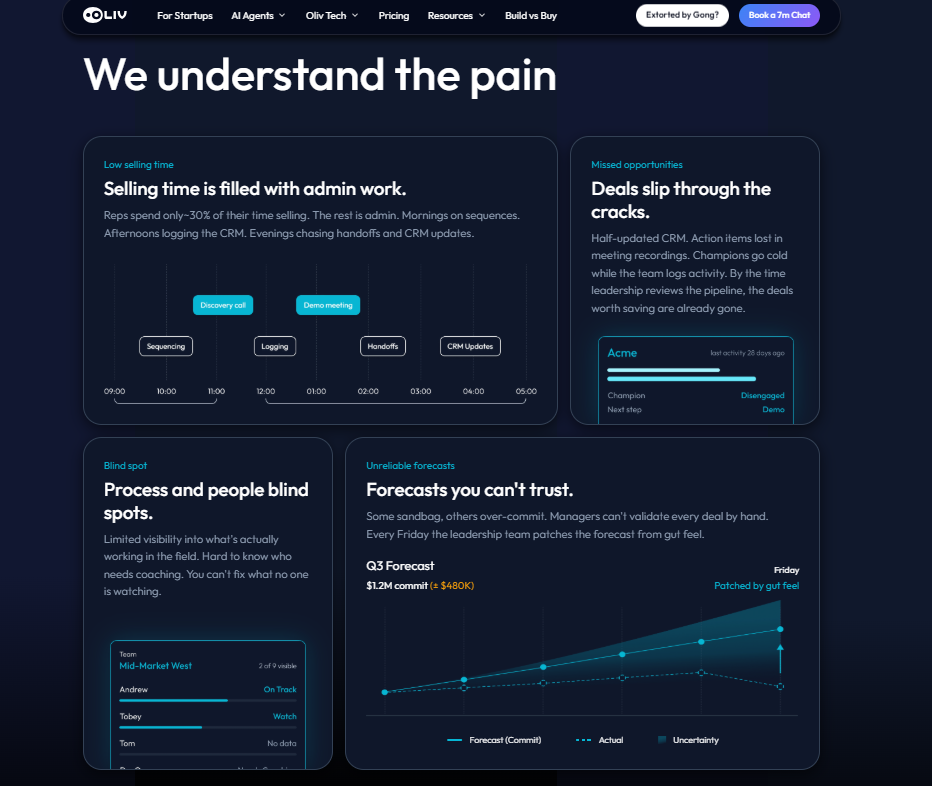
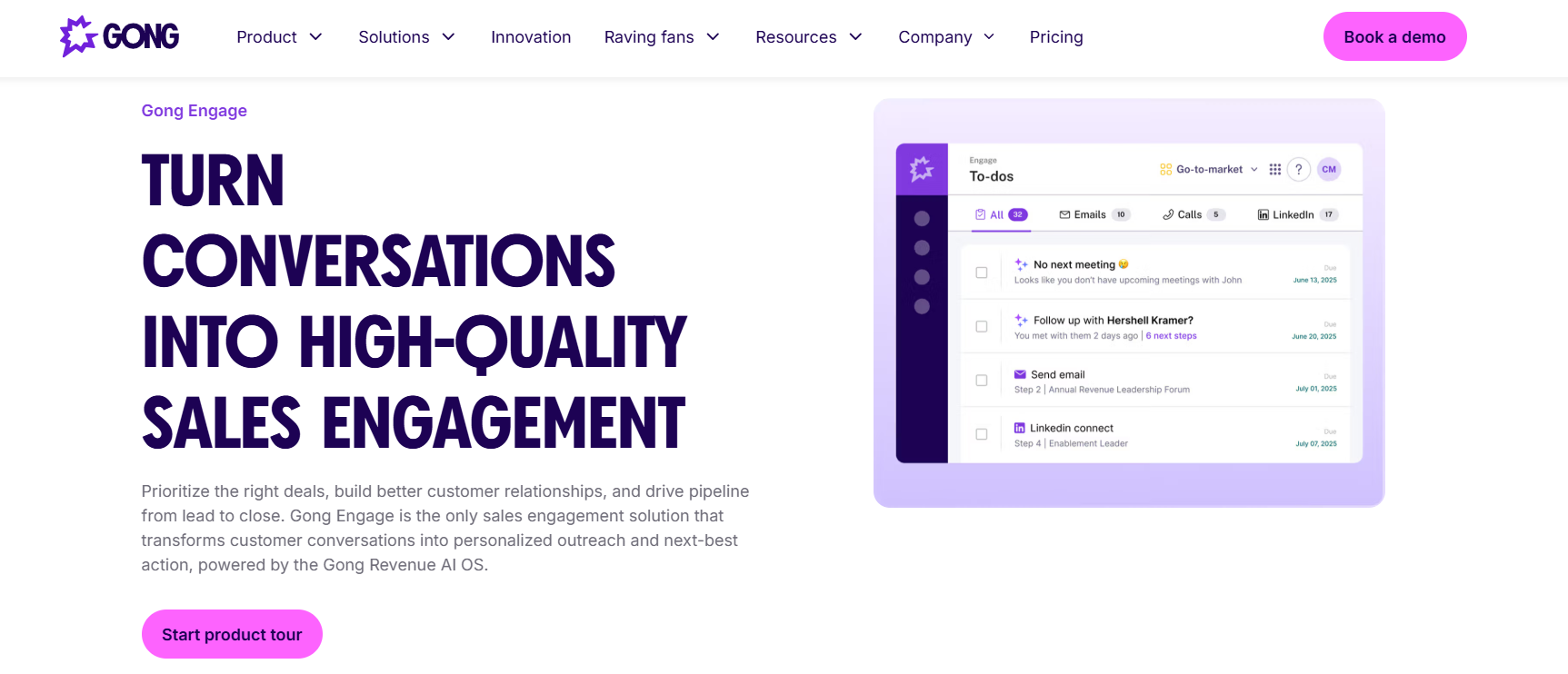
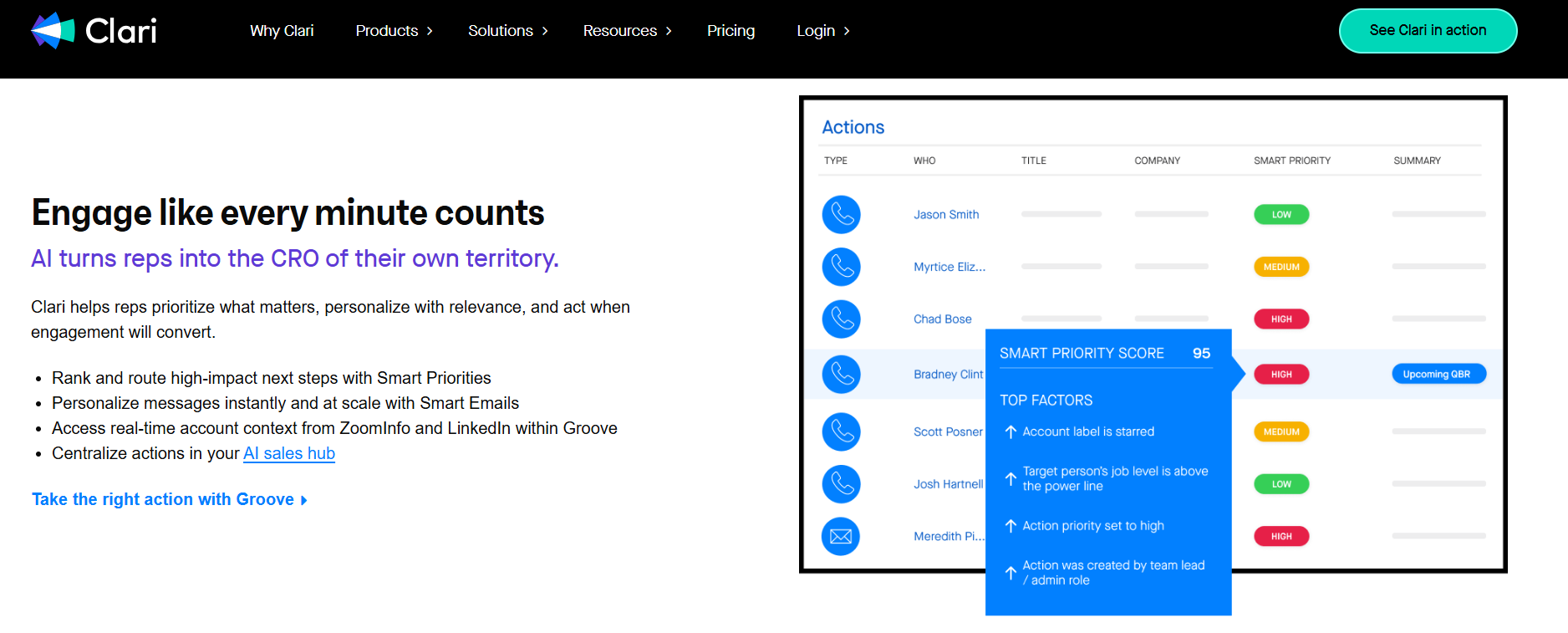
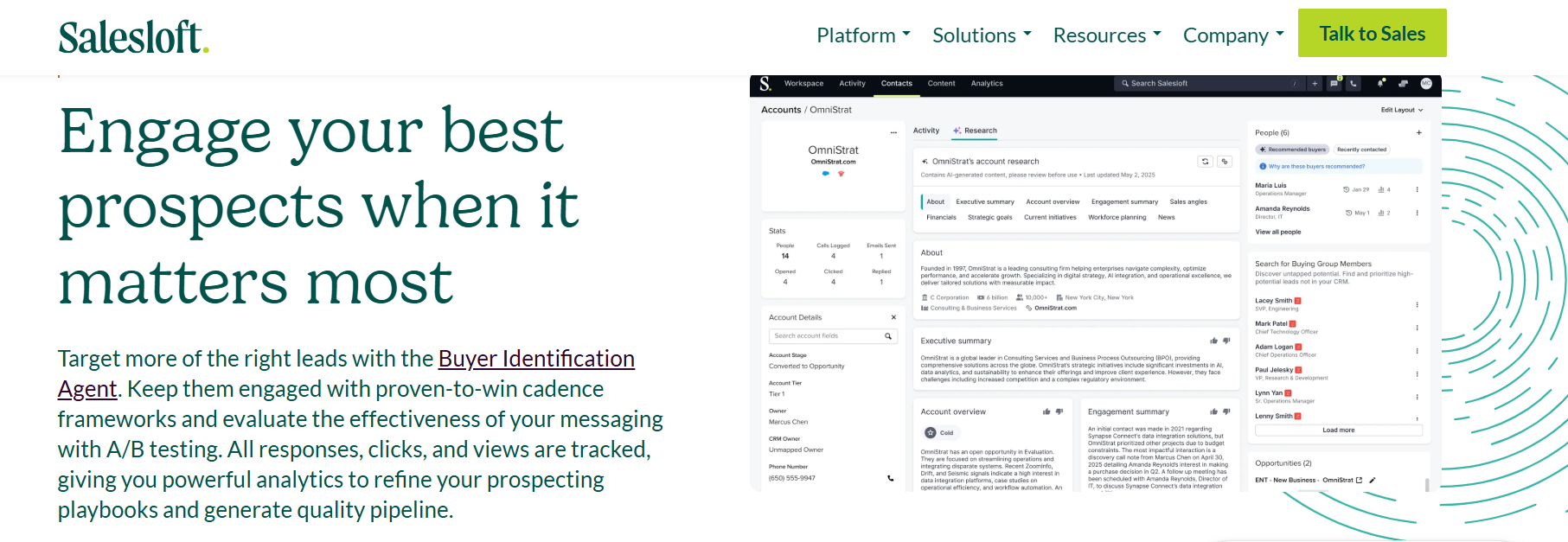

.png)
.png)
.png)

