12 Best AI Sales Platform of 2026: Compared across Prospecting, Engagement, and Revenue Intelligence
Written by
Ishan Chhabra
Last Updated :
June 13, 2026
Skim in :
8
mins
In this article
Revenue teams love Oliv
Here’s why:
All your deal data unified (from 30+ tools and tabs).
Insights are delivered to you directly, no digging.
AI agents automate tasks for you.
Thank you! Your submission has been received!
Oops! Something went wrong while submitting the form.
Meet Oliv’s AI Agents
Hi! I’m, Deal Driver
I track deals, flag risks, send weekly pipeline updates and give sales managers full visibility into deal progress
Hi! I’m, CRM Manager
I maintain CRM hygiene by updating core, custom and qualification fields all without your team lifting a finger
Hi! I’m, Forecaster
I build accurate forecasts based on real deal movement and tell you which deals to pull in to hit your number
Hi! I’m, Coach
I believe performance fuels revenue. I spot skill gaps, score calls and build coaching plans to help every rep level up
Hi! I’m, Prospector
I dig into target accounts to surface the right contacts, tailor and time outreach so you always strike when it counts
Hi! I’m, Pipeline tracker
I call reps to get deal updates, and deliver a real-time, CRM-synced roll-up view of deal progress
Hi! I’m, Analyst
I answer complex pipeline questions, uncover deal patterns, and build reports that guide strategic decisions
TL;DR
The 12 best AI sales platforms of 2026 are Oliv AI, Gong, Clari, Salesloft, Outreach, Apollo, ZoomInfo, Salesforce Agentforce/Einstein, HubSpot Breeze, Chorus, Clay, and Avoma.
We ranked Oliv AI first as the only generative-AI-native, agent-first platform that returns MEDDIC-enriched insights in about five minutes and syncs two-way to your CRM.
Recording is now a commodity, so the real moat moved up to autonomy and two-way data portability, where incumbents like Gong stay one-way and recording-first.
We scored vendors on five weighted criteria: autonomy (30%), CRM integration (25%), revenue intelligence (20%), user reviews (15%), and pricing transparency (10%).
List price hides the real number; platform fees, per-action billing, and seat creep mean you should compare 12-month TCO, not sticker price.
Pick by bottleneck, not brand, and buy rather than build, since in-house agent stacks go obsolete in months.
Q1. What Are the 12 Best AI Sales Platforms of 2026? [toc=1. The 12 Platforms]
The 12 best AI sales platforms of 2026 are Oliv AI, Gong, Clari, Salesloft, Outreach, Apollo, ZoomInfo, Salesforce Agentforce/Einstein, HubSpot Breeze, Chorus, Clay, and Avoma. Oliv AI ranks first as the only generative-AI-native, fully agentic platform that returns MEDDIC-enriched insights in about five minutes and syncs two-way to your CRM, while incumbents like Gong stay recording-first with one-way data flows.
Most "best AI sales tools" lists copy the same vendor blurbs. I wanted to read the actual product release notes and the messy G2 reviews instead. So this ranking is built from primary sources: vendor changelogs, financial disclosures, and verified user reviews. If you want the deeper methodology, our breakdown of the best AI sales tools walks through the same lens.
Here is how to read the table. "Best for" tells you the buyer it fits. "Pricing model" flags how you get billed, not just a sticker number. "CRM integration" notes one-way versus two-way sync, which is where most pain hides. "Key AI capability" is the one thing each tool does better than the rest.
The 12 Platforms at a Glance
The 12 Best AI Sales Platforms of 2026 at a Glance
#
Platform
Best for
Pricing model
CRM integration
Key AI capability
1
Oliv AI
Teams wanting agents that do the work
Modular, seat-based, $19 to $120/user, no platform fee
Two-way live sync (Salesforce, HubSpot, Dynamics, Pipedrive, Zoho)
30+ agents, MEDDIC enrichment in about 5 min
2
Gong
Enterprise conversation intelligence
Seat plus platform fee, add-ons for Forecast/Engage
Salesforce-native, mostly one-way logging
Smart Trackers, AI Briefs, Gong Assistant
3
Clari
Enterprise forecasting and pipeline
Seat-based, per-node user licenses
Two-way Salesforce sync
Roll-up forecasting, waterfall analytics
4
Salesloft
SDR cadence and engagement
Seat-based tiers
Salesforce/Dynamics connect
Cadences, Rhythm signal-to-action
5
Outreach
Outbound sequencing at scale
Seat-based, Amplify paid tier
Salesforce-native, HubSpot via sync
Omni AI agents, MCP Server
6
Apollo
SMB prospecting plus data
Freemium, seat-based
Native CRM sync
Lead database plus sequencing
7
ZoomInfo
B2B data plus buying signals
Seat-based, undisclosed list
Salesforce and HubSpot signal delivery
Copilot signals, Data Cube
8
Salesforce Agentforce/Einstein
Salesforce-native shops
About $0.10/action or about $500/seat all-in
Native to Salesforce data model
Low-code agent builder
9
HubSpot Breeze
SMB and mid-market on HubSpot
Bundled into Hubs
Native HubSpot CRM
Breeze Copilot, prospecting agents
10
Chorus
Existing ZoomInfo customers
SKU under ZoomInfo, undisclosed
One-way CRM logging
Call recording, briefs into Copilot
11
Clay
RevOps custom enrichment workflows
Credit-based, starts near $100K/year
API and CRM connectors
Waterfall enrichment plus AI research
12
Avoma
SMB meeting notes plus light forecasting
Lite from about $20/user
HubSpot and Salesforce auto-sync
Meeting assistant, Revenue Intelligence add-on
1. Oliv AI ⭐⭐⭐⭐⭐
Oliv AI object graph resolves messy inputs from emails, calls, CRM, and Slack into clean connected objects, showing how an agentic AI sales platform structures revenue intelligence.
Oliv AI is the only platform on this list built generative-AI-native and agent-first, so it does the work instead of making your reps do it. We run 30+ specialized agents that research accounts, enrich opportunities, and update the CRM autonomously. If you are weighing the category, our guide to the best sales intelligence platform options frames where an agentic approach wins.
🛠️ What It Does
We return MEDDIC-enriched insights in about five minutes after a call, then sync them two-way to Salesforce, HubSpot, Dynamics, Pipedrive, or Zoho. The point is simple: the rep does not log in, paste, or retype anything. The agent does it, and the CRM stays clean on its own.
⚡ Key Features
30+ specialized AI agents covering research, enrichment, and forecasting.
Two-way live CRM sync across five major CRMs.
MEDDIC enrichment in about five minutes, not 20 to 30.
Modular, seat-based pricing from $19 to $120/user with no platform fee.
✅ Pros and ❌ Cons
✅ Agent-first, so adoption does not depend on rep willpower.
✅ SOC 2 Type II, GDPR, and CCPA compliant.
✅ Transparent, modular pricing you can forecast.
❌ Full customization can still take 2 to 4 weeks.
⚠️ Voice Agent is in alpha, and enterprise rollouts often start as a narrow pilot.
2. Gong ⭐⭐⭐⭐
Gong AI Trainer evaluates a sales call with a 4/5 score and coaching notes, showing how an AI sales platform delivers conversation intelligence and rep enablement.
Gong is the enterprise conversation intelligence leader, best for large teams that want deep call analysis and coaching. Founded in 2015, it stays recording-first, and its data mostly flows one way into Salesforce. For a closer look, see our breakdown of Gong features and where they fit a modern stack.
🛠️ What It Does
Gong records and transcribes calls, runs Smart Trackers to detect topics, and now layers AI Briefs and the Gong Assistant on top. It bills on a seat plus platform fee, with add-ons for Forecast and Engage. Our note on Gong pricing details how those add-ons stack.
⚡ Key Features
Smart Trackers for conversation topic detection.
AI Briefs and Gong Assistant for call summaries.
Deal boards for pipeline visibility.
Salesforce-native logging, mostly one-way.
✅ Pros and ❌ Cons
✅ Best-in-class conversation intelligence and coaching depth.
✅ The single source of truth for many enterprise revenue teams.
❌ Expensive, with add-ons billed separately from the core.
❌ Bulk data export is painful, since calls download individually.
⚠️ Setup of trackers and AI training can overwhelm new admins.
"Gong offers valuable insights... However, their current solution is far from convenient or accessible, it requires downloading calls individually, which is impractical and inefficient for a large volume of data." Neel P., Sales Operations ManagerGong G2 Verified Review
"Its too complicated, and not intuitive at all... For me, the only business problem gong solves is the call recordings." John S., Senior Account ExecutiveGong G2 Verified Review
3. Clari ⭐⭐⭐⭐
Clari opportunity dashboard ranks key deals by CRM score, deal size, and close date, illustrating how an AI sales platform surfaces forecasting and pipeline risk for revenue teams.
Clari is the enterprise forecasting and pipeline platform, best for RevOps leaders who live in roll-up calls. Founded in 2014, it added Groove for engagement and is now merging with Salesloft. Our comparison of Gong vs Clari shows how the forecasting focus differs from conversation intelligence.
🛠️ What It Does
Clari runs roll-up forecasting, waterfall analytics, and pipeline inspection with two-way Salesforce sync. It bills seat-based on per-node user licenses. If forecasting is your bottleneck, our roundup of the best AI sales forecasting software puts Clari in context.
⚡ Key Features
Roll-up forecasting up the management chain.
Waterfall analytics for pipeline movement.
Two-way Salesforce sync.
Copilot conversation intelligence and Groove engagement modules.
✅ Pros and ❌ Cons
✅ Clean, well-designed UI for RevOps and revenue leadership.
✅ Strong deal analytics that overlay on Salesforce.
❌ Reps often see little value, since it is built for leaders.
❌ Overlaps with native Salesforce forecasting features.
⚠️ Needs a strong RevOps team to maintain validation rules.
"Clari has a great team... I like their deal analytics and forecasting modules... Clari should find ways to differentiate from the native Salesforce features." Dan J., RevOpsClari G2 Verified Review
"Clari is a tool for sales leaders, it adds no value to reps as far as I can see." Msoave, r/SalesOperationsReddit Thread
4. Salesloft ⭐⭐⭐⭐
Salesloft contact profile tracks cadence steps, calls, emails, and live dialer logging for a prospect, showing how an AI sales platform drives engagement workflows and sales activity tracking.
Salesloft is the SDR cadence and engagement platform, best for outbound teams that run high-volume sequences. Founded in 2011 around its Cadence engine, it acquired Drift and is merging with Clari. Our Gong vs Salesloft comparison weighs engagement against conversation intelligence.
🛠️ What It Does
Salesloft runs cadences, dialing, and its Rhythm signal-to-action engine, connecting to Salesforce and Dynamics. It bills on seat-based tiers. For teams choosing a coaching layer on top, our list of the best sales coaching softwares is a useful next read.
⚡ Key Features
Cadence engine for multi-step outreach.
Rhythm to turn signals into rep actions.
AI-built email templates.
Salesforce and Dynamics connectors.
✅ Pros and ❌ Cons
✅ Cadences work well and scale personalized outreach.
❌ Reviewers report rigid auto-renewal and weak support for small teams.
⚠️ Phone and texting defaults frustrate some reps.
"Cadences work great and the Al theyve built into their templates is helpful... Super clunky to set up. Conversations doesnt work at all. They sell it as a gong competitor." Verified User, Professional Training and CoachingSalesloft G2 Verified Review
5. Outreach ⭐⭐⭐⭐
Outreach team pipeline dashboard tracks quota attainment, revenue trends, and rep strengths and weaknesses, showing how an AI sales platform surfaces engagement analytics and forecasting insights.
Outreach, founded in 2014, built its name on the sales engagement sequence engine and now brands itself an "Agentic AI Platform for Revenue Teams." It is built for high-volume outbound teams that live in sequences and dialers. Our Gong vs Outreach piece maps where each one fits.
🛠️ What It Does
Outreach runs multi-step sequences, dialing, and deal management, all syncing tightly with Salesforce. Since late 2024, it has layered AI Prospecting Agents and, in 2026, the Omni agent suite on top.
⚡ Key Features
Sequence and cadence engine with strong Salesforce sync.
Personalization, Research, and Deal Agents shipped through 2025.
Omni agent suite with Meeting Prep Agent and Sequential Dialing.
Outreach MCP Server for connecting external AI tools.
✅ Pros and ❌ Cons
✅ Excellent for emailing, sequencing, and prospect management.
✅ Earned ISO/IEC 42001 Responsible-AI certification in July 2025.
❌ Dialing features lag for high-volume teams, with spam flags 15 to 20% of the time.
❌ Contracts auto-renew annually, which users call rigid.
⚠️ No native LinkedIn automation.
"Outreach is significantly overpriced for what it offers. The platform has a clunky interface... their agreements are evergreen, automatically renewing annually." Kevin H., CTO and Co-FounderOutreach G2 Verified Review
6. Apollo ⭐⭐⭐⭐
Apollo people search lists prospects with titles, companies, locations, and contact actions, showing how an AI sales platform powers lead prospecting, data enrichment, and outbound list building.
Apollo is the go-to prospecting and data platform for SMB and mid-market teams that want a lead database plus sequencing in one freemium tool. Reviewers repeatedly cite it as the affordable alternative when Gong or Outreach feel overpriced.
🛠️ What It Does
Apollo combines a large B2B contact database with email sequencing, dialing, and basic engagement analytics. It syncs natively with major CRMs so reps can prospect and outreach without leaving one tool.
⚡ Key Features
B2B lead database with enrichment and filters.
Email sequences and dialer for outbound.
Native CRM sync for contact and activity logging.
Freemium entry tier that lowers adoption friction.
✅ Pros and ❌ Cons
✅ Strong value, offering prospecting plus sequencing for a fraction of the price of Gong.
✅ Low barrier to start with a freemium model.
❌ Conversation intelligence and forecasting are not its strength.
⚠️ Best fit for SMB outbound rather than enterprise deal management.
7. ZoomInfo ⭐⭐⭐⭐
ZoomInfo is the B2B data giant, best for teams that need contact data plus buying signals surfaced inside the CRM. Its Copilot tier turns that data into seller-facing recommendations. For where data-led intelligence sits in the wider stack, see our guide to revenue intelligence platforms.
🛠️ What It Does
ZoomInfo Copilot pushes account signals into Salesforce or HubSpot, tracks engaged accounts, and links insights back to their source meetings and emails. It absorbed Chorus.ai as a SKU for conversation intelligence.
⚡ Key Features
Copilot buying signals delivered into the CRM.
Auto account tracking with an activity-based feed.
Sourced insights in Copilot Chat linking to original calls and emails.
Participant overviews in pre-meeting briefs.
✅ Pros and ❌ Cons
✅ Best-in-class B2B data depth and signal coverage.
✅ Signals push directly into Salesforce and HubSpot workflows.
❌ Conversation intelligence is folded into Chorus, adding SKU complexity.
⚠️ Per-seat Chorus pricing is not publicly disclosed.
8. Salesforce Agentforce / Einstein ⭐⭐⭐
Agentforce is Salesforce's low-code AI agent layer, best for shops already deep in the Salesforce ecosystem. It bolts agents onto the existing CRM rather than rethinking it. Our analysis of Salesforce Agentforce and the Salesforce Einstein reviews covers the real-world tradeoffs.
🛠️ What It Does
Agentforce lets admins build chat-style agents with flows, prompts, and actions, mostly for customer service and support use cases. Einstein adds activity capture and predictive features inside Salesforce.
⚡ Key Features
Low-code agent builder using topics, actions, and flows.
Natural-language agents for live chat and case handling.
Agent Analytics dashboard for QA and coaching.
Native to the Salesforce data model.
✅ Pros and ❌ Cons
✅ Deeply native to Salesforce with a huge installed base.
✅ Low-code build works with admin-level skills.
❌ Setup is complex and often needs developers or prompt engineering.
❌ Pricing is opaque and scales up fast with users and use cases.
⚠️ Primarily B2C/support-focused and underserved for B2B sales.
"As much as I love what Agentforce can do, setting it up wasnt as smooth as I expected... the pricing caught us off guard. Once we started scaling to more users and use cases, the cost ramped up pretty quickly." Verified ReviewerSalesforce Agentforce G2 Verified Review
9. HubSpot Breeze ⭐⭐⭐⭐
HubSpot Breeze is the AI layer across HubSpot's Hubs, best for SMB and mid-market teams already standardized on HubSpot. It bundles Copilot and agents into the platform they already pay for.
🛠️ What It Does
Breeze adds a Copilot assistant, prospecting agents, and content agents natively inside HubSpot. Because it is native, data flows without external sync setup.
⚡ Key Features
Breeze Copilot assistant across Hubs.
Prospecting and content agents.
Native enrichment via Breeze Intelligence.
Tight, native HubSpot CRM integration.
✅ Pros and ❌ Cons
✅ Zero integration friction for existing HubSpot customers.
✅ Bundled pricing simplifies the buying decision.
❌ Less deep conversation intelligence than Gong.
⚠️ Limited value if you are not already on HubSpot.
10. Chorus ⭐⭐⭐
Chorus, now Chorus by ZoomInfo, is a conversation intelligence tool best suited to existing ZoomInfo customers. Its innovation has largely folded into the Copilot release cycle. Our Gong vs Chorus comparison details the feature and pricing gaps.
🛠️ What It Does
Chorus records and transcribes calls, generates post-meeting briefs, and feeds signals into ZoomInfo Copilot. It logs activity one-way into the CRM.
⚡ Key Features
Call recording and transcription.
Pre-meeting briefs with participant overviews.
Signal feeds into Copilot and the CRM.
Deal and momentum tracking via ZoomInfo.
✅ Pros and ❌ Cons
✅ Solid conversation intelligence tied to ZoomInfo data.
✅ Briefs and signals reach reps inside Salesforce or HubSpot.
❌ No standalone roadmap, since it rolled into Copilot/Cube cycles.
⚠️ Per-seat pricing is not publicly disclosed.
11. Clay ⭐⭐⭐⭐
Clay is a RevOps data enrichment and automation tool, best for teams building custom prospecting workflows. It is the go-to for "waterfall" enrichment, which chains many data sources, across dozens of providers.
🛠️ What It Does
Clay chains multiple data providers to enrich leads, then uses AI to research and personalize outreach at scale. It connects to CRMs and engagement tools like Outreach via integrations.
⚡ Key Features
Waterfall enrichment across many data vendors.
AI research and message personalization.
Spreadsheet-style automation builder.
API and CRM connectors, including an Outreach integration.
✅ Pros and ❌ Cons
✅ Unmatched flexibility for custom enrichment workflows.
✅ Pairs well with engagement tools rather than replacing them.
❌ Credit-based pricing can climb with heavy enrichment.
⚠️ Built for RevOps tinkerers, not turnkey for every rep.
12. Avoma ⭐⭐⭐
Avoma is a meeting assistant with light forecasting, best for SMB teams that want affordable notes and recording. It has carried the same record-transcribe-summarize core since 2020. Our look at Avoma features covers what the add-on tiers unlock.
🛠️ What It Does
Avoma records, transcribes, and summarizes meetings, then auto-syncs notes to the CRM. Forecasting sits behind a paid Revenue Intelligence add-on.
⚡ Key Features
AI meeting assistant with summaries and snippets.
CRM auto-sync of notes for HubSpot and Salesforce.
Conversation search and smart templates.
Forecast Tool via the Revenue Intelligence add-on.
💰 Pricing and ✅ Pros / ❌ Cons
✅ Affordable, with a Lite plan that started at $20/user/month, charging only active recording users.
✅ Useful transcription and meeting organization.
❌ Forecasting is gated behind a paid add-on.
❌ Reviewers report the bot showing up late, dropping, or double-joining calls.
⚠️ Bulk call download and seat renegotiation have frustrated users.
"The upsides of using Avoma are the call transcriptions and the organization... We are paying for double the amount of seats that we need... Multiple times they flat out refused." Jessica W., IT SpecialistAvoma G2 Verified Review
Where This Nets Out
Here is the pattern across all 12. The recording layer is now a commodity, the incumbents are racing to bolt agents onto a decade-old core, and the merger wave (Clari plus Salesloft, Chorus into ZoomInfo) is consolidating point tools rather than rethinking them.
From what surfaces when you actually run a pipeline review, the deciding question is no longer "who records best" but "whose agents do the work without you logging in." That is the bottleneck our team designed around when we built Oliv as an agent-first revenue intelligence software platform, and it is where the next two years of the category get decided.
Q2. How Did We Score and Select These AI Sales Platforms? [toc=2. Scoring Methodology]
We scored each platform on five weighted criteria totaling 100%: Agentic Autonomy and Workflow Execution (30%), CRM Integration and Data Portability (25%), Cross-Functional Revenue Intelligence (20%), User Reviews (15%), and Pricing Transparency and TCO (10%). Scores map to stars, from 0 to 20% as 1★ up to 81 to 100% as 5★. Oliv AI scores 5★, while recording-first, one-way-integration tools score lower.
🧮 Why Autonomy and Data Portability Lead
We weighted autonomy highest, because the real cost is human adoption, not the license. A tool that needs reps to log in, click, and copy-paste quietly fails. So we asked one question first: does the platform do the work, or make you do it?
Data portability sits second for a blunt reason. Gong gives one-way integrations and, by its own users' account, makes bulk export painful. Your data should flow back into the CRM that matters, not get trapped. If forecasting is your bottleneck, our roundup of the best AI sales forecasting software applies the same lens.
"Gong offers valuable insights... However, their current solution is far from convenient or accessible, it requires downloading calls individually, which is impractical and inefficient for a large volume of data." Neel P., Sales Operations ManagerGong G2 Verified Review
The Star Bands and What We Could Not Fully Test
Score Band to Star Rating Mapping
Score band
Star rating
0 to 20%
1★
21 to 40%
2★
41 to 60%
3★
61 to 80%
4★
81 to 100%
5★
Each criterion rolls up to a percentage, then maps to a star band. The math is simple, so you can audit it yourself. For the full criteria behind our picks, see how we rank the best sales intelligence platform options.
⚠️ A Quick Disclosure on Limits
Per-seat list pricing for Gong, Salesforce Agentforce, and Chorus is not publicly disclosed, so our TCO scores lean on verified user reports and renewal anecdotes. I will be honest, I could be off on edge-case enterprise discounts. We also could not fully stress-test alpha features like Oliv's Voice Agent at scale.
"It was a big mistake on our part to commit to a two year term... its probably the highest end option on the market, and now were stuck with a tool that works technically but isnt the right business decision." Iris P., Head of Marketing and Sales PartnershipsGong G2 Verified Review
Here is the standard read I want to push back on. Gong tries to be the center of your revenue universe. But the universe should be your CRM, and that is exactly why we score two-way sync and autonomy above brand. Our Gong vs Oliv breakdown shows what that scoring shift looks like in practice.
Q3. What Is an AI Sales Platform and Why Does It Matter in 2026? [toc=3. AI Sales Platform Defined]
An AI sales platform uses generative AI and autonomous agents to run prospecting, engagement, conversation analysis, and forecasting, not just record and store data. The shift matters now. Salesforce found 83% of AI-equipped teams reported revenue growth versus 66% without, McKinsey ties AI to deals closing up to 78% faster, and its research shows a 58% revenue lift.
🤖 What Agentic Actually Means
Think of a vending machine versus a smart employee. Old SaaS is the vending machine. You put in effort, you press the buttons, you get data back.
An agentic platform is the smart employee. It does the work for you, then drops the result where you already work. Oliv's agents, for example, enrich the CRM and draft forecasts without you logging in. To see where this sits in the broader category, our guide to revenue intelligence platforms maps the landscape.
The SDR Copy-Paste Loop That Breaks
Here is the daily reality I keep seeing. A rep pulls a transcript from Gong, pastes it into ChatGPT, then copies the output into Outlook. Most people just skip it.
That loop is why the CRM as a product has failed. Reps update it because management requires it, not because it helps them sell. Chat-based UX, like talking to a bot in Agentforce, is not true agent tech, since you still do the fetching. Our analysis of Salesforce Agentforce details where that chat-first model falls short.
"For me, the only business problem gong solves is the call recordings... Its too complicated, and not intuitive at all." John S., Senior Account ExecutiveGong G2 Verified Review
📊 The Primary Data Behind Adoption
The numbers are now hard to ignore. Salesforce's sixth State of Sales report, surveying 5,500 professionals, found 81% of teams experimenting with or running AI. McKinsey reports AI-using sales pros are up to 45% more productive, saving up to 12 hours weekly.
Yet adoption alone is not the win. Clari Labs found 87% of enterprises missed 2025 revenue targets despite record AI spend. So the question shifts from "do you have AI" to "does your AI act." For teams choosing a coaching layer, our list of the best sales coaching softwares is a useful next read.
What changes Monday is simple. Stop measuring time saved and start measuring pipeline created. That is the bet Oliv makes: agents that move revenue, not dashboards you admire.
Q4. How Do These Platforms Compare on Prospecting, Engagement, and Revenue Intelligence? [toc=4. Three-Layer Comparison]
Across the three layers, Apollo, ZoomInfo, and Clay lead prospecting and enrichment, Outreach and Salesloft own engagement cadences, and Gong, Chorus, Clari, Avoma, and Oliv AI compete on conversation and revenue intelligence. But volume without judgment backfires. Generic "Hello Name" blasts hurt deliverability, while signal-led, agentic outreach drives the response lift buyers actually want.
Layer 1: Prospecting and Data
This layer is about finding and enriching the right accounts. The data players dominate here, each with a clear edge.
Layer 1 Prospecting and Data Edge by Tool
Tool
Prospecting edge
ZoomInfo
Deepest B2B data plus Copilot buying signals
Apollo
Freemium database plus sequencing value
Clay
Waterfall enrichment across many vendors
Oliv AI
Researcher Agent builds account dossiers from web and LinkedIn
Layer 2: Engagement and Deliverability
This layer runs the cadences and dials. Outreach and Salesloft are the established leaders, though both draw deliverability complaints. Our Gong vs Salesloft comparison weighs the engagement tradeoffs.
Signal-led outreach is what moves the needle. McKinsey ties agentic, well-targeted campaigns to open rates up 30% or more and deals closing up to 78% faster. The lift comes from timing and judgment, not blast volume.
"Cadences work great and the Al theyve built into their templates is helpful... Super clunky to set up. Conversations doesnt work at all. They sell it as a gong competitor." Verified User, Professional Training and CoachingSalesloft G2 Verified Review
Layer 3: Conversation and Revenue Intelligence
Recording is now a commodity, since Zoom, Teams, and Meet all transcribe free. So this layer competes on speed and structure, not tape. Our look at Gong features shows where the recording-first model stops short.
Oliv returns processed insights in about five minutes versus Gong's 20 to 30 minutes, and updates real CRM objects, not just activity logs. Think GPS versus a paper map for MEDDPICC, the qualification checklist; one routes you, the other just shows terrain. To be clear, Oliv does not claim in-call real-time, it competes on post-call speed and two-way sync.
"Clari has a great team... I like their deal analytics and forecasting modules... Clari should find ways to differentiate from the native Salesforce features." Dan J., RevOpsClari G2 Verified Review
⚖️ The Payoff: The 10/80/10 Rule
Here is where my head is right now. Humans should ideate the first 10 and quality-check the last 10. Agents should execute the messy 80 in the middle. That split is the real promise of an agentic stack, and it is why a single platform like Oliv beats stacking three point tools past $500/user/month. For the deeper category logic, see our breakdown of revenue intelligence software platforms.
Q5. How Autonomous, Secure, and Compliant Are These AI Agents? [toc=5. Autonomy and Compliance]
Most platforms marketed as AI agents are still chat-based assistants, not autonomous execution engines, and autonomy without governance makes orgs brittle. From August 2, 2026, high-risk AI systems face EU AI Act obligations, including human oversight under Article 14 and activity logging, layered on GDPR and SOC 2 Type II. Score each vendor on an autonomy-versus-governance grid before you buy.
Chat Is Not an Agent
The standard read gets this backwards. A chat box that fetches data is not an agent, since you still do the work. A true agent goes straight to the underlying database, applies its own logic, and returns the answer.
That gap matters. Salesforce Agentforce leans chat-first, so reps must prompt it, then copy the output elsewhere. Oliv sits on the agent layer instead, acting on the data and dropping results where you already work. If you are weighing the chat-first model, our analysis of Salesforce Agentforce goes deeper, and our list of Agentforce alternatives and competitors shows the agentic options.
Autonomy versus Governance Grid
-
Low governance
High governance
Low autonomy
Toy chatbots
Legacy CRM rules
High autonomy
Risky, brittle
Oliv target zone
🔐 SOC 2, GDPR, and Consent
Translate trust signals into Monday actions. SOC 2 Type II means audited security controls, so ask for the report, not the badge. Oliv is SOC 2 Type II certified, GDPR and CCPA compliant, with AES-256 encryption at rest.
Watch the redaction trap. Salesforce Einstein has been flagged for redacting activities even when not sensitive, which blocks a complete customer picture. I might be wrong on the edge cases, but over-redaction quietly breaks your data more than it protects it. Our breakdown of Salesforce Einstein reviews covers more of these tradeoffs.
⚖️ What August 2026 Actually Requires
The EU AI Act's core framework becomes broadly operational on August 2, 2026. For high-risk systems, that means real obligations in plain language.
Human oversight built into design, so a person can intervene or halt the system, per Article 14.
Activity logging to ensure traceability of results.
Risk management, data governance, and technical documentation.
Transparency, so people know when they interact with AI.
The Resilience Paradox
Here is the contrarian bit. More autonomy without oversight makes you fragile, not strong. Forrester estimates ungoverned generative AI will cost B2B firms over 10 billion, and predicts 20% of sellers will face AI-agent-led quote negotiations.
So humans-in-the-loop is a moat, not a tax. In finance, you must keep an audit trail, full stop. Oliv treats audit logs and role-based access as non-negotiable for regulated buyers. For teams comparing secure options, our roundup of the best sales intelligence platform choices applies the same governance lens.
Where my head is right now, the winners will pair high autonomy with provable oversight. If your vendor cannot show you the audit trail before August, that tells you something. What would it take for your stack to pass an EU AI Act review tomorrow?
Q6. What Do These AI Sales Platforms Cost, Including Total Cost of Ownership? [toc=6. Cost and TCO]
Sticker price hides the real number. Most enterprise AI sales platforms start around $50K per year, and Clay can start near $100K. Salesforce prices Agentforce on an opaque, roughly $0.10-per-action model alongside an all-inclusive tier near $500 per seat. True total cost of ownership adds implementation, integration engineering, and seat creep, so compare TCO over 12 months, not list price.
The list price is the appetizer, not the bill. Gong charges a platform fee plus seats, then add-ons for Forecast and Engage stack on top. Users report platform fees ranging from $5,000 to $50,000 regardless of seat count.
Per-action pricing is the sneakier trap. At roughly $0.10 per action, costs scale with usage you cannot fully predict. I have watched cheap per action quietly outrun a flat seat price once agents run at volume.
"It was a big mistake on our part to commit to a two year term... were stuck with a tool that works technically but isnt the right business decision." Iris P., Head of Marketing and Sales PartnershipsGong G2 Verified Review
A 12-Month TCO Checklist
Compare the real number with this list. Add license, then implementation, which can run three to six months for legacy tools. Add integration engineering, since Gong's bulk export needs dev time. Our Gong implementation timeline breakdown shows where those months go.
Then add seat creep and forced bundling, where modules require a core license per seat. Oliv's pitch is the opposite: double the functionality at half the cost of stacking Gong plus Clari, which can pass $500/user/month. Our Gong vs Clari comparison shows how that stack adds up.
I could be off on any single quote, since list prices stay private. So my ask is simple: would your CFO rather sign an opaque action meter or a flat per-agent line they can forecast?
Q7. Which AI Sales Platform Is Right for Your Team, and Should You Build or Buy? [toc=7. Right Fit and Build vs Buy]
Pick by bottleneck, not brand. SMBs needing volume start with Apollo, mid-market teams fixing forecasting lean on Clari, and enterprises wanting agentic, two-way CRM intelligence choose Oliv AI over recording-first Gong. And do not build your own stack unless you are Vercel, because in-house agent builds go obsolete in months, so buy the process IP and own only your unique context.
Choose by Your Bottleneck
Start with what is actually breaking. If reps cannot find leads, that is a data problem. If the forecast call is a guessing game, that is a forecasting problem. Our guide to the best AI sales forecasting software helps when that is the gap, and our list of the best AI for sales calls helps when conversation intelligence is the priority.
"Clari has a great team... I like their deal analytics and forecasting modules... Clari should find ways to differentiate from the native Salesforce features." Dan J., RevOpsClari G2 Verified Review
🛠️ Build or Buy
The honest answer is buy, for almost everyone. In-house agent builds go obsolete in months as models and integrations move, so the smart move is to buy the process IP and own only your unique context. For the full category view, our roundup of the best revenue intelligence software platforms maps where each tool fits.
Q1. What Are the 12 Best AI Sales Platforms of 2026? [toc=1. The 12 Platforms]
The 12 best AI sales platforms of 2026 are Oliv AI, Gong, Clari, Salesloft, Outreach, Apollo, ZoomInfo, Salesforce Agentforce/Einstein, HubSpot Breeze, Chorus, Clay, and Avoma. Oliv AI ranks first as the only generative-AI-native, fully agentic platform that returns MEDDIC-enriched insights in about five minutes and syncs two-way to your CRM, while incumbents like Gong stay recording-first with one-way data flows.
Most "best AI sales tools" lists copy the same vendor blurbs. I wanted to read the actual product release notes and the messy G2 reviews instead. So this ranking is built from primary sources: vendor changelogs, financial disclosures, and verified user reviews. If you want the deeper methodology, our breakdown of the best AI sales tools walks through the same lens.
Here is how to read the table. "Best for" tells you the buyer it fits. "Pricing model" flags how you get billed, not just a sticker number. "CRM integration" notes one-way versus two-way sync, which is where most pain hides. "Key AI capability" is the one thing each tool does better than the rest.
The 12 Platforms at a Glance
The 12 Best AI Sales Platforms of 2026 at a Glance
#
Platform
Best for
Pricing model
CRM integration
Key AI capability
1
Oliv AI
Teams wanting agents that do the work
Modular, seat-based, $19 to $120/user, no platform fee
Two-way live sync (Salesforce, HubSpot, Dynamics, Pipedrive, Zoho)
30+ agents, MEDDIC enrichment in about 5 min
2
Gong
Enterprise conversation intelligence
Seat plus platform fee, add-ons for Forecast/Engage
Salesforce-native, mostly one-way logging
Smart Trackers, AI Briefs, Gong Assistant
3
Clari
Enterprise forecasting and pipeline
Seat-based, per-node user licenses
Two-way Salesforce sync
Roll-up forecasting, waterfall analytics
4
Salesloft
SDR cadence and engagement
Seat-based tiers
Salesforce/Dynamics connect
Cadences, Rhythm signal-to-action
5
Outreach
Outbound sequencing at scale
Seat-based, Amplify paid tier
Salesforce-native, HubSpot via sync
Omni AI agents, MCP Server
6
Apollo
SMB prospecting plus data
Freemium, seat-based
Native CRM sync
Lead database plus sequencing
7
ZoomInfo
B2B data plus buying signals
Seat-based, undisclosed list
Salesforce and HubSpot signal delivery
Copilot signals, Data Cube
8
Salesforce Agentforce/Einstein
Salesforce-native shops
About $0.10/action or about $500/seat all-in
Native to Salesforce data model
Low-code agent builder
9
HubSpot Breeze
SMB and mid-market on HubSpot
Bundled into Hubs
Native HubSpot CRM
Breeze Copilot, prospecting agents
10
Chorus
Existing ZoomInfo customers
SKU under ZoomInfo, undisclosed
One-way CRM logging
Call recording, briefs into Copilot
11
Clay
RevOps custom enrichment workflows
Credit-based, starts near $100K/year
API and CRM connectors
Waterfall enrichment plus AI research
12
Avoma
SMB meeting notes plus light forecasting
Lite from about $20/user
HubSpot and Salesforce auto-sync
Meeting assistant, Revenue Intelligence add-on
1. Oliv AI ⭐⭐⭐⭐⭐
Oliv AI object graph resolves messy inputs from emails, calls, CRM, and Slack into clean connected objects, showing how an agentic AI sales platform structures revenue intelligence.
Oliv AI is the only platform on this list built generative-AI-native and agent-first, so it does the work instead of making your reps do it. We run 30+ specialized agents that research accounts, enrich opportunities, and update the CRM autonomously. If you are weighing the category, our guide to the best sales intelligence platform options frames where an agentic approach wins.
🛠️ What It Does
We return MEDDIC-enriched insights in about five minutes after a call, then sync them two-way to Salesforce, HubSpot, Dynamics, Pipedrive, or Zoho. The point is simple: the rep does not log in, paste, or retype anything. The agent does it, and the CRM stays clean on its own.
⚡ Key Features
30+ specialized AI agents covering research, enrichment, and forecasting.
Two-way live CRM sync across five major CRMs.
MEDDIC enrichment in about five minutes, not 20 to 30.
Modular, seat-based pricing from $19 to $120/user with no platform fee.
✅ Pros and ❌ Cons
✅ Agent-first, so adoption does not depend on rep willpower.
✅ SOC 2 Type II, GDPR, and CCPA compliant.
✅ Transparent, modular pricing you can forecast.
❌ Full customization can still take 2 to 4 weeks.
⚠️ Voice Agent is in alpha, and enterprise rollouts often start as a narrow pilot.
2. Gong ⭐⭐⭐⭐
Gong AI Trainer evaluates a sales call with a 4/5 score and coaching notes, showing how an AI sales platform delivers conversation intelligence and rep enablement.
Gong is the enterprise conversation intelligence leader, best for large teams that want deep call analysis and coaching. Founded in 2015, it stays recording-first, and its data mostly flows one way into Salesforce. For a closer look, see our breakdown of Gong features and where they fit a modern stack.
🛠️ What It Does
Gong records and transcribes calls, runs Smart Trackers to detect topics, and now layers AI Briefs and the Gong Assistant on top. It bills on a seat plus platform fee, with add-ons for Forecast and Engage. Our note on Gong pricing details how those add-ons stack.
⚡ Key Features
Smart Trackers for conversation topic detection.
AI Briefs and Gong Assistant for call summaries.
Deal boards for pipeline visibility.
Salesforce-native logging, mostly one-way.
✅ Pros and ❌ Cons
✅ Best-in-class conversation intelligence and coaching depth.
✅ The single source of truth for many enterprise revenue teams.
❌ Expensive, with add-ons billed separately from the core.
❌ Bulk data export is painful, since calls download individually.
⚠️ Setup of trackers and AI training can overwhelm new admins.
"Gong offers valuable insights... However, their current solution is far from convenient or accessible, it requires downloading calls individually, which is impractical and inefficient for a large volume of data." Neel P., Sales Operations ManagerGong G2 Verified Review
"Its too complicated, and not intuitive at all... For me, the only business problem gong solves is the call recordings." John S., Senior Account ExecutiveGong G2 Verified Review
3. Clari ⭐⭐⭐⭐
Clari opportunity dashboard ranks key deals by CRM score, deal size, and close date, illustrating how an AI sales platform surfaces forecasting and pipeline risk for revenue teams.
Clari is the enterprise forecasting and pipeline platform, best for RevOps leaders who live in roll-up calls. Founded in 2014, it added Groove for engagement and is now merging with Salesloft. Our comparison of Gong vs Clari shows how the forecasting focus differs from conversation intelligence.
🛠️ What It Does
Clari runs roll-up forecasting, waterfall analytics, and pipeline inspection with two-way Salesforce sync. It bills seat-based on per-node user licenses. If forecasting is your bottleneck, our roundup of the best AI sales forecasting software puts Clari in context.
⚡ Key Features
Roll-up forecasting up the management chain.
Waterfall analytics for pipeline movement.
Two-way Salesforce sync.
Copilot conversation intelligence and Groove engagement modules.
✅ Pros and ❌ Cons
✅ Clean, well-designed UI for RevOps and revenue leadership.
✅ Strong deal analytics that overlay on Salesforce.
❌ Reps often see little value, since it is built for leaders.
❌ Overlaps with native Salesforce forecasting features.
⚠️ Needs a strong RevOps team to maintain validation rules.
"Clari has a great team... I like their deal analytics and forecasting modules... Clari should find ways to differentiate from the native Salesforce features." Dan J., RevOpsClari G2 Verified Review
"Clari is a tool for sales leaders, it adds no value to reps as far as I can see." Msoave, r/SalesOperationsReddit Thread
4. Salesloft ⭐⭐⭐⭐
Salesloft contact profile tracks cadence steps, calls, emails, and live dialer logging for a prospect, showing how an AI sales platform drives engagement workflows and sales activity tracking.
Salesloft is the SDR cadence and engagement platform, best for outbound teams that run high-volume sequences. Founded in 2011 around its Cadence engine, it acquired Drift and is merging with Clari. Our Gong vs Salesloft comparison weighs engagement against conversation intelligence.
🛠️ What It Does
Salesloft runs cadences, dialing, and its Rhythm signal-to-action engine, connecting to Salesforce and Dynamics. It bills on seat-based tiers. For teams choosing a coaching layer on top, our list of the best sales coaching softwares is a useful next read.
⚡ Key Features
Cadence engine for multi-step outreach.
Rhythm to turn signals into rep actions.
AI-built email templates.
Salesforce and Dynamics connectors.
✅ Pros and ❌ Cons
✅ Cadences work well and scale personalized outreach.
❌ Reviewers report rigid auto-renewal and weak support for small teams.
⚠️ Phone and texting defaults frustrate some reps.
"Cadences work great and the Al theyve built into their templates is helpful... Super clunky to set up. Conversations doesnt work at all. They sell it as a gong competitor." Verified User, Professional Training and CoachingSalesloft G2 Verified Review
5. Outreach ⭐⭐⭐⭐
Outreach team pipeline dashboard tracks quota attainment, revenue trends, and rep strengths and weaknesses, showing how an AI sales platform surfaces engagement analytics and forecasting insights.
Outreach, founded in 2014, built its name on the sales engagement sequence engine and now brands itself an "Agentic AI Platform for Revenue Teams." It is built for high-volume outbound teams that live in sequences and dialers. Our Gong vs Outreach piece maps where each one fits.
🛠️ What It Does
Outreach runs multi-step sequences, dialing, and deal management, all syncing tightly with Salesforce. Since late 2024, it has layered AI Prospecting Agents and, in 2026, the Omni agent suite on top.
⚡ Key Features
Sequence and cadence engine with strong Salesforce sync.
Personalization, Research, and Deal Agents shipped through 2025.
Omni agent suite with Meeting Prep Agent and Sequential Dialing.
Outreach MCP Server for connecting external AI tools.
✅ Pros and ❌ Cons
✅ Excellent for emailing, sequencing, and prospect management.
✅ Earned ISO/IEC 42001 Responsible-AI certification in July 2025.
❌ Dialing features lag for high-volume teams, with spam flags 15 to 20% of the time.
❌ Contracts auto-renew annually, which users call rigid.
⚠️ No native LinkedIn automation.
"Outreach is significantly overpriced for what it offers. The platform has a clunky interface... their agreements are evergreen, automatically renewing annually." Kevin H., CTO and Co-FounderOutreach G2 Verified Review
6. Apollo ⭐⭐⭐⭐
Apollo people search lists prospects with titles, companies, locations, and contact actions, showing how an AI sales platform powers lead prospecting, data enrichment, and outbound list building.
Apollo is the go-to prospecting and data platform for SMB and mid-market teams that want a lead database plus sequencing in one freemium tool. Reviewers repeatedly cite it as the affordable alternative when Gong or Outreach feel overpriced.
🛠️ What It Does
Apollo combines a large B2B contact database with email sequencing, dialing, and basic engagement analytics. It syncs natively with major CRMs so reps can prospect and outreach without leaving one tool.
⚡ Key Features
B2B lead database with enrichment and filters.
Email sequences and dialer for outbound.
Native CRM sync for contact and activity logging.
Freemium entry tier that lowers adoption friction.
✅ Pros and ❌ Cons
✅ Strong value, offering prospecting plus sequencing for a fraction of the price of Gong.
✅ Low barrier to start with a freemium model.
❌ Conversation intelligence and forecasting are not its strength.
⚠️ Best fit for SMB outbound rather than enterprise deal management.
7. ZoomInfo ⭐⭐⭐⭐
ZoomInfo is the B2B data giant, best for teams that need contact data plus buying signals surfaced inside the CRM. Its Copilot tier turns that data into seller-facing recommendations. For where data-led intelligence sits in the wider stack, see our guide to revenue intelligence platforms.
🛠️ What It Does
ZoomInfo Copilot pushes account signals into Salesforce or HubSpot, tracks engaged accounts, and links insights back to their source meetings and emails. It absorbed Chorus.ai as a SKU for conversation intelligence.
⚡ Key Features
Copilot buying signals delivered into the CRM.
Auto account tracking with an activity-based feed.
Sourced insights in Copilot Chat linking to original calls and emails.
Participant overviews in pre-meeting briefs.
✅ Pros and ❌ Cons
✅ Best-in-class B2B data depth and signal coverage.
✅ Signals push directly into Salesforce and HubSpot workflows.
❌ Conversation intelligence is folded into Chorus, adding SKU complexity.
⚠️ Per-seat Chorus pricing is not publicly disclosed.
8. Salesforce Agentforce / Einstein ⭐⭐⭐
Agentforce is Salesforce's low-code AI agent layer, best for shops already deep in the Salesforce ecosystem. It bolts agents onto the existing CRM rather than rethinking it. Our analysis of Salesforce Agentforce and the Salesforce Einstein reviews covers the real-world tradeoffs.
🛠️ What It Does
Agentforce lets admins build chat-style agents with flows, prompts, and actions, mostly for customer service and support use cases. Einstein adds activity capture and predictive features inside Salesforce.
⚡ Key Features
Low-code agent builder using topics, actions, and flows.
Natural-language agents for live chat and case handling.
Agent Analytics dashboard for QA and coaching.
Native to the Salesforce data model.
✅ Pros and ❌ Cons
✅ Deeply native to Salesforce with a huge installed base.
✅ Low-code build works with admin-level skills.
❌ Setup is complex and often needs developers or prompt engineering.
❌ Pricing is opaque and scales up fast with users and use cases.
⚠️ Primarily B2C/support-focused and underserved for B2B sales.
"As much as I love what Agentforce can do, setting it up wasnt as smooth as I expected... the pricing caught us off guard. Once we started scaling to more users and use cases, the cost ramped up pretty quickly." Verified ReviewerSalesforce Agentforce G2 Verified Review
9. HubSpot Breeze ⭐⭐⭐⭐
HubSpot Breeze is the AI layer across HubSpot's Hubs, best for SMB and mid-market teams already standardized on HubSpot. It bundles Copilot and agents into the platform they already pay for.
🛠️ What It Does
Breeze adds a Copilot assistant, prospecting agents, and content agents natively inside HubSpot. Because it is native, data flows without external sync setup.
⚡ Key Features
Breeze Copilot assistant across Hubs.
Prospecting and content agents.
Native enrichment via Breeze Intelligence.
Tight, native HubSpot CRM integration.
✅ Pros and ❌ Cons
✅ Zero integration friction for existing HubSpot customers.
✅ Bundled pricing simplifies the buying decision.
❌ Less deep conversation intelligence than Gong.
⚠️ Limited value if you are not already on HubSpot.
10. Chorus ⭐⭐⭐
Chorus, now Chorus by ZoomInfo, is a conversation intelligence tool best suited to existing ZoomInfo customers. Its innovation has largely folded into the Copilot release cycle. Our Gong vs Chorus comparison details the feature and pricing gaps.
🛠️ What It Does
Chorus records and transcribes calls, generates post-meeting briefs, and feeds signals into ZoomInfo Copilot. It logs activity one-way into the CRM.
⚡ Key Features
Call recording and transcription.
Pre-meeting briefs with participant overviews.
Signal feeds into Copilot and the CRM.
Deal and momentum tracking via ZoomInfo.
✅ Pros and ❌ Cons
✅ Solid conversation intelligence tied to ZoomInfo data.
✅ Briefs and signals reach reps inside Salesforce or HubSpot.
❌ No standalone roadmap, since it rolled into Copilot/Cube cycles.
⚠️ Per-seat pricing is not publicly disclosed.
11. Clay ⭐⭐⭐⭐
Clay is a RevOps data enrichment and automation tool, best for teams building custom prospecting workflows. It is the go-to for "waterfall" enrichment, which chains many data sources, across dozens of providers.
🛠️ What It Does
Clay chains multiple data providers to enrich leads, then uses AI to research and personalize outreach at scale. It connects to CRMs and engagement tools like Outreach via integrations.
⚡ Key Features
Waterfall enrichment across many data vendors.
AI research and message personalization.
Spreadsheet-style automation builder.
API and CRM connectors, including an Outreach integration.
✅ Pros and ❌ Cons
✅ Unmatched flexibility for custom enrichment workflows.
✅ Pairs well with engagement tools rather than replacing them.
❌ Credit-based pricing can climb with heavy enrichment.
⚠️ Built for RevOps tinkerers, not turnkey for every rep.
12. Avoma ⭐⭐⭐
Avoma is a meeting assistant with light forecasting, best for SMB teams that want affordable notes and recording. It has carried the same record-transcribe-summarize core since 2020. Our look at Avoma features covers what the add-on tiers unlock.
🛠️ What It Does
Avoma records, transcribes, and summarizes meetings, then auto-syncs notes to the CRM. Forecasting sits behind a paid Revenue Intelligence add-on.
⚡ Key Features
AI meeting assistant with summaries and snippets.
CRM auto-sync of notes for HubSpot and Salesforce.
Conversation search and smart templates.
Forecast Tool via the Revenue Intelligence add-on.
💰 Pricing and ✅ Pros / ❌ Cons
✅ Affordable, with a Lite plan that started at $20/user/month, charging only active recording users.
✅ Useful transcription and meeting organization.
❌ Forecasting is gated behind a paid add-on.
❌ Reviewers report the bot showing up late, dropping, or double-joining calls.
⚠️ Bulk call download and seat renegotiation have frustrated users.
"The upsides of using Avoma are the call transcriptions and the organization... We are paying for double the amount of seats that we need... Multiple times they flat out refused." Jessica W., IT SpecialistAvoma G2 Verified Review
Where This Nets Out
Here is the pattern across all 12. The recording layer is now a commodity, the incumbents are racing to bolt agents onto a decade-old core, and the merger wave (Clari plus Salesloft, Chorus into ZoomInfo) is consolidating point tools rather than rethinking them.
From what surfaces when you actually run a pipeline review, the deciding question is no longer "who records best" but "whose agents do the work without you logging in." That is the bottleneck our team designed around when we built Oliv as an agent-first revenue intelligence software platform, and it is where the next two years of the category get decided.
Q2. How Did We Score and Select These AI Sales Platforms? [toc=2. Scoring Methodology]
We scored each platform on five weighted criteria totaling 100%: Agentic Autonomy and Workflow Execution (30%), CRM Integration and Data Portability (25%), Cross-Functional Revenue Intelligence (20%), User Reviews (15%), and Pricing Transparency and TCO (10%). Scores map to stars, from 0 to 20% as 1★ up to 81 to 100% as 5★. Oliv AI scores 5★, while recording-first, one-way-integration tools score lower.
🧮 Why Autonomy and Data Portability Lead
We weighted autonomy highest, because the real cost is human adoption, not the license. A tool that needs reps to log in, click, and copy-paste quietly fails. So we asked one question first: does the platform do the work, or make you do it?
Data portability sits second for a blunt reason. Gong gives one-way integrations and, by its own users' account, makes bulk export painful. Your data should flow back into the CRM that matters, not get trapped. If forecasting is your bottleneck, our roundup of the best AI sales forecasting software applies the same lens.
"Gong offers valuable insights... However, their current solution is far from convenient or accessible, it requires downloading calls individually, which is impractical and inefficient for a large volume of data." Neel P., Sales Operations ManagerGong G2 Verified Review
The Star Bands and What We Could Not Fully Test
Score Band to Star Rating Mapping
Score band
Star rating
0 to 20%
1★
21 to 40%
2★
41 to 60%
3★
61 to 80%
4★
81 to 100%
5★
Each criterion rolls up to a percentage, then maps to a star band. The math is simple, so you can audit it yourself. For the full criteria behind our picks, see how we rank the best sales intelligence platform options.
⚠️ A Quick Disclosure on Limits
Per-seat list pricing for Gong, Salesforce Agentforce, and Chorus is not publicly disclosed, so our TCO scores lean on verified user reports and renewal anecdotes. I will be honest, I could be off on edge-case enterprise discounts. We also could not fully stress-test alpha features like Oliv's Voice Agent at scale.
"It was a big mistake on our part to commit to a two year term... its probably the highest end option on the market, and now were stuck with a tool that works technically but isnt the right business decision." Iris P., Head of Marketing and Sales PartnershipsGong G2 Verified Review
Here is the standard read I want to push back on. Gong tries to be the center of your revenue universe. But the universe should be your CRM, and that is exactly why we score two-way sync and autonomy above brand. Our Gong vs Oliv breakdown shows what that scoring shift looks like in practice.
Q3. What Is an AI Sales Platform and Why Does It Matter in 2026? [toc=3. AI Sales Platform Defined]
An AI sales platform uses generative AI and autonomous agents to run prospecting, engagement, conversation analysis, and forecasting, not just record and store data. The shift matters now. Salesforce found 83% of AI-equipped teams reported revenue growth versus 66% without, McKinsey ties AI to deals closing up to 78% faster, and its research shows a 58% revenue lift.
🤖 What Agentic Actually Means
Think of a vending machine versus a smart employee. Old SaaS is the vending machine. You put in effort, you press the buttons, you get data back.
An agentic platform is the smart employee. It does the work for you, then drops the result where you already work. Oliv's agents, for example, enrich the CRM and draft forecasts without you logging in. To see where this sits in the broader category, our guide to revenue intelligence platforms maps the landscape.
The SDR Copy-Paste Loop That Breaks
Here is the daily reality I keep seeing. A rep pulls a transcript from Gong, pastes it into ChatGPT, then copies the output into Outlook. Most people just skip it.
That loop is why the CRM as a product has failed. Reps update it because management requires it, not because it helps them sell. Chat-based UX, like talking to a bot in Agentforce, is not true agent tech, since you still do the fetching. Our analysis of Salesforce Agentforce details where that chat-first model falls short.
"For me, the only business problem gong solves is the call recordings... Its too complicated, and not intuitive at all." John S., Senior Account ExecutiveGong G2 Verified Review
📊 The Primary Data Behind Adoption
The numbers are now hard to ignore. Salesforce's sixth State of Sales report, surveying 5,500 professionals, found 81% of teams experimenting with or running AI. McKinsey reports AI-using sales pros are up to 45% more productive, saving up to 12 hours weekly.
Yet adoption alone is not the win. Clari Labs found 87% of enterprises missed 2025 revenue targets despite record AI spend. So the question shifts from "do you have AI" to "does your AI act." For teams choosing a coaching layer, our list of the best sales coaching softwares is a useful next read.
What changes Monday is simple. Stop measuring time saved and start measuring pipeline created. That is the bet Oliv makes: agents that move revenue, not dashboards you admire.
Q4. How Do These Platforms Compare on Prospecting, Engagement, and Revenue Intelligence? [toc=4. Three-Layer Comparison]
Across the three layers, Apollo, ZoomInfo, and Clay lead prospecting and enrichment, Outreach and Salesloft own engagement cadences, and Gong, Chorus, Clari, Avoma, and Oliv AI compete on conversation and revenue intelligence. But volume without judgment backfires. Generic "Hello Name" blasts hurt deliverability, while signal-led, agentic outreach drives the response lift buyers actually want.
Layer 1: Prospecting and Data
This layer is about finding and enriching the right accounts. The data players dominate here, each with a clear edge.
Layer 1 Prospecting and Data Edge by Tool
Tool
Prospecting edge
ZoomInfo
Deepest B2B data plus Copilot buying signals
Apollo
Freemium database plus sequencing value
Clay
Waterfall enrichment across many vendors
Oliv AI
Researcher Agent builds account dossiers from web and LinkedIn
Layer 2: Engagement and Deliverability
This layer runs the cadences and dials. Outreach and Salesloft are the established leaders, though both draw deliverability complaints. Our Gong vs Salesloft comparison weighs the engagement tradeoffs.
Signal-led outreach is what moves the needle. McKinsey ties agentic, well-targeted campaigns to open rates up 30% or more and deals closing up to 78% faster. The lift comes from timing and judgment, not blast volume.
"Cadences work great and the Al theyve built into their templates is helpful... Super clunky to set up. Conversations doesnt work at all. They sell it as a gong competitor." Verified User, Professional Training and CoachingSalesloft G2 Verified Review
Layer 3: Conversation and Revenue Intelligence
Recording is now a commodity, since Zoom, Teams, and Meet all transcribe free. So this layer competes on speed and structure, not tape. Our look at Gong features shows where the recording-first model stops short.
Oliv returns processed insights in about five minutes versus Gong's 20 to 30 minutes, and updates real CRM objects, not just activity logs. Think GPS versus a paper map for MEDDPICC, the qualification checklist; one routes you, the other just shows terrain. To be clear, Oliv does not claim in-call real-time, it competes on post-call speed and two-way sync.
"Clari has a great team... I like their deal analytics and forecasting modules... Clari should find ways to differentiate from the native Salesforce features." Dan J., RevOpsClari G2 Verified Review
⚖️ The Payoff: The 10/80/10 Rule
Here is where my head is right now. Humans should ideate the first 10 and quality-check the last 10. Agents should execute the messy 80 in the middle. That split is the real promise of an agentic stack, and it is why a single platform like Oliv beats stacking three point tools past $500/user/month. For the deeper category logic, see our breakdown of revenue intelligence software platforms.
Q5. How Autonomous, Secure, and Compliant Are These AI Agents? [toc=5. Autonomy and Compliance]
Most platforms marketed as AI agents are still chat-based assistants, not autonomous execution engines, and autonomy without governance makes orgs brittle. From August 2, 2026, high-risk AI systems face EU AI Act obligations, including human oversight under Article 14 and activity logging, layered on GDPR and SOC 2 Type II. Score each vendor on an autonomy-versus-governance grid before you buy.
Chat Is Not an Agent
The standard read gets this backwards. A chat box that fetches data is not an agent, since you still do the work. A true agent goes straight to the underlying database, applies its own logic, and returns the answer.
That gap matters. Salesforce Agentforce leans chat-first, so reps must prompt it, then copy the output elsewhere. Oliv sits on the agent layer instead, acting on the data and dropping results where you already work. If you are weighing the chat-first model, our analysis of Salesforce Agentforce goes deeper, and our list of Agentforce alternatives and competitors shows the agentic options.
Autonomy versus Governance Grid
-
Low governance
High governance
Low autonomy
Toy chatbots
Legacy CRM rules
High autonomy
Risky, brittle
Oliv target zone
🔐 SOC 2, GDPR, and Consent
Translate trust signals into Monday actions. SOC 2 Type II means audited security controls, so ask for the report, not the badge. Oliv is SOC 2 Type II certified, GDPR and CCPA compliant, with AES-256 encryption at rest.
Watch the redaction trap. Salesforce Einstein has been flagged for redacting activities even when not sensitive, which blocks a complete customer picture. I might be wrong on the edge cases, but over-redaction quietly breaks your data more than it protects it. Our breakdown of Salesforce Einstein reviews covers more of these tradeoffs.
⚖️ What August 2026 Actually Requires
The EU AI Act's core framework becomes broadly operational on August 2, 2026. For high-risk systems, that means real obligations in plain language.
Human oversight built into design, so a person can intervene or halt the system, per Article 14.
Activity logging to ensure traceability of results.
Risk management, data governance, and technical documentation.
Transparency, so people know when they interact with AI.
The Resilience Paradox
Here is the contrarian bit. More autonomy without oversight makes you fragile, not strong. Forrester estimates ungoverned generative AI will cost B2B firms over 10 billion, and predicts 20% of sellers will face AI-agent-led quote negotiations.
So humans-in-the-loop is a moat, not a tax. In finance, you must keep an audit trail, full stop. Oliv treats audit logs and role-based access as non-negotiable for regulated buyers. For teams comparing secure options, our roundup of the best sales intelligence platform choices applies the same governance lens.
Where my head is right now, the winners will pair high autonomy with provable oversight. If your vendor cannot show you the audit trail before August, that tells you something. What would it take for your stack to pass an EU AI Act review tomorrow?
Q6. What Do These AI Sales Platforms Cost, Including Total Cost of Ownership? [toc=6. Cost and TCO]
Sticker price hides the real number. Most enterprise AI sales platforms start around $50K per year, and Clay can start near $100K. Salesforce prices Agentforce on an opaque, roughly $0.10-per-action model alongside an all-inclusive tier near $500 per seat. True total cost of ownership adds implementation, integration engineering, and seat creep, so compare TCO over 12 months, not list price.
The list price is the appetizer, not the bill. Gong charges a platform fee plus seats, then add-ons for Forecast and Engage stack on top. Users report platform fees ranging from $5,000 to $50,000 regardless of seat count.
Per-action pricing is the sneakier trap. At roughly $0.10 per action, costs scale with usage you cannot fully predict. I have watched cheap per action quietly outrun a flat seat price once agents run at volume.
"It was a big mistake on our part to commit to a two year term... were stuck with a tool that works technically but isnt the right business decision." Iris P., Head of Marketing and Sales PartnershipsGong G2 Verified Review
A 12-Month TCO Checklist
Compare the real number with this list. Add license, then implementation, which can run three to six months for legacy tools. Add integration engineering, since Gong's bulk export needs dev time. Our Gong implementation timeline breakdown shows where those months go.
Then add seat creep and forced bundling, where modules require a core license per seat. Oliv's pitch is the opposite: double the functionality at half the cost of stacking Gong plus Clari, which can pass $500/user/month. Our Gong vs Clari comparison shows how that stack adds up.
I could be off on any single quote, since list prices stay private. So my ask is simple: would your CFO rather sign an opaque action meter or a flat per-agent line they can forecast?
Q7. Which AI Sales Platform Is Right for Your Team, and Should You Build or Buy? [toc=7. Right Fit and Build vs Buy]
Pick by bottleneck, not brand. SMBs needing volume start with Apollo, mid-market teams fixing forecasting lean on Clari, and enterprises wanting agentic, two-way CRM intelligence choose Oliv AI over recording-first Gong. And do not build your own stack unless you are Vercel, because in-house agent builds go obsolete in months, so buy the process IP and own only your unique context.
Choose by Your Bottleneck
Start with what is actually breaking. If reps cannot find leads, that is a data problem. If the forecast call is a guessing game, that is a forecasting problem. Our guide to the best AI sales forecasting software helps when that is the gap, and our list of the best AI for sales calls helps when conversation intelligence is the priority.
"Clari has a great team... I like their deal analytics and forecasting modules... Clari should find ways to differentiate from the native Salesforce features." Dan J., RevOpsClari G2 Verified Review
🛠️ Build or Buy
The honest answer is buy, for almost everyone. In-house agent builds go obsolete in months as models and integrations move, so the smart move is to buy the process IP and own only your unique context. For the full category view, our roundup of the best revenue intelligence software platforms maps where each tool fits.
Q1. What Are the 12 Best AI Sales Platforms of 2026? [toc=1. The 12 Platforms]
The 12 best AI sales platforms of 2026 are Oliv AI, Gong, Clari, Salesloft, Outreach, Apollo, ZoomInfo, Salesforce Agentforce/Einstein, HubSpot Breeze, Chorus, Clay, and Avoma. Oliv AI ranks first as the only generative-AI-native, fully agentic platform that returns MEDDIC-enriched insights in about five minutes and syncs two-way to your CRM, while incumbents like Gong stay recording-first with one-way data flows.
Most "best AI sales tools" lists copy the same vendor blurbs. I wanted to read the actual product release notes and the messy G2 reviews instead. So this ranking is built from primary sources: vendor changelogs, financial disclosures, and verified user reviews. If you want the deeper methodology, our breakdown of the best AI sales tools walks through the same lens.
Here is how to read the table. "Best for" tells you the buyer it fits. "Pricing model" flags how you get billed, not just a sticker number. "CRM integration" notes one-way versus two-way sync, which is where most pain hides. "Key AI capability" is the one thing each tool does better than the rest.
The 12 Platforms at a Glance
The 12 Best AI Sales Platforms of 2026 at a Glance
#
Platform
Best for
Pricing model
CRM integration
Key AI capability
1
Oliv AI
Teams wanting agents that do the work
Modular, seat-based, $19 to $120/user, no platform fee
Two-way live sync (Salesforce, HubSpot, Dynamics, Pipedrive, Zoho)
30+ agents, MEDDIC enrichment in about 5 min
2
Gong
Enterprise conversation intelligence
Seat plus platform fee, add-ons for Forecast/Engage
Salesforce-native, mostly one-way logging
Smart Trackers, AI Briefs, Gong Assistant
3
Clari
Enterprise forecasting and pipeline
Seat-based, per-node user licenses
Two-way Salesforce sync
Roll-up forecasting, waterfall analytics
4
Salesloft
SDR cadence and engagement
Seat-based tiers
Salesforce/Dynamics connect
Cadences, Rhythm signal-to-action
5
Outreach
Outbound sequencing at scale
Seat-based, Amplify paid tier
Salesforce-native, HubSpot via sync
Omni AI agents, MCP Server
6
Apollo
SMB prospecting plus data
Freemium, seat-based
Native CRM sync
Lead database plus sequencing
7
ZoomInfo
B2B data plus buying signals
Seat-based, undisclosed list
Salesforce and HubSpot signal delivery
Copilot signals, Data Cube
8
Salesforce Agentforce/Einstein
Salesforce-native shops
About $0.10/action or about $500/seat all-in
Native to Salesforce data model
Low-code agent builder
9
HubSpot Breeze
SMB and mid-market on HubSpot
Bundled into Hubs
Native HubSpot CRM
Breeze Copilot, prospecting agents
10
Chorus
Existing ZoomInfo customers
SKU under ZoomInfo, undisclosed
One-way CRM logging
Call recording, briefs into Copilot
11
Clay
RevOps custom enrichment workflows
Credit-based, starts near $100K/year
API and CRM connectors
Waterfall enrichment plus AI research
12
Avoma
SMB meeting notes plus light forecasting
Lite from about $20/user
HubSpot and Salesforce auto-sync
Meeting assistant, Revenue Intelligence add-on
1. Oliv AI ⭐⭐⭐⭐⭐
Oliv AI object graph resolves messy inputs from emails, calls, CRM, and Slack into clean connected objects, showing how an agentic AI sales platform structures revenue intelligence.
Oliv AI is the only platform on this list built generative-AI-native and agent-first, so it does the work instead of making your reps do it. We run 30+ specialized agents that research accounts, enrich opportunities, and update the CRM autonomously. If you are weighing the category, our guide to the best sales intelligence platform options frames where an agentic approach wins.
🛠️ What It Does
We return MEDDIC-enriched insights in about five minutes after a call, then sync them two-way to Salesforce, HubSpot, Dynamics, Pipedrive, or Zoho. The point is simple: the rep does not log in, paste, or retype anything. The agent does it, and the CRM stays clean on its own.
⚡ Key Features
30+ specialized AI agents covering research, enrichment, and forecasting.
Two-way live CRM sync across five major CRMs.
MEDDIC enrichment in about five minutes, not 20 to 30.
Modular, seat-based pricing from $19 to $120/user with no platform fee.
✅ Pros and ❌ Cons
✅ Agent-first, so adoption does not depend on rep willpower.
✅ SOC 2 Type II, GDPR, and CCPA compliant.
✅ Transparent, modular pricing you can forecast.
❌ Full customization can still take 2 to 4 weeks.
⚠️ Voice Agent is in alpha, and enterprise rollouts often start as a narrow pilot.
2. Gong ⭐⭐⭐⭐
Gong AI Trainer evaluates a sales call with a 4/5 score and coaching notes, showing how an AI sales platform delivers conversation intelligence and rep enablement.
Gong is the enterprise conversation intelligence leader, best for large teams that want deep call analysis and coaching. Founded in 2015, it stays recording-first, and its data mostly flows one way into Salesforce. For a closer look, see our breakdown of Gong features and where they fit a modern stack.
🛠️ What It Does
Gong records and transcribes calls, runs Smart Trackers to detect topics, and now layers AI Briefs and the Gong Assistant on top. It bills on a seat plus platform fee, with add-ons for Forecast and Engage. Our note on Gong pricing details how those add-ons stack.
⚡ Key Features
Smart Trackers for conversation topic detection.
AI Briefs and Gong Assistant for call summaries.
Deal boards for pipeline visibility.
Salesforce-native logging, mostly one-way.
✅ Pros and ❌ Cons
✅ Best-in-class conversation intelligence and coaching depth.
✅ The single source of truth for many enterprise revenue teams.
❌ Expensive, with add-ons billed separately from the core.
❌ Bulk data export is painful, since calls download individually.
⚠️ Setup of trackers and AI training can overwhelm new admins.
"Gong offers valuable insights... However, their current solution is far from convenient or accessible, it requires downloading calls individually, which is impractical and inefficient for a large volume of data." Neel P., Sales Operations ManagerGong G2 Verified Review
"Its too complicated, and not intuitive at all... For me, the only business problem gong solves is the call recordings." John S., Senior Account ExecutiveGong G2 Verified Review
3. Clari ⭐⭐⭐⭐
Clari opportunity dashboard ranks key deals by CRM score, deal size, and close date, illustrating how an AI sales platform surfaces forecasting and pipeline risk for revenue teams.
Clari is the enterprise forecasting and pipeline platform, best for RevOps leaders who live in roll-up calls. Founded in 2014, it added Groove for engagement and is now merging with Salesloft. Our comparison of Gong vs Clari shows how the forecasting focus differs from conversation intelligence.
🛠️ What It Does
Clari runs roll-up forecasting, waterfall analytics, and pipeline inspection with two-way Salesforce sync. It bills seat-based on per-node user licenses. If forecasting is your bottleneck, our roundup of the best AI sales forecasting software puts Clari in context.
⚡ Key Features
Roll-up forecasting up the management chain.
Waterfall analytics for pipeline movement.
Two-way Salesforce sync.
Copilot conversation intelligence and Groove engagement modules.
✅ Pros and ❌ Cons
✅ Clean, well-designed UI for RevOps and revenue leadership.
✅ Strong deal analytics that overlay on Salesforce.
❌ Reps often see little value, since it is built for leaders.
❌ Overlaps with native Salesforce forecasting features.
⚠️ Needs a strong RevOps team to maintain validation rules.
"Clari has a great team... I like their deal analytics and forecasting modules... Clari should find ways to differentiate from the native Salesforce features." Dan J., RevOpsClari G2 Verified Review
"Clari is a tool for sales leaders, it adds no value to reps as far as I can see." Msoave, r/SalesOperationsReddit Thread
4. Salesloft ⭐⭐⭐⭐
Salesloft contact profile tracks cadence steps, calls, emails, and live dialer logging for a prospect, showing how an AI sales platform drives engagement workflows and sales activity tracking.
Salesloft is the SDR cadence and engagement platform, best for outbound teams that run high-volume sequences. Founded in 2011 around its Cadence engine, it acquired Drift and is merging with Clari. Our Gong vs Salesloft comparison weighs engagement against conversation intelligence.
🛠️ What It Does
Salesloft runs cadences, dialing, and its Rhythm signal-to-action engine, connecting to Salesforce and Dynamics. It bills on seat-based tiers. For teams choosing a coaching layer on top, our list of the best sales coaching softwares is a useful next read.
⚡ Key Features
Cadence engine for multi-step outreach.
Rhythm to turn signals into rep actions.
AI-built email templates.
Salesforce and Dynamics connectors.
✅ Pros and ❌ Cons
✅ Cadences work well and scale personalized outreach.
❌ Reviewers report rigid auto-renewal and weak support for small teams.
⚠️ Phone and texting defaults frustrate some reps.
"Cadences work great and the Al theyve built into their templates is helpful... Super clunky to set up. Conversations doesnt work at all. They sell it as a gong competitor." Verified User, Professional Training and CoachingSalesloft G2 Verified Review
5. Outreach ⭐⭐⭐⭐
Outreach team pipeline dashboard tracks quota attainment, revenue trends, and rep strengths and weaknesses, showing how an AI sales platform surfaces engagement analytics and forecasting insights.
Outreach, founded in 2014, built its name on the sales engagement sequence engine and now brands itself an "Agentic AI Platform for Revenue Teams." It is built for high-volume outbound teams that live in sequences and dialers. Our Gong vs Outreach piece maps where each one fits.
🛠️ What It Does
Outreach runs multi-step sequences, dialing, and deal management, all syncing tightly with Salesforce. Since late 2024, it has layered AI Prospecting Agents and, in 2026, the Omni agent suite on top.
⚡ Key Features
Sequence and cadence engine with strong Salesforce sync.
Personalization, Research, and Deal Agents shipped through 2025.
Omni agent suite with Meeting Prep Agent and Sequential Dialing.
Outreach MCP Server for connecting external AI tools.
✅ Pros and ❌ Cons
✅ Excellent for emailing, sequencing, and prospect management.
✅ Earned ISO/IEC 42001 Responsible-AI certification in July 2025.
❌ Dialing features lag for high-volume teams, with spam flags 15 to 20% of the time.
❌ Contracts auto-renew annually, which users call rigid.
⚠️ No native LinkedIn automation.
"Outreach is significantly overpriced for what it offers. The platform has a clunky interface... their agreements are evergreen, automatically renewing annually." Kevin H., CTO and Co-FounderOutreach G2 Verified Review
6. Apollo ⭐⭐⭐⭐
Apollo people search lists prospects with titles, companies, locations, and contact actions, showing how an AI sales platform powers lead prospecting, data enrichment, and outbound list building.
Apollo is the go-to prospecting and data platform for SMB and mid-market teams that want a lead database plus sequencing in one freemium tool. Reviewers repeatedly cite it as the affordable alternative when Gong or Outreach feel overpriced.
🛠️ What It Does
Apollo combines a large B2B contact database with email sequencing, dialing, and basic engagement analytics. It syncs natively with major CRMs so reps can prospect and outreach without leaving one tool.
⚡ Key Features
B2B lead database with enrichment and filters.
Email sequences and dialer for outbound.
Native CRM sync for contact and activity logging.
Freemium entry tier that lowers adoption friction.
✅ Pros and ❌ Cons
✅ Strong value, offering prospecting plus sequencing for a fraction of the price of Gong.
✅ Low barrier to start with a freemium model.
❌ Conversation intelligence and forecasting are not its strength.
⚠️ Best fit for SMB outbound rather than enterprise deal management.
7. ZoomInfo ⭐⭐⭐⭐
ZoomInfo is the B2B data giant, best for teams that need contact data plus buying signals surfaced inside the CRM. Its Copilot tier turns that data into seller-facing recommendations. For where data-led intelligence sits in the wider stack, see our guide to revenue intelligence platforms.
🛠️ What It Does
ZoomInfo Copilot pushes account signals into Salesforce or HubSpot, tracks engaged accounts, and links insights back to their source meetings and emails. It absorbed Chorus.ai as a SKU for conversation intelligence.
⚡ Key Features
Copilot buying signals delivered into the CRM.
Auto account tracking with an activity-based feed.
Sourced insights in Copilot Chat linking to original calls and emails.
Participant overviews in pre-meeting briefs.
✅ Pros and ❌ Cons
✅ Best-in-class B2B data depth and signal coverage.
✅ Signals push directly into Salesforce and HubSpot workflows.
❌ Conversation intelligence is folded into Chorus, adding SKU complexity.
⚠️ Per-seat Chorus pricing is not publicly disclosed.
8. Salesforce Agentforce / Einstein ⭐⭐⭐
Agentforce is Salesforce's low-code AI agent layer, best for shops already deep in the Salesforce ecosystem. It bolts agents onto the existing CRM rather than rethinking it. Our analysis of Salesforce Agentforce and the Salesforce Einstein reviews covers the real-world tradeoffs.
🛠️ What It Does
Agentforce lets admins build chat-style agents with flows, prompts, and actions, mostly for customer service and support use cases. Einstein adds activity capture and predictive features inside Salesforce.
⚡ Key Features
Low-code agent builder using topics, actions, and flows.
Natural-language agents for live chat and case handling.
Agent Analytics dashboard for QA and coaching.
Native to the Salesforce data model.
✅ Pros and ❌ Cons
✅ Deeply native to Salesforce with a huge installed base.
✅ Low-code build works with admin-level skills.
❌ Setup is complex and often needs developers or prompt engineering.
❌ Pricing is opaque and scales up fast with users and use cases.
⚠️ Primarily B2C/support-focused and underserved for B2B sales.
"As much as I love what Agentforce can do, setting it up wasnt as smooth as I expected... the pricing caught us off guard. Once we started scaling to more users and use cases, the cost ramped up pretty quickly." Verified ReviewerSalesforce Agentforce G2 Verified Review
9. HubSpot Breeze ⭐⭐⭐⭐
HubSpot Breeze is the AI layer across HubSpot's Hubs, best for SMB and mid-market teams already standardized on HubSpot. It bundles Copilot and agents into the platform they already pay for.
🛠️ What It Does
Breeze adds a Copilot assistant, prospecting agents, and content agents natively inside HubSpot. Because it is native, data flows without external sync setup.
⚡ Key Features
Breeze Copilot assistant across Hubs.
Prospecting and content agents.
Native enrichment via Breeze Intelligence.
Tight, native HubSpot CRM integration.
✅ Pros and ❌ Cons
✅ Zero integration friction for existing HubSpot customers.
✅ Bundled pricing simplifies the buying decision.
❌ Less deep conversation intelligence than Gong.
⚠️ Limited value if you are not already on HubSpot.
10. Chorus ⭐⭐⭐
Chorus, now Chorus by ZoomInfo, is a conversation intelligence tool best suited to existing ZoomInfo customers. Its innovation has largely folded into the Copilot release cycle. Our Gong vs Chorus comparison details the feature and pricing gaps.
🛠️ What It Does
Chorus records and transcribes calls, generates post-meeting briefs, and feeds signals into ZoomInfo Copilot. It logs activity one-way into the CRM.
⚡ Key Features
Call recording and transcription.
Pre-meeting briefs with participant overviews.
Signal feeds into Copilot and the CRM.
Deal and momentum tracking via ZoomInfo.
✅ Pros and ❌ Cons
✅ Solid conversation intelligence tied to ZoomInfo data.
✅ Briefs and signals reach reps inside Salesforce or HubSpot.
❌ No standalone roadmap, since it rolled into Copilot/Cube cycles.
⚠️ Per-seat pricing is not publicly disclosed.
11. Clay ⭐⭐⭐⭐
Clay is a RevOps data enrichment and automation tool, best for teams building custom prospecting workflows. It is the go-to for "waterfall" enrichment, which chains many data sources, across dozens of providers.
🛠️ What It Does
Clay chains multiple data providers to enrich leads, then uses AI to research and personalize outreach at scale. It connects to CRMs and engagement tools like Outreach via integrations.
⚡ Key Features
Waterfall enrichment across many data vendors.
AI research and message personalization.
Spreadsheet-style automation builder.
API and CRM connectors, including an Outreach integration.
✅ Pros and ❌ Cons
✅ Unmatched flexibility for custom enrichment workflows.
✅ Pairs well with engagement tools rather than replacing them.
❌ Credit-based pricing can climb with heavy enrichment.
⚠️ Built for RevOps tinkerers, not turnkey for every rep.
12. Avoma ⭐⭐⭐
Avoma is a meeting assistant with light forecasting, best for SMB teams that want affordable notes and recording. It has carried the same record-transcribe-summarize core since 2020. Our look at Avoma features covers what the add-on tiers unlock.
🛠️ What It Does
Avoma records, transcribes, and summarizes meetings, then auto-syncs notes to the CRM. Forecasting sits behind a paid Revenue Intelligence add-on.
⚡ Key Features
AI meeting assistant with summaries and snippets.
CRM auto-sync of notes for HubSpot and Salesforce.
Conversation search and smart templates.
Forecast Tool via the Revenue Intelligence add-on.
💰 Pricing and ✅ Pros / ❌ Cons
✅ Affordable, with a Lite plan that started at $20/user/month, charging only active recording users.
✅ Useful transcription and meeting organization.
❌ Forecasting is gated behind a paid add-on.
❌ Reviewers report the bot showing up late, dropping, or double-joining calls.
⚠️ Bulk call download and seat renegotiation have frustrated users.
"The upsides of using Avoma are the call transcriptions and the organization... We are paying for double the amount of seats that we need... Multiple times they flat out refused." Jessica W., IT SpecialistAvoma G2 Verified Review
Where This Nets Out
Here is the pattern across all 12. The recording layer is now a commodity, the incumbents are racing to bolt agents onto a decade-old core, and the merger wave (Clari plus Salesloft, Chorus into ZoomInfo) is consolidating point tools rather than rethinking them.
From what surfaces when you actually run a pipeline review, the deciding question is no longer "who records best" but "whose agents do the work without you logging in." That is the bottleneck our team designed around when we built Oliv as an agent-first revenue intelligence software platform, and it is where the next two years of the category get decided.
Q2. How Did We Score and Select These AI Sales Platforms? [toc=2. Scoring Methodology]
We scored each platform on five weighted criteria totaling 100%: Agentic Autonomy and Workflow Execution (30%), CRM Integration and Data Portability (25%), Cross-Functional Revenue Intelligence (20%), User Reviews (15%), and Pricing Transparency and TCO (10%). Scores map to stars, from 0 to 20% as 1★ up to 81 to 100% as 5★. Oliv AI scores 5★, while recording-first, one-way-integration tools score lower.
🧮 Why Autonomy and Data Portability Lead
We weighted autonomy highest, because the real cost is human adoption, not the license. A tool that needs reps to log in, click, and copy-paste quietly fails. So we asked one question first: does the platform do the work, or make you do it?
Data portability sits second for a blunt reason. Gong gives one-way integrations and, by its own users' account, makes bulk export painful. Your data should flow back into the CRM that matters, not get trapped. If forecasting is your bottleneck, our roundup of the best AI sales forecasting software applies the same lens.
"Gong offers valuable insights... However, their current solution is far from convenient or accessible, it requires downloading calls individually, which is impractical and inefficient for a large volume of data." Neel P., Sales Operations ManagerGong G2 Verified Review
The Star Bands and What We Could Not Fully Test
Score Band to Star Rating Mapping
Score band
Star rating
0 to 20%
1★
21 to 40%
2★
41 to 60%
3★
61 to 80%
4★
81 to 100%
5★
Each criterion rolls up to a percentage, then maps to a star band. The math is simple, so you can audit it yourself. For the full criteria behind our picks, see how we rank the best sales intelligence platform options.
⚠️ A Quick Disclosure on Limits
Per-seat list pricing for Gong, Salesforce Agentforce, and Chorus is not publicly disclosed, so our TCO scores lean on verified user reports and renewal anecdotes. I will be honest, I could be off on edge-case enterprise discounts. We also could not fully stress-test alpha features like Oliv's Voice Agent at scale.
"It was a big mistake on our part to commit to a two year term... its probably the highest end option on the market, and now were stuck with a tool that works technically but isnt the right business decision." Iris P., Head of Marketing and Sales PartnershipsGong G2 Verified Review
Here is the standard read I want to push back on. Gong tries to be the center of your revenue universe. But the universe should be your CRM, and that is exactly why we score two-way sync and autonomy above brand. Our Gong vs Oliv breakdown shows what that scoring shift looks like in practice.
Q3. What Is an AI Sales Platform and Why Does It Matter in 2026? [toc=3. AI Sales Platform Defined]
An AI sales platform uses generative AI and autonomous agents to run prospecting, engagement, conversation analysis, and forecasting, not just record and store data. The shift matters now. Salesforce found 83% of AI-equipped teams reported revenue growth versus 66% without, McKinsey ties AI to deals closing up to 78% faster, and its research shows a 58% revenue lift.
🤖 What Agentic Actually Means
Think of a vending machine versus a smart employee. Old SaaS is the vending machine. You put in effort, you press the buttons, you get data back.
An agentic platform is the smart employee. It does the work for you, then drops the result where you already work. Oliv's agents, for example, enrich the CRM and draft forecasts without you logging in. To see where this sits in the broader category, our guide to revenue intelligence platforms maps the landscape.
The SDR Copy-Paste Loop That Breaks
Here is the daily reality I keep seeing. A rep pulls a transcript from Gong, pastes it into ChatGPT, then copies the output into Outlook. Most people just skip it.
That loop is why the CRM as a product has failed. Reps update it because management requires it, not because it helps them sell. Chat-based UX, like talking to a bot in Agentforce, is not true agent tech, since you still do the fetching. Our analysis of Salesforce Agentforce details where that chat-first model falls short.
"For me, the only business problem gong solves is the call recordings... Its too complicated, and not intuitive at all." John S., Senior Account ExecutiveGong G2 Verified Review
📊 The Primary Data Behind Adoption
The numbers are now hard to ignore. Salesforce's sixth State of Sales report, surveying 5,500 professionals, found 81% of teams experimenting with or running AI. McKinsey reports AI-using sales pros are up to 45% more productive, saving up to 12 hours weekly.
Yet adoption alone is not the win. Clari Labs found 87% of enterprises missed 2025 revenue targets despite record AI spend. So the question shifts from "do you have AI" to "does your AI act." For teams choosing a coaching layer, our list of the best sales coaching softwares is a useful next read.
What changes Monday is simple. Stop measuring time saved and start measuring pipeline created. That is the bet Oliv makes: agents that move revenue, not dashboards you admire.
Q4. How Do These Platforms Compare on Prospecting, Engagement, and Revenue Intelligence? [toc=4. Three-Layer Comparison]
Across the three layers, Apollo, ZoomInfo, and Clay lead prospecting and enrichment, Outreach and Salesloft own engagement cadences, and Gong, Chorus, Clari, Avoma, and Oliv AI compete on conversation and revenue intelligence. But volume without judgment backfires. Generic "Hello Name" blasts hurt deliverability, while signal-led, agentic outreach drives the response lift buyers actually want.
Layer 1: Prospecting and Data
This layer is about finding and enriching the right accounts. The data players dominate here, each with a clear edge.
Layer 1 Prospecting and Data Edge by Tool
Tool
Prospecting edge
ZoomInfo
Deepest B2B data plus Copilot buying signals
Apollo
Freemium database plus sequencing value
Clay
Waterfall enrichment across many vendors
Oliv AI
Researcher Agent builds account dossiers from web and LinkedIn
Layer 2: Engagement and Deliverability
This layer runs the cadences and dials. Outreach and Salesloft are the established leaders, though both draw deliverability complaints. Our Gong vs Salesloft comparison weighs the engagement tradeoffs.
Signal-led outreach is what moves the needle. McKinsey ties agentic, well-targeted campaigns to open rates up 30% or more and deals closing up to 78% faster. The lift comes from timing and judgment, not blast volume.
"Cadences work great and the Al theyve built into their templates is helpful... Super clunky to set up. Conversations doesnt work at all. They sell it as a gong competitor." Verified User, Professional Training and CoachingSalesloft G2 Verified Review
Layer 3: Conversation and Revenue Intelligence
Recording is now a commodity, since Zoom, Teams, and Meet all transcribe free. So this layer competes on speed and structure, not tape. Our look at Gong features shows where the recording-first model stops short.
Oliv returns processed insights in about five minutes versus Gong's 20 to 30 minutes, and updates real CRM objects, not just activity logs. Think GPS versus a paper map for MEDDPICC, the qualification checklist; one routes you, the other just shows terrain. To be clear, Oliv does not claim in-call real-time, it competes on post-call speed and two-way sync.
"Clari has a great team... I like their deal analytics and forecasting modules... Clari should find ways to differentiate from the native Salesforce features." Dan J., RevOpsClari G2 Verified Review
⚖️ The Payoff: The 10/80/10 Rule
Here is where my head is right now. Humans should ideate the first 10 and quality-check the last 10. Agents should execute the messy 80 in the middle. That split is the real promise of an agentic stack, and it is why a single platform like Oliv beats stacking three point tools past $500/user/month. For the deeper category logic, see our breakdown of revenue intelligence software platforms.
Q5. How Autonomous, Secure, and Compliant Are These AI Agents? [toc=5. Autonomy and Compliance]
Most platforms marketed as AI agents are still chat-based assistants, not autonomous execution engines, and autonomy without governance makes orgs brittle. From August 2, 2026, high-risk AI systems face EU AI Act obligations, including human oversight under Article 14 and activity logging, layered on GDPR and SOC 2 Type II. Score each vendor on an autonomy-versus-governance grid before you buy.
Chat Is Not an Agent
The standard read gets this backwards. A chat box that fetches data is not an agent, since you still do the work. A true agent goes straight to the underlying database, applies its own logic, and returns the answer.
That gap matters. Salesforce Agentforce leans chat-first, so reps must prompt it, then copy the output elsewhere. Oliv sits on the agent layer instead, acting on the data and dropping results where you already work. If you are weighing the chat-first model, our analysis of Salesforce Agentforce goes deeper, and our list of Agentforce alternatives and competitors shows the agentic options.
Autonomy versus Governance Grid
-
Low governance
High governance
Low autonomy
Toy chatbots
Legacy CRM rules
High autonomy
Risky, brittle
Oliv target zone
🔐 SOC 2, GDPR, and Consent
Translate trust signals into Monday actions. SOC 2 Type II means audited security controls, so ask for the report, not the badge. Oliv is SOC 2 Type II certified, GDPR and CCPA compliant, with AES-256 encryption at rest.
Watch the redaction trap. Salesforce Einstein has been flagged for redacting activities even when not sensitive, which blocks a complete customer picture. I might be wrong on the edge cases, but over-redaction quietly breaks your data more than it protects it. Our breakdown of Salesforce Einstein reviews covers more of these tradeoffs.
⚖️ What August 2026 Actually Requires
The EU AI Act's core framework becomes broadly operational on August 2, 2026. For high-risk systems, that means real obligations in plain language.
Human oversight built into design, so a person can intervene or halt the system, per Article 14.
Activity logging to ensure traceability of results.
Risk management, data governance, and technical documentation.
Transparency, so people know when they interact with AI.
The Resilience Paradox
Here is the contrarian bit. More autonomy without oversight makes you fragile, not strong. Forrester estimates ungoverned generative AI will cost B2B firms over 10 billion, and predicts 20% of sellers will face AI-agent-led quote negotiations.
So humans-in-the-loop is a moat, not a tax. In finance, you must keep an audit trail, full stop. Oliv treats audit logs and role-based access as non-negotiable for regulated buyers. For teams comparing secure options, our roundup of the best sales intelligence platform choices applies the same governance lens.
Where my head is right now, the winners will pair high autonomy with provable oversight. If your vendor cannot show you the audit trail before August, that tells you something. What would it take for your stack to pass an EU AI Act review tomorrow?
Q6. What Do These AI Sales Platforms Cost, Including Total Cost of Ownership? [toc=6. Cost and TCO]
Sticker price hides the real number. Most enterprise AI sales platforms start around $50K per year, and Clay can start near $100K. Salesforce prices Agentforce on an opaque, roughly $0.10-per-action model alongside an all-inclusive tier near $500 per seat. True total cost of ownership adds implementation, integration engineering, and seat creep, so compare TCO over 12 months, not list price.
The list price is the appetizer, not the bill. Gong charges a platform fee plus seats, then add-ons for Forecast and Engage stack on top. Users report platform fees ranging from $5,000 to $50,000 regardless of seat count.
Per-action pricing is the sneakier trap. At roughly $0.10 per action, costs scale with usage you cannot fully predict. I have watched cheap per action quietly outrun a flat seat price once agents run at volume.
"It was a big mistake on our part to commit to a two year term... were stuck with a tool that works technically but isnt the right business decision." Iris P., Head of Marketing and Sales PartnershipsGong G2 Verified Review
A 12-Month TCO Checklist
Compare the real number with this list. Add license, then implementation, which can run three to six months for legacy tools. Add integration engineering, since Gong's bulk export needs dev time. Our Gong implementation timeline breakdown shows where those months go.
Then add seat creep and forced bundling, where modules require a core license per seat. Oliv's pitch is the opposite: double the functionality at half the cost of stacking Gong plus Clari, which can pass $500/user/month. Our Gong vs Clari comparison shows how that stack adds up.
I could be off on any single quote, since list prices stay private. So my ask is simple: would your CFO rather sign an opaque action meter or a flat per-agent line they can forecast?
Q7. Which AI Sales Platform Is Right for Your Team, and Should You Build or Buy? [toc=7. Right Fit and Build vs Buy]
Pick by bottleneck, not brand. SMBs needing volume start with Apollo, mid-market teams fixing forecasting lean on Clari, and enterprises wanting agentic, two-way CRM intelligence choose Oliv AI over recording-first Gong. And do not build your own stack unless you are Vercel, because in-house agent builds go obsolete in months, so buy the process IP and own only your unique context.
Choose by Your Bottleneck
Start with what is actually breaking. If reps cannot find leads, that is a data problem. If the forecast call is a guessing game, that is a forecasting problem. Our guide to the best AI sales forecasting software helps when that is the gap, and our list of the best AI for sales calls helps when conversation intelligence is the priority.
"Clari has a great team... I like their deal analytics and forecasting modules... Clari should find ways to differentiate from the native Salesforce features." Dan J., RevOpsClari G2 Verified Review
🛠️ Build or Buy
The honest answer is buy, for almost everyone. In-house agent builds go obsolete in months as models and integrations move, so the smart move is to buy the process IP and own only your unique context. For the full category view, our roundup of the best revenue intelligence software platforms maps where each tool fits.
Q1. What Are the 12 Best AI Sales Platforms of 2026? [toc=1. The 12 Platforms]
The 12 best AI sales platforms of 2026 are Oliv AI, Gong, Clari, Salesloft, Outreach, Apollo, ZoomInfo, Salesforce Agentforce/Einstein, HubSpot Breeze, Chorus, Clay, and Avoma. Oliv AI ranks first as the only generative-AI-native, fully agentic platform that returns MEDDIC-enriched insights in about five minutes and syncs two-way to your CRM, while incumbents like Gong stay recording-first with one-way data flows.
Most "best AI sales tools" lists copy the same vendor blurbs. I wanted to read the actual product release notes and the messy G2 reviews instead. So this ranking is built from primary sources: vendor changelogs, financial disclosures, and verified user reviews. If you want the deeper methodology, our breakdown of the best AI sales tools walks through the same lens.
Here is how to read the table. "Best for" tells you the buyer it fits. "Pricing model" flags how you get billed, not just a sticker number. "CRM integration" notes one-way versus two-way sync, which is where most pain hides. "Key AI capability" is the one thing each tool does better than the rest.
The 12 Platforms at a Glance
The 12 Best AI Sales Platforms of 2026 at a Glance
#
Platform
Best for
Pricing model
CRM integration
Key AI capability
1
Oliv AI
Teams wanting agents that do the work
Modular, seat-based, $19 to $120/user, no platform fee
Two-way live sync (Salesforce, HubSpot, Dynamics, Pipedrive, Zoho)
30+ agents, MEDDIC enrichment in about 5 min
2
Gong
Enterprise conversation intelligence
Seat plus platform fee, add-ons for Forecast/Engage
Salesforce-native, mostly one-way logging
Smart Trackers, AI Briefs, Gong Assistant
3
Clari
Enterprise forecasting and pipeline
Seat-based, per-node user licenses
Two-way Salesforce sync
Roll-up forecasting, waterfall analytics
4
Salesloft
SDR cadence and engagement
Seat-based tiers
Salesforce/Dynamics connect
Cadences, Rhythm signal-to-action
5
Outreach
Outbound sequencing at scale
Seat-based, Amplify paid tier
Salesforce-native, HubSpot via sync
Omni AI agents, MCP Server
6
Apollo
SMB prospecting plus data
Freemium, seat-based
Native CRM sync
Lead database plus sequencing
7
ZoomInfo
B2B data plus buying signals
Seat-based, undisclosed list
Salesforce and HubSpot signal delivery
Copilot signals, Data Cube
8
Salesforce Agentforce/Einstein
Salesforce-native shops
About $0.10/action or about $500/seat all-in
Native to Salesforce data model
Low-code agent builder
9
HubSpot Breeze
SMB and mid-market on HubSpot
Bundled into Hubs
Native HubSpot CRM
Breeze Copilot, prospecting agents
10
Chorus
Existing ZoomInfo customers
SKU under ZoomInfo, undisclosed
One-way CRM logging
Call recording, briefs into Copilot
11
Clay
RevOps custom enrichment workflows
Credit-based, starts near $100K/year
API and CRM connectors
Waterfall enrichment plus AI research
12
Avoma
SMB meeting notes plus light forecasting
Lite from about $20/user
HubSpot and Salesforce auto-sync
Meeting assistant, Revenue Intelligence add-on
1. Oliv AI ⭐⭐⭐⭐⭐
Oliv AI object graph resolves messy inputs from emails, calls, CRM, and Slack into clean connected objects, showing how an agentic AI sales platform structures revenue intelligence.
Oliv AI is the only platform on this list built generative-AI-native and agent-first, so it does the work instead of making your reps do it. We run 30+ specialized agents that research accounts, enrich opportunities, and update the CRM autonomously. If you are weighing the category, our guide to the best sales intelligence platform options frames where an agentic approach wins.
🛠️ What It Does
We return MEDDIC-enriched insights in about five minutes after a call, then sync them two-way to Salesforce, HubSpot, Dynamics, Pipedrive, or Zoho. The point is simple: the rep does not log in, paste, or retype anything. The agent does it, and the CRM stays clean on its own.
⚡ Key Features
30+ specialized AI agents covering research, enrichment, and forecasting.
Two-way live CRM sync across five major CRMs.
MEDDIC enrichment in about five minutes, not 20 to 30.
Modular, seat-based pricing from $19 to $120/user with no platform fee.
✅ Pros and ❌ Cons
✅ Agent-first, so adoption does not depend on rep willpower.
✅ SOC 2 Type II, GDPR, and CCPA compliant.
✅ Transparent, modular pricing you can forecast.
❌ Full customization can still take 2 to 4 weeks.
⚠️ Voice Agent is in alpha, and enterprise rollouts often start as a narrow pilot.
2. Gong ⭐⭐⭐⭐
Gong AI Trainer evaluates a sales call with a 4/5 score and coaching notes, showing how an AI sales platform delivers conversation intelligence and rep enablement.
Gong is the enterprise conversation intelligence leader, best for large teams that want deep call analysis and coaching. Founded in 2015, it stays recording-first, and its data mostly flows one way into Salesforce. For a closer look, see our breakdown of Gong features and where they fit a modern stack.
🛠️ What It Does
Gong records and transcribes calls, runs Smart Trackers to detect topics, and now layers AI Briefs and the Gong Assistant on top. It bills on a seat plus platform fee, with add-ons for Forecast and Engage. Our note on Gong pricing details how those add-ons stack.
⚡ Key Features
Smart Trackers for conversation topic detection.
AI Briefs and Gong Assistant for call summaries.
Deal boards for pipeline visibility.
Salesforce-native logging, mostly one-way.
✅ Pros and ❌ Cons
✅ Best-in-class conversation intelligence and coaching depth.
✅ The single source of truth for many enterprise revenue teams.
❌ Expensive, with add-ons billed separately from the core.
❌ Bulk data export is painful, since calls download individually.
⚠️ Setup of trackers and AI training can overwhelm new admins.
"Gong offers valuable insights... However, their current solution is far from convenient or accessible, it requires downloading calls individually, which is impractical and inefficient for a large volume of data." Neel P., Sales Operations ManagerGong G2 Verified Review
"Its too complicated, and not intuitive at all... For me, the only business problem gong solves is the call recordings." John S., Senior Account ExecutiveGong G2 Verified Review
3. Clari ⭐⭐⭐⭐
Clari opportunity dashboard ranks key deals by CRM score, deal size, and close date, illustrating how an AI sales platform surfaces forecasting and pipeline risk for revenue teams.
Clari is the enterprise forecasting and pipeline platform, best for RevOps leaders who live in roll-up calls. Founded in 2014, it added Groove for engagement and is now merging with Salesloft. Our comparison of Gong vs Clari shows how the forecasting focus differs from conversation intelligence.
🛠️ What It Does
Clari runs roll-up forecasting, waterfall analytics, and pipeline inspection with two-way Salesforce sync. It bills seat-based on per-node user licenses. If forecasting is your bottleneck, our roundup of the best AI sales forecasting software puts Clari in context.
⚡ Key Features
Roll-up forecasting up the management chain.
Waterfall analytics for pipeline movement.
Two-way Salesforce sync.
Copilot conversation intelligence and Groove engagement modules.
✅ Pros and ❌ Cons
✅ Clean, well-designed UI for RevOps and revenue leadership.
✅ Strong deal analytics that overlay on Salesforce.
❌ Reps often see little value, since it is built for leaders.
❌ Overlaps with native Salesforce forecasting features.
⚠️ Needs a strong RevOps team to maintain validation rules.
"Clari has a great team... I like their deal analytics and forecasting modules... Clari should find ways to differentiate from the native Salesforce features." Dan J., RevOpsClari G2 Verified Review
"Clari is a tool for sales leaders, it adds no value to reps as far as I can see." Msoave, r/SalesOperationsReddit Thread
4. Salesloft ⭐⭐⭐⭐
Salesloft contact profile tracks cadence steps, calls, emails, and live dialer logging for a prospect, showing how an AI sales platform drives engagement workflows and sales activity tracking.
Salesloft is the SDR cadence and engagement platform, best for outbound teams that run high-volume sequences. Founded in 2011 around its Cadence engine, it acquired Drift and is merging with Clari. Our Gong vs Salesloft comparison weighs engagement against conversation intelligence.
🛠️ What It Does
Salesloft runs cadences, dialing, and its Rhythm signal-to-action engine, connecting to Salesforce and Dynamics. It bills on seat-based tiers. For teams choosing a coaching layer on top, our list of the best sales coaching softwares is a useful next read.
⚡ Key Features
Cadence engine for multi-step outreach.
Rhythm to turn signals into rep actions.
AI-built email templates.
Salesforce and Dynamics connectors.
✅ Pros and ❌ Cons
✅ Cadences work well and scale personalized outreach.
❌ Reviewers report rigid auto-renewal and weak support for small teams.
⚠️ Phone and texting defaults frustrate some reps.
"Cadences work great and the Al theyve built into their templates is helpful... Super clunky to set up. Conversations doesnt work at all. They sell it as a gong competitor." Verified User, Professional Training and CoachingSalesloft G2 Verified Review
5. Outreach ⭐⭐⭐⭐
Outreach team pipeline dashboard tracks quota attainment, revenue trends, and rep strengths and weaknesses, showing how an AI sales platform surfaces engagement analytics and forecasting insights.
Outreach, founded in 2014, built its name on the sales engagement sequence engine and now brands itself an "Agentic AI Platform for Revenue Teams." It is built for high-volume outbound teams that live in sequences and dialers. Our Gong vs Outreach piece maps where each one fits.
🛠️ What It Does
Outreach runs multi-step sequences, dialing, and deal management, all syncing tightly with Salesforce. Since late 2024, it has layered AI Prospecting Agents and, in 2026, the Omni agent suite on top.
⚡ Key Features
Sequence and cadence engine with strong Salesforce sync.
Personalization, Research, and Deal Agents shipped through 2025.
Omni agent suite with Meeting Prep Agent and Sequential Dialing.
Outreach MCP Server for connecting external AI tools.
✅ Pros and ❌ Cons
✅ Excellent for emailing, sequencing, and prospect management.
✅ Earned ISO/IEC 42001 Responsible-AI certification in July 2025.
❌ Dialing features lag for high-volume teams, with spam flags 15 to 20% of the time.
❌ Contracts auto-renew annually, which users call rigid.
⚠️ No native LinkedIn automation.
"Outreach is significantly overpriced for what it offers. The platform has a clunky interface... their agreements are evergreen, automatically renewing annually." Kevin H., CTO and Co-FounderOutreach G2 Verified Review
6. Apollo ⭐⭐⭐⭐
Apollo people search lists prospects with titles, companies, locations, and contact actions, showing how an AI sales platform powers lead prospecting, data enrichment, and outbound list building.
Apollo is the go-to prospecting and data platform for SMB and mid-market teams that want a lead database plus sequencing in one freemium tool. Reviewers repeatedly cite it as the affordable alternative when Gong or Outreach feel overpriced.
🛠️ What It Does
Apollo combines a large B2B contact database with email sequencing, dialing, and basic engagement analytics. It syncs natively with major CRMs so reps can prospect and outreach without leaving one tool.
⚡ Key Features
B2B lead database with enrichment and filters.
Email sequences and dialer for outbound.
Native CRM sync for contact and activity logging.
Freemium entry tier that lowers adoption friction.
✅ Pros and ❌ Cons
✅ Strong value, offering prospecting plus sequencing for a fraction of the price of Gong.
✅ Low barrier to start with a freemium model.
❌ Conversation intelligence and forecasting are not its strength.
⚠️ Best fit for SMB outbound rather than enterprise deal management.
7. ZoomInfo ⭐⭐⭐⭐
ZoomInfo is the B2B data giant, best for teams that need contact data plus buying signals surfaced inside the CRM. Its Copilot tier turns that data into seller-facing recommendations. For where data-led intelligence sits in the wider stack, see our guide to revenue intelligence platforms.
🛠️ What It Does
ZoomInfo Copilot pushes account signals into Salesforce or HubSpot, tracks engaged accounts, and links insights back to their source meetings and emails. It absorbed Chorus.ai as a SKU for conversation intelligence.
⚡ Key Features
Copilot buying signals delivered into the CRM.
Auto account tracking with an activity-based feed.
Sourced insights in Copilot Chat linking to original calls and emails.
Participant overviews in pre-meeting briefs.
✅ Pros and ❌ Cons
✅ Best-in-class B2B data depth and signal coverage.
✅ Signals push directly into Salesforce and HubSpot workflows.
❌ Conversation intelligence is folded into Chorus, adding SKU complexity.
⚠️ Per-seat Chorus pricing is not publicly disclosed.
8. Salesforce Agentforce / Einstein ⭐⭐⭐
Agentforce is Salesforce's low-code AI agent layer, best for shops already deep in the Salesforce ecosystem. It bolts agents onto the existing CRM rather than rethinking it. Our analysis of Salesforce Agentforce and the Salesforce Einstein reviews covers the real-world tradeoffs.
🛠️ What It Does
Agentforce lets admins build chat-style agents with flows, prompts, and actions, mostly for customer service and support use cases. Einstein adds activity capture and predictive features inside Salesforce.
⚡ Key Features
Low-code agent builder using topics, actions, and flows.
Natural-language agents for live chat and case handling.
Agent Analytics dashboard for QA and coaching.
Native to the Salesforce data model.
✅ Pros and ❌ Cons
✅ Deeply native to Salesforce with a huge installed base.
✅ Low-code build works with admin-level skills.
❌ Setup is complex and often needs developers or prompt engineering.
❌ Pricing is opaque and scales up fast with users and use cases.
⚠️ Primarily B2C/support-focused and underserved for B2B sales.
"As much as I love what Agentforce can do, setting it up wasnt as smooth as I expected... the pricing caught us off guard. Once we started scaling to more users and use cases, the cost ramped up pretty quickly." Verified ReviewerSalesforce Agentforce G2 Verified Review
9. HubSpot Breeze ⭐⭐⭐⭐
HubSpot Breeze is the AI layer across HubSpot's Hubs, best for SMB and mid-market teams already standardized on HubSpot. It bundles Copilot and agents into the platform they already pay for.
🛠️ What It Does
Breeze adds a Copilot assistant, prospecting agents, and content agents natively inside HubSpot. Because it is native, data flows without external sync setup.
⚡ Key Features
Breeze Copilot assistant across Hubs.
Prospecting and content agents.
Native enrichment via Breeze Intelligence.
Tight, native HubSpot CRM integration.
✅ Pros and ❌ Cons
✅ Zero integration friction for existing HubSpot customers.
✅ Bundled pricing simplifies the buying decision.
❌ Less deep conversation intelligence than Gong.
⚠️ Limited value if you are not already on HubSpot.
10. Chorus ⭐⭐⭐
Chorus, now Chorus by ZoomInfo, is a conversation intelligence tool best suited to existing ZoomInfo customers. Its innovation has largely folded into the Copilot release cycle. Our Gong vs Chorus comparison details the feature and pricing gaps.
🛠️ What It Does
Chorus records and transcribes calls, generates post-meeting briefs, and feeds signals into ZoomInfo Copilot. It logs activity one-way into the CRM.
⚡ Key Features
Call recording and transcription.
Pre-meeting briefs with participant overviews.
Signal feeds into Copilot and the CRM.
Deal and momentum tracking via ZoomInfo.
✅ Pros and ❌ Cons
✅ Solid conversation intelligence tied to ZoomInfo data.
✅ Briefs and signals reach reps inside Salesforce or HubSpot.
❌ No standalone roadmap, since it rolled into Copilot/Cube cycles.
⚠️ Per-seat pricing is not publicly disclosed.
11. Clay ⭐⭐⭐⭐
Clay is a RevOps data enrichment and automation tool, best for teams building custom prospecting workflows. It is the go-to for "waterfall" enrichment, which chains many data sources, across dozens of providers.
🛠️ What It Does
Clay chains multiple data providers to enrich leads, then uses AI to research and personalize outreach at scale. It connects to CRMs and engagement tools like Outreach via integrations.
⚡ Key Features
Waterfall enrichment across many data vendors.
AI research and message personalization.
Spreadsheet-style automation builder.
API and CRM connectors, including an Outreach integration.
✅ Pros and ❌ Cons
✅ Unmatched flexibility for custom enrichment workflows.
✅ Pairs well with engagement tools rather than replacing them.
❌ Credit-based pricing can climb with heavy enrichment.
⚠️ Built for RevOps tinkerers, not turnkey for every rep.
12. Avoma ⭐⭐⭐
Avoma is a meeting assistant with light forecasting, best for SMB teams that want affordable notes and recording. It has carried the same record-transcribe-summarize core since 2020. Our look at Avoma features covers what the add-on tiers unlock.
🛠️ What It Does
Avoma records, transcribes, and summarizes meetings, then auto-syncs notes to the CRM. Forecasting sits behind a paid Revenue Intelligence add-on.
⚡ Key Features
AI meeting assistant with summaries and snippets.
CRM auto-sync of notes for HubSpot and Salesforce.
Conversation search and smart templates.
Forecast Tool via the Revenue Intelligence add-on.
💰 Pricing and ✅ Pros / ❌ Cons
✅ Affordable, with a Lite plan that started at $20/user/month, charging only active recording users.
✅ Useful transcription and meeting organization.
❌ Forecasting is gated behind a paid add-on.
❌ Reviewers report the bot showing up late, dropping, or double-joining calls.
⚠️ Bulk call download and seat renegotiation have frustrated users.
"The upsides of using Avoma are the call transcriptions and the organization... We are paying for double the amount of seats that we need... Multiple times they flat out refused." Jessica W., IT SpecialistAvoma G2 Verified Review
Where This Nets Out
Here is the pattern across all 12. The recording layer is now a commodity, the incumbents are racing to bolt agents onto a decade-old core, and the merger wave (Clari plus Salesloft, Chorus into ZoomInfo) is consolidating point tools rather than rethinking them.
From what surfaces when you actually run a pipeline review, the deciding question is no longer "who records best" but "whose agents do the work without you logging in." That is the bottleneck our team designed around when we built Oliv as an agent-first revenue intelligence software platform, and it is where the next two years of the category get decided.
Q2. How Did We Score and Select These AI Sales Platforms? [toc=2. Scoring Methodology]
We scored each platform on five weighted criteria totaling 100%: Agentic Autonomy and Workflow Execution (30%), CRM Integration and Data Portability (25%), Cross-Functional Revenue Intelligence (20%), User Reviews (15%), and Pricing Transparency and TCO (10%). Scores map to stars, from 0 to 20% as 1★ up to 81 to 100% as 5★. Oliv AI scores 5★, while recording-first, one-way-integration tools score lower.
🧮 Why Autonomy and Data Portability Lead
We weighted autonomy highest, because the real cost is human adoption, not the license. A tool that needs reps to log in, click, and copy-paste quietly fails. So we asked one question first: does the platform do the work, or make you do it?
Data portability sits second for a blunt reason. Gong gives one-way integrations and, by its own users' account, makes bulk export painful. Your data should flow back into the CRM that matters, not get trapped. If forecasting is your bottleneck, our roundup of the best AI sales forecasting software applies the same lens.
"Gong offers valuable insights... However, their current solution is far from convenient or accessible, it requires downloading calls individually, which is impractical and inefficient for a large volume of data." Neel P., Sales Operations ManagerGong G2 Verified Review
The Star Bands and What We Could Not Fully Test
Score Band to Star Rating Mapping
Score band
Star rating
0 to 20%
1★
21 to 40%
2★
41 to 60%
3★
61 to 80%
4★
81 to 100%
5★
Each criterion rolls up to a percentage, then maps to a star band. The math is simple, so you can audit it yourself. For the full criteria behind our picks, see how we rank the best sales intelligence platform options.
⚠️ A Quick Disclosure on Limits
Per-seat list pricing for Gong, Salesforce Agentforce, and Chorus is not publicly disclosed, so our TCO scores lean on verified user reports and renewal anecdotes. I will be honest, I could be off on edge-case enterprise discounts. We also could not fully stress-test alpha features like Oliv's Voice Agent at scale.
"It was a big mistake on our part to commit to a two year term... its probably the highest end option on the market, and now were stuck with a tool that works technically but isnt the right business decision." Iris P., Head of Marketing and Sales PartnershipsGong G2 Verified Review
Here is the standard read I want to push back on. Gong tries to be the center of your revenue universe. But the universe should be your CRM, and that is exactly why we score two-way sync and autonomy above brand. Our Gong vs Oliv breakdown shows what that scoring shift looks like in practice.
Q3. What Is an AI Sales Platform and Why Does It Matter in 2026? [toc=3. AI Sales Platform Defined]
An AI sales platform uses generative AI and autonomous agents to run prospecting, engagement, conversation analysis, and forecasting, not just record and store data. The shift matters now. Salesforce found 83% of AI-equipped teams reported revenue growth versus 66% without, McKinsey ties AI to deals closing up to 78% faster, and its research shows a 58% revenue lift.
🤖 What Agentic Actually Means
Think of a vending machine versus a smart employee. Old SaaS is the vending machine. You put in effort, you press the buttons, you get data back.
An agentic platform is the smart employee. It does the work for you, then drops the result where you already work. Oliv's agents, for example, enrich the CRM and draft forecasts without you logging in. To see where this sits in the broader category, our guide to revenue intelligence platforms maps the landscape.
The SDR Copy-Paste Loop That Breaks
Here is the daily reality I keep seeing. A rep pulls a transcript from Gong, pastes it into ChatGPT, then copies the output into Outlook. Most people just skip it.
That loop is why the CRM as a product has failed. Reps update it because management requires it, not because it helps them sell. Chat-based UX, like talking to a bot in Agentforce, is not true agent tech, since you still do the fetching. Our analysis of Salesforce Agentforce details where that chat-first model falls short.
"For me, the only business problem gong solves is the call recordings... Its too complicated, and not intuitive at all." John S., Senior Account ExecutiveGong G2 Verified Review
📊 The Primary Data Behind Adoption
The numbers are now hard to ignore. Salesforce's sixth State of Sales report, surveying 5,500 professionals, found 81% of teams experimenting with or running AI. McKinsey reports AI-using sales pros are up to 45% more productive, saving up to 12 hours weekly.
Yet adoption alone is not the win. Clari Labs found 87% of enterprises missed 2025 revenue targets despite record AI spend. So the question shifts from "do you have AI" to "does your AI act." For teams choosing a coaching layer, our list of the best sales coaching softwares is a useful next read.
What changes Monday is simple. Stop measuring time saved and start measuring pipeline created. That is the bet Oliv makes: agents that move revenue, not dashboards you admire.
Q4. How Do These Platforms Compare on Prospecting, Engagement, and Revenue Intelligence? [toc=4. Three-Layer Comparison]
Across the three layers, Apollo, ZoomInfo, and Clay lead prospecting and enrichment, Outreach and Salesloft own engagement cadences, and Gong, Chorus, Clari, Avoma, and Oliv AI compete on conversation and revenue intelligence. But volume without judgment backfires. Generic "Hello Name" blasts hurt deliverability, while signal-led, agentic outreach drives the response lift buyers actually want.
Layer 1: Prospecting and Data
This layer is about finding and enriching the right accounts. The data players dominate here, each with a clear edge.
Layer 1 Prospecting and Data Edge by Tool
Tool
Prospecting edge
ZoomInfo
Deepest B2B data plus Copilot buying signals
Apollo
Freemium database plus sequencing value
Clay
Waterfall enrichment across many vendors
Oliv AI
Researcher Agent builds account dossiers from web and LinkedIn
Layer 2: Engagement and Deliverability
This layer runs the cadences and dials. Outreach and Salesloft are the established leaders, though both draw deliverability complaints. Our Gong vs Salesloft comparison weighs the engagement tradeoffs.
Signal-led outreach is what moves the needle. McKinsey ties agentic, well-targeted campaigns to open rates up 30% or more and deals closing up to 78% faster. The lift comes from timing and judgment, not blast volume.
"Cadences work great and the Al theyve built into their templates is helpful... Super clunky to set up. Conversations doesnt work at all. They sell it as a gong competitor." Verified User, Professional Training and CoachingSalesloft G2 Verified Review
Layer 3: Conversation and Revenue Intelligence
Recording is now a commodity, since Zoom, Teams, and Meet all transcribe free. So this layer competes on speed and structure, not tape. Our look at Gong features shows where the recording-first model stops short.
Oliv returns processed insights in about five minutes versus Gong's 20 to 30 minutes, and updates real CRM objects, not just activity logs. Think GPS versus a paper map for MEDDPICC, the qualification checklist; one routes you, the other just shows terrain. To be clear, Oliv does not claim in-call real-time, it competes on post-call speed and two-way sync.
"Clari has a great team... I like their deal analytics and forecasting modules... Clari should find ways to differentiate from the native Salesforce features." Dan J., RevOpsClari G2 Verified Review
⚖️ The Payoff: The 10/80/10 Rule
Here is where my head is right now. Humans should ideate the first 10 and quality-check the last 10. Agents should execute the messy 80 in the middle. That split is the real promise of an agentic stack, and it is why a single platform like Oliv beats stacking three point tools past $500/user/month. For the deeper category logic, see our breakdown of revenue intelligence software platforms.
Q5. How Autonomous, Secure, and Compliant Are These AI Agents? [toc=5. Autonomy and Compliance]
Most platforms marketed as AI agents are still chat-based assistants, not autonomous execution engines, and autonomy without governance makes orgs brittle. From August 2, 2026, high-risk AI systems face EU AI Act obligations, including human oversight under Article 14 and activity logging, layered on GDPR and SOC 2 Type II. Score each vendor on an autonomy-versus-governance grid before you buy.
Chat Is Not an Agent
The standard read gets this backwards. A chat box that fetches data is not an agent, since you still do the work. A true agent goes straight to the underlying database, applies its own logic, and returns the answer.
That gap matters. Salesforce Agentforce leans chat-first, so reps must prompt it, then copy the output elsewhere. Oliv sits on the agent layer instead, acting on the data and dropping results where you already work. If you are weighing the chat-first model, our analysis of Salesforce Agentforce goes deeper, and our list of Agentforce alternatives and competitors shows the agentic options.
Autonomy versus Governance Grid
-
Low governance
High governance
Low autonomy
Toy chatbots
Legacy CRM rules
High autonomy
Risky, brittle
Oliv target zone
🔐 SOC 2, GDPR, and Consent
Translate trust signals into Monday actions. SOC 2 Type II means audited security controls, so ask for the report, not the badge. Oliv is SOC 2 Type II certified, GDPR and CCPA compliant, with AES-256 encryption at rest.
Watch the redaction trap. Salesforce Einstein has been flagged for redacting activities even when not sensitive, which blocks a complete customer picture. I might be wrong on the edge cases, but over-redaction quietly breaks your data more than it protects it. Our breakdown of Salesforce Einstein reviews covers more of these tradeoffs.
⚖️ What August 2026 Actually Requires
The EU AI Act's core framework becomes broadly operational on August 2, 2026. For high-risk systems, that means real obligations in plain language.
Human oversight built into design, so a person can intervene or halt the system, per Article 14.
Activity logging to ensure traceability of results.
Risk management, data governance, and technical documentation.
Transparency, so people know when they interact with AI.
The Resilience Paradox
Here is the contrarian bit. More autonomy without oversight makes you fragile, not strong. Forrester estimates ungoverned generative AI will cost B2B firms over 10 billion, and predicts 20% of sellers will face AI-agent-led quote negotiations.
So humans-in-the-loop is a moat, not a tax. In finance, you must keep an audit trail, full stop. Oliv treats audit logs and role-based access as non-negotiable for regulated buyers. For teams comparing secure options, our roundup of the best sales intelligence platform choices applies the same governance lens.
Where my head is right now, the winners will pair high autonomy with provable oversight. If your vendor cannot show you the audit trail before August, that tells you something. What would it take for your stack to pass an EU AI Act review tomorrow?
Q6. What Do These AI Sales Platforms Cost, Including Total Cost of Ownership? [toc=6. Cost and TCO]
Sticker price hides the real number. Most enterprise AI sales platforms start around $50K per year, and Clay can start near $100K. Salesforce prices Agentforce on an opaque, roughly $0.10-per-action model alongside an all-inclusive tier near $500 per seat. True total cost of ownership adds implementation, integration engineering, and seat creep, so compare TCO over 12 months, not list price.
The list price is the appetizer, not the bill. Gong charges a platform fee plus seats, then add-ons for Forecast and Engage stack on top. Users report platform fees ranging from $5,000 to $50,000 regardless of seat count.
Per-action pricing is the sneakier trap. At roughly $0.10 per action, costs scale with usage you cannot fully predict. I have watched cheap per action quietly outrun a flat seat price once agents run at volume.
"It was a big mistake on our part to commit to a two year term... were stuck with a tool that works technically but isnt the right business decision." Iris P., Head of Marketing and Sales PartnershipsGong G2 Verified Review
A 12-Month TCO Checklist
Compare the real number with this list. Add license, then implementation, which can run three to six months for legacy tools. Add integration engineering, since Gong's bulk export needs dev time. Our Gong implementation timeline breakdown shows where those months go.
Then add seat creep and forced bundling, where modules require a core license per seat. Oliv's pitch is the opposite: double the functionality at half the cost of stacking Gong plus Clari, which can pass $500/user/month. Our Gong vs Clari comparison shows how that stack adds up.
I could be off on any single quote, since list prices stay private. So my ask is simple: would your CFO rather sign an opaque action meter or a flat per-agent line they can forecast?
Q7. Which AI Sales Platform Is Right for Your Team, and Should You Build or Buy? [toc=7. Right Fit and Build vs Buy]
Pick by bottleneck, not brand. SMBs needing volume start with Apollo, mid-market teams fixing forecasting lean on Clari, and enterprises wanting agentic, two-way CRM intelligence choose Oliv AI over recording-first Gong. And do not build your own stack unless you are Vercel, because in-house agent builds go obsolete in months, so buy the process IP and own only your unique context.
Choose by Your Bottleneck
Start with what is actually breaking. If reps cannot find leads, that is a data problem. If the forecast call is a guessing game, that is a forecasting problem. Our guide to the best AI sales forecasting software helps when that is the gap, and our list of the best AI for sales calls helps when conversation intelligence is the priority.
"Clari has a great team... I like their deal analytics and forecasting modules... Clari should find ways to differentiate from the native Salesforce features." Dan J., RevOpsClari G2 Verified Review
🛠️ Build or Buy
The honest answer is buy, for almost everyone. In-house agent builds go obsolete in months as models and integrations move, so the smart move is to buy the process IP and own only your unique context. For the full category view, our roundup of the best revenue intelligence software platforms maps where each tool fits.
FAQ's
What is an AI sales platform and how is it different from older sales software?
An AI sales platform uses generative AI and autonomous agents to run prospecting, engagement, conversation analysis, and forecasting, not just record and store data. We think of it as the difference between a vending machine and a smart employee.
Old SaaS is the vending machine. You put in effort, press buttons, and get data back. An agentic platform is the smart employee. It does the work for you, then drops the result where you already work, so reps do not log in, paste, or retype anything.
The shift matters because adoption, not the license, is the real cost. A tool that needs reps to copy-paste between Gong, ChatGPT, and Outlook quietly fails. Our agents instead enrich the CRM and draft forecasts on their own. We go deeper on the category in our guide to revenue intelligence platforms.
The data backs the urgency:
Salesforce found 83% of AI-equipped teams reported revenue growth versus 66% without.
McKinsey ties AI to deals closing up to 78% faster.
Clari Labs found 87% of enterprises still missed 2025 targets despite record AI spend.
So the question shifts from do you have AI to does your AI act.
Which is the best AI sales platform in 2026?
We rank Oliv AI first among the 12 best AI sales platforms of 2026, ahead of Gong, Clari, Salesloft, Outreach, Apollo, ZoomInfo, Salesforce Agentforce/Einstein, HubSpot Breeze, Chorus, Clay, and Avoma.
Oliv AI is the only platform built generative-AI-native and agent-first, so it does the work instead of making your reps do it. We run 30+ specialized agents that research accounts, enrich opportunities, and update the CRM autonomously.
Here is what separates us from recording-first incumbents:
We return MEDDIC-enriched insights in about five minutes versus Gong's 20 to 30 minutes.
We sync two-way to Salesforce, HubSpot, Dynamics, Pipedrive, or Zoho, not one-way logging.
We update real CRM objects, not just activity logs, so the data is reportable.
That said, the right answer depends on your bottleneck. To see the full methodology and where each vendor fits, read our breakdown of the best AI sales tools. We are transparent about our own limits too, since our Voice Agent is still in alpha and complex builds can take two to four weeks.
How did you score and select these AI sales platforms?
We scored each platform on five weighted criteria totaling 100%, because we wanted a method buyers could audit rather than a vendor popularity contest.
Agentic Autonomy and Workflow Execution: 30%.
CRM Integration and Data Portability: 25%.
Cross-Functional Revenue Intelligence: 20%.
User Reviews: 15%.
Pricing Transparency and TCO: 10%.
We weighted autonomy highest, because the real cost is human adoption, not the license. Data portability sits second, since your data should flow back into the CRM that matters, not get trapped in one-way exports.
Scores roll up to a percentage, then map to star bands, from 0 to 20% as one star up to 81 to 100% as five stars. Oliv AI scores five stars, while recording-first, one-way-integration tools score lower.
We are honest about limits. Per-seat list pricing for Gong, Salesforce Agentforce, and Chorus is not publicly disclosed, so those TCO scores lean on verified user reports. For the criteria behind our picks, see how we rank the best sales intelligence platform options.
How do AI sales platforms compare on prospecting, engagement, and revenue intelligence?
We split the market into three layers, because no single category label captures how these tools actually compete.
Prospecting and data: ZoomInfo offers the deepest B2B data plus Copilot signals, Apollo brings freemium database value, and Clay leads waterfall enrichment. Our Researcher Agent builds account dossiers from the web and LinkedIn.
Engagement and deliverability: Outreach and Salesloft own cadences, though both draw deliverability complaints. Signal-led outreach beats blast volume, with McKinsey tying well-targeted campaigns to open rates up 30% or more.
Conversation and revenue intelligence: Recording is now a commodity since Zoom, Teams, and Meet transcribe free, so this layer competes on speed and structure.
Here is our 10/80/10 view. Humans should ideate the first 10% and quality-check the last 10%, while agents execute the messy 80% in the middle. That split is why a single agentic platform beats stacking three point tools past $500/user/month. For the deeper logic, see our breakdown of the best revenue intelligence software platforms.
Are AI sales agents secure and compliant with regulations like the EU AI Act?
Security and compliance now decide deals, especially for regulated buyers, because autonomy without governance makes organizations brittle. From August 2, 2026, high-risk AI systems face EU AI Act obligations layered on top of GDPR and SOC 2 Type II.
In plain language, that means real requirements:
Human oversight built into design, so a person can intervene or halt the system, per Article 14.
Activity logging to ensure traceability of results.
Risk management, data governance, and technical documentation.
Transparency, so people know when they interact with AI.
We treat audit logs and role-based access as non-negotiable, and Oliv is SOC 2 Type II certified, GDPR and CCPA compliant, with AES-256 encryption at rest. We also warn buyers about the redaction trap, where over-redaction quietly breaks your data more than it protects it.
The takeaway is that humans-in-the-loop is a moat, not a tax. If you are weighing chat-first options, our list of Agentforce alternatives and competitors shows the agentic, governed choices.
How much does an AI sales platform cost, including total cost of ownership?
Sticker price hides the real number, so we always tell buyers to compare TCO over 12 months, not list price. Most enterprise AI sales platforms start around $50K per year, and Clay can start near $100K.
Pricing models differ in ways that matter:
Gong charges a platform fee plus seats, with users reporting fees from $5,000 to $50,000 regardless of seat count, then add-ons for Forecast and Engage stack on top.
Salesforce prices Agentforce on a roughly $0.10-per-action model or an all-in tier near $500 per seat, so costs scale with usage you cannot fully predict.
Oliv AI is modular and seat-based, from $19 to $120 per user, with no mandatory platform fee.
The hidden costs are implementation, which can run three to six months for legacy tools, integration engineering, and seat creep. Our pitch is the opposite of stacking: double the functionality at half the cost of running Gong plus Clari. For a deeper breakdown, see our Salesforce Agentforce pricing breakdown.
Which AI sales platform is right for my team, and should we build or buy?
Pick by bottleneck, not brand, because the right fit depends on what is actually breaking in your revenue motion.
If reps cannot find leads, that is a data problem, so SMBs needing volume often start with Apollo.
If the forecast call is a guessing game, mid-market teams lean on Clari.
If you want agentic, two-way CRM intelligence, enterprises choose Oliv AI over recording-first Gong.
On build versus buy, the honest answer is buy for almost everyone. In-house agent builds go obsolete in months as models and integrations move, so the smart play is to buy the process IP and own only your unique context. We like to say: do not build your own stack unless you are Vercel.
Start by naming your single biggest bottleneck, then match it to the layer that solves it. When forecasting is the gap, our guide to the best AI sales forecasting software helps, and when conversation intelligence is the priority, our list of the best AI for sales calls points the way.
Enjoyed the read? Join our founder for a quick 7-minute chat — no pitch, just a real conversation on how we’re rethinking RevOps with AI.
Revenue teams love Oliv
Here’s why:
All your deal data unified (from 30+ tools and tabs).
Insights are delivered to you directly, no digging.
AI agents automate tasks for you.
Thank you! Your submission has been received!
Oops! Something went wrong while submitting the form.
Meet Oliv’s AI Agents
Hi! I’m, Deal Driver
I track deals, flag risks, send weekly pipeline updates and give sales managers full visibility into deal progress
Hi! I’m, CRM Manager
I maintain CRM hygiene by updating core, custom and qualification fields, all without your team lifting a finger
Hi! I’m, Forecaster
I build accurate forecasts based on real deal movement and tell you which deals to pull in to hit your number
Hi! I’m, Coach
I believe performance fuels revenue. I spot skill gaps, score calls and build coaching plans to help every rep level up
Hi! I’m, Prospector
I dig into target accounts to surface the right contacts, tailor and time outreach so you always strike when it counts
Hi! I’m, Pipeline tracker
I call reps to get deal updates, and deliver a real-time, CRM-synced roll-up view of deal progress
Hi! I’m, Analyst
I answer complex pipeline questions, uncover deal patterns, and build reports that guide strategic decisions
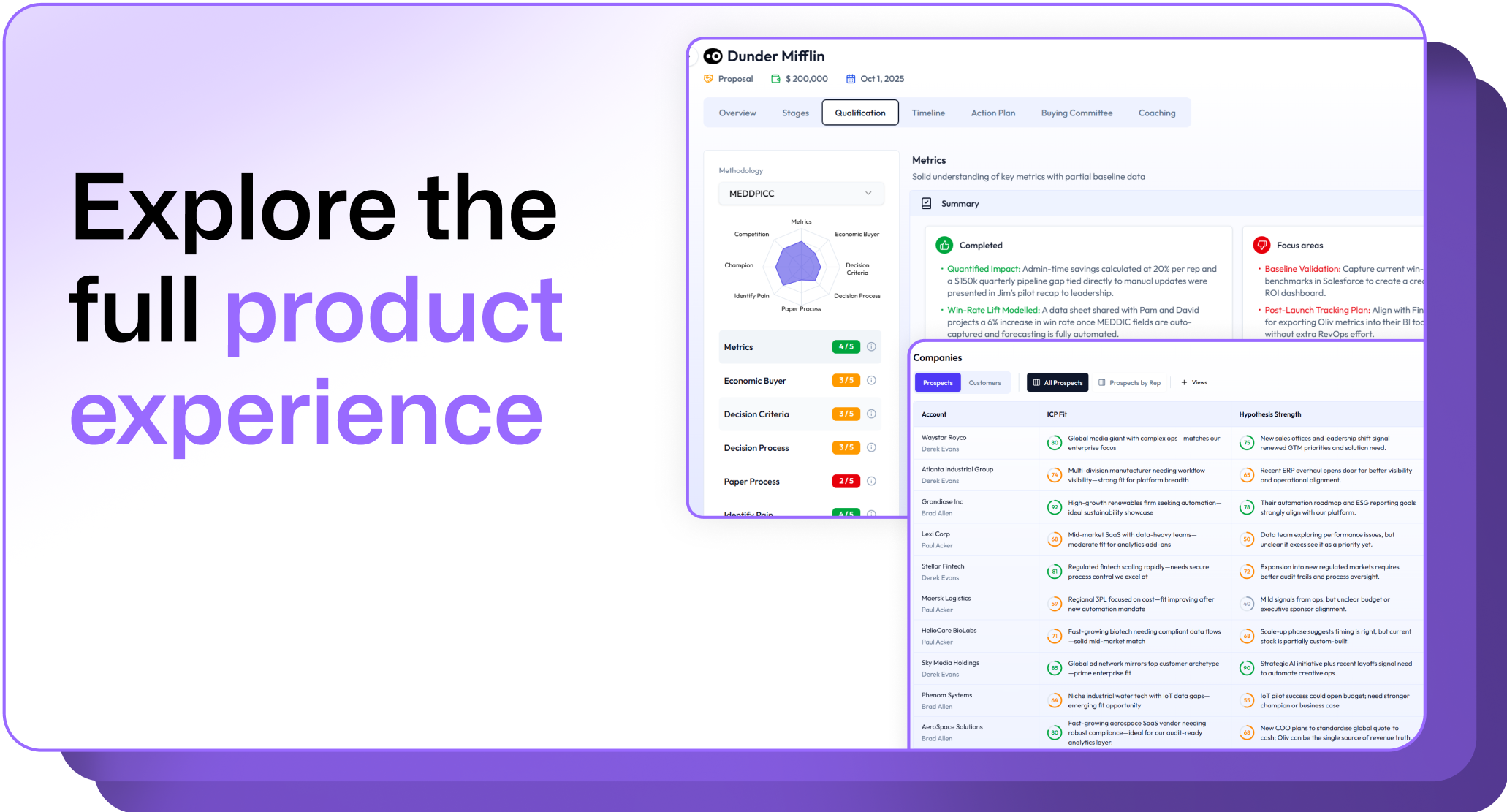
.avif)
.png)







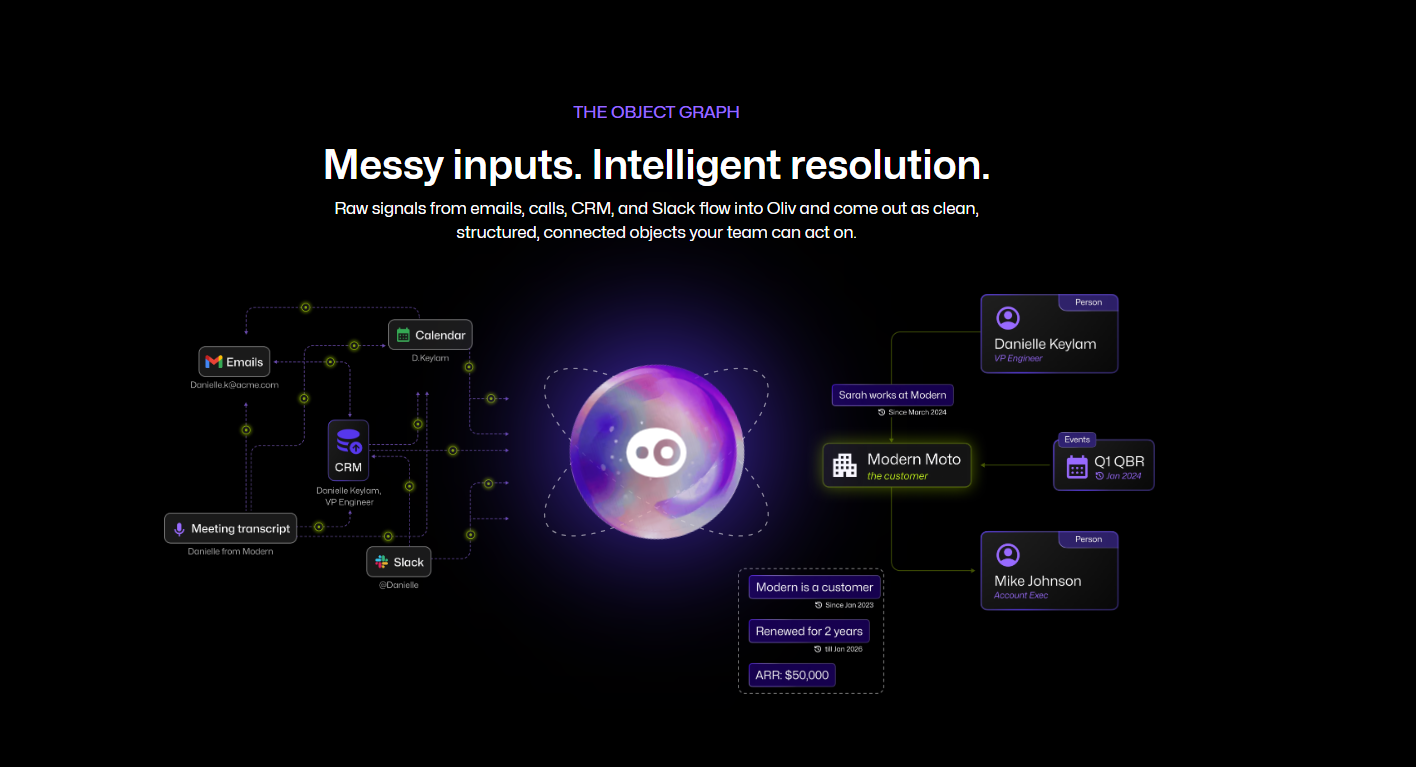
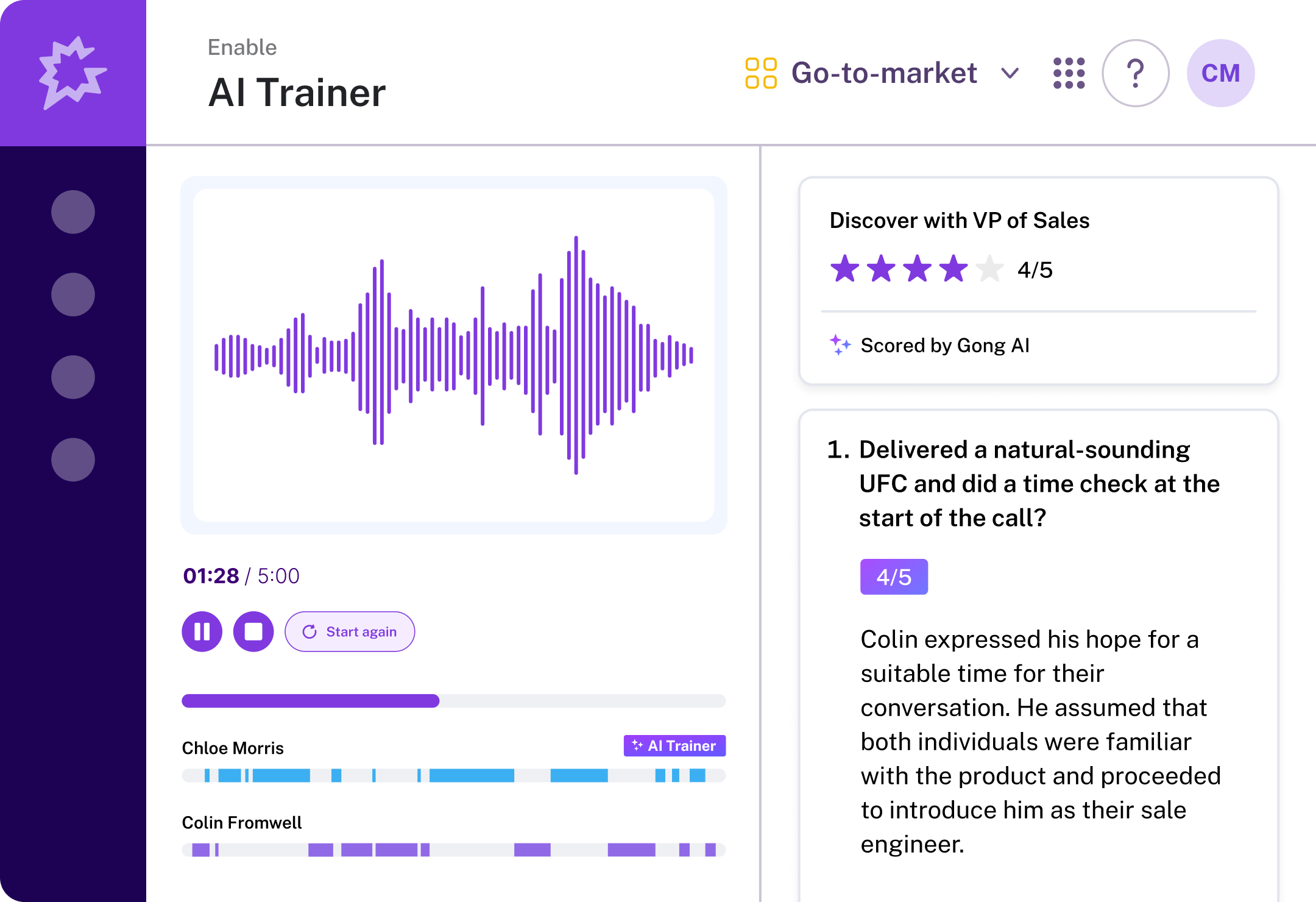
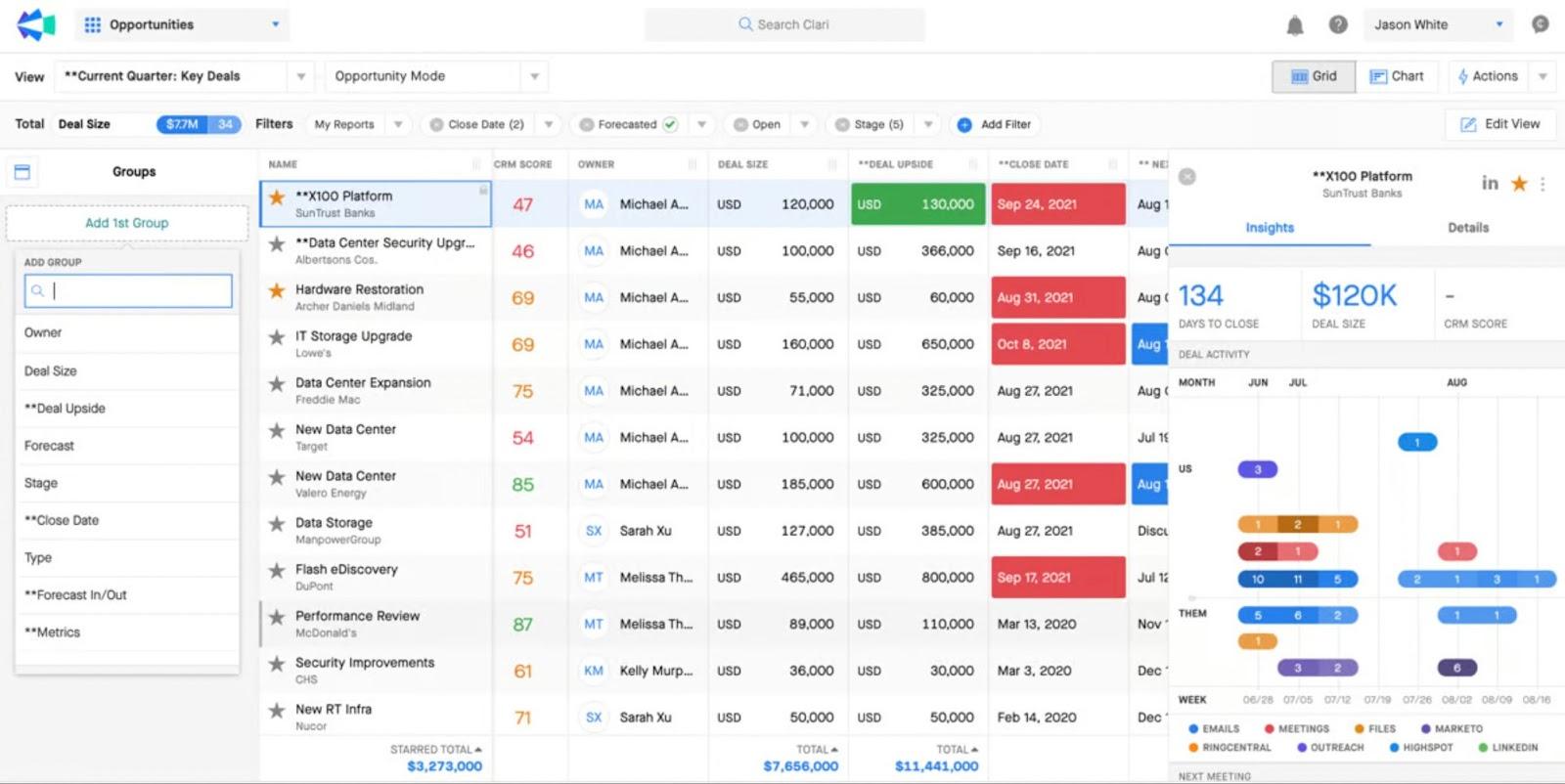
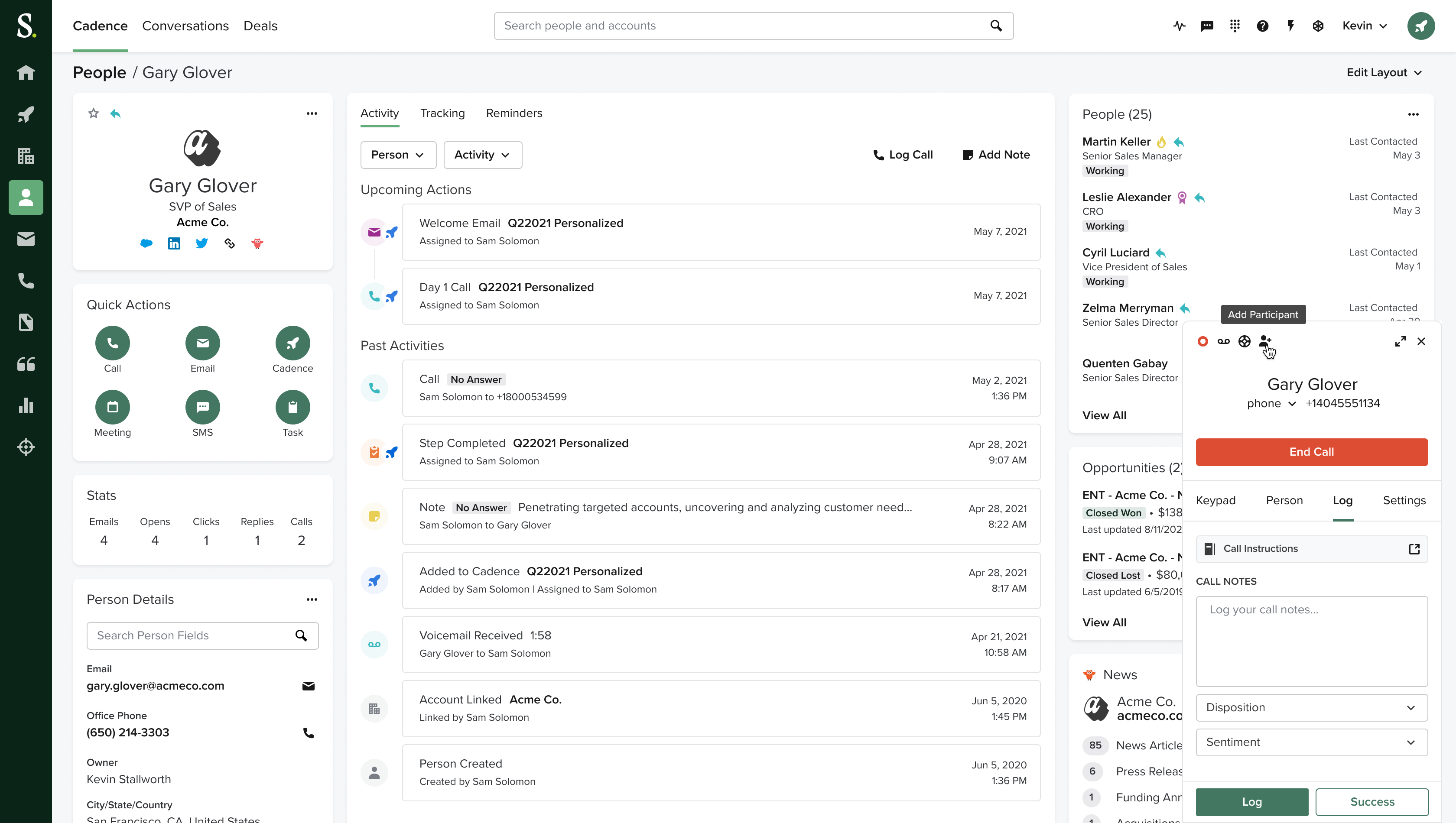
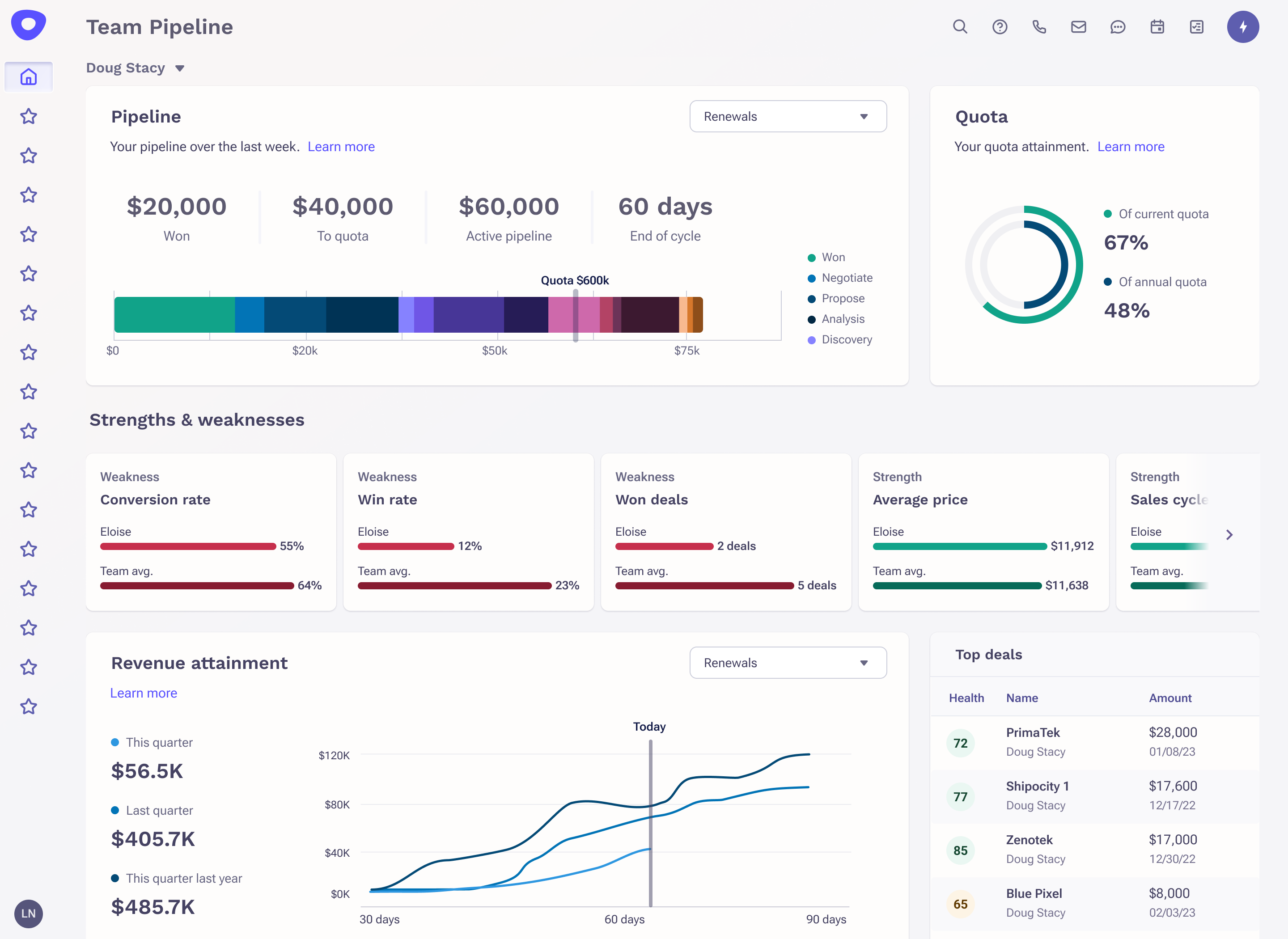
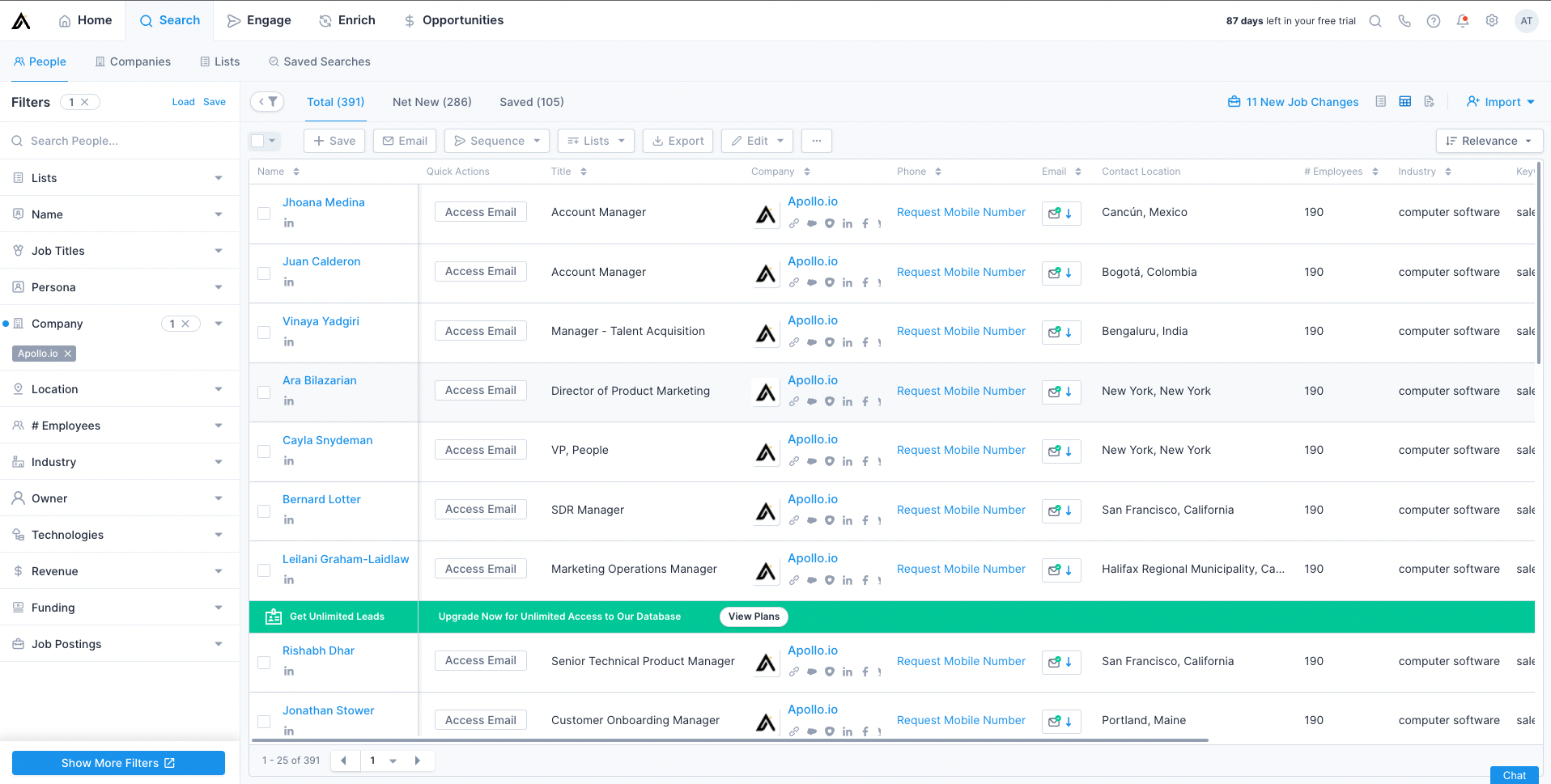

.png)
.png)
.png)

